Dy Proeung ឌី ព្រឿង (16 June 1939, Kandal — 22 March 2020, Siem Reap) was a Cambodian architect and sculptor who worked as a draftsman for EFEO and Angkor Conservation from 1961 to 1975 and founded in 1994 the Miniature Replicas of Angkorian Temples រូបចម្លងខ្នាតតូចនៃប្រាសាទអង្គរ, a garden museum set at his house in Siem Reap with cement scale models of Angkor Wat, Bayon, Banteay Srei and Prasat Ta Keo [Built by Jayavarman V from the year 975 CE, Ta Keo Temple ប្រាសាទតាកែវ is considered to be the first structure built entirely of sandstone in Cambodia.
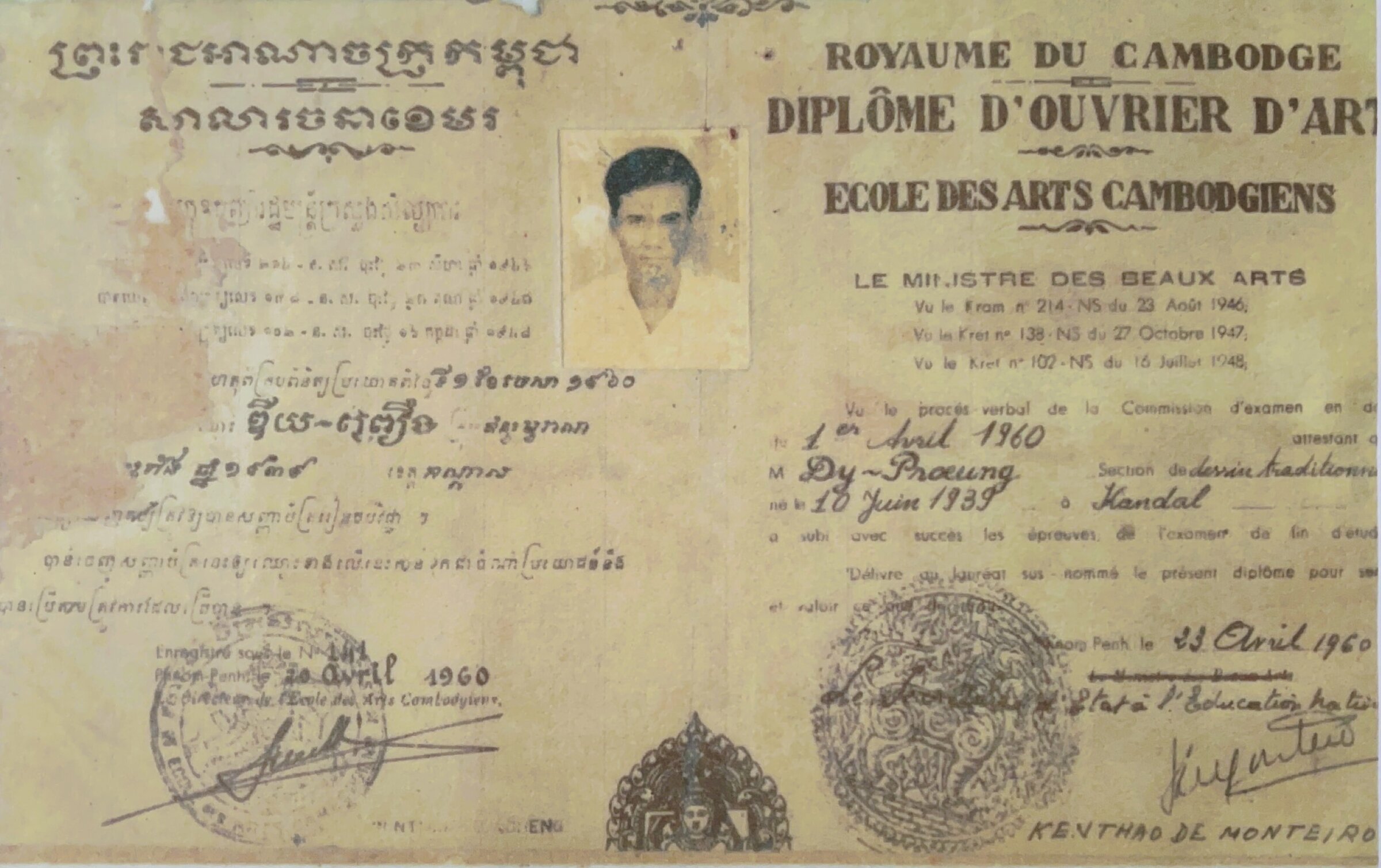
Trained as a draftsman since his childhood, Dy Proeung joined Phnom Penh Royal University of Fine Arts [then still called Ecole des Arts Cambodgiens] in 1957, graduating with a diplome d’ouvrier d’art [Diploma of Master Artisan] in 1960. Fascinated with the temples of Angkor, he read extensively on the subject and was particularly fond of the paintings by Maurice Fiévet in which the French artist imagined the daily life at Angkor in ancient times. In his old age, he would like to paint reproductions of Fiévet’s main artworks.
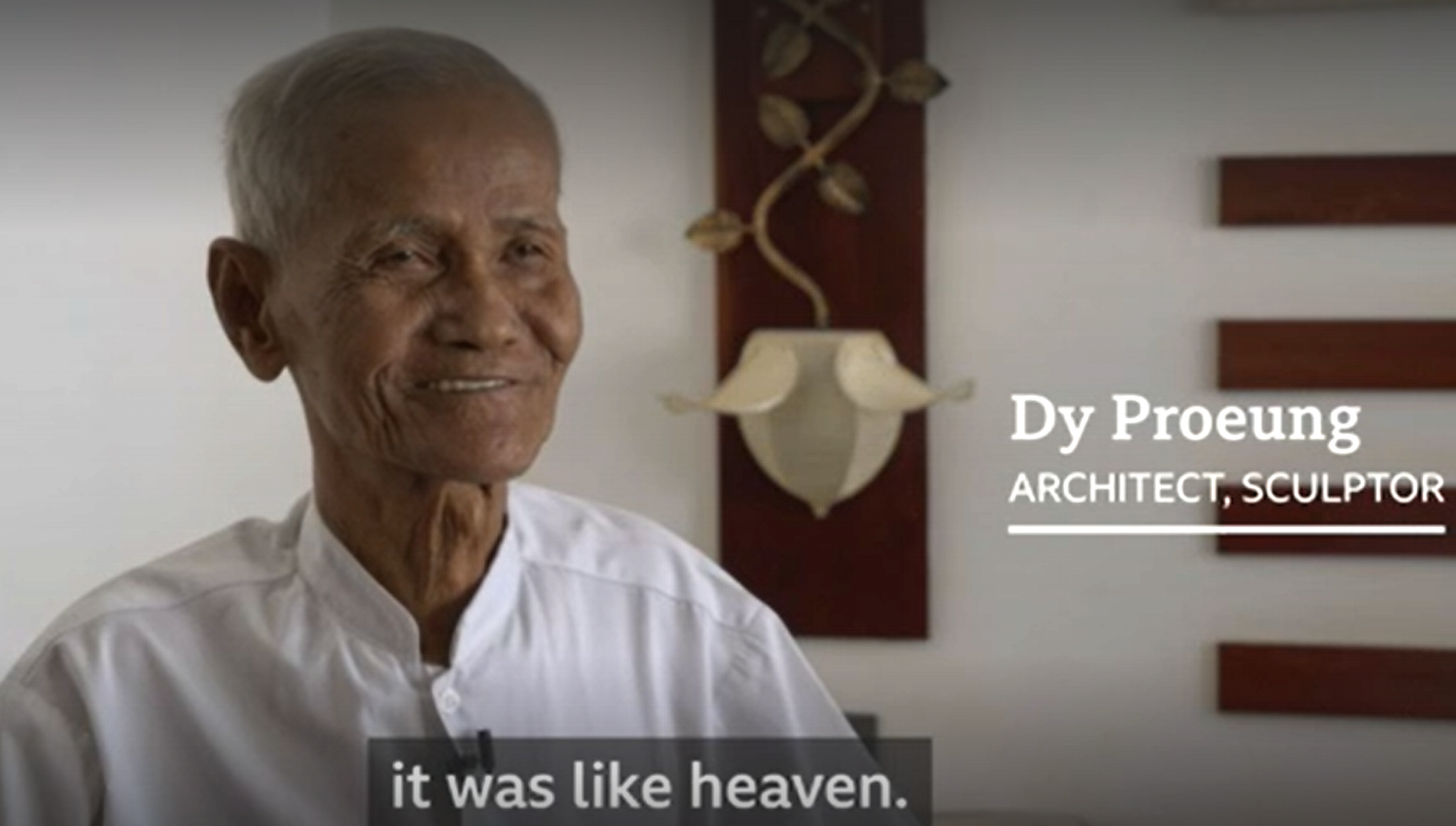
1) Diplome d’ouvrier d’art granted to Dy Proeung on 23 April 1960 and signed by then State Secretary of National Education, Kenthao de Monteiro. [Dy Proeung’s Collection at Angkor Database (DPCADB 6)] 2) “The first time I saw Angkor Wat, it was like heaven”, recalled Dy Proeung shortly two years before his death for BBC reporter Naotomo Umewaka [“Cambodia’s ‘hidden’ Angkor Wat: The secret drawings of Cambodia’s ancient temples”, BBC, 18 June 2020, screen capture].
1) Diplome d’ouvrier d’art granted to Dy Proeung on 23 April 1960 and signed by then State Secretary of National Education, Kenthao de Monteiro. [Dy Proeung’s Collection at Angkor Database (DPCADB 6)] 2) “The first time I saw Angkor Wat, it was like heaven”, recalled Dy Proeung shortly two years before his death for BBC reporter Naotomo Umewaka [“Cambodia’s ‘hidden’ Angkor Wat: The secret drawings of Cambodia’s ancient temples”, BBC, 18 June 2020, screen capture].
1) Diplome d’ouvrier d’art granted to Dy Proeung on 23 April 1960 and signed by then State Secretary of National Education, Kenthao de Monteiro. [Dy Proeung’s Collection at Angkor Database (DPCADB 6)] 2) “The first time I saw Angkor Wat, it was like heaven”, recalled Dy Proeung shortly two years before his death for BBC reporter Naotomo Umewaka [“Cambodia’s ‘hidden’ Angkor Wat: The secret drawings of Cambodia’s ancient temples”, BBC, 18 June 2020, screen capture].
His minitious drawings of architectural details, sections, elevations and floorplans for Angkor Wat, Bayon and other temples helped several researchers from EFEO, and in 1967 Dy Proeung moved to Siem Reap, under contract with the Angkor Conservation. He contributed to EFEO survey team directed by EFEO architects Guy Nafilyan and Jacques Dumarcay, who personally acknowledged his work in their scientific publications. In his Introduction to Le Bayon, histoire architecturale du temple (1967, 3 vol.), the latter noted that previous plans made by Georges Trouvé, Maurice Glaize and Henri Marchal
il manquait surtout des coupes et des élévations, c’est pourquoi Bernard-Philippe Groslier nous a chargé de diriger l’exécution des levés de cet album. Ils ont été exécutés du mois de janvier 1965 à la fin du mois de juillet 1966 avec l’aide des dessinateurs de la Conservation, particulièrement MM. Ouk Samit, Dy Proeung, Thân Sarun, Ban Bun et Chan Péou. [lacked of sections and elevations, which is why Bernard-Philippe Groslier entrusted us with directing the execution of the surveys for this album. They were carried out from January 1965 to the end of July 1966 with the help of the draftsmen of the Conservation, particularly Messrs. Ouk Samit, Dy Proeung, Than Sarun, Ban Bun and Chan Peou.]
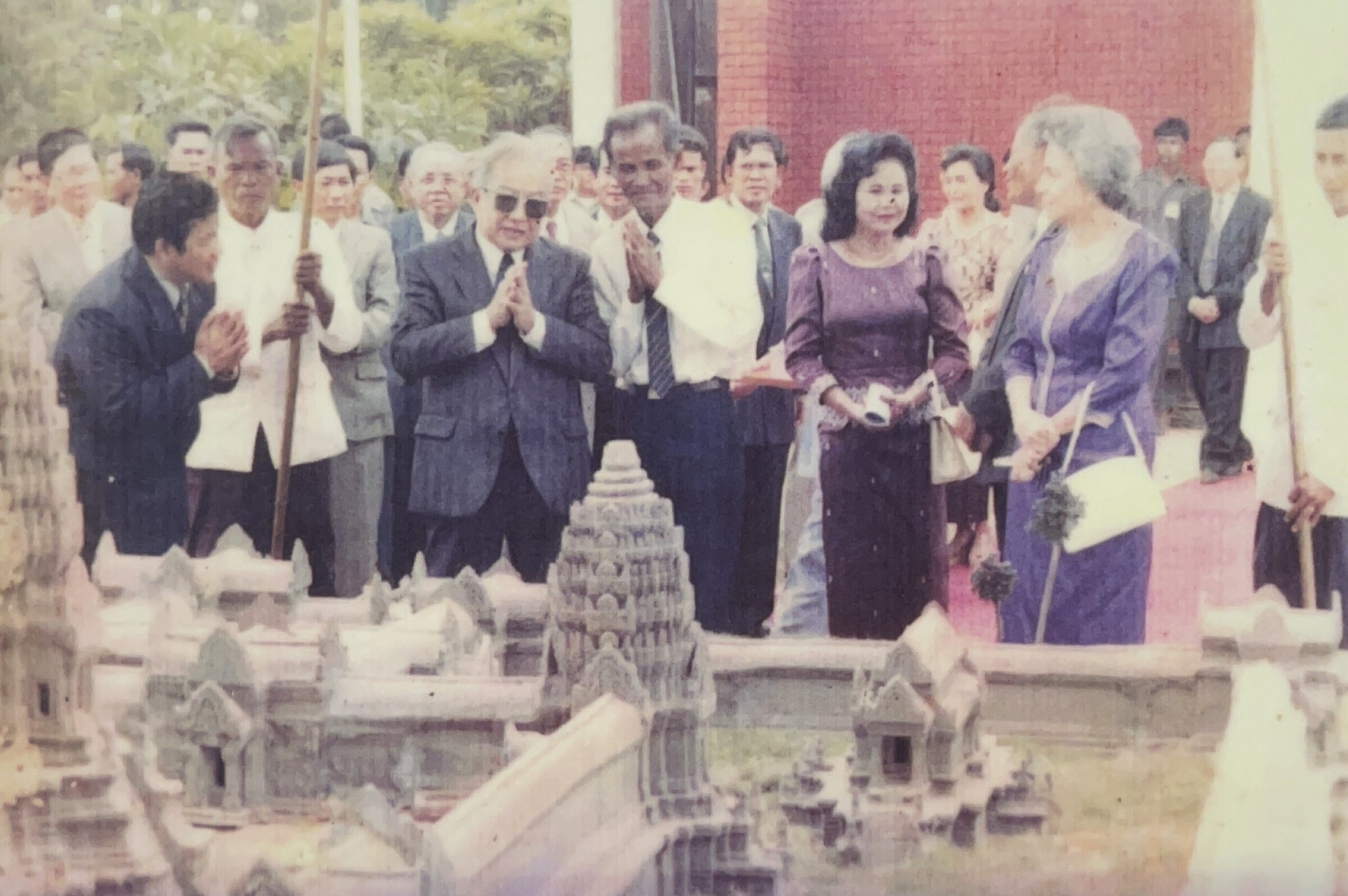
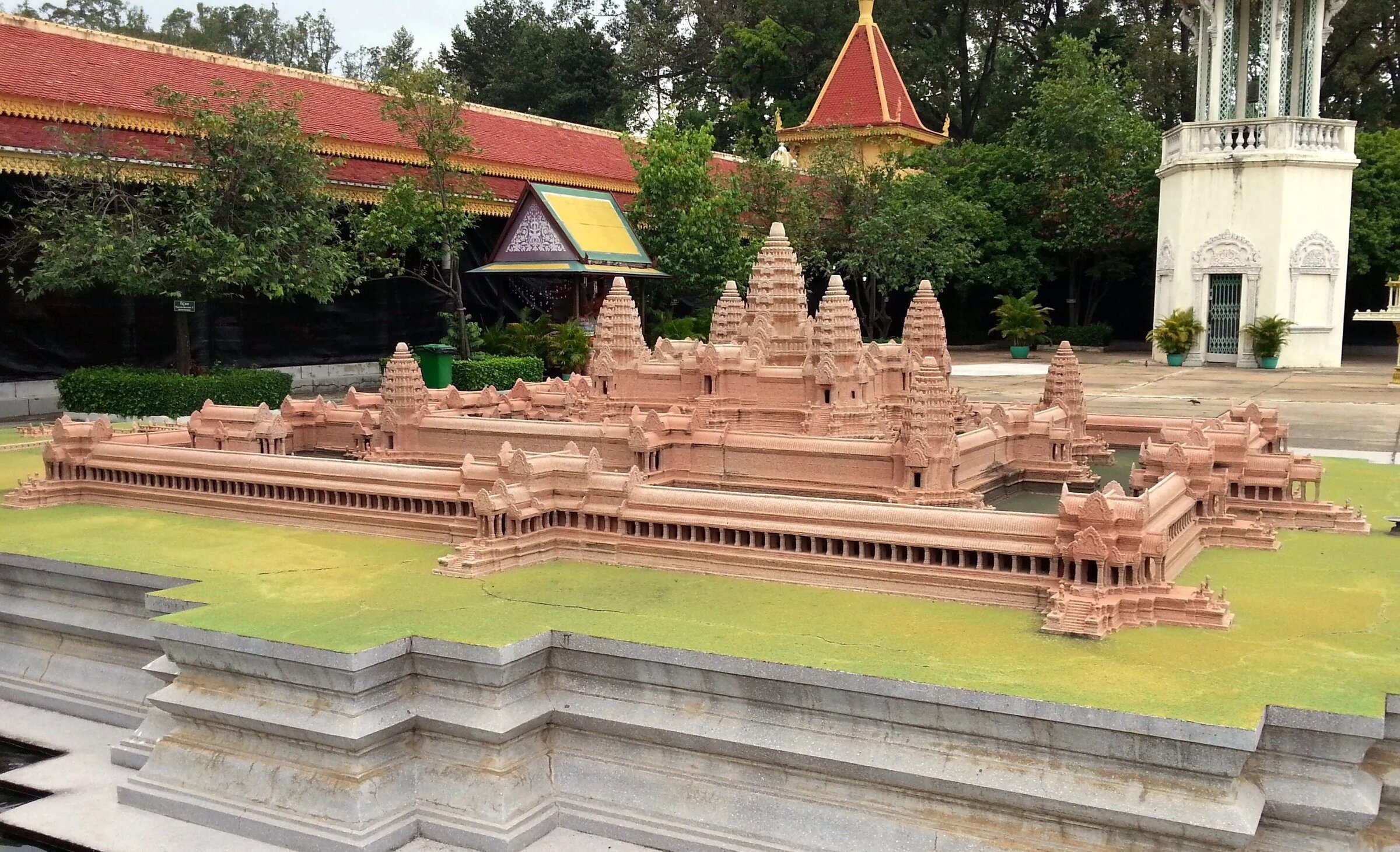
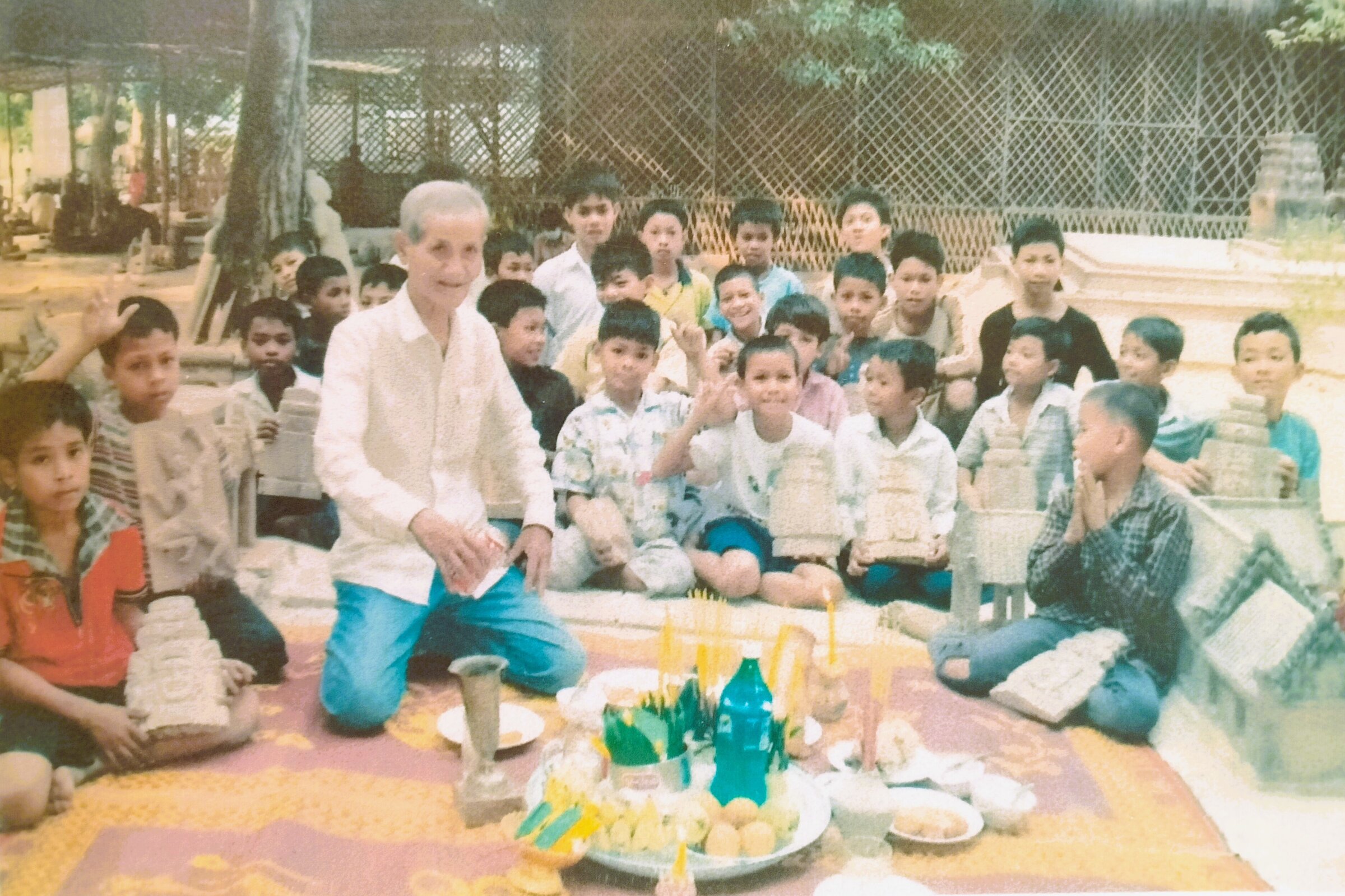
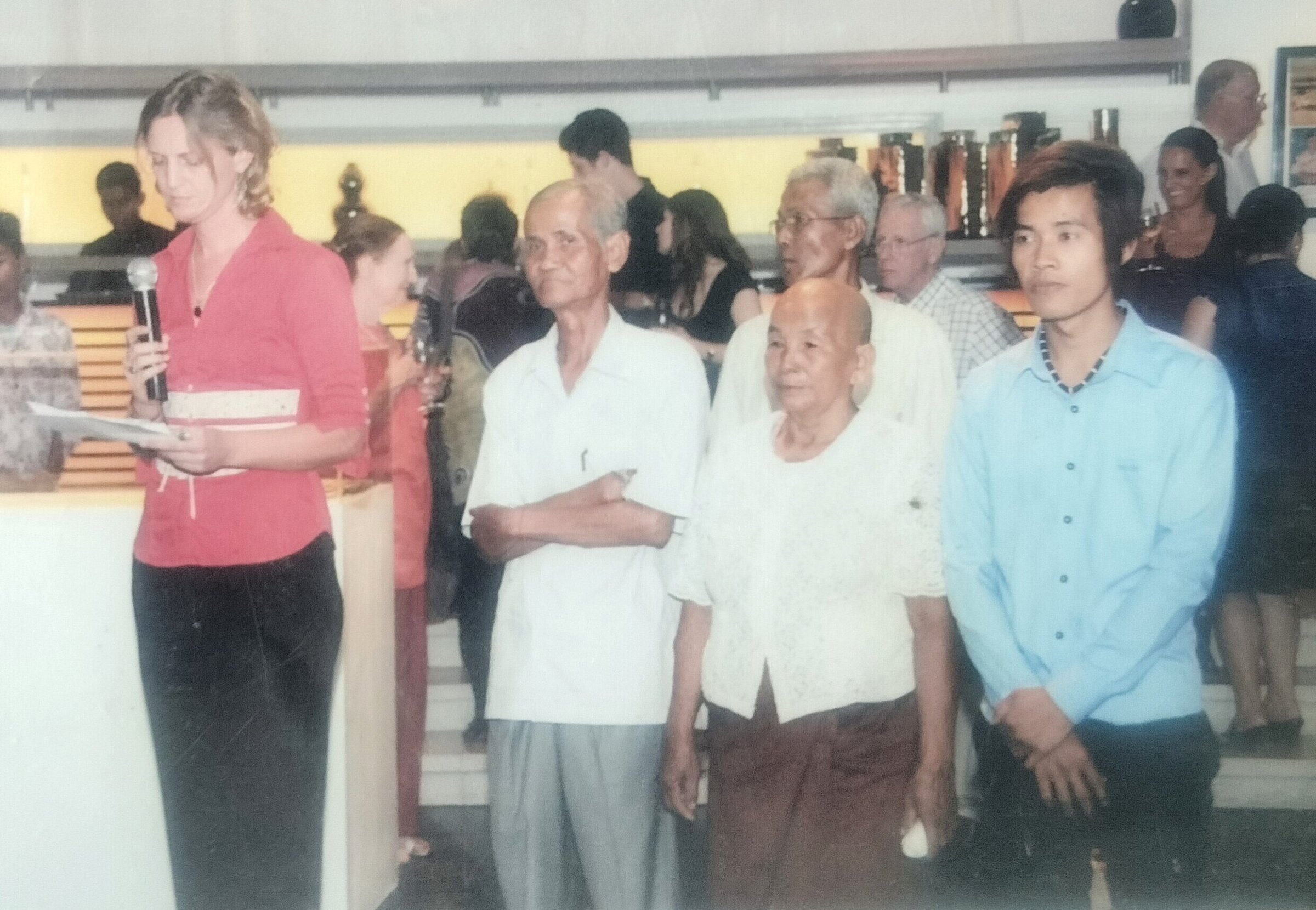
1) Presenting one of his models to HM King Sihanouk in October 1995. 2) The Angkor Wat miniature model remains to these days on display on the grounds of Phnom Penh Royal Palace, behind the Silver Pagoda [photo Cambodia Trains]. 3) Teaching young students at his open-air museum. 4) Opening of Scale of Angkor exhibition, Siem Reap, 2011, from left to right: Sasha Constable, art curator; Dy Proeung; his wife; artist Chan Dany. 5) One of the Bayon plans drawn in 1967. [all photos except 2) from DPCADB collection]
1) Presenting one of his models to HM King Sihanouk in October 1995. 2) The Angkor Wat miniature model remains to these days on display on the grounds of Phnom Penh Royal Palace, behind the Silver Pagoda [photo Cambodia Trains]. 3) Teaching young students at his open-air museum. 4) Opening of Scale of Angkor exhibition, Siem Reap, 2011, from left to right: Sasha Constable, art curator; Dy Proeung; his wife; artist Chan Dany. 5) One of the Bayon plans drawn in 1967. [all photos except 2) from DPCADB collection]
1) Presenting one of his models to HM King Sihanouk in October 1995. 2) The Angkor Wat miniature model remains to these days on display on the grounds of Phnom Penh Royal Palace, behind the Silver Pagoda [photo Cambodia Trains]. 3) Teaching young students at his open-air museum. 4) Opening of Scale of Angkor exhibition, Siem Reap, 2011, from left to right: Sasha Constable, art curator; Dy Proeung; his wife; artist Chan Dany. 5) One of the Bayon plans drawn in 1967. [all photos except 2) from DPCADB collection]
1) Presenting one of his models to HM King Sihanouk in October 1995. 2) The Angkor Wat miniature model remains to these days on display on the grounds of Phnom Penh Royal Palace, behind the Silver Pagoda [photo Cambodia Trains]. 3) Teaching young students at his open-air museum. 4) Opening of Scale of Angkor exhibition, Siem Reap, 2011, from left to right: Sasha Constable, art curator; Dy Proeung; his wife; artist Chan Dany. 5) One of the Bayon plans drawn in 1967. [all photos except 2) from DPCADB collection]
1) Presenting one of his models to HM King Sihanouk in October 1995. 2) The Angkor Wat miniature model remains to these days on display on the grounds of Phnom Penh Royal Palace, behind the Silver Pagoda [photo Cambodia Trains]. 3) Teaching young students at his open-air museum. 4) Opening of Scale of Angkor exhibition, Siem Reap, 2011, from left to right: Sasha Constable, art curator; Dy Proeung; his wife; artist Chan Dany. 5) One of the Bayon plans drawn in 1967. [all photos except 2) from DPCADB collection]
1) Presenting one of his models to HM King Sihanouk in October 1995. 2) The Angkor Wat miniature model remains to these days on display on the grounds of Phnom Penh Royal Palace, behind the Silver Pagoda [photo Cambodia Trains]. 3) Teaching young students at his open-air museum. 4) Opening of Scale of Angkor exhibition, Siem Reap, 2011, from left to right: Sasha Constable, art curator; Dy Proeung; his wife; artist Chan Dany. 5) One of the Bayon plans drawn in 1967. [all photos except 2) from DPCADB collection]
As the Khmer Rouge seized power in 1975, Dy Proeung’s only recourse was to hide all his drawings and notes in a hole he dug in the Sla Kram forest (Siem Reap), spending four years as a slave laborer and recovering them in 1979.
1995 was for him the year of consecration, as he was awarded the Ministry of Culture and Fine Arts ‘Pisnuloka’ Certificate and Trophy of Recognition for its contribution to the Arts. And as his work on cement replicas of Khmer temples had come to the attention of King Norodom Sihanouk, Dy Proeung presented the Cambodian sovereign with one of his models on his birthday in October, during a ceremony in Phnom Penh attended by the King, Prime Minister Hun Sen and their respective spouses.
In 2011 (5 May to 5 July), an exhibition associating visual artist Chan Dany’s mosaics with the miniature replica of Banteay Srei by Dy Proeung was held again at Hôtel de la Paix under the title ទំហំនៃអង្គរ The Scale of Angkor and curated by Sasha Constable. One large cement model was dismounted and carried by truck from Dy Preung’s workshop to the hotel’s Arts Lounge, on the other side of the Siem Reap River. APSARA Director-General Bun Narith personally attended the event to congratulate the septuagerian architect.
Dy Proeung loved to welcome visitors from all around the world at his garden museum, and to share his vast knowledge with groups of Cambodian students. To contribute to the artistic development of new generations, he launched the Sihanouk Reach Arts and Crafts School in Roluous, near Siem Reap.
In 2024, the family of the late architect allowed Angkor Database to salvage some of his personal papers from two shacks at his house. Documents, books and drawings have been cleaned from mold and currently in the process of being digitized and classified in the Dy Proeung’s Collection at Angkor Database(DPCADB), Templation Library. Some of Dy Proeung’s original drawings are now exhibited at SAR — ស Museum of Cambodian Modern Art.
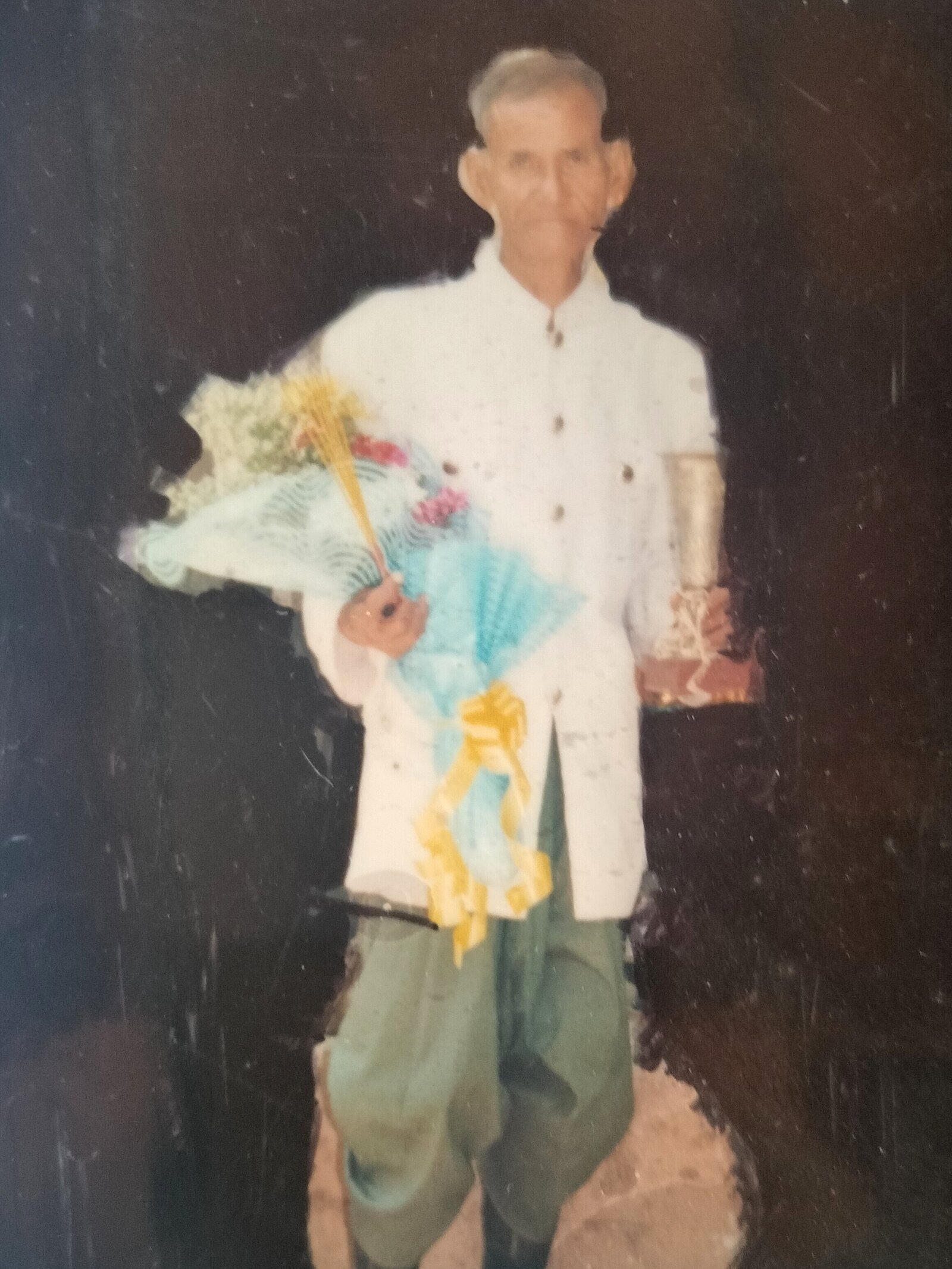
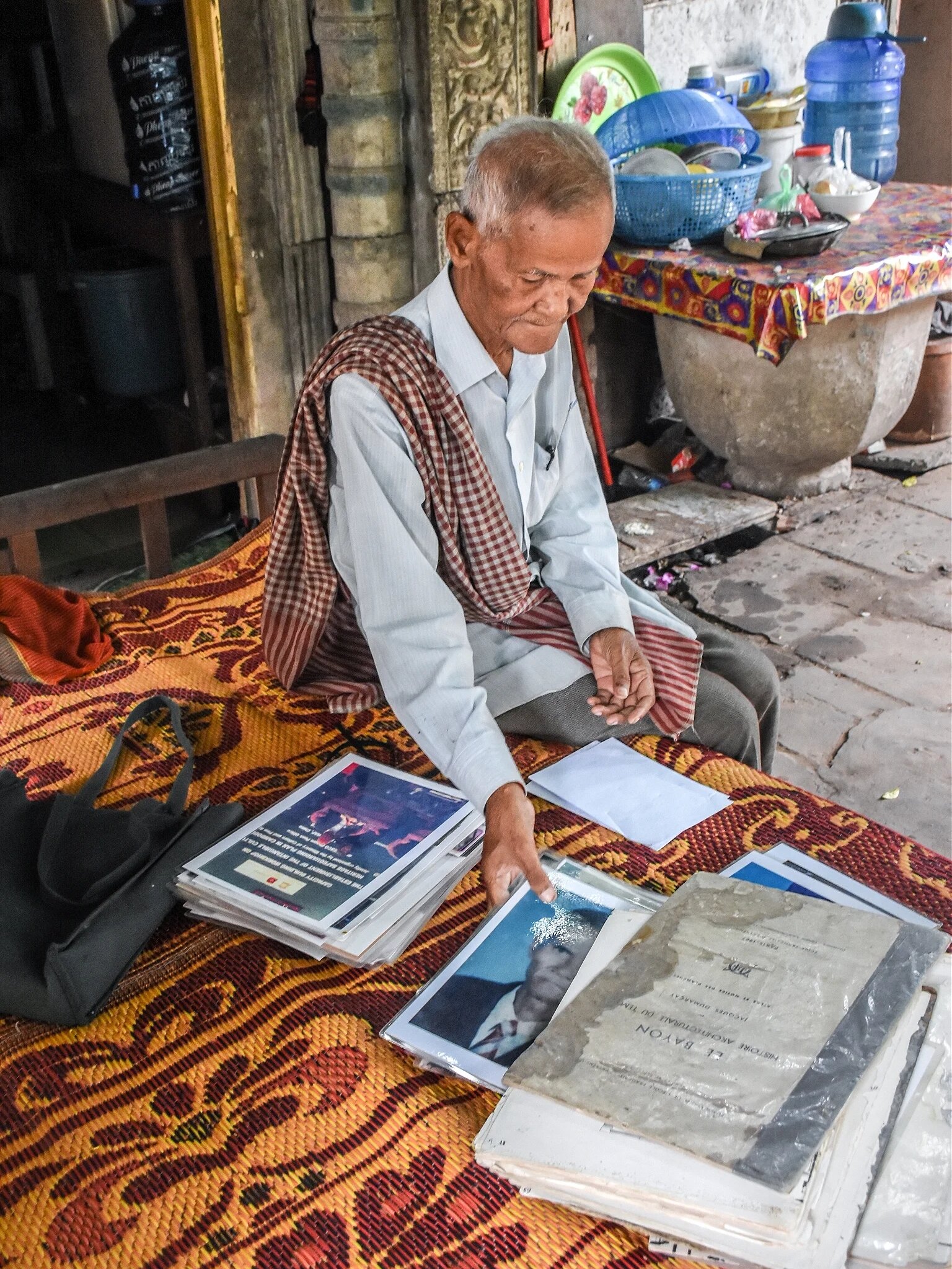
1) Receiving the Pisnuloka Trophy in 1995 [DPCADB 10]. 2) Sorting some personal papers during an interview with Roads&Kingdom, 5 Nov. 2018 [photo by Zoe Osborne].
1) Receiving the Pisnuloka Trophy in 1995 [DPCADB 10]. 2) Sorting some personal papers during an interview with Roads&Kingdom, 5 Nov. 2018 [photo by Zoe Osborne].
1) Receiving the Pisnuloka Trophy in 1995 [DPCADB 10]. 2) Sorting some personal papers during an interview with Roads&Kingdom, 5 Nov. 2018 [photo by Zoe Osborne].
sk क्रम krama, "serial order", "succession", "progress"; kh ក្រមkram, "order", "code" ; pa kama
kram: in middle period Cambodia, referred to proceeding, succession, order, justice, customary law, ordinance. "Cau krama" (IMA 30: 23-4), ‘head of law', judge, magistrate’.
Law codes were called kram, subsisting in modern times as in រាជក្រមreachkram: "royal code, royal edict". ក្រមការ kramkara, "order", "code of conduct", also meant "official, functionary" in middle period.