

Walter Bosshard

Walter Bosshard [Boßard in German] (8 Nov. 1892 — Samstagern, Switzerland — 18 Nov. 1975, Ronda, Spain) was a Swiss photographer, filmmaker and reporter, one of the pioneers of modern photojournalism who went to Angkor in 1930 and photographed dancers of the Royal Ballet of Cambodia in Angkor Wat.
Initially a primary school teacher in Switzwerland, he took photography as a hobby. In 1919, he decided to leave for Sumatra where he worked as a plantation administrator and a gemstone dealer. In 1919, he gave up teaching and went to Sumatra to work as an administrator on a plantation and then as a gemstone dealer in the Far East. In 1927 – 28, he joined as technician the German scientific expedition led by Emil Trinkler to Kashmir and Xinjiang, taking his first professional photographs that became sought after by German illustrated media while he furthered his coverage of ‘exotic’ lands — the coronation of one of the kings of Afghanistan in 1929 [1], a series on Mahatma Gandhi’s daily life in 1930, then Siam, Cambodia, the Shan States, the Upper Mekong Valley, Laos and Annam.
In 1931 he was in Nanjing, where he was able to record a meeting with Marshal Chiang Kai-shek and presented a photo reportage about Mao Zedong, which was again highly regarded. In the same year he made a photo report for the Berliner Illustrirte Zeitung about the polar flight of the airship Graf Zeppelin. In 1932 he also travelled to Singapore, Bangkok — working in particular on Siamese gemstone mines -, the Philippines and Japan. In 1933 he documented the Manchurian crisis, reported from Shanghai and took part in the German Kokonor geographic expedition. Working with the American agency Black Star, he covered extensively China and Inner Mongolia. [information from Wikipedia DE and German National Library Catalogue].
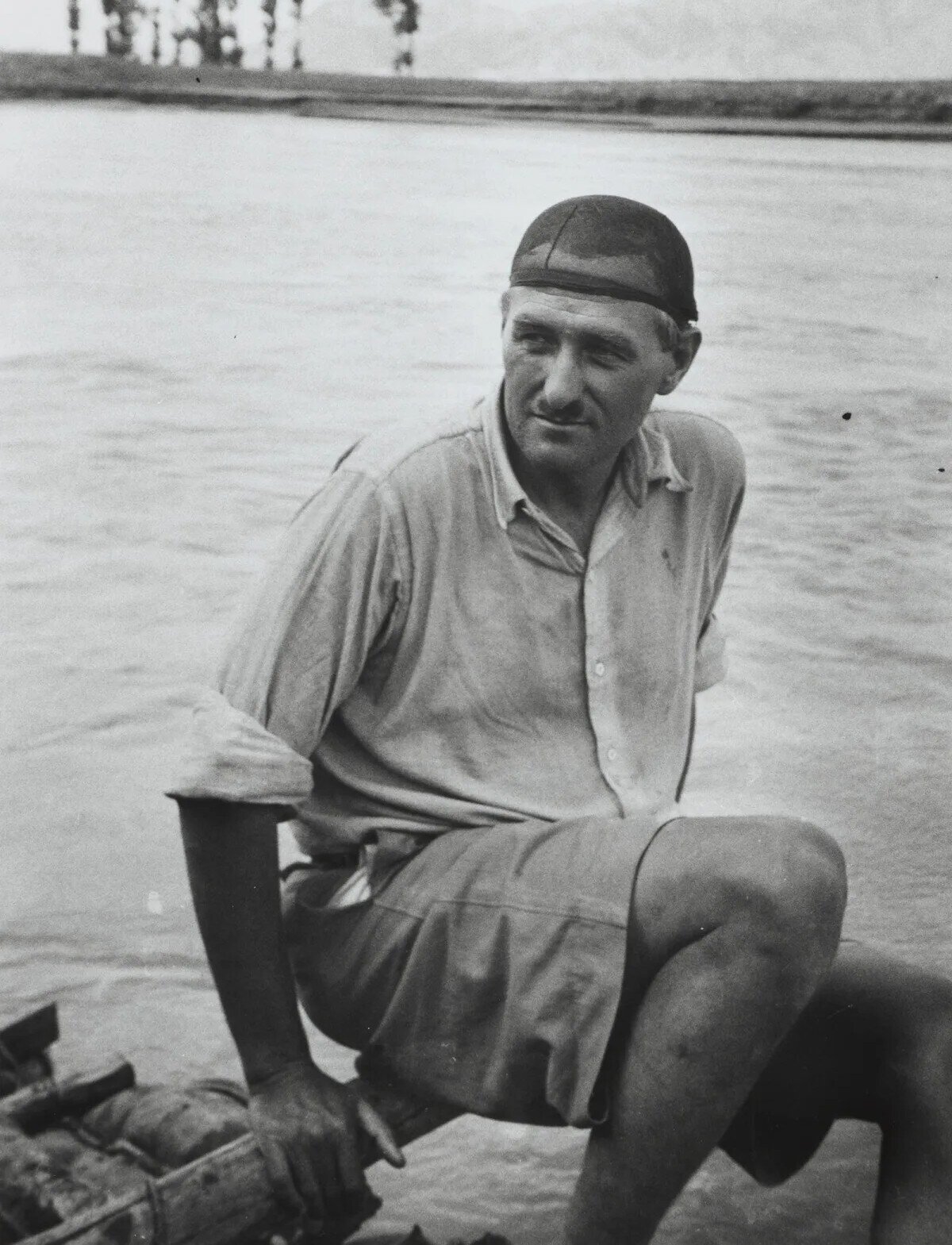
1) Walter Bosshard on a river journey in China in 1933 [Fotostiftung Schweiz; published in Peter Pfrunder, “Gandhi in a new light”, National Museum of Switzerland Blog, 1 Nov. 2019]. 2) A rare photograph of Walter Bosshard at work, posing Turkish President Ismet Inönü while he was covering Turkey for Life Magazine with famed American photoreporter Margaret Bourke-White [Life, 8 April 1940].
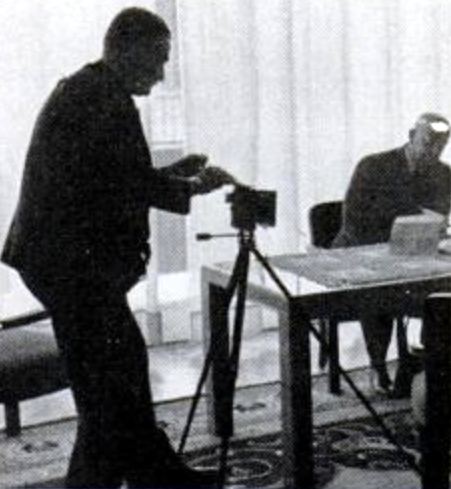
1) Walter Bosshard on a river journey in China in 1933 [Fotostiftung Schweiz; published in Peter Pfrunder, “Gandhi in a new light”, National Museum of Switzerland Blog, 1 Nov. 2019]. 2) A rare photograph of Walter Bosshard at work, posing Turkish President Ismet Inönü while he was covering Turkey for Life Magazine with famed American photoreporter Margaret Bourke-White [Life, 8 April 1940].
1) Walter Bosshard on a river journey in China in 1933 [Fotostiftung Schweiz; published in Peter Pfrunder, “Gandhi in a new light”, National Museum of Switzerland Blog, 1 Nov. 2019]. 2) A rare photograph of Walter Bosshard at work, posing Turkish President Ismet Inönü while he was covering Turkey for Life Magazine with famed American photoreporter Margaret Bourke-White [Life, 8 April 1940].
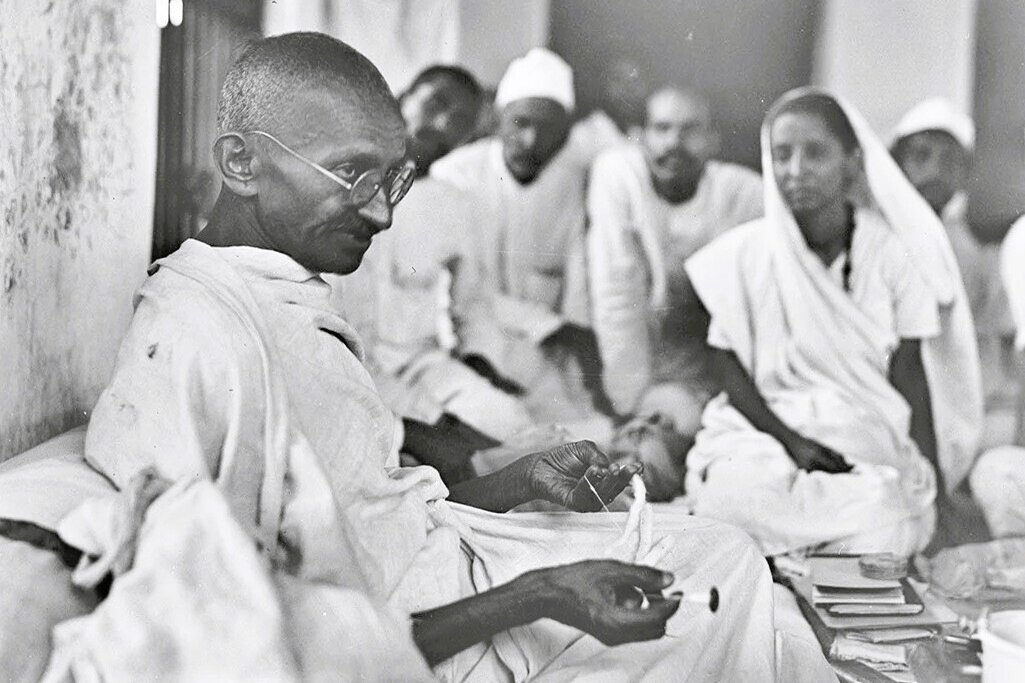
Historic encounters: 1) Indian independentist leader Mahatma Gandhi spinning a white yawn, April 1930 [© Walter Bosshard/Fotostiftung Schweiz/Archives of Contemporary History, ETH Zurich, published in Peter Pfrunder, “Gandhi in a new light”, National Museum of Switzerland Blog, 1 Nov. 2019]. 2) At Yan’an Caves, Martin Bosshard (left) and American journalist A.T. Steele with Mao Zedong in May 1938 [AfZ 4NL Walter Bosshard 243, published in David Möller, “Auf eine Zigarette Mit Mao – ein Schweizer in den Höhlen von Yan‘an”, e‑t-ü Blog, 6 Oct. 2016].
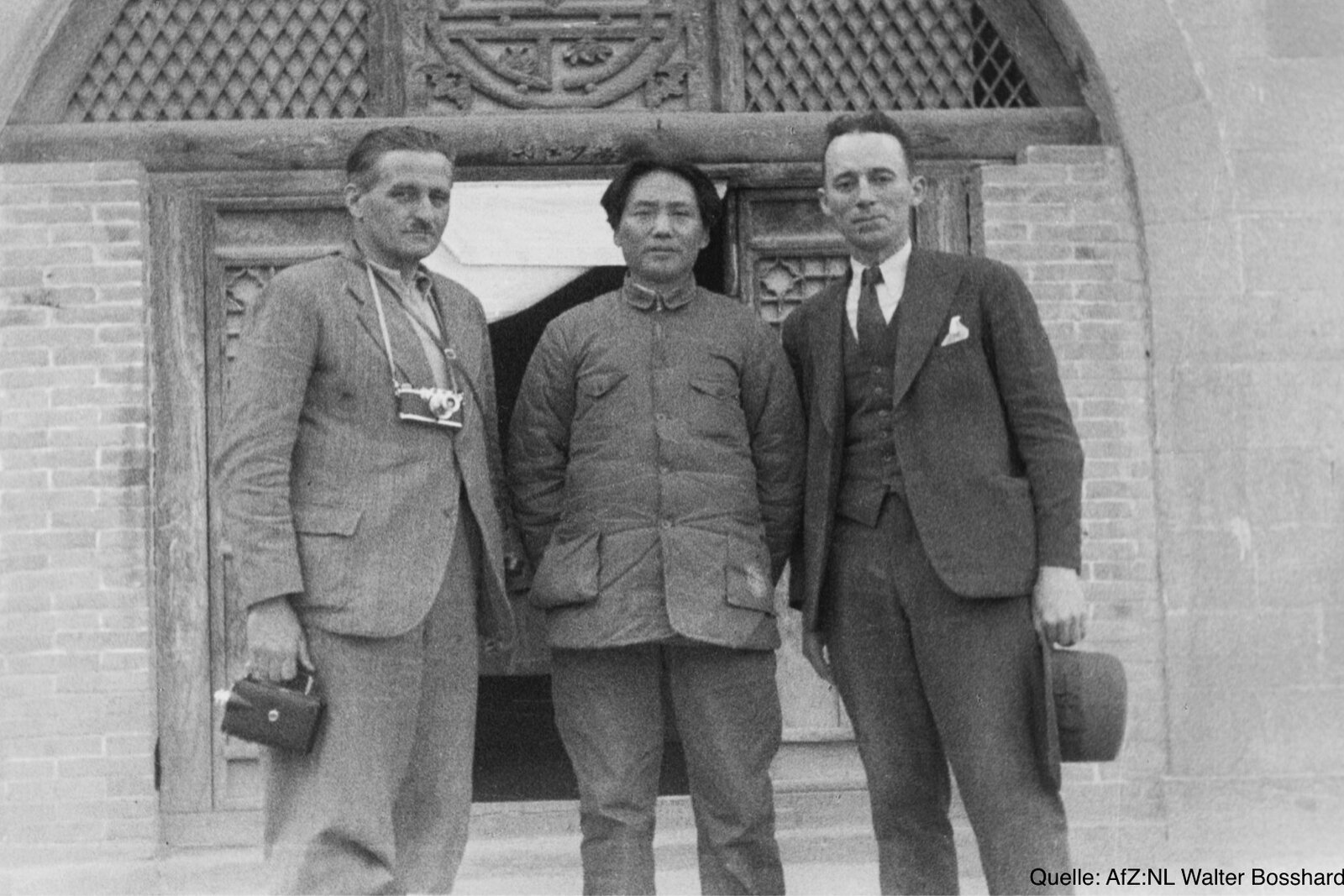
Historic encounters: 1) Indian independentist leader Mahatma Gandhi spinning a white yawn, April 1930 [© Walter Bosshard/Fotostiftung Schweiz/Archives of Contemporary History, ETH Zurich, published in Peter Pfrunder, “Gandhi in a new light”, National Museum of Switzerland Blog, 1 Nov. 2019]. 2) At Yan’an Caves, Martin Bosshard (left) and American journalist A.T. Steele with Mao Zedong in May 1938 [AfZ 4NL Walter Bosshard 243, published in David Möller, “Auf eine Zigarette Mit Mao – ein Schweizer in den Höhlen von Yan‘an”, e‑t-ü Blog, 6 Oct. 2016].
Historic encounters: 1) Indian independentist leader Mahatma Gandhi spinning a white yawn, April 1930 [© Walter Bosshard/Fotostiftung Schweiz/Archives of Contemporary History, ETH Zurich, published in Peter Pfrunder, “Gandhi in a new light”, National Museum of Switzerland Blog, 1 Nov. 2019]. 2) At Yan’an Caves, Martin Bosshard (left) and American journalist A.T. Steele with Mao Zedong in May 1938 [AfZ 4NL Walter Bosshard 243, published in David Möller, “Auf eine Zigarette Mit Mao – ein Schweizer in den Höhlen von Yan‘an”, e‑t-ü Blog, 6 Oct. 2016].
In May 1938, Walter Bosshard was the first European correspondent to reach the Yan’an Caves [窑洞 yaodong, Shaanxi Province] the stronghold of the communist resistance against the Japanese occupation of China, and to interview leader Mao Zedong along with American journalist Archibald T. Steele — only American journalists Helen and Edgar Snow and Agnes Smedley had done that in 1936. Foreign correspondent for the Neue Zürcher Zeitung (NZZ) in Beijing since 1939, he became staff photographer for Life at the same period and, at WWII outbreak, worked as war correspondent for the American magazine in Poland, Greece, Iraq, Iran and Turkey. From 1942 to 1945 he joined Life’s Washington D.C. Bureau, while sitting as an observer at the San Francisco Conference, the Yalta Conference and the preliminary sessions of the nascent United Nations. From 1946 to 1949 he was back to Beijing, where his photographic and written archive had been scrupulously stored for eight years. Leaving in a hurry when the communist insurgents entered Beijing, he had to burn his personal notes, reports and telegrams. [see tswhere he had to flee from the invasion of the communists and lost a large number of his photographic works during his escape. From 1949 to 1953 he worked as a correspondent in the Middle East, exploring Egypt and Sudan. [see Gautier Chiarini, “Figures: Walter BOSSHARD 瓦尔特 ‧ 博萨特 (1892−1975)”, SinOptic, April 2016 (the author is a relative of Walter Bosshard)]
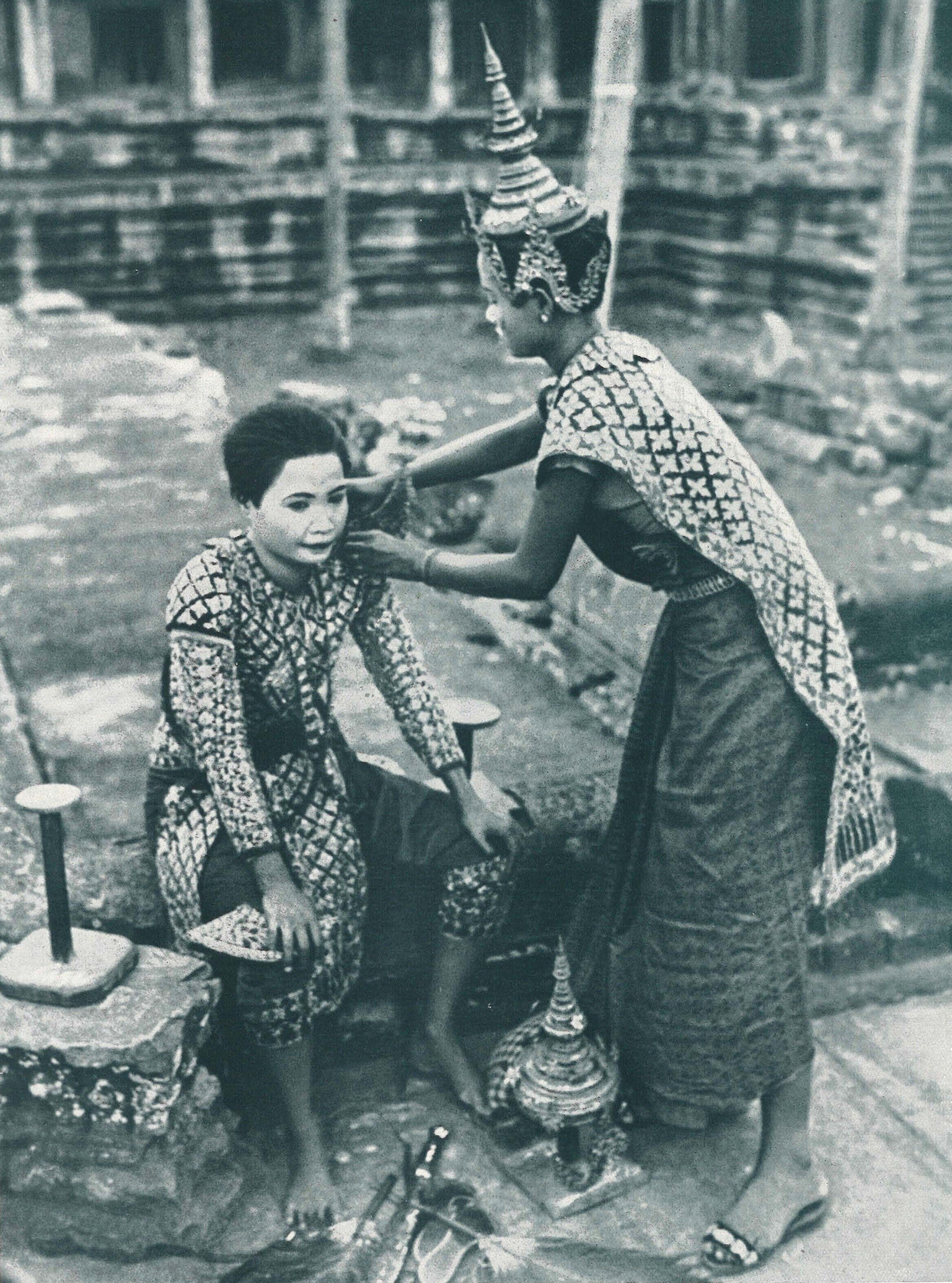
‘Die Tempelthänzerinnen beim Ankleiden’ [‘The temple dancers getting dressed’, photograph by Walter Bosshard. [from Die Dame 60 – 4, Nov. 1932, p. 6] There were about 10 photos in the series published in the main German women’s magazine at that time.
‘Die Tempelthänzerinnen beim Ankleiden’ [‘The temple dancers getting dressed’, photograph by Walter Bosshard. [from Die Dame 60 – 4, Nov. 1932, p. 6] There were about 10 photos in the series published in the main German women’s magazine at that time.
After tripping during a walk and suffering a hip fracture in Korea, where he was reporting on the Swiss delegation to the peace negotiations in 1953, Walter Brosshard ended his professional career and opted for retiring in Andalucia (Southern Spain) for the rest of his life.
During his career, his path has crossed the ones of major photoreporters, including Robert Capa (1913−1954), Margaret Bourke-White (1904−1971), Griffith J. ‘Griff’ Davis (1923−1993), and Swiss photographer Martin Hürlimann, who had also photographed Cambodian dancers. His style has been compared with the adventurous travel writing of Annemarie Schwarzenbach (1908−1942), the talented Swiss heiress whom writer Thomas Mann called ‘the Ravaged Angel’ and who drove a Ford from Zurich to Kabul in 1939 along with her friend and lover Ella K. Maillard, describing Persia (modern Iran) and other places with a rare flair.
___________________
[1] With the civil war raging, no less than four kings of Afghanistan were enthroned in 1929 — Amanullah Khan (r. first fortnight January), Inayatullah Khan (3 days in January), Habibullah Kalakani (January — October), and Mohammad Nadir Shah (r. from 15 Oct.1929 until his assassination on 8 Nov. 1933). Bosshard was one of the only three foreign reporters admitted at the event, with William L. Shirer and Harald Lechenperg.
In the Archives
Walter Bosshard’s written works were bequeathed by Paul Hofer, his godchild and heir, to bequeathed the Archive for Contemporary History (AfZ) at ETH (Eidgenössische Technische Hochschule [Federal Institute of Technology]) Zurich, along with some 20,000 positives and negatives, slides, glass plates, albums and films. The majority of his photographic and filmic legacy is kept at the Fotostiftung Schweiz [Swiss Photographic Foundation], the foundation which completed with Afz a a full inventory of Bosshard’s archive, published a book [Peter Pfrunder, Verena Münzer & Annemarie Hürlimann, Fernsicht: Walter Bosshard – ein Pionier des modernen Photojournalismus, Bern, 1997, 238 p.] and held a 1998 exhibition at the Kunsthaus Zürich in 1998.
In regards to photographs published before 1935, in particular the series on Cambodian dancers at Angkor Wat, it seems that Ullstein Verlag, then the largest publishing company in Germany, controlling the Berliner Illustrirte Zeitung (BIZ) and Die Dame, the women’s magazine which published part of Bosshard’s work at Angkor in 1932, has kept the original prints — part of them now distributed under the ‘copyright’ ullsteinbild/gettyimages. Incidentally, Kurt Safranski, the founder — with Ernest Mayer and Kurt Kornfeld, all three German Jews who had fled the Nazi exactions — of Black Star agency in the US in 1935, had been an editor of BIZ and already met Bosshard, who later joined Black Star. As of May 2026, Fotostiftung Schweiz’s online collection included 300 photographs, all taken by Walter Brosshard in China [including under Japanese occupation], Mongolia and India (Mahatma Gandhi), as well as two portraits of him taken by Magnum photographer René Burri at Hotel Victoria, Ronda, Spain, in 1972 [catalog number 1997.831, © / Magnum Photos, Fondation René Burri, courtesy Musée de l’Elysée Lausanne].
Selected Publications
[not including the numerous articles written by W.B.]
- Durch Tibet und Turkestan [Through Tibet and Mongolia], 1930.
- Indien kämpft! [India is Fighting!], 1931.
- Die Tempeltänzerinnen in Angkor, series published without title in Die Dame 60 – 4, November 1932.
- [with Margaret Bourke-White] “Turkey: It Faces the Modern World with New Ways and Modern Machines”, photographic essay, Life Magazine, 28 April 1940.
- Erlebte Weltgeschichte. Reisen und Begegnungen eines neutralen Berichterstatters im Weltkrieg 1939 – 1945 [World History as Experienced: Travels and Encounters of a Neutral Reporter in the World War 1939 – 1945], Fretz and Wasmuth, 1947 [with 44 photographs].
- Kühles Grasland Mongolei [Grasslands of Mongolia], Büchergilde Gutenberg 1952.
- Gefahrenherd der Welt [World Hotspot], Büchergilde Gutenberg, 1954.
- Generäle, Könige, Rebellen [Generals, Kings, Rebels],1954.
- Thut, Geschichte aus dem Sudan [Thut, History from Sudan], Fretz & Wasmuth 1960.
- Im goldenen Sand von Asswan [In the Golden Sands of Aswan], Orell Füssli 1962.
Filmography
- Peking [Beijing], 1934.
- Freunde in Peking [Friends in Beijing], 1934.
- Kaiserkrönung in Hsinking [Imperial coronation in Hsinking [Xinjing]] , 1934.
- Mandschurei [Manchuria], Nr. 1, ca. 1935.
- Mongolei [Mongolia], Part I & II, ca. 1936.
- Allerlei aus China [All sorts of things from China], 1936.
- Von Tientsin nach Shanghai [From Tientsin to Shanghai], 1937.
- Siam I, 1938.
- Siam-Lobpburi, n.d.
- Evacuated Children, 1938.
- Yenan, Part I & II, 1938.
- Weltausstellung in New York [World Fair in New York], 1939.
- Pazifik-Kanada [Pacific Canada], 1939.
- Plymouth-Rome, n.d.
- USA-Kanada 1943 – 1944. Von Washington nach Williamsburg – Tropfsteinhöhlen in Kanada [USA-Canada 1943 – 1944. From Washington to Williamsburg – Caves in Canada], 1944.
- Peking 1947, 1. August-Feier, Privates [Beijing, August 1st celebration, private scene], 1947.
- Peking: Tore, Strasse, Tempel, Zauberer, Opium, Verbotene Stadt [Beijing: Gates, street, temple, magician, opium, Forbidden City], ca. 1954.
- Grosse Mauer, Shanghai, Pagode der Macht in Lungwa [Great Wall, Shanghai, Pagoda of Power in Lungwa], n.d.