

Ergy Landau

Ergy (Erzsy) Landau (1896, Budapest, Hungary — 1967, Paris, France) was a Hungarian-French photographer, a portraitist who explored the genre of documentative humanist photography particularly in Mongolia and China during the 1940s and 1950s.
After studying with experienced photographers in Vienna and Berlin, starting with portrait photography — for instance of German writer Thomas Mann and Hungarian painter László Moholy-Nagy -, she emigrated to Paris in 1922, bringing her first Rolleiflex with her. Applying her woman’s eye, she worked on female nudes, a genre left to male photographers until then. Nora Dumas and Ylla, two women photographers who would become renowned artists, joined her studio in the early 1930s.
Initially influenced by Pictorialism — like her very first mentoress back in Budapest, Olga Máté, Ergy Landau embraced the Nouvelle Vision (New vision) aesthetics in Paris. Like fellow photographer and emigree Germaine Krull, she worked on industrial objects and buildings. Her advertising works were often published in arts and architecture magazines, while her photos illustrated children books. [see Csilla Csorba, “Ergy Landau”, Dictionnaire universel des créatrices, Antoinette Fouque ed., Éditions des femmes, 2013, ENG tr by Kate Porro, Archives of Women Artists, Research and Exhibitions, 2020]
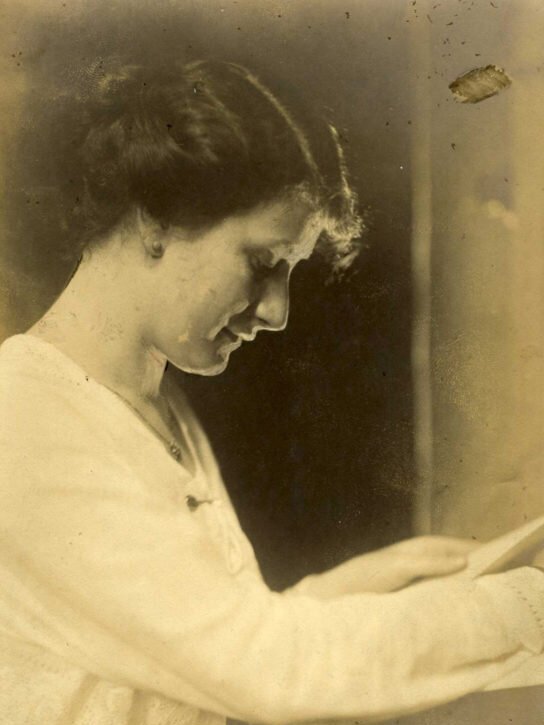
1) Portrait of Ergy Landau, n.d., © Photo : Association Les Amis d’Ergy Landau [published on AWARE blog, Paris, Centre Pompidou]. 2) A Chinese actress portrayed by Ergy Landau [from Aujourd’hui la Chine, 1955].
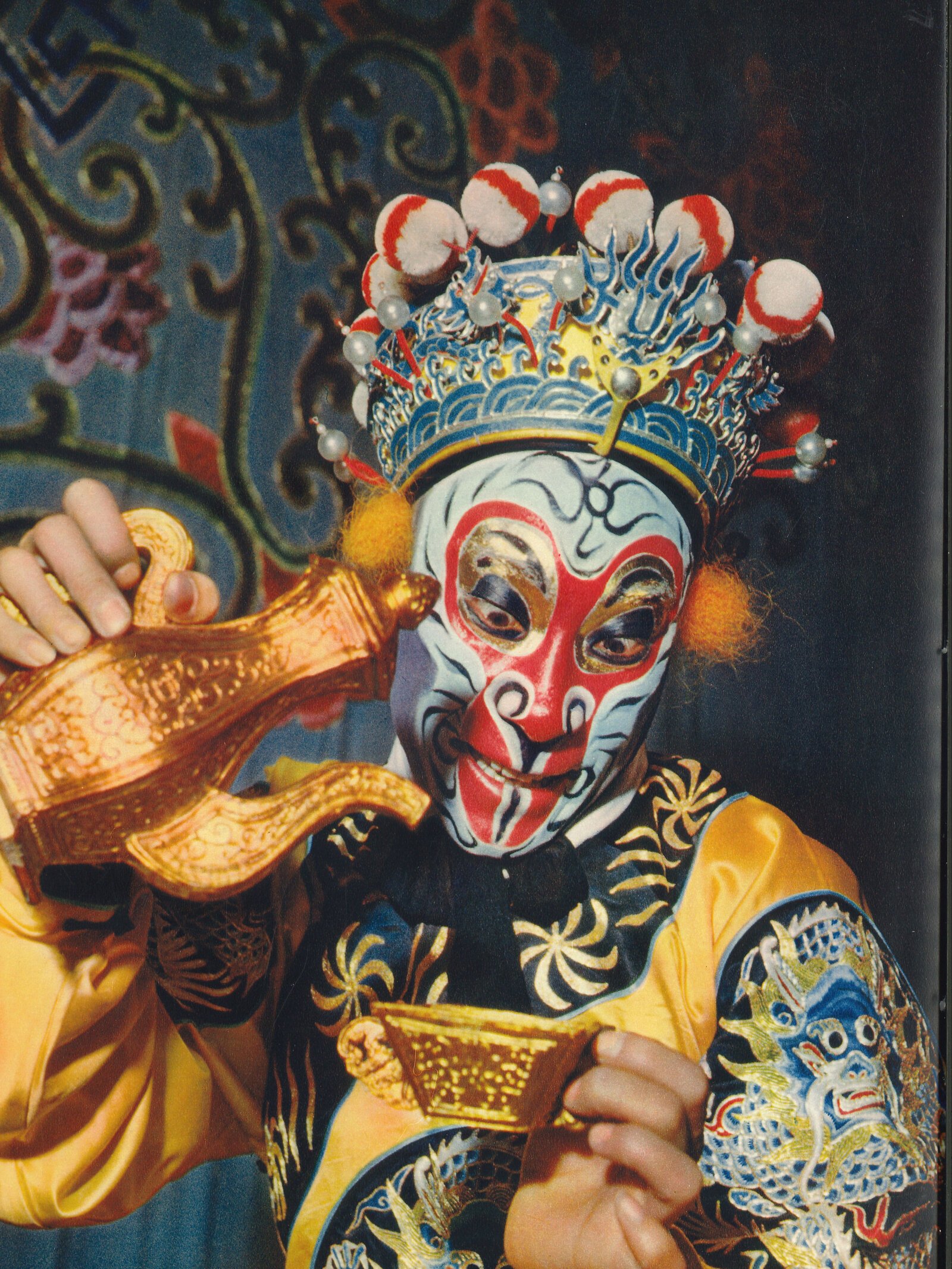
1) Portrait of Ergy Landau, n.d., © Photo : Association Les Amis d’Ergy Landau [published on AWARE blog, Paris, Centre Pompidou]. 2) A Chinese actress portrayed by Ergy Landau [from Aujourd’hui la Chine, 1955].
1) Portrait of Ergy Landau, n.d., © Photo : Association Les Amis d’Ergy Landau [published on AWARE blog, Paris, Centre Pompidou]. 2) A Chinese actress portrayed by Ergy Landau [from Aujourd’hui la Chine, 1955].
In 1933, Ergy Landau met Charles Rado (1899−1970), a photographer whose work was to be often featured at the Metropolitan Museum of Art (MET), New York. Together and joined by Brassaï, Ylla (who specialized in animal photography) and Nora Dumas, they founded the prestigious Rapho photographic agency, the development of which was suspended during World War II. In 1945, Rado reopened the agency as Rapho Guillumette Pictures, with partners Paul Guillumette in New York and Raymond Grosset — whom Ergy knew since 1930 — in Paris, both confirmed photographers. The agency came to represent stars of creative photography such as Robert Doisneau, Édouard Boubat, Bill Brandt, André Kertész, Yousuf Karsh, Jacques Henri Lartigue, until it was taken over by Hachette Filipacchi Photos Group in 1977, sold and reincorporate before resurfacing in 2010 as Gamma-Rapho [which managed her estate after her death].
After Paris was occupied by the Reich armies, Ergy Landau found an escape in joining a UNESCO study tour to China. This exposure to an entirely new civilization particularly stimulated her creativity, as reflected in the powerful photo album she published after the war, Aujourd’hui la Chine [China Today] (with texts by Pierre Gascar, Paris, La Guilde du Livre, 1955). Her photographs were also featured in the collective book La France à livre ouvert [France, Open Book] (Paris, Pierre Seghers, 1954, 166 p, with texts by literary luminaries such as Apollinaire, Aragon, Bernanos, Camus, Daudet, Du Bellay, Gide, Giono, Hugo, La Bruyère, Mac Orlan, Maurois, Montesquieu, Racine, Reverdy, Sévigné, Stendhal, Valéry, de Vilmorin, etc, and photographs by Robert Doisneau, Willy Ronis, Ergy Landau, Feher, Sabine Weiss, David Seymour, Roger-Violet, Jean Roubier, etc.
Latest Retrospectives on Ergy Landau’s Work
- FormELLES, la femme dénudée dans la photographie hongroise, Paris, Hungarian Institute, 2010.
- Ergy Landau, Budapest – Paris, 1896 – 1967, Budapest, Hungarian House of Photography-Mai Manó House, March-May 2023.