

Gabrielle Vassal

Gabrielle Maud Vassal — née Gabrielle Maud Candler, sometimes publishing under the pen name of Countess Gabrielle Von Hoenstadt — (5 March 1880, Uppingham, England — 31 May 1959) was a British-French explorer, naturalist, photographer, author and public speaker who explored French Indochina in the years 1900s, contributed to enrich the collection of the London Natural History Museum (British Museum), and wrote extensively about her experiences in Southeast Asia, China and Africa.
A typical ‘Renaissance woman’, Gabrielle met in England Joseph Marguerite Jean-Baptiste Vassal, a physician in the French Colonial Service and as the newlyled couple moved to Annam (Vietnam) in 1904 and Joseph Vassal was working on issues related to tropical medicine at the Nha Trang new branch of the Pasteur Institute (founded in 1887), she explored often by herself Vietnam’s hauts-plateaux, trekking across the Hmong (then called ‘Moi’) country on 200 kilometers by foot and horse riding. She studied the native flora and fauna, turning also her curious mind to local history, in particular the Cham legacy after meeting EFEO archaeologist Henri Parmentier and his wife, author Jeanne Leuba, on site.
In addition to her account of “my three years in Annam’, she wrote on Cambodia in the encyclopedic Peoples of All Nations after visiting Phnom Penh and Angkor (published in 1922), Tonkin, South China and Hong-Kong, as well as the Philippines, as the couple sojourned in Manila for a medical international symposium before moving to Gabon and Congo, always taking crisp and highly informative photographs. She was particularly interested in the realities of women’s lives, and back in London was an active member of the Women’s Freedom League. Writing about women banned from the stage in China in 1920, she remarked
It was naturally a terrible blow to dramatic art to give women’s roles to young men and boys. How could one sex express all the sentiments and feelings of the other? No man understands the heart and mind of a woman so how could he thrill an audience with emotions of which he knows nothing? No such acting could be convincing. [In an Around Yunnan Fou, 1922, p 110.]
In Cambodia, on the contrary, she was impressed by the social status of women, noting that “divorce is easy to obtain for both sexes” and “the moral authority of the wife and her position in the family are as good as that or any wife in Europe. Daughters share the inheritance or their parents equally with their sons.” [“Cambodia”, in Peoples of All Nations, 1922, p 1111.]
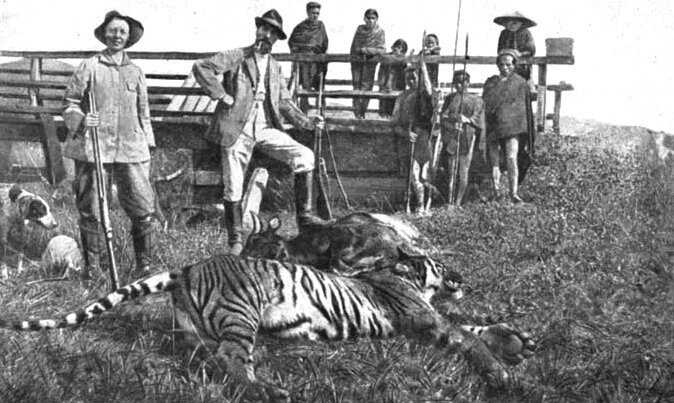
1) While not sticking to the social conventions of the time regarding women, Gabrielle Vassal wasn’t a compulsive hunter. On this photo (far left), she had taken part in a search for a dangerous tiger threatening Annamite villagers [from the book On and Off Duty in Annam, 1904]. 2) The Pasteur Institute in Nha Trang, where Jean Vassal worked on tropical diseases (from G. Maspero, L’Indochine, vol. 2, 1929).
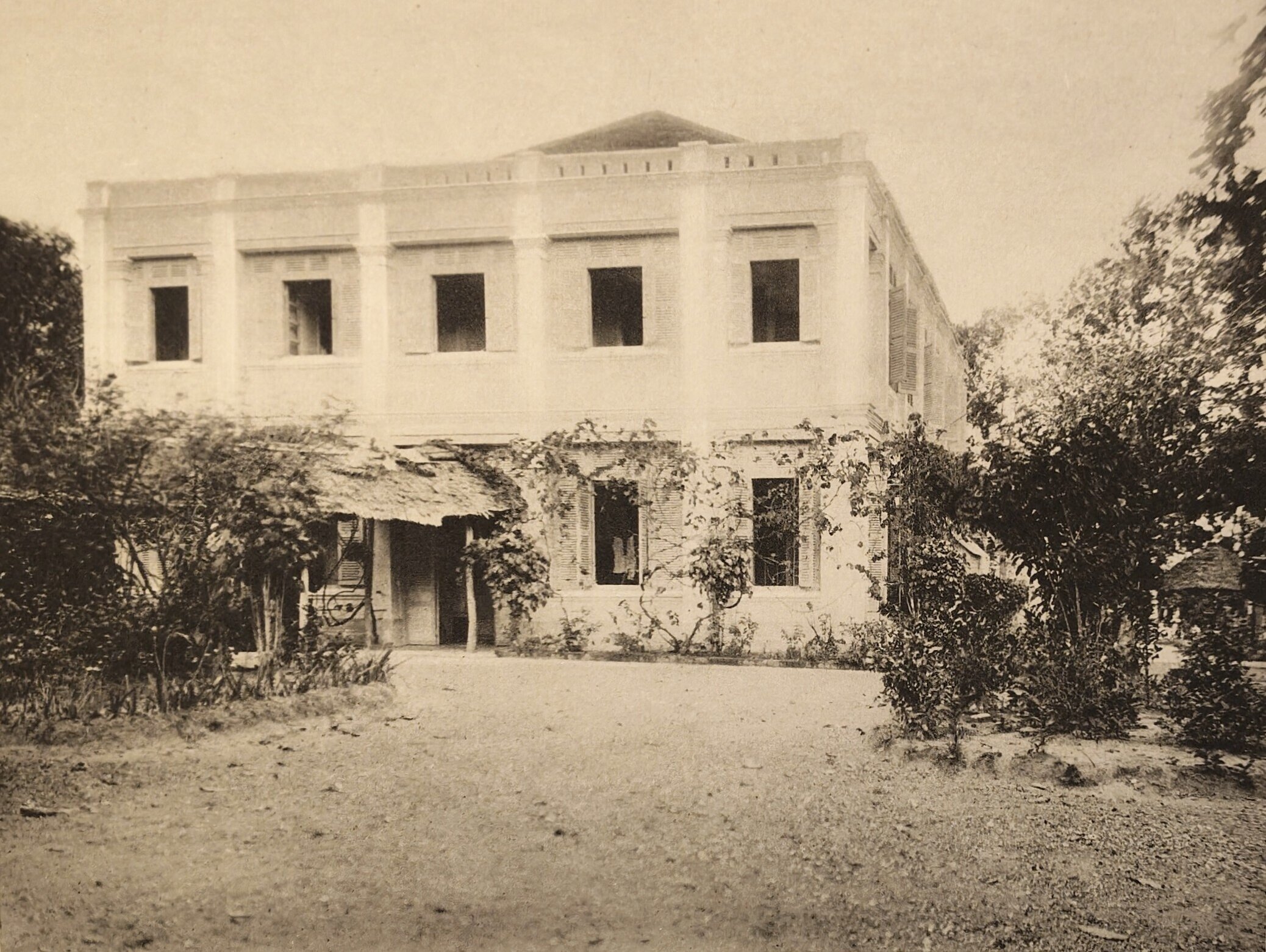
1) While not sticking to the social conventions of the time regarding women, Gabrielle Vassal wasn’t a compulsive hunter. On this photo (far left), she had taken part in a search for a dangerous tiger threatening Annamite villagers [from the book On and Off Duty in Annam, 1904]. 2) The Pasteur Institute in Nha Trang, where Jean Vassal worked on tropical diseases (from G. Maspero, L’Indochine, vol. 2, 1929).
1) While not sticking to the social conventions of the time regarding women, Gabrielle Vassal wasn’t a compulsive hunter. On this photo (far left), she had taken part in a search for a dangerous tiger threatening Annamite villagers [from the book On and Off Duty in Annam, 1904]. 2) The Pasteur Institute in Nha Trang, where Jean Vassal worked on tropical diseases (from G. Maspero, L’Indochine, vol. 2, 1929).
Adverse to the French official discourse on a supposed “mission civilisatrice”, she also wrote, again about Cambodians as early as 1905: “At heart they will be always Cambodian, and French civilization cannot induce them to depart from some of their favorite customs.” [Ibid, p. 1118].
A keen naturalist, Vassal supplied numerous specimens from Vietnam, Gabon and Congo to the London Natural History Museum (later British Museum) during some three decades, including several newly-discovered species of which a number were named after her, for instance the yellow-cheeked crested gibbon Nomascus gabriellae. Her correspondence with the Museum is still preserved in its archive (“Natural History Museum, Correspondence with Gabrielle Maud Vassal”: PX8352). [see also Katrina Gulliver, “Gabrielle Vassal (1880 – 1959): collecting specimens in Indochina for the British Museum (Natural History), 1900 – 1915”, Archives of Natural History 47(1), April 2020 : 29 – 40.]
As the couple returned to France at the start of World War II, Gabrielle Vassal joined the French Resistance, using her command of both English and French languages to help downed British and American airmen escape the Gestapo and the French police. Her bravery was recognized by both UK and US governments after the war.
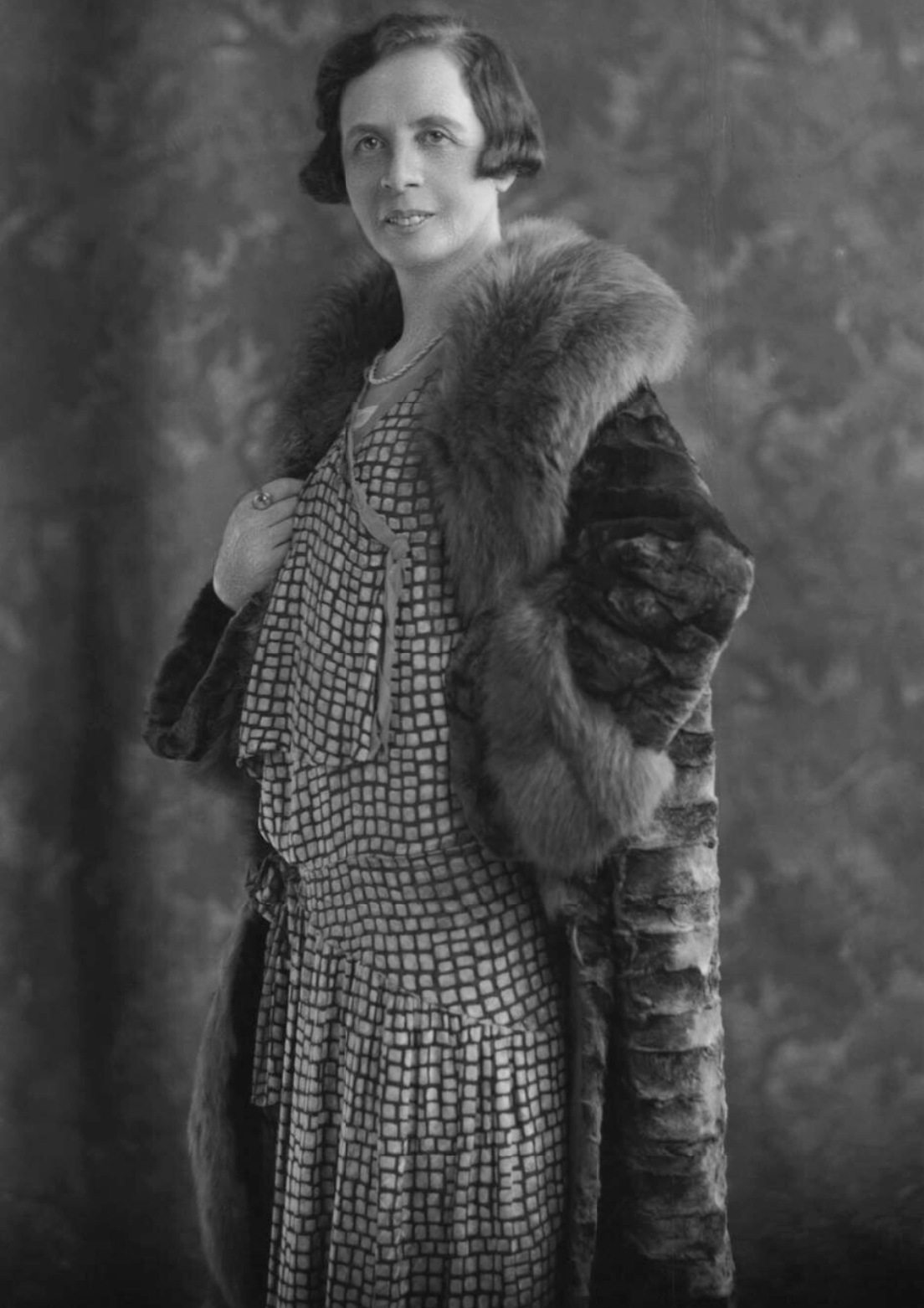
1) Portrait by Lafayette, 10 Nov. 1928; half-plate nitrate negative, Given by Pinewood Studios to National Portrait Gallery (London) via Victoria and Albert Museum, 1989 [NPG x42992]. 2) In Tonkin “where the buffaloes cross the river”, c. 1904 [from On and Off in Annam, 1910].
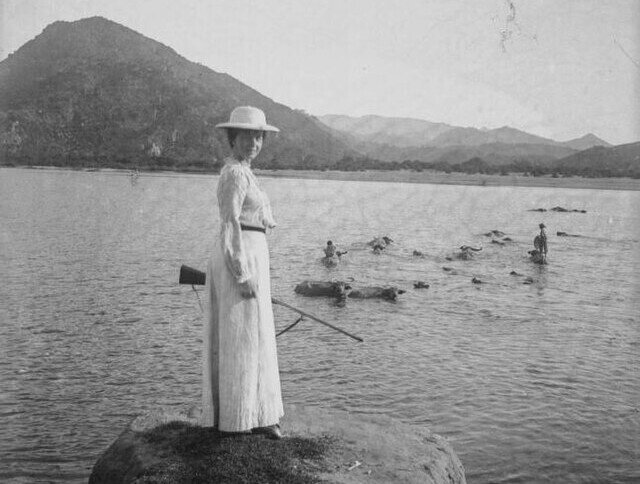
1) Portrait by Lafayette, 10 Nov. 1928; half-plate nitrate negative, Given by Pinewood Studios to National Portrait Gallery (London) via Victoria and Albert Museum, 1989 [NPG x42992]. 2) In Tonkin “where the buffaloes cross the river”, c. 1904 [from On and Off in Annam, 1910].
1) Portrait by Lafayette, 10 Nov. 1928; half-plate nitrate negative, Given by Pinewood Studios to National Portrait Gallery (London) via Victoria and Albert Museum, 1989 [NPG x42992]. 2) In Tonkin “where the buffaloes cross the river”, c. 1904 [from On and Off in Annam, 1910].
Selected Publications
- On and Off Duty in Annam, London, W. Heinemann, 1910; repr. 2012, 228 p. ISBN 978 – 1290822565.; repr. as Three Years in Vietnam (1907−1910): Medicine, Chams and Tribesmen in Nhatrang and Surroundings (Historical Reprints), Chiang Mai, White Lotus Press, 1999. ISBN 13: 9789748434537. | FR “Mes trois ans d’Annam”, tr. and adapt. by Joseph Vassal, Le Tour du Monde, 1911; Mes trois ans d’Annam, pref. by Dr Emile Roux, Directeur de l’Institut Pasteur, Paris, Hachette, 1912, 295 p, 50 illustr.
- “A Visit to The Philippines”, Scottish Geographical Magazine, Feb. 1911.
- A Romance of the Western Front, London, William Heinemann, 1918.
- “Cambodia”, “Annam”, “French Indochina”, in J. A. Hammerton, Peoples of All Nations: Their Life Today and the Story of their Past by Our Foremost Writers of Travel Anthropology & History (An llustrated World Gazeteer), London, The Fleetway House/ Amalgamated Press, 1922 – 1924, 14 vol.; repr. 1935, 7 vol.; repr. with original color illustrations, Delhi, Logos Press, 2008, 1 vol., 5499 p. ISBN 9788172681449.
- In and Round Yunnan Fou, London: W. Heinemann, 1922, 187 p.; repr. 2017, 232 p. ISBN 978 – 0649079568. | FR Mon séjour au Tonkin et au Yunnan, pref. by Charles Richet, Paris, Hachette, 1928.
- Life in French Congo, London, T. F. Unwin, c. 1925. | FR Mon séjour au Congo français, pref. by Édouard Daladier, ministre des colonies, Paris, P. Roger, 1925.
- [with Joseph Vassal] Français, Belges et Portugais en Afrique équatoriale: Pointe-Noire, Matadi, Lobito, Paris, Editions P. Roger, 1931, 255 p.
- “French Equatorial Africa”, a lecture at Royal African Geographical Society, summary in Journal of the Royal African Society 31(123), Apr. 1932: 167 – 172.