

K.M. Srivastava

Dr. Shri Krishna Murari Srivastava (21 Sept 1927, Allahabad, India — ) is a leading Indian archaelogist who supervised the Special Archeological Preservation Mission to Angkor from 1982 to 1993, and was credited with the discovery-identification of the lost town of Kapilavatsu, where Lord Buddha spent the first twenty-nine years of his life before renouncing the world.
Devoting twenty-seven years of his life to the Archaeological Survey of India (IAS), K.M. Srivastava started his career as an archeologist with field training at Sisupalgarh (Orissa) and Hastinapura (Uttar Pradesh). In addition to his work at Piprahwa and other sites in Uttar Pradesh, leading to the discovery of corporeal relics of Buddha which he personally took to Sri Lanka in order to present the Buddhist leadership with them in 1978, he led important excavations at Lothal, Rangpur, Kalibangan and Gilund, from Gujarat to south-eastern Rajasthan, to study the spread of Black-and-Red Ware ceramics.
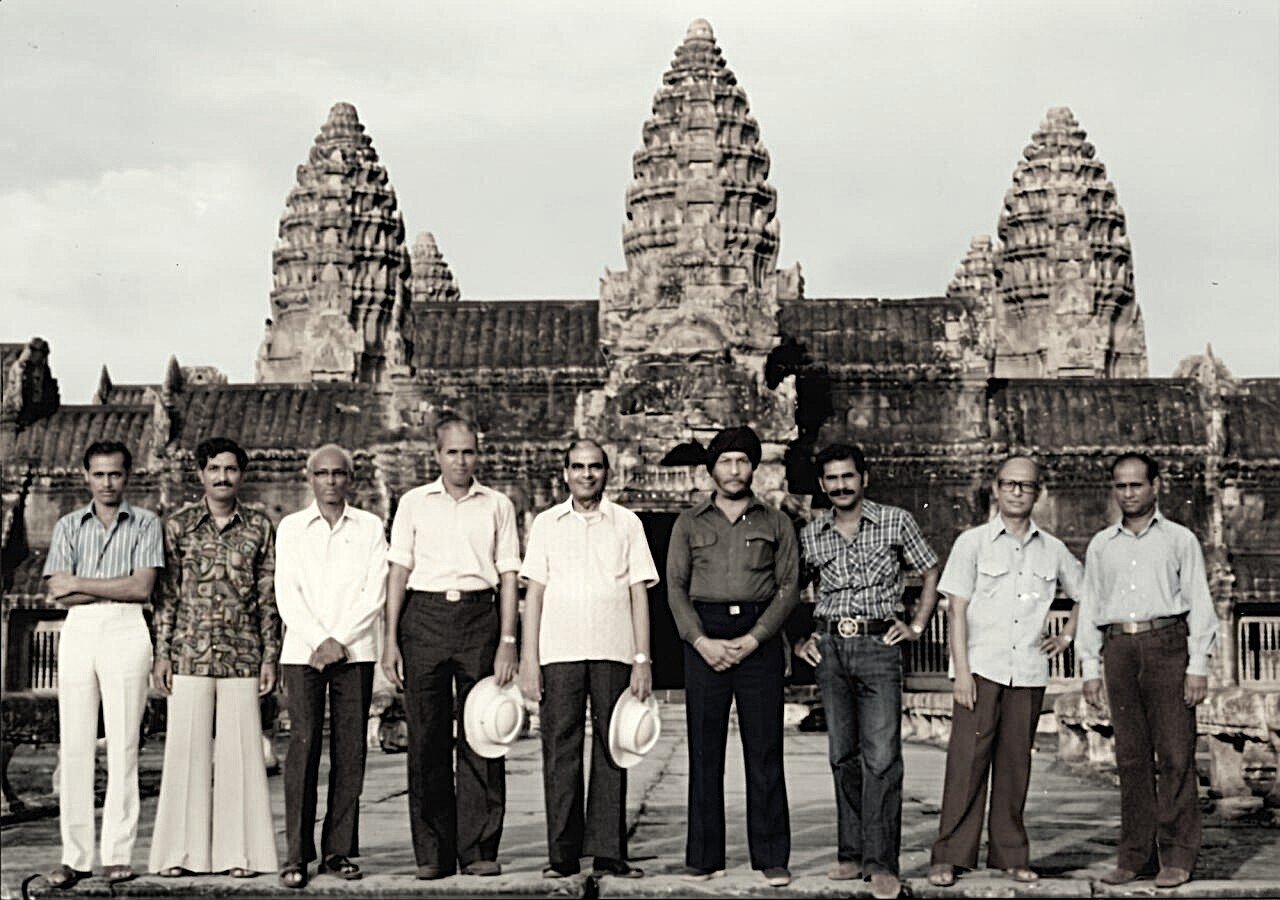
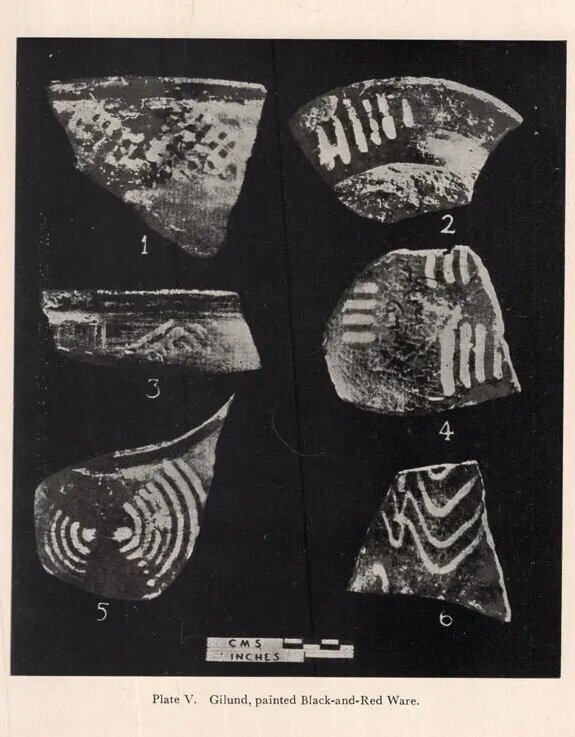
1) K. M. Srivastava (fourth from left, the tallest on the pic) at Angkor Wat with part of the Indian restoration team in 1982 [photo courtesy of Kent Davis]. 2) Fragments of black-and-red ceramic ware found at Gilund (Rajasthan) by K. M. Srivastava [from Excavations At Piprahwa and Ganwaria, Delhi, Archaeological Survey of India, 1996].
1) K. M. Srivastava (fourth from left, the tallest on the pic) at Angkor Wat with part of the Indian restoration team in 1982 [photo courtesy of Kent Davis]. 2) Fragments of black-and-red ceramic ware found at Gilund (Rajasthan) by K. M. Srivastava [from Excavations At Piprahwa and Ganwaria, Delhi, Archaeological Survey of India, 1996].
1) K. M. Srivastava (fourth from left, the tallest on the pic) at Angkor Wat with part of the Indian restoration team in 1982 [photo courtesy of Kent Davis]. 2) Fragments of black-and-red ceramic ware found at Gilund (Rajasthan) by K. M. Srivastava [from Excavations At Piprahwa and Ganwaria, Delhi, Archaeological Survey of India, 1996].
In 1962, he was selected as one of the members of the expedition to Nubia in United Arab Republic (Egypt) in 1962 to help salvaging the antiquities from the areas which were to be submerged due to the construction of the Aswan Dam. In addition to his field work, he was the head of the Expeditions Abroad department at IAS, which brought him to lead the Special Archeological Preservation Mission to Angkor (1982−1991), and later served as Superintending Archaeologist for Museums at IAS, based in Calcutta [Kolkhata], before retiring in 1997.
Dr. Shri Srivastava authored several books, including The Apsarases At Angkor Wat (1994). His daughter, Manisha Srivastava, was preparing a new edition of this reference book in collaboration with editor and researcher Kent Davis in 2026.
Select Publications
- Community Movements in Proto-Historic India, Delhi, Agam Kala Prakashan, c. 1977.
- The Apsarases At Angkor Wat, Delhi, 1994.
- Excavations At Piprahwa and Ganwaria, Delhi, Archaeological Survey of India, 1996.
- “Temples of Aihole, Badami and Pattadakal: Meeting Ground of Dravidian and Northern Traditions under Chalukyas”, Arts of Asia 33 – 3, May-June 2004: 99 – 103.