
Lele Huang

Portrait of Lele   Huang

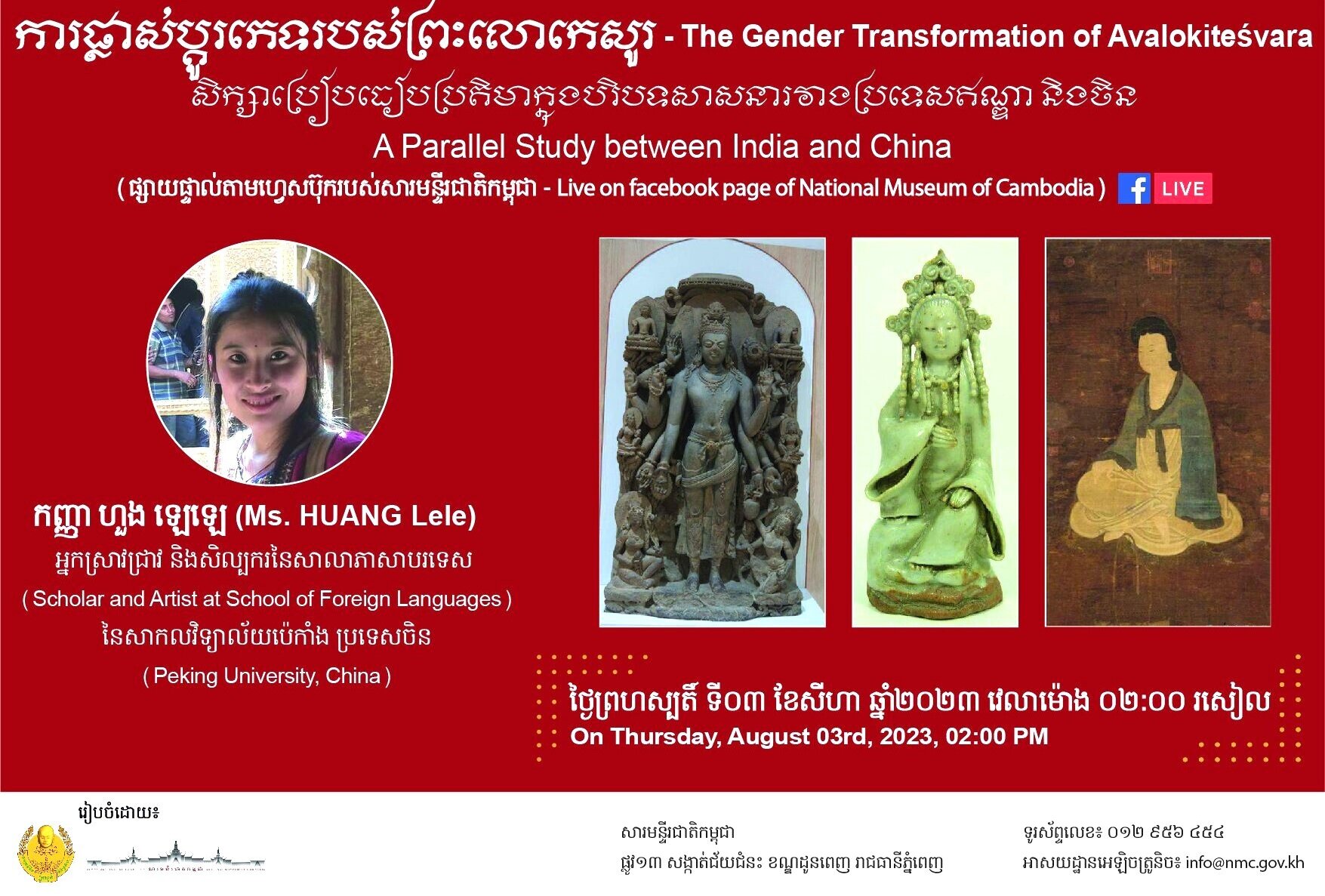
Huang Lele (14 July 1988, Nanjing, China) is a visual artist and curator, and apost-doctoral researcher in Buddhist Art with Peking University, China.

She has particularly studied The Gender Transformation of Avalokitesvara in Sui Tang, A Parallel Study Between India and China (Univision Books, New Delhi, 2023).

As an artist and curator, she has collaborated with fellow creators such Raqs Media Collective, PFunkPFama, Shin Dowon, Sarojini, Huang Du, Horanggasimanu Creation Studio, etc…

Publications

  • From India to China: The Gender Transformation of Avalokiteśvara, New Delhi: Univision Books, 2021, ISBN 978−81−94−9999−0−4.
  • The Gender Transformation of Avalokiteśvara: A Parallel Study between India and China, New Delhi: Univision Books, ISBN 978−81−94−9999−3−5.
  • Xu Beihong in India, collected in 20th Century Indian Art”, Skira Editore, 1, 22nd Sep., 2014.
  • When Does Curatorial Work End?: Pre-Cambrian Caves inside a Gallery!” [with Lalthlanchhuaha and Sarojini Lewis], Friends Printers, New Delhi, 2016.
  • Explore the Interconnectedness of the Symbolism of the Tree, Lotus and Serpent in the Early Indian Art”, in Education Plus, ISSN 2277 – 2405, (UGC Notification No. 64522), Vol. IX, No. 6, (Special Issue), January, 2018, pp. 62 – 68.
  • Summarize the Different Explanations for the Prevalence of Erotic Sculptures in Indian Temples”, Education Times, ISSN 2319 – 8265, (UGC Notification No. 62976), Vol. IX, No. 6, (Special Issue), January, 2018, pp. 190 – 197.
  • Short Notes on Gavaksha, Vyala/​Yali, Gopuram, Mandapa, Education Times, ISSN 2319 – 8265, (UGC Notification No. 62976), Vol. IX, No. 7, (Special Issue), January, 2018, pp. 9 – 15.
  • Earliest Xuangzang Portrait? Identifying the Chinese’ Figure in Tiru Parameswara Vinnagaram”, EDU World, ISSN 2319 – 7129, (UGC Notification No. 62981), Vol. XII, No. 13, (Special Issue), April, 2018, pp. 118 – 132.
  • Review of the Gods in Glass”(Solo Exhibition at Visual Arts Gallery), EDU World, ISSN 2319 – 7129, (UGC Notification No. 62981), Vol. XII, No. 15, (Special Issue), April, 2018, pp. 5 – 10.
  • Chinese Modern Art in Cultural Revolution”, Imperial Journal of Interdisciplinary Research (IJIR), ISSN 2454 – 1362, May, 2019.
  • Female Patronage and The Gender Transformation of Avalokiteśvara”, Research Deliberation, ISSN 2395 – 7778, Volume‑V/​Issue‑I, May, 2019, pp.1‑pp.15.
  • From India to China: Early Iconography of Avalokiteśvara”, Research Deliberation, ISSN 2395 – 7778, Vol. 5, Issue-II, Nov., 2019, pp. 9 – 33.
  • Explore Chinese Mythological Animals in Illustrations of Hamzanama”, Research Deliberation, ISSN 2395 – 7778, Vol. 5, Issue-II, Nov., 2019, pp. 94 – 110.
  • Female Patronage and The Gender Transformation of Avalokiteśvara”, Journal of Comparative Literature and Aesthetics, ISSN 0252 – 8169, Vol. 43, No.4, Winter 2020, pp.251 – 259.
  • The Iconography of Bhakti Saints Karaikkal Ammaiyar”, Edu Care, ISSN 2319 – 5282, Vol. IX, No. 15, Jan-Dec, 2020, pp. 23 – 29.
  • Ambiguity of the Gender of Avalokiteśvara — A Comparative Study of the Representations of Avalokiteśvara from India and China during Sui-Tang period”, Journal of History Art and Archaeology (JHAA, Delhi: Academic Research Foundations), 1st Vol., Mar.-Apr., 2021, pp 31 – 42.
  • Gender Ambiguity of Avalokiteśvara in its Representations from India and China during the Sui-Tang period, Journal of Comparative Literature and Aesthetics, ISSN 0252 – 8169, Vol. 44, No.1, Spring 2021, pp.164 – 174.
    (Vishvanatha Kaviraja Institute, India)
  • Iconography: Mutual Absorption of Deities in Buddhist and Brahmanical Pantheons in India”, Education Today, ISSN 2229 – 5755, (UGC Notification No. 62981), Vol. XI, No. 7, (Special Issue), Dec, 2021, pp. 141 – 150.
  • The Ambiguity of the Gender of Avalokiteśvara: A Comparative Study on the Representations of Avalokiteśvara from India and China during Sui-Tang Period”, Asia Social Issues, Vol. 1, No. 2(2022): March-April, Article 251786, E‑ISSN: 2774 – 0315, pp. 1 – 15.
  • Female Patronage and The Gender Transformation of Avalokiteśvara in China”, IKSAD Publications (World Women Conference-IV, Mata Sundri College for Women, University of Delhi), 21st, Mar, 2022, ISBN: 978−625−7464−802, pp. 6 – 16.
  • Xu Beihong (1895−1953) in India”, 20th Century Indian Art (Modern, Post-Independence, Contemporary), (eds. Partha Mitter, Parul Dave Mukherji, Rakhee Balaram), London & New York & New Delhi: Thames & Hudson, 2022, pp. 97 – 98, ISBN 978−0−500−02332−7.
  • From India to China: Early Iconography of Avalokiteśvara”, International Scientific Research Congress Dedicated to the 30th Anniversary of Baku Eurasia University, IKSAD Global, May, 2022, pp. 1331 – 1347. ISSN: 978−625−7464−87−1.
  • Ambiguity of the Gender of Avalokiteśvara: A Comparative Study on the Representations of Avalokiteśvara from India and China during Sui-Tang Period”, (collected in the Book named Buddhism: Heritage and Hermitage, Niharika), Delhi: Sharada Publishing House, 2022, pp. 169 – 185. ISSN: 978−93−83221−44−8.
  • Earliest Xuangzang Portrait? Identifying the Chinese’ Figure in Tiru Parameswara Vinnagaram”, Paṇidhāna Journal (Chiang Mai University), ISSN 1905 – 6788, Vol. 18, No. 2, July-December, 2022, pp. 289 – 319.

Lele Huang’s website about Guanarts, the studio she directs both in Jiangsu (China) and New Delhi (India).

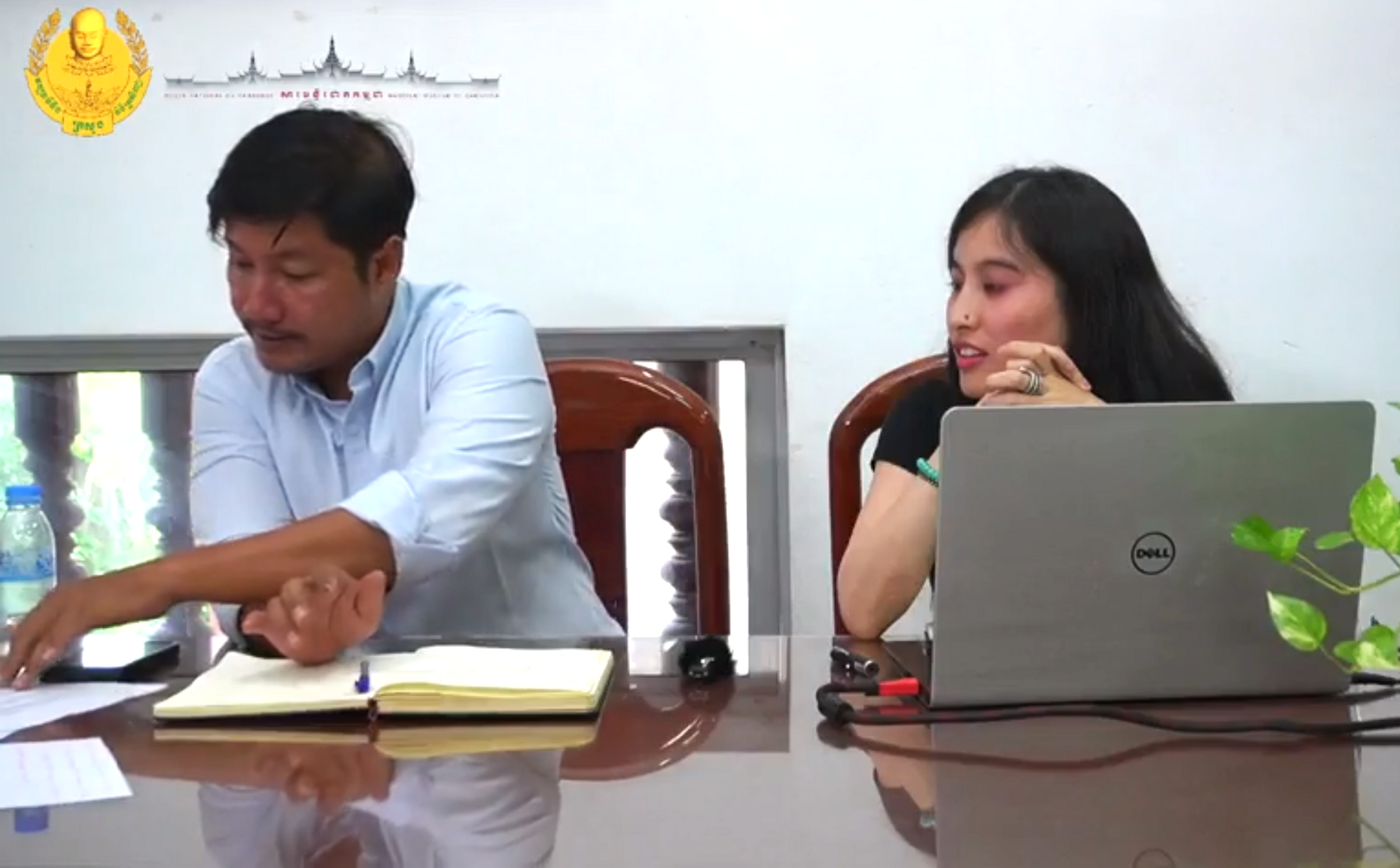
Watch Lele Huang’s conference organized by National Museum of Cambodia on Aug. 2, 2023.

Glossary Terms

  • Avalokitesvara, Lokeshvara

    sk अवलोकितेश्वर  Avalokiteśvara (" lord who looks down and watches [the world]") | लोकेश्वरः Lokeśvara ("Lord of the World") | also पद्मापाणी Padmapāni ("Holder of the Lotus")

    kh  លោកេស្វរៈ Lokesvara [Sealang Dictionary] |  អវលោកិតេស្វរៈ Avaloketesvara "who anticipates as great", លោកេស្វរៈ Loksvara [Chhuon Nath Dictionary] 

    ch  觀音 Guanyin /Kuan Yin (female deity) | tl நாதா Nātha | vn Quan Am (female deity) | tb སྤྱན་རས་གཟིགས Chenrezig ("eye looks with continuity", male and female) | bh Avalokitesvara

    Lokeśvara ("Lord of the World") and Chenrezig (in Tibetan) is a tenth-level bodhisattva associated with great compassion (mahakaruṇā), and often with Amitabha Buddha in Mahayana Buddhism. Avalokiteśvara has numerous manifestations and is depicted in various forms and styles. In some texts, he is even considered to be the source of all Hindu deities (such as Vishnu, Shiva, Saraswati, Brahma, etc).

    In modern Cambodia, the four faces of Avalokitesvara (or Avaloksvara, Loksvara) are usually represented at the top of a pagoda or a stupa, as protector of all the planets. When Brahmanism was popular, these faces were considered as the faces of Brahma. In ancient Khmer art, he is represented with two, four, six or eight arms in freestanding sculptures, and ten arms in temple bas-reliefs such those at Banteay Chhmar. The massive stone faces of Bayon are believed to represent Lokeshvara. 

    Khmer worship of Lokeshvara reached a peak during the reign of Jayavarman VII. Due to his healing powers, the he was given a predominant position in the scenes carved on the chapels of the hospitals built by this king. Lokeshvara was also omnipresent at Neak Poan Temple, whose waters could cleanse the sins and diseases of the pilgrims. Jayavarman VII dedicated the temple of Preah Khan Temple to the memory of his father, deified in the likeness of Lokeshvara.

    A sculpture from Prei Monti (Roluos), late 12th-early 13th century, at the National Museum of Cambodia (piece Ga.2424), represents three adorned divinities: Buddha shelled by the Naga in the middle, Lokesvara to the right of the Buddha, and Prajnaparamita to the left. Lokesvara's attributes are the lotus bud, rosary, vase with water of immortality (amrta) and book. Those of Prajnaparamita include the book and the lotus bud.

    While Avalokiteśvara was depicted as male in India, and male or female in Tibetan tradition, the deity is often depicted as a female figure in East Asian Buddhism, known as Guanyin /Kuan Yin in Chinese, Kannon in Japanese, Gwaneum in Korean and Quan Am in Vietnamese. In Sri Lanka, Natha literally means ‘no form’ or ‘no shape’, thus associating Avalokiteśvara with Maitreya, the next Buddha

    Avalokiteśvara is also known for his popular mantra, oṃ maṇi padme hūṃ, which is the most popular mantra in Tibetan Buddhism.

View all glossary terms →