

Pierre Barthélemy (de)

Pierre-Francois Sauvaire Comte [Earl, later Marquis] de Barthélémy (10 May 1870, Paris, France — 28 Oct. 1940) was a French explorer and writer who headed the Mission Barthélemy to Laos in 1894 – 6.
After attempting a trip around the world in 1892 – 3, he joined the French Army in Annam [Northern Vietnam] and was assigned by the French Ministry of Public Education several geographical, ethnographical and economical studies, including in Cambodia. He was a member of the Académie des sciences d’outré-mer since 1924.
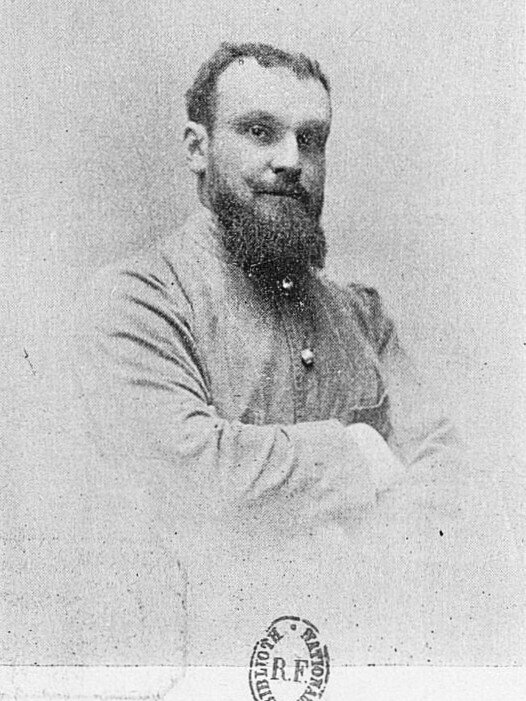
1) Portrait of Marquis de Barthélemy in Indochine 1896 – 1897, 1901 [via gallica.bnf.fr] 2) Map of Ruines d’Angkor (Angkor Ruins) by Barthélemy after the plan by Doudart de Lagrée. Note the Cambodian villages shown near the major buildings, for instance Bayon. [from En Indochine 1894 – 1895, 1899.]
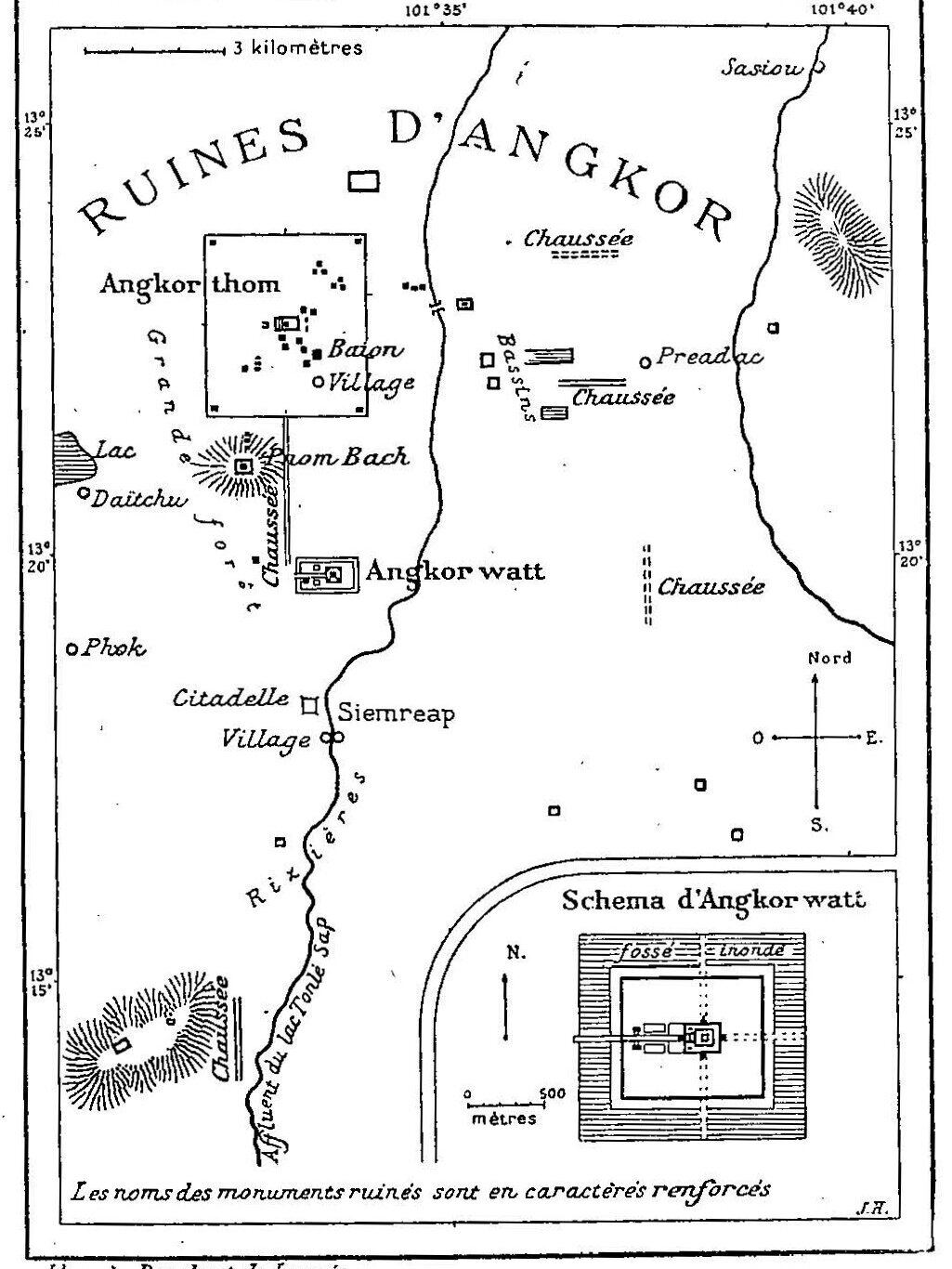
After a plan by Doudart de Lagrée. Note the Cambodian villages shown near the major buildings, for instance Bayon. [from En Indochine 1894 – 1895, 1899.]
1) Portrait of Marquis de Barthélemy in Indochine 1896 – 1897, 1901 [via gallica.bnf.fr] 2) Map of Ruines d’Angkor (Angkor Ruins) by Barthélemy after the plan by Doudart de Lagrée. Note the Cambodian villages shown near the major buildings, for instance Bayon. [from En Indochine 1894 – 1895, 1899.]
After his exploration of Laos and Cambodia with Baron Jean De Neuville in 1894 – 1895, Barthélémy
prospected Hue, the highlands (Bao-rai, Songla, Tra-My, the Banhar and ‘Moi’ country), Cochinchina during the following years. He was one of the first French explorers to study the ‘hill tribes’, given the generic name of Moï in French.
After inheriting his family estate, now Marquis de Barthélémy invested his money in the development of a commercial port at Cam Ranh Bay (Annam) — about 60 kms south of Nha Trang City -, complete with a maritime observatory, a jetty and a urban settlement for both locals and Europeans. Cảng Cam Ranh [Cam Ranh Port] remains an important commercial harbor in modern Vietnam.
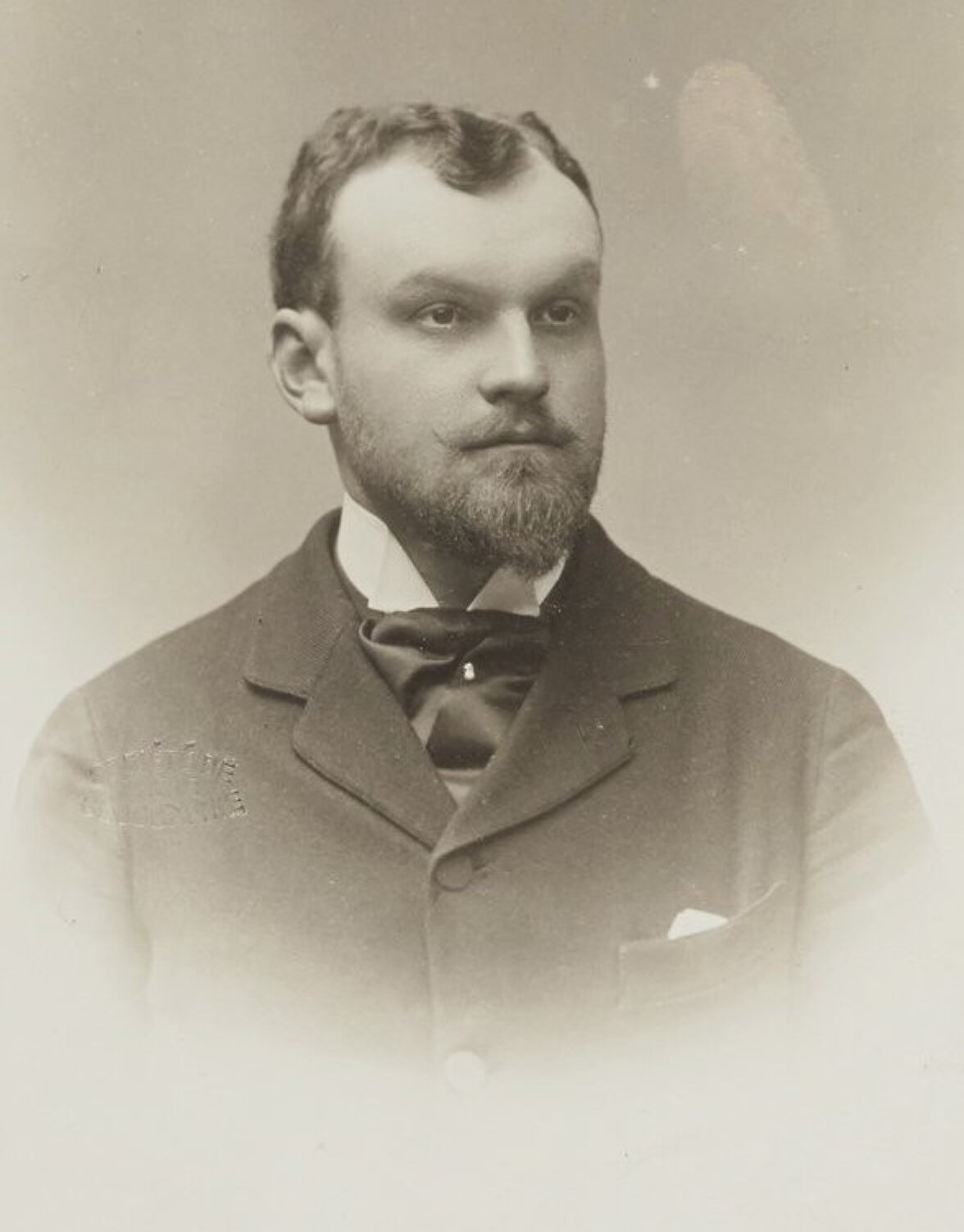
via gallica.bnf.fr
Pierre Barthélemy, daguerreotype portrait by Eugène Pirou [via gallica.bnf.fr].
Publications
- “Compte rendu d’une Mission en Annam et Laos”, Nouvelles Archives scientifiques du Ministère de l’Instruction Publique, T. X, 1893.
- “Mission en Indochine”, Comptes-rendus de la Société de Géographie de Paris, 1897 – 1898.
- Le rôle du Tran-Ninh dans la colonisation indochinoise (Extr. de La Quinzaine coloniale, Dépêche coloniale, 12 Jan. 1898; repr. in Le Moniteur de l’Indochine 55 – 56
- Relation succincte d’un voyage dans l’Indochine, from Bulletin du Muséum d’histoire naturelle (BMHN), Jan. 1898, no 1, Paris, Impr. nationale, 1898.
- “Au pays Moï”, Bulletin de la Société d’Etudes coloniales et Maritimes (BSECM), Nov. 1899.
- “Voyage au pays des Moïs — Carte”, Bulletin de la Société de Géographie de Paris (BSGP), VII S., 3d trim. 1899.
- En Indochine, 1894 – 1895. Cambodge, Cochinchine, Laos, Siam méridional, Paris,
Plon et Nourrit, 1899. - “Un voyage chez les Moïs Stiengs vivant au pied de la Djambra”, Bulletin de la Société de Géographie commerciale (BSGC), Paris, n° 23, 1901.
- Laos (Indochine), Biblioteca illustrata die viaggi intorno al mondo no 114, Milano, Bouzogno,
1901. - “Reconnaissance chez les Moïs Stiengs et aux environs du mont Djambra”, La Géographie,
1er sem. 1901. - En Indochine; 1896 – 1897. Tonkin, Laos, Annam septentrional, Paris, Plon el Nourrit,
1901. - “Rapport sur une Mission scientifique en Annam et au Laos”, Extraits des Archives des
nouvelles Missions scientifiques, Paris, T. X, 1902. - “Les réglons Moïs. Les sauvages de la Montagne d’Annam”, Revue d’Asie, Jan. 1902.
- Au pays Moï, Paris, Plon, 17 grav., 2 cartes, 1904.
- “Les chemins de fer du sud de l’Annam”, Revue indochinoise, 2e sem. 1905.
- “L’étatisme dans notre colonie de l’Indochine”, Revue indochinoise, July 1907.
- “Les taxes de phares et d’ancrage en Indochine”, L’Expansion coloniale, Nov. 1912.
- “Les transports maritimes en Extrême-Orient”, Le Moniteur d’Indochine 278, 14 June 1924.