

Raymond Cauchetier

Raymond Cauchetier (10 Jan. 1920, Paris — 22 Feb. 2021, Paris) was a self-taught photographer whose work, intimately vinculated to Angkor and Asia, is recognized as one of the major testimonies on culture and arts in the 20th century, since as a movie set photographer he beautifully captured actors, actresses and directors of the French Nouvelle vague [New Wave].
The son of a struggling widow, Raymond had a humble childhood, illuminated at the age of 11 with the vision of the Angkor Wat reconstitution for the 1931 World Exhibition in Vincennes, which he could marvel at from the window of their small apartment. After joining the France Libre Resistance in 1943, he was sent in Saigon as part of the Free French Air Force press service. He bought himself a quite basic Rolleiflex camera, “used by all war correspondents in those times”, and started taking aerial photographs.
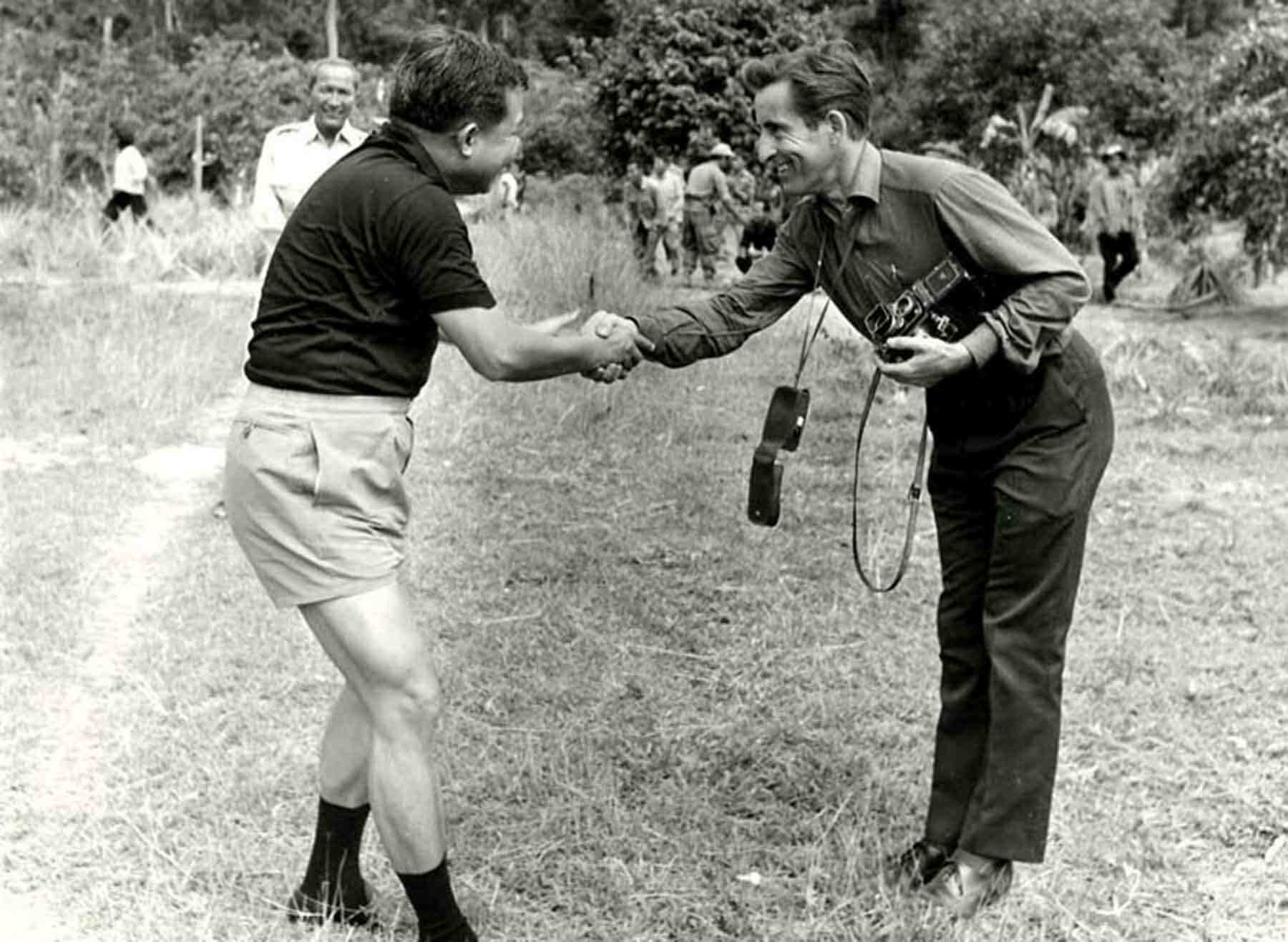
1) Raymond Cauchetier with Prince Norodom Sihanouk on an airfield in Cambodia in the 1950s, 2) and decorated by the Prince in 1967.
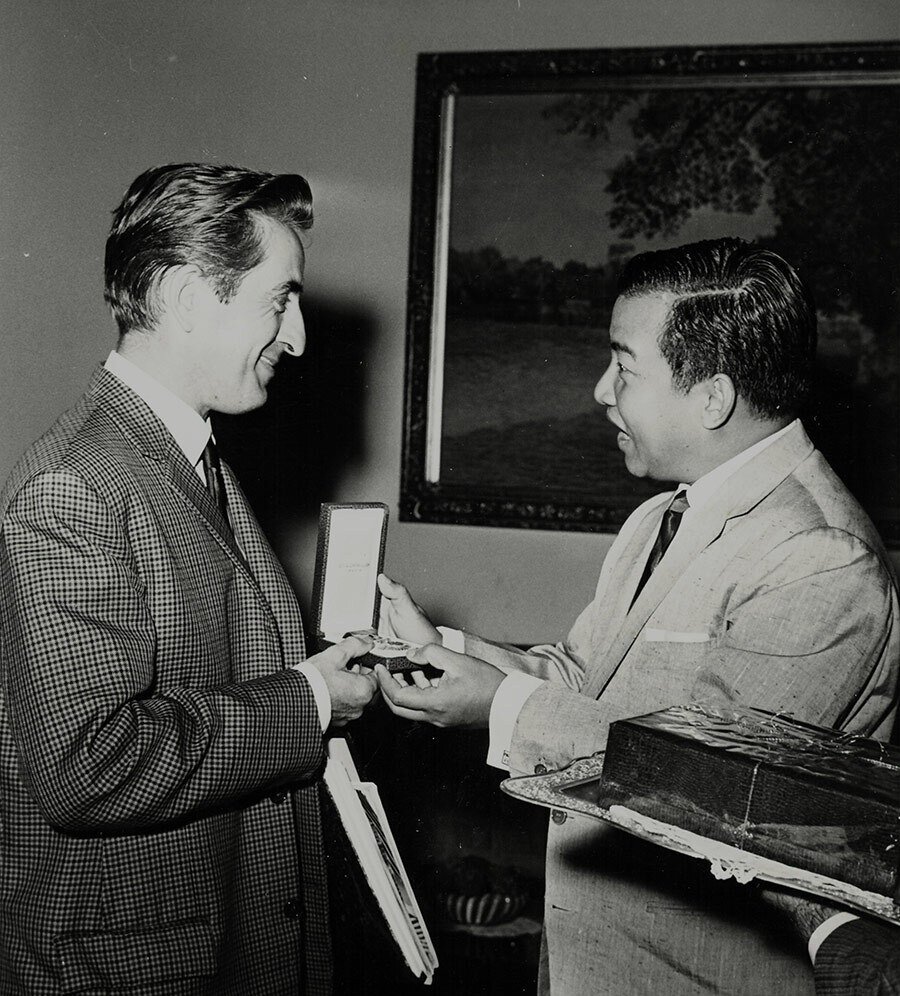
1) Raymond Cauchetier with Prince Norodom Sihanouk on an airfield in Cambodia in the 1950s, 2) and decorated by the Prince in 1967.
1) Raymond Cauchetier with Prince Norodom Sihanouk on an airfield in Cambodia in the 1950s, 2) and decorated by the Prince in 1967.
¨I see myself more as a historian than a photographer¨, would later recall Cauchetier, who nevertheless became a belatedly acclaimed visual artist, photographying Vietnam, Cambodia, Laos, Japan in the 1950s, before switching to movie set photography. He had discovered the world of the silver screen also in Cambodia, as he joined in 1956 the set of Marcel Camus’ (1912−1982) first feature film, Mort en fraude (1957), based on Jean Hougron’s eponym novel, a movie filmed mostly in Phnom Penh due to the hostility of the French administration in Saigon and banned by the French colonial censors. [Marcel Camus was back to Cambodia in 1961 for L’Oiseau de Paradis [Bird of Paradise] (1962), a movie set mostly in Angkor and starring Princess Norodom Buppha Devi].
In 1967, King Sihanouk was so taken by Cauchetier’s photos that he offered him to launch and head a National School of Photography, but the photographer was too much of a wanderer and free spirit to take upon himself such a responsibility. According to Cauchetier himself, “the King of Cambodia had a special air-conditioned safe made to protect my slides and negatives from the tropical climate. Little did he know that a coup was in the offing, and that in 1970 one of his generals, Lon Nol, inspired by the CIA, would depose him while he was on one of his trips to France. The victory was short-lived. The Khmers Rouges, which Sihanouk had kept in check, were unleashed on Cambodia and embarked on a reign of terror. They took Phnom Penh in 1975 and occupied the Royal Palace. They found the safe with the photos in it and, believing it to be full of jewels, blew it up with dynamite. Everything it contained was burnt to ashes: nothing remained of my 3,000 negatives.”
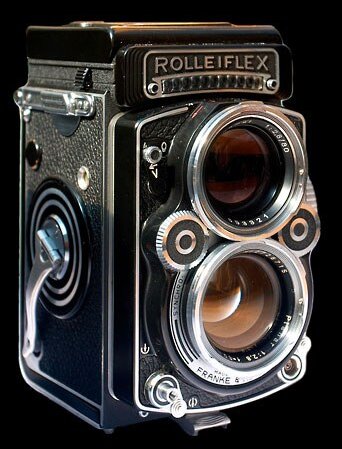
1) In 1959, Brazilian musician Antonio Carlos Jobim and lyricist Newton Mendonça released Desafinado (Out of Tune), the song-manifesto of Bossa Nova: “Fotografei vôce na minha Roleiflex / Revelou-se sua enorme ingratidao”, [Taking a photo of you with my Rolleiflex/ Exposed its gigantic ungratefulness…] Cauchetier started his photographic career with a Rolleiflex and stayed with it during his long career, even with Magnum photo agency asked him to switch to a more novel camera. 2) In 1957, Cauchetier went to the Siem Reap jungle to photograph the warlord Chap Duon. During that trip, he rescued a baby tiger that he named Bijou and brought back to Phnom Penh, then to France.
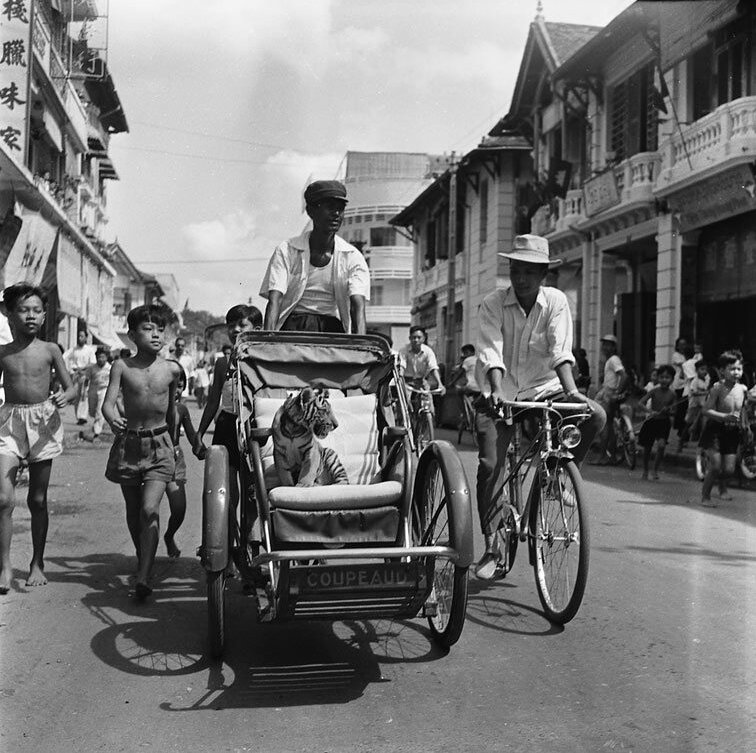
1) In 1959, Brazilian musician Antonio Carlos Jobim and lyricist Newton Mendonça released Desafinado (Out of Tune), the song-manifesto of Bossa Nova: “Fotografei vôce na minha Roleiflex / Revelou-se sua enorme ingratidao”, [Taking a photo of you with my Rolleiflex/ Exposed its gigantic ungratefulness…] Cauchetier started his photographic career with a Rolleiflex and stayed with it during his long career, even with Magnum photo agency asked him to switch to a more novel camera. 2) In 1957, Cauchetier went to the Siem Reap jungle to photograph the warlord Chap Duon. During that trip, he rescued a baby tiger that he named Bijou and brought back to Phnom Penh, then to France.
1) In 1959, Brazilian musician Antonio Carlos Jobim and lyricist Newton Mendonça released Desafinado (Out of Tune), the song-manifesto of Bossa Nova: “Fotografei vôce na minha Roleiflex / Revelou-se sua enorme ingratidao”, [Taking a photo of you with my Rolleiflex/ Exposed its gigantic ungratefulness…] Cauchetier started his photographic career with a Rolleiflex and stayed with it during his long career, even with Magnum photo agency asked him to switch to a more novel camera. 2) In 1957, Cauchetier went to the Siem Reap jungle to photograph the warlord Chap Duon. During that trip, he rescued a baby tiger that he named Bijou and brought back to Phnom Penh, then to France.
As his work in then French Indochina remains to be thoroughly studied, edited and published [see a photographic evocation of his Cambodian assignments], Raymond Cauchetier wrote a page in the history of photography and cinematography with his portraits as a stage photographer on several iconic movies of the French Nouvelle Vague, for instance when he captured actor Jean-Paul Belmondo and actress Jean Seberg walking the Champs-Élysées in Jean-Luc Godard’s A bout de soufflé [Breathless, 1960].
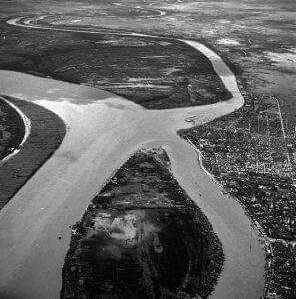
Later in his life, as a member of the French Society of Archaeology since 1955 (a passion found in Angkor) he photographed ancient sites across France and was commissioned by the prestigious Milanese publishing house Rizzoli to picture striking ancient monuments across Europe. In 2005, he opened in Saigon the exhibition Saigon-Ho Chi Minh Ville 1955 – 2005 Vu du Ciel, a ‘then-and-now’ retrospective in which the aerial photographs of the city he had taken in 1953 – 1955 (“through the open door of an old Cessna airplane”) were presented side by side with birdseye shots taken half a century later by the Vietnamese Air Force.
Raymond Cauchetier passed away at 101 years of age, after contracting Covid-19 virus in France. The website dedicated to his life and work carries his ‘Self-Portrait’ in English and French versions. His wife for 48 years, Kaoru Cauchetier, keeps his memory alive.
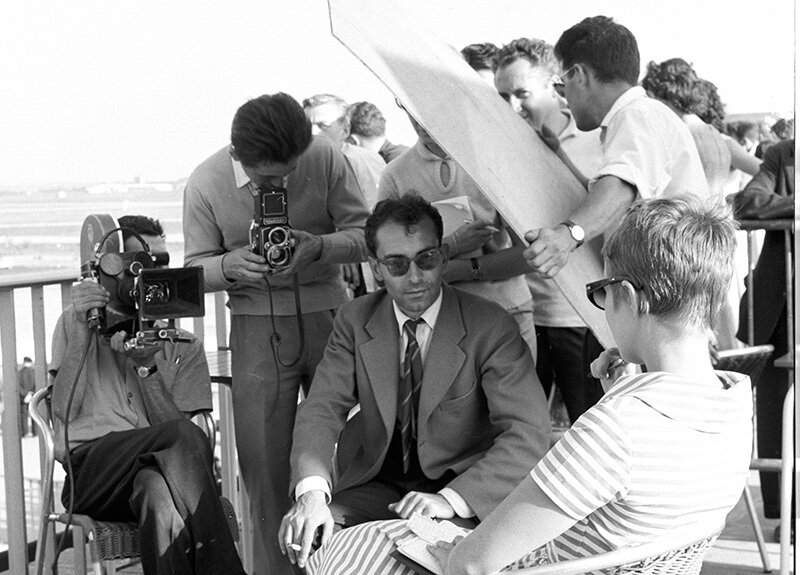
1) Cauchetier and his signature Rolleiflex in action at the famous press conference on Orly Airport terrace given by actresss Jean Seberg and movie director Jean-Luc Godard. 2) The exhibition Saigon-Ho Chi Minh Ville 1955 – 2005 from the Sky attracted more than 1 million visitors, including scores of Vietnamese grade schoolers [photos from Raymond Cauchetier website].
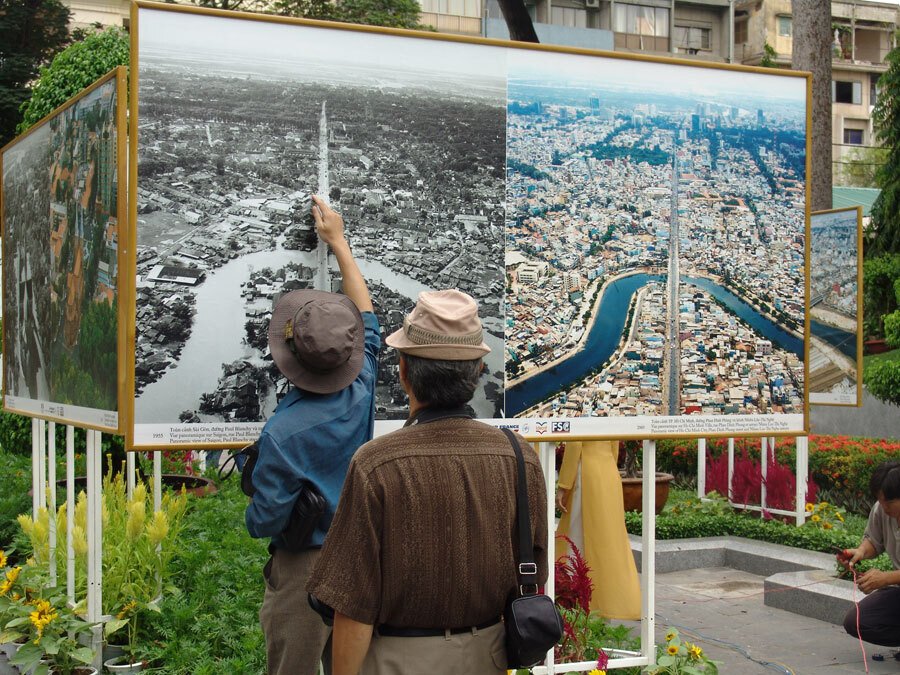
1) Cauchetier and his signature Rolleiflex in action at the famous press conference on Orly Airport terrace given by actresss Jean Seberg and movie director Jean-Luc Godard. 2) The exhibition Saigon-Ho Chi Minh Ville 1955 – 2005 from the Sky attracted more than 1 million visitors, including scores of Vietnamese grade schoolers [photos from Raymond Cauchetier website].
1) Cauchetier and his signature Rolleiflex in action at the famous press conference on Orly Airport terrace given by actresss Jean Seberg and movie director Jean-Luc Godard. 2) The exhibition Saigon-Ho Chi Minh Ville 1955 – 2005 from the Sky attracted more than 1 million visitors, including scores of Vietnamese grade schoolers [photos from Raymond Cauchetier website].
Publications
Raymond Cauchetier authored or contributed with his photographs to numerous publications, the list below being still under construction. Apart from recent reprints, several of these books have ran out of stock:
- Ciel de guerre en Indochine, 106 photos, préface du Général L.M. Chassin, Saigon, Edition CAEO [pr. by Heliographia, Lausanne], 1953. [out of stock]
- [with photographs by Raymond Cauchetier] Jean-Michel de Kermadec, Cholon ville chinoise, Saigon, Société Asiatique d’Editions, 1955, 143 p.
- Saigon, 96 photos, préface de Pierre-Jean Laspeyres, Paris, Albin Michel [pr. by Heliographia, Lausanne], 1955. [out of stock.
- Phnom Penh [details unknown]
- Angkor [details unknown]
- “Escale a Saigon”, textes et photos by Raymond Cauchetier in Géographia 84, Dec. 1958 [reproduced on the website Saigon-Vietnam]
- Saigon-Ho Chi Minh Ville 1955 – 2005 Vu du Ciel, 40 photos, catalogue of the 2005 exhibition held at the French Consulate in Ho Chi Minh Ville, préface de M. Nicolas Warnery, Consul Général de France, Ho Chi Minh Ville, 2005.
- Photos de Cinéma: Autour de la Nouvelle Vague (1958−1968), 111 photos, préface de Marc Vernet, Edition Image-France [printed by Impression Blanchard, Le Plessis-Robinson, 2007.
- [with photographs by Raymond Cauchetier] Robert Ingram & Paul Duncan, François Truffaut: The Complete Films, Taschen, 2008, 96 p.
- Flashback sur Raymond Cauchetier, 97 photos, préface de Jean-Pierre Bourgeois, catalogue officiel du Salon de la Photo de Paris, Paris, 2013, 97 p., limited edition [printed by Escourbiac].
- Raymond Cauchetier’s New Wave, 310 photos, texts by Raymond Cauchetier, preface by Philippe Garnier, London, ACC Art Books, 2015, 240 p. ISBN 9781851497911. | FR La Nouvelle Vague de Raymond Cauchetier, préface de Philippe Garnier, tr. par Laurent Bury, Hugo Publishing, 2022. ISBN 9782755698862.
- Raymond Cauchetier, Paris, La Galerie de l’Instant, limited edition around “La Nouvelle Vague de Raymond Cauchetier”, 2 Oct 2015 — 17 Jan. 2016.
- Kaoru, vue par Raymond Cauchetier, 160 photos compiled by his wife Kaoru Cauchetier, Editions Image-France [printed by Escourbiac, Toulouse], Feb. 2019.
(all photos © Raymond Cauchetier)
- Related Photos