

René Piot

René Piot (14 Jan. 1866, Paris, France — 24 Apr. 1934, Paris) was a French painter, frescoist, stage set and costume designer who had a lasting influence on Paris theater and decorative arts scenes in the 1910s and 1920s, and experienced a kind of ‘Rodin moment’ when he saw the Cambodian Royal Ballet dancers at the 1922 Marseille Colonial Exhibition, producing numerous sketches and at least four large format paintings of the young Cambodian artists.
A fervent admirer of Eugène Delacroix — his first art tutor was Pierre Andrieu, who had himself studied under Delacroix -, Piot perfected his technique under the supervision of Gustave Moreau and met Paul Gauguin a few years before the naturalist master’s passing. Close to avant-garde creators such as Henri Matisse, Degas, Georges Braque, Maurice Denis and the ‘Nabi’ (Prophets) group. Within the tradition of the great Italian and French frescoists — he went to Florence to study ancient techniques, notably the tempera [colored pigments mixed with a water-soluble binder, traditionally egg yolk].
From 1894 to 1908, Piot went through a long period of reassessment of his artistic priorities. He worked on frescoes for the villa of famed French novelist André Gide and was commissioned by American art historian Bernard Berenson (1865−1959) to create murals for the latter’s residence in Florence, Villa I Tatti, à Florence, Settignagno, Florence, Tuscany. When Berenson changed his mind, with Piot already on location, the project tanked at the artist’s utter disappointment.
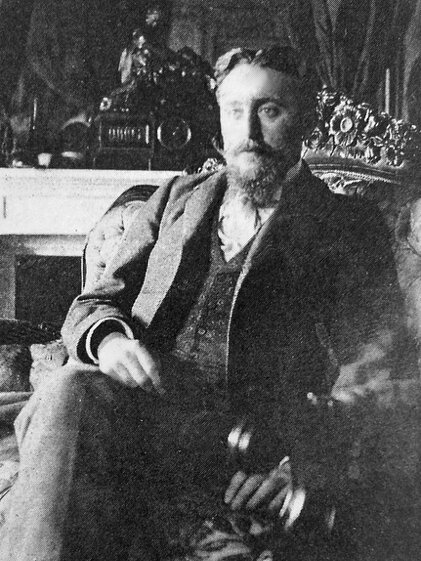
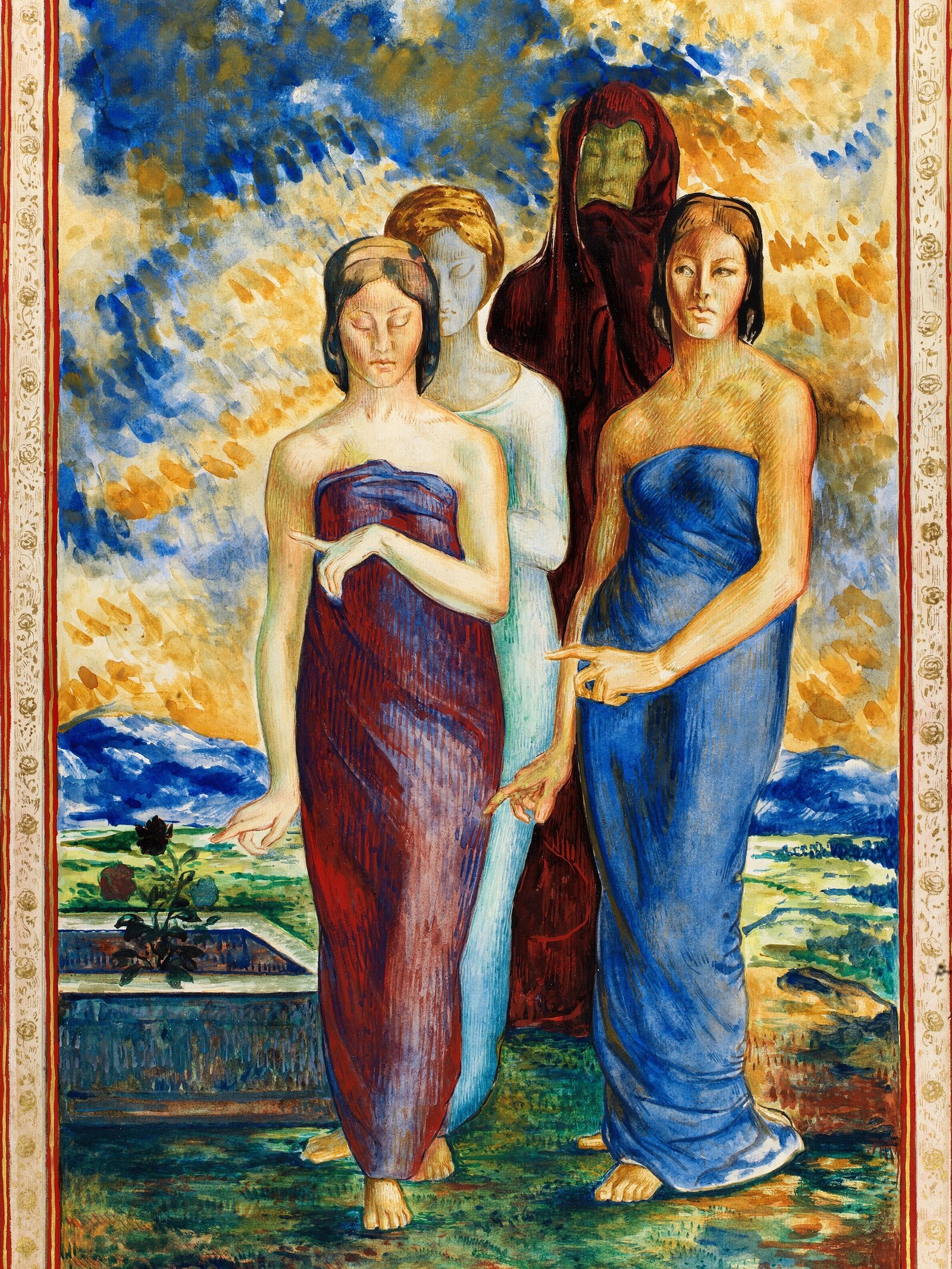
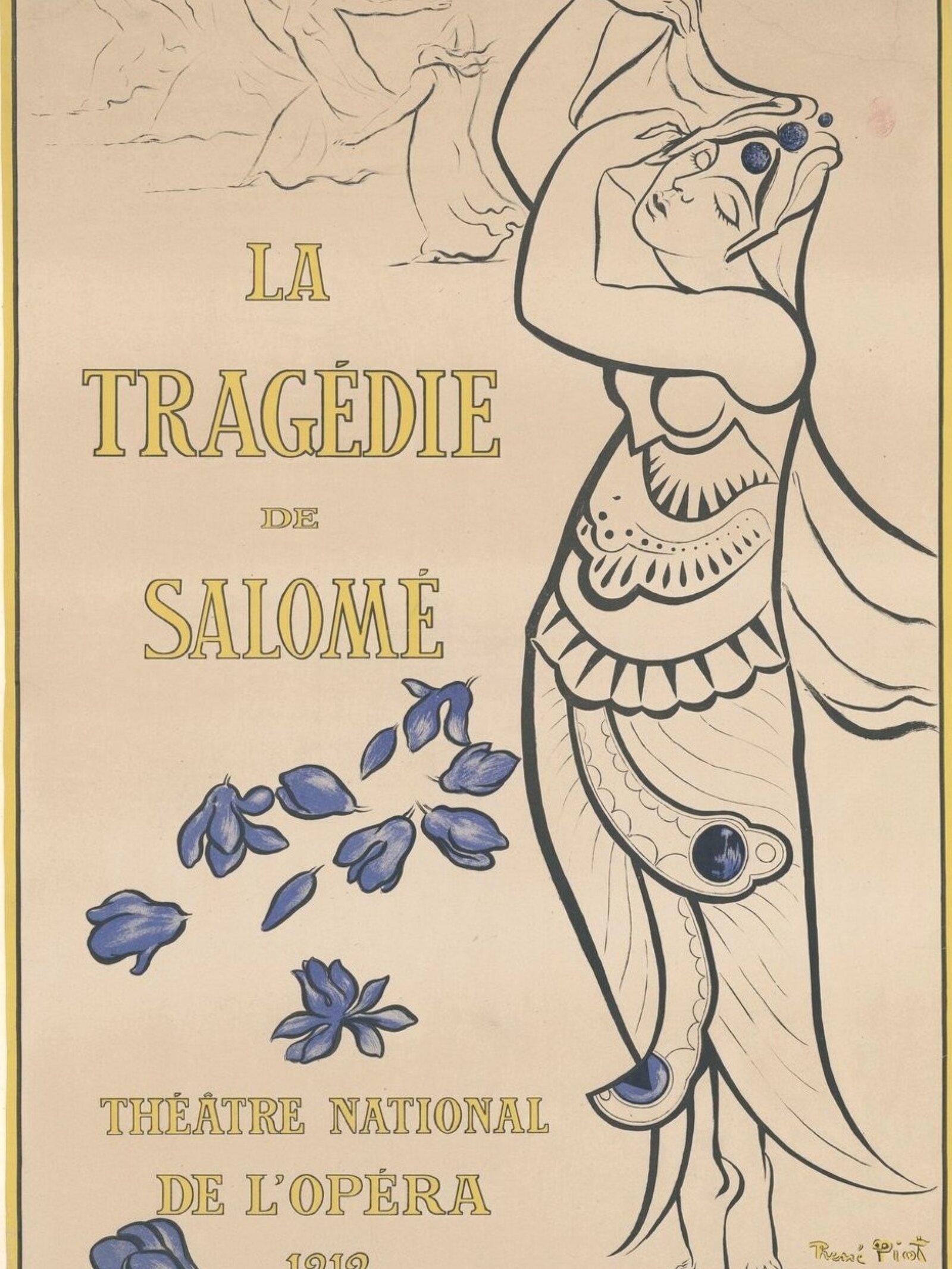
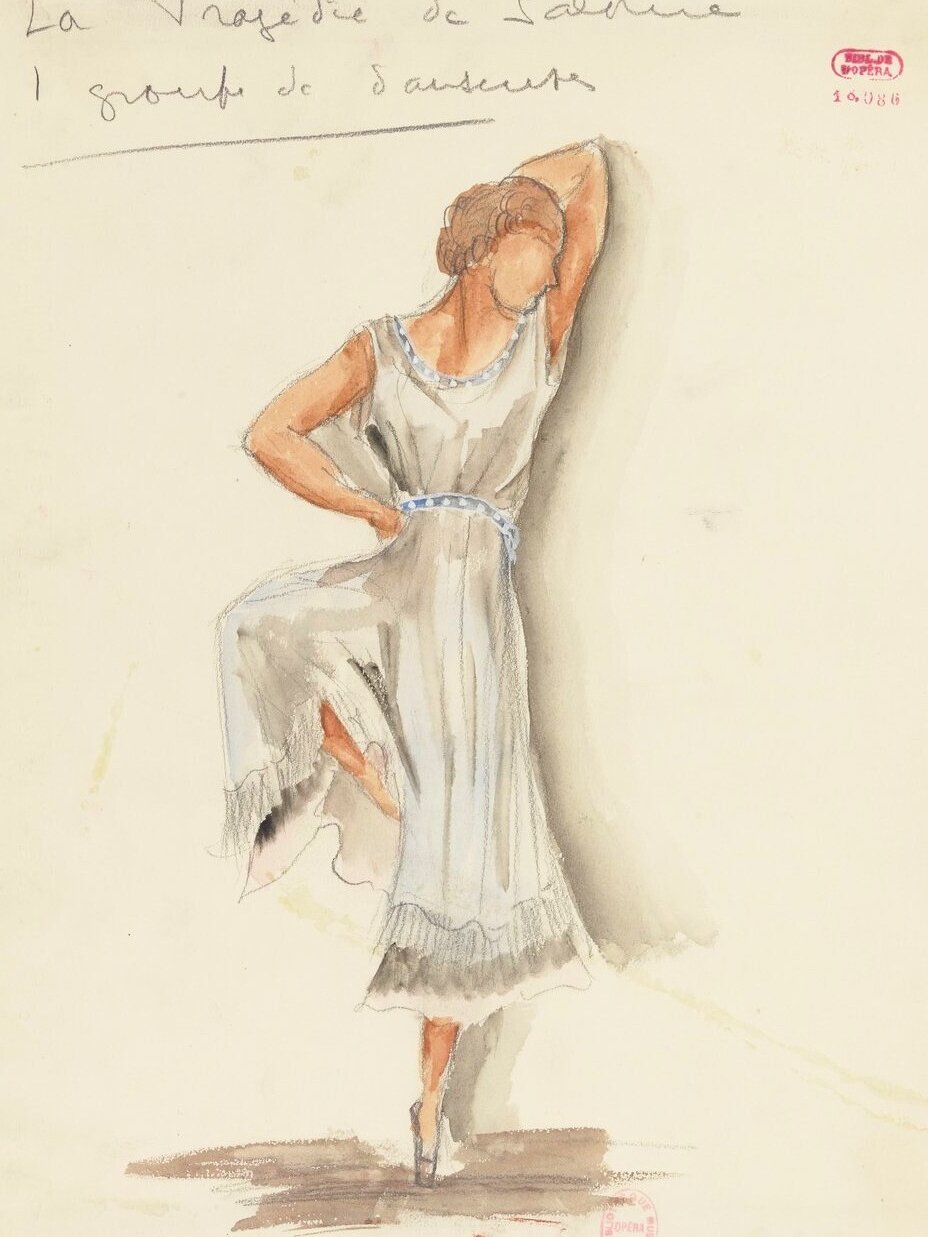
1) A rare portrait of René Piot, circa 1900. French magazine Comoedia depicted him as ’ talented, secretive and haughty’ in the 1920s [uncredited photo reproduced in René Piot, fresquiste et décorateur, op. cit.] 2) Figures allégoriques [Allegorical Figures], fresco panel, c. 1915. [via artnews]. 3) Poster for La tragédie de Salomé (1919 production at Paris Opera) by René Piot. 4) Costume for female dancers in La tragédie de Salomé (1919) by René Piot [drawing via gallica.bnf.fr].
1) A rare portrait of René Piot, circa 1900. French magazine Comoedia depicted him as ’ talented, secretive and haughty’ in the 1920s [uncredited photo reproduced in René Piot, fresquiste et décorateur, op. cit.] 2) Figures allégoriques [Allegorical Figures], fresco panel, c. 1915. [via artnews]. 3) Poster for La tragédie de Salomé (1919 production at Paris Opera) by René Piot. 4) Costume for female dancers in La tragédie de Salomé (1919) by René Piot [drawing via gallica.bnf.fr].
1) A rare portrait of René Piot, circa 1900. French magazine Comoedia depicted him as ’ talented, secretive and haughty’ in the 1920s [uncredited photo reproduced in René Piot, fresquiste et décorateur, op. cit.] 2) Figures allégoriques [Allegorical Figures], fresco panel, c. 1915. [via artnews]. 3) Poster for La tragédie de Salomé (1919 production at Paris Opera) by René Piot. 4) Costume for female dancers in La tragédie de Salomé (1919) by René Piot [drawing via gallica.bnf.fr].
1) A rare portrait of René Piot, circa 1900. French magazine Comoedia depicted him as ’ talented, secretive and haughty’ in the 1920s [uncredited photo reproduced in René Piot, fresquiste et décorateur, op. cit.] 2) Figures allégoriques [Allegorical Figures], fresco panel, c. 1915. [via artnews]. 3) Poster for La tragédie de Salomé (1919 production at Paris Opera) by René Piot. 4) Costume for female dancers in La tragédie de Salomé (1919) by René Piot [drawing via gallica.bnf.fr].
1) A rare portrait of René Piot, circa 1900. French magazine Comoedia depicted him as ’ talented, secretive and haughty’ in the 1920s [uncredited photo reproduced in René Piot, fresquiste et décorateur, op. cit.] 2) Figures allégoriques [Allegorical Figures], fresco panel, c. 1915. [via artnews]. 3) Poster for La tragédie de Salomé (1919 production at Paris Opera) by René Piot. 4) Costume for female dancers in La tragédie de Salomé (1919) by René Piot [drawing via gallica.bnf.fr].
His inclination to decorative arts brought Piot to the theater stage. Starting with Le Chagrin dans le palais de Han in 1911, his décor and costume creations had a real impact on staging and choreography directors, similar to the influence of decorator Léon Bakst (1866−1924) on the Ballets Russes aesthetics. A high point in his contribution to the stage was the 1919 production of Florent Schmitt’s ballet La tragédie de Salomé with Ida Rubinstein in the title role, a commercial success that included performances in Madrid and Barcelona but was the butt of harsh critics. Critic Jean Marnold, for instance, writing in the Mercure de France, lamented after the première at Paris that
René Piot […] perpetrated a most pretentious and absurd setting for this work. There are garish colors, and it was in the middle of a sort of sea-bathed cabin crudely painted with a stupid green hue that the ill-fated mimodrama took place — transformed by Mr. Piot’s direction into an impenetrable enigma. [quoted in Phillip Nones, “Made for the stage: The incredible life and career of dancer and dramatic actress Ida Rubinstein… and her 20-year collaboration with French composer Florent Schmitt,” 8 Sept. 2015.]
“Profoundly vinculated to the past and yet an active proponent of modernity” — to quote Agathe de Kermenguy in her bioprofile of René Piot (2019) -, secretive and yet pushed towards the limelights by his work in fashion and theater — he also designed fabric and tapestry patterns -, he could spend weeks perched on a scaffolding to restore Delacroix’s ceiling frescoes at the Palais Bourbon Library, as he did in 1930, and design dance costumes for the extravagant Fête du Théâtre et de la Parure, or Nuit du Grand-Palais, the gala event on 16 June 1925 attended by 2,000 guests for the Paris Exposition des Arts decoratifs et industriels that has stayed in the annals of ‘Art-Deco’:
Introduced by a fanfare from trumpeters in mediaeval costume, the opening ‘Vision of the East’ was danced by students and athletes. This was followed by a number from Loie Fuller’s students, ‘swimming’ through a turbulent sea made up of an enormous gauze veil. Loie Fuller herself danced, a personal triumph since she had been the sensation of the 1900 Exhibition. She was also the only American contribution to the 1925 Exhibition — apart, of course, from American jazz and popular music. Thirty mannequins modelled ermine coats with endless trains held by an army of page boys — when they reached the foot of the stairs, the entire staircase was covered by a solid sea of ermine.
A number of tableaux followed. Each colour of ‘The Rainbow’ was made up of leading mannequins from each of the main haute couture houses, while other tableaux included Napoleon’s ‘grande armee’ an a symbolic representation of the perfumes. The ‘Cortège de la Parure’ (Ornamental Cortège) was led by Mistinguett in very short dress, very tall headdress and long, long train, sparkling as ‘The Solitaire Diamond,’ while the whole troupe of the Casino de Paris appeared as gemstones and ribbons in costumes designed by Jean le Seyeux. Eva Le Galienne and her company interpreted Joan of Arc; Ida Rubinstein, clad as the Golden Archangel in the costume designed by Bakst, danced the Martyrdom of Saint Sebastian; the Paris Opera company sang a potted version of ‘Esther’; the entire company of the Comedie Francaise appeared and gave brief, largely mimed versions of all of Moliere’s plays in appropriate costume; a Spanish caprice involved hundreds of dancers with flashing teeth, liquid black eyes, waving mantillas, snapping castanets and singing by all twenty four exponents of the role of Escamillo in Bizet’s ‘Carmen’ from the Paris Opera, Opera Comique and Gaite-Lyrique theatres; a comic interlude contained all the clowns from all the circuses in and around Paris; the Hoffman girls from the Moulin Rouge were followed by the sixty ‘Tiller Girls’ from the Folies Bergere; the parade of ‘The Queens of Theatre’ consisted of sixty of the best-known actresses of the day modelling clothes by all the leading fashion houses, accompanied by as many leading actors in full evening dress. The finale was the ‘Ballet of Ballets,’ danced by 300 members of the corps de ballet of all the Paris companies in white tutus. It was early morning when the show ended. [Victor Arwas, Art-Deco, New York, Harry N. Abrams Publishers, 1980, p. 38 – 40; repr. 1986, 316 p. ISBN 0 – 8109-0691 – 0.]
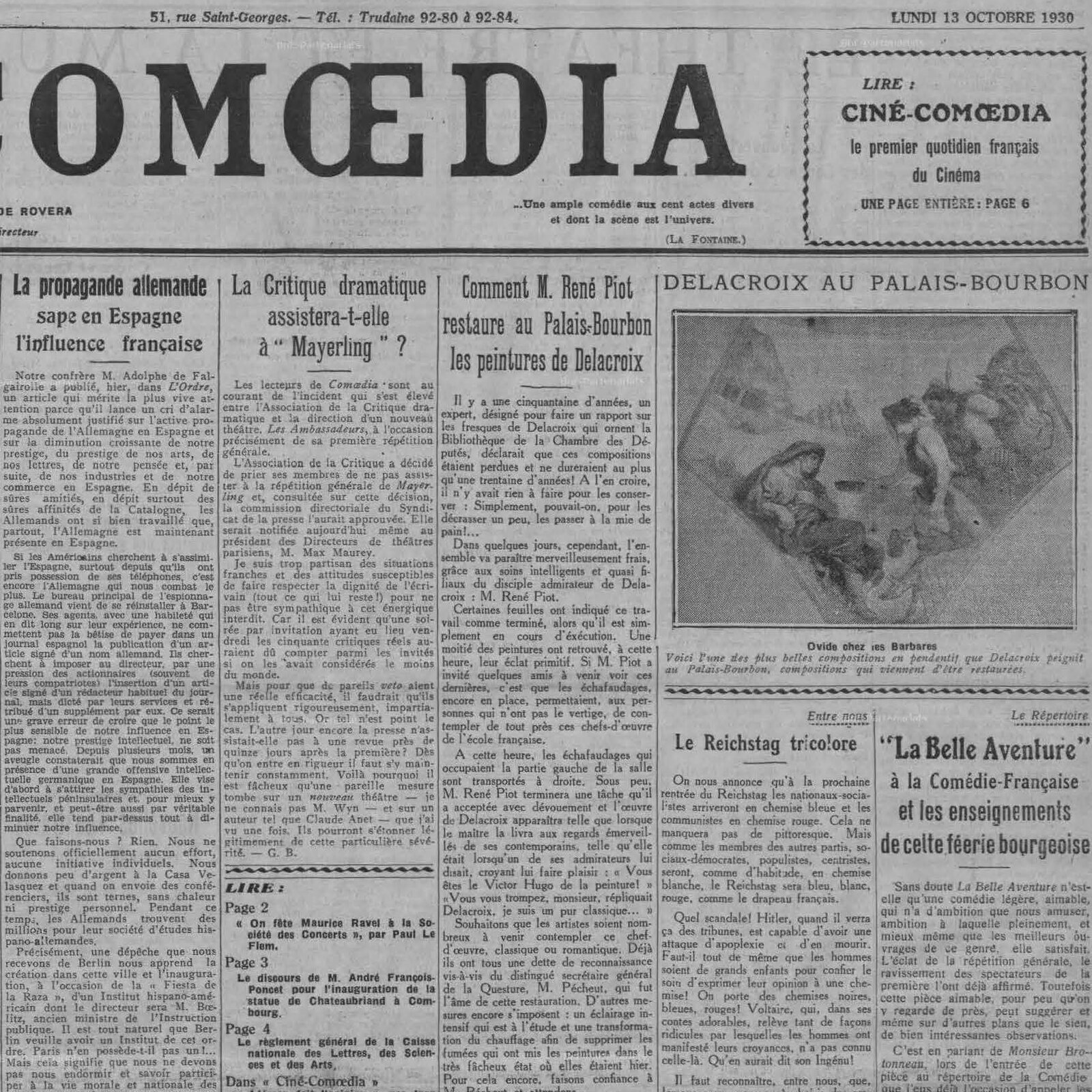
1) Frontpage of Comoedia, 13 Oct. 1930, reporting Piot’s restoration work on Delacroix’s paintings. 2) Bust portrait of Marie Piot [a] by René Piot, pencil and crayon on paper [Paris, Musée du Quai d’Orsay RF31699].
[a] Born Marie Justine Baechler (7 Oct. 1873, Nancy- 1954, Paris), she had married Piot on 17 March 1903 in Paris. Their only child, Hélène Marie-Renée (13 July 1898, Arcueil — 16 Nov. 1960, Paris) was the spouse of industrialist Albert François-Poncet (1890−1985).
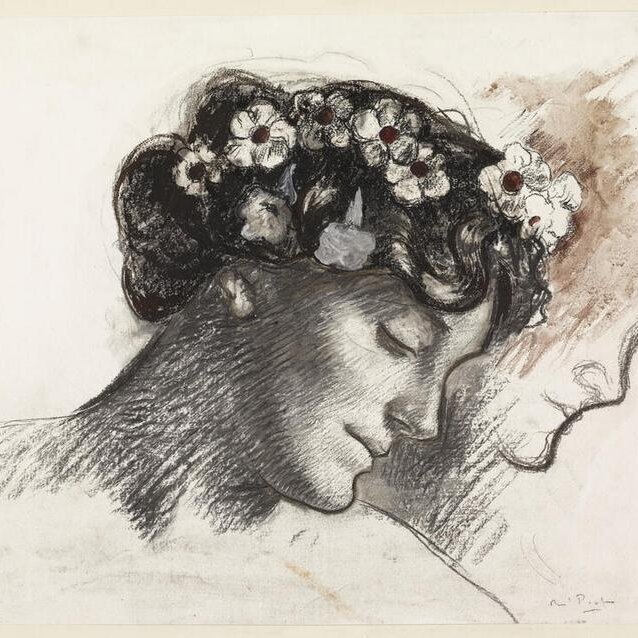
1) Frontpage of Comoedia, 13 Oct. 1930, reporting Piot’s restoration work on Delacroix’s paintings. 2) Bust portrait of Marie Piot [a] by René Piot, pencil and crayon on paper [Paris, Musée du Quai d’Orsay RF31699].
[a] Born Marie Justine Baechler (7 Oct. 1873, Nancy- 1954, Paris), she had married Piot on 17 March 1903 in Paris. Their only child, Hélène Marie-Renée (13 July 1898, Arcueil — 16 Nov. 1960, Paris) was the spouse of industrialist Albert François-Poncet (1890−1985).
1) Frontpage of Comoedia, 13 Oct. 1930, reporting Piot’s restoration work on Delacroix’s paintings. 2) Bust portrait of Marie Piot [a] by René Piot, pencil and crayon on paper [Paris, Musée du Quai d’Orsay RF31699].
[a] Born Marie Justine Baechler (7 Oct. 1873, Nancy- 1954, Paris), she had married Piot on 17 March 1903 in Paris. Their only child, Hélène Marie-Renée (13 July 1898, Arcueil — 16 Nov. 1960, Paris) was the spouse of industrialist Albert François-Poncet (1890−1985).
Equally fascinated with the technique of the old masters — he minitiously studied the color palettes used by Delacroix — and the bold contrasts of the ‘Fauvists’, with the theme of death pervading Christinanity and the pagan celebration of spring, Piot was literally illuminated when he saw the dancers of the Royal Ballet of Cambodia at the 1922 Colonial Exhibition in Marseille. Not only he sketched and photographed them at length — like Rodin had done in 1906, also in Marseille and in Paris — but, thanks to intervention of his friend and Angkor specialist Victor Goloubew, he had the opportunity to attend their rehearsal sessions (after “waiting for more than a month to gain their confidence,” as he reported himself).
In depicting their motions and costumes, he found a new way to use gold and silver leaves, new color combinations and some meaningful harmony that had often escaped him before. His paintings of Cambodian dancers on wood panels — unfortunately, only one has been recently exhibited in Paris — profoundly impacted the art critics at the time. Paul Santenac wrote in 1929 about these works, which had been on display as early as May-June 1923 -
Nous y avons revu trois danseuses cambodgiennes de René Piot, dans les légendes du Ramayana : l’une avec une tiare et une robe à ramages d’or, telle une apsara d’autrefois, sur le fond rougeâtre du palais d’Angkor, une autre vêtue de carmin, et surtout cette danseuse dans l’évocation du Prince des fleurs, une rose rouge au bord du diadème, la robe verte à broderies dorées, les jambes en arc, les pieds cerclés d’anneaux. Le peintre a fait revivre ces danseuses dans leurs poses les plus significatives de danses sacrées, avec leurs mouvements lent et rituel, leurs physionomies d’une jeunesse grave. L’art de René Piot dans ces évocations s’offre somptueux et profond à la fois. L’artiste emploie beaucoup l’or et l’argent pour rendre les robes et les tuniques chamarrée de ses modèles, leurs coiffures lourdes de pierres précieuses. Il use de bleus nourris, de carmins et de nacarats corsés. Les visages de ses figures sont modelés avec une solidité qui n’enlève rien pourtant au mystère enclos dans ces diverses peintures. René Piot a peint avec le même procédé une Comédienne annamite, tenant un éventail, et que l’on sent fragile, se portant difficilement sur ses jambes un peu ployées dans le fourreau chargé de dorure et de pierreries qui la vêt et sous le diadème dont elle semble presque accablée. Ces figures comptent vraiment dans l’œuvre de ce maître si personnel qu’est Réné Piot. [Paul Sentenac, “Chronique artistique”, Extrême-Asie (Revue indochinoise), June 1930 p 336.]
[“We have seen again three Cambodian dancers by René Piot in their reenacting of legends from the Ramayana: one with a tiara and a dress with gold leaf, like an apsara from the past, against the reddish backdrop of the Angkor palace; another dressed in carmine; and above all, that dancer in the evocation of the Prince of Flowers, a red rose at the edge of her diadem, her green dress with gold embroidery, her legs arched, her feet encircled with rings. The painter has brought them back to life in their most significant poses of sacred dances, with their slow, ritualistic movements, their facial expression radiating with solemn youth. René Piot’s art in these evocations is both sumptuous and profound. The artist makes extensive use of gold and silver to render the richly adorned dresses and tunics of his models, their headdresses heavy with precious stones. He applies rich nuances of blue, carmines, and deep pearlescent hues. The faces of his figures are modeled with a firmess that nonetheless deprives them in no way of the mystery contained within these various paintings. Using the same technique, he has painted an Annamite actress holding a fan, who appears fragile, struggling on her slightly bent legs within the sheath dress laden with gilding and jewels that adorns her, and beneath the diadem that seems almost overwhelming. These figures truly stand out in the oeuvre of this highly distinctive master, René Piot.’]
Staying in Marseille from April to October 1922, Piot came back to Paris with a renewed energy, and some insights on Cambodia dance that he, “the artist who worked in silence”, shared with art critic André Warnod [Comoedia, 17 April 1923]:
Au Cambodge, la danse n’est plus l’hymne religieux d’un peuple unanime mais elle reste encore une épopée, glorification de Ramayana, et la tradition du geste est fixée avec une précision telle qu’un initié, sans entendre la la mélopée, peut suivre la légende dans ses moindres détails narratifs, langage plastique aussi écrit que le texte dont le même sentiment est traduit différemment par des groupes d’expression subdivisés à l’infini, suivant qu’il est ressenti par l’amant, la princesse ou le géant, et selon qu’il s’exécute assis, debout ou couché. Au point de vue technique, le dessin associe les coincidences des lignes dans des élans concentriques seules, les extrémités s’élancent excentriquement comme pour alléger cette coupe fermée: ainsi de l’amphore s’envolent les ailes. C’est la loi de dessin contraire à nos danses occidentales.
[“In Cambodia, dance is no longer the religious hymn of a unanimous people, but it remains an epic, a glorification of the Ramayana. The tradition of movement is fixed with such precision that an initiate, without hearing the melody, can follow the legend in its smallest narrative details—a visual language as precisely scripted as the text itself, in which the same feeling is translated differently by groups of expression subdivided ad infinitum, depending on whether it is felt by the lover, the princess, or the giant, and whether it is performed sitting, standing, or lying down. From a technical point of view, the design combines coincidences of lines in concentric movements only; the extremities spring ex-centrically as if to lighten this closed cup, in the same manner as the wings of the amphora take flight. This is a law of design opposite to our Western dances.”]
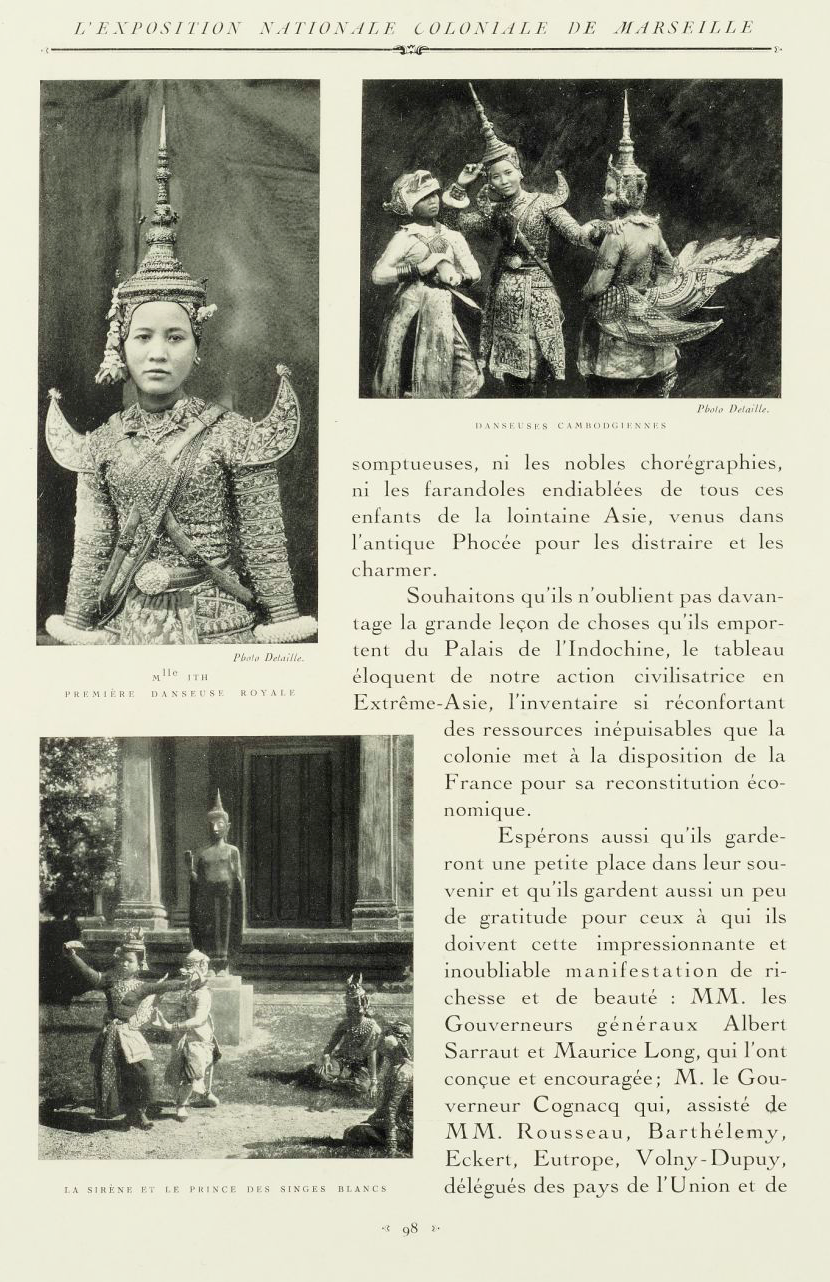
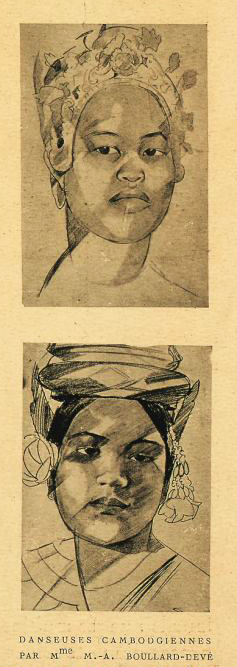
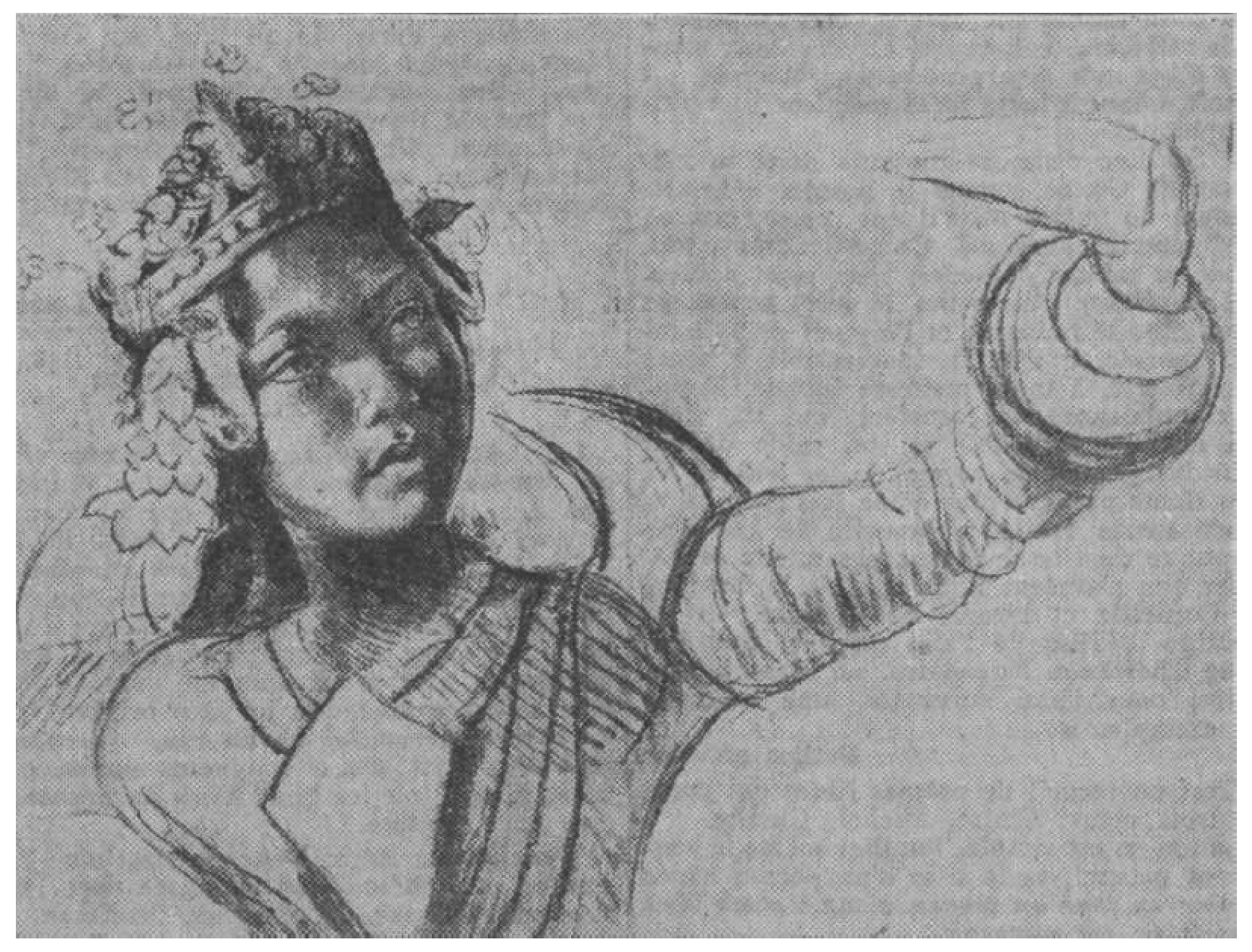
1) Page from L’Indochine, l’Exposition nationale coloniale de Marseille, 1922. 2) Two portraits of Cambodian dancers during that same event by Marie-Antoinette Boullard-Devé. 3) Study of a Cambodian dancer by René Piot, Marseille, 1922 [repr. in Comoedia, 17 April 1923, p. 3]
1) Page from L’Indochine, l’Exposition nationale coloniale de Marseille, 1922. 2) Two portraits of Cambodian dancers during that same event by Marie-Antoinette Boullard-Devé. 3) Study of a Cambodian dancer by René Piot, Marseille, 1922 [repr. in Comoedia, 17 April 1923, p. 3]
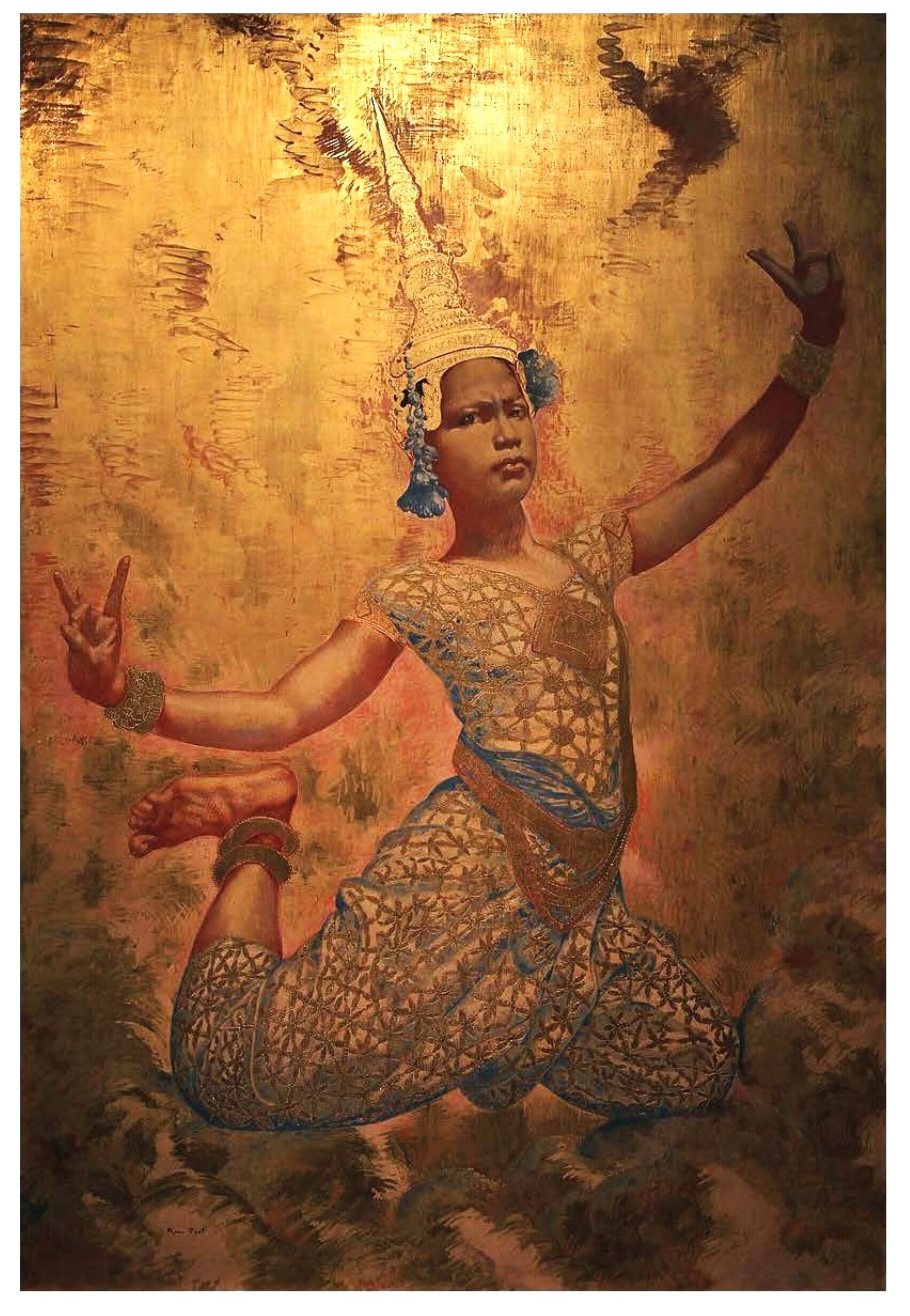
Danseuse cambodgienne, by René Piot, 1922. Tempera and gold leaves on wood, Musée du quai Branly, Inv 75. 9982, on loan at Musée National des Arts Asiatiques-Guimet (MNAAG). Other panels in this series have not been publicly accessible since the 1920s.
Danseuse cambodgienne, by René Piot, 1922. Tempera and gold leaves on wood, Musée du quai Branly, Inv 75. 9982, on loan at Musée National des Arts Asiatiques-Guimet (MNAAG). Other panels in this series have not been publicly accessible since the 1920s.
Piot’s Cambodian dancers, whose “complex and pure elegance so well expressed the poetry of the Orient” (Robert Rey), stirred the enthousiasm of the usually circumspect art historian Louis Gillet, who equalled the series to “the retables de Duccio or Vivarini, even some Veronese at Villa Borghese or the splendid Rubens at Cassel Museum”, remarked
La série de panneaux sur les danseuses cambodgiennes qui ont paru à l’Exposition coloniale de Marseille exposés chez Druet au printemps de 1923 est à beaucoup d’égards une oeuvre extraordinaire; l’artiste a voulu y unir à la vérité de l’étude ethnographique la plus précise, la signification religieuse des hiéroglyphes, le mystère reculé des siècles et des races, avec le luxe des costumes et la richesse de la matière. [Art et décoration, Jul-Dec. 1923, p. 192]
“The series of panels depicting the Cambodian dancers who performed at the Marseille Colonial Exposition, shown at Druet Gallery in the spring of 1923, is in many respects an extraordinary work. The artist sought to combine the truth of the most precise ethnographic study, the religious significance of hieroglyphs, the enduring mystery of centuries and races, with the luxury of the costumes and the richness of the materials.”]
Thus, for the last decade of his life, before his waning creativity led him to deep depression and suicide„ the Delacroix specialist and acclaimed set designer was also recognized as an ‘artist of the Far East’. His obituary in the newspaper Le Temps (25 April 1934) read:
René Piot, qui disparaît à l’âge de 65 ans, avait introduit le premier un sentiment nouveau dans le décor des pièces de théâtre. […] On lui doit également la restauration des peintures exécutées par Eugène Delacroix sur la voûté de la bibliothèque de la Chambre des députés. Il a réussi enfin à fixer avec un bonheur exceptionnel les attitudes et les gestes des danseuses cambodgiennes envoyées par le roi Sisovath à Paris pour l’Exposition de 1900 [sic, for 1906].
[“René Piot, who died at the age of 65, was the first to introduce a new sensibility into theatrical set design. He is also responsible for the restoration of the paintings executed by Eugène Delacroix on the vault of the library of the Chamber of Deputies. Finally, he succeeded in capturing with exceptional success the attitudes and gestures of the Cambodian dancers sent by King Sisovath to Paris for the 1900 [sic, for 1906] Exhibition.”]
Works, Exhibitions, Publications
Original Productions as Set Decorator (D) and Costume Designer ©
- [C, D] Le Chagrin dans le palais de Han, drama by Louis Laloy from the 13th-century composition by Ma Zhiyuan, 1911.
- [D] La Péri, ballet by Paul Dukas, 1912.
- [C, D] Siang-Sin, ballet-pantomime by Georges Hüe, 1924.
- [C, D] Un jardin sur l’Oronte, dir. Franc-Nohain [from Maurice Barrès’ eponymous novel (1922), mus. Alfred Bachelet], 1932.
Set Decorator (D) and Costume Designer ©
- [C, D] La tragédie de Salomé, ballet by Florent Schmitt [original production 1907], 1919 [with Ida Rubinstein as Salome]; 1922; 1928.
- [C, D] Les Troyens, grand opera by Hector Berlioz, dir. Ernest Merle-Forest, 1921.
- [C, D] Esther, princesse d’Israël, dir. Pierre Chéreau, 1925.
- [D] Naïla, dir. Pierre Chéreau, 1927.
- [C, D] Elektra, opera by Richard Strauss, dir. Jacques Rouché, 1932.
- [D] Les Troyens à Carthage, [last 3 acts of Berlioz’s Les Troyens], dir. Pierre Chéreau 1930.
Exhibitions
- “René Piot, fresques et peintures à l’oeuf, paysages de montagnes (aquarelles)”, Paris, galerie Georges Petit, 1904.
- Exposition des oeuvres de René Piot, Paris, Musée des Arts Décoratifs, 1919.
- Exhibition of French Modern Art, Paris, Musée du Luxembourg, 1919; New York, 1920.
- Exposition René Piot, Paris, Galerie E. Druet, May-June 1923; Paris, Salon d’automne, Sept. 1923.
- “Les colonies vues par les artistes francais”, Paris, Galerie du Bûcheron (Au Sylve), 1929 [with painter-sculptor Géo-Michel (artist’s name of Georges Dreyfus (1883 – 1985)]. [During these three art shows in 1923 and 1929, Piot exhibited 3 or 4 large painted panels of Cambodian dancers].
- “24th International Exhibition of Paintings at Carnegie Institute (Foreign Section)”, Saint-Louis, 1950.
- “XVIIe Biennale di Venezia ; Mostra individuale di René Piot”, Venice, 1950.
- “Gauguin, ses amis, l’école de Pont-Aven et l’académie Julian”, Paris, Expositions de Beaux-Arts et de la Gazette des Beaux-Arts, 1954.
- “Exposition rétrospective des oeuvres de René Piot”, Paris, Salon d’Automne, 1955.
- “Gustave Moreau et ses élèves”, Marseille, Musée Cantini, 1962.
- “Delacroix, René Piot (1866−1934) et la couleur”, Paris, Musée Delacroix, 1968.
- “René Piot (1866−1934), Aquarelles et dessins”, Paris, Galerie de Bayser, 1975.
- “La Lyre et la harpe”, Gargilesse-Dampierre, Atelier Léon Detroy, 1977.
- “Gustave Moreau et le symbolisme”, Japon, exposition itinérante, 1984 – 85.
- “Salomé”, Saint-Denis, Musée d’art et d’histoire de Saint-Denis, 1988.
Publications
- [as scientific editor with Paul Flat] Journal de Eugène Delacroix, Paris, Plon-Nourrit, 1893 – 1895. 3 vol.
- “A propos des Cubistes”, Bulletin du Salon d’Automne V, Paris, 1917.
- [with Louis Laloy as author] Le Chagrin dans la maison de Han, drame chinois, orné par René Piot et publié par la Société littéraire de France, Paris, 1921.
- [as illustrator] Louis Gillet, Histoire des arts en France, 115 illustrations and 18 watercolors (Collection de l’Histoire nationale de la France, dir. Gabriel Hanotaux, t. XI, Paris, Plon, 1922.
- Les palettes de Delacroix, Paris, Librairie de France, 1931, 100 p. [via gallica.bnf.fr].
- Les ‘tempere’ vénitiennes de Mariano Fortuny,Venise, 1955.
References
- André Warnod, “René Piot et les danseuses cambodgiennes”, Comoedia, 17 avril 1923, p. 3 [with a note by René Piot].
- Louis Gillet, “René Piot”, Art et décoration 44, July-Dec. 1923: 184 – 92. [ADB pdf from gallica.bnf.fr]
- Robert Rey,“La peinture et la sculpture au Salon d’Automne”, Art et décoration 44 (Albert Levy ed.), July-Dec. 1923, p. 137.
- Paul Sentenac, “Chronique artistique: Les peintres d’Extrême-Asie dans les Salons et les Expositions de 1929”, Extrême-Asie (Revue indochinoise), June 1930: 332 – 7.
- Rodolphe Rapetti, René Piot (1866−1934), fresquiste et décorateur, Paris, Réunion des musees nationaux (Les Dossiers du Musée d’Orsay), 1991, 87 p. ISBN13 978 – 2711824328.
- Agathe de Kermenguy, “René Piot, modèle de persévérance et de passion : figurer le mouvement, du croquis à la représentation monumentale”, Artoris Magazine, April 2019.