
Homage to the Lord of the Dance Nataraja at Angkor, April 2024

A rare dance performance at Prasat Baksey Chamrong - the graceful encounter of Khmer and Bharatanatyam classical traditions.

 
Published
April 28th, 2024
Source
Sacred Dancers of Angkor, Banteay-Srei/Siem Reap, and Sadhguru-Isha Program [via Vimeo].
Language
Khmer

In the spring season of 2024, a 130-strong delegation of the Indian cultural association Isha-Project Samskriti visited the Angkorian temples in Siem Reap area. Following a stay in Bali, the trip to Cambodia’s sacred sites was part of a larger program titled Mystic Musings, a physical and spiritual travel inspired by respected leader Sadhguru, the latter’s major public engagement since his recovery from surgery earlier in the year.

During five days of site visits, meetings with dignitaries — including Cambodian Minister of Tourism Sok Soken, with an emphasis on proposals for fostering spiritual tourism’ -, guided meditations and satsangs with Sadhguru, participants had the opportunity to meet with Ravynn Karet-Coxen, founder of Sacred Dancers of Angkor [NKFC], a dance company with a main sala [school] in Banteay Srei, the teachers and some of the students. Recalled Bong Ravyn -

The representatives of Isha Project were so impressed with our dancers that, since they maintain their own company of bharatanatyam back in India, we decided on the spot to test a quite novel experience — a performance mixing the traditions of Khmer and Indian classical dance forms. Despite the fact we had only a limited amount of time for rehearsal, everyone marveled at how fluid, effortless and elegant the encounter appeared when the two groups performed together against the magnificent backdrop of the lit-up structure of Baksey Chamkrong Temple, half way between the southern gate of Angkor Thom and the Bakheng temple-mountain.

In this 15:15 minute video, one can see an inspired choreography allowed Indian and Cambodian dancers to gracefully combine their respective dancing styles, the former with bolder, more athletic moves, the latter infused with introspective energy. 


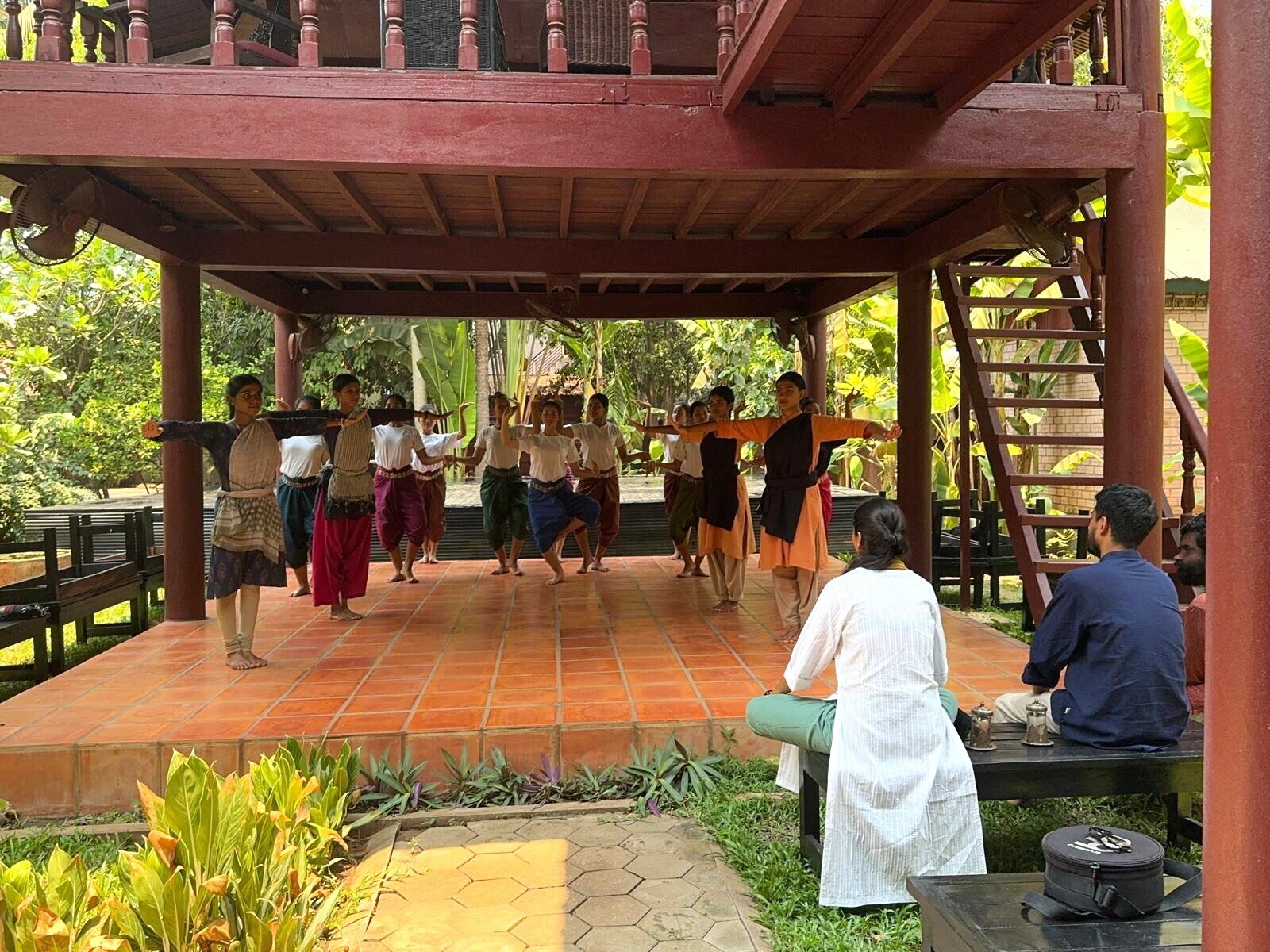
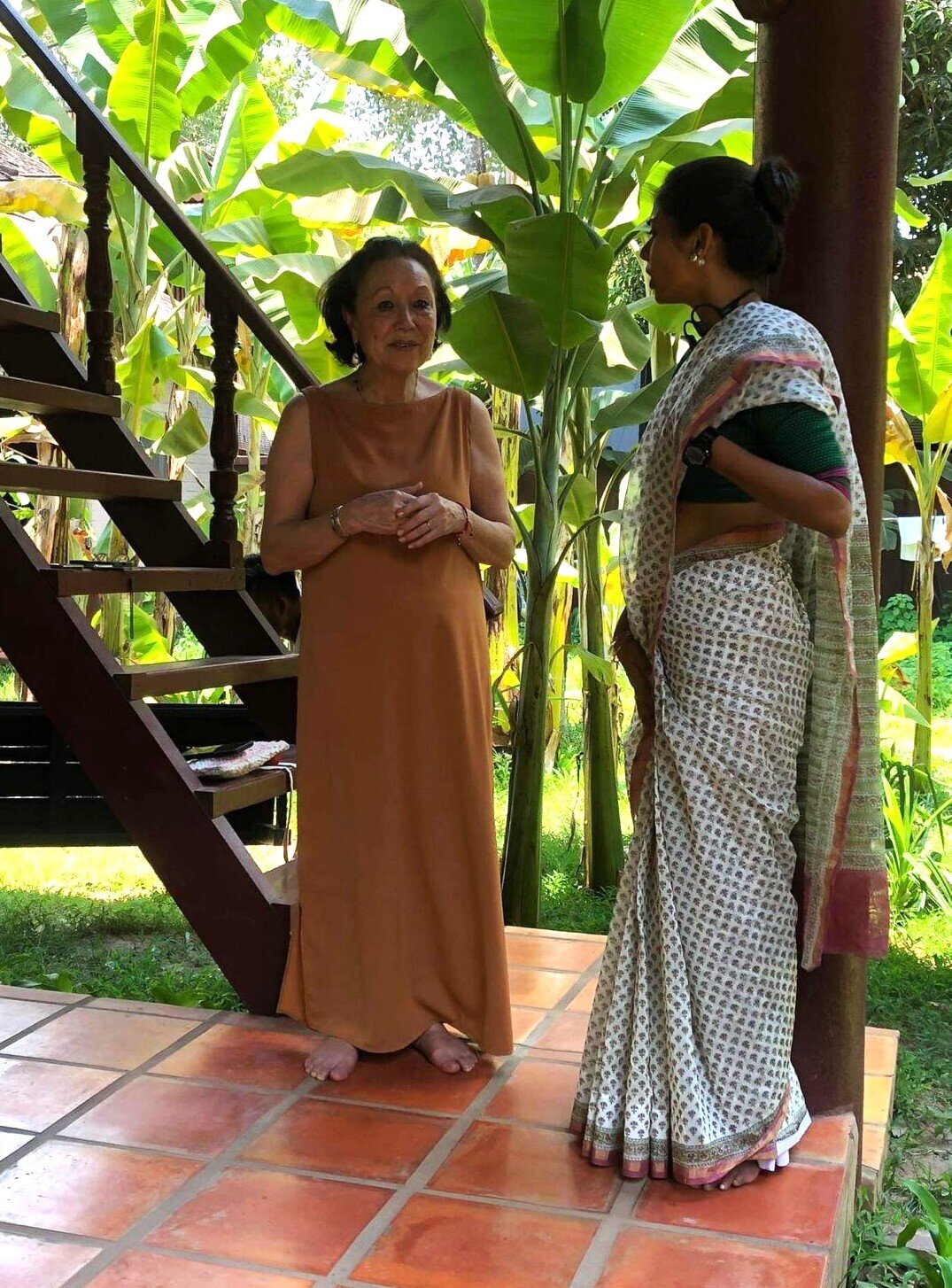
Intimate joint rehearsal [1], Bong Ravynn and Project Samskriti’s dance instructor and choreographer, Radhe Jaggi, Sadghuru’s daughter, in conversation [2] at Sacred Dancers Sala, Siem Reap, April 2024.


Intimate joint rehearsal [1], Bong Ravynn and Project Samskriti’s dance instructor and choreographer, Radhe Jaggi, Sadghuru’s daughter, in conversation [2] at Sacred Dancers Sala, Siem Reap, April 2024.

Intimate joint rehearsal [1], Bong Ravynn and Project Samskriti’s dance instructor and choreographer, Radhe Jaggi, Sadghuru’s daughter, in conversation [2] at Sacred Dancers Sala, Siem Reap, April 2024.


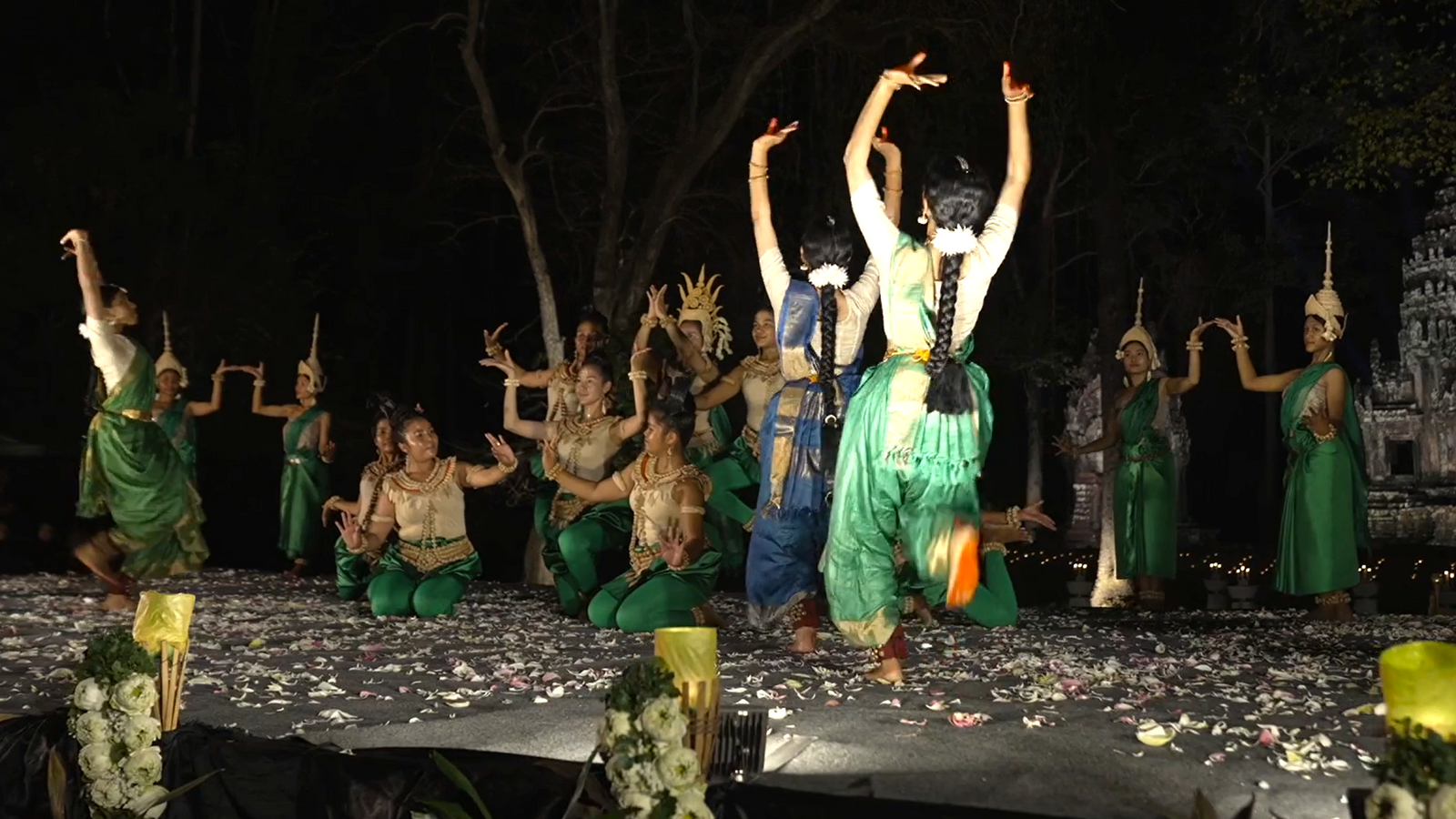
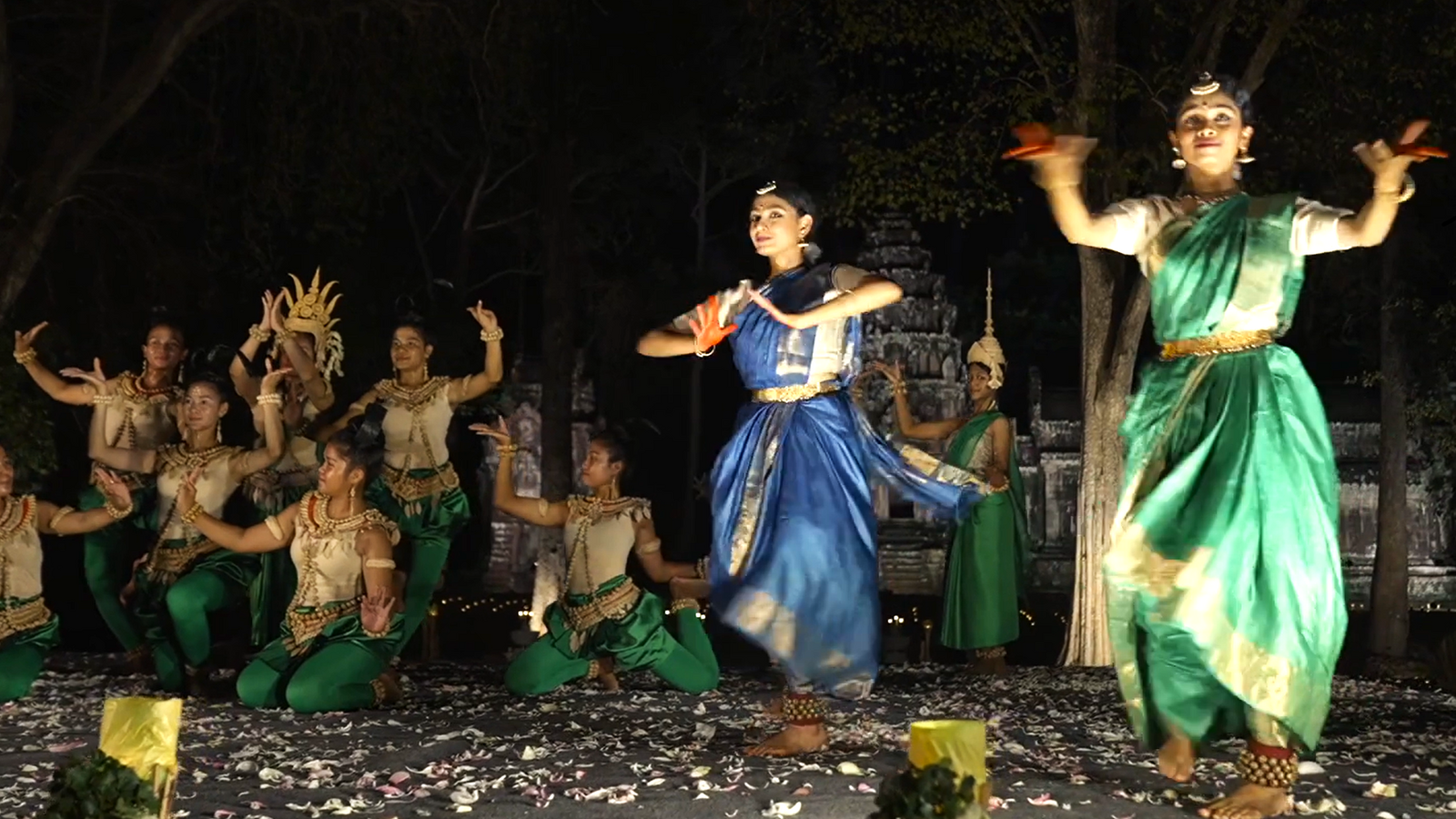
Two moments of the Homage to Naraja’ performance, Prasat Baksei Chamkrong, April 2024. [courtesy of Sacred Dancers of Angkor and Isha-Project Samskriti].


Two moments of the Homage to Naraja’ performance, Prasat Baksei Chamkrong, April 2024. [courtesy of Sacred Dancers of Angkor and Isha-Project Samskriti].

Two moments of the Homage to Naraja’ performance, Prasat Baksei Chamkrong, April 2024. [courtesy of Sacred Dancers of Angkor and Isha-Project Samskriti].

Tags: dance, dancers, India-Cambodia cultural ties, meditation, temple events, cultural tourism, preservation, spirituality, spiritual tourism

Glossary Terms

  • Bharatanatyam

    a) - sk भरत bharata, 1) 'who sings the exploits of the Bharata race' [ie India] 2) name of an expert in natyam, the art of dance and theater; 3) name of Rama's younger brother. b) - sk नाट्य nāṭyam and tamil naadanam, "drama", "form of classical dance".

    Bharatanatyam is said to be the dance of Bhārat, meaning the dance of India

    The word “Bharata” has been interpreted as a) the name of the very first emperor of Bharata (India) in the epic Mahabharata; b) the name of the younger half-brother of Rama in the Ramayana [along with twins Lakshmana and Shatrughna]; c) the composit of bhā (for bhāva, "expressions"), (for rāga, "melody"), (for tāla,"rhythm") and m (shruti, "smallest interval of pitch"); d) the namre of the author of the Natyashastra, Treatise on Dance.

    The Pañcamarapu (“five-fold traditional usage”) represents an important piece of Tamil literature and was composed by Cerai Aṟivanār in the 9th century AD during the time of Pandyan Tirumaran of the last Caṅkam Period.

    Bharatanatyam is held as the main form of classical dance in the South of India, particularly Tamil Nadu where the word nāṭyam originated from. Natyashastra (नाट्यशास्त्र, nāṭyaśāstra) refers to both the ancient Indian tradition (shastra) of performing arts (natya—theatrics, drama, dance, music), as well as the name of a Sanskrit work dealing with these subjects. It also teaches the rules for composing dramatic plays (nataka), construction and performance of theater, and poetic works (kavya).

View all glossary terms →