

Hugo Suter

Hugo Suter (dates unknown) was a German businessmen and diplomat, Deputy-Director of the Deutschasiatisechn Bank [German-Asian Bank] and future consul of the United States of Brazil in Shanghai in 1908, when he took a trip to Angkor he recounted in his book Angkor: Eine Reise Nach Der Ruinen Von Angkor [A Trip to the Ruins of Angkor] (1912).
We know very little of Suter’s life, except he had been the director of the Deutschasiatisechn Bank, Hong Kong branch, in 1906 before moving to Singapore and Shanghai. As for his diplomatic position, the “United States of Brazil” — official name for Brazil during the First and Second Republics, from 1889 to 1937 — having established consulates in Shanghai and Hong Kong as per the first Chinese-Brazilian Treaty of 3 October 1881. As the treaty prohibited merchants to serve as consulary agents, Suter, who might have been vinculated to the important German minority in Chile, wasn’t controversial since he represented various London-based financial companies in addition to the D.B. Governmental archive in Brazil show that Suter served as Consul in Shanghai from 1912 to 1915 — the Hong Kong representative was then J.J. Leiria. [1]
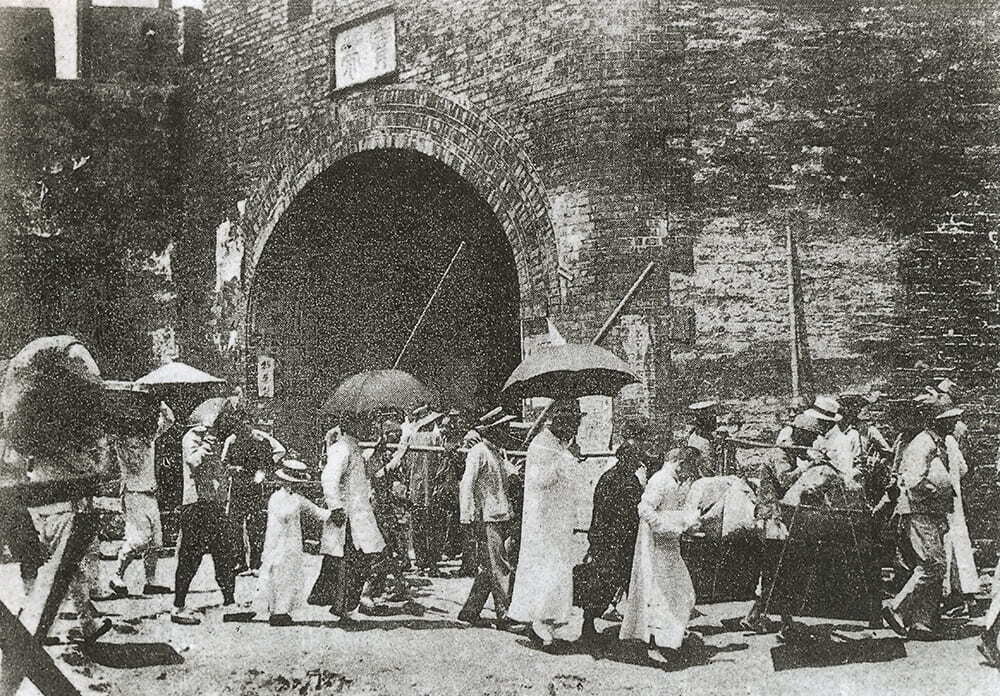
1) Shanghai, Little East Gate, circa 1910 [source: Shanghai Public Library, repr. by Katya Knyazeva on Historical Photographs of China (HPC), 29 Oct. 2020.] 2) “Caravan of Elephants on Treasure Bridge, Phnom Penh”, postcard ed. by Curtin Ed. in 1906, two years before Hugo Suter’s visit to Cambodia.
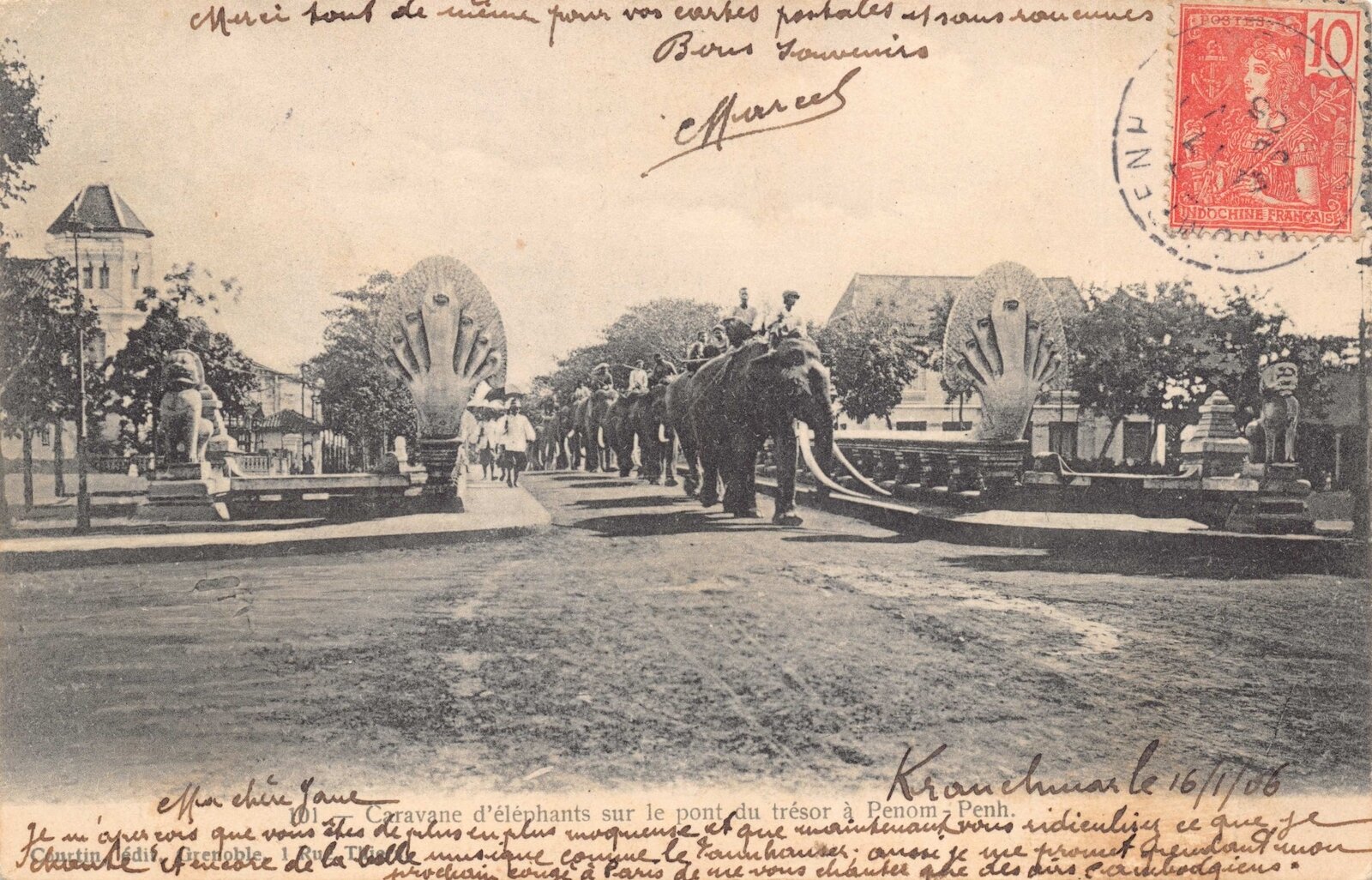
1) Shanghai, Little East Gate, circa 1910 [source: Shanghai Public Library, repr. by Katya Knyazeva on Historical Photographs of China (HPC), 29 Oct. 2020.] 2) “Caravan of Elephants on Treasure Bridge, Phnom Penh”, postcard ed. by Curtin Ed. in 1906, two years before Hugo Suter’s visit to Cambodia.
1) Shanghai, Little East Gate, circa 1910 [source: Shanghai Public Library, repr. by Katya Knyazeva on Historical Photographs of China (HPC), 29 Oct. 2020.] 2) “Caravan of Elephants on Treasure Bridge, Phnom Penh”, postcard ed. by Curtin Ed. in 1906, two years before Hugo Suter’s visit to Cambodia.
In Coralie Bajas’s publication “Angkor, ville royale redécouverte: Les récits allemands, des sources méconnues”, [Kambodschanische Kultur 7, 2001: 56 – 80], we learn that Suter published at least one more book, Geschichte der brasilianischen Finanz und Wirtschaftliche Entwicklung bis Ende Kaiserreiches 1889 [History of Brazilian Financial and Economic development until the End of the Empire in 1889] (Rio de Janeiro, 1926).
[1] Note that Mexico was in better position than Brazil, Chile or Peru at the time in China, since there were a Mexican legation in Beijing and consulates in Shanghai, Hankou, Fuzhou and Hong Kong. [see David Nazar Coutiño, “Tratados desiguales entre China y América Latina”, Centro de Estudios China-México [Universidad Nacional Autónoma de México, Facultad de Economía] n 2, 2023.]