

L'art khmer primitif [Earlier Khmer Art]
by Henri Parmentier
Monumental work on pre-Angkorian art from Udon to the Mekong Delta with Sambor Prei Kuk as hypothetical center.

- Author
- Henri Parmentier
- Publisher
- Paris, Librairie G. Vanoest/Publications de l'Ecole française d'Extrême-Orient, 2 vols [Vol 1: 408 p + 178 ill., Vol II: 94 plates]
- Published
- 1927
- Pages
- 764
- Language
- French
- Format
- e-book
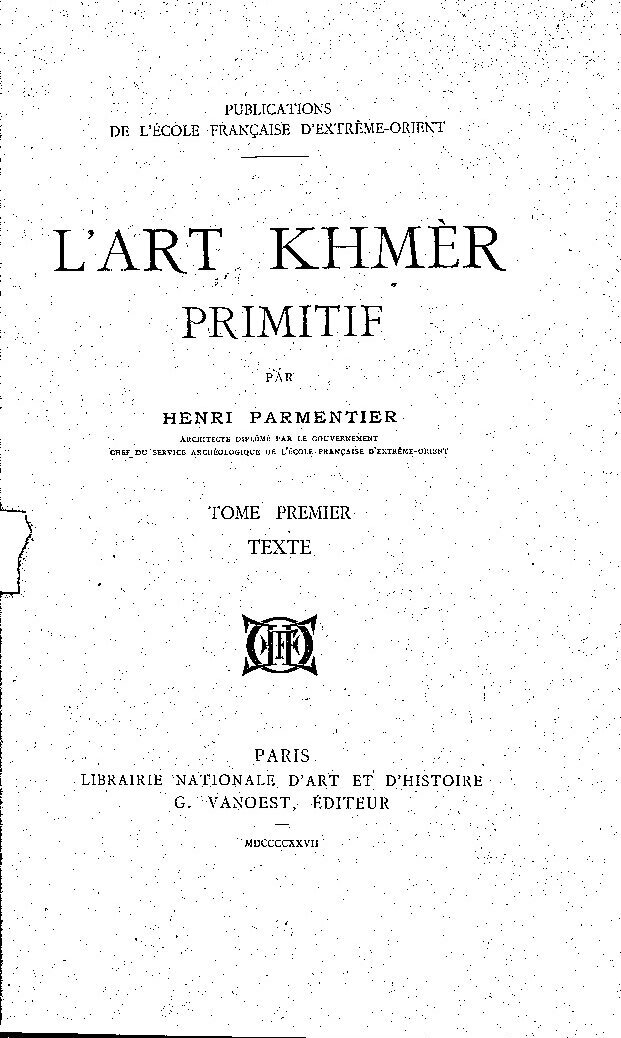
pdf 82.7 MB
This transregional study focused on Sambor Prei Kuk សំបូរព្រៃគុហ៍ (also Isanapura) complex, a site briefly mentioned earlier but thoroughly explored in the 1920s only. Built in the 7th — beginning of 8th century, the site was the capital city of King Īśānavarman ឦសានវរ្ម័នទី១ [r. 616 – 637], son of Mahendravarman.
The Group N (North) comprises as main temple Prasat Sambor ប្រាសាទសំបូរ, possibly dedicated to Gambhireshvara [Shiva]. Group C (Center) comprises some 18 temples mostly in ruined state, with the enigmatic Prasat Boram ប្រាសាទបុរាម — also called Prasat Tao (The Lions’ Temple) because of numerous sculptures of guardian singha (lion). Group S to the south includes some 22 sanctuaries, among them Prasat Yeah Puon ប្រាសាទយាយព័ន្ធ.
The author, who was also working on Cham temples at the time, encompassed many other examples of pre-Angkorian temples, including those reflecting what he called “pre-Khmer art” belonging to the times when multiethnic polities were cohabitating across the territory of modern Cambodian and beyond.
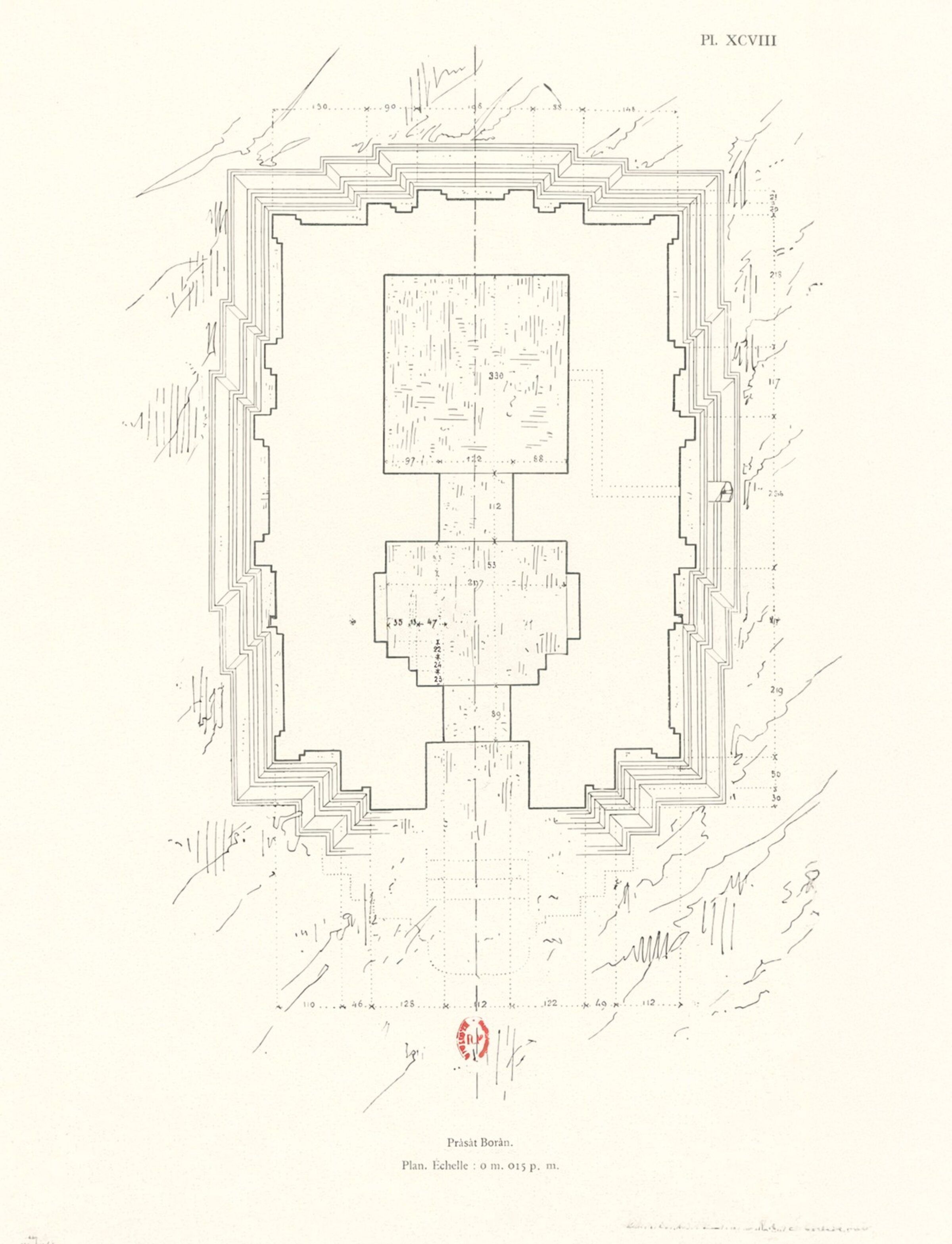
Prasat Boram, Sambor Prei Kuk, floorplan by Henri Parmentier (1927).
Prasat Boram, Sambor Prei Kuk, floorplan by Henri Parmentier (1927).
Table of contents
Vol. I
- INTRODUCTION 1
- IDescription générale des monuments 9
- IISambor-Prei Kuk 44
- IIILe delta et le cours inférieur du Mékong 93
- IVLe bassin du Tonlé Sap 132
- VCours supérieur du Mékong 188
- VIVestiges voisins de l'art khmèr primitif et pièces de cet, art conservées dans les musées 236
- VIIDécoration et sculpture 247
- VIIILe linteau khmèr dans l'art khmér primitif et dans l'art classique; son origine 272
- IXDonnées sur la civilisation contemporaine fournies par l'art khmèr primitif 297
- XDonnées sur la civilisation contemporaine fournies par l'art khmèr primitif. Religion et culte 310
- XIRapports de l'architecture khmère primitive avec les architectures de même ordre 340
- XIIL'art figuré dans les réductions d'édifices 350
- CONCLUSION: Rapports de l'art khmèr primitif et de l'art khmèr cIassique 371
- Lexique des termes étrangers 377
- Table générale des monuments 379
- Index des noms cités dans l'ouvrage 399
- Errata et Addenda 403
- Table des illustrations 405
Vol. II
- 94 plates, including 3 maps: 1) Cochinchina-Cambodia, 2) Cambodia, Northwestern section, 3) Laos-Cambodia, Northeastern section
Tags: pre-Angkorian, pre-Angkorean, Khmer art, sculpture, archaeology, architecture, Mekong Delta, Laos, Siam, Sambor Prei Kuk, Sambor, Hanchey, Tonle Bati, Angkor Borei, Chenla, Funan
About the Author
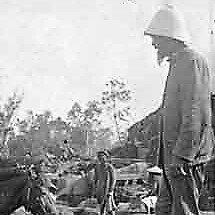
Henri Parmentier
Henri Parmentier (3 Jan. 1870, Paris — 22 Feb. 1949, Phnom Penh) was a French architect, art historian and archaeologist, one of the first European specialists in the archaeology of Indochina. He has documented, depicted and preserved numerous Khmer, Cham and Lao monuments.
Head of the EFEO in Cambodia during 28 years, he had married in 1905 novelist and journalist Jeanne Leuba, with whom he co-published several accounts. The couple endured the Japanese occupation of Cambodia with the rest of the small Phnom Penh French colony opposed to Petainist collaboration during World War II. He died in Phnom Penh, still actively contributing to Khmer, Cham and Laotian studies after his official retirement in 1962.
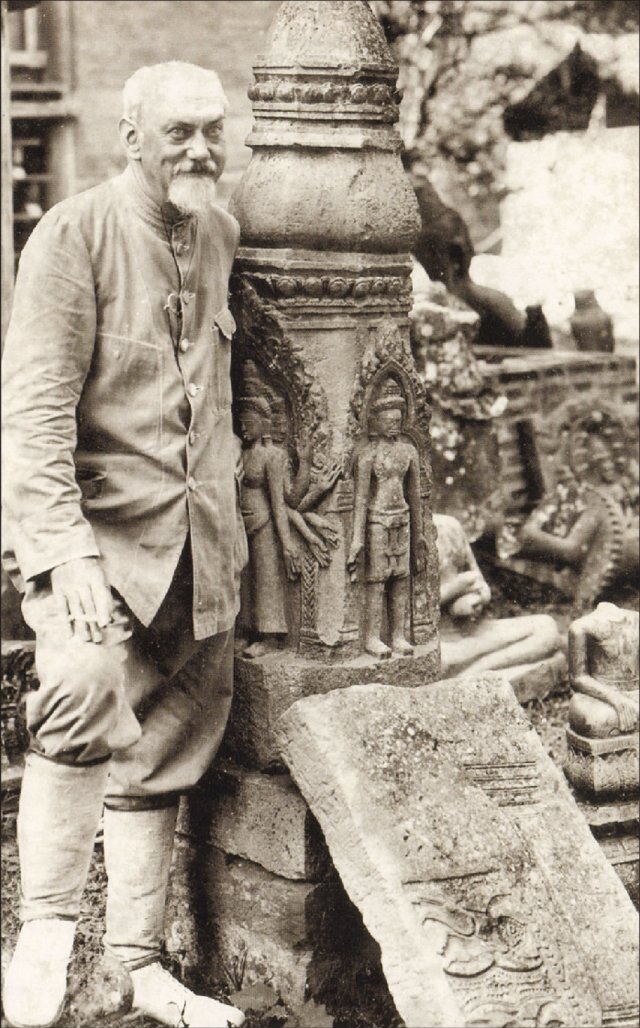
Henri Parmentier, circa 1930 (EFEO Archives, reprinted in W640).
Henri Parmentier, circa 1930 (EFEO Archives, reprinted in W640).