Discovering Vietnam's Ancient Capital: the Archaeology and History of the Imperial Citadel of Thăng Long-Hanoi
by
&
Tien Dong Nguyen
A lively account of the 2000-2004 archaeological campaign on the site of the ancient citadel and imperial compound of Thang Long (modern Hanoi).
Author
Tien Dong Nguyen
Publisher
Singapore, NUS [National University of Singapore] Press.
Published
2024
Pages
333
Language
English
ISBN
978-981-325-229-5
Formats
ADB Physical Library, paperback
[From the foreword]: As Vietnam entered the 21st century it began to prepare for the 1,000th anniversary of the founding of its capital, Thăng Long (now Hanoi). In the heart of the city, a rescue excavation was launched on land earmarked for me construction or a new National Assembly building. Archaeologists unearthed thirteen centuries of vestiges of the ancient city of Thăng Long, yielding a richer record than anyone had dared to hope for. Construction plans were shelved, excavations widened, and at the city’s millennial celebrations in 2010, UNESCO announced its inscription of the Imperial Citadel of Thăng Long on its World Heritage List.
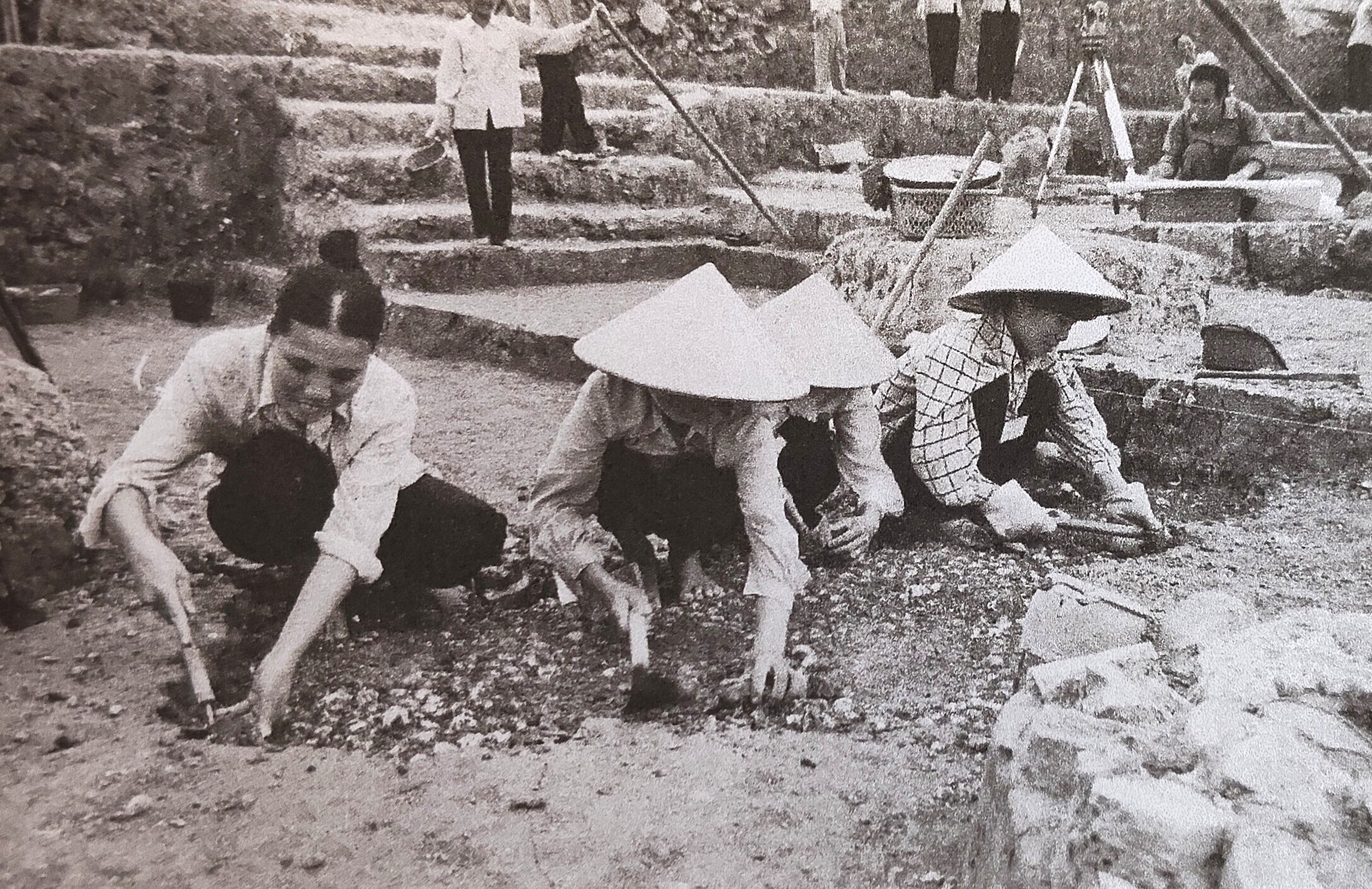
This archaeological discovery has two facets. The first, told here by the archaeologists involved, is the story of the excavations, as their trowels brought to light the bricks, tiles, pillars, sculptures and ceramics of countless ancient temples and palaces. The second is the history of the citadel itself, in its early years as an outpost of the Chinese empire, in its heyday as the Forbidden City of Vietnam’s emperors, and in its downgrading and eventual destruction at the hands of the Nguyễn dynasty and French colonial rulers. The book relates the questions, findings and emotions of research team members as the imperial citadel took shape before their eyes. Drawing on the results of their work, it presents a historical narrative of the continuous development of a regional political centre on this site.
Bringing together history, urban archaeology and a fascinating story of the interplay of influences from China and Southeast Asia, this is also a fascinating case of an Asian capital city coming to understand its history, and deciding how to preserve its archaeological remains.
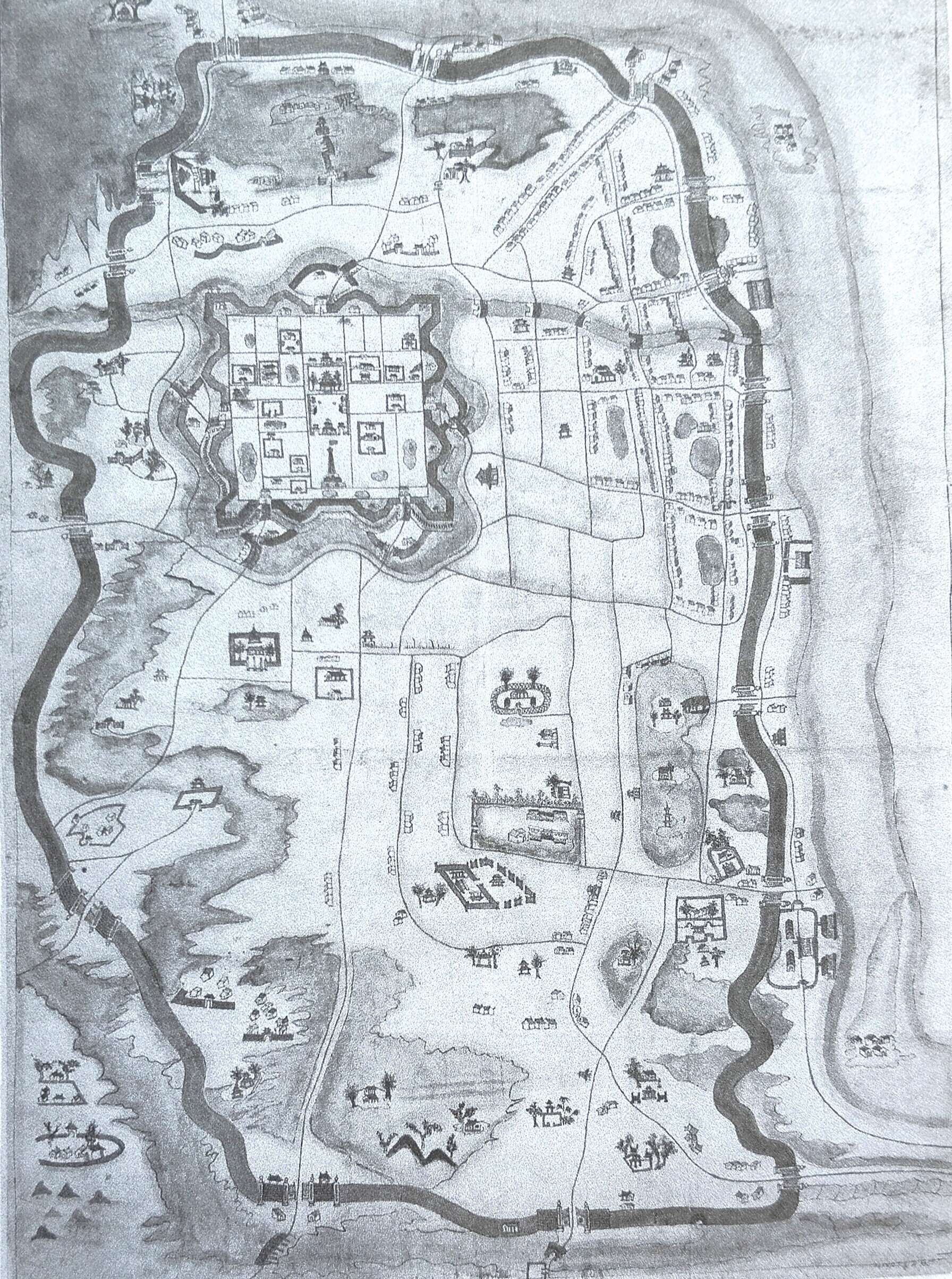
‘Annamite map of Hanoi’ collected betw. 1876 and 1883 [Paris, Bibliothèque Nationale de France, DCP-GE A‑395 (RES), public domain, repr. in Discovering Vietnam’s Ancient Capital, 2024].
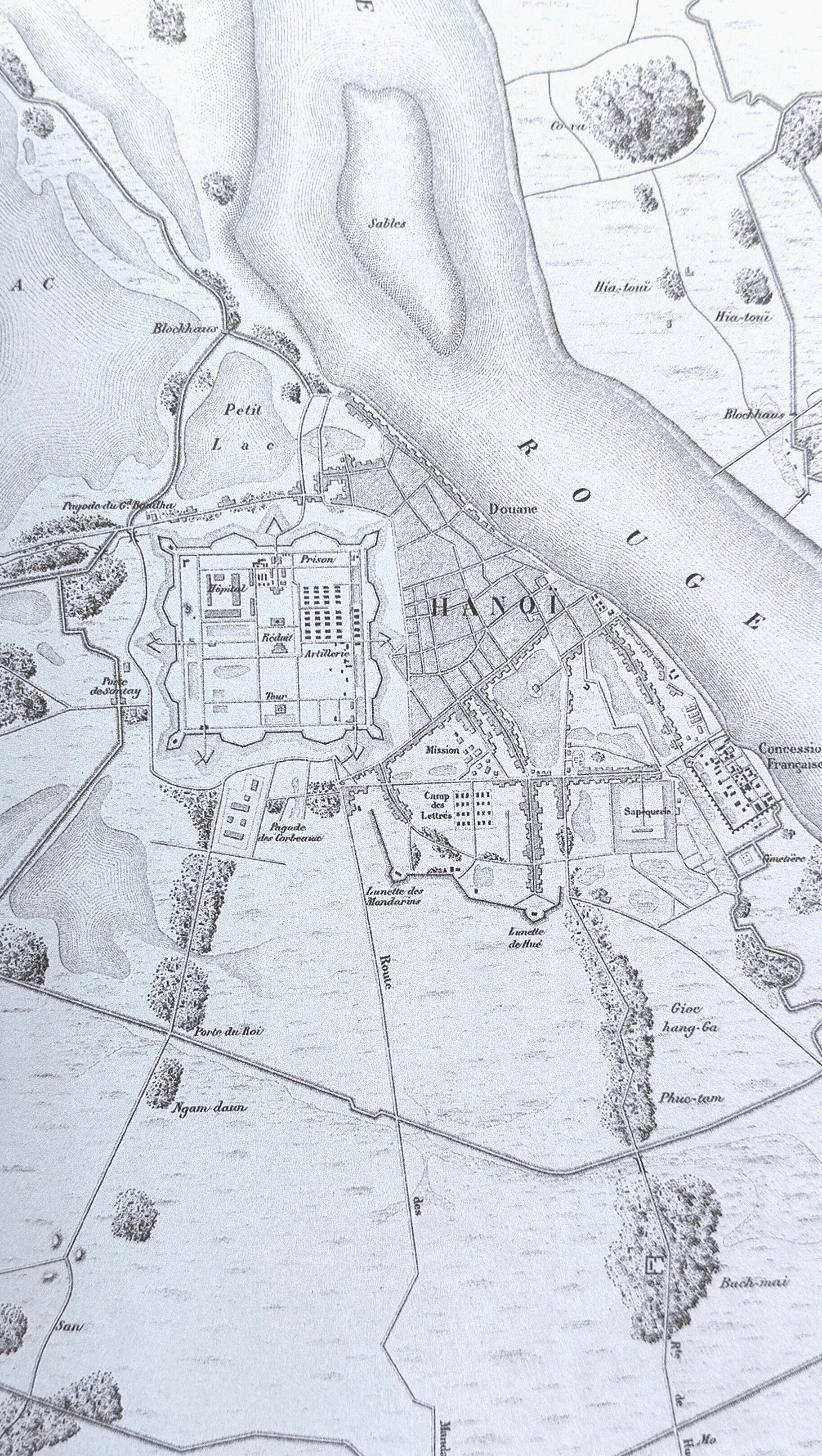
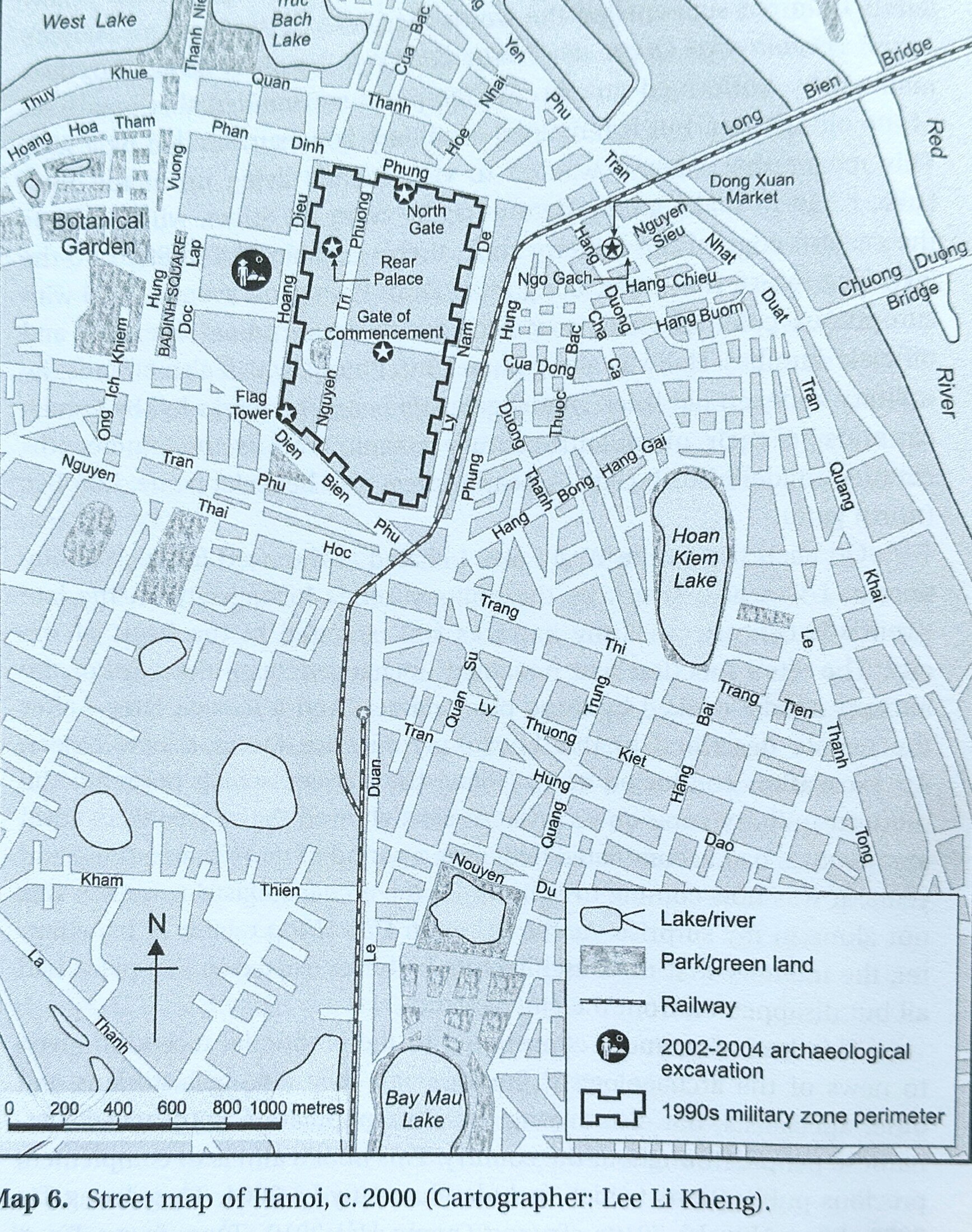
1) ‘Annamite map of Hanoi’ collected betw. 1876 and 1883 [Paris, Bibliothèque Nationale de France, DCP-GE A‑395 (RES), public domain]. 2) ‘Environs de Hanoi’ [Hanoi and surroundings], French Expeditionary Corps in Tonkin, Chief of Staff Surveyor Service, 1885 [BNF DCP-GE 521, public domain]. 3) Street map of Hanoi, c. 2000 [cartographer: Lee Li Kheng].
1) ‘Annamite map of Hanoi’ collected betw. 1876 and 1883 [Paris, Bibliothèque Nationale de France, DCP-GE A‑395 (RES), public domain]. 2) ‘Environs de Hanoi’ [Hanoi and surroundings], French Expeditionary Corps in Tonkin, Chief of Staff Surveyor Service, 1885 [BNF DCP-GE 521, public domain]. 3) Street map of Hanoi, c. 2000 [cartographer: Lee Li Kheng].
1) ‘Annamite map of Hanoi’ collected betw. 1876 and 1883 [Paris, Bibliothèque Nationale de France, DCP-GE A‑395 (RES), public domain]. 2) ‘Environs de Hanoi’ [Hanoi and surroundings], French Expeditionary Corps in Tonkin, Chief of Staff Surveyor Service, 1885 [BNF DCP-GE 521, public domain]. 3) Street map of Hanoi, c. 2000 [cartographer: Lee Li Kheng].
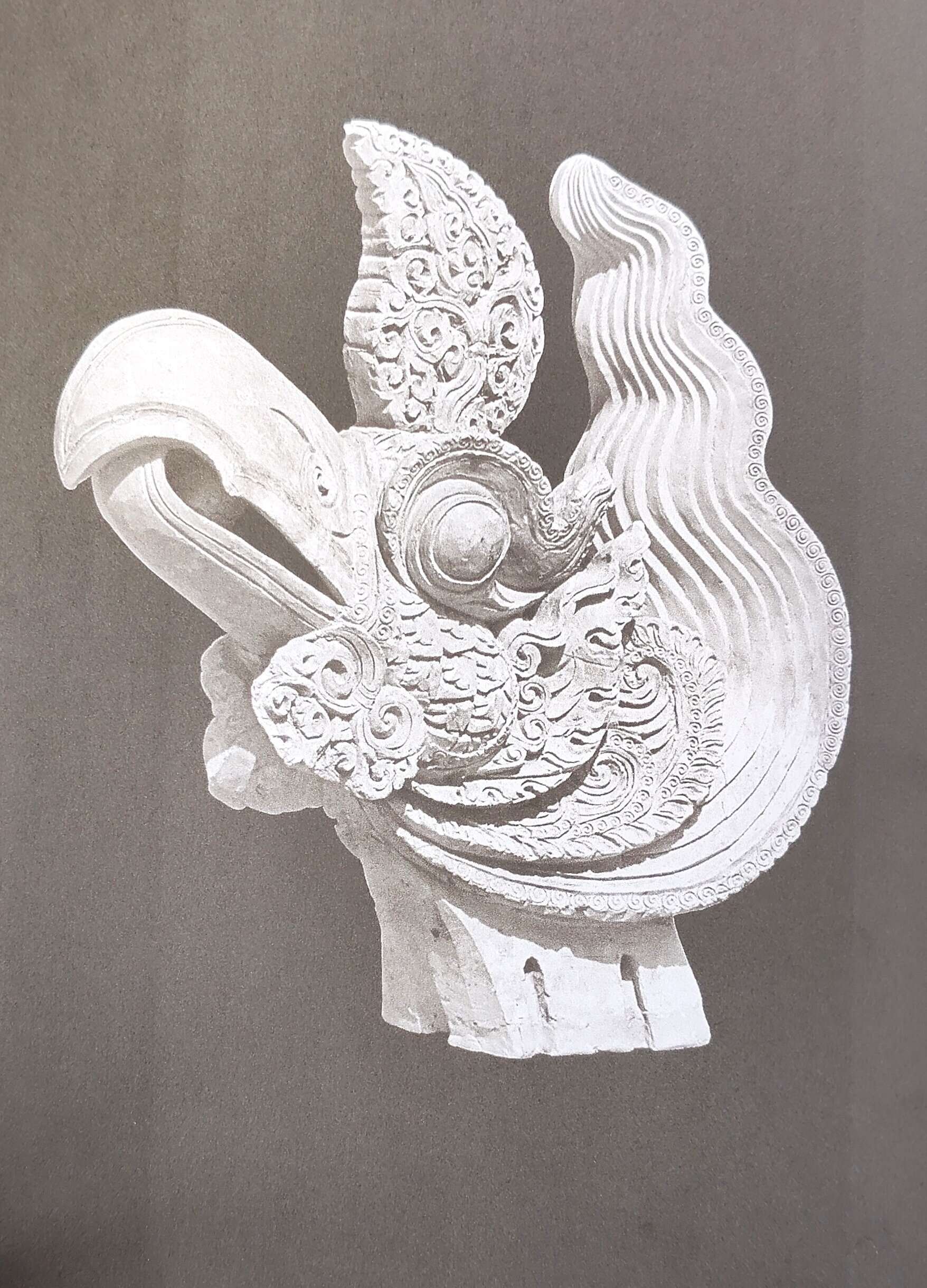
1) Lý-dynasty terracotta phoenix, symbol of the empress, exhibited at the Thăng Long Imperial Citadel on-site museum (53 cm x 62,5 cm). 2) Pavement with cockle shells unearthed in Section B, c. 2001 [photos: Institute of Archaeology, Hanoi].
1) Lý-dynasty terracotta phoenix, symbol of the empress, exhibited at the Thăng Long Imperial Citadel on-site museum (53 cm x 62,5 cm). 2) Pavement with cockle shells unearthed in Section B, c. 2001 [photos: Institute of Archaeology, Hanoi].
1) Lý-dynasty terracotta phoenix, symbol of the empress, exhibited at the Thăng Long Imperial Citadel on-site museum (53 cm x 62,5 cm). 2) Pavement with cockle shells unearthed in Section B, c. 2001 [photos: Institute of Archaeology, Hanoi].
As the capital city of Dai Viet[Đại Việt]- ancient name of Vietnam — and the seat of its independent dynasties — the Ly, Tran and Lê -, Thang Long faded into oblivion starting from 1802, a few decades before the French army started its push inward, when the Nguyen lords established their grip over the country from Phu Xuan (later Hue) and their rival faction, the Trinh family, was confined to the northern regions.
What the 2000 – 2004 excavations have shown, among many other findings, is that the Thang Long period marked not only a peak in the irredentist aspirations against Chinese hegemony but also a profound renewal of cultural references. As one of the leading Vietnamese architects on the citadel site, Nguyễn Tiến Đông, put it — before passing away prematurely two years before this collective book was published -
The Ly-Tran period appears as a time of strong renaisssance, and its achievements were not an accident of chance. On the basis of a local culture containing the vestiges of Dong Son culture combined with cultural factors from abroad, the Vietnamese [people] created architectural, sculptural and musical traditions — and a capital ‑that were Viêt in character but also contained much of the essence of other civilisations. One source of inspiration was Champa, a neighbouring country that possessed a dazzling civilisation and an attractive artistic tradition. This southern source became one of the factors impacting the reduction of the imitation of China, or as the Trần Quốc Vượng called it,‘de-sinisation’.
A millennium of Chinese rule meant that the Chinese inputs to Việt culture were multiple and contributed, along with indigenous factors, to the country’s unique southern identity. For Trần Quốc Vượng [1], ‘imitation of China was inevitable’ for the following reasons:
a. Because of China’s presence during a millennium of rule;
b. Because of the implicit and explicit pressure exerted by China from the tenth century, impeding the country’s development;
c. Because ‘whatever Vietnam does, it must keep one eye on its northern neighbour. China is large, Vietnam is small; imitation of China demonstrates that Vietnam is “not less” and “no different” from China, and as “cultured” as China, which means Vietnam has no need for Chinese rule’.
The tenth century saw the beginning of a period of restoration of national independence and renaissance of national culture. Long-standing influences from Indian culture (Buddhism and Hinduism), shown in the veneration of Đế Thích and Nhị Thiên Vương (Lý-dynasty divinities of the sun and moon), and new influences arriving from Champa and Chenla, two great non-Chinese civilisations, acted as counterweights for Vietnamese culture, serving to balance Chinese cultural influence and increase the uniqueness of Vietnamese identity.
These ideas led me to agree that it was entirely natural for Đại Việt to look south for inspiration, and that Champa served as a counterweight to China, giving new forms to Vietnamese efforts to escape from Chinese cultural constraints. The people in the past did not make straight copies of Champa cultural models, but learned from them, absorbed them, and used them to create unique cultural forms on the basis of an indigenous culture. What we see unearthed today at the Thăng Long Citadel is evidence of a political transformation and cultural renaissance in Đại Việt during the centuries after Lý Công Uẩn chose Gao Pian’s town for his capital, justified this choice with Chinese geomantic ideology, and initiated a building programme strongly inspired by the art forms and construction technologies of Champa.
[1] Here, the author was quoting Trần Quốc Vượng, ‘Xuân lửa Đống Đa trong bối cảnh văn hóa xã hội đương thời’ [The Đống Đa spring of fire in contemporary cultural and social context], in Trên mãnh đất ngàn năm văn vật, ed. Trần Quốc Vượng. Hanoi: Nxb Hà Nội, 2000, p. 142. [From the same author — Trần Quốc Vượng & Vũ Tuấn Sán, Hà Nội nghìn xưa [Hanoi, A Thousand-Past City]. Hanoi Sở Văn hóa Thông tin Hà Nội, 1975, reprint 1990.]
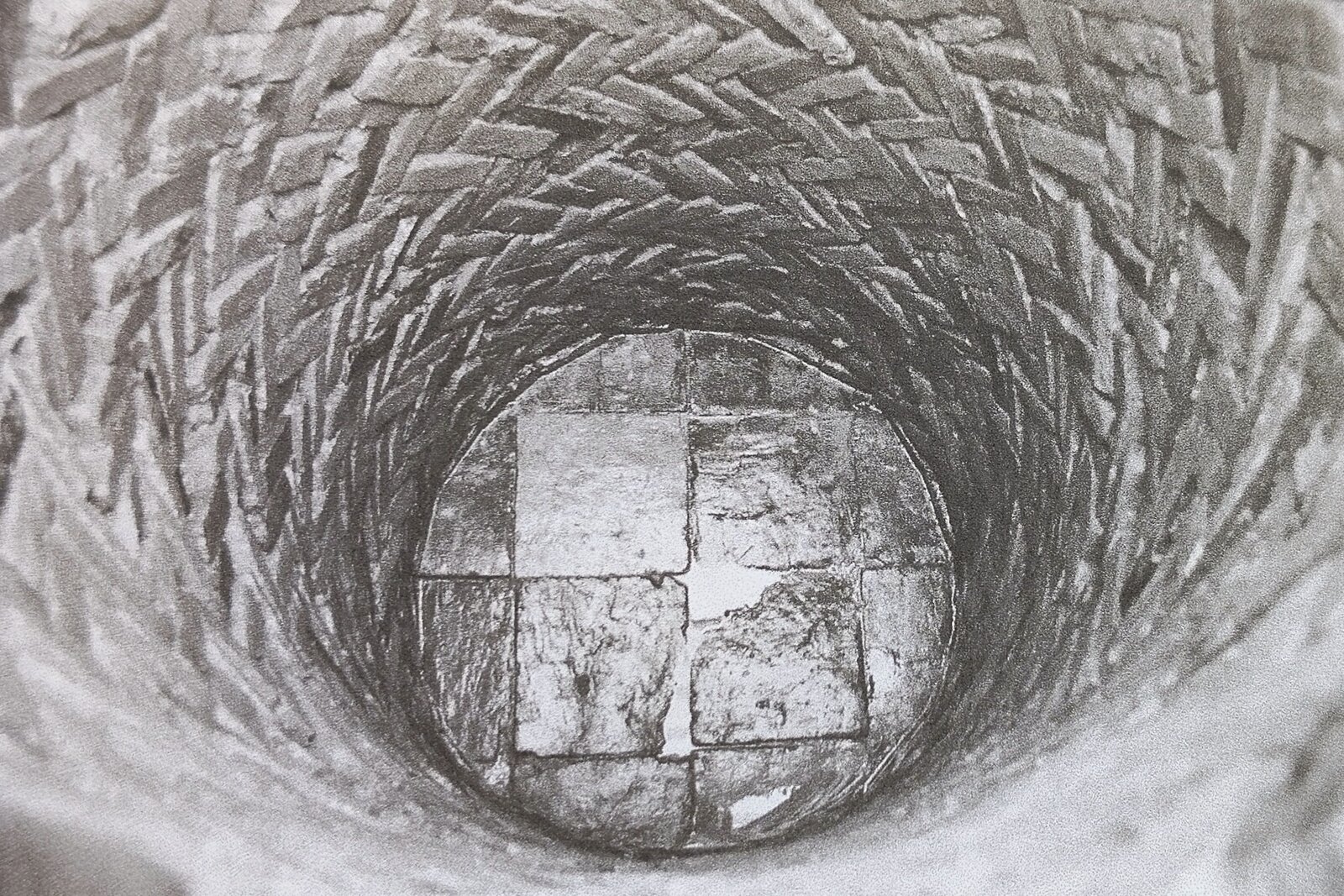
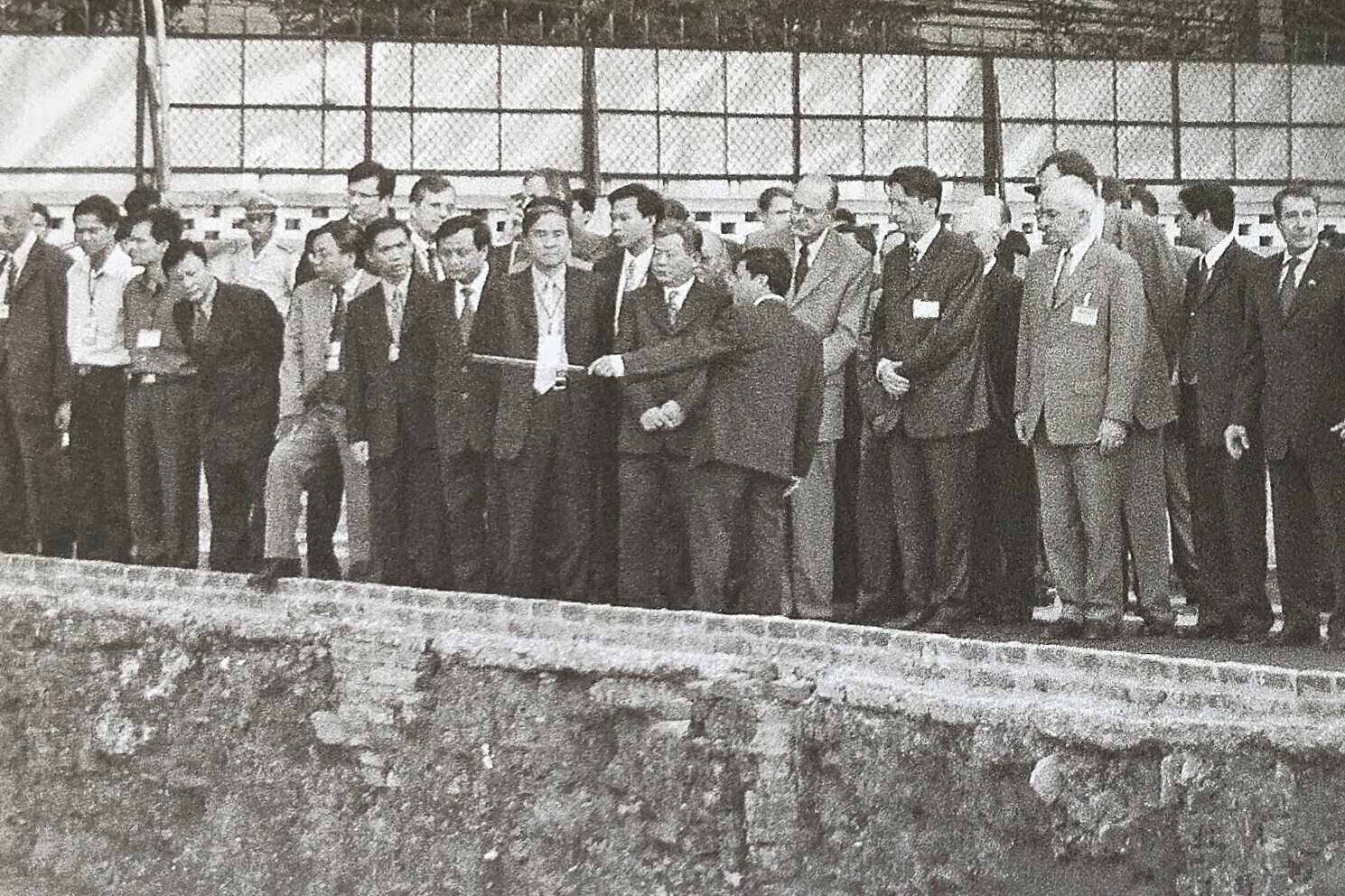
1) A well built during the Tran dynasty [photo Institute of Archaeology, Hanoi, 2003]. 2) French president Jacques Chirac, first foreign head of state to visit the Thang Long citadel archaeological site [photo EFEO Hanoi, 2004].
1) A well built during the Tran dynasty [photo Institute of Archaeology, Hanoi, 2003]. 2) French president Jacques Chirac, first foreign head of state to visit the Thang Long citadel archaeological site [photo EFEO Hanoi, 2004].
1) A well built during the Tran dynasty [photo Institute of Archaeology, Hanoi, 2003]. 2) French president Jacques Chirac, first foreign head of state to visit the Thang Long citadel archaeological site [photo EFEO Hanoi, 2004].
LIST OF CONTRIBUTORS
Đào Hùng (1932−2013): Historian, former editor of XuaNay review, Vietnam History Association.
Đỗ Danh Huấn: Historian, Institute of History, Vietnam Academy of Social Sciences.
Andrew Hardy: Historian, EFEO.
Lê Thị Liên: Archaeologist, administrative officer of the Vietnam Archaeology Association.
Nguyễn Gia Đối: Archaeologist, former director of the Institute of Archaeology, Vietnam Academy of Social Sciences.
Nguyễn Hồng Kiên: Archaeologist, Institute of Archaeology, Vietnam Academy of Social Sciences.
Nguyễn Tiến Đông (1962−2022): Archaeologist, Institute of Archaeolog Vietnam Academy of Social Sciences.
Nguyễn Văn Anh: Archaeologist, Faculty of History, University of Soc Sciences and Humanities, Hanoi.
Nguyễn Văn Sơn: Archaeologist, president of the Association of the History of Hanoi.
Phan Huy Lê (1934−2018): Historian, honorary president of the Vietnamese History Association, foreign corresponding member of the French Academy of Inscriptions and Belles-Lettres.
Phạm Văn Triệu: Archaeologist, Institute of Archaeology, Vietnam Academy of Social Sciences.
Olivier Tessier: Anthropologist, EFEO.
Tống Trung Tín: Archaeologist, president of the Vietnam Archaeological Association.
Franciscus Verellen: Historian, Professor Emeritus EFEO, member French Academy of Inscriptions and Belles-Lettres.
Table of contents
List of Maps and Figures
vii
Acknowledgements
xiii
Foreword by Nguyễn Gia Đối
xv
Introduction: The Discovery of Thăng Long Imperial Citadel: Archaeological Dig and Historical Event/ Andrew Hardy
1
Part I Excavation of the Citadel as Historical Event
1
Archaeological Research and Discoveries at the Thăng Long Imperial Citadel Site, 18 Hoàng Diệu Street, Hanoi / Tống Trung Tín 41
41
2
Intriguing Mysteries from a Corner of the Imperial Citadel / Lê Thị Liên
73
3
Discoveries Change Our Understanding of Vietnam's Ancient Architecture / Nguyễn Hồng Kiên
94
4
Interpreting the Cultural Layers / Nguyễn Văn Anh
100
5
Our Ancestors' Bricks / Đỗ Danh Huấn
106
6
The Central Sector of the Imperial Citadel of Thăng Long-Hanoi: World Heritage / Nguyễn Văn Sơn
118
Part II Research into the History of the Citadel
7
Thăng Long Imperial Citadel in Vietnamese Memory / Đào Hùng
129
8
Gao Pian (高駢), the Last Protector General of Annan / Franciscus Verellen
139
9
The Scale and Location of the Forbidden City Within the Structure of Thăng Long-Hanoi Citadel Through History / Phan Huy Lê
178
10
Đại Việt and Champa, Viewed from the Excavation Trenches at 18 Hoàng Diệu Street / Nguyễn Tiến Đông
222
11
Ancient Thăng Long Through Old Maps Phạm / Văn Triệu
239
12
From Thăng Long to Hanoi: The Downgrading and Destruction of the Nineteenth-Century Citadel / Olivier Tessier
248
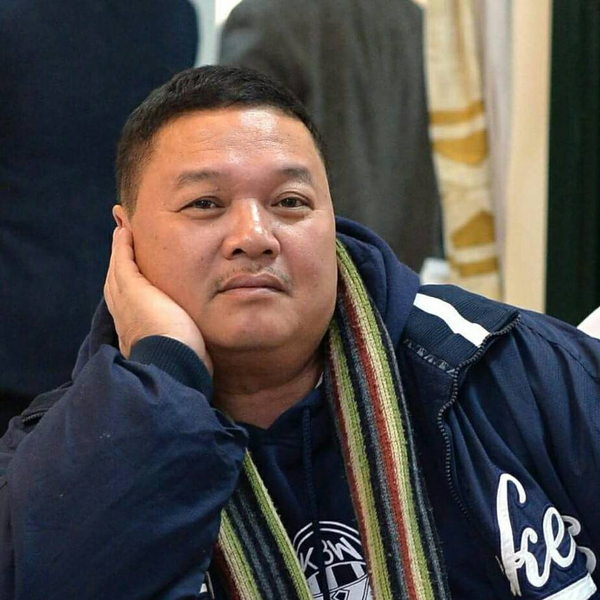
Dr. Nguyen Tien Dong [Nguyễn Tiến Đông] (1962, Hanoi, Vietnam — 1 March 2022, Hanoi) was a Vietnamese archaeologist and lecturer on archaeology specializing in Champa culture and history.
Before and after being appointed Head of the Historical Archaeology Department, Institute of Archaeology, Vietnam Academy of Social Sciences, Nguyen Tien Dong conducted extensive research on Champa in Central Vietnam and at the Cat Tien site, Lam Dong province.
He also contributed to the preparatory dossier for the Truong Luynational monuments in Quang Ngai and Binh Dinh provinces, and took an active part in the excavation, research and documentation of the Thang Long Imperial Citadel, an UNESCO heritage site since 2010.
Dong is an ancient Chinese term for a mountain valley community, especially in the southern and soutwestern regions abutting to 'historic' mainland China.
In Korea, dong동 has come to refer to a neighborhood or an administrative sub-district.