

Phnom Penh Then and Now
by Michel Igout & Serge Dubuisson
The evolution of Phnom Penh as the capital city of Cambodia through the colonial period, the Independence, the civil war and the decades of reconstruction.

- Authors
- Michel Igout & Serge Dubuisson
- Publisher
- Bangkok, White Lotus Press. Foreword by Prince Norodom Sihanouk [with the support of Total, Accor Group, Hotel Sofitel Cambodiana, GTM International]
- Published
- 1993
- Pages
- 179
- Language
- English
- ISBN
- 974-8495-84-1
- Formats
- ADB Physical Library, hardback
Through this smart selection of photographs and period postcards, the author manages to vividly recreate the unique destiny of Phnom Penh, an ancient royal city revitalized by the French Protectorate with the erection of a new Royal Palace in the 1860s, segregated by the colonial system in its architectural and urbanistic development, reoriented towards modernity during the ‘Golden Age’ of the late 1950s and 1960s, emptied of all life under the Khmer Rouge régime from 1975 to 1979, and able to catch up with its belated starting from the early 1980s.
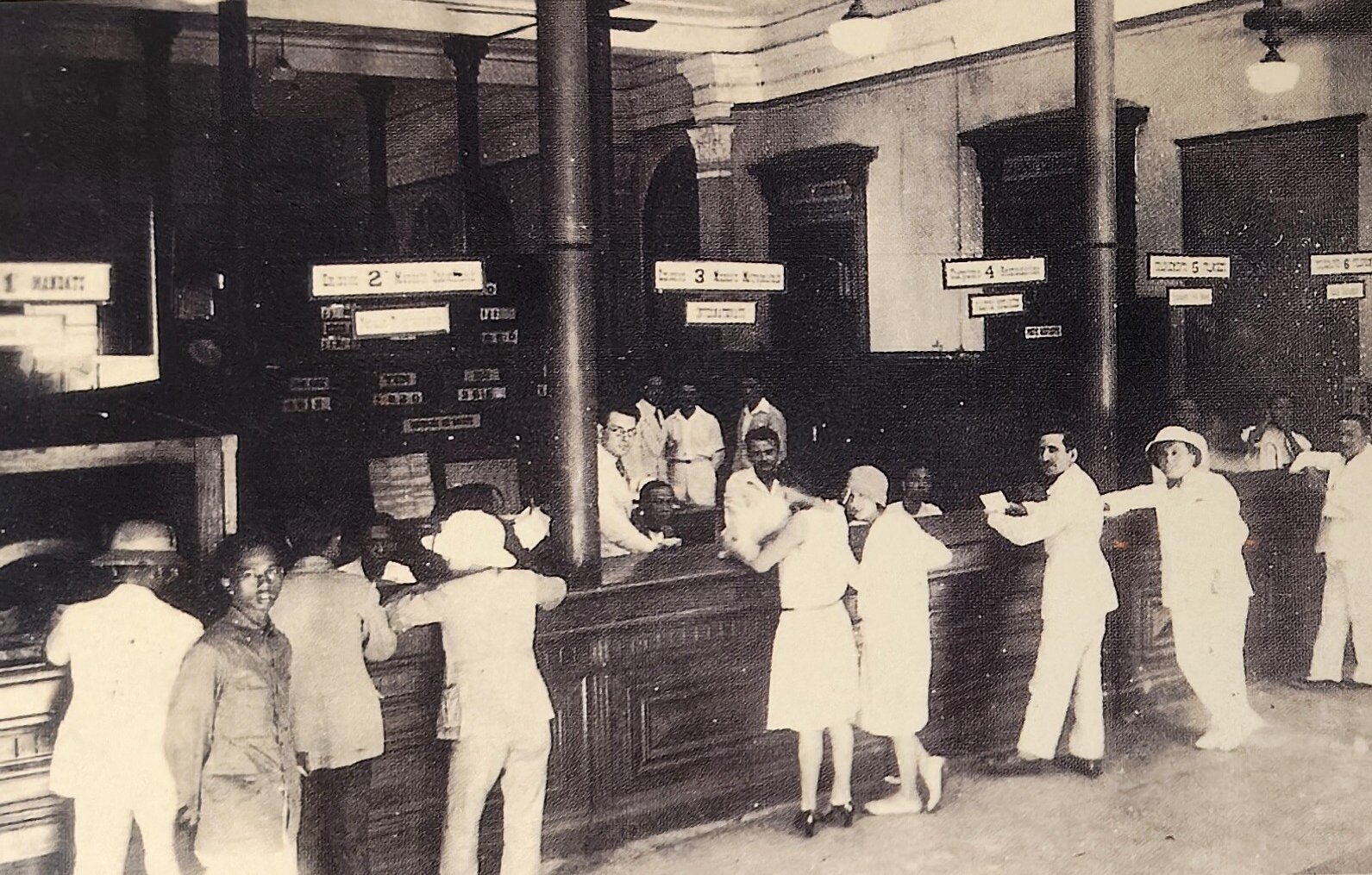
Phnom Penh Post Office, 1930 [in Michel Igout, Phnom Penh Then and Now, 1993].
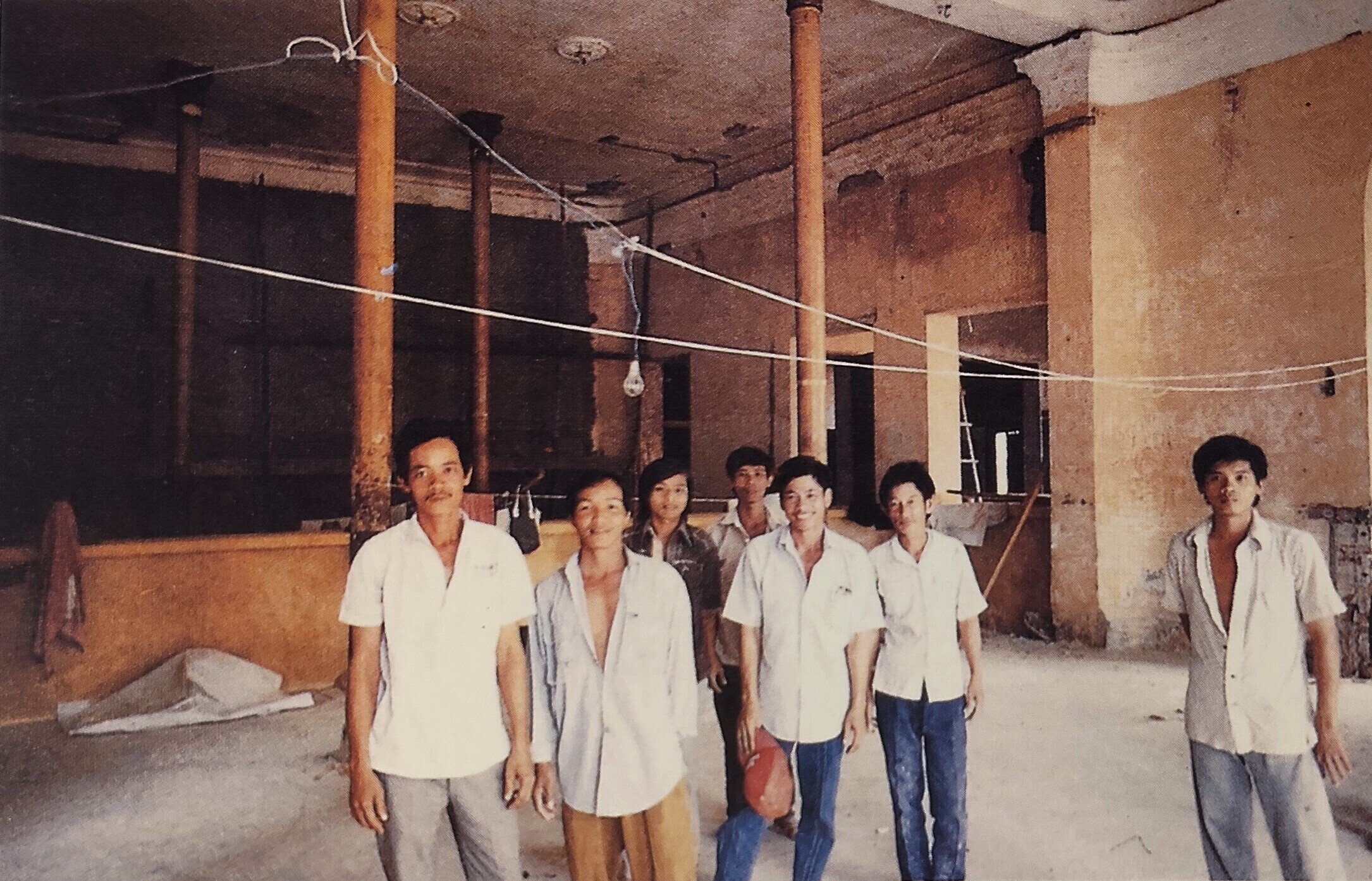
Phnom Penh Post Office, 1992 [in Michel Igout, Phnom Penh Then and Now, 1993].
A telling example of ”then and now” — the counters of Phnom Penh Post Office in 1930 [1, left], when patrons were Europeans and clerks Cambodian, and [2, right] in 1992, when the task of rehabilitating historic buildings abandoned during the Khmer Rouge terror was so pressing.
Table of contents
- Foreword by Prince Norodom Sihanouk [FR & ENG] v
- Photographs, Maps and Drawings viii
- Preface ix
- The Birth of Phnom Penh in the Fifteenth Century 1
- Cambodia in 1859, at King Norodom's Succession 3
- Phnom Penh During the Reign of King Norodom 4
- Major Construction Work in the Reigns of King Sisowat and King Monivong, 1906-1939 10
- A Modern City in the Making, 1939-1958 14
- Phnom Penh Becomes a True Capital under Prince Norodom Sihanouk in the 1960s 15
- From War to Reconstruction: Phnom Penh since 1970 22
- Conclusion 23
- Bibliography 25
Photographs, Maps and Drawings
- The Former Village in 1885 31
- The Royal Palace and the Kings 39 39
- Norodom Sihanouk, builder of modern Cambodia 45
- The Colonial Period 47
- The First Buildings of the French Protectorate, from 1890 to 1918 49
- The Old Bridges and Canals (1891-1932) 69
- The Buildings of the French Protectorate from 1919 to 1945 81
- The New Phnom Penh after Independence: the 1960s 105
- The Deserted City (1975-1979) 117
- The Streets of Phnom Penh 121
- Means of Transport in the City 131
- School, High-school and University Buildings 139
- The Construction of the Grand Market 145
- The Construction of the Royal Hotel 149
- The Port and the River 153
- Since 1991: A City in the Throes of Construction 161
- Phnom Penh from the Air 169
Tags: photography, postcards, urbanism, Phom Penh, civil war, French Protectorate, independence
About the Author
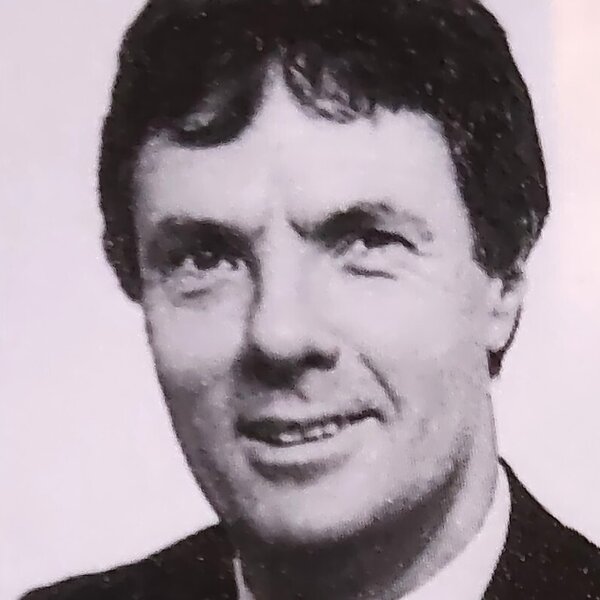
Michel Igout
Michel Igout is a French geographer who taught at several military academies in France and was an Associate Professor at the Institute of French Studies for Foreign Students at University of Aix-Marseille III (Law, Economics and Science), Aix-en-Provence, France.
As a special envoy to Cambodia from the International Cooperation Department, Ministry of National Education, he extensively visited Phnom Penh in the 1990s, serving as President of the Franco-Cambodian Solidarity Association and General Secretary of the Cambodian League for Human Rights.
Author of several reports on the situation of post-war Cambodia for the European Commission (Brussels) and the French Ministry of Cooperation (Paris), he completed a major illustrated essay on Phnom Penh, Phnom Penh then and now (1993, 2001), which became a sought-after reference publication about the Cambodian capital city.
Publications
- Phnom Penh then and now, Bangkok, White Lotus, 1993, 179 p. [with photos by Serge Dubuisson, foreword by Prince Norodom Sihanouk] [online]; repr. 2001. | FR Phnom-Penh d’hier à aujourd’hui, id. [
- “Au pays du roi lépreux”, 1895, revue d’histoire du cinéma, numéro hors-série “Jacques Feyder”, 1998: 109 – 21.
About the Photographer

Serge Dubuisson
Serge Dubuisson is a French photographer who was in charge of the African and Asian photo archive at Centre National des Archives d’Outré-Mer (ANOM), Aix-en-Provence, France, in the 1980s and 1990s.
After studying the trade at Paris National School of Photography and Cinematography (ETPC, founded in 1928, later known as École nationale supérieure Louis-Lumière (ENS Louis-Lumière), he worked as a photo reporter for many years, illustrating history and travel books such as Bordjs et Forts du Sahara by Jean-Charles Humbert, Ho Chi Minh, de l’Indochine au Viet-nam by Daniel Hémery, and Michel Igout’s Phnom Penh Then and Now (1993, 2001).