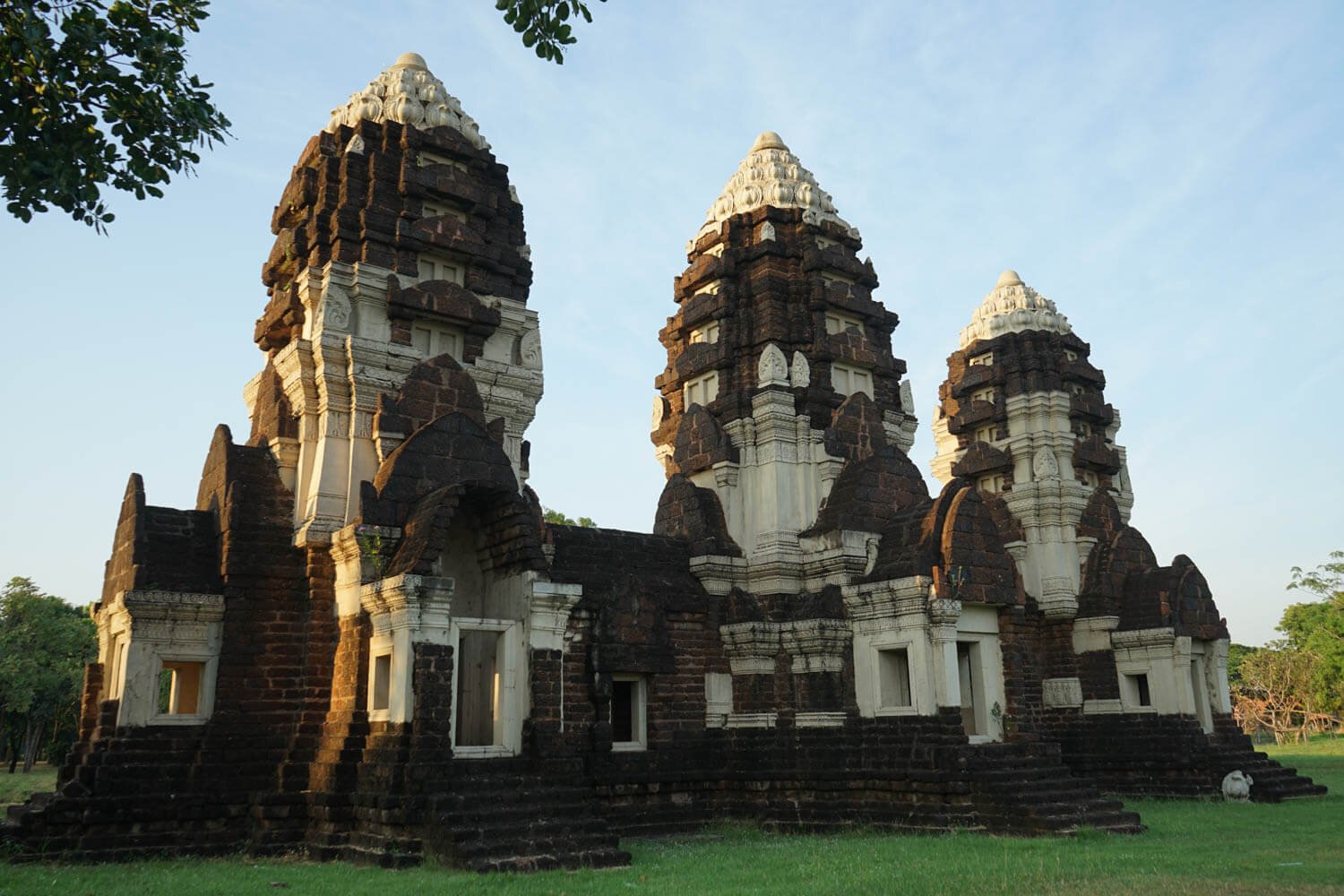
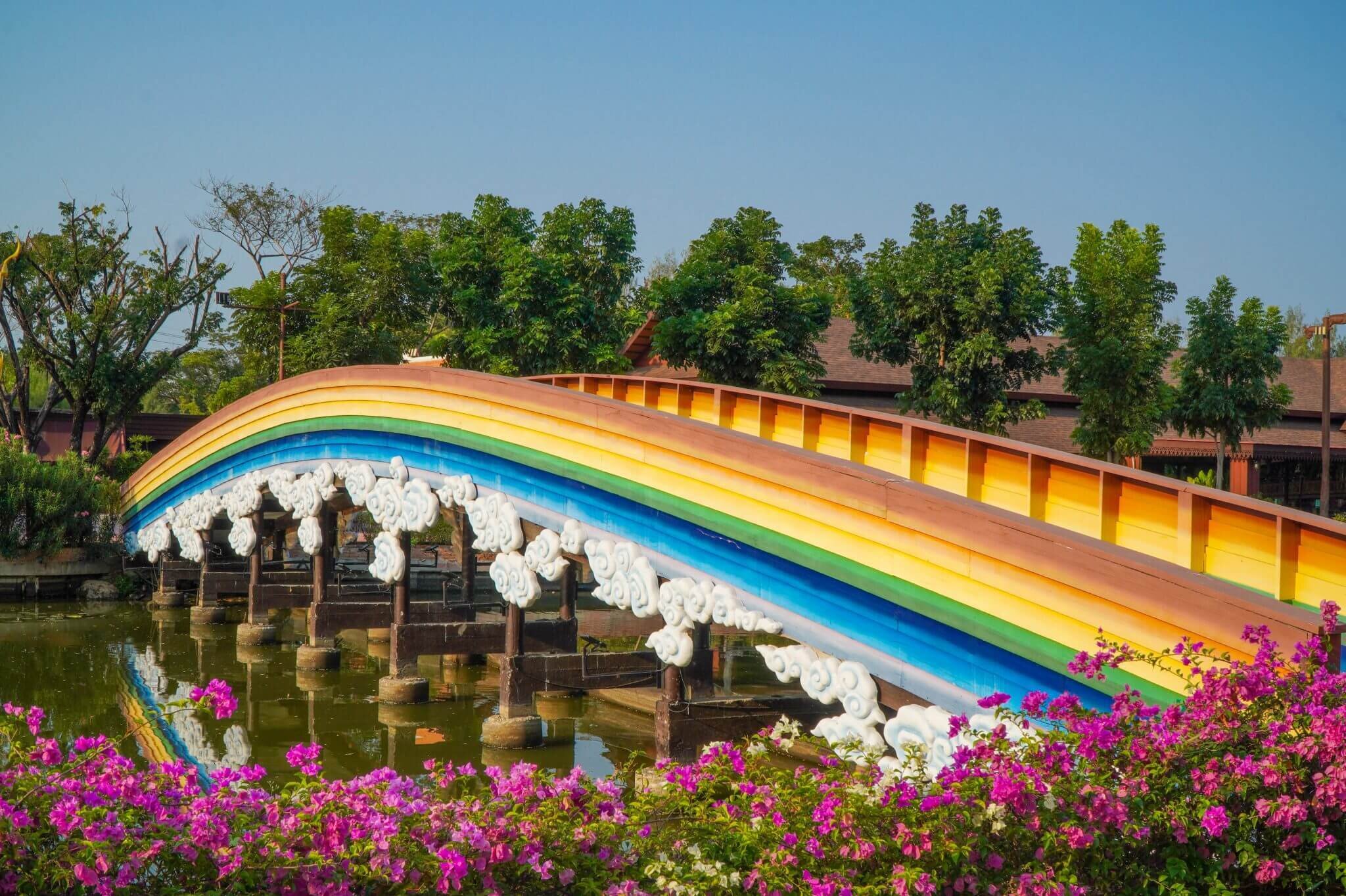
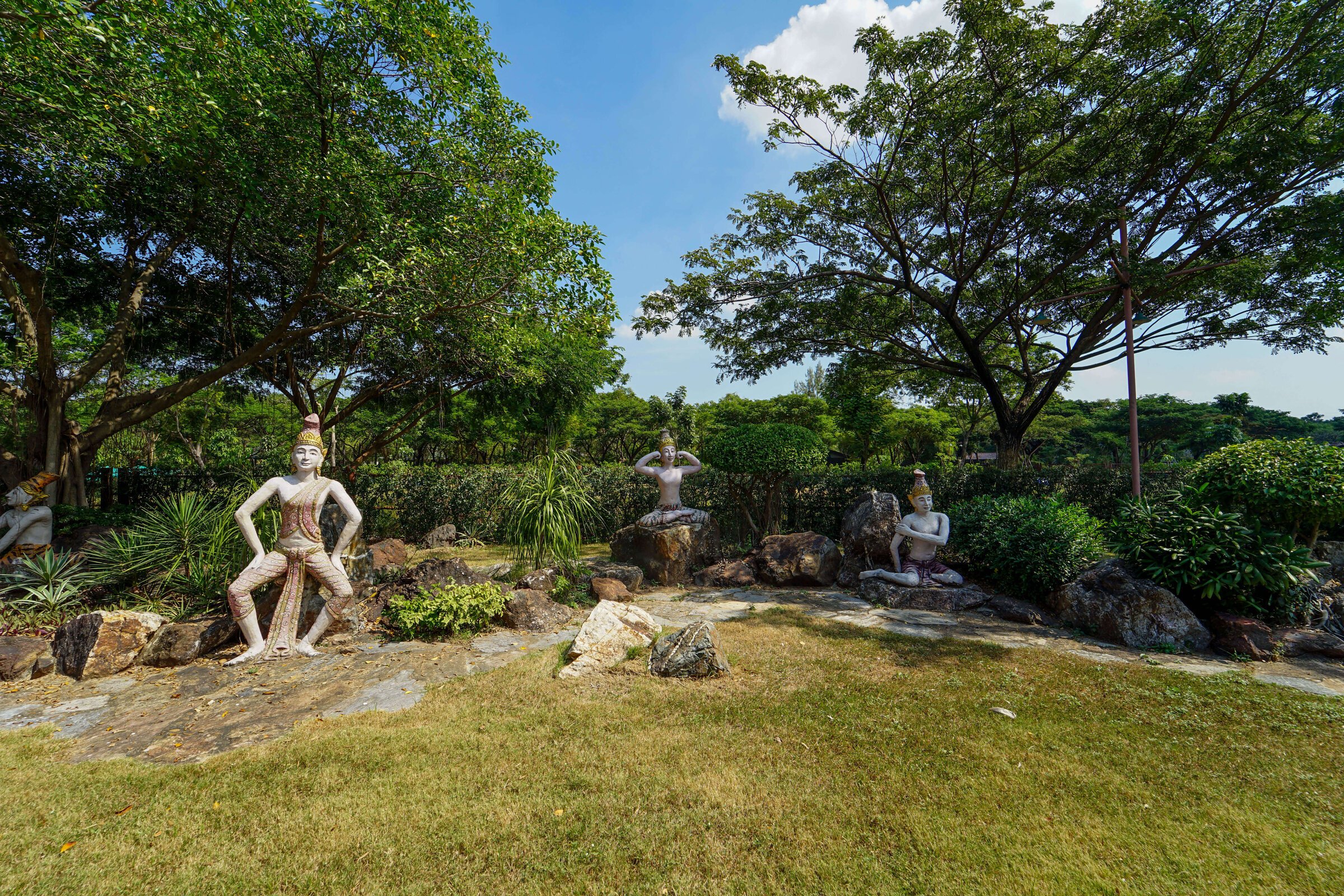
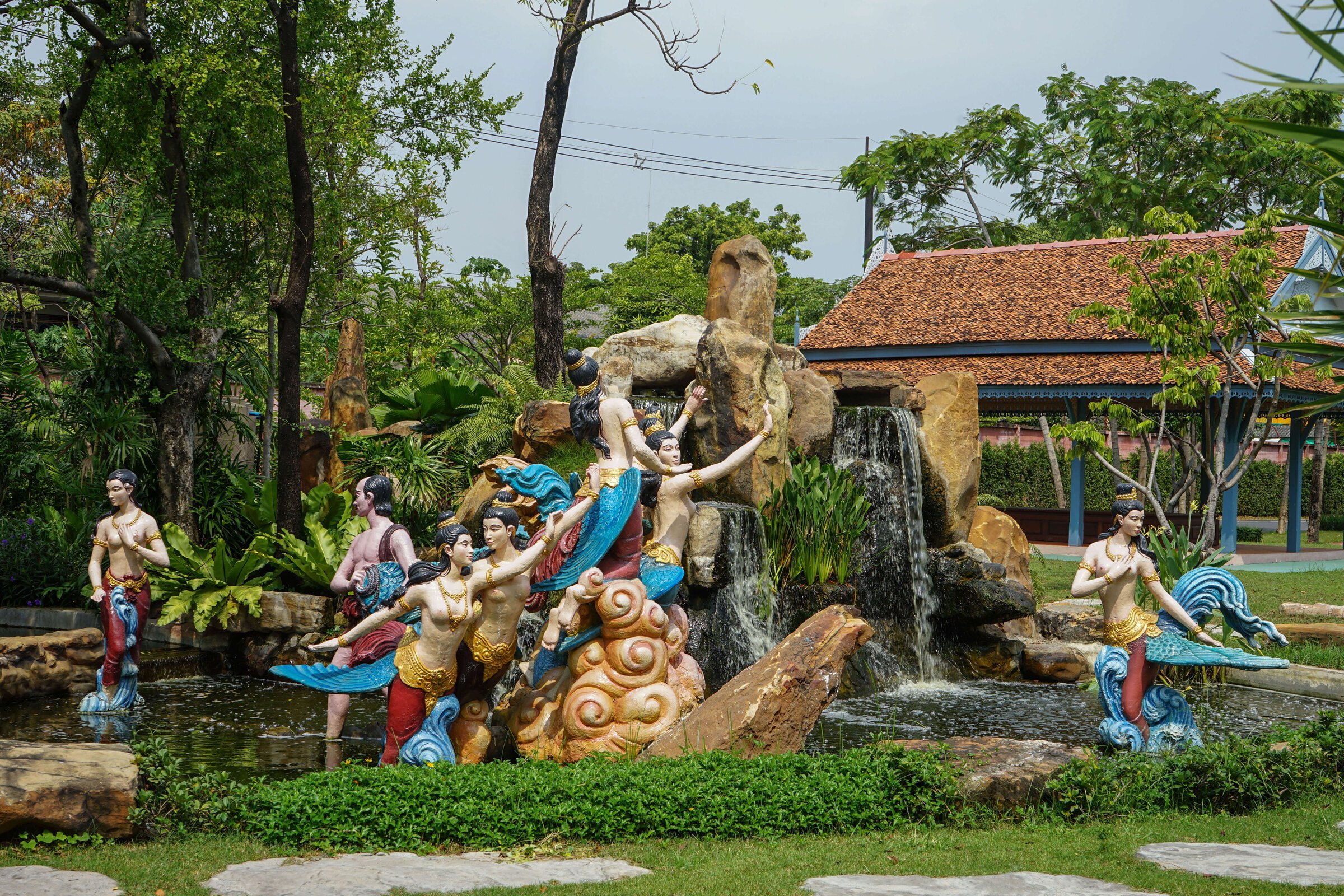
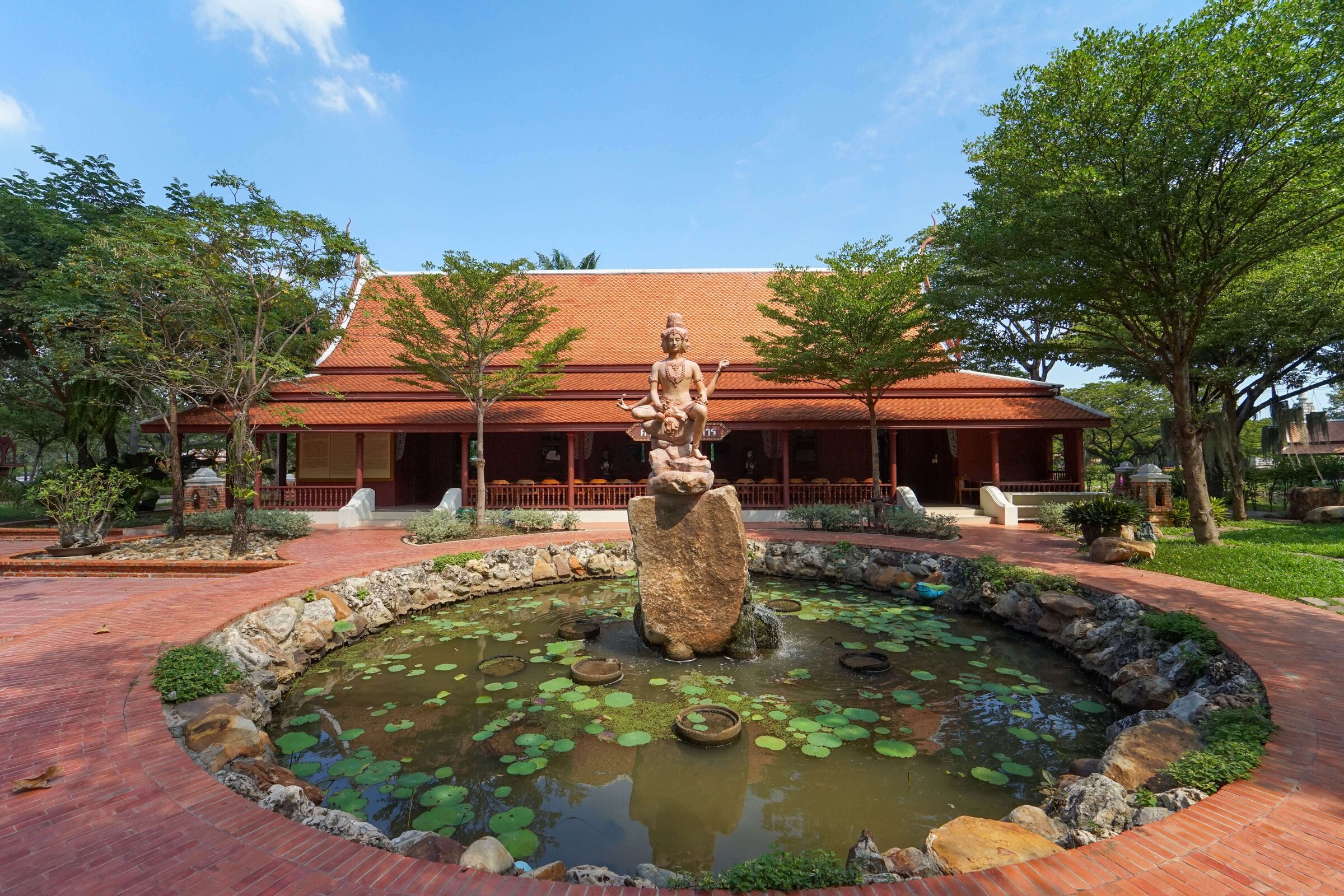
The 316 acres large museum-park re-creates an ‘ancient city’ (เมืองโบราณ สมุทรปราการ, Muang Boran) that encompasses Ancient Siam ways of life — markets, elephants, traditional boat rides) –, Buddhist ceremonies, and glimpses to ‘other religions and races’. An evocation of Subarnabhumi, The Land of Gold praised in Buddhist traditions, lies at the center of the park.
‘The Begining of an Era’, with Khmer sites
From the official website: “In 1963, Mr. Lek Viriyaphant started the construction of the Ancient City — the architecture in this area is not only modeled exactly after the originals that is fading away, some ruins were actually brought here, and along with much research with all the evidences they could gather, the central area of the Ancient City was built. These monuments includes Sanphet Prasat Palace, Ayutthaya (27), Dusit Maha Prasat Palace (The Grand Palace) (23), The Footprint of the Lord Buddha, Saraburi (33), The Audience Hall of Thon Buri (16) — those were central in the economics and governance of Siam, along with the grand buildings of The Dvaravati House (18), Khun Phaen House (19), Rattanakosin Dwelling (24). As for stone buildings, there are Prasat phra Wihan (Preah Vihear), Si Sa Ket (72), The Phanom Rung Sanctuary, Buri Ram (87), The Phimai Sanctuary, Nakhon Ratchasima (86), Prasat Sikhoraphum, Surin (90), The Fruit-shape Tower (Prang Mafuang), Chai Nat (32), Prang Sam Yod, Lop Buri (35), Prasat Sadok Kok Thom, Sa Kaeo (93), the essense of the Northeastern Historal places. Other masterpieces were also built during this period [1963 – 1972] such as The Garden of the Gods (43), The Bench of Public Appeals, Sukhothai (48), Noen Prasat, Sukhothai (49), The Grand Hall of Wat Maha That Sukhothai (50), The Hall of Wat Nimit, Trat (95), Ho Kham, Lampang (53), Phra That Phanom, Nakhon Phanom (71), Phra That Bang Phuan, Nong Khai (66), Phra Chedi Si Song Rak, Loei (63), Phra That Narai Cheng Weng, Sakon Nakhonon (69), etc.”
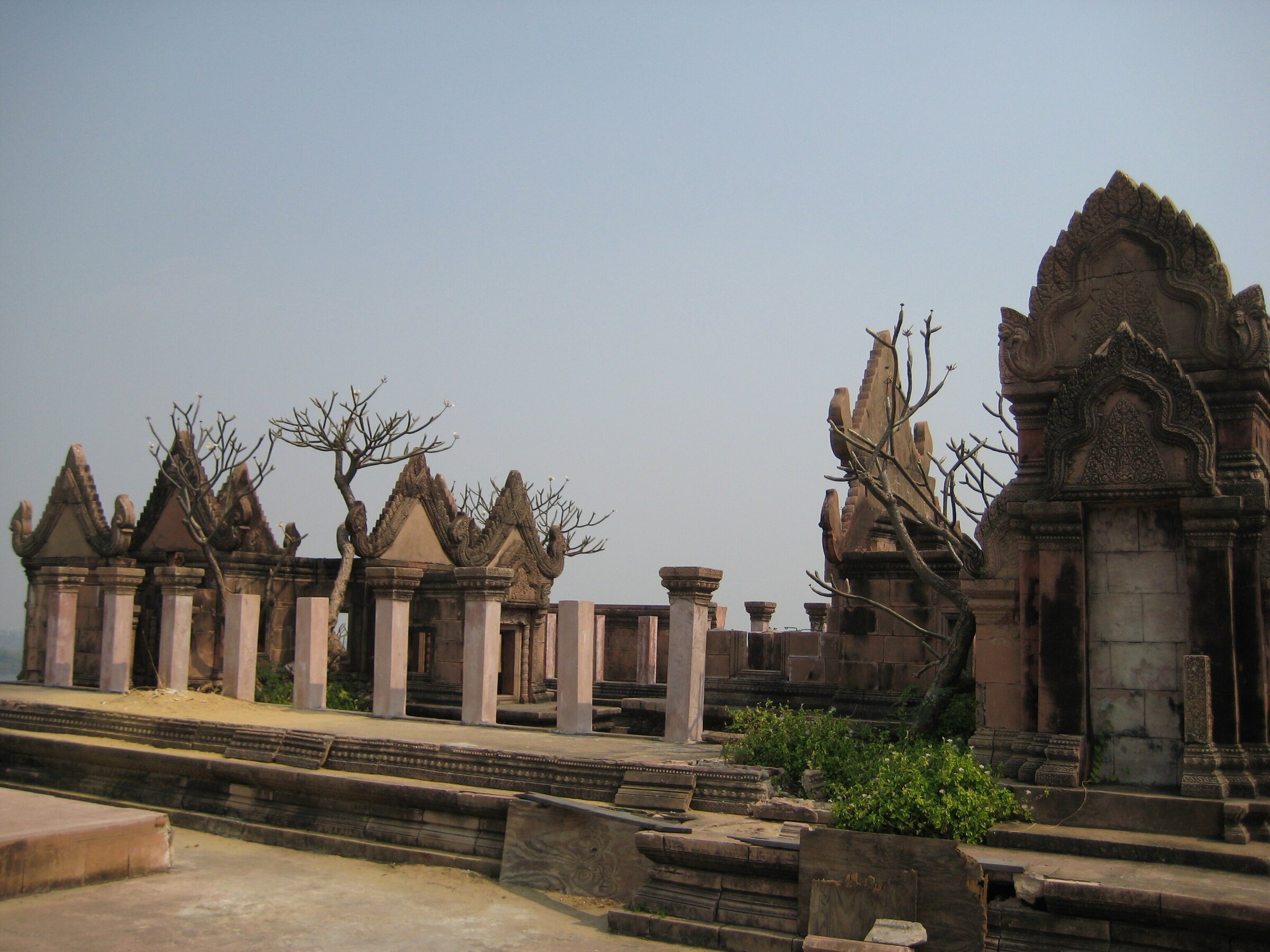
Preah Vihear Replica at Ancient City (Photo courtesy of John Burgess)
Preah Vihear Replica at Ancient City (Photo courtesy of John Burgess)
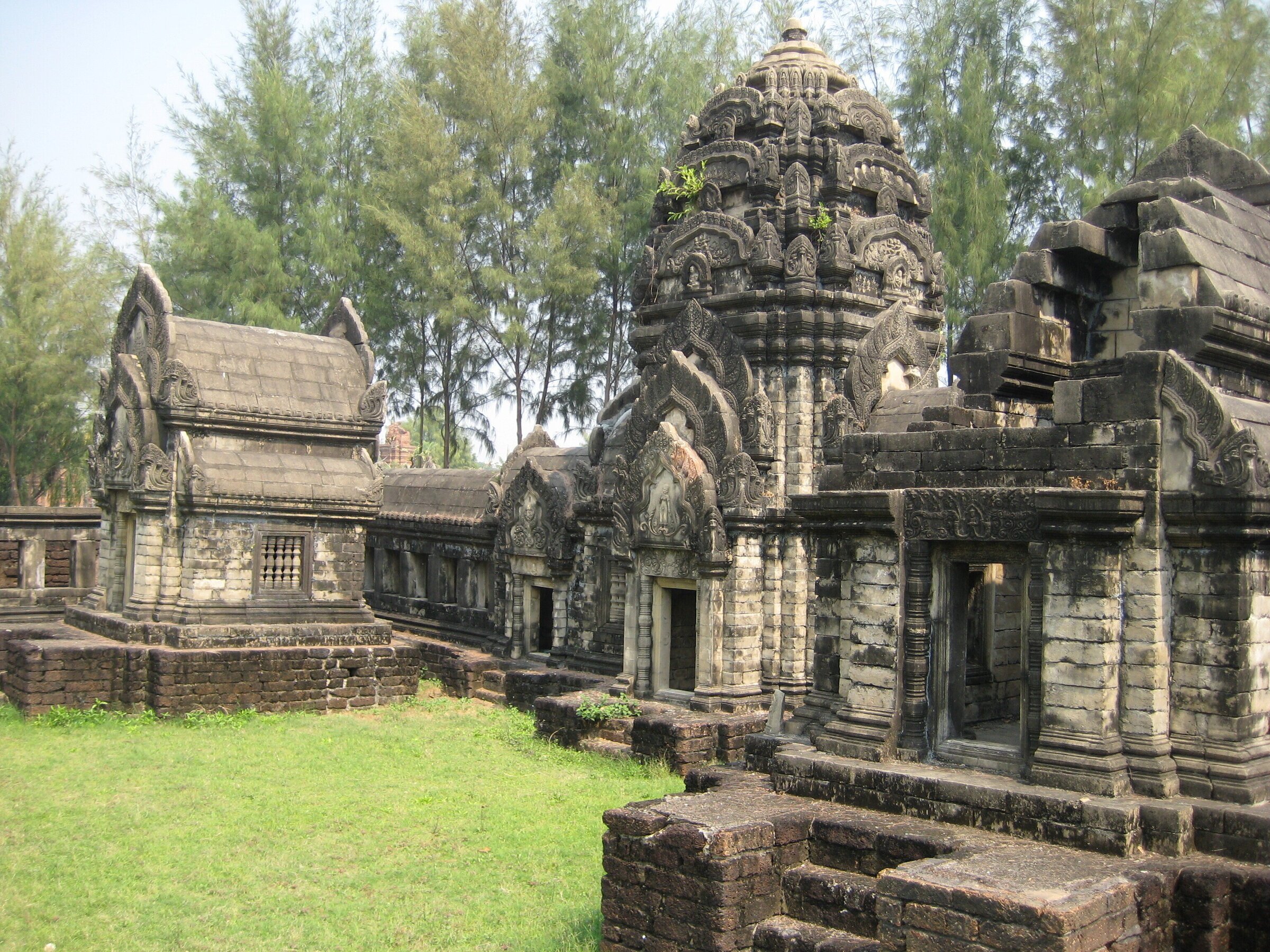
Sdok Kok Thom replica at Muang Boran (photo 2009 courtesy of John Burgess)
Sdok Kok Thom replica at Muang Boran (photo 2009 courtesy of John Burgess)
The Khmer temples are not illustrated on the official website, only mentioned as quoted above. Researcher John Burgess shared these photos with Angkor Database, adding: “In 2009, when I was researching my Sdok Kok Thom book, I was surprised to learn that the Ancient City had a replica of the temple. The real temple was in ruin when the replica was built. So Lek must have sent a team of architects and surveyors and photographers to the site who then decided the details of what the temple must have looked like when it was new. The replica is somewhat different from the now-completed reconstruction of the real temple, but nonetheless a pretty good effort.”
‘The Era of Growth, the great, forever-enduring inheritance’
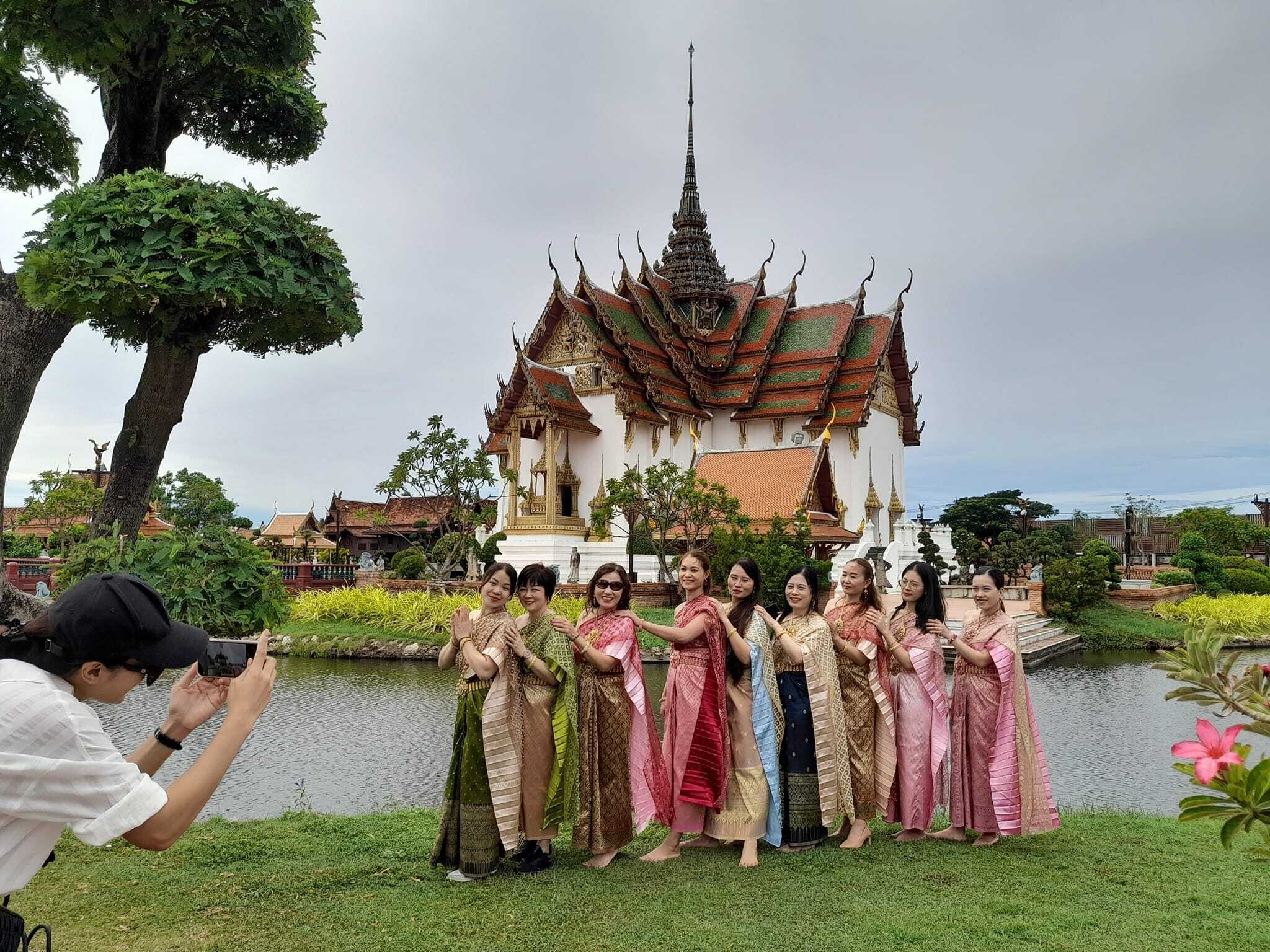
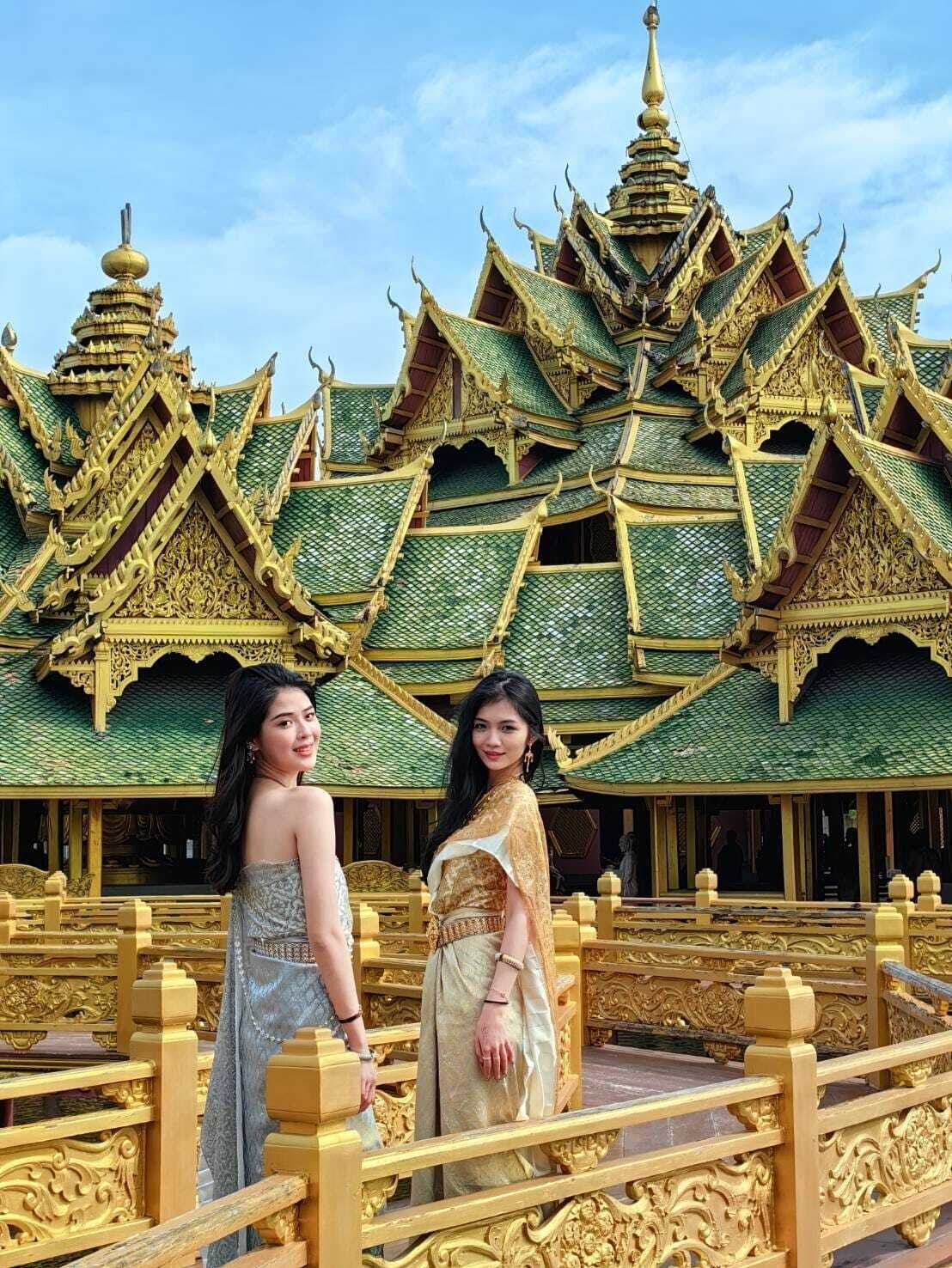
Since 1972, when the founder passed away, the museum-park has boasted many new additions, mostly aimed at international tourists, to become a vast showcase of Thai traditions. ‘Become a real Thai for a day’, a new program launched by the management, invite visitors, mostly female, to wear traditional attire and pose for many Instagram aficionados.
sk ऐरावत airāvata "belonging to Iravati" | kh អៃរាវតា aireavta | pali Erāvana | th เอราวัณ "Erawan".
Airavata is the divine elephant, characterized by four tusks, seven trunks and a white complexion, the main vehicle for Indra, the third son of Iravati, with Abhramu, his elephant wife, at his side.
In Cambodia, អៃរាវតា Airavata is generally represented with three heads, and he is one of the elephants supporting the four quarters of the world. The main elephant sanctuary in modern Cambodia bears the name of Airavata Foundation (Ratanakiri Province).
In Thailand, Erawan became the symbol of Bangkok during its foundation as the capital of the new Rattanakosin Kingdom. The three-headed white elephant was also an icon in the ancient Lao Kingdom of Lan Xang.
The Ayutthaya Kingdom or Empire was a Mon and later Siamese kingdom existed in Southeast Asia from 1351 to 1767, with its center Ayutthaya city, in Siam [nowadays Thailand]. Considered as the precursor of modern Thailand.
According to traditions, the kingdom was founded by King Uthong, but the latter's origin is unclear, as he is depicted as "a Northern Thai prince, a fugitive Chinese prince from the sea, a Khmer noble from Angkor, a ruler from one of the gulf cities, or a Chola dignitary."
kh ប្រាង្គ, th ปรางค์ ; compoud of sk pra- ("forward) and aṅga (body limb).
A tall tower-like spire, usually richly carved, common shrine element of Hindu and Buddhist architecture in the Khmer Empire (802–1431). Later adapted by Buddhist builders in Thailand, especially during the Ayutthaya Kingdom (1350–1767) and Rattanakosin Kingdom (1782–1932). In Thailand, only related with most important Buddhist temples.
sk स्तूप, stupa, "heap" | pa thupa | kh ចេតិយ chedi, cha-dey | th เจดีย์ cedyi, "stupa", "mausoleum".
A Buddhist mound-like or hemispherical structure containing relics, originally from the Buddha or from Buddhist monks or nuns, in modern times the remains of distinguished departed people, where one can come to meditate.
Thought to be derived from the ancient ritual of building tumuli, the stupa was designed to allow circumambulation [pradakhshina] around the structure, as seen until these days at Shewanagon Pagoda (Myanmar), the Abayagiri Dageba (Sri Lanka) or Borobodur Temple (Indonesia).
In Cambodia, royal stupas in pagodas (Oudong, Wat Ounalom, Wat Phnom...) and at the Royal Palace (Kantha Boppha chedi, King Suramarit...) have a distinctive style, different from Thai cedyis. In Khmer, the word originally meant "sign" [of a sacred place], and went to refer only to a structure containing relics.