

Jacob E. Conner

Jacob Elon Conner (21 Oct. 1862, Ohio, USA — 27 July 1949, Brooklyn, New York, USA) was an American political scientist, diplomat and writer who served as the first US Consul in Saigon from December 1907 to July 1909 (replaced with Miller Joblin) and visited Angkor at that time, with his account published in The National Geographic in 1912 along with photographs by Pierre Dieulefils and Lucien Fournereau.
After studying at Mt. Pleasant State University, Iowa — PhD. in political science -, he taught Greek and economics in secondary schools before conducting field research for the U. S. Bureau of Labor and the Interstate Commerce Commission. Impressed by his study on the foreign service corps (Uncle Sam Abroad, 1900), President Franklin D. Roosevelt appointed him to open in 1907 the first US Consular representation in Saigon (then labeled as ‘French Indochina’, ‘Cochinchina’ and even ‘Cambodia’ in the National Geographic). From 1909 to 1913, he was US Consul in St. Petersburg, Russia, later traveling extensively across Europe for ‘commercial purposes’ and furthering his personal studies on Ancient Greek civilization. His obituary in The Mt. Pleasant News (10 Aug. 1949) only added than from the 1920s to his death he was a “special Washington correspondent for a New York daily.” He also published one history essay late in his life, quite controversial Jesus Was Not a Jew: An Epistle to the Gentiles (1936).
The need for a permanent US representation in Saigon had been expressed since the 1870s by various American merchants in diplomats, in particular the US Consul in Singapore, A.G. Studer, who in a cable to the State Department dated February 1881 recommended for that position “Andrew Spooner, an American merchant at Saigon of whom the French Consul here, who knows him personally and respects him very highly, told me, that he is by far the ablest and most enterprising man in Cochinchina, and has been a member of the Colonial legislature, that he has a large mill for unhulling all the paddy (rice) exported from Saigon, and is, otherwise, engaged in large enterprises, that he is very highly respected in the Colony. [Robert Hopkins Miller, The United States and Vietnam: 1787 – 1941, Washington DC, National Defense University Press, 1990, p. 78 – 9] [1] [Spooner, who was in fact American by his father and French by his mother, worked only with French or local companies]. The US Consul in Bangkok expressed on many occasions an adverse opinion, claiming that Saigon would never gain any significant position in international trade.
As the tension between France and China was high due to the French military campaigns in Tonkin, the American officials waited until after the signing of the France-China 1885 Treaty — by which Saigon lost its status of ‘free port’ to become clearly French-operated -, before appointing a ‘US Commercial Agent’ starting from 1889, with Aimée Fonsales and later Edward Schneegans. Nine years later, the USA took over the Philippines after deafeting the Spanish fleet at Manila and the Saigon place acquired renewed importance. During his relatively brief posting, Jacob E. Conner pleaded for more American warships from Manila to pay visits to Saigon, as he thought the French colonizers were hoping that the US and Japan would go to war. In a May 1908 report, he noted that the local French “would be delighted to see a war between ourselves and Japan” and that “they would be impartial spectators, indifferent as to the outcome.” [Robert Hopkins Miller, op. cit., p. 151 – 2.]
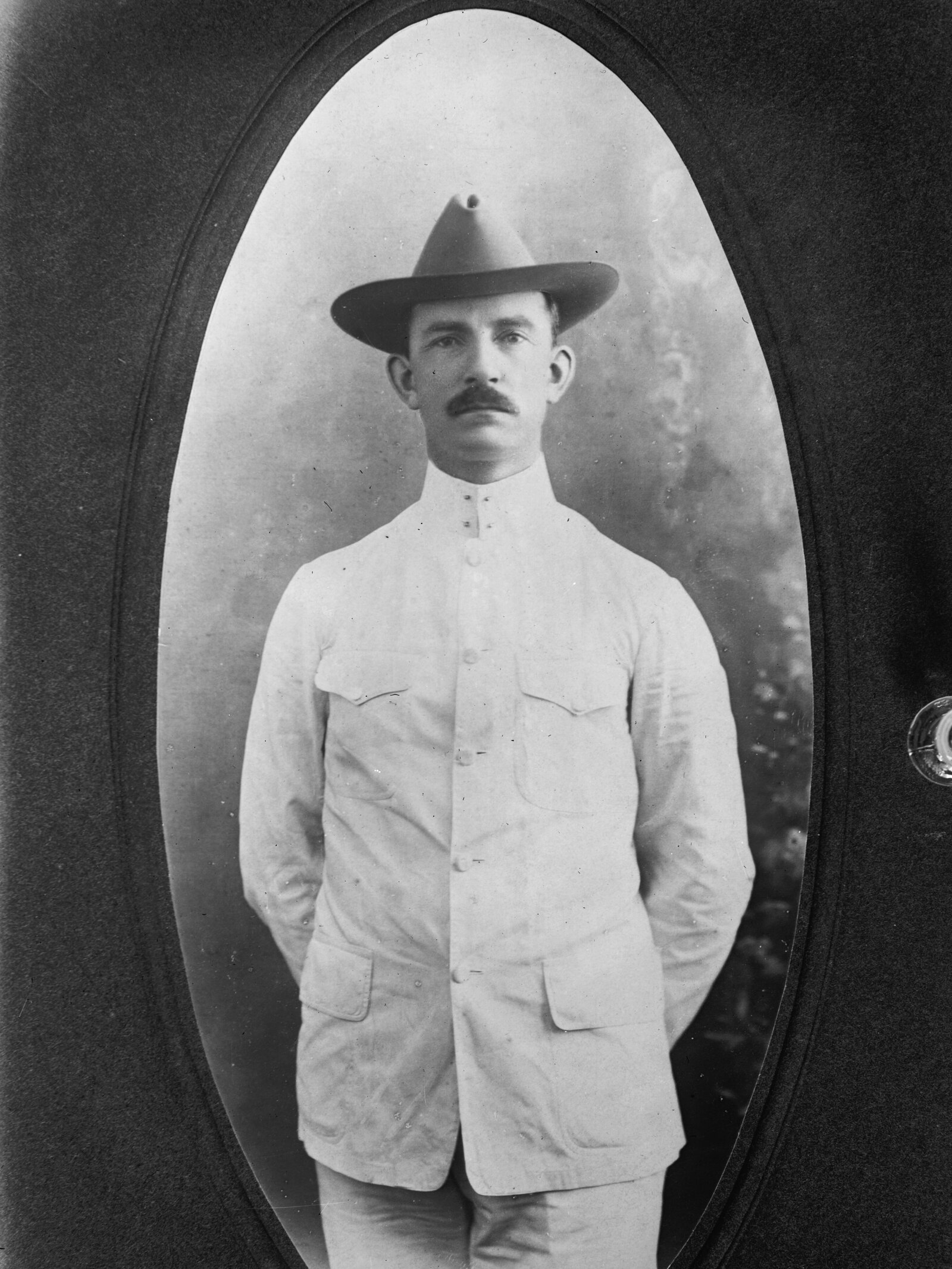
1) Portrait of Jacob E. Conner c. 1910 [Bains News Service via Library of Congress]. 2) Book cover of Uncle Sam Abroad, 1900. 3, 4) Illustrations in Jacob Conner’s Uncle Sam Abroad by
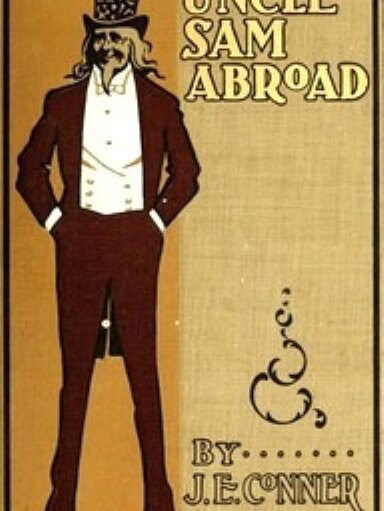
1) Portrait of Jacob E. Conner c. 1910 [Bains News Service via Library of Congress]. 2) Book cover of Uncle Sam Abroad, 1900. 3, 4) Illustrations in Jacob Conner’s Uncle Sam Abroad by
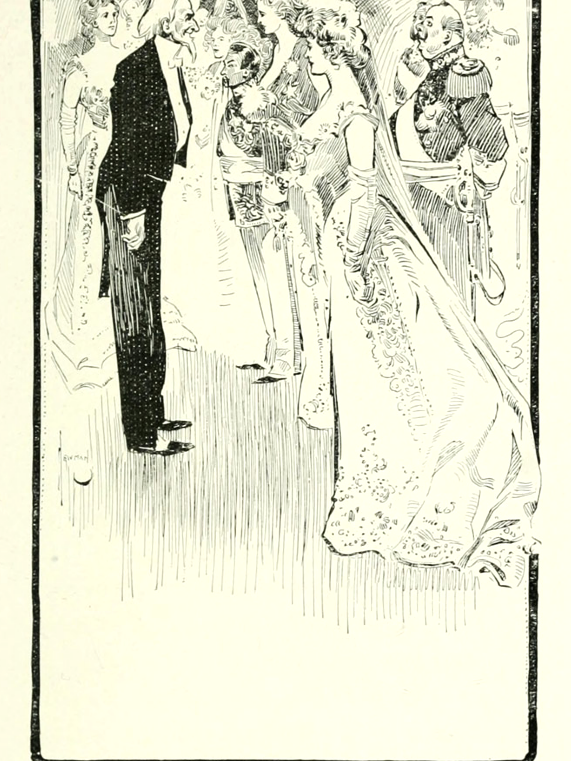
1) Portrait of Jacob E. Conner c. 1910 [Bains News Service via Library of Congress]. 2) Book cover of Uncle Sam Abroad, 1900. 3, 4) Illustrations in Jacob Conner’s Uncle Sam Abroad by
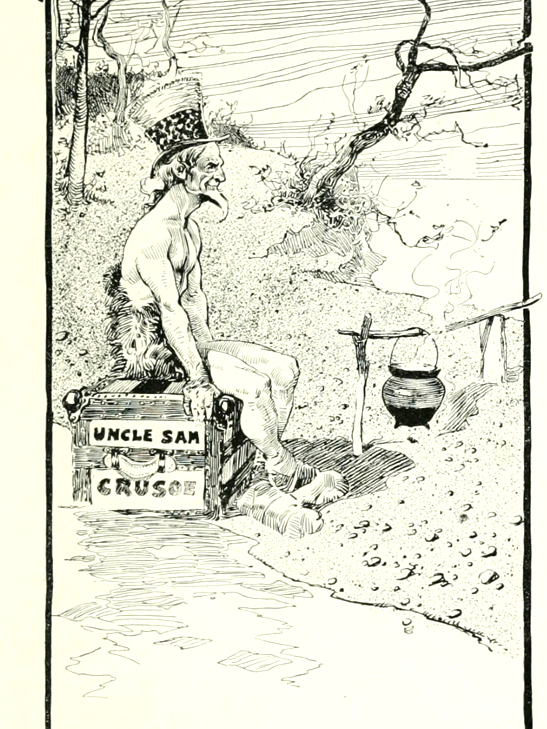
1) Portrait of Jacob E. Conner c. 1910 [Bains News Service via Library of Congress]. 2) Book cover of Uncle Sam Abroad, 1900. 3, 4) Illustrations in Jacob Conner’s Uncle Sam Abroad by
1) Portrait of Jacob E. Conner c. 1910 [Bains News Service via Library of Congress]. 2) Book cover of Uncle Sam Abroad, 1900. 3, 4) Illustrations in Jacob Conner’s Uncle Sam Abroad by
Despite diplomatically complaining about his meager Consul salary, Conner found the time and the financial means to travel to Angkor and spend ten days exploring the ruins in December 1912. His account was the first ever featured article on the Angkorian site published in The National Geographic, complete with a wise selection of photographs by Dieulefils and by Fournereau. Certainly, activity of the American consulate remained modest through the 1910s. For instance, “no exports were declared through the consulate to the United States in 1911, and only 13,935 pounds of pepper, valued at $1,605, in 1910. Declared exports to the Philippines amounted to $3,971,025 in 1911, of which $3,966,481 represented rice and $2,169 cinematograph films. The total for 1910 was $4,915,868, of which $1,909,059 was rice and $5,850 buffaloes.” [New York Times, 1 Jan 1913].
It is only on 1 May 1929 that the American consulate set its headquarters in a substantial building on present-day Ho Co Rua (The Turtle Pond Square, fornerly Place de Maréchal Joffre north of the cathedral), the former residdence of pharmacist and antique collector Dr. Thomas Victor Holbé (1857−1927). Holbé, an amateur archaeologist and an undefatigable collector of jade and porcelain artefacts, willed his collection to the Société des Etudes indochinoises (SEI), which in turn transferred all its holdings to the Musée Blanchard de la Brosse [from James Nach, History of the US Consulate in Saigon, excerpts published on the US Foreign Service website] . The latter finally opened its door that same year, 1929. Apart from commercial endeavors, it catered to the American expat community, which before WWII, was only around 20 individuals strong.
[1] R. Hopkins Miller mentioned twice Jacob E. Conner in his study, with his last name mispelled as ‘Connor’.
Publications
- [with illustr. by Clyde J. Newman] Uncle Sam Abroad, Chicago/New York, Rand, McNally & Company, 1900, 200 p. [available at Project Gutenberg].
- [with photos by P. Dieulefils, L. Fournereau] “The Forgotten ruins of Indo-China: The Most Profusely and Richly Carved Group of Buildings in the World”, The National Geographic Magazine 23 – 3, March 1912, p. 209 – 72.
- [with photos by Ernest L. Harris] “Homer’s Troy Today”, The National Geographic Magazine, 27 – 5, May 1915: 521 – 32.
- Jesus Was Not a Jew: An Epistle to the Gentiles, 1936; repr. Literary Licensing, 2013, 202 p. ISBN 978 – 1258848460.
- Related Publications