A lively account of the formative years of a key actor of the rebuilding of Cambodia after the civil war, Governor of National Bank of Cambodia in 1998-2023.
Author
Chanto Chea
Publisher
Phnom Penh, National Bank of Cambodia. 3 separate volumes respectively in Khmer, English and French.
Published
2023
Pages
435
Languages
English, French, Khmer
Formats
ADB Physical Library, paperback
Among his numerous memories from younger years, H.E. Chea Chanto — who served as Governor of the National Bank of Cambodia from 1993 to 2023, when the present book was published before his passing on 25 October 2024 -, shared this one, a visit to relatives in Pailin in 1973:
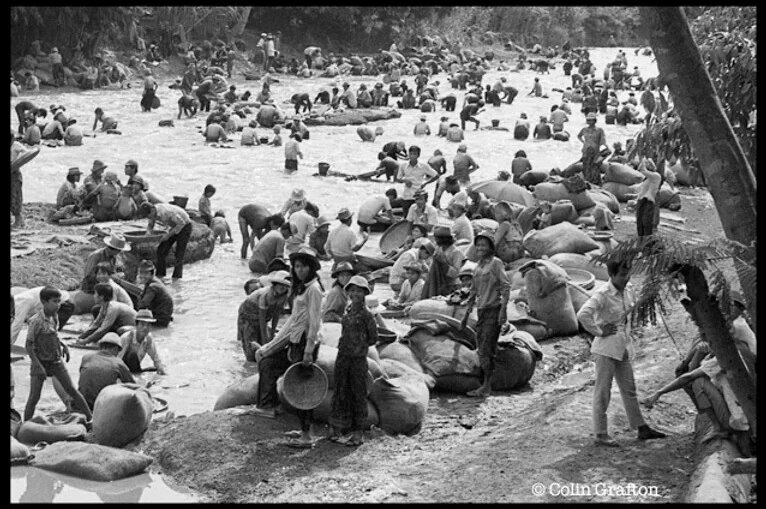
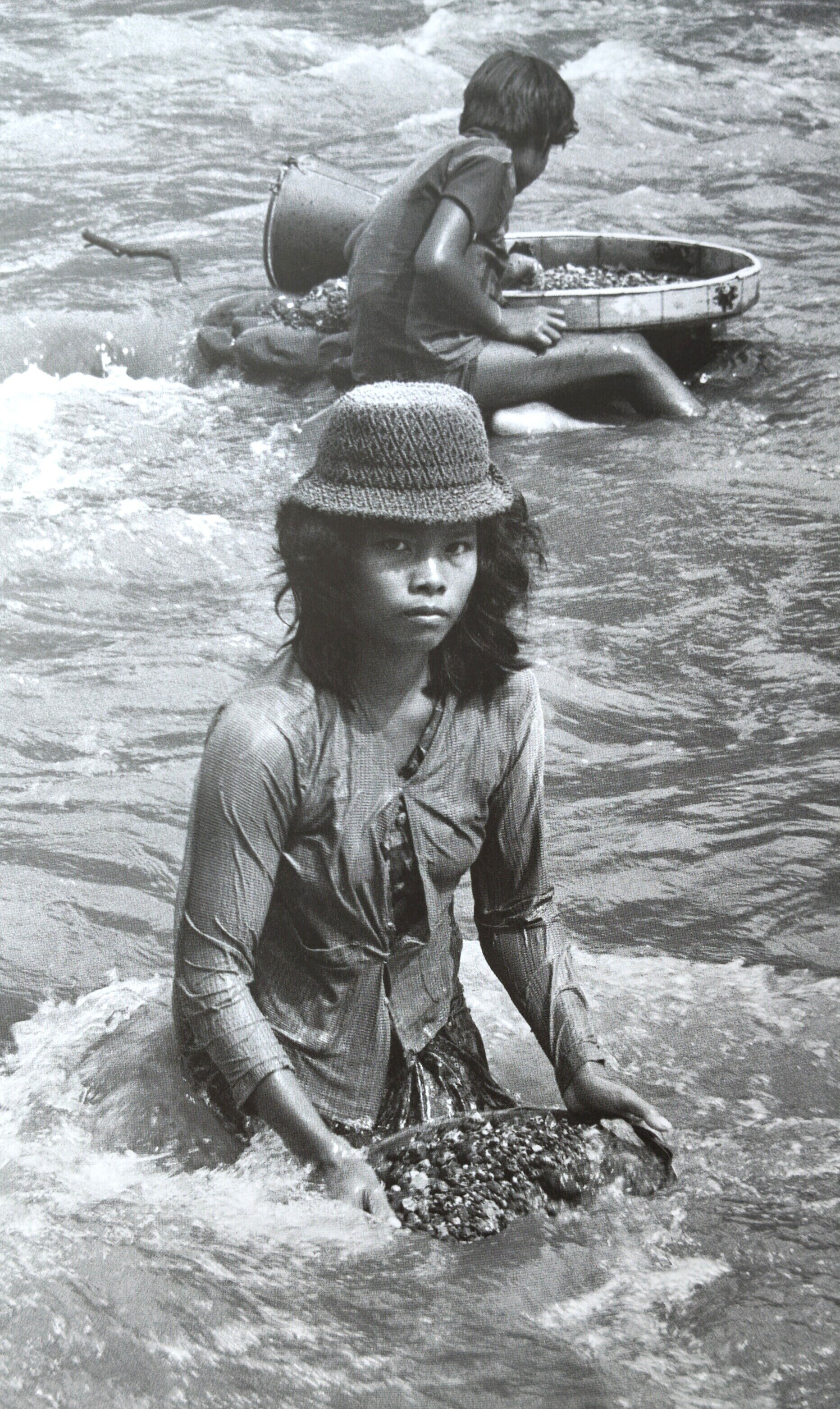
From 1973 onwards, therefore, I tried to get a part-time job. I had already tried working in a candy factory. Preparing and packaging the treats were not really my thing! But I was eventually able to get some work in the administrative end. Then, at vacation time, I went to Pailin, in the north-west of the country, to try my luck looking for precious stones! Back then, much more than now, it was quite a remote place. But I went there in the summer of 1973 hoping to make a few pennies. An uncle and aunt lived there and worked in the so-called gemstone industry.
My two-month vacation that year was quite a novel experience! I flew from Phnom Penh to Battambang. Yes, there was a small airport in Battambang. With service, daily I think, to Phnom Penh, no doubt with a DC4 propeller aircraft. That was a godsend because traveling by road took a very long time even when things were peaceful, but had become very touch-and-go under Lon Nol. Khmer Rouge and Viet Cong forces occupied, controlled, or were able to act in almost three-quarters of the territory.
In Battambang, before reaching Pailin, I stayed for a couple of days at the house of a childhood friend, Thet, who had gotten married and moved there, where his wife worked at the Derm Doung Market as an ice cream seller. The majority of the people seemed to be loyal to the Khmer Republic. Large brigades of loyalist forces were stationed there. People made little attempt to break through the threatening encirclement. Moreover, the governor was secretly playing a clever game with the KR to limit incursions and insecurity. As a result, the people seemed a little oblivious to what was going on. In any case, it was far from the battlefield, which actually was not that far away. The streets were clean and joyful. Cheerfulness reigned there.
I went on to Pailin by car, to be initiated by my uncle and aunt to work on zircon, topaz, and ruby stones, certainly with better pay than in my candy factory. In addition to them, I also had a few gemologist friends with whom I also worked as a bud- ding gemologist. I might as well admit right away that I didn’t make a fortune. The result was not as good as the dreams: few precious stones discovered and no pay dirt that I can remember! I earned just enough money to pay for my meals!
I took the road back from Pailin to Battambang when my vacation was over and stayed with another friend, Sreng. He had just graduated and, already married with a child, had started working at the Dôn Teav jute factory. That factory was well-know and remained so for a long time. It had been launched with great fanfare by prince Sihanouk under the Sangkum to locally supply the bags in which rice was sold and exported, thus helping to create more value in the country and reduce imports. Despite the battles and vicissitudes, it never stopped operating. The RPK took it over, damaged, poorly maintained, but still able to function. However, I only stayed one night at his place and left by plane the next day, as I had come.
Did that unprofitable but instructive trip predispose me to another livelihood? You might well think so. While continuing my education at university, I joined Air Cambodia, our very first airline, as an accountant.
Fortunately, I worked hard and was a pretty good student at the Faculty of Commerce. One of my teachers, Mrs. Réveil, a Frenchwoman married to a Cambodian, was of particular help in this regard. She was a talented teacher of French. She was no doubt at the origin of the sentimental attachment that I continue to have for that language. She loved all her students, who reciprocated the feeling. She is still alive as I write this and I have as much respect for her today as I did when I was a student.
My hope, with my limited resources and those from the family, was to find a job. Of course, I wanted my trial job at Air Cambodia to turn into a permanent position there once I got my diploma. Things didn’t work out that way. History wasn’t listening to me. [p.39 – 41]
1) General view of gem prospectors in Pailin, from a rare photographic series by Colin Grafton in 1974. 2) A panner in the Pailin river spotting out the photographer (detail). [from Colin Grafton, Cambodia November 28, 1972 — April 7, 1975, 2026, p. 118, 123]
1) General view of gem prospectors in Pailin, from a rare photographic series by Colin Grafton in 1974. 2) A panner in the Pailin river spotting out the photographer (detail). [from Colin Grafton, Cambodia November 28, 1972 — April 7, 1975, 2026, p. 118, 123]
1) General view of gem prospectors in Pailin, from a rare photographic series by Colin Grafton in 1974. 2) A panner in the Pailin river spotting out the photographer (detail). [from Colin Grafton, Cambodia November 28, 1972 — April 7, 1975, 2026, p. 118, 123]
The Khmer Rouge period was briefly mentioned in these memoirs focused on the dreams and drive of a young Cambodian caught inside a nightmarish quagmire:
When the situation of the Lon Nol régime, discredited and beleaguered in the cities, became catastrophic, and the standard of living of the people collapsed, let alone their security and freedom of movement, we only wanted one thing, to live in peace and security in our country. So, when the Khmer Rouge soldiers entered the capital, we were relieved and almost confident: no matter which side won or lost, the fighting would stop.
Of course, even before leaving my village for Phnom Penh, in the zone already controlled by the KR, I had been frequently summoned to attend political education and training meetings. Hatred of capitalism, of the rich, of feudalism, was already being taught there. The focus was to make people love collective work, collective living, and meals eaten togethercollective thinking. Equality was put at the top of the agenda. None of that could be difficult to accept for a young man from a modest family. To put an end to exploitation, to liquidate the old régime, to build a great country like our ancestors of Angkor… Who could not subscribe to it?
Obviously, putting all those ideas and beliefs into practice was going to turn into a nightmare. The Pol Pot régime that emerged from that struggle would, in his name, deport, starve, and slaughter masses, especially those who had served under the previous government and educated people. It was really killing those of the old régime. Soldiers, civil servants, maybe that was the price to pay? But also, teachers, engineers, doctors, graduates of this or that. As well as his own associates in the struggle. Those little comrades who used to tease me (“you got an education so you could exploit and kill the peasants, etc., etc.”), most of them were purged… We didn’t understand a thing. But our level of information was nil. Our capacity for indignation or reaction suffered. [p. 52 – 53]
The author then elaborated on the reorganization of the national banking system following the collapse of the Khmer Rouge régime, a period in which institutional structures had been reduced to ashes and the country was compelled to rebuild from the ground up. In this context, Cambodia adopted key financial principles and administrative models from neighboring states to re-establish a functional economic framework, “a very special banking system at the service of a centralized economy” as he called it:
We were coming out of a period without banks or money, and just mentioning the word caused one to be viewed with suspicion and probably worse. Our only support at the time came from Vietnam, whose offensive against Pol Pot’s troops had been decisive and whose administrative support was invaluable to us, as well as from the countries of the Soviet bloc, led by the USSR. It was normal that we were not looking to complicate the issue. And that we were adopting the model that they were using and advising us to adopt, in particular for the urgent reconstruction of the monetary and banking system that had been completely destroyed and banished by the Khmer Rouge. We therefore opted for the single bank model advocated by the communist countries.
From 1979 to 1986 and somewhat beyond, we thus evolved into a centralized, 100% state-run banking system, corresponding to the criteria of a planned socialist economy. That one-tier model, consisting of the Central Bank and all its provincial and municipal dependencies (I will certainly get back to that), assumed all the monetary and banking functions of the two-tier system in liberal economies, to which we now belong. The difference in structure and efficiency is enormous. But there is one driving principle that unites them: to circulate money properly for the settlement of transactions and for investment, which in turn generates transactions and demands money.
With its subsidiaries and branches, the National People’s Bank of Kampuchea played all the roles. It served as an issuing institute. It managed foreign trade. It was also the retail bank and, if I may use a misnomer in a socialist régime, the investment bank of the whole country.
For a long time, too, it served as the public treasury. Through it, the operations and investments of the State were processed, including its customs and tax revenues, which it bolstered with its own “profits.” So much so that its governor was a full-fledged member of the government and held the job of Minister of Finance. And that many of its provincial branches were housed in the revenue and collection units of the Ministry of Finance.
Furthermore, the state was constantly under-funded. Very little tax in any form was collected. The economy was devastated. The vast majority of the people were still very poor, and there was no will to “bludgeon” them further after all those years of suffering and subservience. There were few taxable imports due to a lack of export earnings and therefore foreign exchange. The profits from state-owned enterprises that were remitted to it made up most of its income. But the situation was hardly favorable. Many preferred to keep their profits to themselves in one way or another. In that context, the Central Bank had to regularly replenish or bail out the state coffers. Where the economy was almost entirely state-owned, where almost all investments were both planned and financed by the government, that was quite logical.
Currency was issued to cover expenses included in the budget and the Plan that were not covered by domestic revenues: customs duties and taxes, the profits of public companies that went to the state, along with external revenue: aid or loans from friendly countries. It circulated via the channels of the central bank, which acted as a sort of public treasury. Such a one-tier system was the antithesis of the two-tier system characteristic of market economies. In the latter model, most of the time the central bank also plays the role of issuing institute. However, it refrains from intervening directly in the form of loans and deposits with regard to companies and individuals. On the other hand, it reserves for itself an extremely important task of regulating, controlling, and supervising the commercial banks responsible for receiving deposits and making loans, as close to the field as possible and while being in competition with each other.
To carry out that mission, our new Central Bank had provincial and municipal divisions. Within the framework of government policies and the Plan, and under the aegis of the Central Bank, they enjoyed accounting autonomy and a measure of administrative autonomy. They managed a whole portfolio of “clients” at their constituency level, kept accounts for them, provided them with advances or loans. That was especially important for cooperatives and all agricultural and aqua-cultural activities, fishing, or forestry that had been banned or deprived of the means of development and which now needed loans in order to relaunch and invest. In Phnom Penh, the priorities were obviously different: loans were mainly given to local industrial factories and handicraft enterprises.
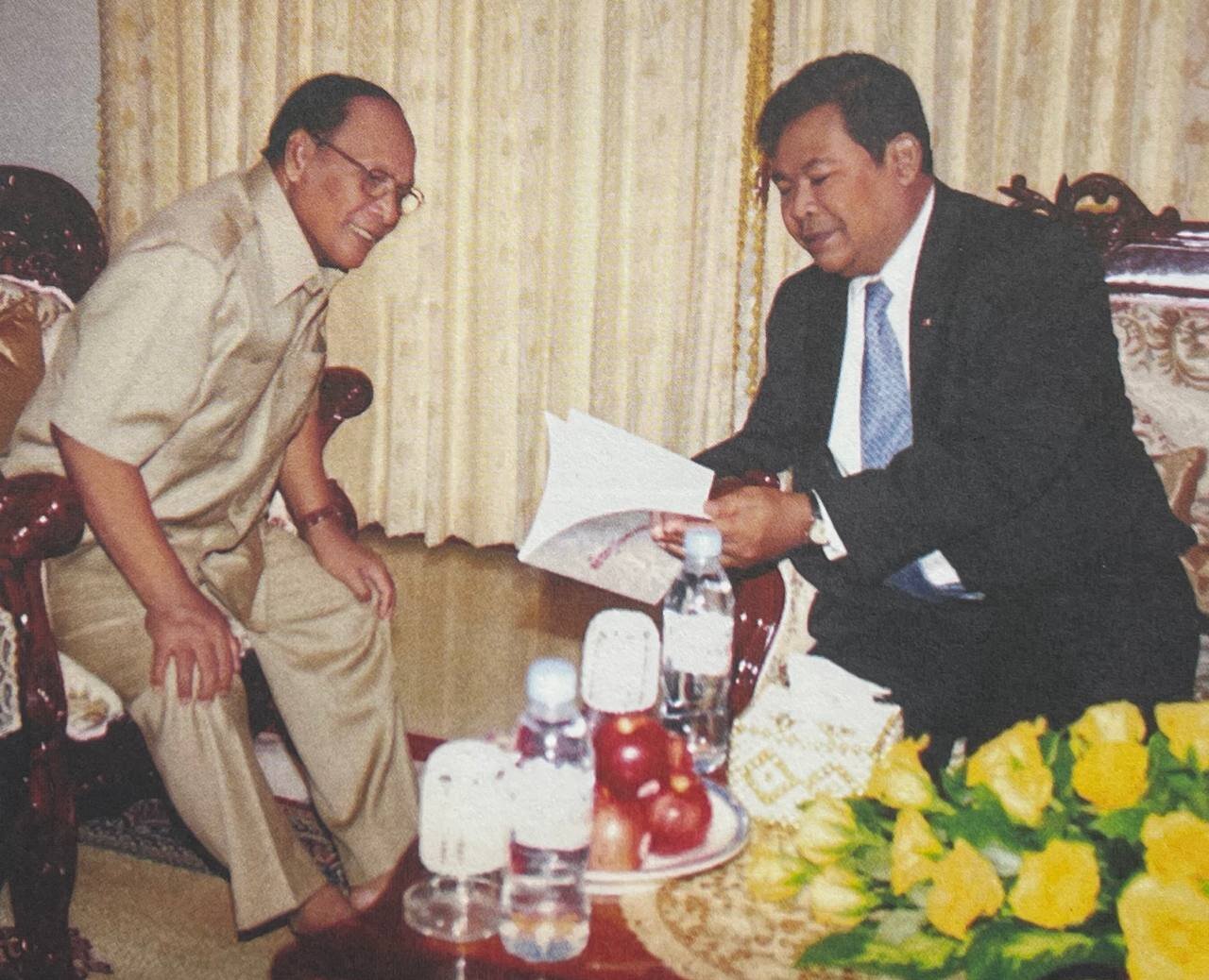
H.E. Chea Chanto with Samdech Heng Samrin. [p. 403]
H.E. Chea Chanto with Samdech Heng Samrin. [p. 403]
That system was, with some tweaking, in force for some 12 years. The year before the 1993 general elections, which would give the country a new constitution and usher it into a new era, Cambodia opted for the two-tier system, more in line with the liberal economic and privatization policy that had been finally enacted that year. The 1992 reform identified the different functions: central bank, commercial and specialized banks, etc., and initiated the implementation of that model, which the 1996 reform was to enshrine. The original name, National Bank of Cambodia, which was already on everyone’s lips, was taken back.
It took me several years to be able to grasp all the implications (and weaknesses) of the system that we had initially chosen. It was by drawing on the experiences of the NEP of the 1920s and, before my eyes, of Perestroika and the Đổi Mới policy, as well as by exchanging ideas with my Russian and Hungarian colleagues that I understood the need for reform and for which I became a whole-hearted advocate from 1986 onwards, as Minister of Planning. [p. 68 – 71]
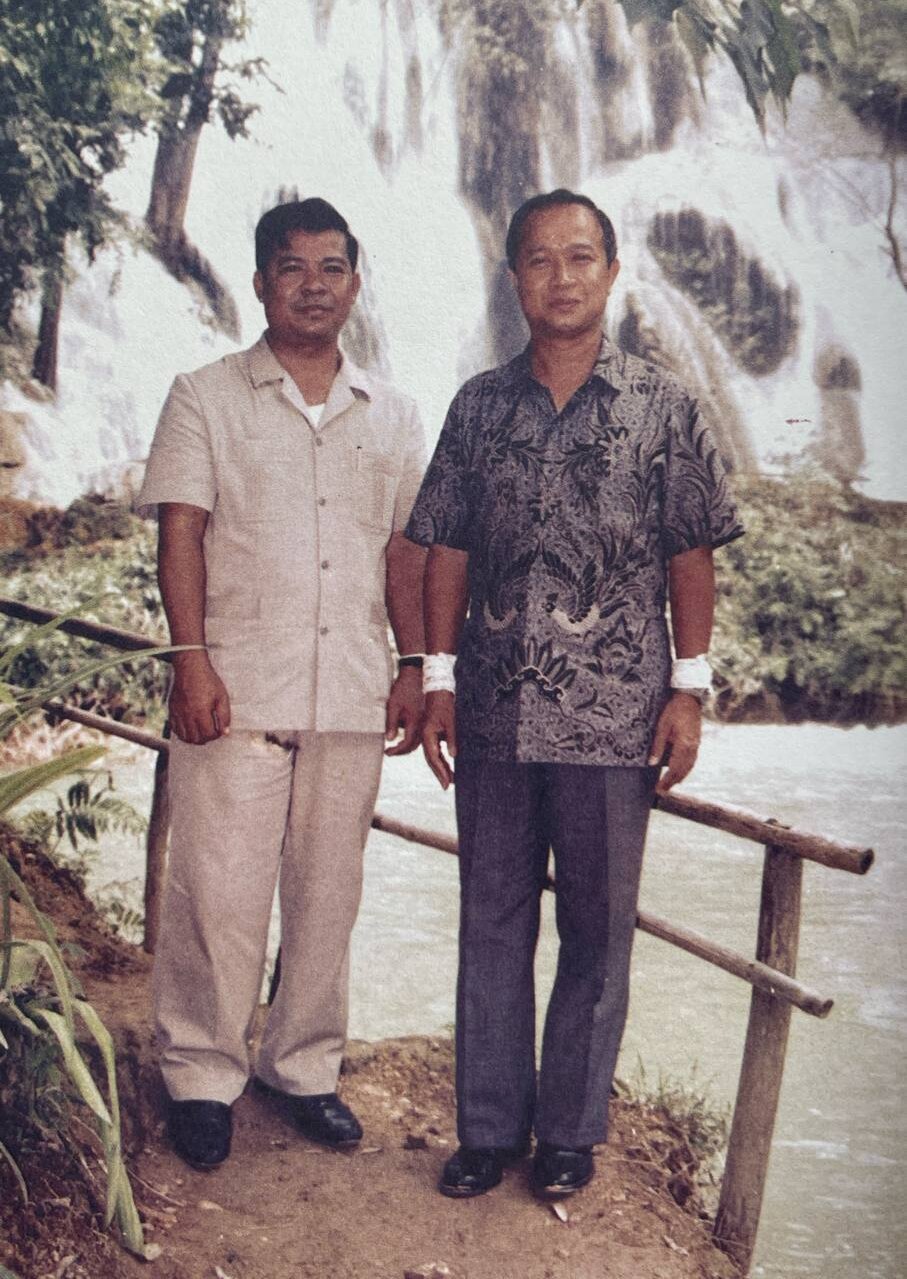
H.E. Chea Chanto with Prince Norodom Ranariddh, Laos, 1993. Prince Ranariddh was First Prime Minister of Cambodia with Samdech Hun Sen from 24 Sept.1993 to 6 August 1997.[p. 404]
H.E. Chea Chanto with Prince Norodom Ranariddh, Laos, 1993. Prince Ranariddh was First Prime Minister of Cambodia with Samdech Hun Sen from 24 Sept.1993 to 6 August 1997.[p. 404]
About the Author
Chanto Chea
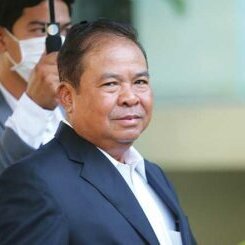
H.E. Chea Chanto ជា ចាន់តូ (9 Oct. 1951, Kompong Thom Province — 25 Oct. 2024, Phnom Penh) was an economic and social planner who played a key role in reviving Cambodia’s financial and banking system in the post-Khmer Rouge era as the Minister of Planning from 1986 to 1994, and served as the Governor-General of the National Bank of Cambodia (NBC) from 1998 to 2023 before being succeeded by his daughter, H.E. Chea Serey.
Born in a modest family of Khmer-Chinese origin, he learned carpentry from his grandfather, attended Kompong Thom Middle School, where he met his future wife, Keo Sina, and opted for vocational training on a scholarship after completing graduating in 1969. Despite the 18 March 1970 coup against Prince Norodom Sihanouk, he went to Phnom Penhto pursue highter studies but after being admitted to the Faculty of Electricity at the University of Takeo-Kampot, he decided to relinquish his scholarship and to return home in order to support his struggling family Penh
He was to continue later his academic and professional advancement abroad, receiving a PhD in Economics from Hanoi University in 1990 and was awarded a PhD in Business Administration (Honoris Causa) from the University of Southern California in 1995. In 2018, the Asian Institute of Chartered Bankers granted him an Honorary Fellowship in recognition of his significant contributions to banking and financial services.
Commenting on the difficult situation of the country after the ousting of the Khmer Rouge in 1979, he wrote in his autobiography:
We were coming out of a period without banks or money, and just mentioning the word caused one to be viewed with suspicion and probably worse. Our only support at the time came from Vietnam, whose offensive against Pol Pot’s troops had been decisive and whose administrative support was invaluable to us, as well as from the countries of the Soviet bloc, led by the USSR. It was normal that we were not looking to complicate the issue.
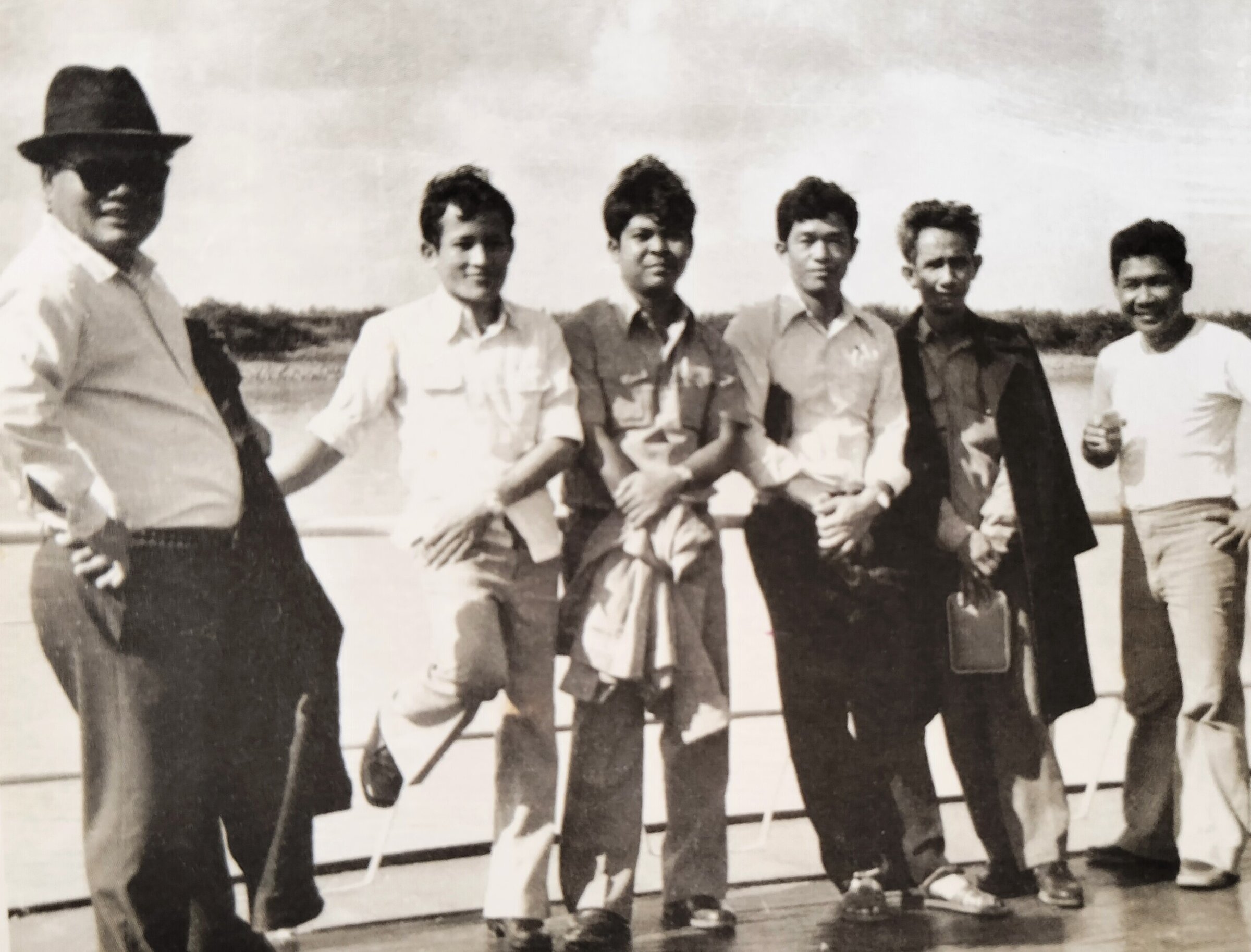
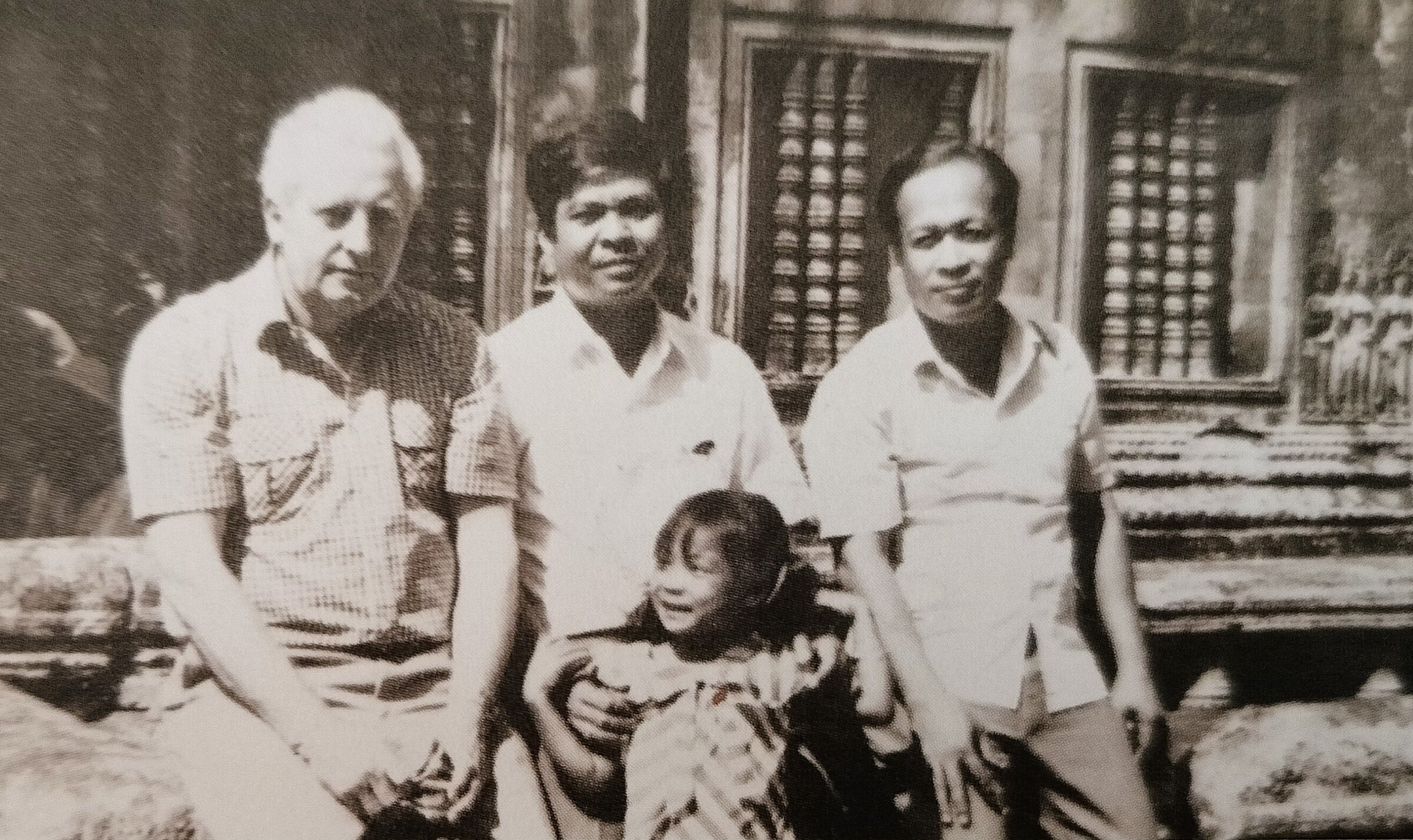
1) With Cambodian fellow students (third from left) in Vietnam, 1982. 2) Accompanying a Soviet delegation in Angkor, 1987. To Chea Chanto’s right, possibly Russian journalist and author Evgueny V. Kobelev [both photos from Chea Chanto’s 2023 autobiography].
1) In Vietnam in 1982; 2)With the head of a Soviet delegation (left) in Angkor, 1987. [[hotos from autobiography]
1) With Cambodian fellow students (third from left) in Vietnam, 1982. 2) Accompanying a Soviet delegation in Angkor, 1987. To Chea Chanto’s right, possibly Russian journalist and author Evgueny V. Kobelev [both photos from Chea Chanto’s 2023 autobiography].
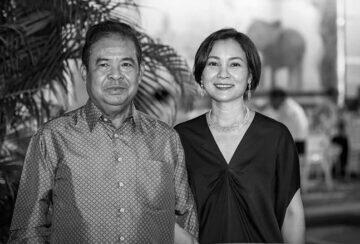
With daughter H.E. Chea Serey, who succeeded him as the Governor of the National Bank of Cambodia [photo Khmer Times].
With daughter H.E. Chea Serey, who succeeded him as the Governor of the National Bank of Cambodia [photo Khmer Times].
As Minister of Planning (from 1986 to 1993) and Governor of the National Bank of Cambodia (1998−2023) H.E. Chea Chanto was instrumental in the rebuilding of the financial system in the country, utterly destroyed by the Khmer Rouge — the National Bank headquarters and the Catholic Cathedral were the only large buildings torn down by Pol Pot’s régime in Phnom Penh — and the rekindling of international trust after decades of insolvency. He also fine-tuned the dual currency system (US dollar and Cambodian riel) in order to attract international investors and rein inflation in.
His leadership during the Covid-19 pandemic earned him international recognition. In 2021, The Banker named him Central Banker of the Year for the Asia-Pacific region, one of five governors worldwide honored for promoting growth and stabilizing the economy during the global crisis.