

La nouvelle architecture khmere [New Khmer Architecture]
by Molyvann Vann

- Author
- Molyvann Vann
- Publication
- Nokor Khmer 1 [FR edition], Oct-Dec 1969: 35-47. [from the original copy kept at CKS, Siem Reap]
- Published
- October 1969
- Pages
- 12
- Language
- French
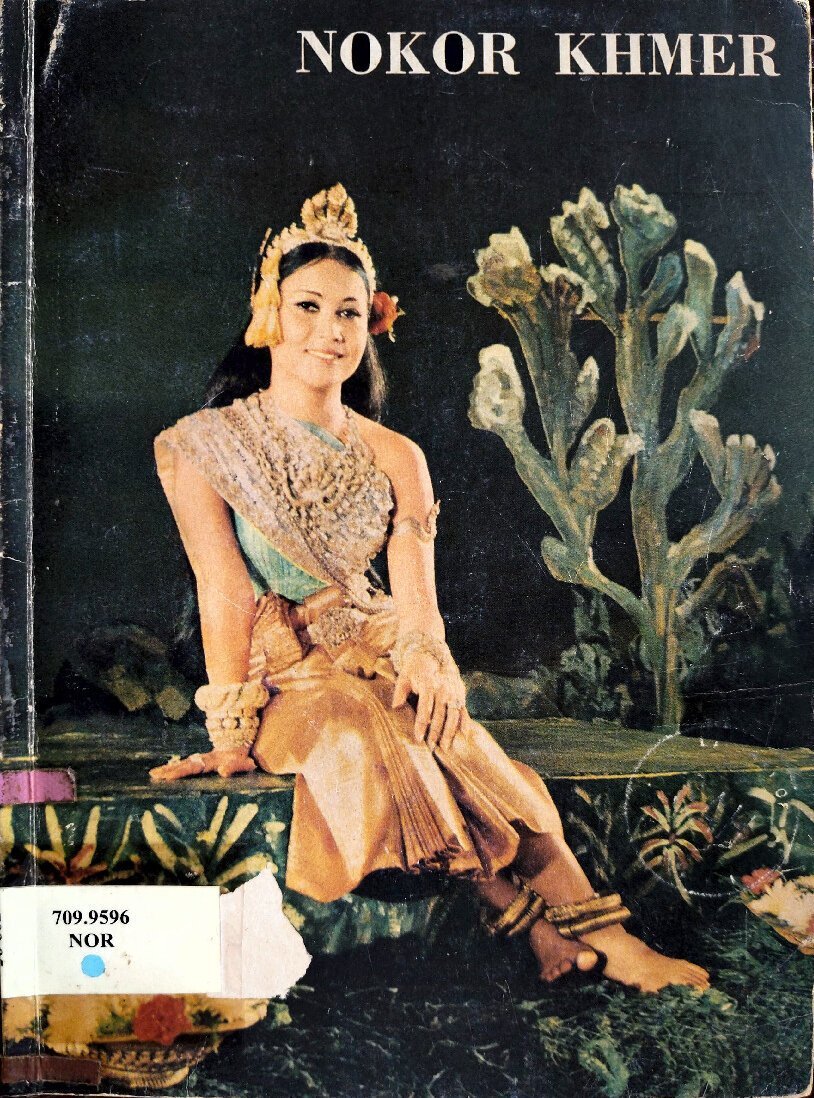
pdf 17.7 MB
Published in 1969, four years after the completion of the iconic Olympic Stadium and only a few months of General Lon Nol’s coup in March 1970 which shattered the post-independence decade of optimism and unbalanced growth, this essay by the emblematic figure of modern Cambodian architecture, this short essay illustrated with noted images by Swiss photographer Jean Mohr remains a reference document for historians and researchers.
The author’s closing lines illustrate the mindset of the Cambodian intelligentsia in those crucial moments — the US administration had already started a covert and unrelenting campaign of carpet bombing directed against Cambodia’s eastern regions, part of its military escalation against the Vietnamese push for independence: Prince Sihanouk’s non-alignment stance, firm in principle but constantly challenged by the US ‘war games’ was on the brink of collapsing. Caught between the raging aggression in Vietnam and the relentless alignment of Thailand with the Cold War logics, Cambodia was on the edge of catastrophy. In hindsight, these lines encompassed much more than the architectural feats of the time:
Les rois d’Angkor et leurs architectes bâtissaient pour le pays et son peuple sans se soucier de donner à leur art une signification dépassant les frontières khmères. La monarchie cambodgienne actuelle n’a pas d’autres ambitions que celle de rendre à notre pays un peu de sa splendeur passée. Mais nous puisons un grand encouragement dans l’attention qu’ailleurs on accorde à nos réalisations et je voudrais dire combien nous fûmes touchés par les paroles du général de Gaulle qui, en 1966, rendait hommage au Cambodge en soulignant “que les monuments de sa merveilleuse civilisation voisinent avec ses réalisations modernes, sans que celles-ci en souffrent aucunement dans leur efficacité ni ceux-là dans leur majesté”. [p. 37]
[The kings of Angkor and their architects were building for the country and its people without worrying about giving their art a meaning that transcended Khmer borders. The current Cambodian monarchy has no other ambition than to restore to our country some of its former splendor. Nevertheless, we draw great encouragement from the attention our achievements receive elsewhere, and I would like to express how moved we were by the words of Général de Gaulle who, in 1966, paid tribute to Cambodia by emphasizing that “the monuments of its marvelous civilization stand alongside its modern achievements, without the latter suffering in any way in their effectiveness, nor the former in their majesty.”]
Looking for a creative connection to the Angkorian architecture, the author was deeply aware of the fact that any ‘Angkor revival’ wouldn’t solve the Cambodian quagmire at the time. However rich with potential creativity, the smart references to ‘Ancient Cambodia’ couldn’t possibly resist the onslaught on Southeast Asia, nor the looming collapse of Cambodia’s ‘Golden Age’. And here is the author’s and his generation’s drama - architecture reflects history but it takes decades for architecture to, somehow, makes history.
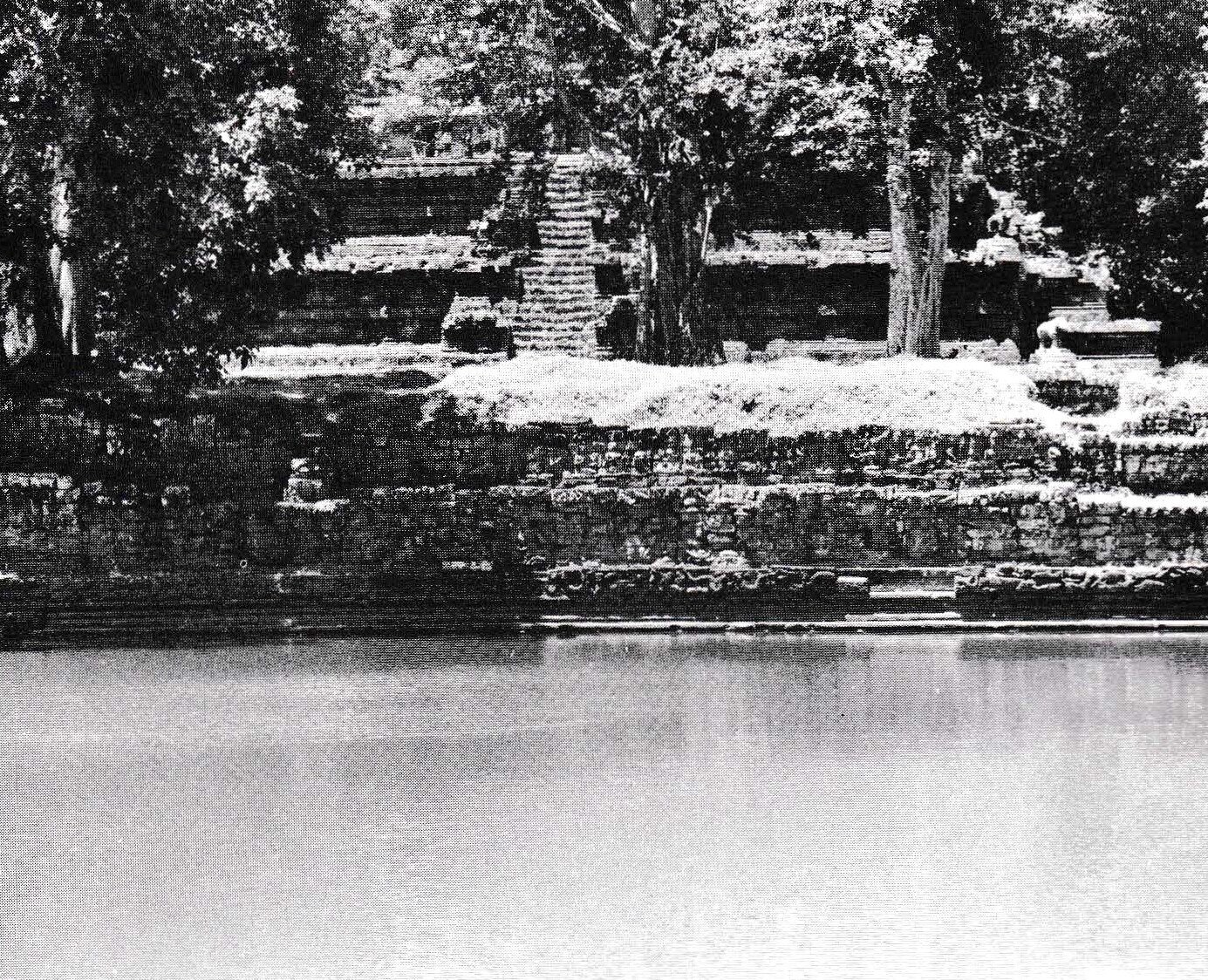
The Northern basin at Phimeanakas, Royal Palace, Angkor Thom [photo EFEO], in Vann Molyvann, Nokor Khmer, 1969.
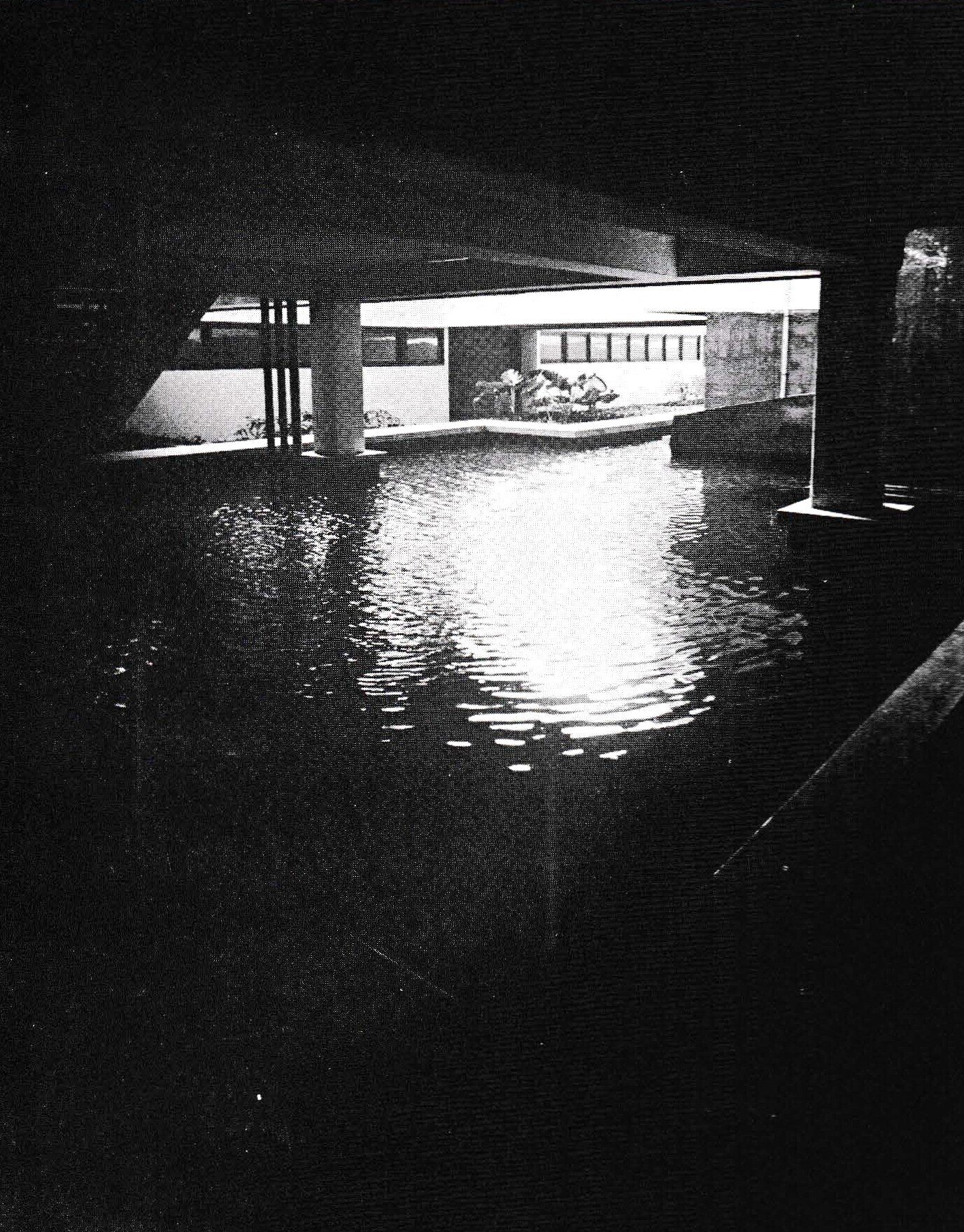
Rekindling a glorious past — 1) The Northern basin at Phimeanakas, Royal Palace, Angkor Thom. Prasat Phimean Akas, the ‘celestial temple’, was built in the 960s CE [photo EFEO] . 2) Inner basins in the Sports Palace and the Grandstands at National Sports Complex (NSC), Olympic Stadium. [photo by Jean Mohr].
Rekindling a glorious past — 1) The Northern basin at Phimeanakas, Royal Palace, Angkor Thom. Prasat Phimean Akas, the ‘celestial temple’, was built in the 960s CE [photo EFEO] . 2) Inner basins in the Sports Palace and the Grandstands at National Sports Complex (NSC), Olympic Stadium. [photo by Jean Mohr].
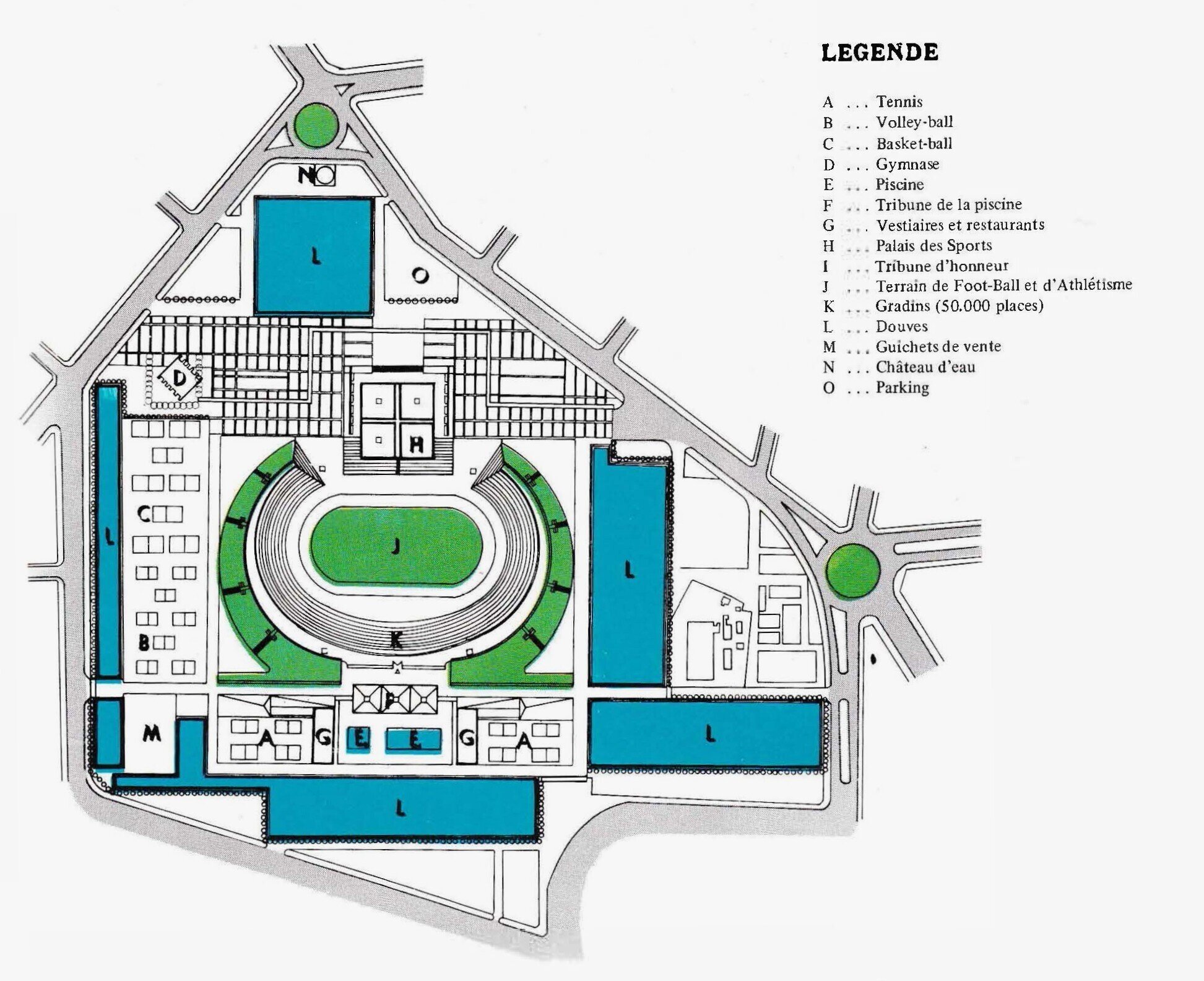
By Vann Molyvann, reproduced in Nokor Khmer 1, Oct-Dec. 1969, p. 39. A: Tennis Courts. B: Volley-ball fields. C: Basket-ball fields. D: Gymnasium. E: Swimming Pool. F: Pool Stands. G: Locker Rooms and Restaurants. H: Sports Palace. I: VIP Grandstands. J: Soccer fields and Tracks. K: Stands (Bleachers) 50,000 seats. L: Moats. M: Ticket Booths [Nokor Khmer 1, Oct-Dec. 1969, p. 39].
Plan of Phnom Penh Olympic Stadium by Vann Molyvann reproduced in the article. A: Tennis Courts. B: Volley-ball fields. C: Basket-ball fields. D: Gymnasium. E: Swimming Pool. F: Pool Stands. G: Locker Rooms and Restaurants. H: Sports Palace. I: VIP Grandstands. J: Soccer fields and Tracks. K: Stands (Bleachers) 50,000 seats. L: Moats. M: Ticket Booths [Nokor Khmer 1, Oct-Dec. 1969, p. 39].
Main photo: Sectional plan of Angkor Wat and National Sports Complex by Vann Molyvann, 1969.
Tags: De Gaulle, architecture, modern architecture, Sangkum Reastr Neyum, 1960s
About the Author
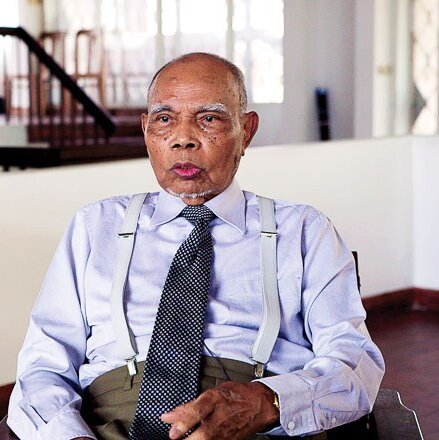
Molyvann Vann
Vann Molyvann វណ្ណ ម៉ូលីវណ្ណ (23 November 1926, Ream – 28 September 2017, Siem Reap), a a leading Cambodian architect who largely contributed to the New Khmer Architecture movement, served as first Director of APSARA Authority, as well as Minister of Culture and of Education during King Norodom Sihanouk’s reign.
The designer of landmark monuments and building sucg as Phnom Penh Olympic Stadium, Chaktomuk Conference Hall, the Royal University, the Institute of Foreign Languages or Independence Monument, Vann Molyvann also reflected on urbanism and urban development.
Developing an interest in Angkor and Angkorean civilization since his youth, he studied architecture in Paris, coming back to Cambodia in order to develop post-colonial architecture, educational programs and renewed efforts in the preservation of Angkor that led to its inscription to UNESCO World Heritage list.
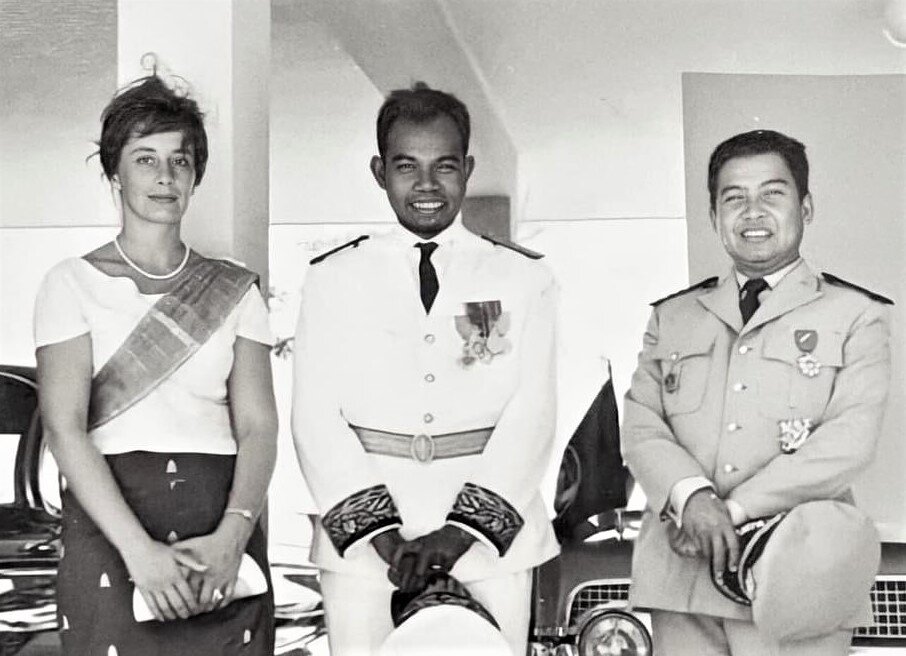
With second wife Trudy Amberg-Vann and HM King Sihanouk (collection Royal Cambodian Monarchy)
With second wife Trudy Amberg-Vann and HM King Sihanouk (collection Royal Cambodian Monarchy)
Since 2009, The Vann Molyvann Project has been working in raising awareness of the scope of Vann Molyvann’s legacy.