

ស្ថាបត្យកម្មក្រុមប្រាសាទ របងរមាស សម្បូណ៌ព្រៃគុក/ The Group of Robang Romeas Monuments, Sambor Prei Kuk
by Keo Kinal
The first extensive study of Sambor Prei Kuk site published in the 21th century.

- Author
- Keo Kinal
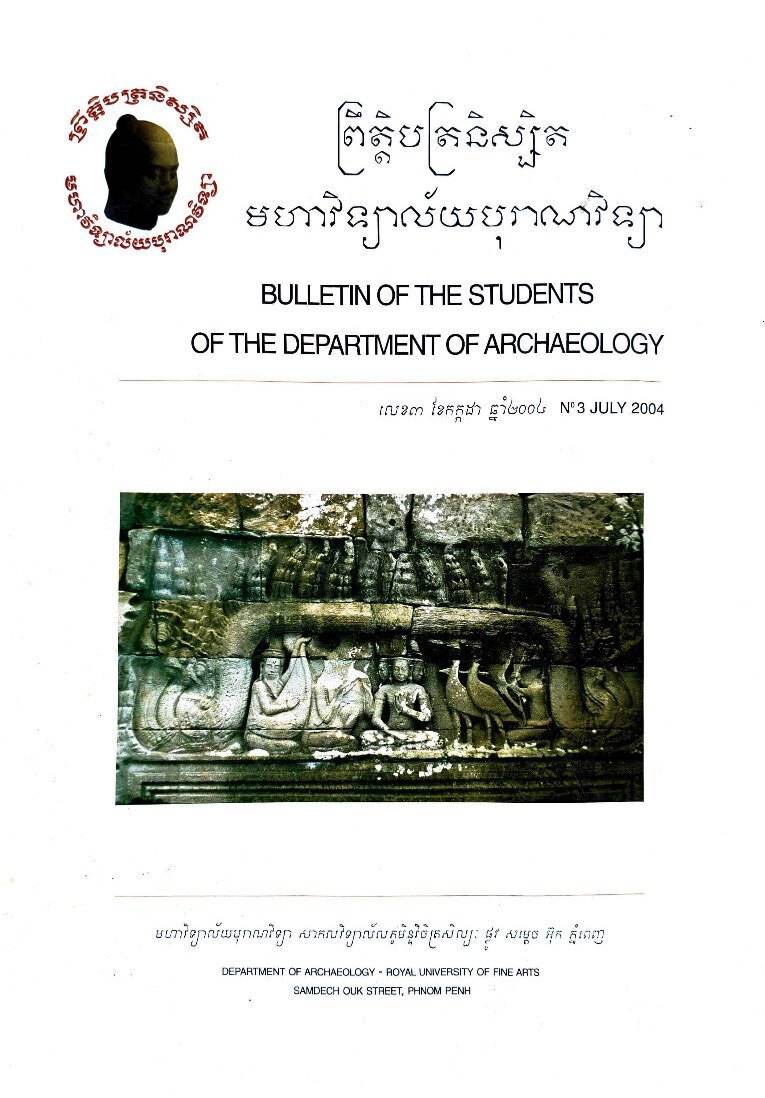
- Publication
- Phnom Penh, Bulletin of the Students of the Department of Archaeolgy, RUFA: 68-82. ADB Scan
- Published
- July 2004
- Pages
- 14
- Languages
- English, Khmer
pdf 5.1 MB
In this exhaustive study, the author, a promising Cambodian archaeologist who was going to die prematurely in 2011, developed the rare archaeological surveys authored by Henri Parmentier in 1927 and Michel Tranet in 1997.
Thirteen years before the Temple Zone of Sambor Prei Kuk was officially added to the UNESCO World Heritage List [on 8 July 2017], the author noted several changes on the badly degraded 7th-century site, including relocation of fallen lintels on other structures, remarking on the need to expand the study and preservation of the remains of the ancient city of Ishanapura.
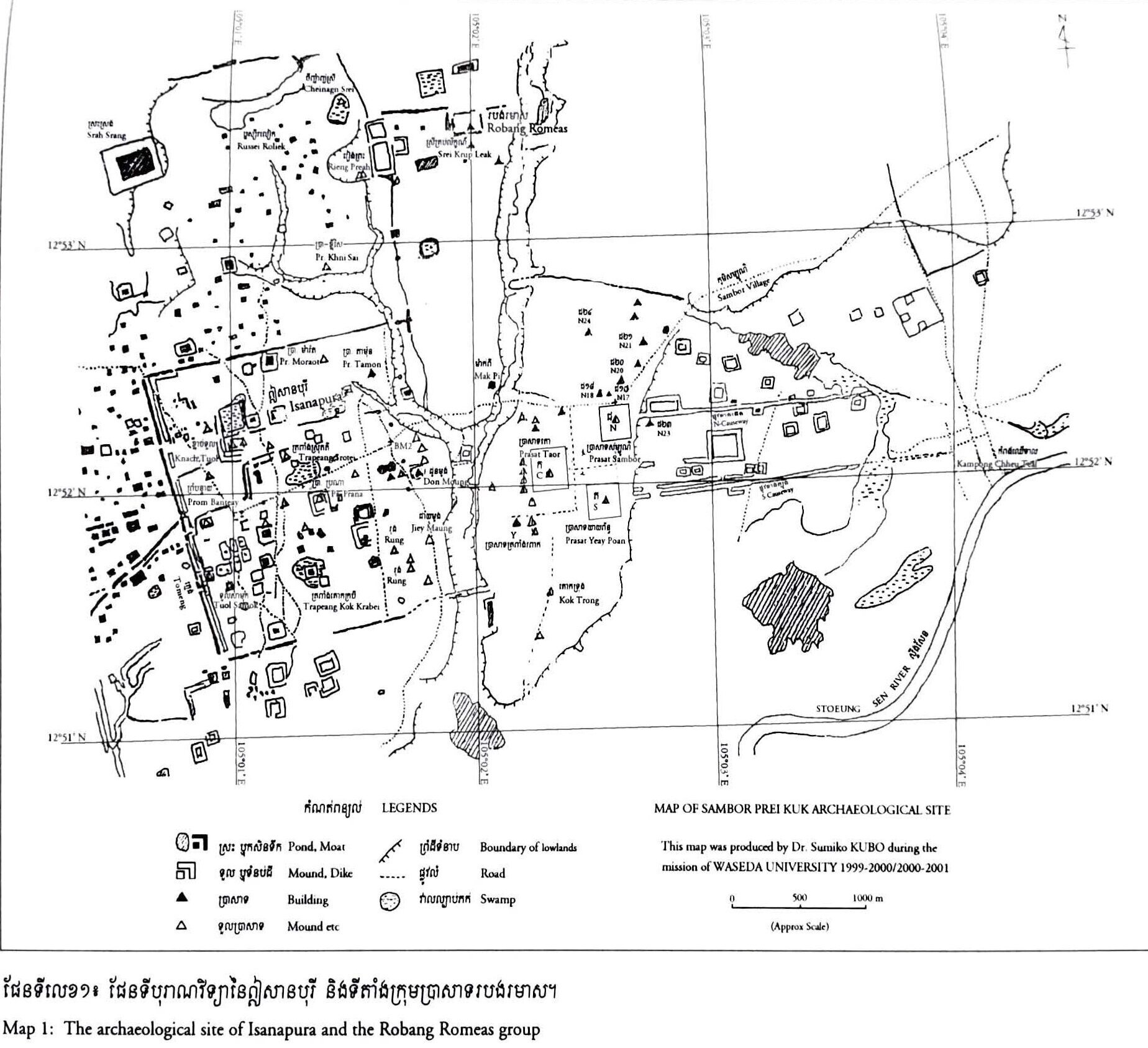
The site of Sambor Prei Kuk, map by Dr. Sumiko Kubo draught during the Waseda University mission 1999 – 2001 [repr. in Keo Kinal 2004.]
The site of Sambor Prei Kuk, map by Dr. Sumiko Kubo draught during the Waseda University mission 1999 – 2001.
Main photo: the temple-tower of Tan Nan O photographed in Henri Parmentier’s L’art khmer primitif, 1927.
Tags: archaeology, Sambor Prei Kuk, Sambor Prei Kuk style, 7th century, pre-Angkorian, Khmer art, capital cities, Khmer arts, Chenla, Zhenla
About the Author
Keo Kinal
Keo Kinal កែវ គីណាល់ (10 Dec. 1973, Siem Reap — 13 Nov. 2011, Stung) was a Cambodian archaeologist and cultural heritage specialist who died prematurely before he could further his research on the Sambor Prei Kuk site and on comparative archaeology in the Mediterranean area.
The son of eminent archaeologist Keo Pich, who was entrusted the direction of Angkor Conservation by Bernard-Philippe Groslier in 1973, survived the Khmer Rouge régime and became the first Cambodian Angkor Conservator in 1979, Kinal came to archaeology by chance, as he initially wanted to become a physician or an economist.
A student at the Faculty of Archaeology, Royal University of Fine Arts (RUFA) between 1991 and 1996, he studied at the National Research Institute for Cultural Properties, Nara, Japan, and returned to Japan in 2003 for a MD at Tokyo National University of the Arts.
A young professor at RUFA, he pursued his field research in Cambodia after exploring archaeological sites in Italy thanks to a UNESCO exchange program, upon recommendation from mentors Danielle Guéret and Ashley Thompson.