[Pean Veng]: If we ask about the general meaning of the term “pean veng”, most people would say it refers to “disrespecting the king (or his majesty)”. More specifically, it is often associated with the idea of having an affair with the royal concubines in the palace. To gain a deeper understanding of its full meaning, we should break down the term and analyze each word individually.
1. Pean – Pea: Both “pean” and “pea” originate from the same root word, which conveys meanings such as “to touch,” “to collide,” “to shift,” “to cut through,” or “to open something up.”
PEA: This word can be used in expressions like “driving a car into someone’s fence” or “causing trouble or interfering with others.” That’s why we have the word “kapea” (meaning “to protect”), which implies “to stop or prevent something bad from making contact.”
PEAN: This term was used in a formal phrase by the author of an article submitted to the Buddhist Institute: “The reason I didn’t dare to elaborate is because I was afraid that if I ‘pean’ to it, it would distort everything, leading to a waste of effort.” Now, consider the word “aggression” (Chlean Pean), which carries the meaning of “impact” (pas pal). Sometimes, we use “pea” and “pean” interchangeably without realizing it, such as in the word “abuse” (bom-pea-bom-pean).
2. [Veng] = Palace. In Old Khmer, the word was written as «វង៑» (vong) or «វាង៑» (vang), referring to something circular and enclosed — essentially, a round structure that is completely fenced in. The word «ពន្យារ «រ្វាង៑» » (ponyea-rveng) means “to oversee” or “to watch over.” In the Siamese language, a similar term is also used and translated as “careful.” Another related term is ponyea rong-veang, which refers to individuals tasked with patrolling, monitoring, and inspecting. These were significant roles, and the title “Rong-Veang” was divided into four levels. It was during the Middle Ages that the meaning of this term became more clearly defined and easier to understand. We will provide two examples to illustrate this.
[Veng] and [chomna] in this context refer to a protective fence that surrounds and safeguards what needs to be protected. Specifically, it refers to the entire house and the garden belonging to the homeowner.
In the Chpap Kram Srok Preah Chei Chetha [12], it is stated: “[…] If I have bad intentions toward the lord and go [Pean Veng], breaking through the fence to enter — even if I come through the door from the west, east, north, or south — if the lord of that palace holds the rank of 10 [Hoo-Pon, a rank title], I must bring betel nut, betel leaf, food, and fruit worth 4 domleung [a traditional unit of currency] to ask for forgiveness. […] Then, let the judge punish me by striking me 40 times with a spiked metal whip, followed by five rounds of head clamping, before releasing me.” This passage clearly shows that [veng] refers to a fenced or enclosed space, particularly the surrounding fence or boundary of a palace.
Linguists can easily show that all languages have a phenomenon called metonymy, is that a word that refers to something on the outside can refer to what is inside it. For example:
So, following the ideas of [robang] (fence), [chomna] (to surround), and [kom paeng] (rampart), we come to [veng] (palace), which refers to everything within the enclosed area. In its full meaning, it includes all the buildings located within the territory where the king resided. If we consider the word [ban-teay] (fortress), it carries a similar meaning, even though its original definition is [kam-paeng] (rampart).
In short, although the phrase “pean veng” immediately brings to mind ideas like “insulting His Majesty” or similar offenses, this is actually a derived meaning. The original meaning simply refers to “(stealing or) breaking through the fence” — a literal act that later took on deeper symbolic and legal significance.
_________________
[1] សូមមើលការសិក្សាវែងឆ្ងាយអំពីច្បាប់នេះនៅក្នុង Saveros Pou, “Les cpāp’ ou code de conduite khmers. I : cpāp kerti kāl”, BEFEO LXII : 369 – 394។ ត្រង់ពាក្យ «វាំង» និង «ចំណារ» សូមមើលត្រង់ ទំ. 383, កំណត់យោង 8។ [For further study of this chpap, see Saveros Pou, “Les Cpāp’ ou codes de conduite Khmers. I: Cpāp Kerti Kāl,” BEFEO 62: 369 – 394. For discussions on the words “Veng” and “Jomna”, see page 383, reference no. 8.]
[2] ឯកសារនេះមានច្បាប់មួយតម្កល់នៅសាលាបារាំងចុងបូព៌ា (ប៉ារីស៍) លេខ EFEO P29 / P115 និង EFEO P44 ត្រង់ទំព័រ ២៤-២៥, បន្ទាត់ ៤១១ ដល់ ៤២២។ ចំពោះការសិក្សា សូមមើល Grégory Mikaelian, « La gestion administrative du royaume khmer d’après un code institutionnel du XVIIe siècle », Péninsule 38, 1991 (1) : 69 – 166។ [This document exists in only one known copy, preserved at EFEO (Paris) under references EFEO P29 / P115 and EFEO P44, specifically on pages 24 – 25, lines 411 – 422. For further study, see Grégory Mikaelian, « La gestion administrative du royaume khmer d’après un code institutionnel du XVIIe siècle », Péninsule 38, 1991 (1): 69 – 166.
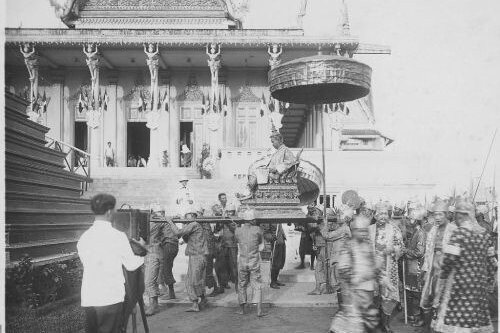
Coronation of King Sisowath Monivong ស៊ីសុវត្ថិ មុនីវង្ស, 9 August 1927. King Monivong (27 Dec 1875 – 24 April 1941) was the King of Cambodia from that date until his death in 1941. Rendered powerless by the conjuration of French Vichy officials, Japanese and Thai occupying forces, he retired to Kampot and the royal residence at Bokor, where he passed away.
Coronation of King Sisowath Monivong ស៊ីសុវត្ថិ មុនីវង្ស, 9 August 1927. King Monivong (27 Dec 1875 – 24 April 1941) was the King of Cambodia from that date until his death in 1941. Rendered powerless by the conjuration of French Vichy officials, Japanese and Thai occupying forces, he retired to Kampot and the royal residence at Bokor, where he passed away.
Note
Criminalization of Lese-majesty [FR Lèse-majesté], the crime of insulting, slandering, libeling or attacking a sovereign or a monarch, was added to the Cambodian Criminal Code [ក្រមព្រហ្មទណ្ឌ] in 2018. In BOOK 4 (Offences against the Nation), Title 1 (Infringements against major institutions of State), Chapter 1 (Offences against the King), Article 437-bis prohibits anyone from defaming, insulting or threatening the sovereign through ‘’any speeches, gestures, scripts/writings, paintings or items that would affect the dignity of the King’’. Violating this article carries a prison sentence of up to five years and a fine of up to ten million riels (US$2,500) for individuals.
Ang Choulean អាំង ជូលាន (1 Dec. 1949, Kompong Kleang, Cambodia) is a Cambodian independent ethnologist, a professor of historical anthropology and Old Khmer at the Royal University of Fine Arts, Faculty of Archaeology, and a former Director of the Department of Culture of APSARA Authority, remaining a special advisor to the entity in charge of Angkor Archaeological Park.
With a BA in archaeology from Phnom Penh University (1974), Ang Choulean graduated from EHESS (Ecole des Hautes Etudes en Sciences Sociales) in 1976, where he obtained a PhD in ethnology in 1982. He was the second Cambodian national to be granted the Fukuoka Grand Prize in 2011.
Ang Choulean is the author of numerous academic papers and books, including an ethnographic essay onfood and village life in the Angkor area (La cuisine rurale d’Angkor, in Khmer and French, Phnom Penh, 2020), and academic presentations. He conducted numerous field research in the Angkor area. He developed a new approach to traditions, myths, ancient rituals and spirituality in the daily life of Cambodian countryside.
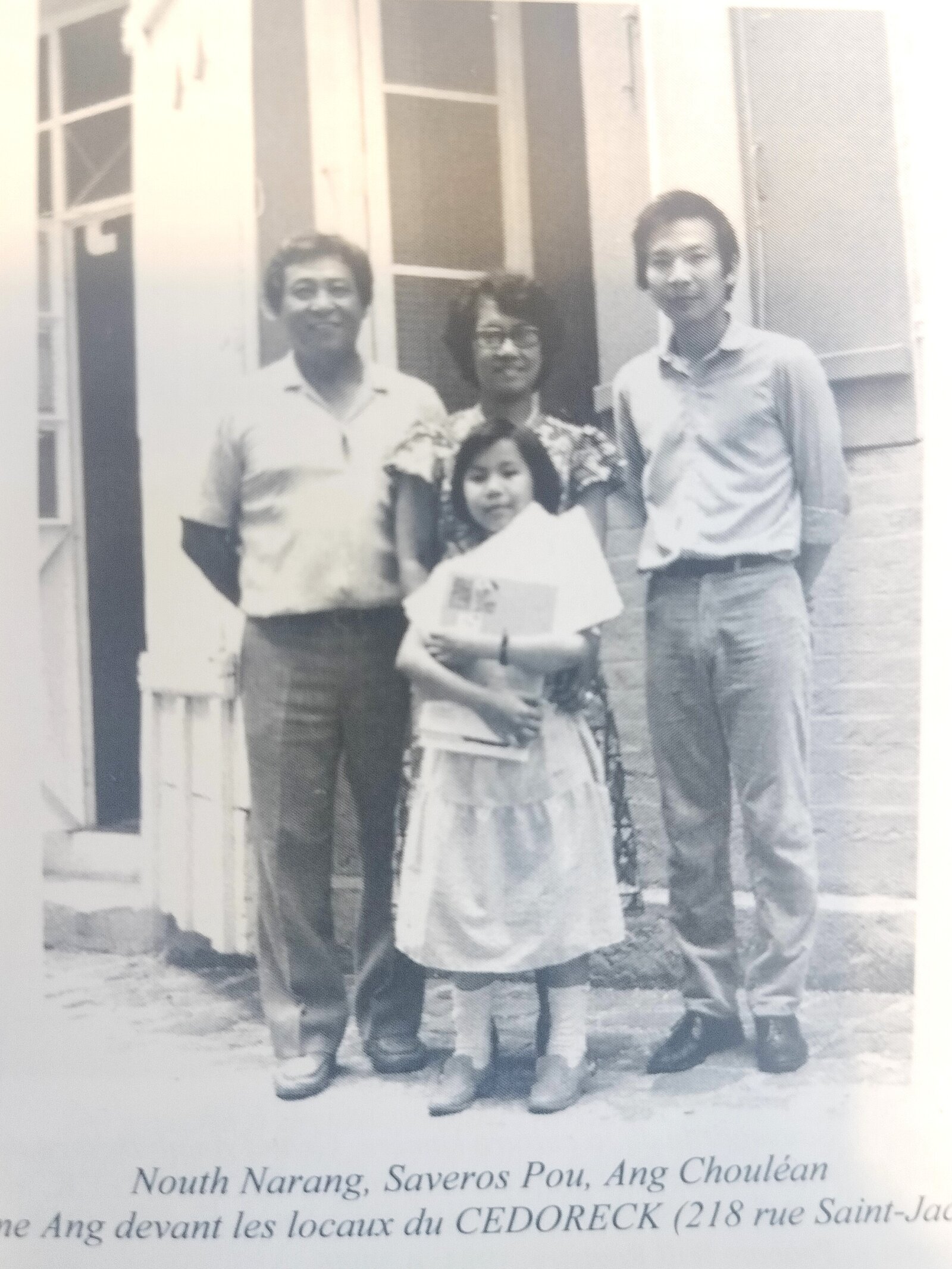
From left to right, Nouth Narang, Saveros Pou, Ang Choulean, center front Alina Ang, in front of CEDORECK offices (undated photo by CEDORECK, from Liber Amicorum in Honor of Ang Choulean, see below.)
From left to right, Nouth Narang, Saveros Pou, Ang Choulean, center front Alina Ang, in front of CEDORECK offices (undated photo by CEDORECK, from Liber Amicorum in Honor of Ang Choulean, see below.)
Publications
(list courtesy of Prof. Ang Choulean)
Catalogue des pièces en bois du Musée national de Phnom Penh, Phnom Penh: Université des Beaux-Arts, mémoire dactylographié de fin d’études, 1973, 174 p.
Le monde surnaturel cambodgien d’après un manuscrit de la Commission des Moeurs et Coutumes du Cambodge, Mémoire de diplôme de l’EHESS, Paris, 1976.
“Le philtre sneh. De la femme humaine à la femme surnaturelle”, Seksa Khmer, n° 1 – 2, Paris 1980, pp.155 – 202.
“Grossesse et accouchement au Cambodge : aspects rituels”, ASEMI XIII, 1 – 4, Cedrasemi, Paris 1982, pp. 87 – 109.
Les êtres surnaturels dans la religion populaire khmère, Cedoreck, Paris 1986.
“Le sacré au féminin”, Seksa Khmer, n° 10 – 13, Paris 1987 – 90, pp. 3 – 30.
“La communauté rurale khmère du point de vue du sacré”, Journal Asiatique, CCLVIII, 1 – 2, 1990, pp. 135 – 154.
“Apports indiens à la médecine traditionnelle khmère. Considérations préliminaires”, Journal of the European Ayurvedic Society, Vol. 2, Reinbek 1992, pp. 101 – 114.
“Un rapide survol des rites de passage dans le Cambodge traditionnel”, Kambodschanische Kultur, Berlin 1992, pp. 21 – 27.
(with TAN Yinh Phong) “Le monastère Khemararam. Espace identitaire de la communauté khmère”, in Jacqueline Matras-Guin and Christian Taillard eds, Habitations et Habitat d’Asie du Sud-Est Continentale, L’Harmattan 1992, pp 285 – 302.
“Recherché récente sur le culte des mégalithes et des grottes au Cambodge”, Journal Asiatique, CCLXXXI, 1 – 2, Paris 1993, pp. 183 – 210.
“De la naissance à la puberté. Rites et croyances khmers”, in J. Massard and J. Koubi eds, Enfants et Sociétés d’Asie du Sud-Est, l’Harmattan, Paris 1995, pp. 153 – 165.
“Le sol et l’ancêtre. L’amorphe et l’anthropomorphe”, Journal Asiatique, CCLXXXIII, 1, Paris 1995, pp. 213 – 238.
អង្គរ អតីត បច្ចុប្បន្ន និង អនាគត | Angkor, a Manual for the Past, Present and Future, Gouvernement royal du Cambodge, Phnom-Penh 1996 (coed. with E. Prenowitz et A. Thompson of the collective research00 “Zoning and Environmental Management Plan for Angkor, UNDP / UNESCO); French ed. 1997, Khmer ed. 1998.
“Nandin et ses avatars”, in H. Jessup and T. Zéphir eds., Angkor et dix siècles d’art khmer, Réunion des Musées Nationaux, Paris 1997, pp. 62 – 69.
“Recherché ethnologique cambodgienne, bref regard”, Dossiers d’Archéologie n 221, 1997, pp. 10 – 11.
“Les manuscrits khmers, survol thématique”, Kambodschanische Kultur, Nr 5, Berlin 1997, pp. 53 – 62.
“Un point de mémoire collective dans le Cambodge ancien”, BEFEO, 84, Paris 1997, pp. 334 – 339.
មនុស្សនិងដី [Hommes et terre], Reyum, Phnom Penh, 2000 (KH, FR, ENG versions).
“The Human-Nature Relationship Seen Through Animistic Belief and Ritual in Cambodia”, in M. Yamamoto and M. Fujimoto eds., Utaki in Okinawa and Sacred Places in Asia, The Japan Foundation, Tokyo 2004, pp. 58 – 65.
“La mort-renaissance en abstraction iconographique”, Udaya 5, Phnom Penh, 2004, pp. 85 – 98.
“Psychologie de l’artisan khmer : une petite pièce à verser dans le grand dossier”, Udaya 6, 2005, pp.187 – 190.7
“The Linga in all Its Aspects”, Orientations, Vol. 37, n° 8, Hong Kong, Nov-Dec. 2006, pp. 76 – 78.
“Vom Brahmanismus zum Buddhismus Betrachtungen zum Totenfest in Kambodscha”, in W. Lobo and Helen Ibbitson Jessup, Angkor. Göttliches Erbe Kambodschas, Bonn 2006, pp. 238 – 242.
“In the beginning was the Bayon”, in J.Clark ed., Bayon. New Perspectives, River Books, Bangkok 2007, pp. 362 – 377.
“សង្ខេបជំនឿលើព្រះយមរាជនៅប្រទេសកម្ពុជា”, ព្រឹត្តិបត្របុរាណវិទ្យា, លេខ ១, សាកលវិទ្យាល័យភូមិន្ទវិចិត្រសិល្បៈ២០០៧, ទំ. ២៥-៣៨. [“Summary of Beliefs regarding Yama in Cambodia”, Archaeological Bulletin n 1, Royal University of Fine Arts, 2007, pp. 25 – 38.]
“ដំណើរជីវិតមនុស្សខ្មែរមើលតាមពិធីឆ្លងវ័យ” (និពន្ធរួមគ្នាជាមួយព្រាប ចាន់ម៉ារ៉ា និង ស៊ុន ចាន់ដីប), ហនុមានទេសចរណ៍ ២០០៧ (ផ្សព្វផ្សាយលើកទី២ដោយយសោធរ, ២០១៤) [The Life of Khmer People Seen through the Ages] (with Preap Chanmara and Sun Chandeep), Hanuman Travel, 2007 (2nd ed. by Yosothor, 2014)].
“Yay Mau”, in Nasir Abdoul-Carime, Grégory Mikaelian, Joseph Thach (eds): Le passé des Khmers, Peter Lang SA, Berne 2016, pp. 249 – 262.
“Bringing India to Cambodia: Two Examples of Bridges”, in Anna L. Dallapiccola and Anila Verghese: India and Southeast Asia: Cultural Discourses, The KR Cama Oriental Institute, Mumbai 2017, pp. 72 – 82.
“Le tamarin dans la cuisine des villages d’Angkor. Des mémoires de Zhou Daguan à aujourd’hui”, in Marie Aberdam and Téphanie Sieng eds., Le patrimoine au Cambodge, Anciens rites, nouveaux usages et enjeux d’appropriation, Moussons, n° 30, 2017, pp. 185 – 202.
“Le terrain ethnographique à l’appui. Le premier mois dans l’ancien Cambodge et la fête des prémices du riz”, in N. Abdoul-Carime, E. Bourdonndeau, G. Mikaélian, J. Thach eds, Temporalités khmères : de près, de loin, entre îles et péninsules, Peter Lang, 2021, pp. 197 – 219.
“Nostalgia or Appropriation of the South?”, in Sonya Rhie Mace and Bertrand Porte eds, Revealing Krishna, The Cleveland Museum of Art (in association with D Giles Limited), London) 2021, pp. 163 – 174.
សត្វលោក [Creatures], Yosothor, Phnom Penh 2021, 147 p. ISBN-13: 978−9924−9394−1−2.
“យល់បាតុភូតអស្ចារ្យ”, UDAYA 16, Phnom Penh 2025, p. 51 – 68.
ប្រវត្តិសាស្ត្រកម្ពុជាសម័យអង្គ័រ (មូលដ្ឋានរៀននិងស្រាវជ្រាវ) [The History of Cambodia during the Angkor Period (Foundation study and research)], Yosothor, Phnom Penh, 2025. ISBN: 978−9924−9491−6−9.
Conference contributions
La place de l’animisme dans le bouddhisme populaire khmer. Exemple du monastère bouddhique, XXXIId ICANAS [International Congress of Asian and North African Studies], Hambourg, Aug. 1986.
Culte des mégalithes et des grottes au Cambodge, XXXIIId ICANAS, Toronto, Aug. 1990.
Les rites de passage khmers, Kambodscha-Seminar, Humboldt University, Berlin, Nov. 1991.
Oudong, ancienne capitale, Centre Culturel Français, Phnom Penh, Jan. 1994.
Historique de la gestion d’Angkor (in Khmer), Colloque de Khmérologie, Phnom Penh University, Aug. 1996.
The Watershed of the 9th Century : A Collective Memory, Sixth International Conference of European Association of SEA Archaeologists, Leiden, Sept. 1996.
Managing Angkor Today, Sixth Seminar on the Conservation of Asian Cultural Heritage, Nara, Oct. 1996.
Le Neak Ta (in Khmer), Sophia University, then Waseda University, Tokyo, Nov. 1996.
Recherché ethnologique au Cambodge: état des lieux, Colloque “Angkor, nouvelles approches de la civilisation cambodgienne”, Paris, Feb. 1997.
Representation of death and the hereafter in Khmer culture, Conference “Recent Studies in the History of Cambodian Art”, Center for Advance Study in the Visual Arts, National Gallery of Art, Washington DC, Sept. 1997.
Perpetual Recreation. Remodeling of Time and Space, Seventh International Conference of European Association of SEA Archaeologists, Berlin, Sept. 1998.
Human Nature and Ancestor Spirits, Lectures and Seminars “Cultural conceptions of human nature and personhood”, Department of cultural Anthropology and Ethnology, Uppsala University, Sept. 1998.
Politics of Religion and Current State of Buddhism in Cambodia, Department of History of Religions, Uppsala University, Sept. 1998.
L’espace humanisé et son fondateur, Nara National Cultural Properties Institute, Nara, Nov. 1998.
Brief History of Angkor, Nara Women’s University, Nara, Dec. 1998.
Angkor : la science, la tradition et leur défi pour les Khmers, 3rd Bayon Symposium by JSA-UNESCO, Siem Reap, Dec. 1998.
The choice of Angkor as royal capital (9th-15th c.), “Preserving architecture in ancient cities and sacred places”, Symposium by World Bankl, Washington DC, May 1999.
Angkor. La vision khmère en déperdition et perspectives d’avenir (in Khmer), presentation at Sophia University, Tokyo, Feb. 2000.
People and Earth, presentation at Reyum Gallery for the opening of the exhibition People and Earth, Phnom Penh, March 2000.
Le Reamker dans la vie quotidienne, presentation at Reyum Institute of Arts, Phnom-Penh, Sept 2002 (in Khmer and French); and at Department of South and Southeast Asian Studies, University of California, Berkeley, Oct. 2002 (in English).
The challenge of Angkor tourism, Università di Bologna, Nov. 2002.
La mort et ses allégories, presentation in two parts at Séminaire du Professeur Georges Condominas, Ecole des Hautes Etudes en Sciences Sociales, Paris, 6 and 20 May 2003.
Eclipse : Time, Death and Renewal in Cambodia, lecture at Center for International Studies, The University of Philippines Diliman, Manila, 9 Jan. 2004.
An abstract notion of “divinity”, International Symposium “Cultural Heritage, Identity and Information Technology”, set by Sophia University (Tokyo), Siem Reap, 12 March 2004.
Human – Nature relation seen through animistic belief and practices, Okinawa International Forum 2004 (theme: “Utaki in Okinawa and Sacred Spaces in Asia : Community Development and Cultural Heritage”), Okinawa, 27 March 2004.
A proposed database for a systematic inventory of Angkor Intangible Heritage, Advanced Digital Technology-Assisted Cultural Archives and Preservation Along the Maritime Silk Road, Seminar organized by the JSPS and the National Institute of Informatics, Tokyo, 24 July 2004.
Brah Ling, presentation at the opening of the exhibition Brah Ling – Le rappel des âmes, Reyum Institute of Arts, Phnom Penh, Aug. 2004 (in Khmer and English).
Riceballs as an Indian Legacy in Khmer Ritual, Center for Southeast Asian Social Studies, University of Gadjah Mada, Yogyakarta, Janvier 2005.
La “réclusion dans l’ombré”, rite de nubilité féminine, presentation at Séminaire du Professeur Georges Condominas, Ecole des Hautes Etudes en Sciences Sociale, Paris, 17 May 2005.
The spade Chumnik : from cultivation to culture, National Gallery of Art, Washington DC, 9 Nov. 2005.
Fusion with the divine, SEASREP 10th Anniversary Conference, Chiang Mai, 9 – 7 Dec. 2005.
The Kuy, their possible contribution to the Angkor power, Cultural heritage: Thais and their neighbours, conference held jointly by Silpakorn University, Thai Fine Arts Department, and SPAFA, Silpakorn University Alumni Association, Silpakorn University, Bangkok, 23 June 2006.
The intangible heritage of Angkor, keynote address, “Conference on New Directions in Research at Angkor”, Université de Sydney, 21 juillet 2006.
Can myths be neglected?, keynote speaker au TAASA Symposium sur le thème “Angkor: Artefacts to Empire”, University de Sydney, 22 juillet 2006.
Yama in present-day Cambodia: an introduction, at Syncretism in South and Southeast Asia, Adoption and Adaptation, The 2nd SSEASR Conference, Mahidol University, Nakhon Pathom, Thailand, May 2007.
Breaking-off and continuity: from ancient to present-day Cambodia, Hawaii and Cambodia: Revitalizing and Sustaining Connections, conference held jointly University of Hawaii at Manoa and the East-West Center, Honolulu, 10 Nov. 2007.
Related beings: rice and human, Center for Southeast Asian Studies, Kyoto University, 17 July 2008.
Merging Buddhism to Animism. An Example of Rice Cultivation Ritual in Angkor Area, Sophia University, Tokyo, 29 July 2008 (in Khmer).
Alcohol, expression of the divine, Center for Southeast Asian Studies, Kyoto University, 24 Sept .2008.
Brothers Kuy, Center for Asian Legal Exchange, Nagoya University, 27 Sept. 2008 (in Khmer).
Living with heritage at Sambor Prei Kuk, Seminars on intangible cultural heritage in Cambodia, The University of Sydney Robert Christie Research Center, Siem Reap, 30 Nov. 2008.
Les gens de Banteay Chhmar (in Khmer), Deuxième conférence international sur Banteay Chhmar, Sisophon, 10 Aug. 2009.
The Adoption of Hindu Religion in Early Historic Time of Cambodia: The Linga as a Bridge, International Conference on Bujang Valley and Early Civilizations in Southeast Asia, Department of National Heritage / Universiti Sains Malaysia, Kuala Lumpur, 5 July 2010.
The Intangible Heritage in Angkor Area: toward a Balanced Care?, Reconstruction Process and Cultural Heritage, National Research Institute for Cultural Properties, Tokyo, Jan. 2011.
Les sites historiques et les populations locales (in Khmer), Cambodia-Japan Cooperation Center, Phnom Penh, 6 Aug. 2011.
Cambodia: the multifaceted link between tangible and intangible heritages, Kyushu University, Japan, 17 Sept. 2011.
The amorphous gods of Japan seen from faraway Cambodia, Public Forum, Fukuoka, 18 Sept. 2011.
L’alcool, c’est divin. Bière et eau-de-vie de riz : leur nature dans le rituel au Cambodge, Séminaire du Centre Asie du Sud-Est, CNRS, Paris, 17 Nov. 2011.
Vivre avec le patrimoine antique, colloque “Quelles sciences pour le pays khmer ? Approches empiriques et théoriques”, Inalco, Paris 25 Nov. 2011.
Les études khmères : règles élémentaires à adopter (en khmer), Séminaire “Conservation et développement culturels : le patrimoine culturel khmer” held by Académie Royale du Cambodge-Royal Academy of Cambodia, Phnom Penh, 8 Dec. 2011.
Japan through my eyes, International Symposium on Khmerology titled “From Cambodia to the World”, held by Sophia Asia Center for Research and Human Development, Phnom Penh, Jan. 2012.
The “supranatural” in everyday life, Religious Studies in Cambodia: “Understand the Old and Trace the New”, conference held by APSARA Authority, EFEO, CKS, Sydney University, Siem Reap, June 2012.
Connectivity: A rapid glance on Cambodia, keynote speaker at 38th seminar on Southeast Asia held by the Center for SEA Studies (Kyoto University), Siem Reap, 22 Nov. 2014.
- Yeay Mao : La mémoire et son contre-pied, Colloque international sur le Cambodge : la conscience du passé chez les Khmers et leurs voisins, Faculty of Archology, RUFA, Phnom Penh, 15 – 17 Dec. 2014.
Two examples of bridges bringing India to Cambodia, seminar titled “Cultural Dialogues Between India And Southeast Asia From The 7th to The 16th Centuries”, The K. R. Cama Oriental Institute [named after Parsi scholar Kharshedji Rustomji Cama], Bombay, 17 – 18 Jan. 2015.
Rice Cycle, Human Cycle: an Example from Sambaur Prei Kuk, Cambodia, “Seminar and Performances” held by SEAMEO-SPAFA, Bangkok, May 2015.
L’ethnographie à l’appui, symposium held by Inalco et al., Projet Camnam, Paris, Nov. 2017.
Le fin du fin : l’absence d’images, international symposium held by Université Paris Lumières and workshops-laboratories by Idéfi-CréaTIC, Metz, Dec. 2017.
Yama, the God of Justice and the Afterlife over Cambodian Religious History, Center for Southeast-Asian Studies, SOAS, London, 20 June 2018.
Faint recollection of forgotten myths in some Khmer rituals, seminar held by SEAMEO-SPAFA, Bangkok, Juin 2024.
ដើម ៖ កំណើត, តជំនាន់, ភ្ជាប់ភព, a lecture co-organized by Yosothor and RUFA, Phnom Penh, 5 July 2024.
បាតុភូត ‑អស្ចារ្យ- [Les manifestations surnaturelles], 2‑part lecture at Ecole Française d’extrême-Orient, Siem Reap, 18 July 2024.
Le mythe du Lac Anavatapta. Traduction monumentale et rituelle, Présence des Etudes Khmères, journée d’études held by AEFEK / AMIYOS, Institut National des Langues et Civilisations Orientales, Paris, Sept. 2024.
The Bayon and the myth on the foundation of Cambodia, keynote speaker at the JSA/JASA 30th Anniversary Symposium, Toyo 1st Feb. 2025.
Fiction
សត្វលោក [Satvalok], novel in Khmer, Phnom Penh, Yosothor, 2021.
Udaya, scientific journal of Khmer studies, initially published by APSARA Authority, then by Friends of Khmer Culture, currently by Yosothor.
KhmeRenaissance, Khmer cultural website since 2005, currently produced by Yosothor and the Royal University of Fine Arts (RUFA) [104 short contributions by A.C. to date].
Filmography
Producer (concept and script) of Gens d’Angkor, ethnographic film (45mn) screened at roving exhibition of Khmer Art, Bonn, Berlin, Zürich, 2006.
Selected translations
Translation from English and French to Khmer of several books and articles by George Coedès, Bernard-Philippe Groslier, Mireille Bénisti, Bernard Dupaigne, Vann Molyvann.4
Translation-adaptation from French to Khmer of L’histoire terrible mais inachevée de Norodom Sihanouk, Roi du Cambodge byHélène Cixous.
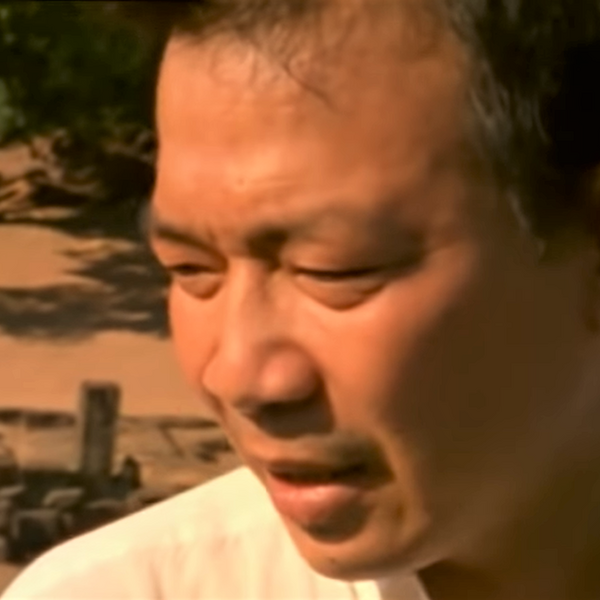
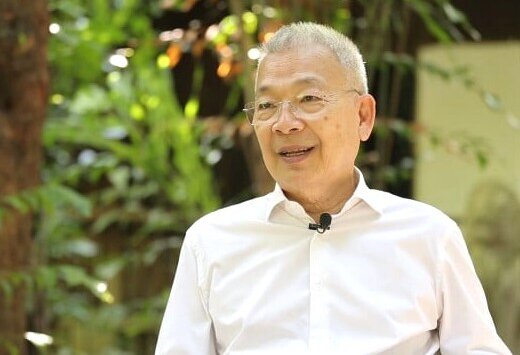
Professor Ang Choulean in 2022 (photo by Cambodianess).
Professor Ang Choulean in 2022 (photo by Cambodianess).
And also:Liber amicorum, mélanges réunis en hommage à Ang Chouléan [Liber Amicorum in Honor of Ang Choulean កម្រងអត្ថបទរំលឹកគុណចំពោះលោកគ្រូអាំងជូលាន], eds Grégory Mikaelian, Siyonn Sophearith, Ashley Thompson, Phnom Penh/Paris, Association des Amis de Yosothor and Péninsule, 2020, 442 p, ISBN 9782353214099.
Sokro Soung
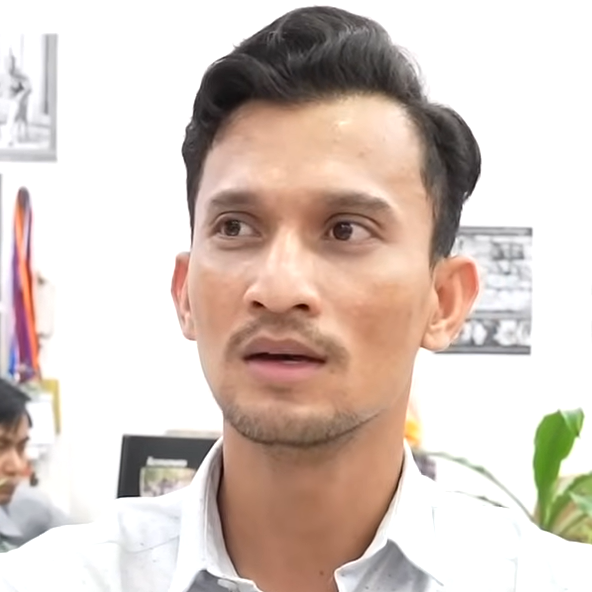
Soung Sokro សួង សុខរ៉ូ isa Cambodian teacher in archaeology and anthropology, a civil servant at the Center for Cultural Research and Innovation, and the executive director of the Khmer cultural promotion organization Yosothor.
He studied archaeology at the Royal University of Fine Arts in Phnom Penh, notably benefitting from Prof.Ang Choulean’s teaching.
sk क्रम krama, "serial order", "succession", "progress"; kh ក្រមkram, "order", "code" ; pa kama
kram: in middle period Cambodia, referred to proceeding, succession, order, justice, customary law, ordinance. "Cau krama" (IMA 30: 23-4), ‘head of law', judge, magistrate’.
Law codes were called kram, subsisting in modern times as in រាជក្រមreachkram: "royal code, royal edict". ក្រមការ kramkara, "order", "code of conduct", also meant "official, functionary" in middle period.