Saveros Pou [ពៅ សាវរស Pou Saveros in Khmer, SaverosLewitz in the 1970s-1980s] (24 Aug. 1929, Phnom Penh- 25 May 2020, Créteil, France) was a French linguist of Cambodian origin. A retired research director of the CNRS in Paris, a specialist of the Khmer language and civilization, she carried out extensive work of Khmer epigraphy, starting as a young researcher with teachers George Cœdès, Jean Filliozat,Louis Renou, Armand Minard, Anne-Marie Esnoul, André Bareau and the Cambodian intellectual living in Paris Au Chhieng.
Born in a respected and learned family — her mother, Nou Sieng, had a brother, (Nou Nhieuk) Nhieuk Nou (1900−1982), who served as oknha mahamontrey (head of protocol of the Royal Palace) during the ‘Golden Age’ of modern Cambodia, her grandfather, Kae Nou កែ នូ (1864−1958), a judge and ‘pandit’ (sage), and her father Pou Chroeng ពៅ ច្រឹង a provincial governor and later on an officer at the Ministry of Culture and Fine Arts -, she was raised after their mother’s premature death by her older sister, Pou Siphan ពៅ ស៊ីផាន់, and went to the Sutharot Girls School and Lycée Sisowath in Phnom Penh. She had wished to pursue higher studies in Philosophy abroad but her father first rejected the idea, and she was 21 when he gave her permission to go study in France, taking Linguistics, Literature and Anthropology at Sorbonne University, later adding degrees History, Geography, and Literature. (as per an interview conducted by Ham Chhayly ហម ឆាយលី on 27 June 27 1997).
Further studies under the guidance of Profs. Armand Minard (Sanskrit Grammar), Louis Renou (Philosophy and Sanskrit Literature), André Bareau (Buddhism and Pali) and Jean Filliozat (Culture and Civilization of Kalinga) led to her doctoral thesis “Reamker (Khmer version of the Ramayana, 16th – 17th century)” in 1978. Then, Saverous Pou went to England to deepen her knowledge of the Old Mon language (with Prof. G.H. Luce in Jersey) and Modern Mon with Prof. H.L. Shorto in London. At University of Hawai’i, she conducted additional research in linguistics.
Already a leading researcher in linguistics and social history of Cambodia, as well as a respected teacher for several generations of students, she exchanged ideas with Cambodian fellow researchers, had the opportunity to communicate with Khmer and Sanskrit pioneer researcher George Coedès and François Martini, and had a lasting influence on the younger generations of Khmerologists, from Ang Choulean to Grégory Mikaelian and others.
Her work in the field of etymology, specifically applied to old Khmer (from 6th to 14th centuries) was seminal, while her varied skills enabled her to tackle areas such as the very rich processes of derivation in Khmer, religion, codes of conduct, zoology and botany, culinary art, etc. This encyclopedic approach is reflected in her Dictionnaire vieux khmer-français-anglais.
‘Madame Pou’, as she was respectfully and affectionately referred to, is the author of more than 150 books and articles, published in several orientalist journals such as the Journal Asiatique and the Bulletin de l’École française d’Extrême-Orient. Saveros Pou’s last book published before her passing away was Un dictionnaire du khmer-moyen (Phnom Penh, Buddhist Institute, Sāstrā Publishing House, 2017).
“In the domain of pre-modern Khmer studies, the most significant intellectual heir to George Coedès was arguably Saveros Pou, often cited as a student of both Jean Filliozat and Coedès”, wrote researcher Jean Baffie in 2025 [Jean Baffie, “George Coedès (1886 – 1969)”, Journal of Siam Society (JSS) 113 [Special Edition George Coedès], 2025, p. 124].
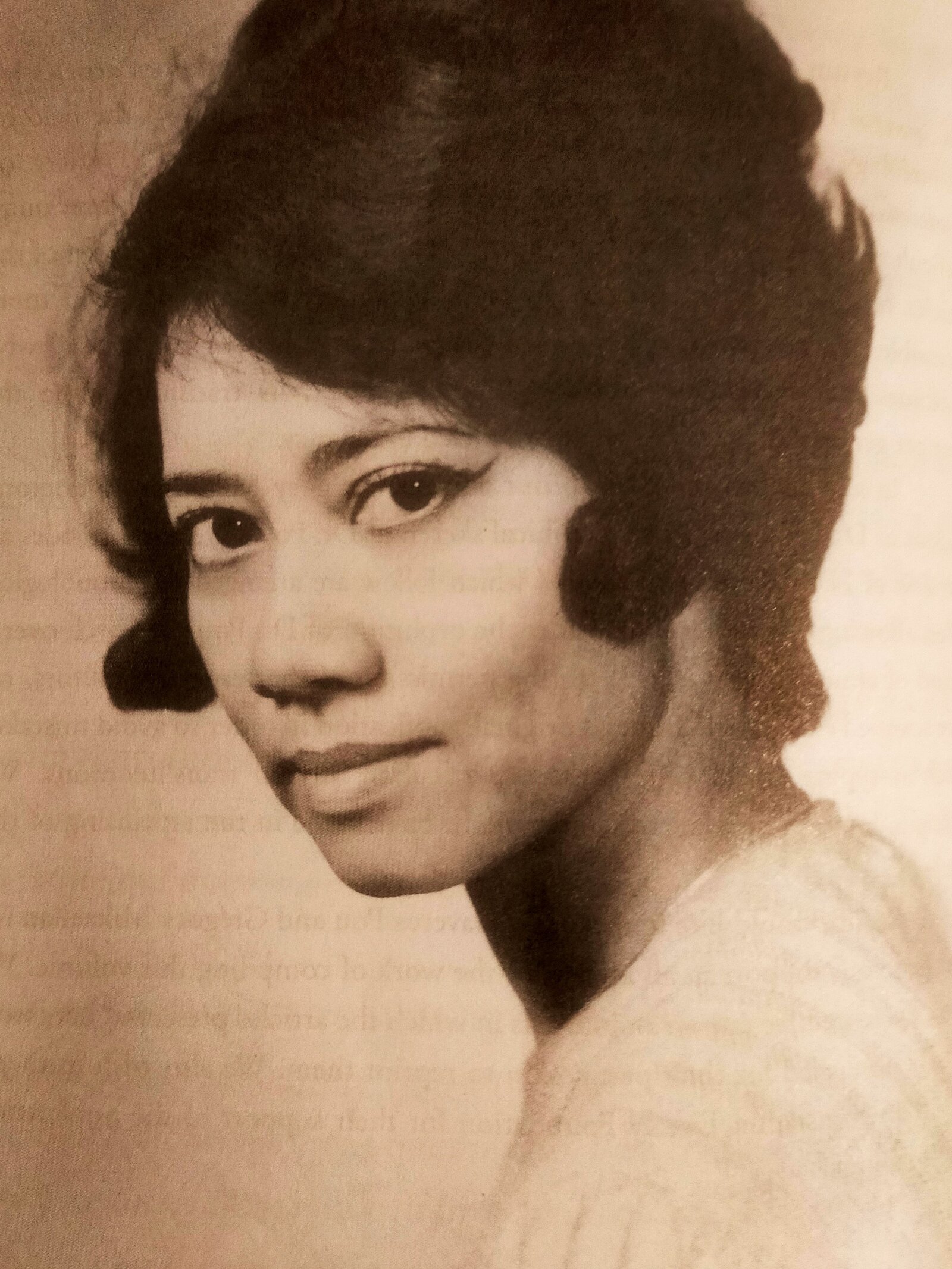
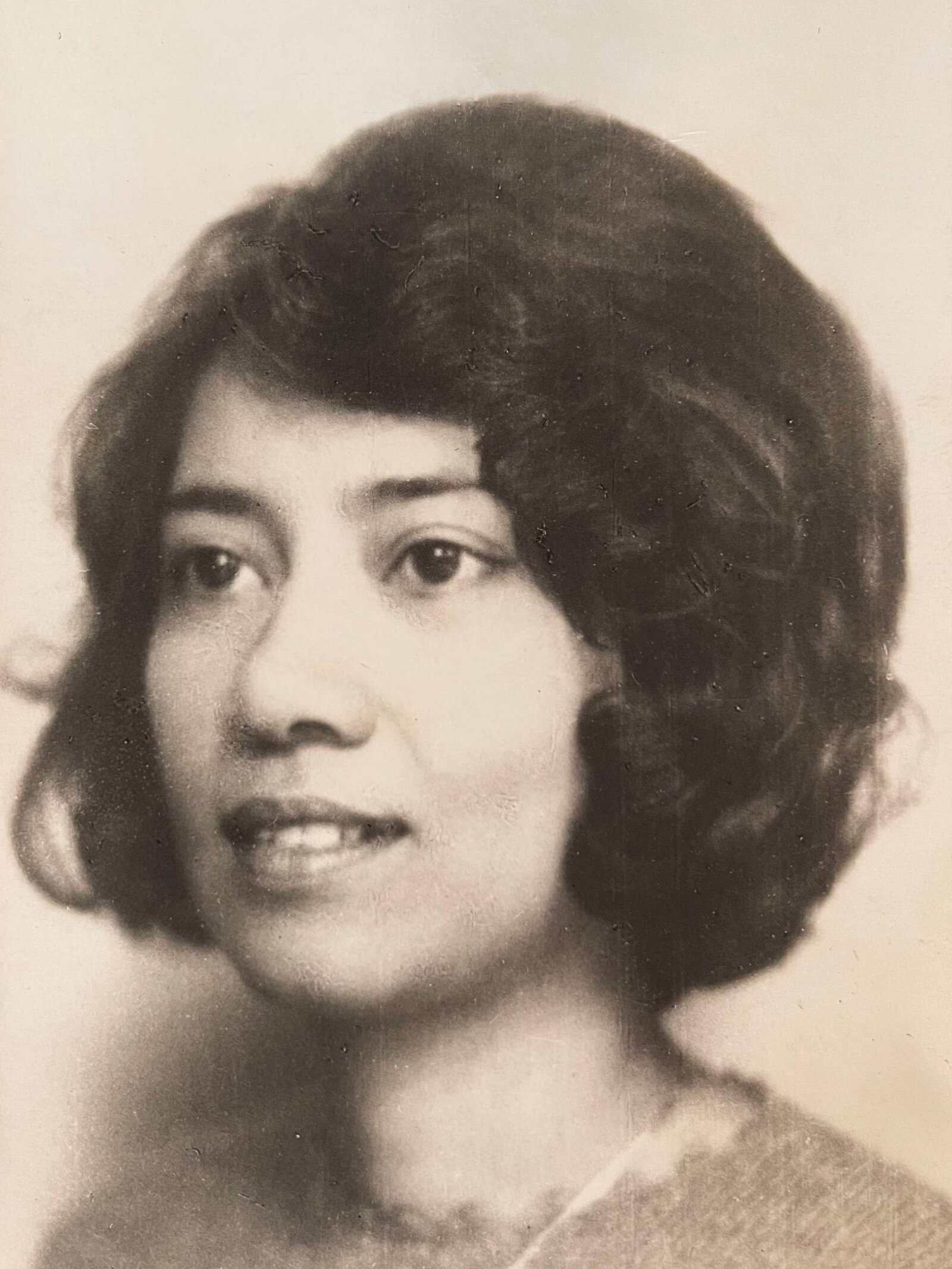
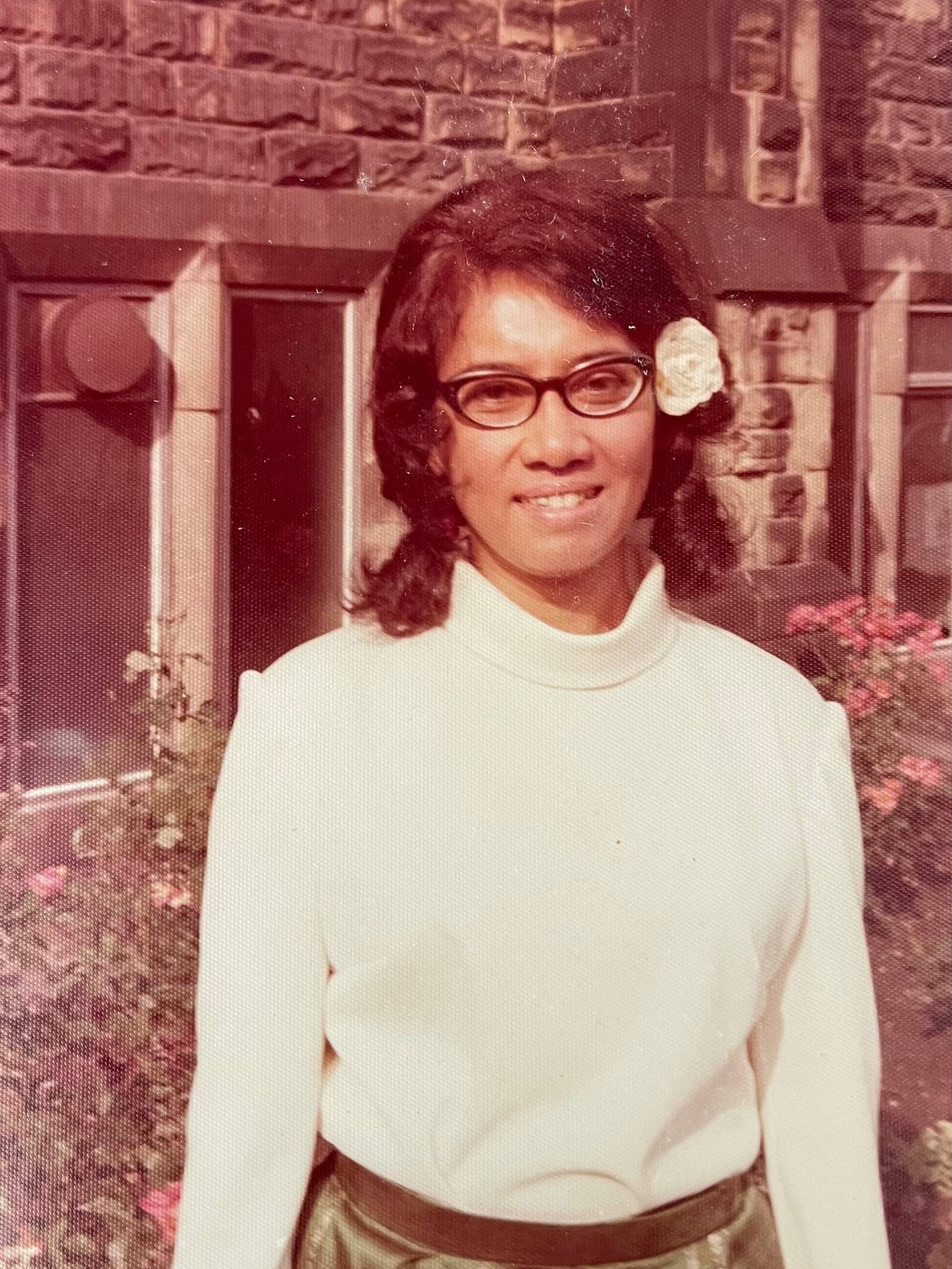
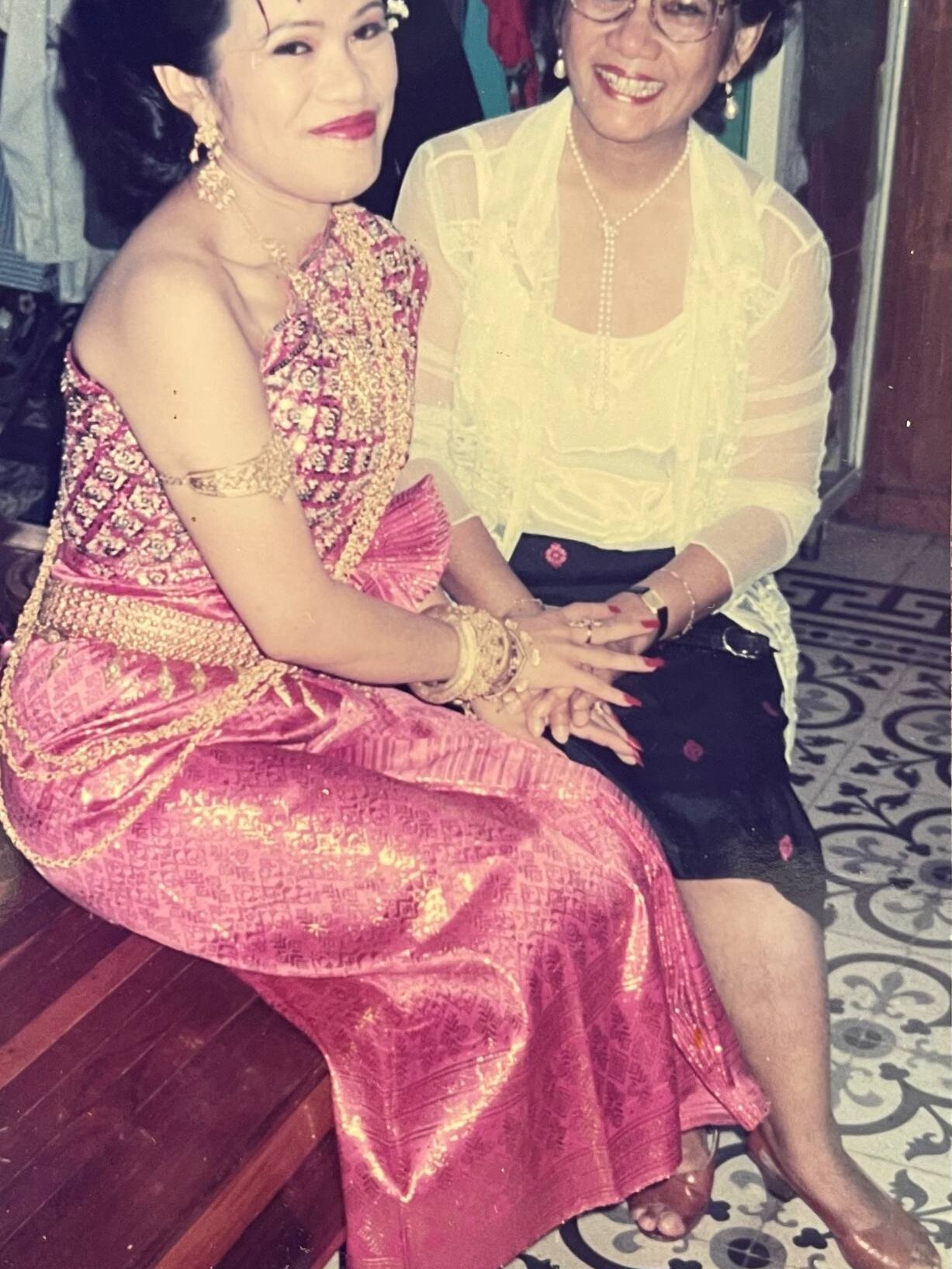
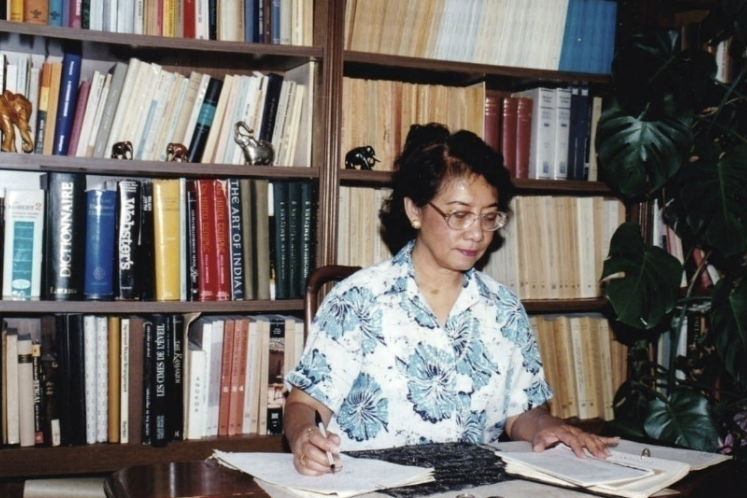
1) Mme Pou Saveros in 1970 [photo Reyum/Mikaelian]. 2) In Paris in the 1950s. 3) In Leeds in the 1970s. 4) At a friend’s wedding in Phnom Penh in the 1990s [2, 3, 4 courtesy of her brother Pou Tonevath in 2026].
1) Mme Pou Saveros in 1970 [photo Reyum/Mikaelian]. 2) In Paris in the 1950s. 3) In Leeds in the 1970s. 4) At a friend’s wedding in Phnom Penh in the 1990s [2, 3, 4 courtesy of her brother Pou Tonevath in 2026].
1) Mme Pou Saveros in 1970 [photo Reyum/Mikaelian]. 2) In Paris in the 1950s. 3) In Leeds in the 1970s. 4) At a friend’s wedding in Phnom Penh in the 1990s [2, 3, 4 courtesy of her brother Pou Tonevath in 2026].
1) Mme Pou Saveros in 1970 [photo Reyum/Mikaelian]. 2) In Paris in the 1950s. 3) In Leeds in the 1970s. 4) At a friend’s wedding in Phnom Penh in the 1990s [2, 3, 4 courtesy of her brother Pou Tonevath in 2026].
1) Mme Pou Saveros in 1970 [photo Reyum/Mikaelian]. 2) In Paris in the 1950s. 3) In Leeds in the 1970s. 4) At a friend’s wedding in Phnom Penh in the 1990s [2, 3, 4 courtesy of her brother Pou Tonevath in 2026].
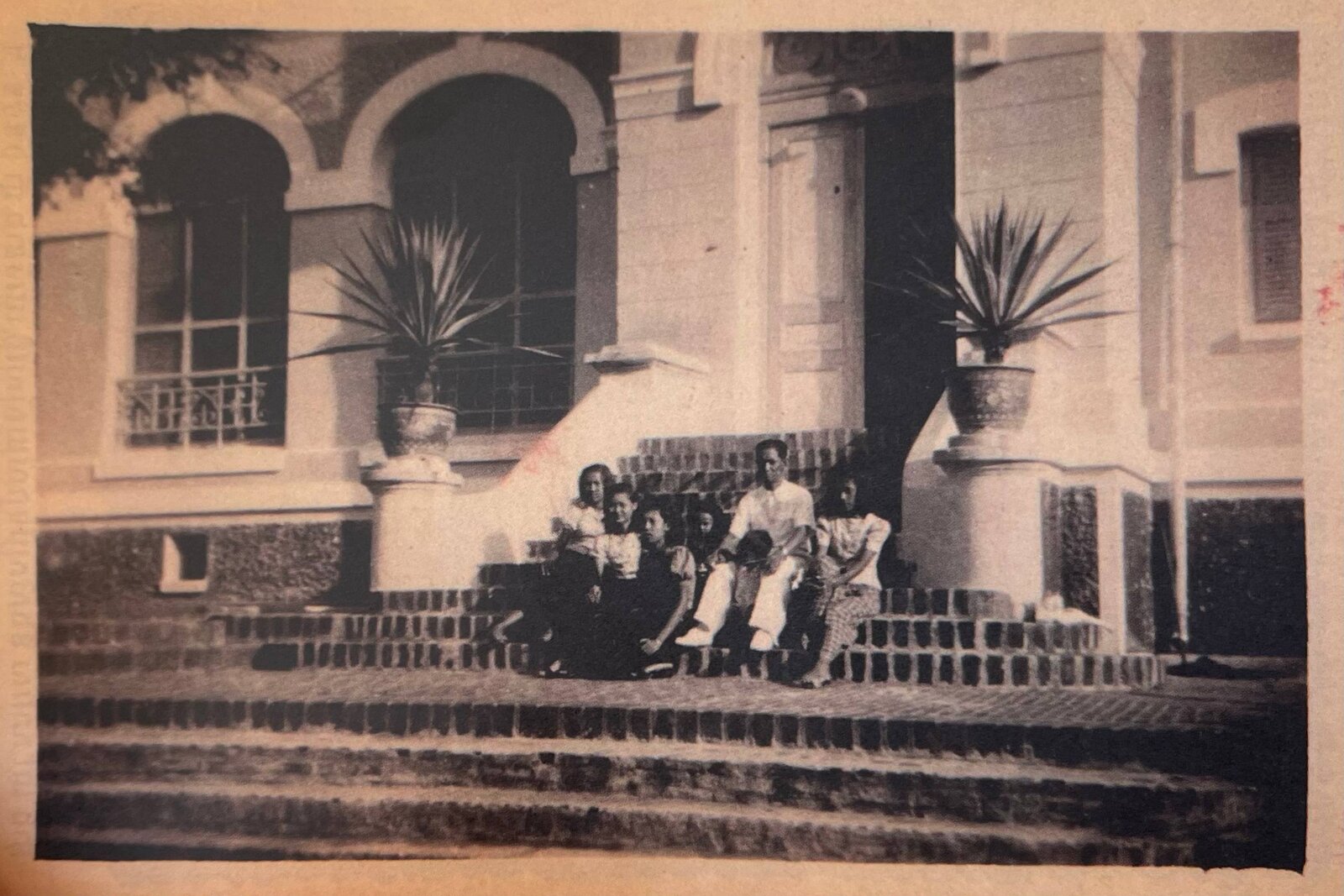
1) Prof. Pou Saveros with her familly in Kampong Speu in 1947. 2) In 1996 [source: Ham Chhayly ហម ឆាយលី].
1) Prof. Pou Saveros with her familly in Kampong Speu in 1947. 2) In 1996 [source: Ham Chhayly ហម ឆាយលី].
1) Prof. Pou Saveros with her familly in Kampong Speu in 1947. 2) In 1996 [source: Ham Chhayly ហម ឆាយលី].
“Recherches sur le vocabulaire cambodgien (I): Mots khmers considérés à tort comme d’origine savante”, Journal Asiatique(JA), 1967, 1: 117 – 31. [RVC1]
“Recherches sur le vocabulaire cambodgien (II): Mots sanskrits considérés comme khmers”, JA, 1967 2: 243 – 60. [RVC2]
“Recherches sur le vocabulaire cambodgien (III): Mots khmers considérés à tort comme d’origine siamoise”, JA, 1967 3 – 4: 285 – 304. [RVC3]
“La dérivation en cambodgien moderne”, Revue de l’Ecole Nationale des Langues Orientales Vivantes (RENLOV), IV, 1967: 65 – 84.
“L’accentuation syllabique en cambodgien”, Papers of the CIC Far Eastern Institute, Michigan 1968: 155 – 67.
Lectures cambodgiennes (Reader), Paris, Maisonneuve, 1968, 110 p.
“Recherches sur le vocabulaire cambodgien (IV): Du mot ‘mourir’ dans le rājasabd”, JA, 1968: 211 – 7. [RVC4]
“Note sur la dérivation par affixation en khmer moderne (cambodgien)”, RENLOV V, 1968: 117 – 27.
“Quelques cas complexes de dérivation en cambodgien”, Journal of the Royal Asiatic Society (JRAS), 1969: 39 – 48.
“Note sur la translittération du cambodgien”, BEFEO LV, 1969: 163 – 9.
“Notes ethnobotaniques sur quelques plantes en usage au Cambodge” [with J.E. Vidal, G. Martel], BEFEO LV, 1969: 171 – 232.
“Recherches sur le vocabulaire cambodgien (V) Les mots lanleń /lanlyin dans les inscriptions khmères”, JA, 1969: 157 – 65. [RVC5]
[review] “Introduction to Cambodian par J.M. Jacob, London, OUP, 1968, in‑8°, 341 р.”, BSOAS XXXII, 3, 1969: 652 – 4.
“Recherches sur le vocabulaire cambodgien (VI): Les noms des points cardinaux en khmer”, JA, 1970: 131 – 41. [RVC6]
[review] “The Khmer Language par Y.A. Gorgoniev, Moscou, Nauka, 1966, in-16, 134 р.”, Bulletin of the Society of Linguistics and Philology (BSLP), LXIV, 1970, 2: 232 – 5.
[review] “Early Indo-Cambodian Contacts. Literary and Linguistic par K.K. Sarkar, Santiniketan, Viśvabharati, 1968, in‑8°, 76 p.”, BSLP LXV, 1970, 2: 34 – 6.
[review] “Rioen Rāmakerti nai Tā Cak’. Histoire du Reamker, présenté par F. Bizot, Phnom Penh, EFEO, 1973”, Artibus Asiae (AAs), 1976, 38/4: 320 – 21.
“Inscriptions en khmer moyen de Vat Athvéa (K. 261)”, BEFEO LXIV, 1977:151 – 66.
“Les Cpap’ ou ‘Codes de conduite’ khmers III. Cpap’ Kūn cau” [with P.N. Jenner], BEFEO LXIV, 1977: 167 – 215. [CPAP3]
[tr. and commentary] Rāmakerti (XVIè-XVIIè siècles), Paris, PEFEO vol. CX, 1977, 299 р.
Etudes sur le Ramakerti (XVIè-XVIIè siècles), Paris, PEFEO vol. CXI, 1977, 201 р.
“Inscription dite de Brai Svay ou ‘Bois des Manguiers’ de Sukhoday”, BEFEO LXV, 1978, 333 – 59.
“Les Cpāp’ IV. Cpāp’ Rājaneti ou Cpap’ Brah Rājasambhār” [with P.N. Jenner), BEFEO LXV, 1978: 361 – 402. [CPAP4]
“Recherches sur le vocabulaire cambodgien X. L’étymologie populaire”, JA, 1978: 153 – 77. [RVC10]
“Sarasvati dans la culture khmère”, BEI 4, 1986: 321 – 39.
[review] “International Seminar on Rāmāyaņa. Traditions and National Cultures in Asia 2 – 6 Oct. 1986, Lucknow”, BEI 4, 1986: 51 – 55.
“Etudes sur le Rāmāyana en Asie (1980−1986)”, JA, 1987, 1 – 2: 193 – 201.
“Old Khmer and Siamese”, KK 2, Berlin, 1988: 37 – 48.
កម្រងច្បាប់ — Guirlande de Cpap’, Paris, Cedoreck, 1988, 2 vols. 638 p.
[review] “Reamker (Ramakerti), the Cambodian version of Ramayana, Translated by J.M. Jacob, London, The Royal Asiatic Society, Oriental Fund, New Series (XLV), 1986, in‑8°, 320 p.”, KK 2, 1988 : 72 – 6.
“Notes on Brahmanic Gods in Theravādin Cambodia”, Indologica Taurinensia, XIV, Colette Caillat Felicitation Volume, 1987 – 88: 339 – 51.
“Sanskrit Loanwords in Old Khmer: Some morphological Observations”, Dialectes dans les littératures indo-aryennes, Pub. ICI, 55, Paris, Collège de France & ICI, 1989: 569 – 78.
“Portrait of Rama in Cambodian (Khmer) Tradition”, Rāmāyaņa Traditions and National Cultures in Asia, D.P. Sinha &S. Sahai eds., Lucknow, Directorate of Cultural Affairs (Uttar Pradesh), 1989: 1 – 7.
Nouvelles Inscriptions du Cambodge, Paris, PEFEO CTDI-XVII, vol. I, 1989, 155 p.
“Le khmer et ses locuteurs”, Language Reform. History and Future, I. Fodor & C. Hagège, eds., Hamburg, Helmut Buske Verlag, vol. V, 1990: 239 – 52.
“Regard sur les études littéraires khmères”, SK 10 – 13, 1987 – 90: 39 – 58.
“Vocabulaire khmer relatif au surnaturel” [with Ang Choulean], Seksa Khmer 10 – 13, 1990 – 90: 59 – 129.
C.R. de Khmer Buddhism and Politics from 1954 to 1984 par Yang Sam, Khmer Studies Institute Inc., Newington (U.S.A.), 1987, petit in‑8°, 97 p., SK10 – 13, 1990: 134 – 36.
“Sanskrit, Pali and Khmero-Pāli in Cambodia”, Panels of the VIIth World Sanskrit Conference, vol. VII, Sanskrit outside India, J.G. de Casparis ed., Leiden, Brill, 1991: 13 – 28.
“Les dérivés désidératifs en khmer, Austroasiatic Languages, Essays in honour of H.L. Shorto, London, SOAS, 1991: 183 – 91.
“Les noms des monuments khmers”, BEFEO LXXVIII, 1991: 203 – 24, Pl.
“Conférence Internationale sur le Rāmāyaņa de Vālmīki, Turin 1992”, BEI 9, 1991: 235 – 7.
Lectures cambodgiennes — A Cambodian Reader, Paris, Cedoreck, 1991, 109p.
“Notes historico-sémantiques khmères”, Asie du Sud-Est et Monde Insulindien (ASEMI) XII, 1 – 2, 1991 : 111 – 124.
[review] “Dialectes dans les littératures indo-aryennes, Paris, Collège de France & ICI, 1989, 578 р.”, BEFEO LXXVIII, 1991: 337 – 9.
[review] “Ramayana Traditions and National Cultures in Asia, Sinha, D.P. & Sahai, S., ed., Lucknow, 1989, 22×28, 222 p., illustr.”, BEFEO LXXVIII, 1991: 339 – 42.
[review] “Circles of Kings. Political Dynamics in Early Continental Southeast Asia, par Renée Hagesteijn, Dordrecht-Holland, Providence‑U.S.A., 1989, ib‑8°, 175 р.”, BEFEO LXXVIII, 1991: 347 – 9.
[review] “A Glossarial Index of the Sukhothai Inscriptions par Ishii, Y, & Al., Bangkok, Amarin Publication, 1989, 15 x 26, 254 p.”, BEFEO LXXVIII, 1991: 349 – 51.
Dictionaire vieux khmer-français-anglais — An Old Khmer-French-English Dictionary — វចនានុក្រមខ្មែរចាស់-បារាំង‑អង្លេស, Paris, Cedoreck, 1992, 555 p. ISBN 2−86731−023−7; 2d augmented edition: Paris, L’Harmattan, 2004, 732 p.
“From Old Khmer Epigraphy to popular Tradition: A study of the names of Cambodian monuments”, Southeast Asian Archaeology 1990, Proceedings of the Third Conference of the EASEAA, Ian Glover ed., Centre for South-East Asian Studies, University of Hull, 1992: 7 – 24.
“Indigenization of Rāmāyana in Cambodia”, Asian Folklore Studies(AFS) vol. LI‑1, 1992: 89 – 102.
[review] “Rāmāyaņa and Rāmāyaņas, ed. Monika Thiel-Horstmann, Wiesbaden, Otto Harrassowitz, 1991, 259 p.”, AFS LI‑2, 1992: 376 – 8.
“From Old Khmer Epigraphy to Popular Tradition: A study of the names of Cambodian monuments”, Southeast Asian Archaeology, Proceedings of the Third Conference of the EASEAA, Ian Glover ed., Center for South-East Asian Studies, University of Hull, 1992: 7 – 24.
“Īsūr-īśvara, ou Śiva, au Cambodge”, Orientalia Lovaniensia Periodica (OLP), 24, 1993: 143 – 77.
“From Valmiki to Theravāda Buddhism: The example of the Khmer classical Rāmakerti”, Indologica Taurinensia, XIX-XX, Proceedings of the Ninth International Rāmāyana Conference (Torino, April 13 th-17th, 1992), 1993 – 4:267 – 84.
“Vişnu-Nārāy au Cambodge”, OLP 25, 1994: 175 – 95.
“Ancient Cambodia’s epigraphy: the concept of merit-making and merit-offering”, in Pierre-Yves Manguin ed., Southeast Asian Archaeology 1994, part II.
“L’offrande des mérites dans la tradition khmère, JA, CCLXXXII, 2, 1994:391 – 408.
“Indra et Brahma au Cambodge”, OLP, 26, 1995: 141 – 61.
“Introduction à l’étude du vieux khmer” [with S. Vogel], Cahiers d’études franco-cambodgiennes(CEFC), 4, Jan. 1995: 1 – 41.
“The concept of avatara in the Ramayana Tradition of Cambodia”, OLP.
“Nouveau regard sur Śiva-īśvara au Cambodge”, BEFEO 89, 2002: 145 – 82.
Choix d’articles de Khmérologie. Selected Papers on Khmerology [presented by Grégory Mikaelian], Phnom Penh, Reyum, 2003, 503 p.
“The concept of avatara in the Ramayana Tradition of Cambodia”, OLP 31, 2005:123 – 35.
“Les fleurs dans la culture khmère”, JA 293 – 1, 2005: 45 – 98.
“Comment nommer les espèces végétales nouvelles: Le Lexique khmer moyen”, JA 294 – 2, 2006: 373 – 407.
Ramakerti I: ‘La Gloire de Rama’, drame épique médiéval du Cambodge [with Grégory Mikaelian], Paris, L’Harmattan, 2007.
“Emprunts lexicaux khmer-moyens au monde indo-persan”, JA 296 – 1,2008:141 – 156.
Nouvelles inscriptions du Cambodge vol IV, Paris, L’Harmattan, 2011.
សទ្ទានុក្រម សំស្រ្កឹតខ្មែរ‑បារាំង — Lexique de Sanskrit-Khmer-Français (Sanskrit utilisé au Cambodge), Editions Angkor, Phnom Penh, 2013.
[awaiting publication] “Satya, śapatha and sāksī in Cambodia’s Tradition”, Proceedings of the 13th World Sanskrit, Edinburgh Conference, July 2006.
[awaiting publication] “Un texte de Satyapranīdhān du 17e siècle cambodgien” [with Grégory Mikaelian].
Un dictionnaire du khmer-moyen, Phnom Penh, Buddhist Institute, Sāstrā Publishing House, 2017, 325 p.
Nouvelles préfaces (en cambodgien et en français) aux Inscriptions Modernes d’Angkor, Paris, Réimpression, Cedoreck, 1984.
Notes sur les coutumes et croyances superstitieuses des Cambodgiens par Étienne Aymonier. Commenté et pré- senté par Saveros Pou, Paris, Cedoreck, 1984, 116 р.
Préface à La réappropriation en khmer de mots em- pruntés par la langue siamoise en vieux khmer, Michel Antelme, Pattani, Prince of Songkla University, 1996, p. 5 – 7.
« Jean Filliozat: le guru que j’ai connu », Seksa Khmer 5, 1982, p. 5 – 9.
Conference Communications
International seminar on Rāmāyaņa traditions and national culture In Asia, Lucknow (India), 2 – 6 Oct.1986.
Conférence Internationale sur le Rāmāyaņa de Valmīki, Torino (Italy), 1992 [BEI 9, 1991: 235 – 7].
La langue khmère, la linguistique et le khmer, manuel de grammaire khmère: perspective de travail, emprunts indo-aryens, lexique et datationm. La littérature khmère: thème et genres littéraires, état des études littéraires khmères et littérature khmère, Phnom Penh Royal University with Alliance française and Cercle de linguistique franco-khmere, 9 – 23 February 1993.
Ancient Cambodia’s Epigraphy: a Socio-Linguistic Look, European Association of Southeast Asian Archaeologists, 6th International Con-ference, Leiden (the Netherlands), 02 – 06 September 1996.
Phnom Penh Buddhist Institute: research at the invitation of Dr. Hema, UN Cultural Section representative in Cambodia, 24 Dec 1998- 19 Jan. 1999.
The Hermitage (Asrama) in Ancient Cambodia as Evidenced by Epigraphy, Albert-Ludwings Universität Freibourg, Orientalisches Seminar, Indologia, 11 Nov. 1999.
The Victoria and Albert Museum and the Institute of Archaeology, University College London, Proceedings of the 10th EurASEAA Conference, London, 14 – 17 Sept. 2004.
Satya, Sapatha and Šaksi in Cambodia’s Tradition, Proceedings of the 13th World Sanskrit Conference, Edingburgh, (Scotland, UK), 10 – 14 July 2006.
Kalpana in Ancient Cambodia, Proceeding of the 10th International Conference of the European Association of Southeast Asian Archaeologists, London, 2008.
Sk आश्रम āśrama, "spiritual hermitage" or "monastery" |kh អាស្រម ashram "monastery"
ashram: a kind of monastery or retreat to which men retire when they consider that their active life is over, in order to prepare for their future existence. In ancient Angkor, the asrama, or vidyasrama, or varnnasrama, were educational colleges with teachers were called adhyapaka, and heads of association often called kulapati (cf. varnnasrama).
sk क्रम krama, "serial order", "succession", "progress"; kh ក្រមkram, "order", "code" ; pa kama
kram: in middle period Cambodia, referred to proceeding, succession, order, justice, customary law, ordinance. "Cau krama" (IMA 30: 23-4), ‘head of law', judge, magistrate’.
Law codes were called kram, subsisting in modern times as in រាជក្រមreachkram: "royal code, royal edict". ក្រមការ kramkara, "order", "code of conduct", also meant "official, functionary" in middle period.
kh: ឧកញ៉ា angk: uk-na | in ancient vn texts: Ốc nha (屋牙)
Khmer honorific meaning 'nobleman' or 'lord'. Initially envoys of the Angkor kings, then title in used during the Oudong monarchy from the 18th century, substituting Ponhea (ពញា - equivalent to Phraya (พญา) in Thai). The title "Oknha" was transformed into Thai as Okya (ออกญา) by the Ayutthaya Kingdom. The word Oknha occurs in ancient Vietnamese records.
Since 1993, title bestowed by the King (later by the Cambodian government) on civilians (non-royalty) distinguished for their goods deeds. Recently, 'oknha' has become a Khmer version of 'tycoon', as since 2017 wealthy people donating a minimum of 500,000 USD to the State can obtain the title.