

Cambodge 1958-1964 (Une vie de photographe) [Cambodia 1958-1964, A Photographer's Life]
by Micheline Dullin
How a chance encounter with Cambodia in the late 1950s led to some meaningful photographs reflecting a historic period lacking of in-depth studies.

- Author
- Micheline Dullin
- Publisher
- Paris, trans photographic press. Ed. by Nausicaa Favart-Amouroux and Christian Caujolle.
- Published
- 2012
- Pages
- 195
- Languages
- English, French
- ISBN
- 979-10-90371-06-4
- Formats
- ADB Physical Library, hardback
Photographer Micheline Dullin was not on a professional assignment when she arrived in Cambodia from her South American wanderings. A free electron gravitating around the Parisian movie scene of the time, she stumbled upon some major changes happening in a country still giddy with a 1953 independence gained without bloodbath. Along with her partner Roland Favart, she was unprejudiced, immensely curious, and gifted with a knack for weaving new friendships and networks, in particular with Prince Norodom Sihanouk.
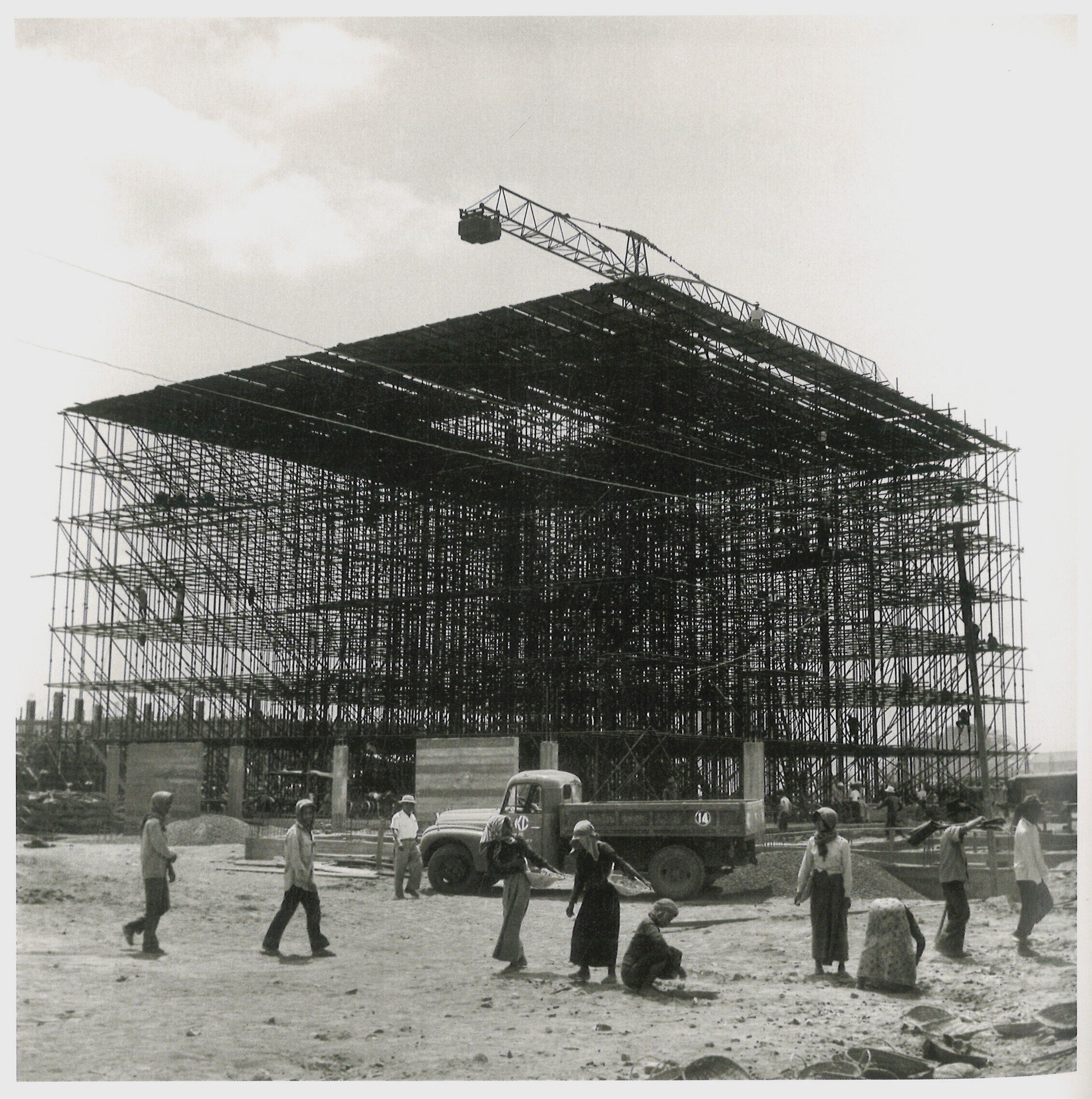
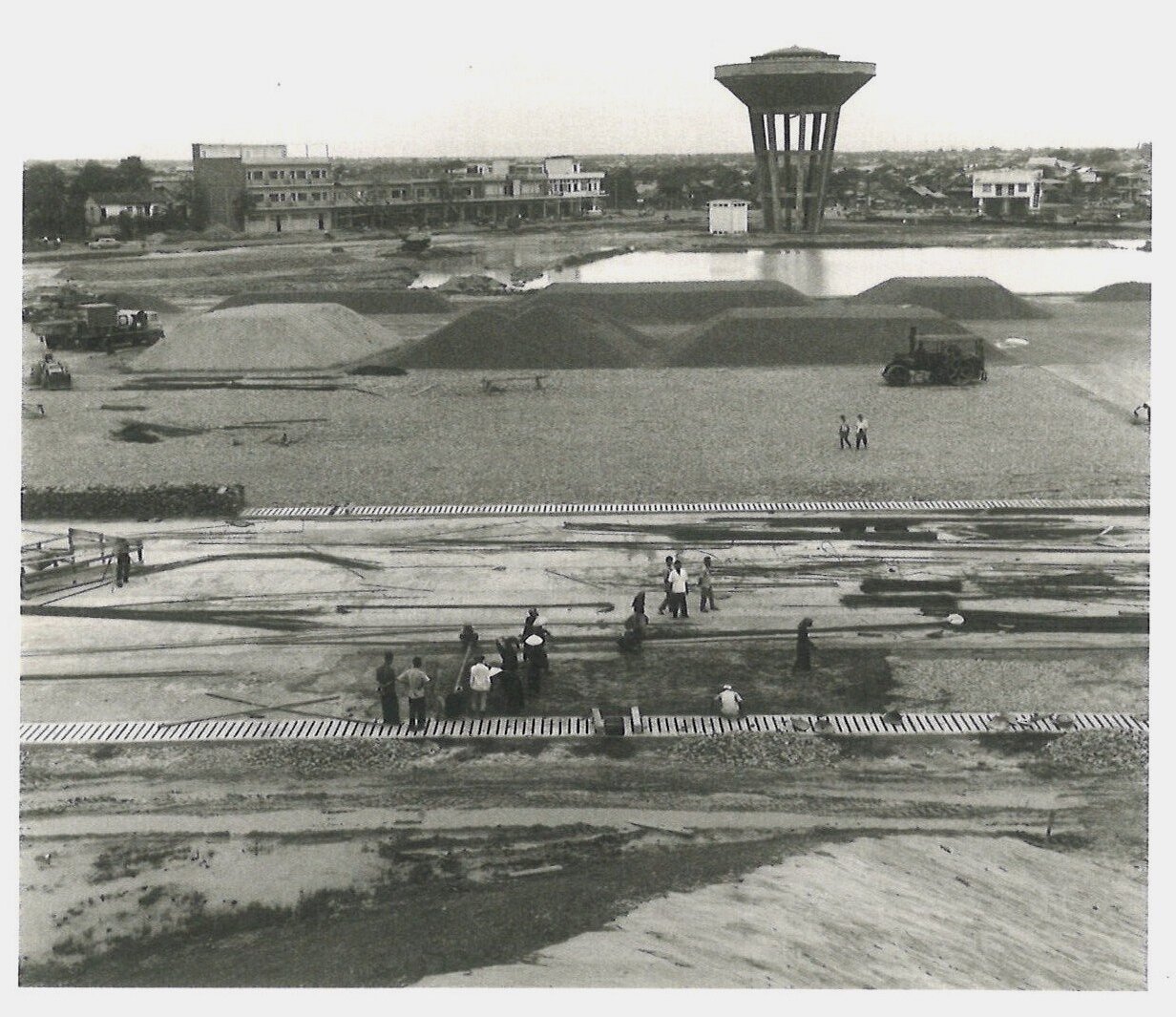
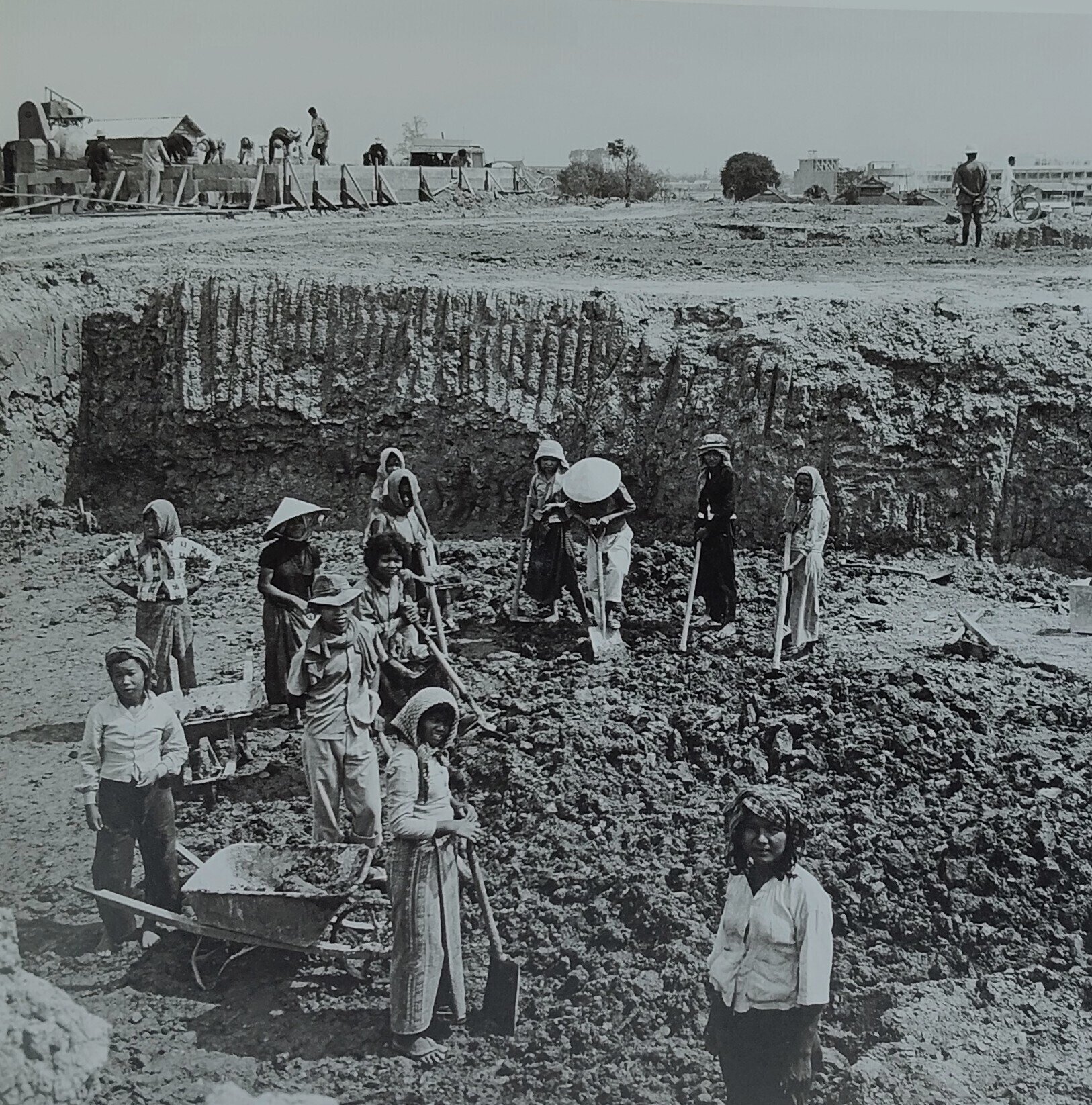
The end result of her six years spent in Cambodia are arresting photos documenting people and their daily life, the leader of the Sangkum Reastr Riyum សង្គមរាស្ត្រនិយម in his numerous tours of the country (sometimes taking the Royal Ballet of Cambodia dancers to remote villages) and the National Sports Complex project (later known as Olympic Stadium) that lasted from 1961 to 1964, and which she thoroughly documented after being introduced to architect Vann Molyvann by French urbanist Gérald Hanning (15 Sept. 1919, Tananarive (Antananarivo, Madagascar) — 31 Dec. 1980, Paris), the latter bringing in legendary structure engineeer and aviator Vladimir Bodiansky (25 March 1894, Kharkiv – 10 Dec. 1966, Paris). Micheline, Molyvann and his wife Trudy became fast friends, with their children often playing together.
In the 2012 book edited by the photographer’s daughter, Nausicaa Favart-Amouroux, Vann Molyvann himself commented on Micheline Dullin’s photographic work, adding some valubable information on this architectural and engineering feat, such as:
At first, the plan had been presented in Japan, but they asked for too much money. So, we had to work everything out in order to use all the local materials we could, starting with earth mounds [instead of concrete foundations], and relying on the local working force. […] For excavation works, we began using ox-driven carts…[…] The main idea was that to build the crown [of the stadium by piling up the soil, and in this process] I was inspired by what the Khmers of the Angkorian period had done.
We also get notations from the photographer herself about the inner works, how she covered a flurry of state visits as Prince Sihanouk wished to project the international image of a non-engaged yet resolutely modern country in a region threatened by war — only Chinese Foreign Minister Zhou Enlai rejected to be photographed, she stated, while her close-ups of Indonesian President Soekarno and Prince Sihanouk were printed as huge posters,
For the first time in this book, Micheline Dullin hinted at her rushed eviction from Cambodia, when Roland Favart and herself were abruptly driven under police escort to the Laos border late 1964. In her testimony, she pinned this sudden fall from grace on some photographs she had taken during at Princess Norodom Buppha Devi’s wedding a few weeks earlier.
We are reproducing here a few photographs of the National Sports Complex worksite.
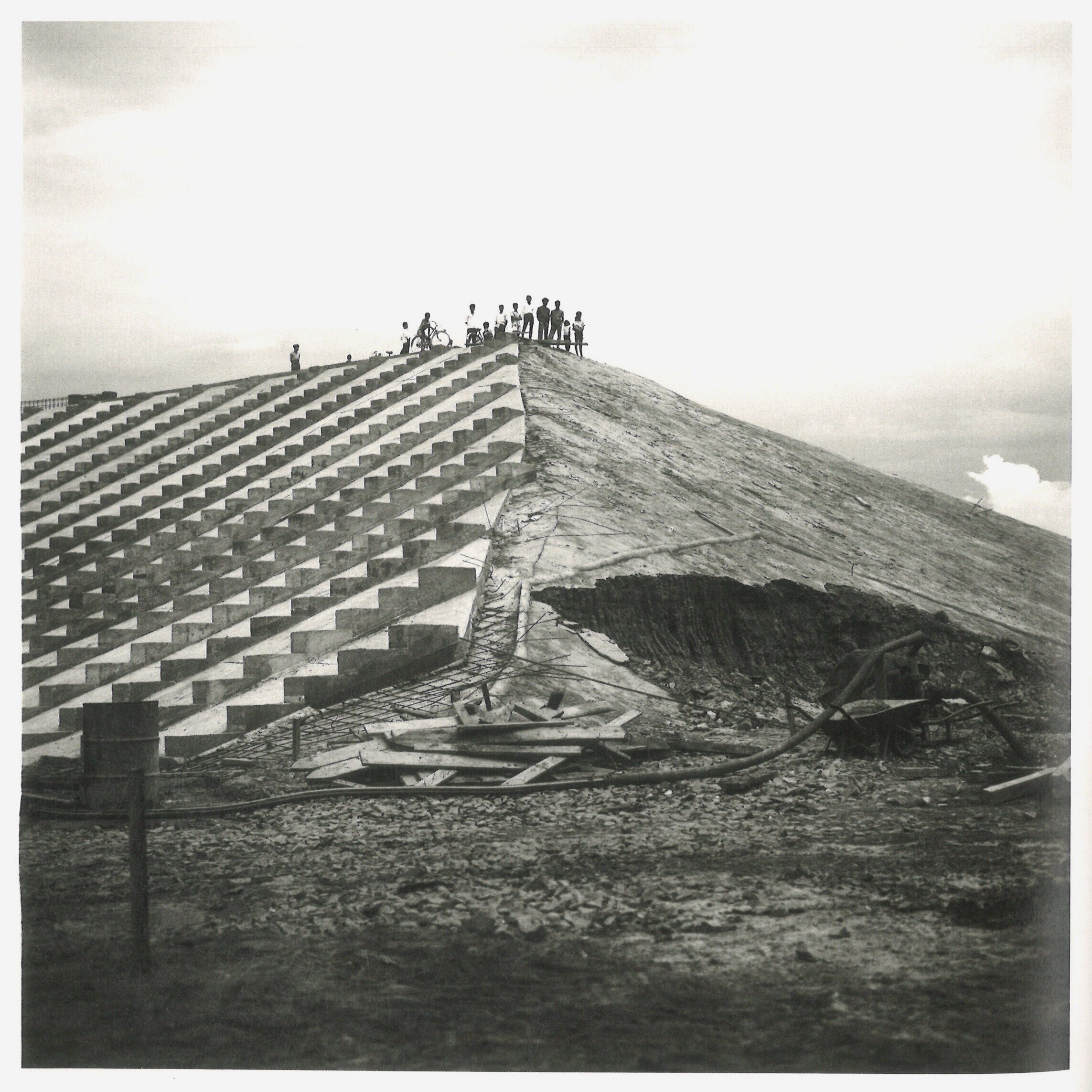
Micheline Dullin was the only photographer to document the National Sports Complex worksite and the people involved in this massive project until its near completion from 1961 to 1964. With an impromptu celebration of chief engineer Vladimir Bodyanski (center with the hat), Vann Molyvann (to his right), members of his team and four dancers from the Royal Ballet. [all photos © Micheline Dullin, from the book]
Micheline Dullin was the only photographer to document the National Sports Complex worksite and the people involved in this massive project until its near completion from 1961 to 1964. With an impromptu celebration of chief engineer Vladimir Bodyanski (center with the hat), Vann Molyvann (to his right), members of his team and four dancers from the Royal Ballet. [all photos © Micheline Dullin, from the book]
Micheline Dullin was the only photographer to document the National Sports Complex worksite and the people involved in this massive project until its near completion from 1961 to 1964. With an impromptu celebration of chief engineer Vladimir Bodyanski (center with the hat), Vann Molyvann (to his right), members of his team and four dancers from the Royal Ballet. [all photos © Micheline Dullin, from the book]
Micheline Dullin was the only photographer to document the National Sports Complex worksite and the people involved in this massive project until its near completion from 1961 to 1964. With an impromptu celebration of chief engineer Vladimir Bodyanski (center with the hat), Vann Molyvann (to his right), members of his team and four dancers from the Royal Ballet. [all photos © Micheline Dullin, from the book]
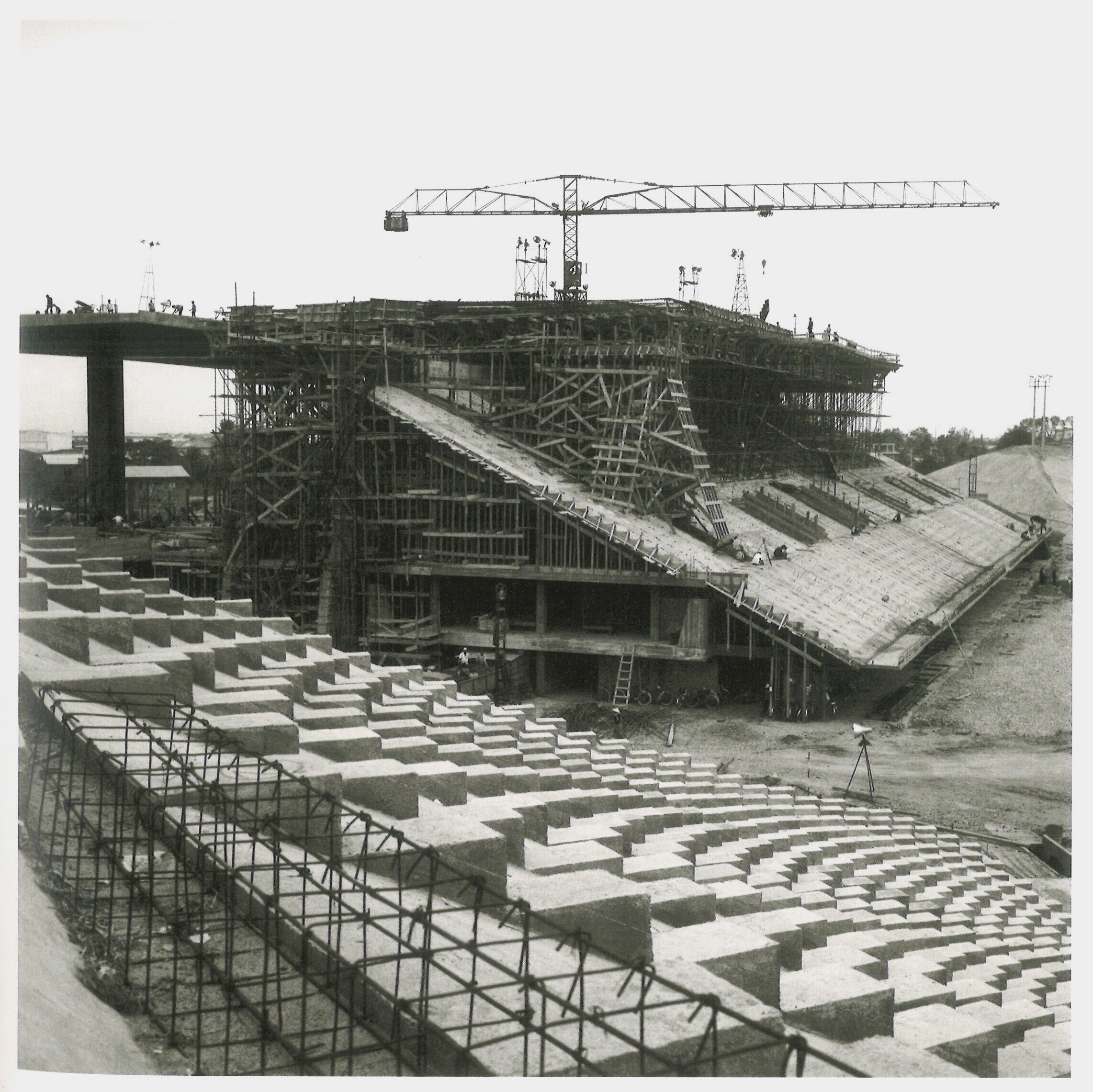
Micheline Dullin was the only photographer to document the National Sports Complex worksite and the people involved in this massive project until its near completion from 1961 to 1964. With an impromptu celebration of chief engineer Vladimir Bodyanski (center with the hat), Vann Molyvann (to his right), members of his team and four dancers from the Royal Ballet. [all photos © Micheline Dullin, from the book]
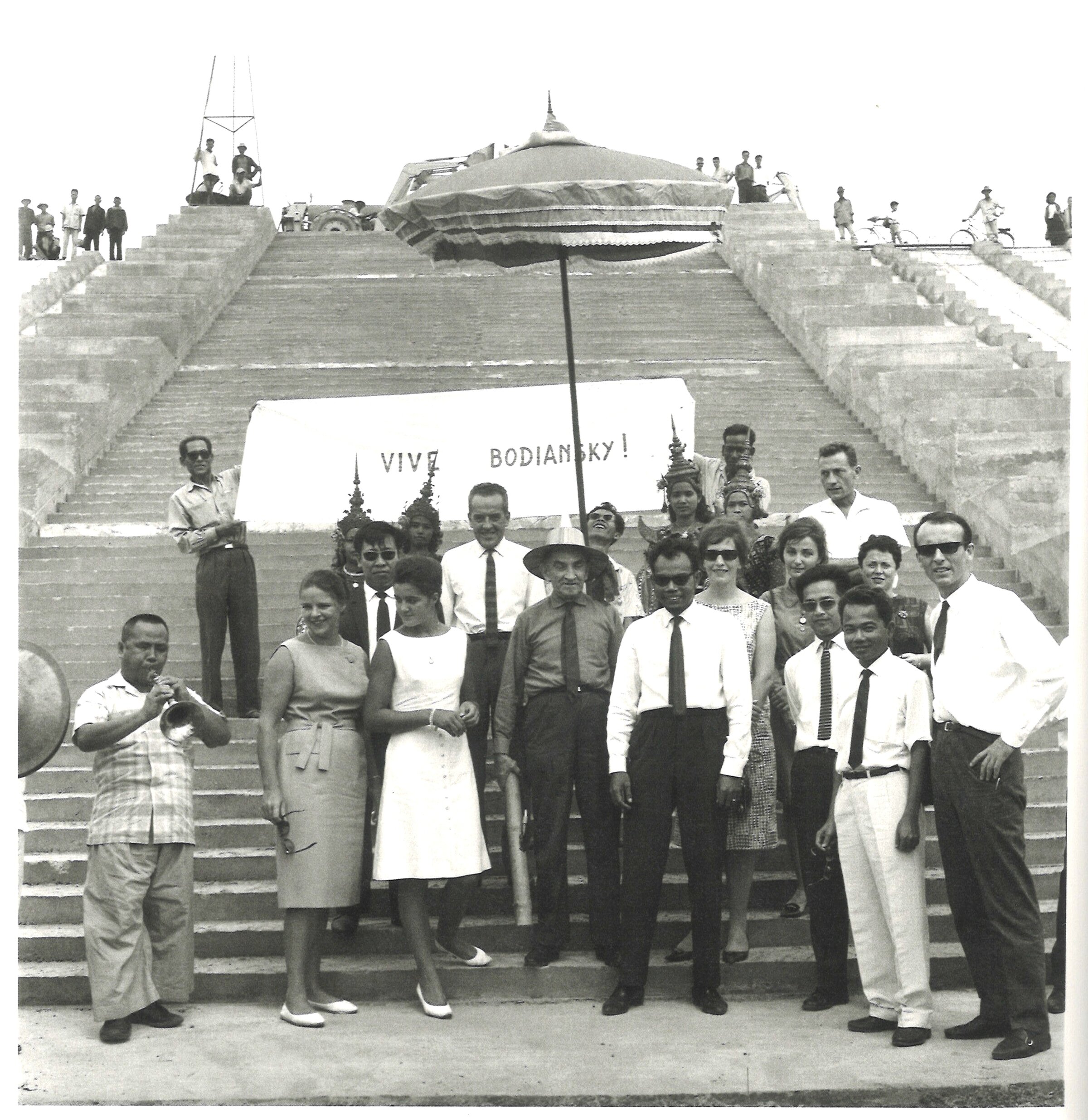
Micheline Dullin was the only photographer to document the National Sports Complex worksite and the people involved in this massive project until its near completion from 1961 to 1964. With an impromptu celebration of chief engineer Vladimir Bodyanski (center with the hat), Vann Molyvann (to his right), members of his team and four dancers from the Royal Ballet. [all photos © Micheline Dullin, from the book]
Micheline Dullin was the only photographer to document the National Sports Complex worksite and the people involved in this massive project until its near completion from 1961 to 1964. With an impromptu celebration of chief engineer Vladimir Bodyanski (center with the hat), Vann Molyvann (to his right), members of his team and four dancers from the Royal Ballet. [all photos © Micheline Dullin, from the book]
What makes Micheline Dullin’s vision of Cambodia particularly endearing and significant for history research is her rare ability to convey the profund relationship between people and places or landmarks. Here two examples from a rich body of work which deserves to be more studied and documented.
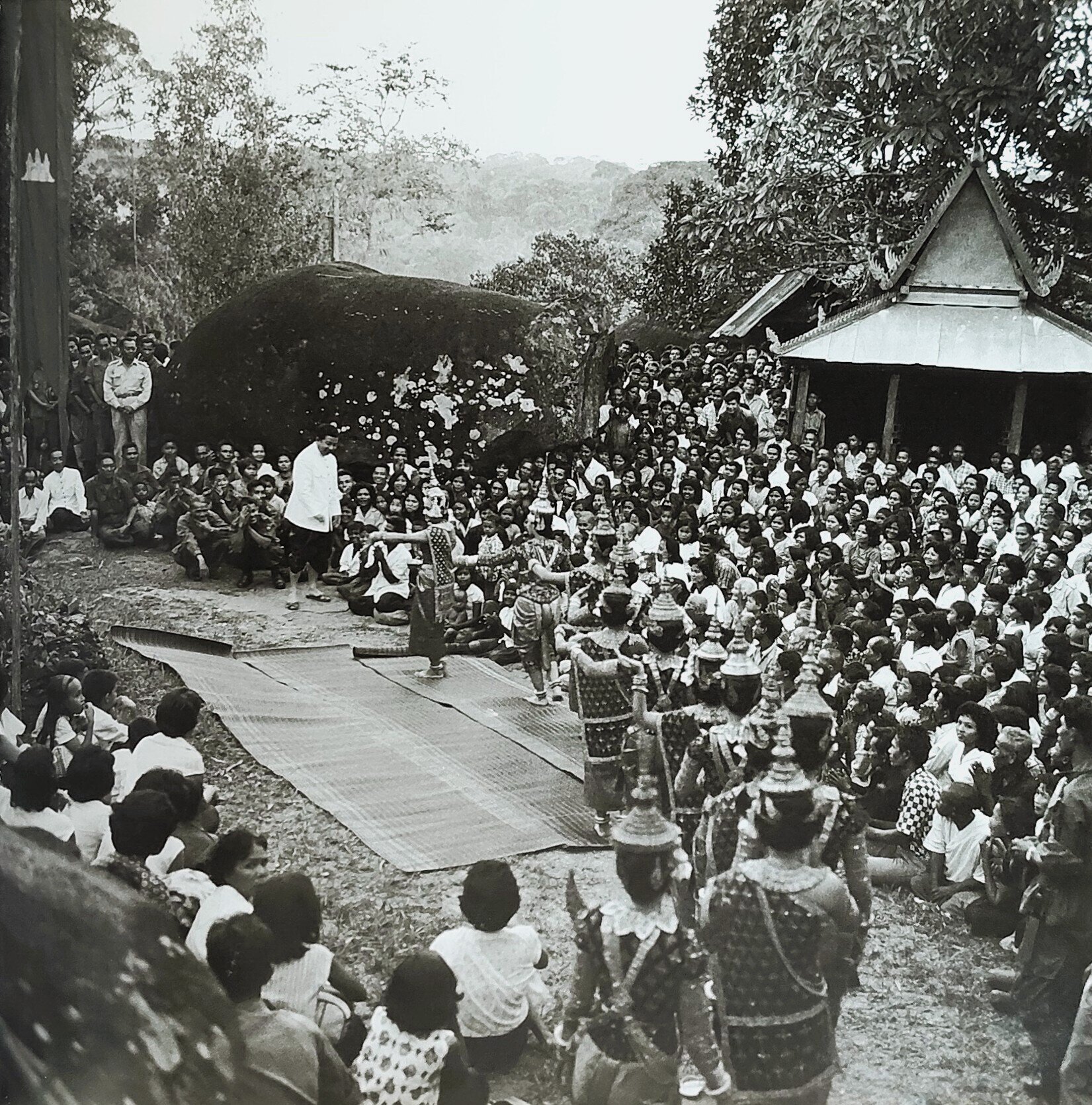
1) Prince Norodom Sihanouk introduces a performance of the Royal Ballet in a remote village, 1963. We guess this rare moment was captured near Preah Vihear for a special celebration. 2) A lone worshipper in front of the King Leper statue, 1963 \[all photos © Micheline Dullin, from the book].
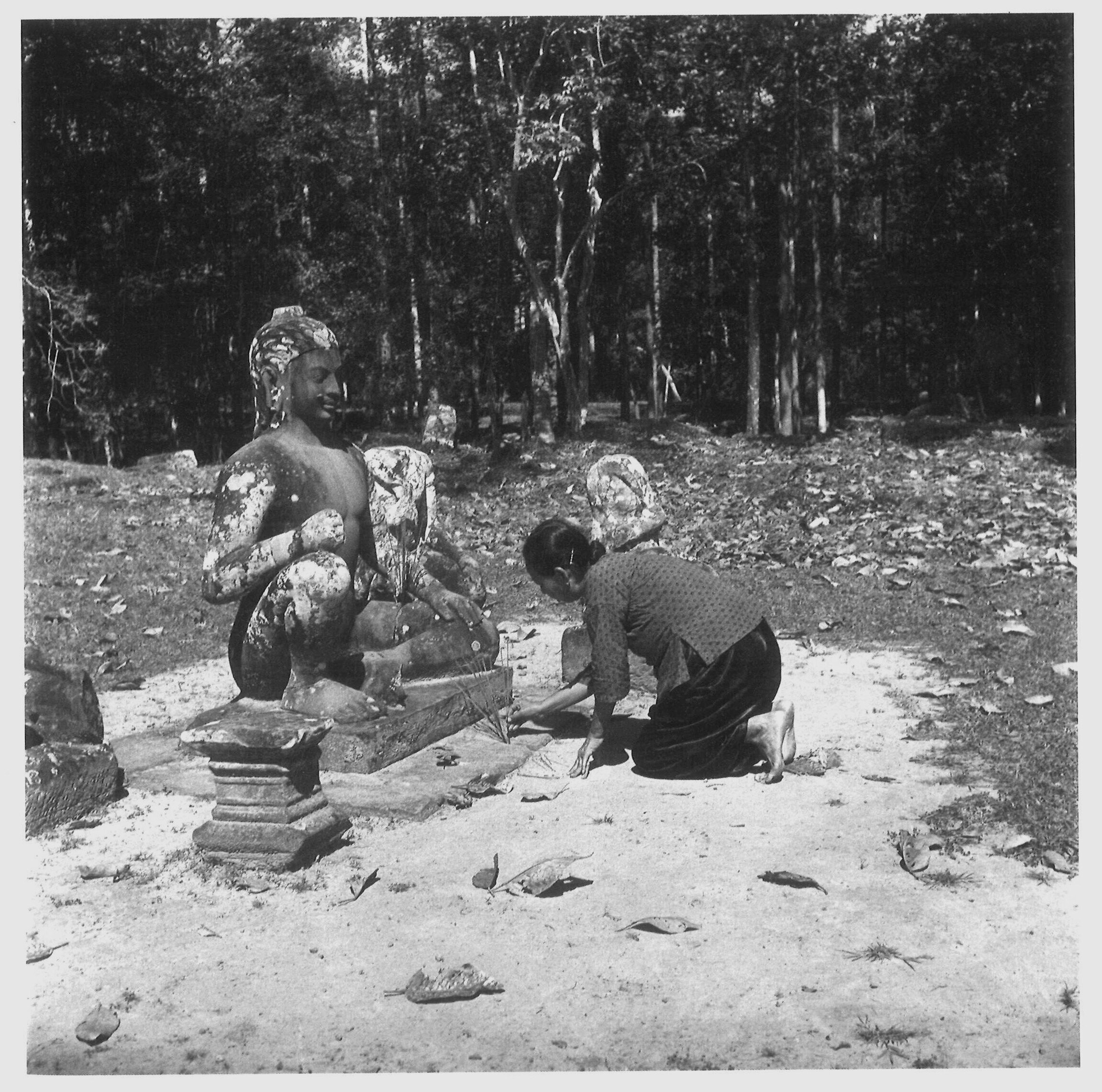
1) Prince Norodom Sihanouk introduces a performance of the Royal Ballet in a remote village, 1963. We guess this rare moment was captured near Preah Vihear for a special celebration. 2) A lone worshipper in front of the King Leper statue, 1963 \[all photos © Micheline Dullin, from the book].
1) Prince Norodom Sihanouk introduces a performance of the Royal Ballet in a remote village, 1963. We guess this rare moment was captured near Preah Vihear for a special celebration. 2) A lone worshipper in front of the King Leper statue, 1963 \[all photos © Micheline Dullin, from the book].
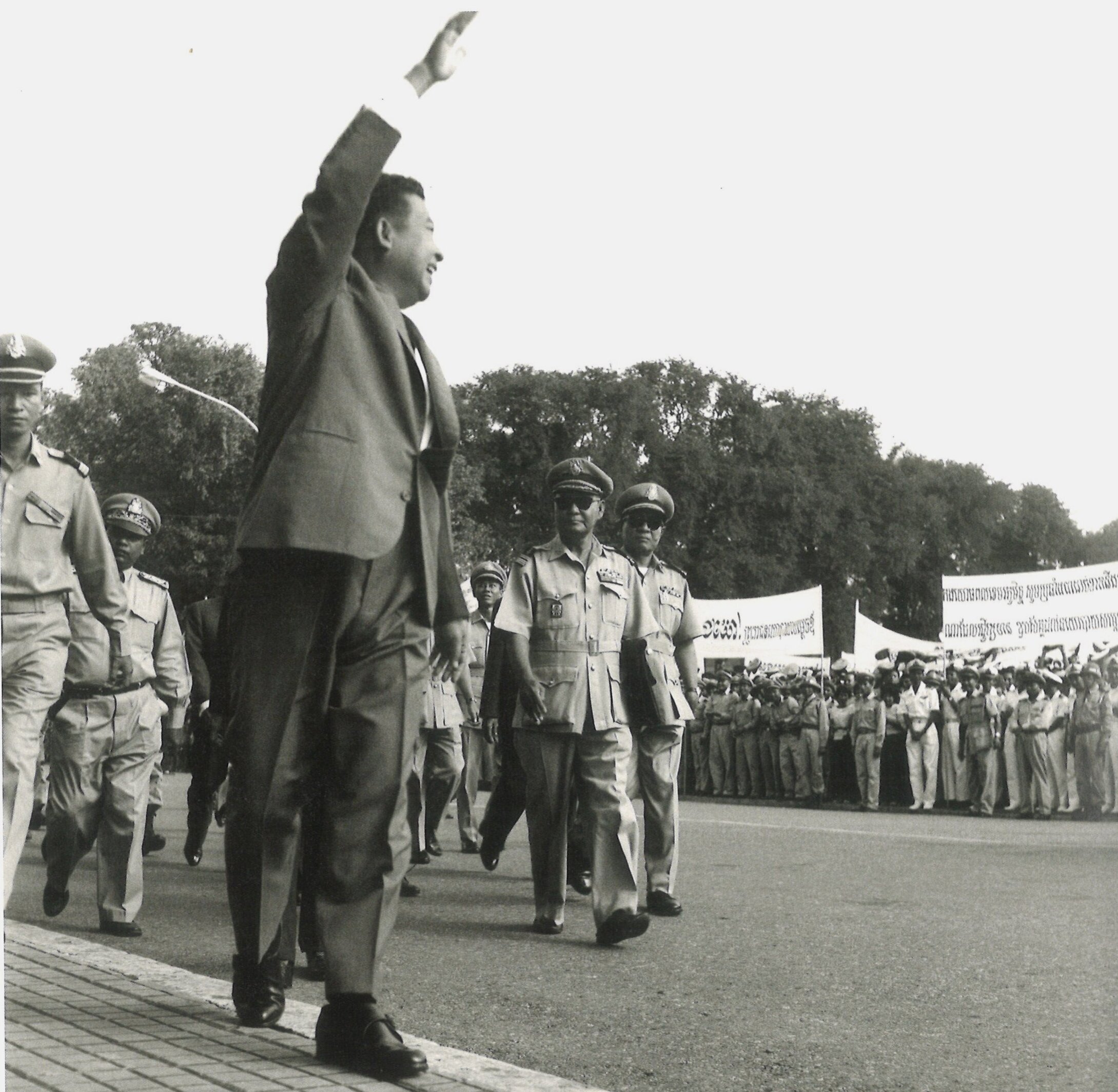
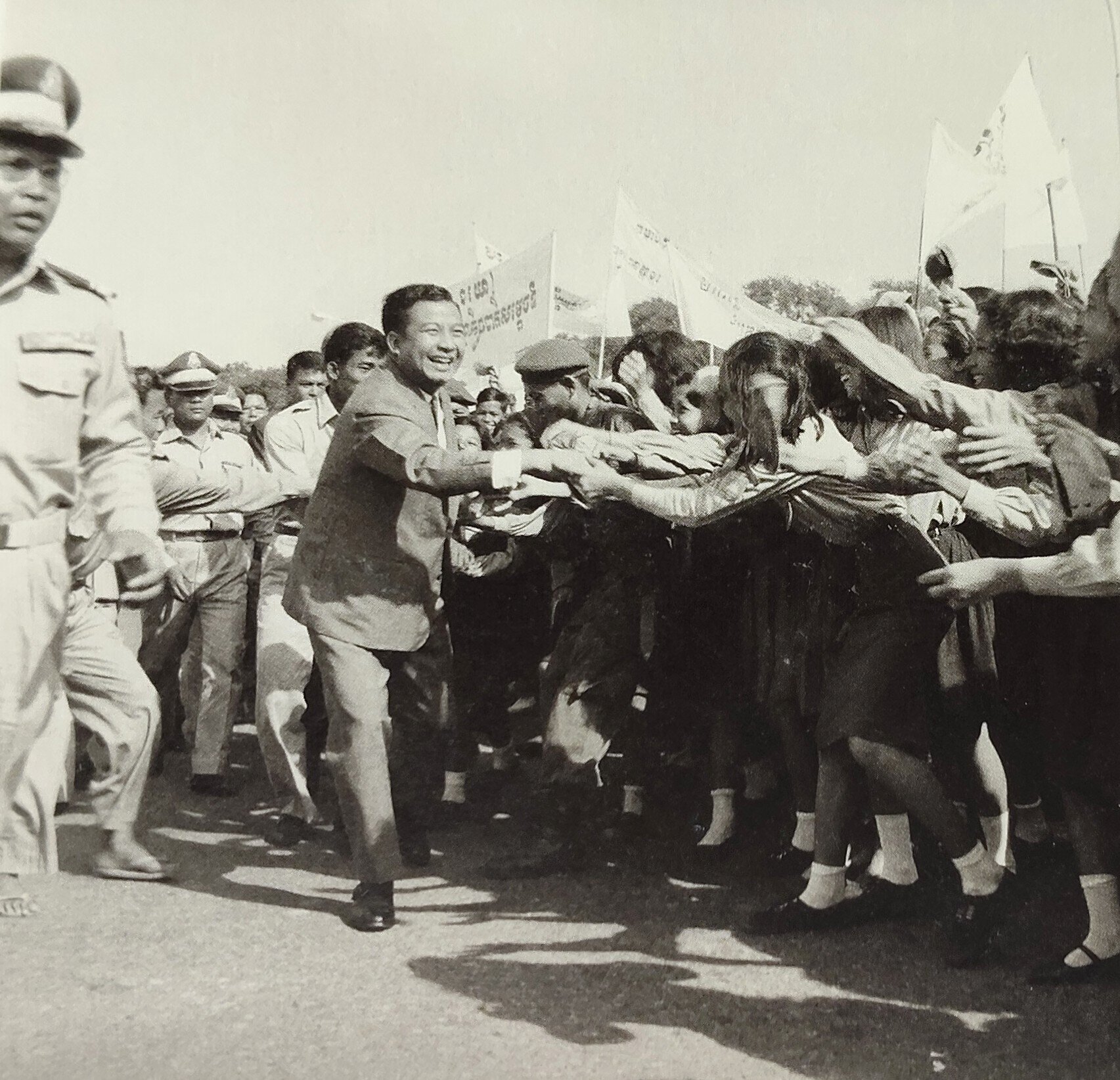
Even as an official photographer for Norodom Sihanouk, Micheline Dullin had a knack to avoid stiff, conventional pictures of the Sangkum’s leader, to capture his youthful energy — the National Sports Complex was part of his campaign to promote and stimulate physical exercise in the kingdom. Economic difficulties and pressure against the “non-alignment” stance were already clouding the horizon, yet the “moving forward” spring can still be felt in these two shots below.
Note: Christian Caujolle (26 February 1953 – 20 October 2025), journalist, curator and publisher, helped this book to come to life amongst many other photographic and fiction works. Head of the Photo Department at French daily Libération for two decades, he founded VU photo agency and was instrumental in the launching of Phnom Penh Photo Association.
Tags: photography, National Sports Complex, Olympic Stadium, architecture, Vann Molyvann, 1950s, 1960s, Sangkum Reastr Neyum, King Norodom Sihanouk
About the Author
Micheline Dullin
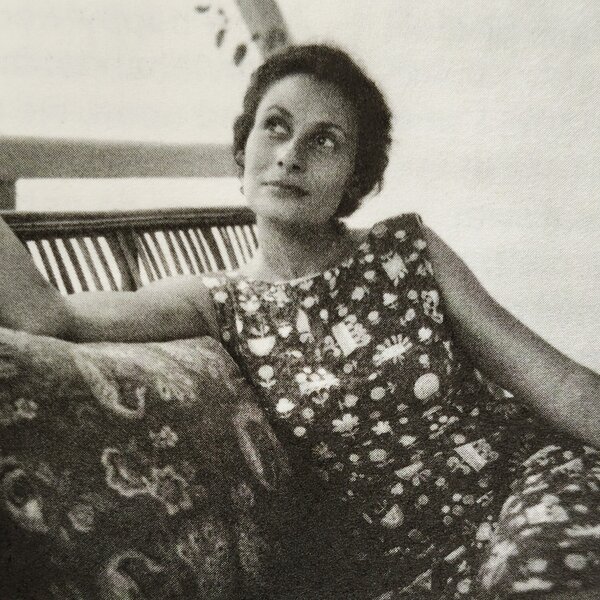
Micheline Dumoulin known as Micheline Dullin (22 Feb. 1927, Paris — 19 December 2025, Martigues, France) was a French photographer and artist who covered Cambodia extensively from 1958 to 1964, documenting the ‘Golden Age’ of the Sangkum (Sangkat Reastr Niyum សង្គមរាស្ត្រនិយម, “People’s Socialist Communist) led by Prince Norodom Sihanouk, working as official photographer along with photographer Robert Favart from 1960 to 1964.
An artist since young age, Micheline Dullin found herself immersed in the world of avant-garde cinema after marrying in 1946 French movie producer Claude Hauser, befriending leading artists of the time such as Oscar Dominguez, Hans Hartung, Goetz, Christine Boomeester, Max Ernst, Boris Vian, movie directors Chris Marker and Alain Resnais, who gifted her a Rolleiflex camera, thus triggering her passion for photography.
In 1956, she married photographer and filongrapher Christian Baugey and the couple worked across Bolivia and Peru for two years, photographying and painting new landscapes and people. In 1958, they moved to Cambodia as Baugey had been appointed UNESCO audiovisual media advisor to the Cambodian government. With a predilection for women’s and children’s portraits, she started to explore the countryside and cover the vast campaign of public works launched by the Sangkum under the guidance of architect Vann Molyvann, becoming fast friends with him and his wife, Trudy.
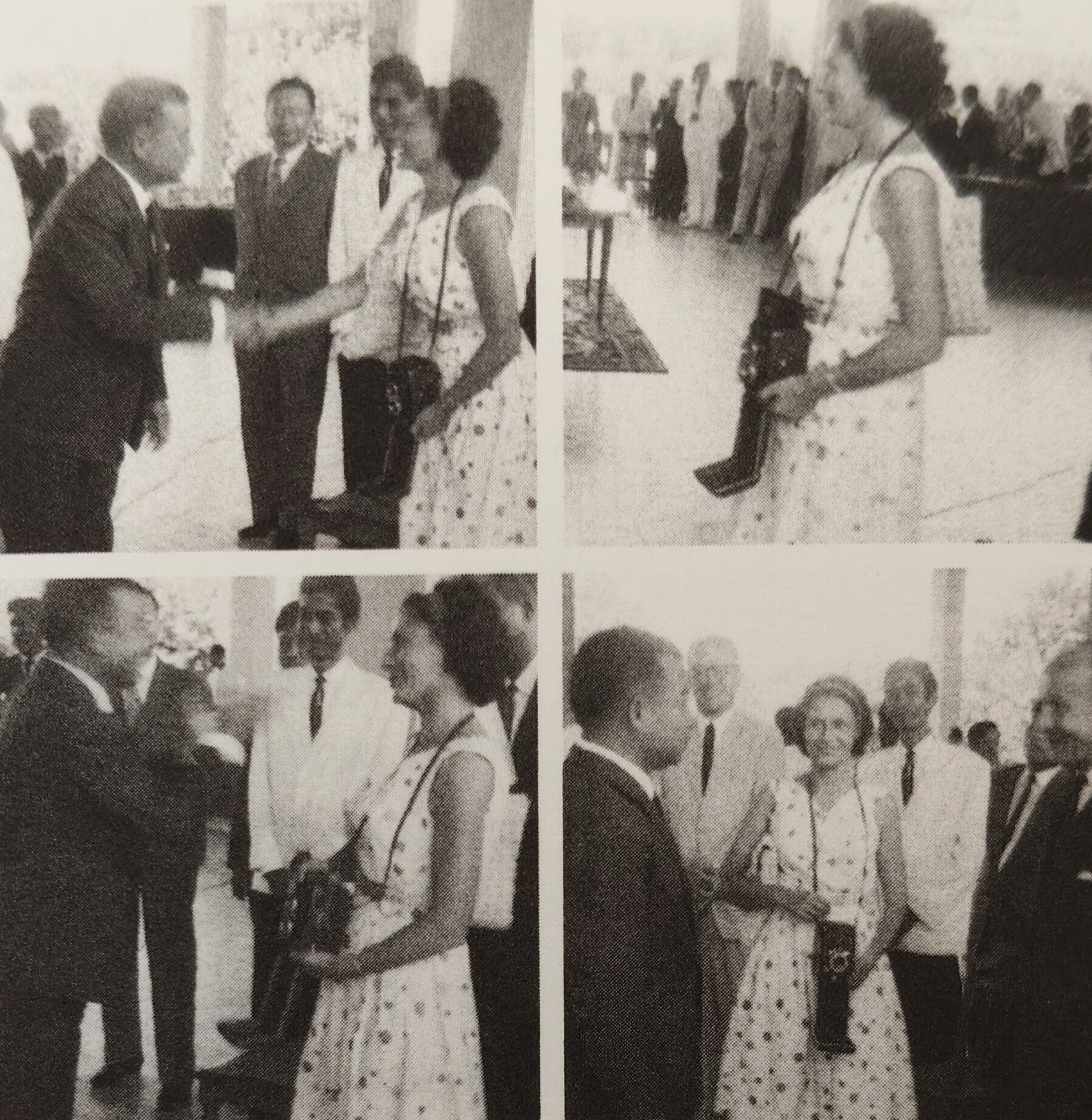
1) Prince Norodom Sihanouk greeting Micheline Dullin during a reception at the Royal Palace, 1963. 2) With Prince Sihanouk at Angkor. 3) At her Phnom Penh apartment-workshop. 4) Checking on the giant prints of her photographs of Prince Sihanouk welcoming Indonesian President Sukarno during one of his several visits to Cambodia. [all photos by Robert Favard, from Cambodge 1958 – 1964, Une vie de photographe, 2012)
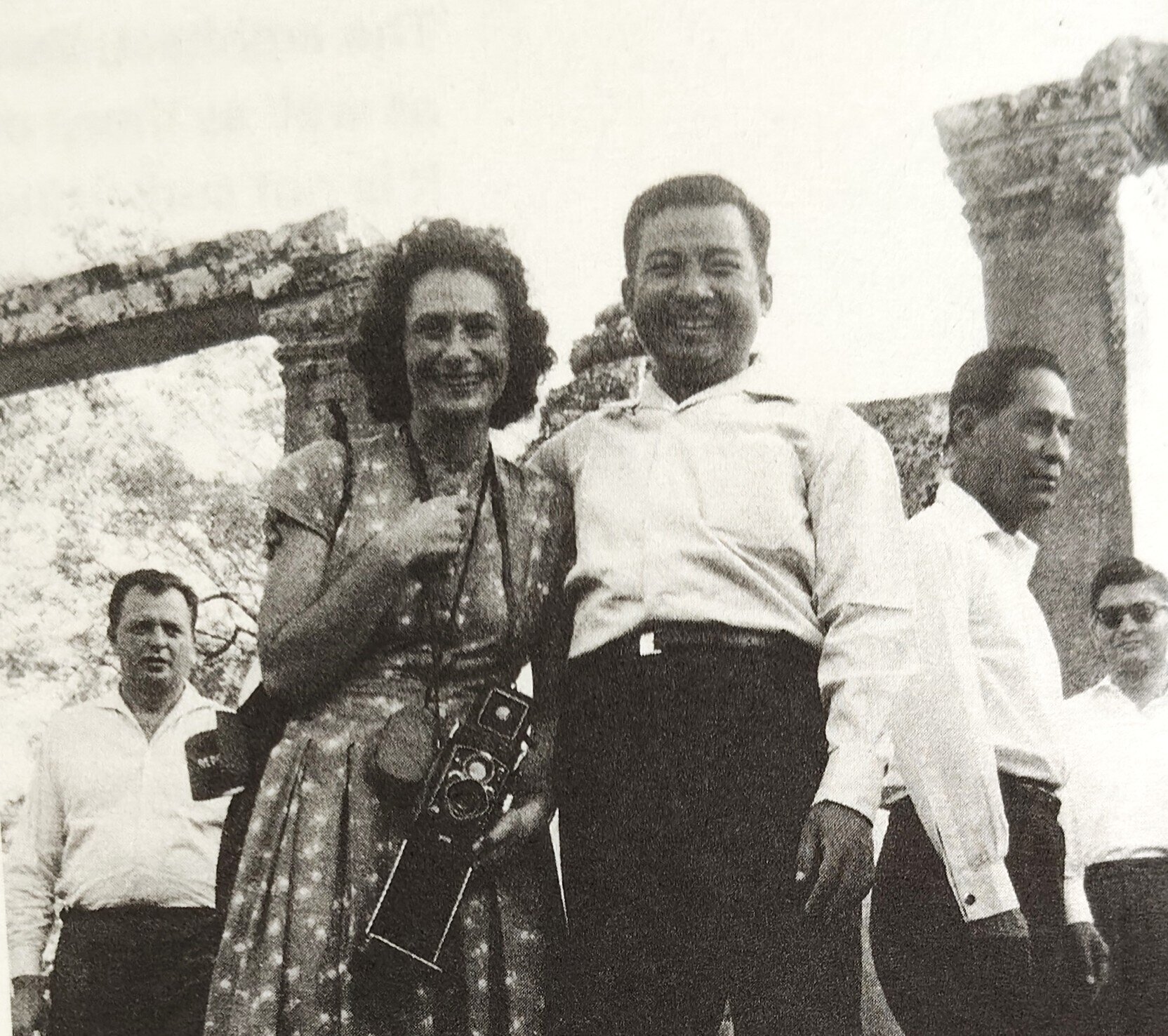
1) Prince Norodom Sihanouk greeting Micheline Dullin during a reception at the Royal Palace, 1963. 2) With Prince Sihanouk at Angkor. 3) At her Phnom Penh apartment-workshop. 4) Checking on the giant prints of her photographs of Prince Sihanouk welcoming Indonesian President Sukarno during one of his several visits to Cambodia. [all photos by Robert Favard, from Cambodge 1958 – 1964, Une vie de photographe, 2012)
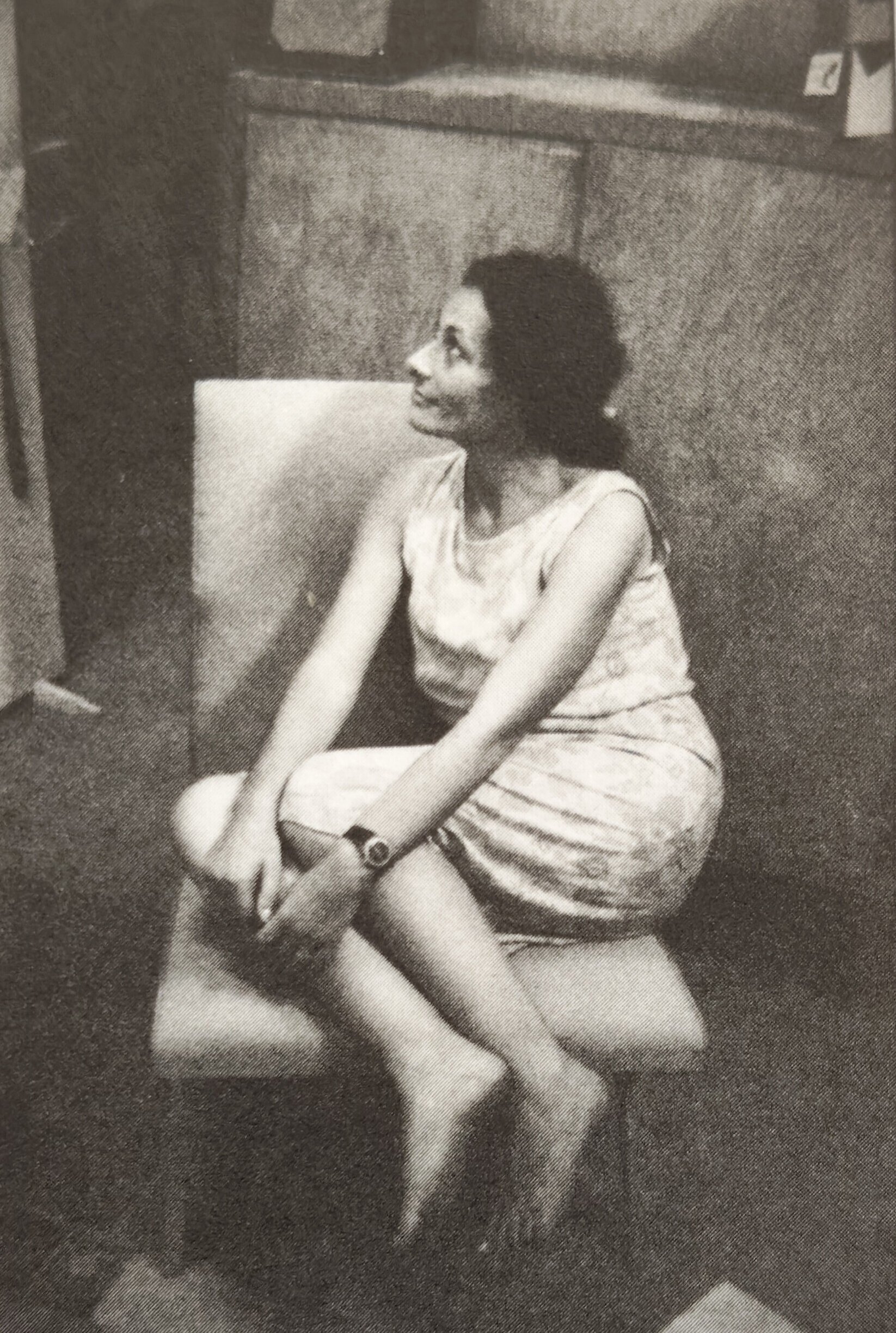
1) Prince Norodom Sihanouk greeting Micheline Dullin during a reception at the Royal Palace, 1963. 2) With Prince Sihanouk at Angkor. 3) At her Phnom Penh apartment-workshop. 4) Checking on the giant prints of her photographs of Prince Sihanouk welcoming Indonesian President Sukarno during one of his several visits to Cambodia. [all photos by Robert Favard, from Cambodge 1958 – 1964, Une vie de photographe, 2012)
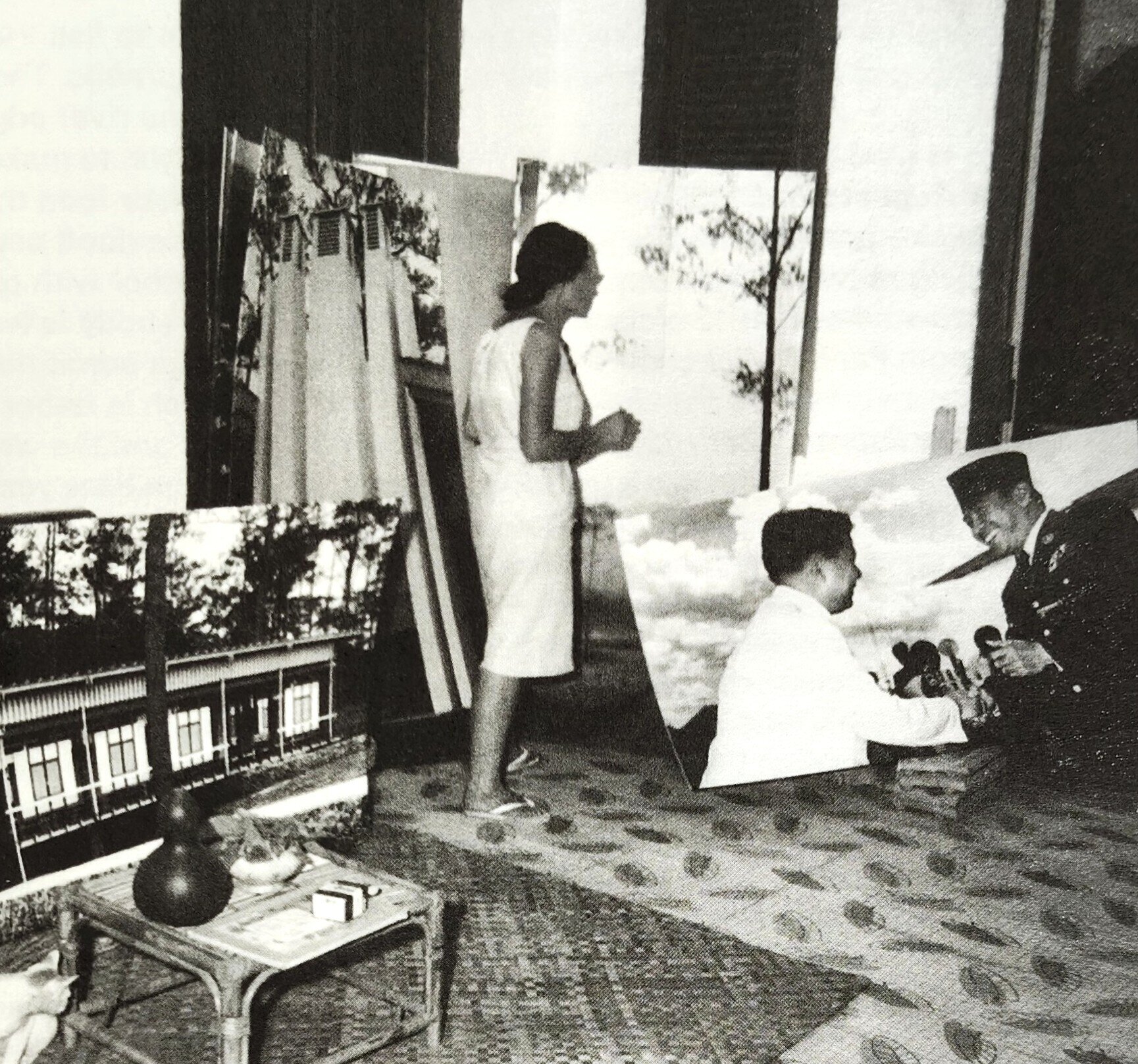
1) Prince Norodom Sihanouk greeting Micheline Dullin during a reception at the Royal Palace, 1963. 2) With Prince Sihanouk at Angkor. 3) At her Phnom Penh apartment-workshop. 4) Checking on the giant prints of her photographs of Prince Sihanouk welcoming Indonesian President Sukarno during one of his several visits to Cambodia. [all photos by Robert Favard, from Cambodge 1958 – 1964, Une vie de photographe, 2012)
1) Prince Norodom Sihanouk greeting Micheline Dullin during a reception at the Royal Palace, 1963. 2) With Prince Sihanouk at Angkor. 3) At her Phnom Penh apartment-workshop. 4) Checking on the giant prints of her photographs of Prince Sihanouk welcoming Indonesian President Sukarno during one of his several visits to Cambodia. [all photos by Robert Favard, from Cambodge 1958 – 1964, Une vie de photographe, 2012)
From 1960, along with her new companion, Robert Favart, she covered all Prince Sihanouk’s public functions and domestic travels, when a still unknown incident led them to a sudden fall of grace: Dullin and Favart were requested to leave the country at once, and could only take their negatives with them when they left first to Laos, then Thailand, where they stayed until returning to France in 1966. In her book, Micheline Dullin hinted that her photographs of the wedding of Prince Sihanouk’s eldest daughter, Princess Buppha Devi, and the son of the ambassador of Italy, Bruno Forsinetti, earlier in 1963, might have been the reason, as they had been published in the French media without the Royal Palace’s consent. Her sudden departure occurred in July 1964, as the young princess, leading the Royal Ballet of Cambodia, was celebrated at Paris Opera for a performance attended by President Charles de Gaulle in person.
Even if Micheline Dullin had exhibited her paintings in Phnom Penh and Vientiane in the 1960s, it is only from 2004 that the historical value of her photographic work on modern Cambodia was recognized, first with a Paris exhibition at the initiative of Philux Association, then in 2006 in Phnom Penh, when her photos were shown during the events for the inauguration of the Bophana Center.
In 2012, the year her book Cambodia 1958 – 1964 edited by her daughter Nausicaa Favart-Amouroux and Christian Caujolle [Paris, trans photographic press, 2012] came out, the city of Aulnay-sous-Bois, where she resided for many years, offered another exhibition, titled 1975 – 2025, 50 ans après…Quelles transmissions?. In 2013, Micheline Dullin’s work on Cambodia was featured at the Photo Phnom Penh Festival in an outdoor exhibition on the promenade of Tonle Sap River, and in 2025 the same Festival organized a photo display at the National Museum of Cambodia.