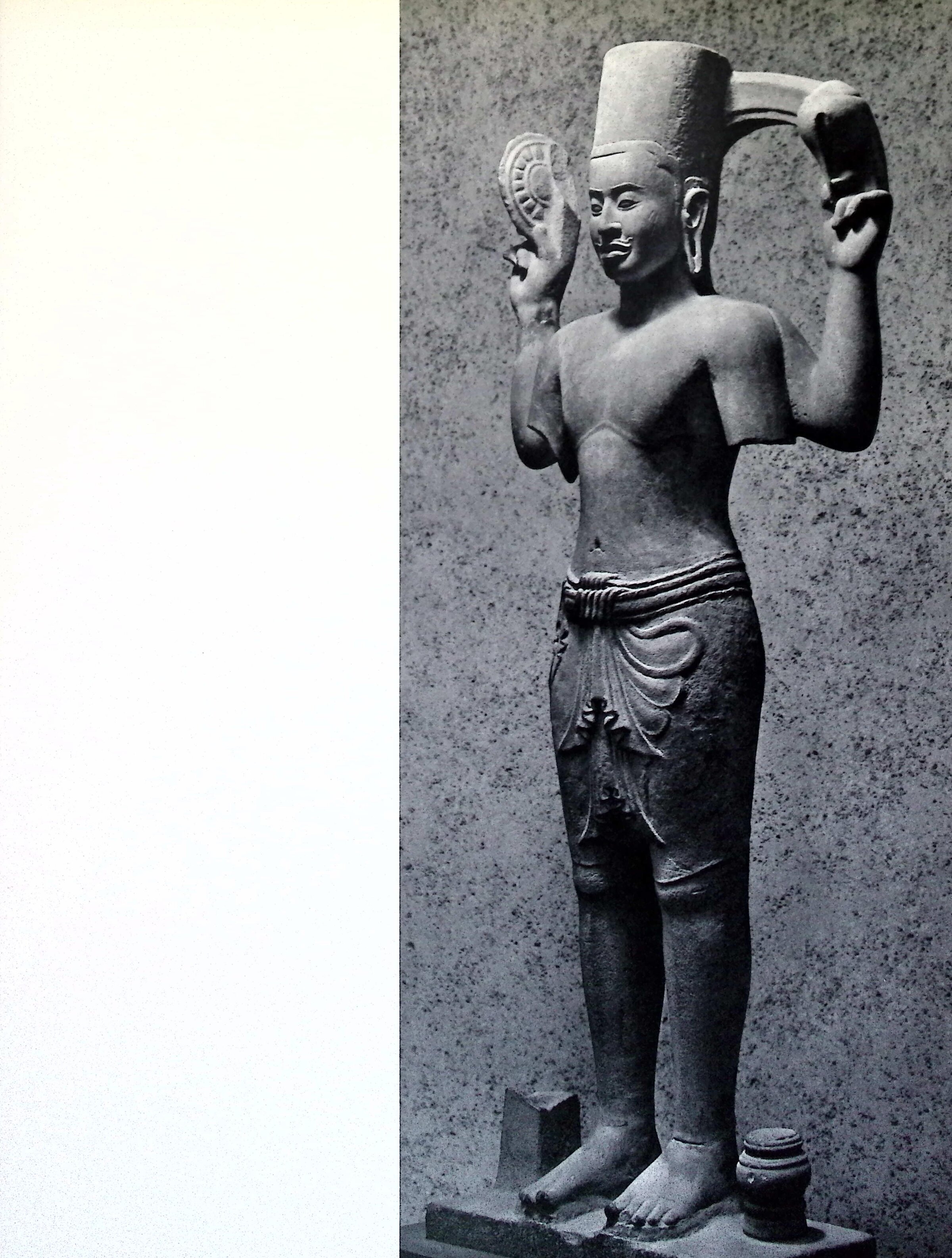
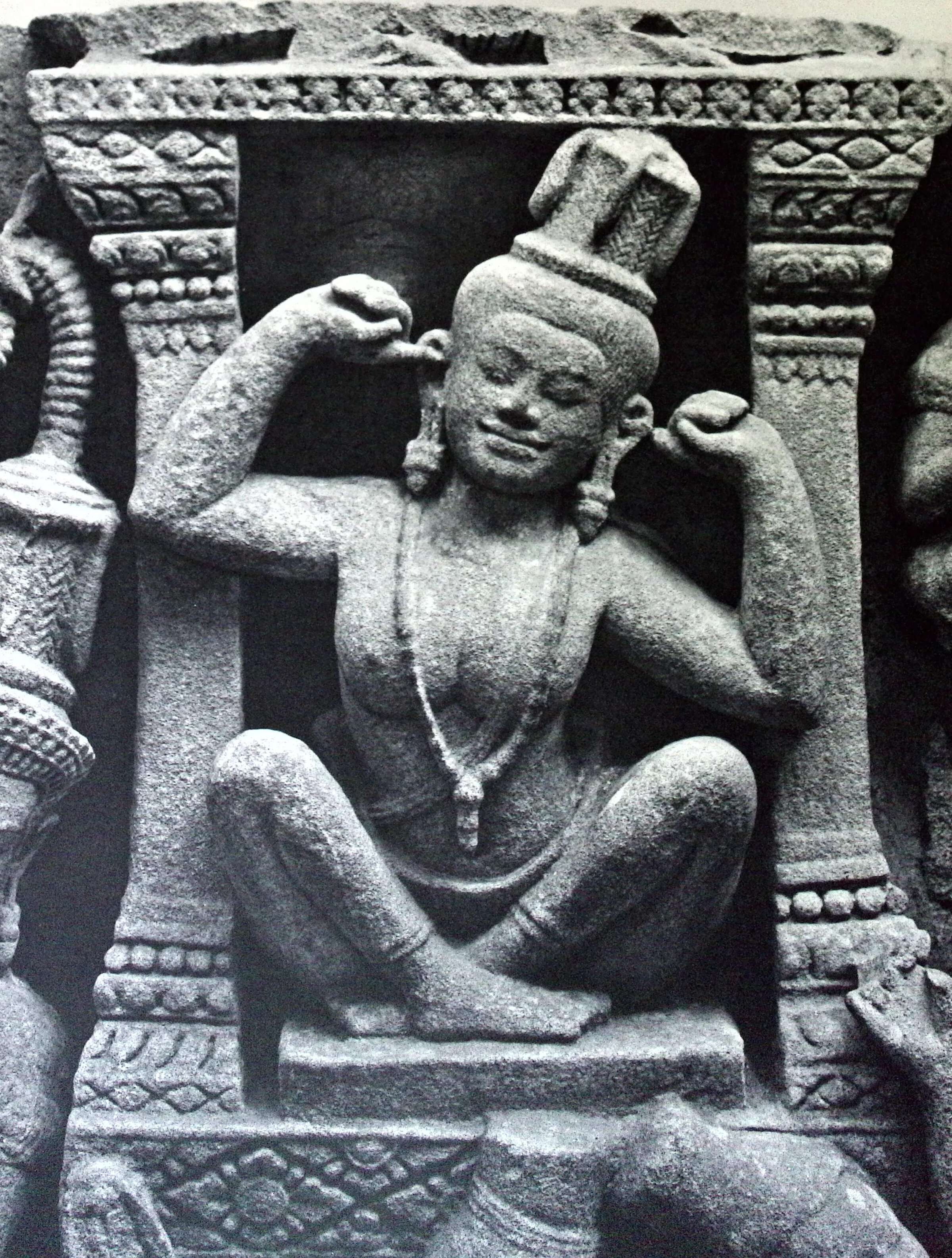
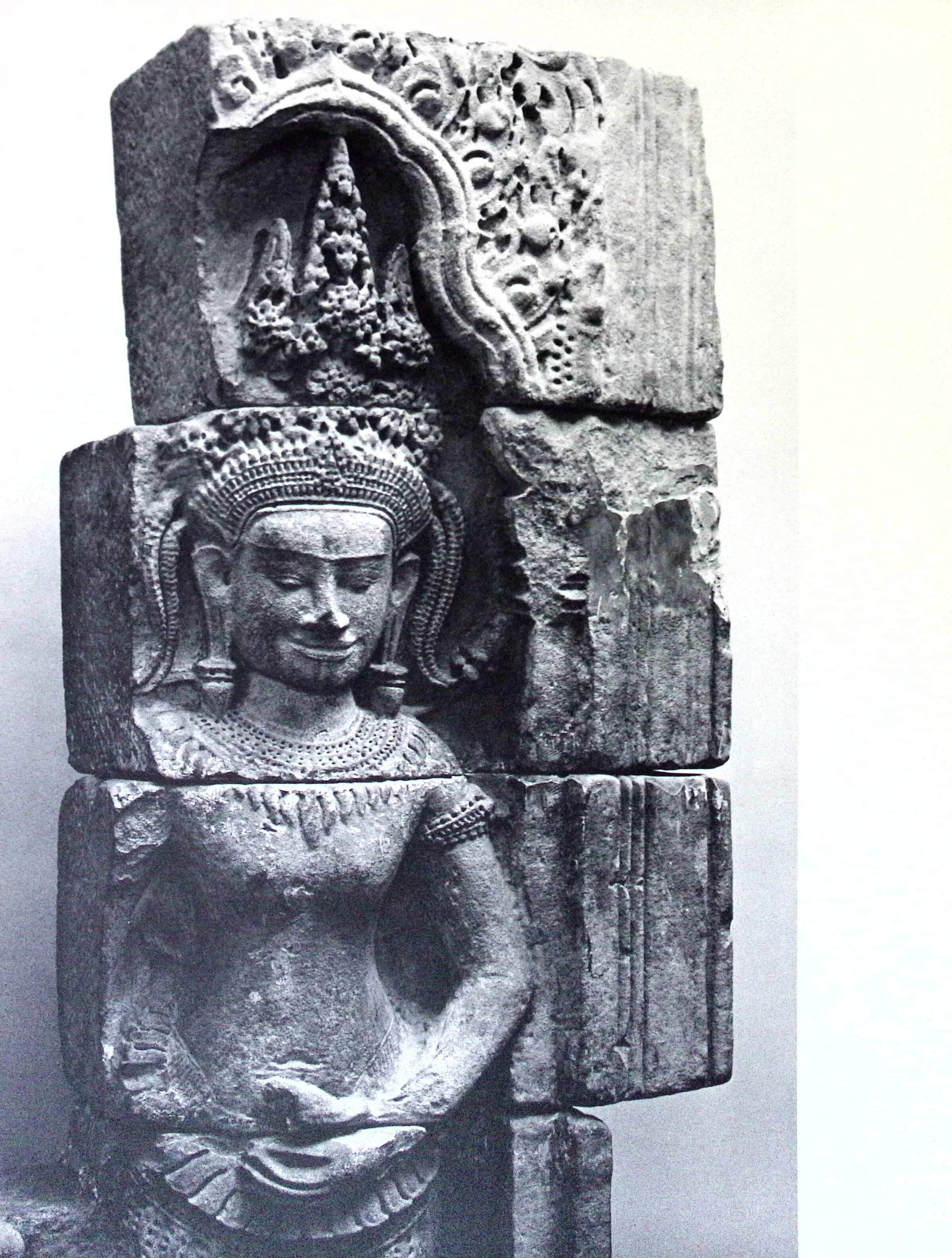
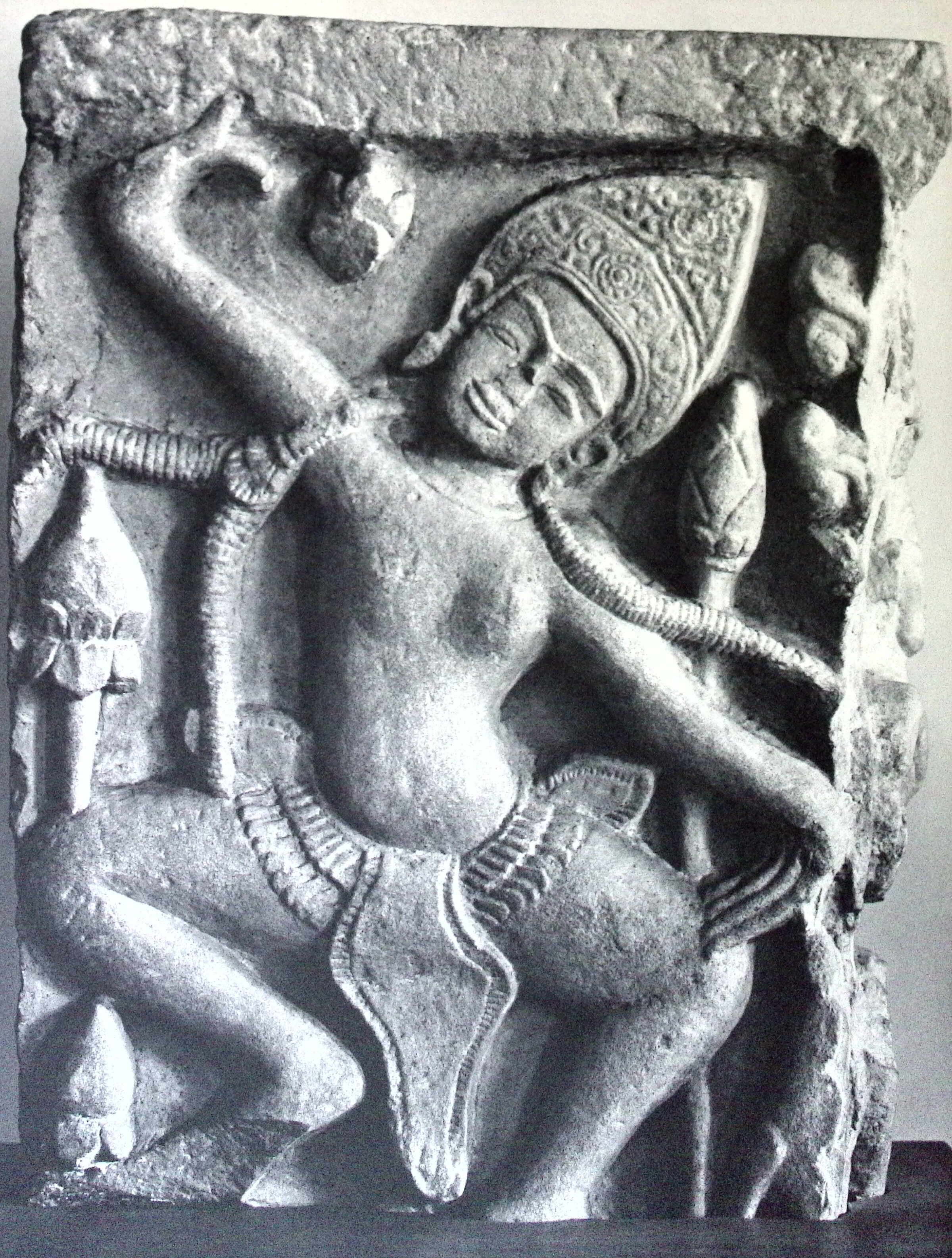
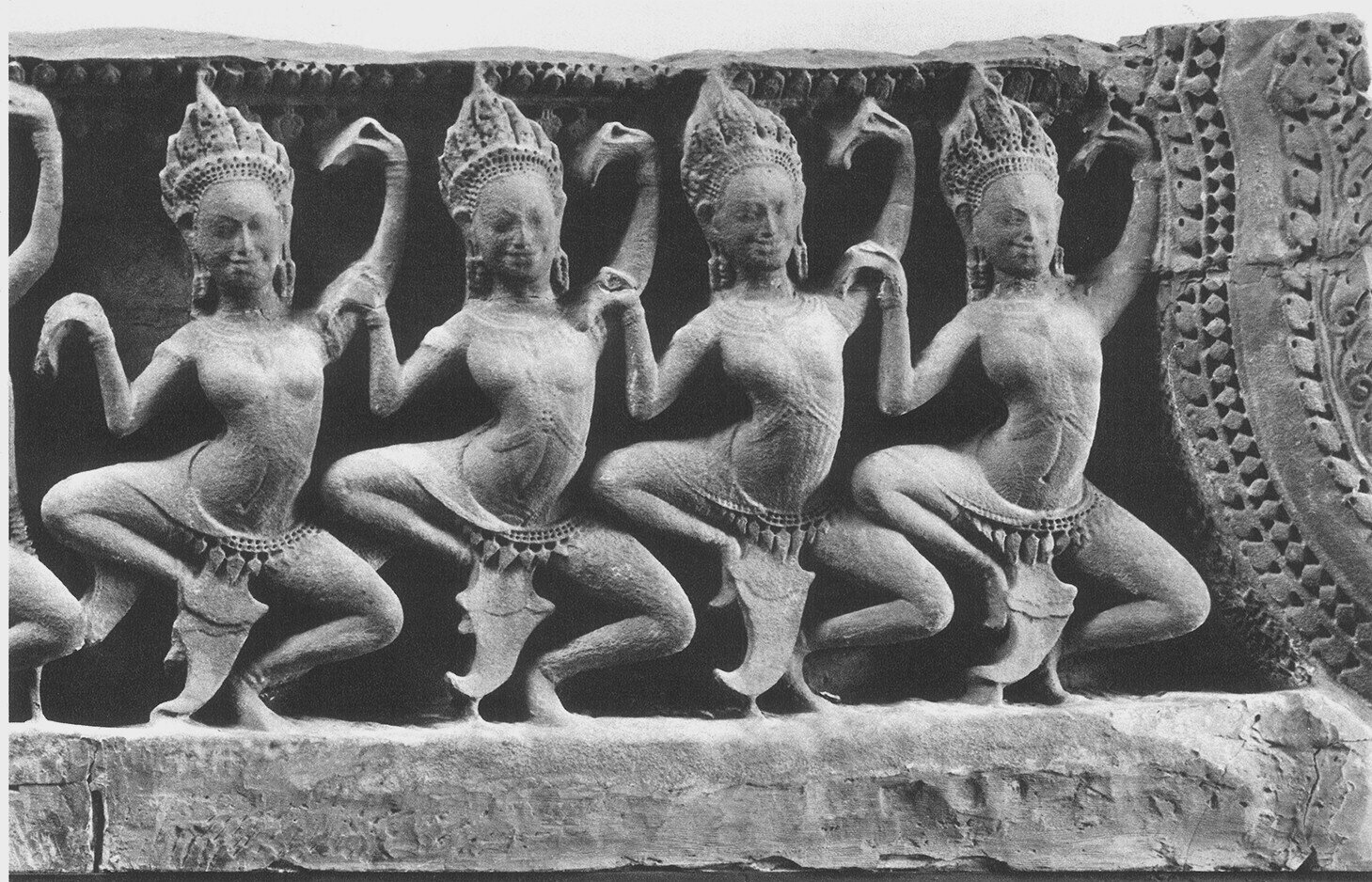
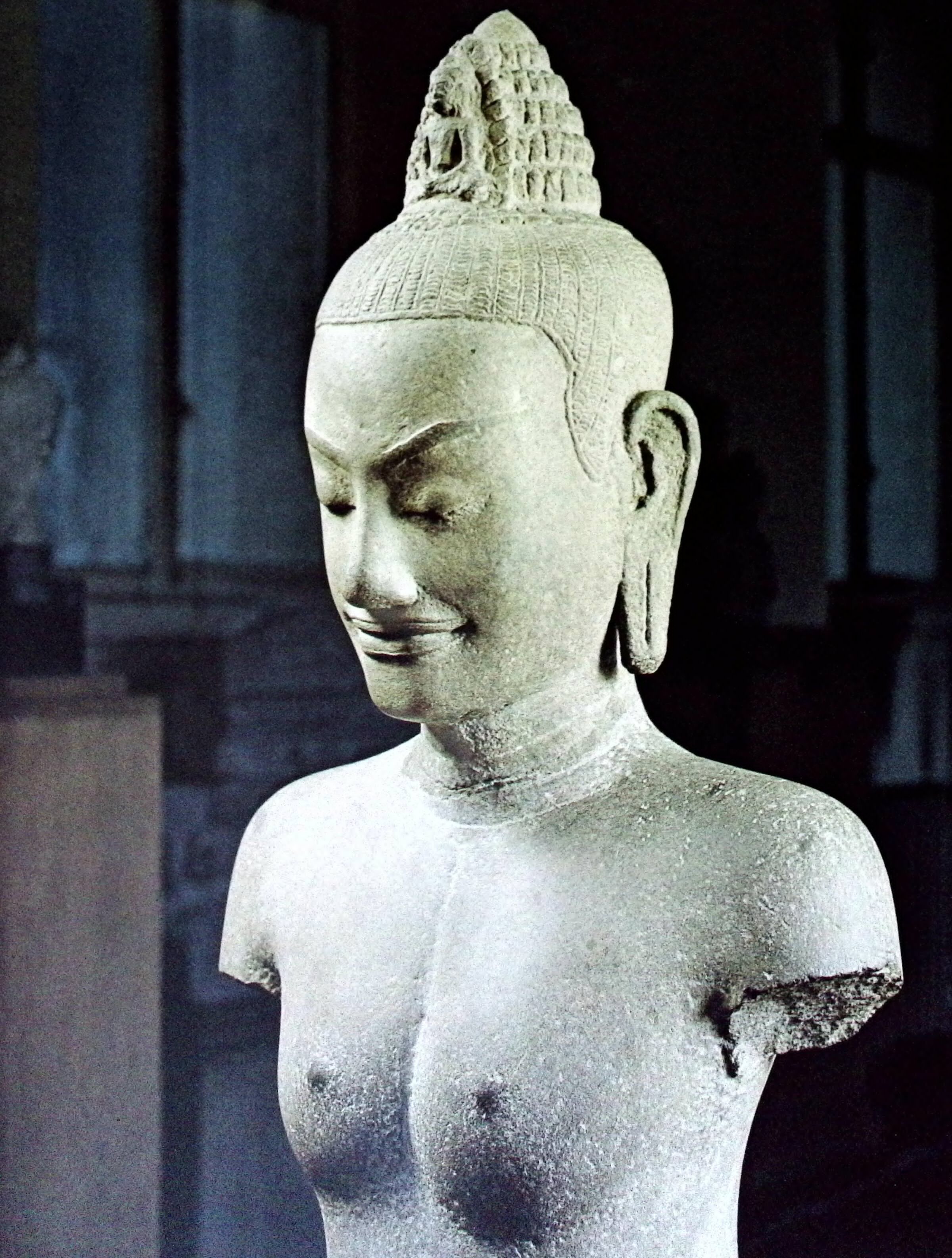
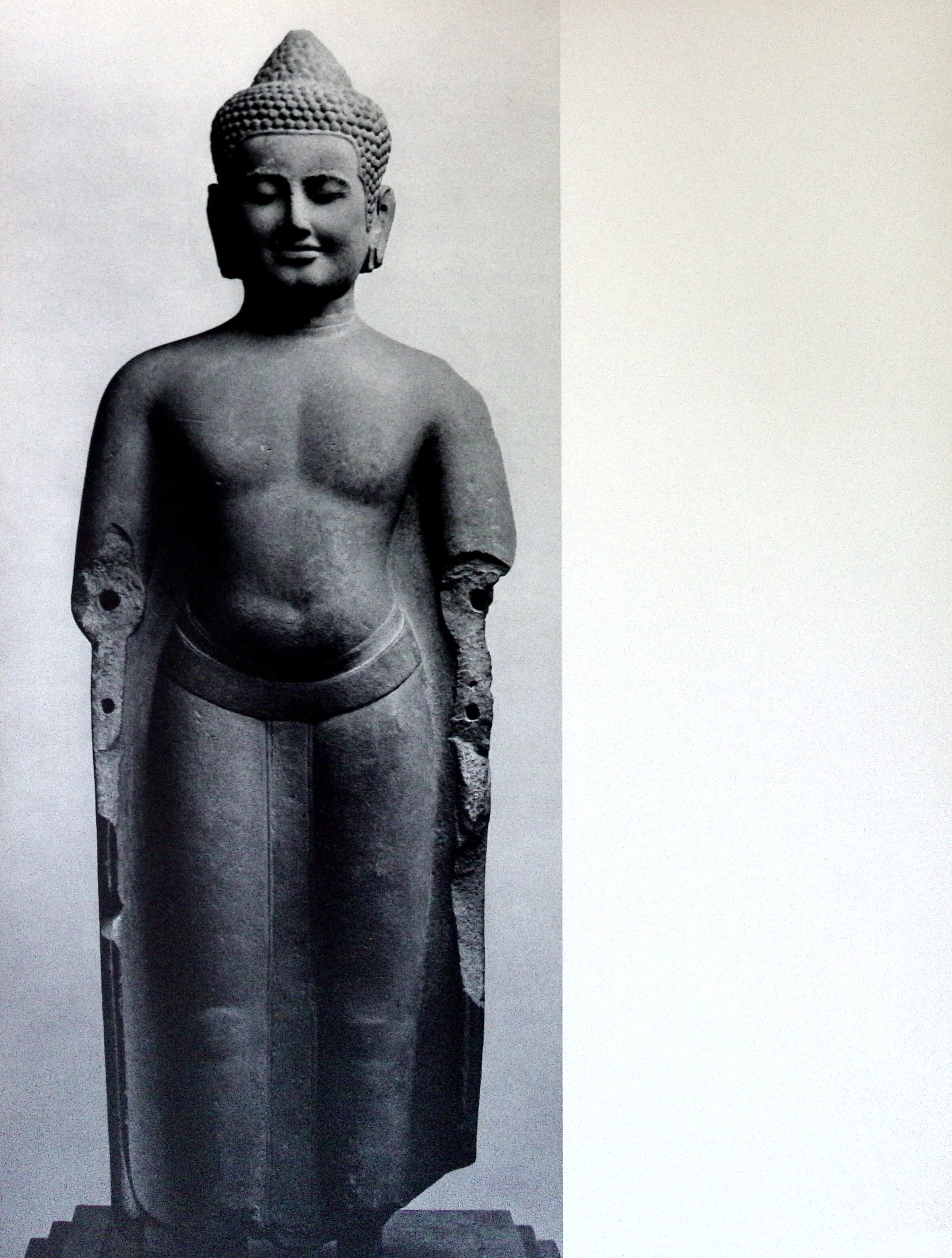
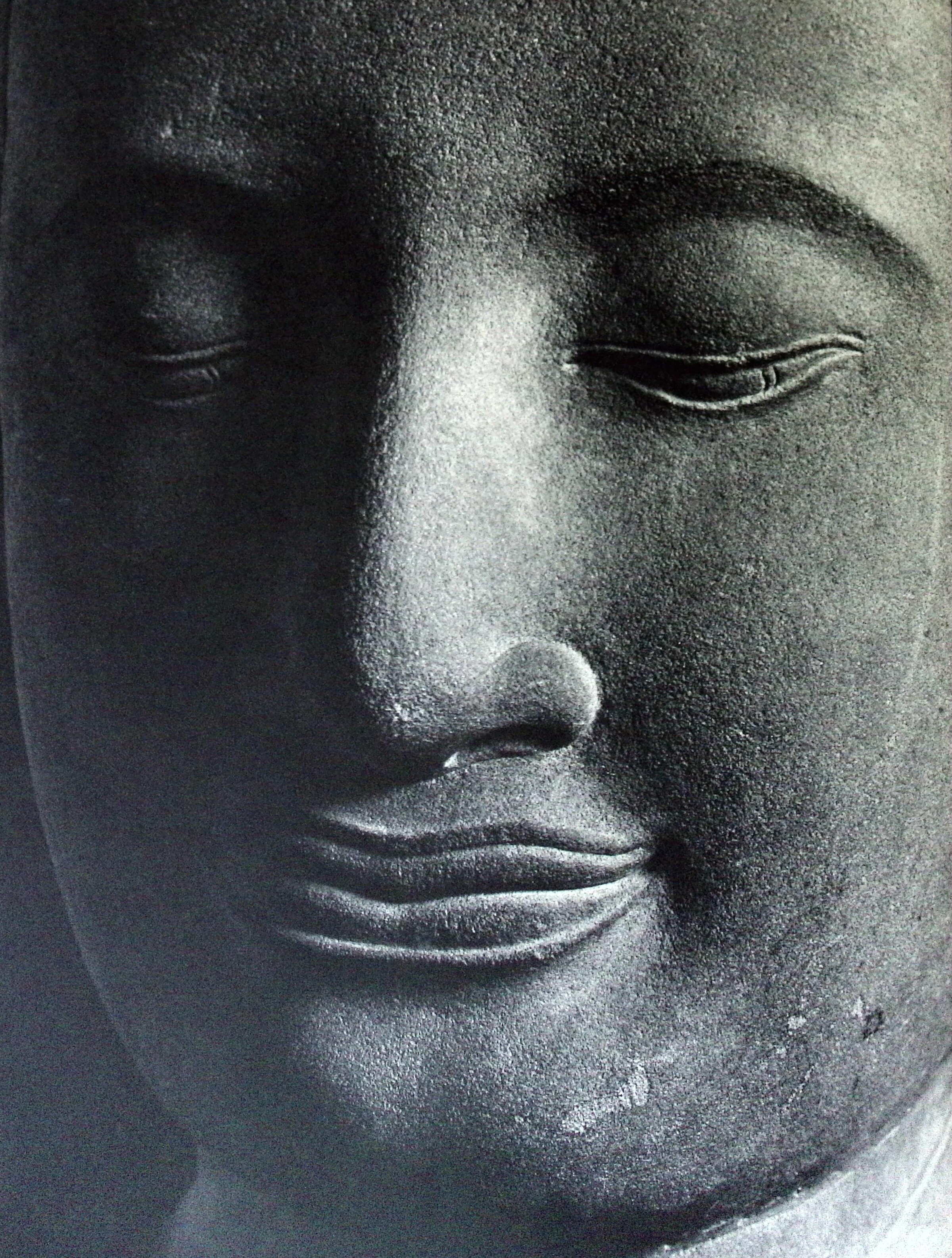
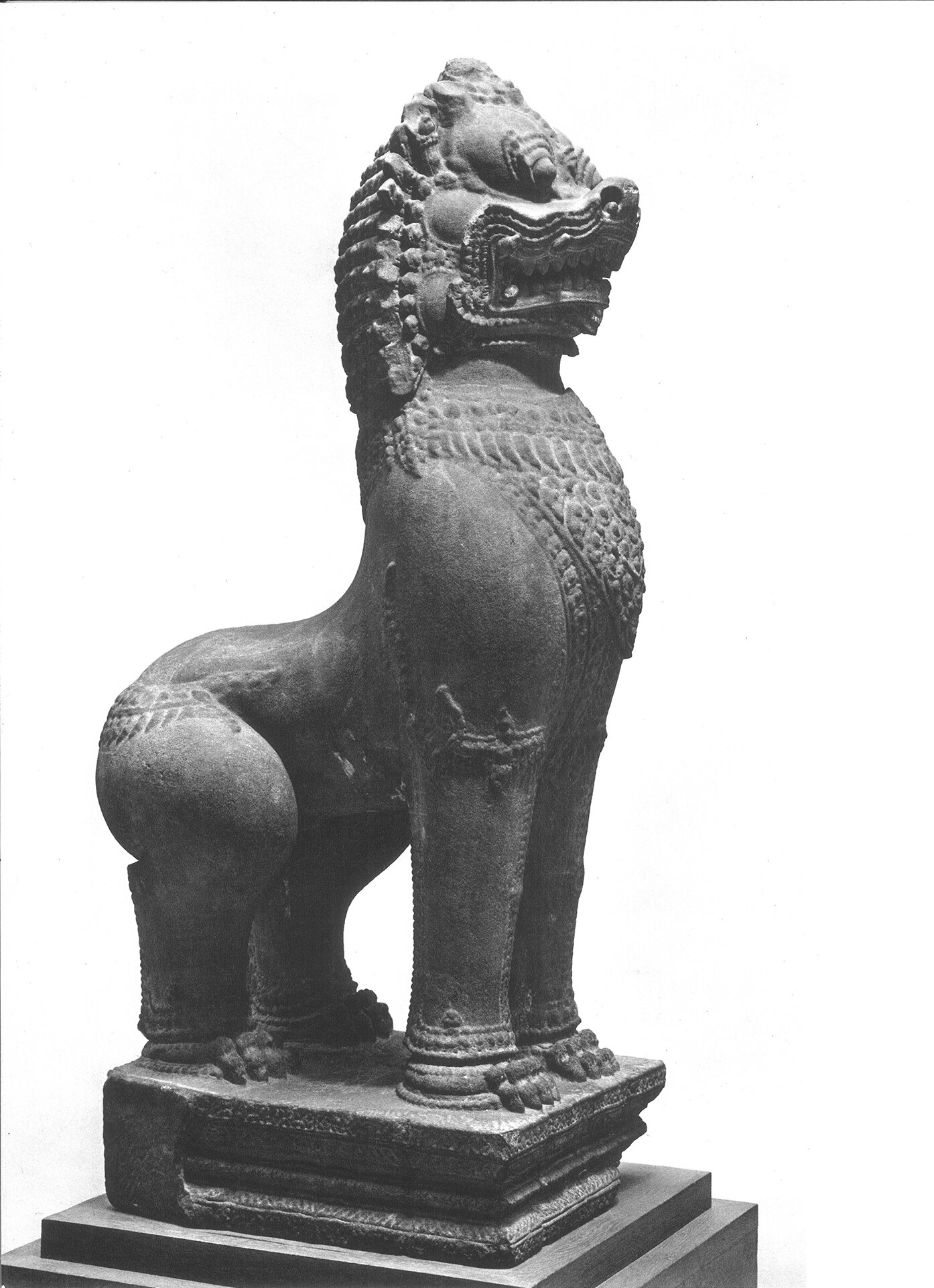
Khmer statuary art reflected in 42 pieces from the collection of Musée Guimet, Paris, in a selection published in 1965.
AUB1
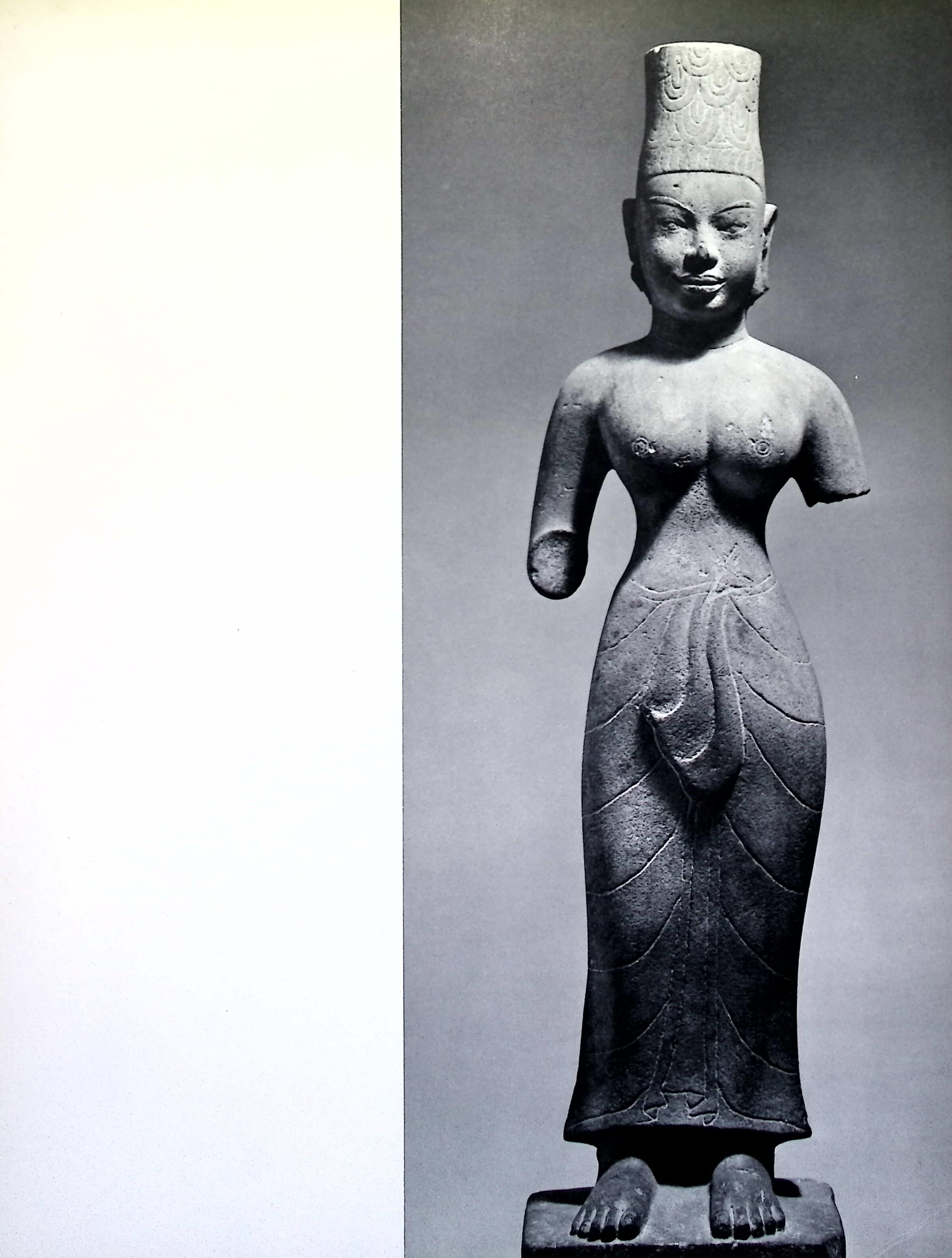
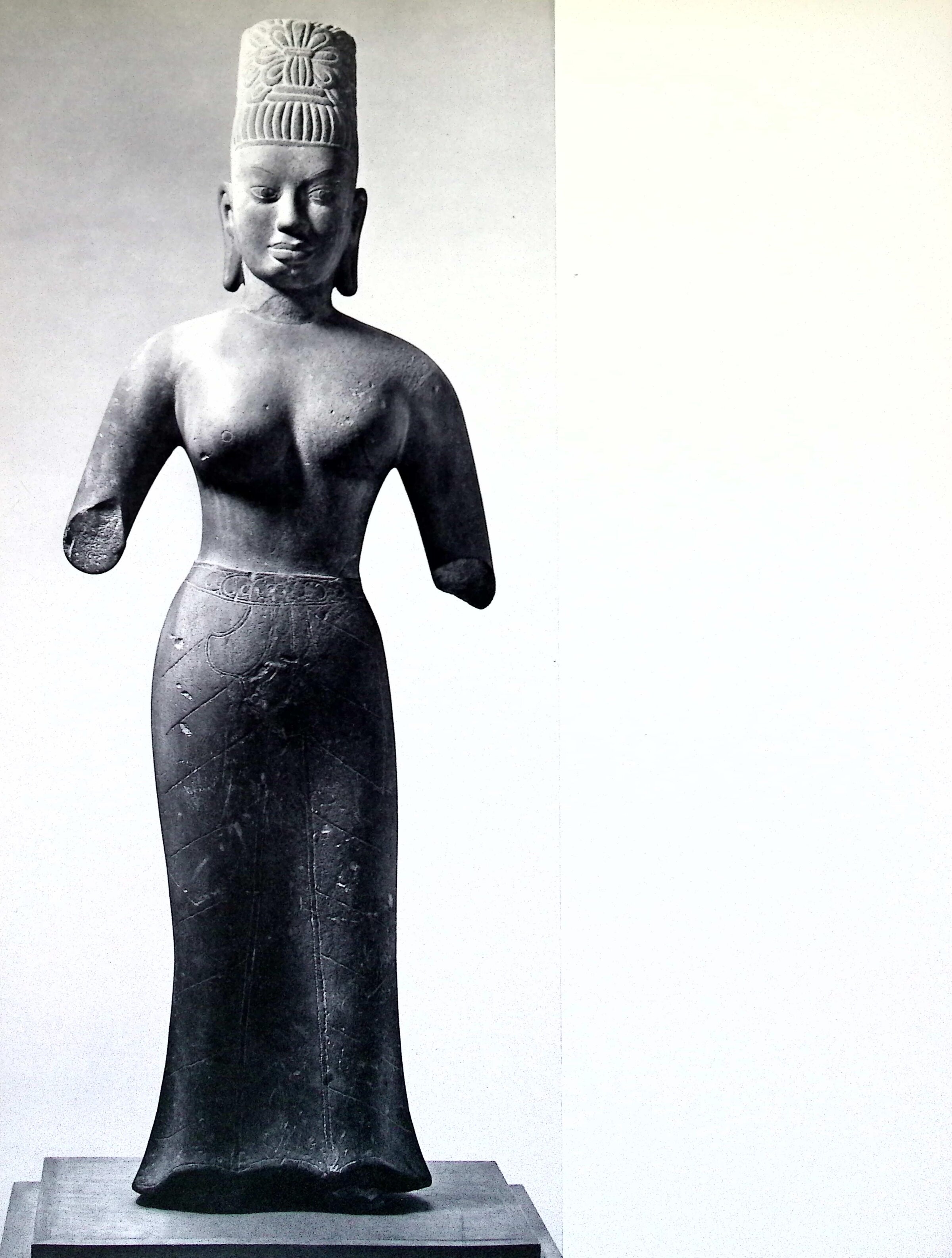
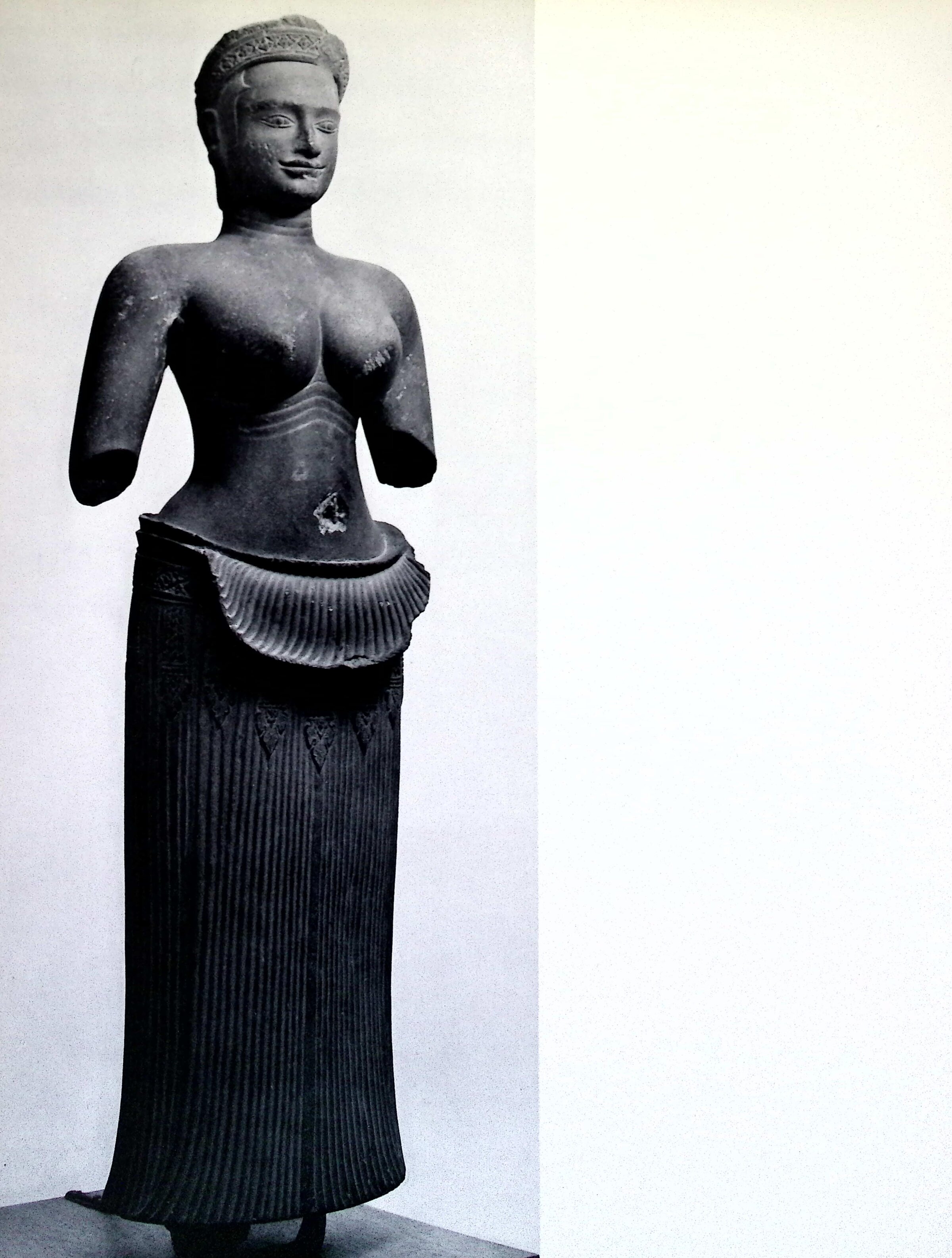
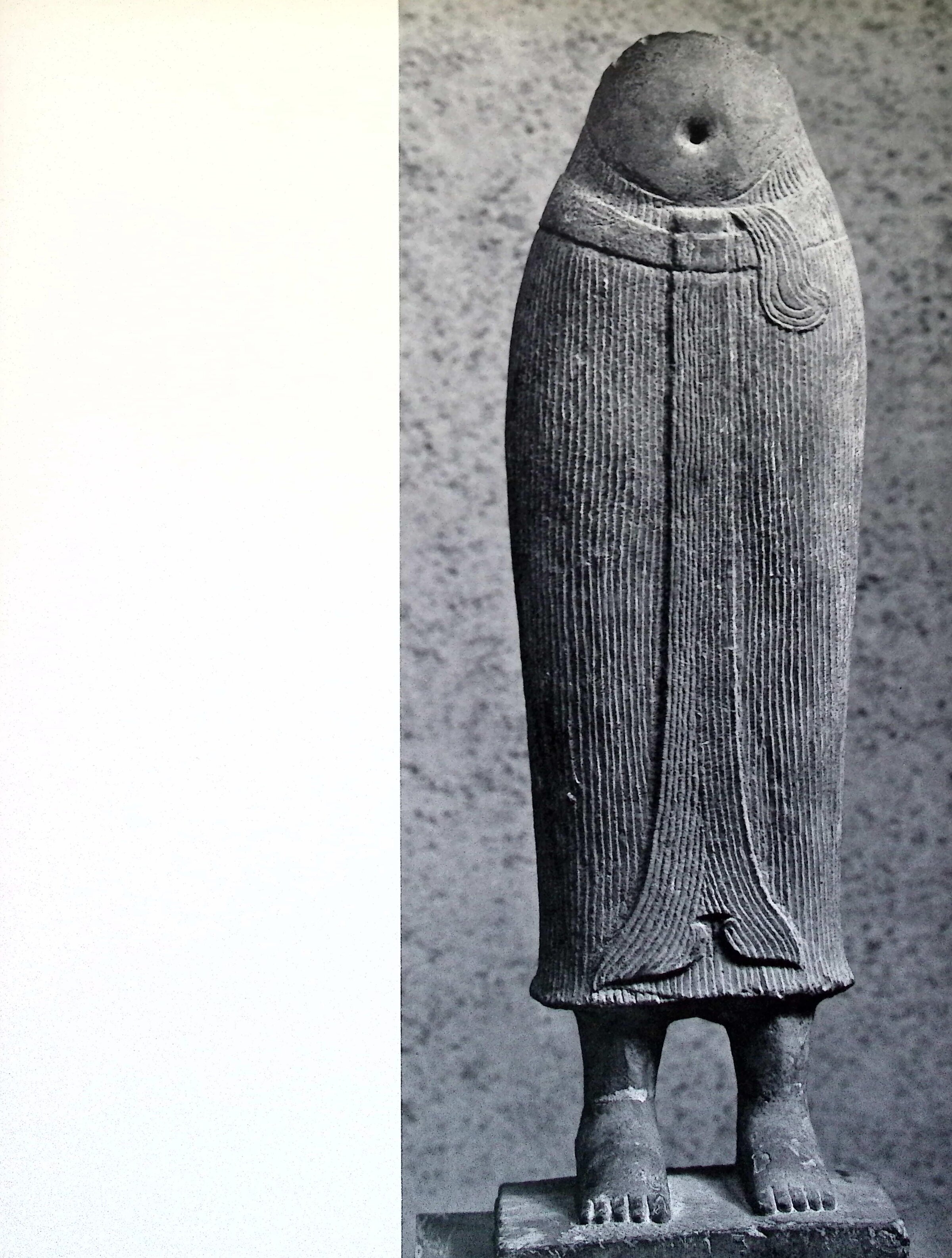
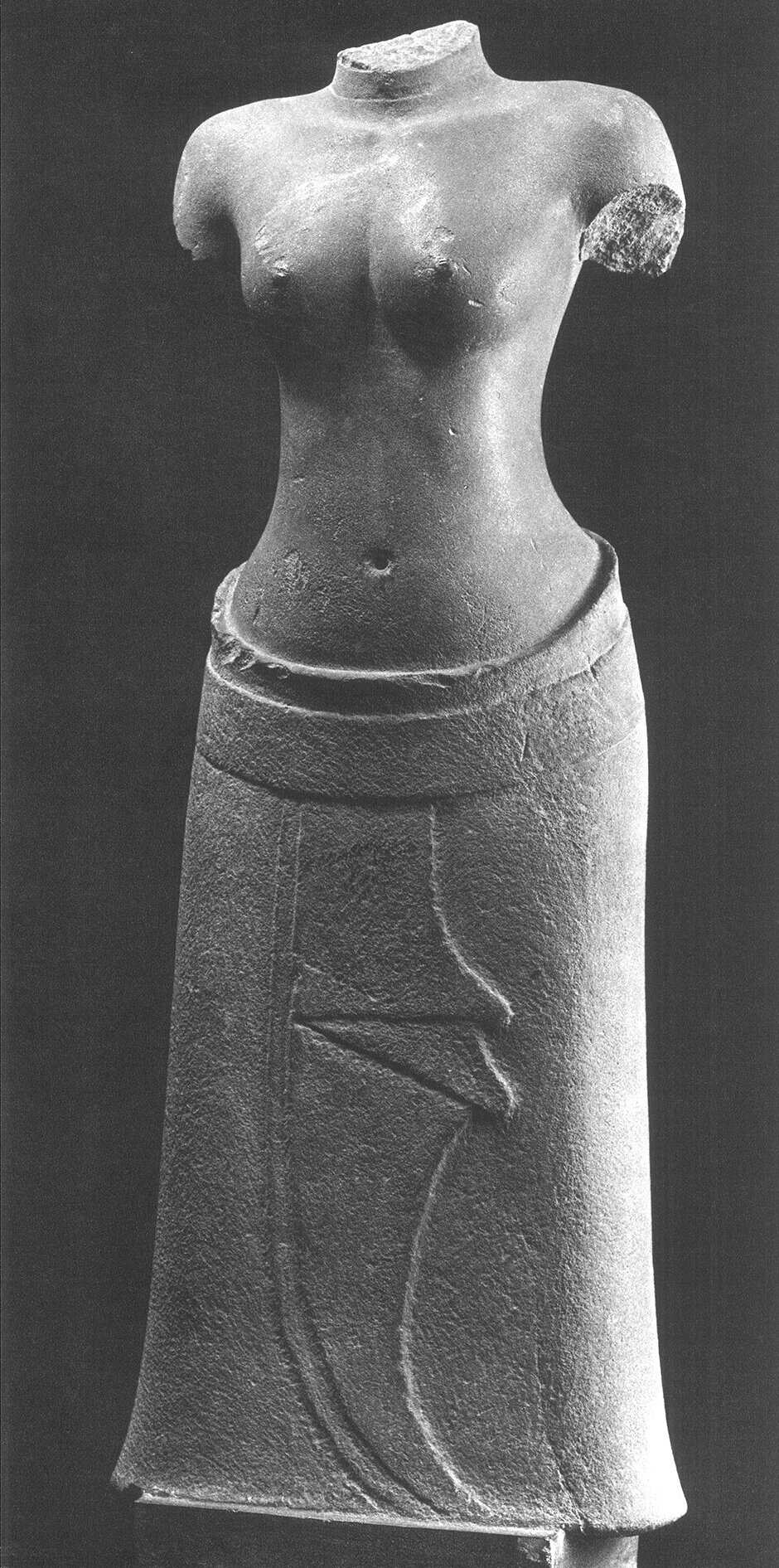
Standing Female Figure, 7th c., MG 18095
AUB2
AUB3
AUB4
AUB5
AUB6
AUB7
AUB8
AUB9
AUB10
AUB11
AUB12
AUB13
AUB14
AUB15
AUB16
AUB17
AUB18
AUB19
AUB20
AUB21
AUB22
AUB23
AUB24
AUB25
AUB26
AUB27
AUB28
AUB29
AUB30
AUB31
AUB32
AUB33
AUB34
AUB35
AUB36
AUB37
AUB38
AUB39
AUB40
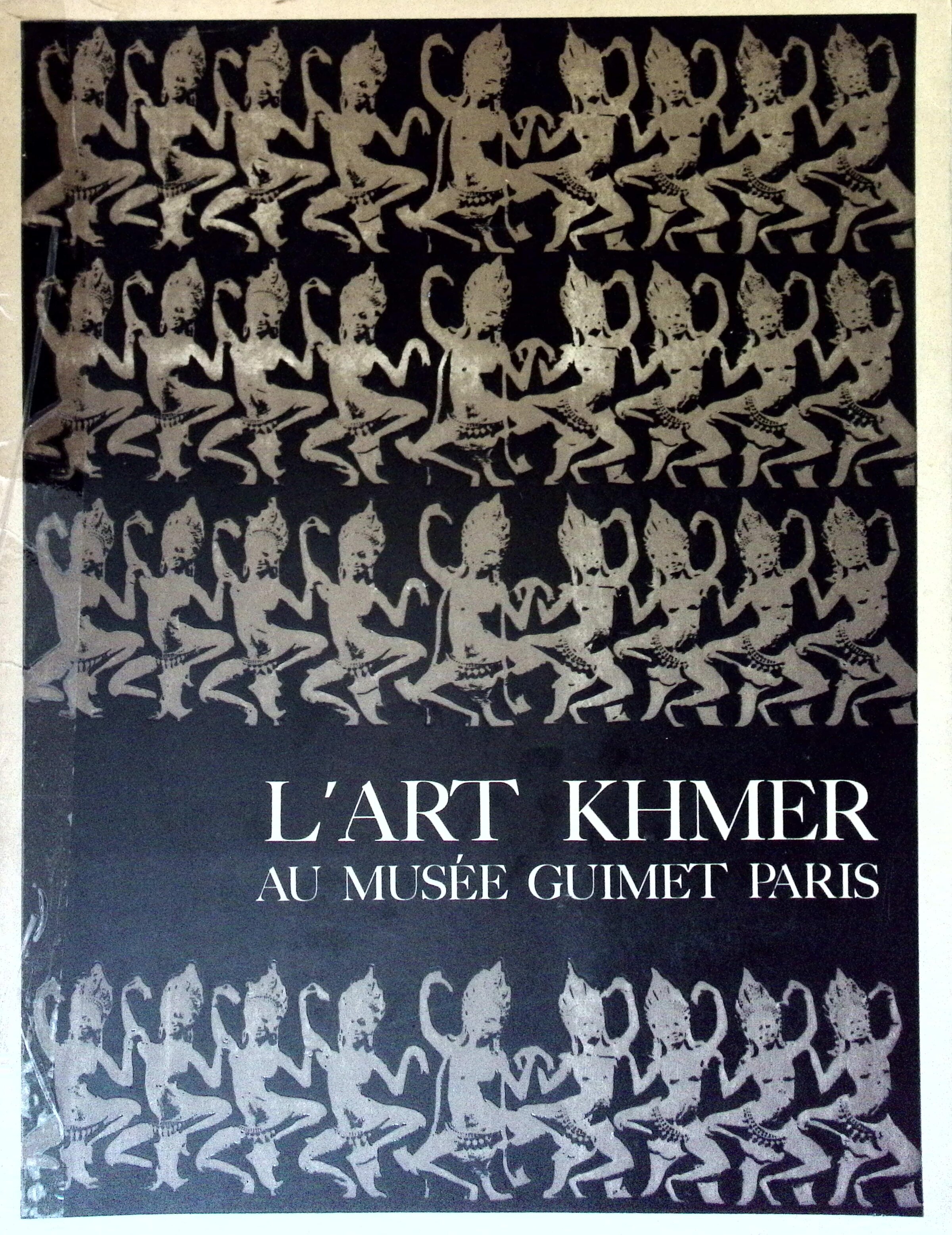
Cover of J. Auboyer's book, 1966
Jeannine Auboyer, L'Art khmer au Musée Guimet , Zurich, Du-Atlantis [special issue], 1965; Manesse Verlag, Conzett & Huber, 1966. Photos by Leonard Von Matt.
AUB41
AUB42
Author
Jeannine Auboyer
Source
Plates from Jeannine Auboyer, L'Art khmer au Musée Guimet , Zurich, Du-Atlantis [special issue], 1965; Zurich, Manesse Verlag, Conzett & Huber, 1966. Photos by Leonard Von Matt.
Published
1966
In addition to the intrinsic beauty and historic significance of the showcased artefacts, the list published in Jeanne Auboyer’s book is interesting by itself, as it reflects:
what the author, who had been recently apppointed the General Curator of Guimet Museum, considered as the most representative examples of Khmer statuary and architectural decoration at the time;
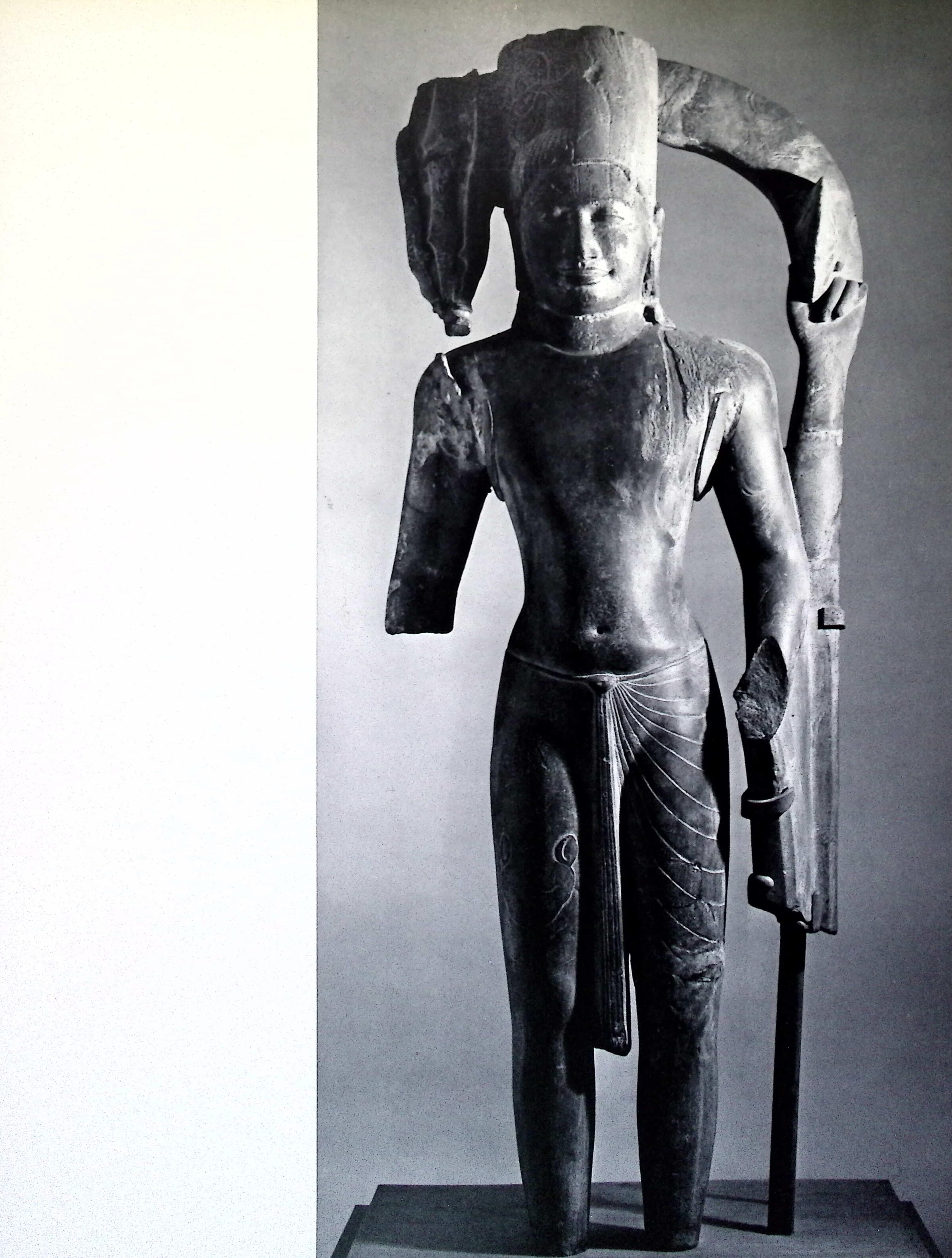
the paucity of information related to the origin and datation of the artpieces. It is therefore useful to compare the author’s data with the Guimet Museum online catalog with the help of accession numbers [MG or MA]. One example: Piece 3, Harihara in Phnom Da style [MG 14910], is now given an origin: Étienne Aymonier mission, 1882 – 1883;
out of 42 selected artworks, only one was in bronze, while the 2025 exhibition Bronzes Royaux d’Angkor has showcased the richness of the collection Khmer bronzes at Guimet — alongside many pieces from National Museum of Cambodia and from private collections;
recently, the MNAAG (Musée National des Arts Asiatiques Guimet] has organized its collections under the category ‘Sud-Est Asiatique’ [Southeast Asia]. Here is the online presentation: “Influenced by Indian culture from the early centuries AD, the countries of Southeast Asia developed artistic traditions pervaded by Buddhism and Hinduism, numerous masterpieces of which are exhibited at the musée Guimet. Khmer art from Cambodia, Cham art from Vietnam, Thai art from Thailand and Javanese art from Indonesia constitute the highlights of one of the most complete collections of the western world.” The wording might be controversial, since it implies ‘Khmer art’ should only originate from Cambodia [modern Cambodia?]. In this categorization in large geographical areas, ‘Tibetan art’ has disappeared, swallowed into the new category ‘Himalayan World’.
Plate Descriptions
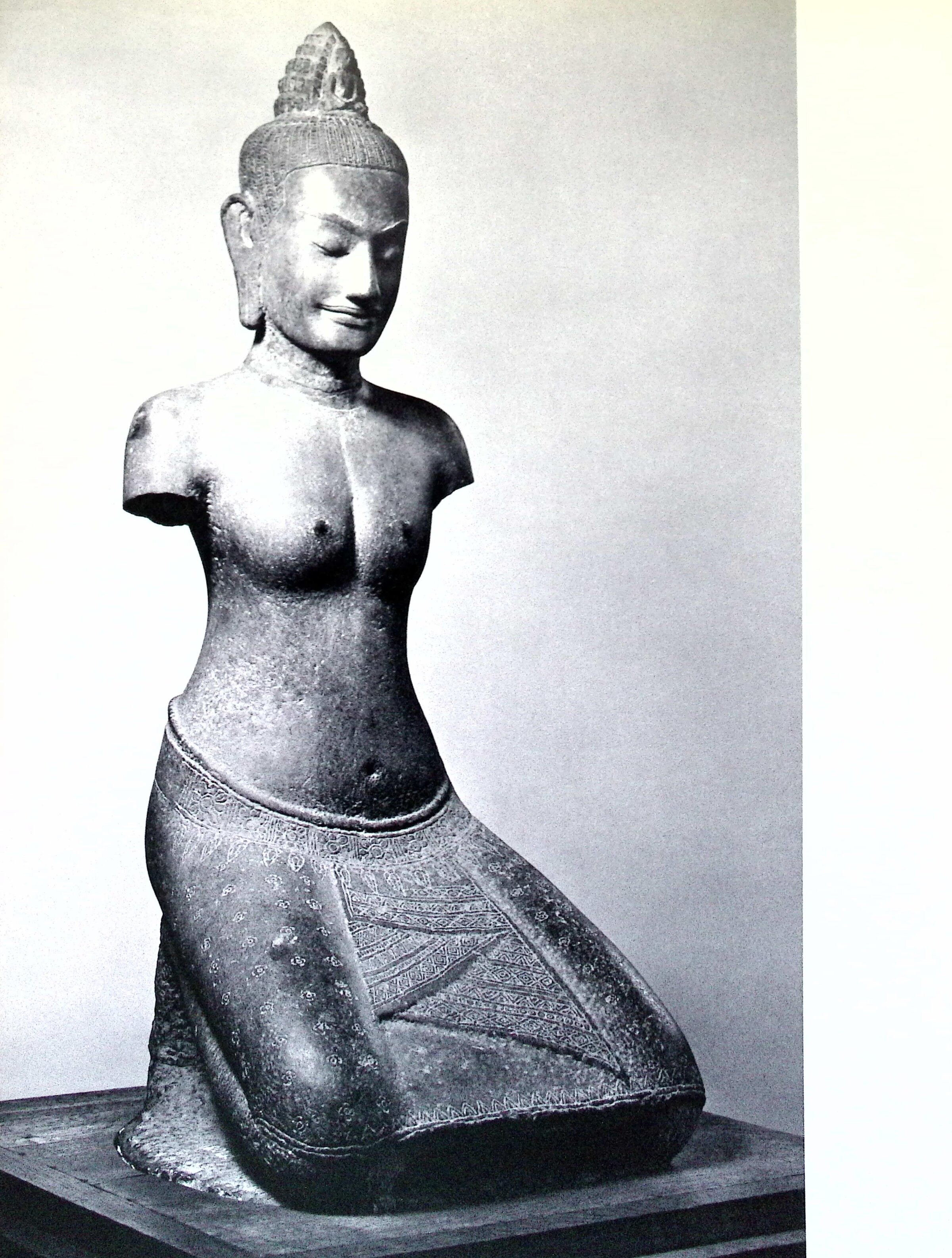
STATUE FÉMININE DEBOUT [Standing Female Figure] | Origin:Popel (Romduol) [ADB: ភូមិពពេល រំដួល in Svay Rieng area?] | 7th c. (?) | Sandstone | H. 105 cm. | MG 18095.
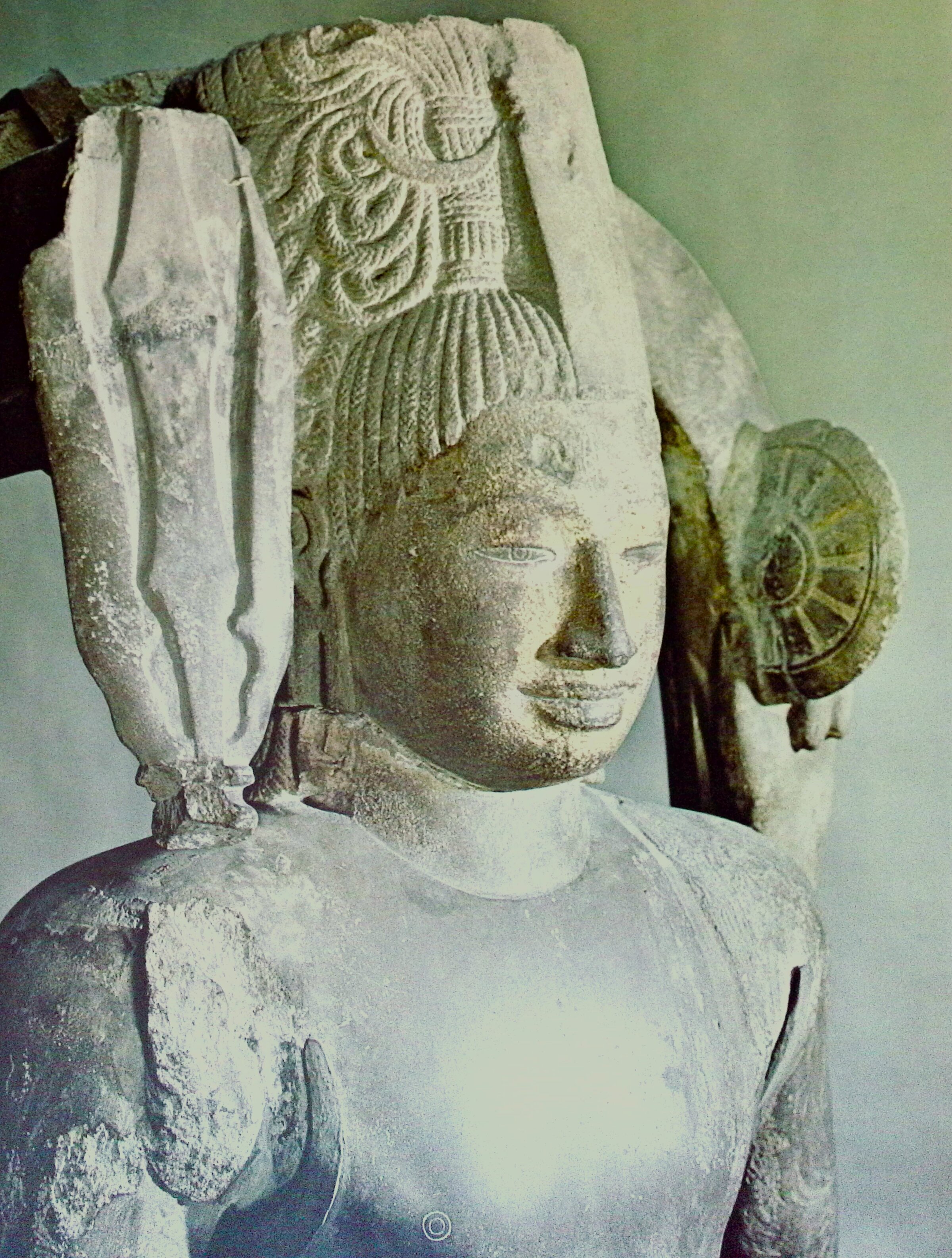
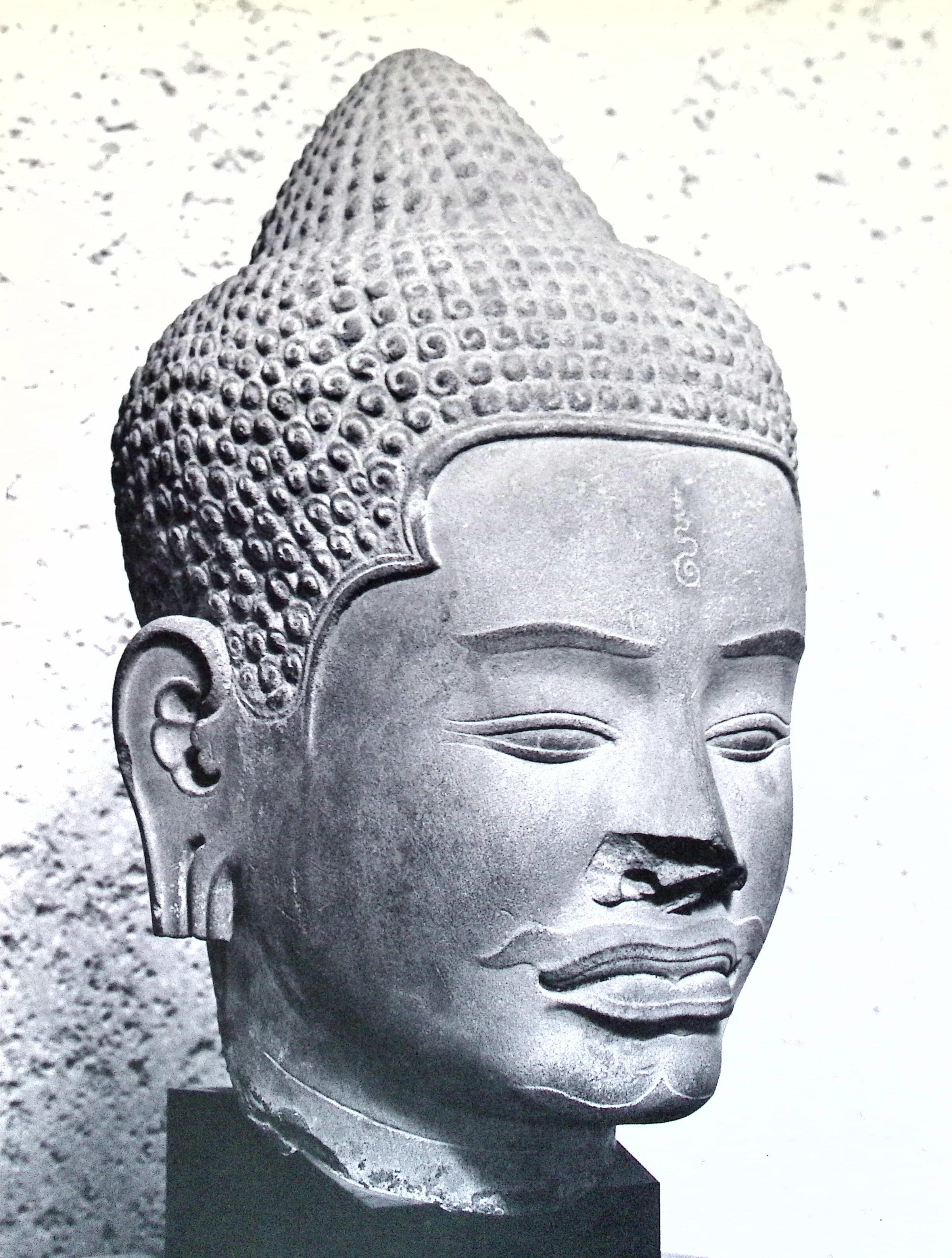
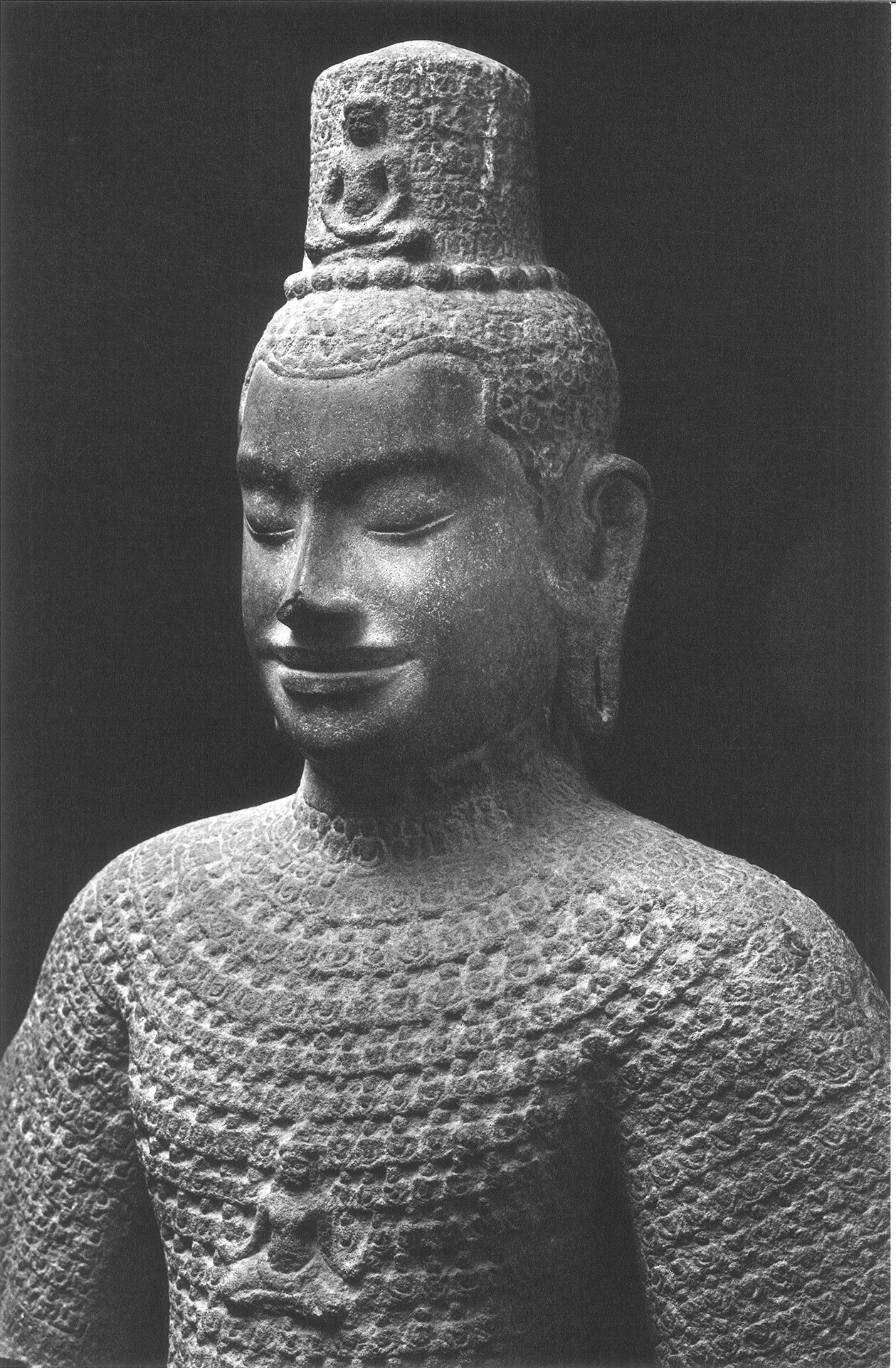
TÊTE DU HARI-HARA [Harihara Head] | Detail from Plate 3.
HARI-HARA [Harihara] | Origin:Ashram Maha Rosei (Prei Krabas) [ADB: ប្រាសាទអាស្រមមហាឥសី in Angkor Borei, Takeo] | Phnom Da Style, 2d half 6th c. (?) [ADB: 7th c.] | Sandstone | H. 175 cm. | MG 14910.
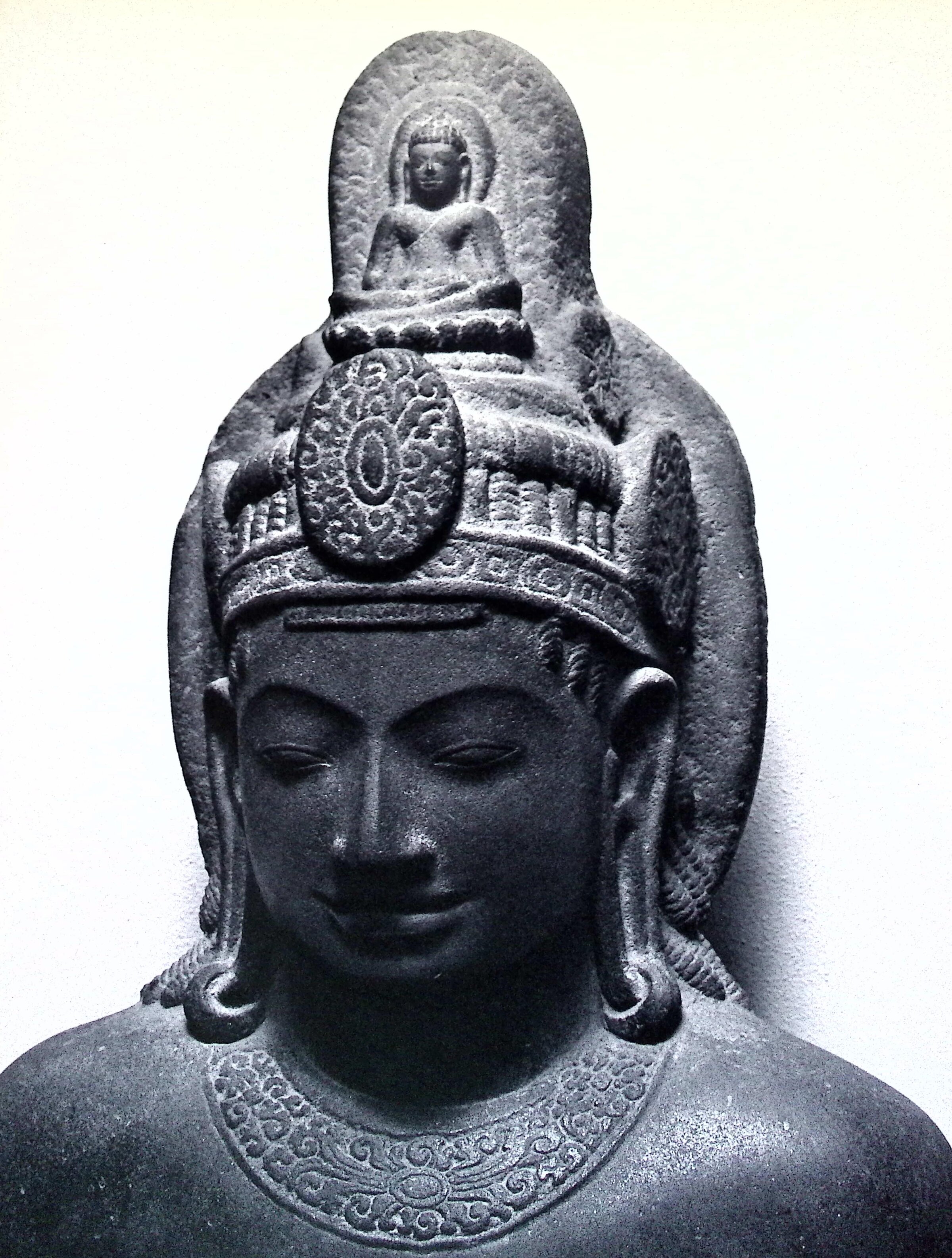
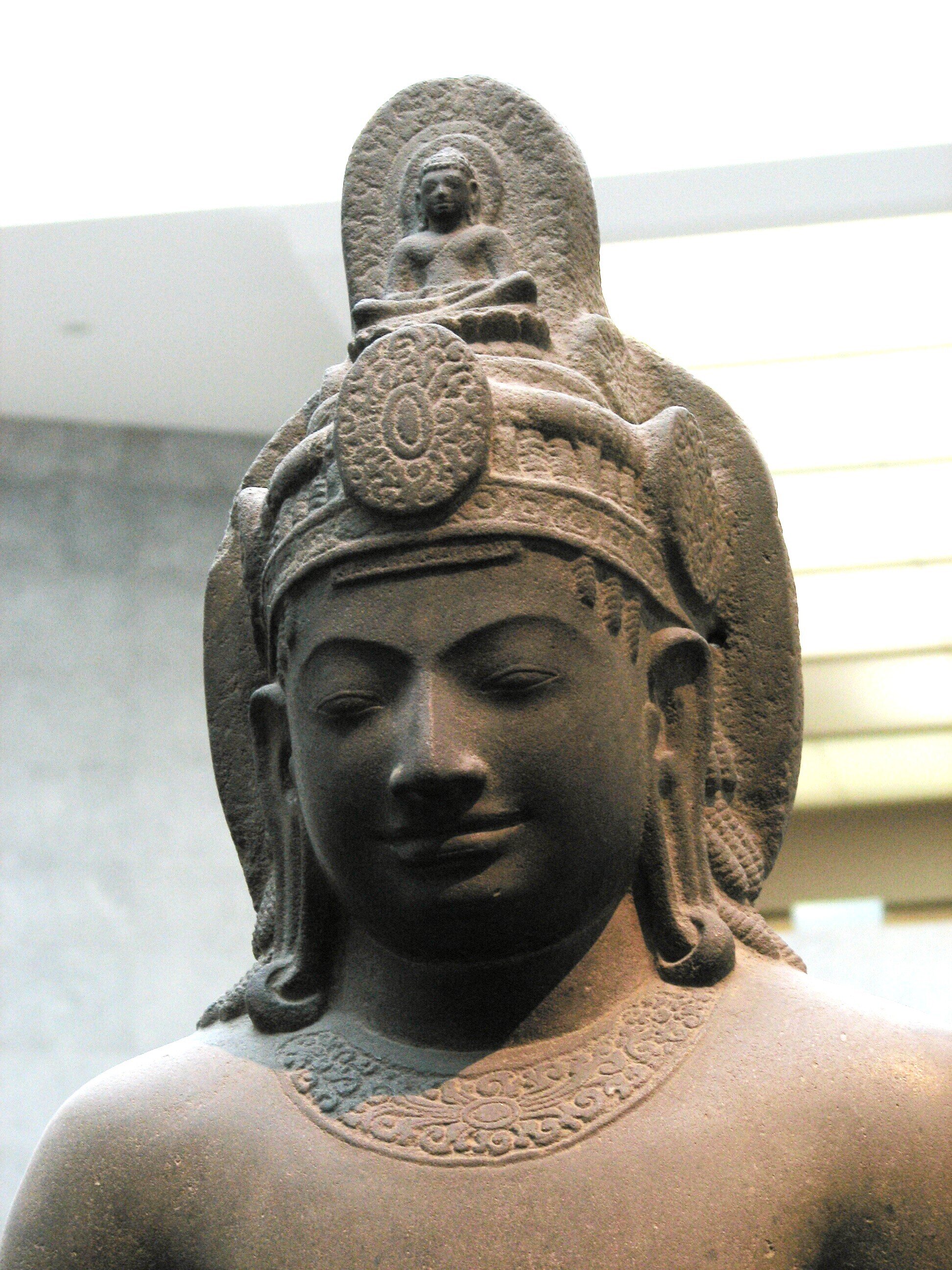
TÊTE DE L’AVALOKITEÇVARA [Avalokitesvara’s Head] | Detail from Plate 5.
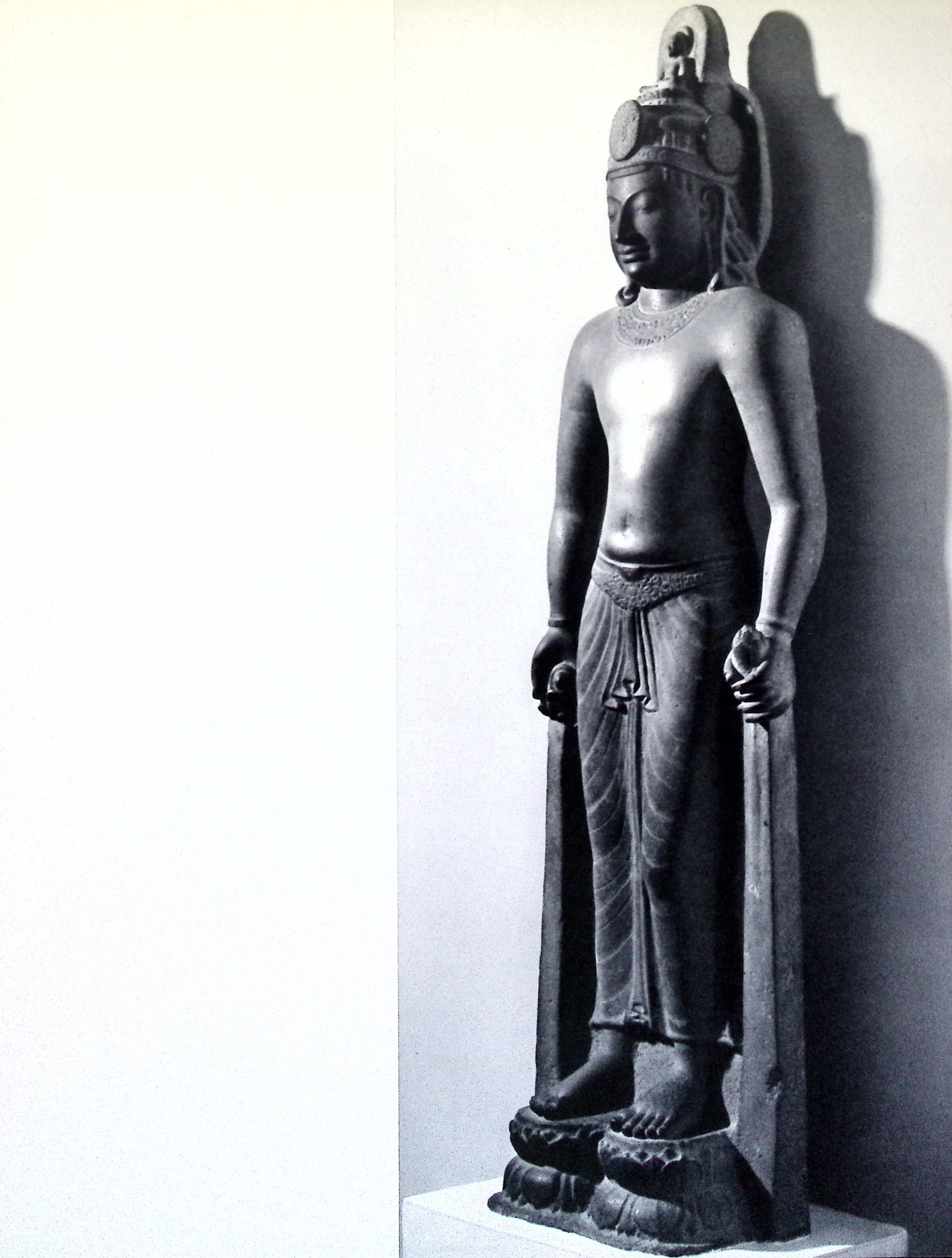
AVALOKITEÇVARA [Avalokitesvara] | Origin: Rach-Gia | Late 6th-Early 7th c. | Sandstone | H. 168 cm. | Collection Didelot, Paris. [1]
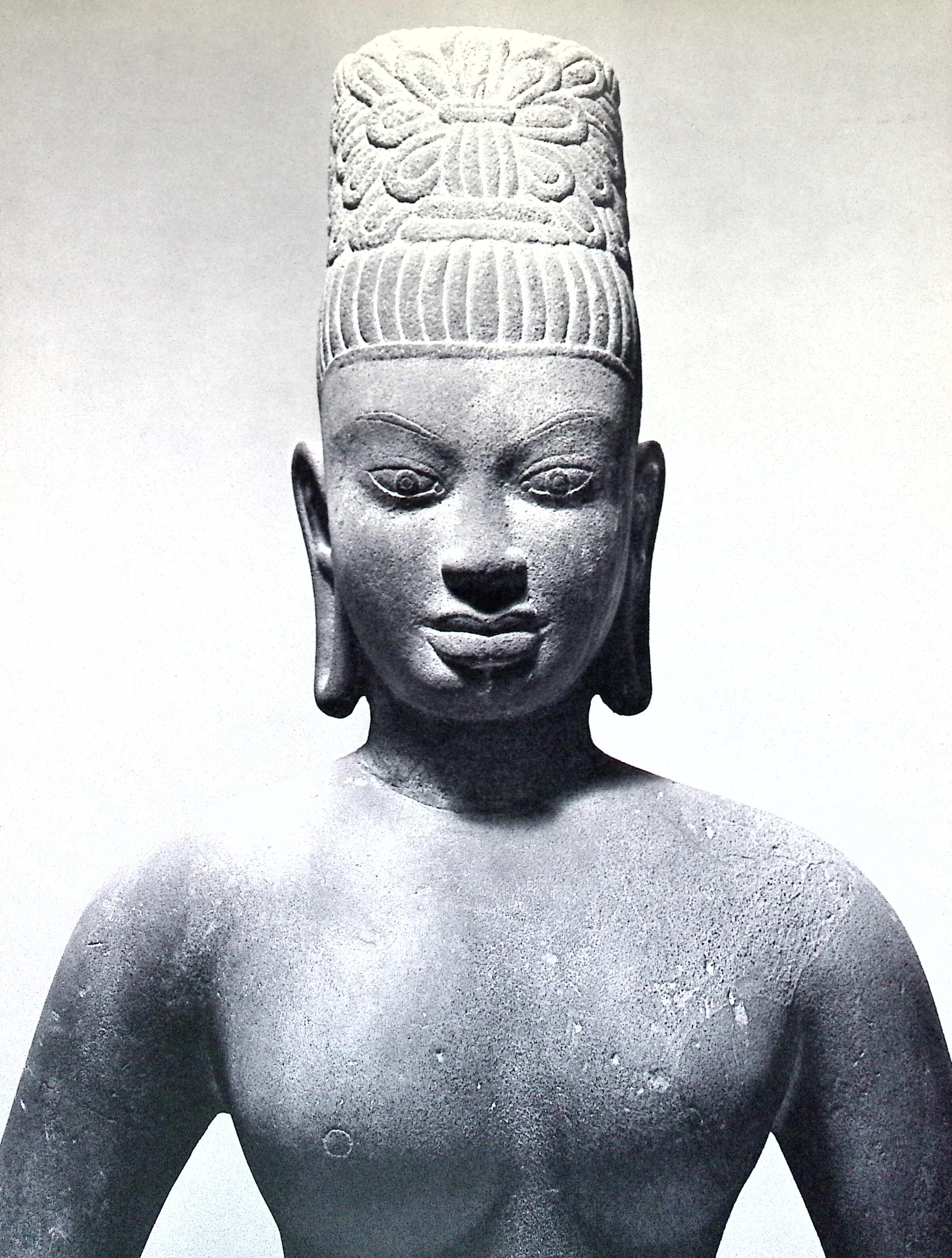
STATUE FÉMININE DEBOUT [Statue of Woman Standing] | Origin: Koh Krieng (Sambor) [ADB: សំបូរ | 7th c. (?) | Sandstone | H. 145 cm | MG 18094.
BUSTE DE LA STATUE FÉMININE [Bust of Statue 6] | Detail from plate 6.
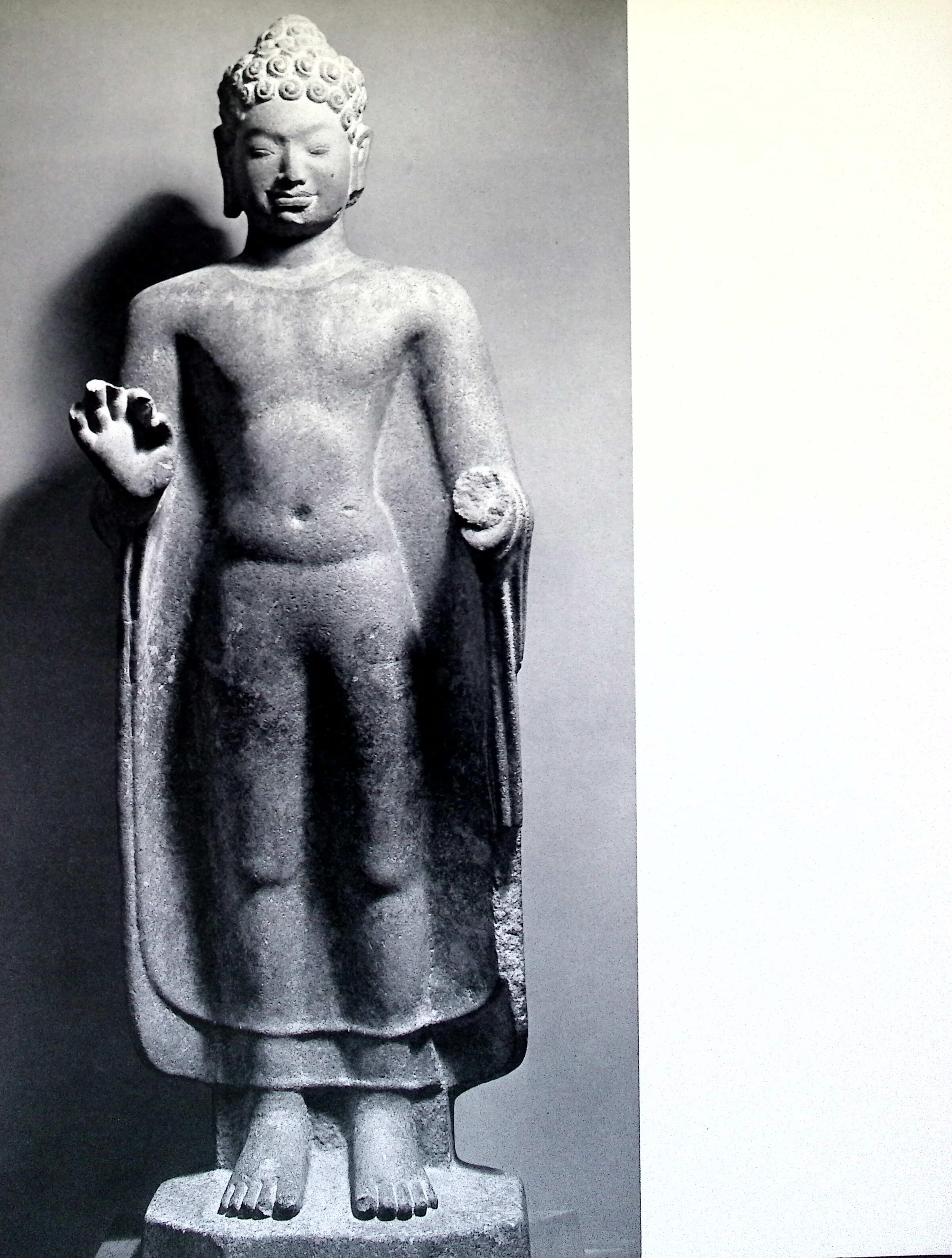
BUDDHA | Origin: Tuol Prah That (Kompong Speu) | 7th-8th c. | Sandstone | H. 90 cm | MG 18891.
VISHNU | Origin: Abri sous roche près de Rup Arak (Kulèn) [Rock shelter near Rup Arak (Kulen) | Kulen style, 1st half of 9th c. | Sandstone | H. 190 cm | MG 18860. [1]
STATUE FÉMININE DEBOUT [Statue of Woman Standing] | Origin: Phnom Bakheng ភ្នំបាខែង (Angkor) | Bakheng style, early 10th c. | Sandstone | H. 130 cm | MG 14879.
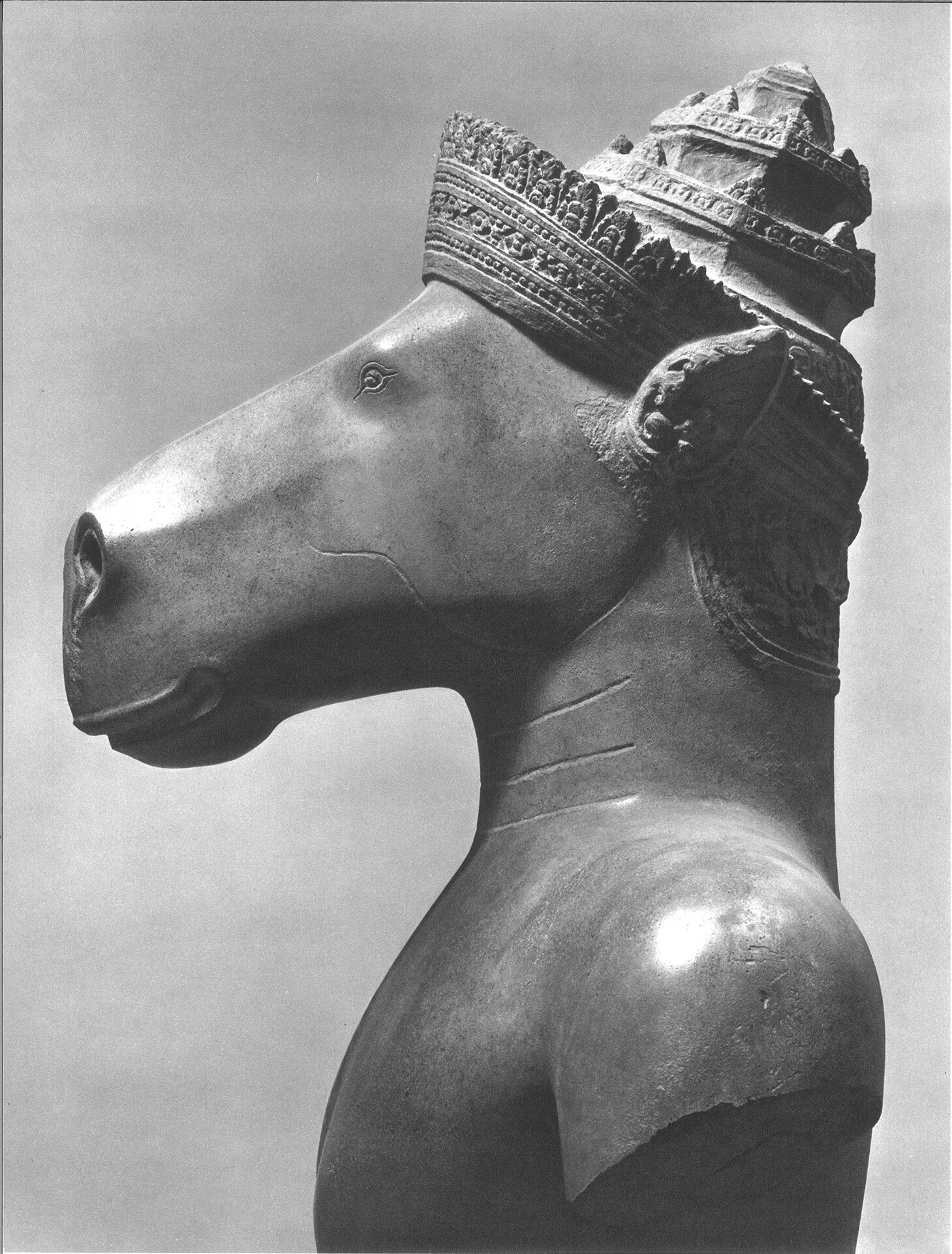
VISHNU A TETE DE CHEVAL [Horse-Headed Vishnu] | Origin: Sambor សំបូរ (Kompong Thom) | Bakheng Style, early 10 th c. | Sandstone | H 135 cm | MG 18099
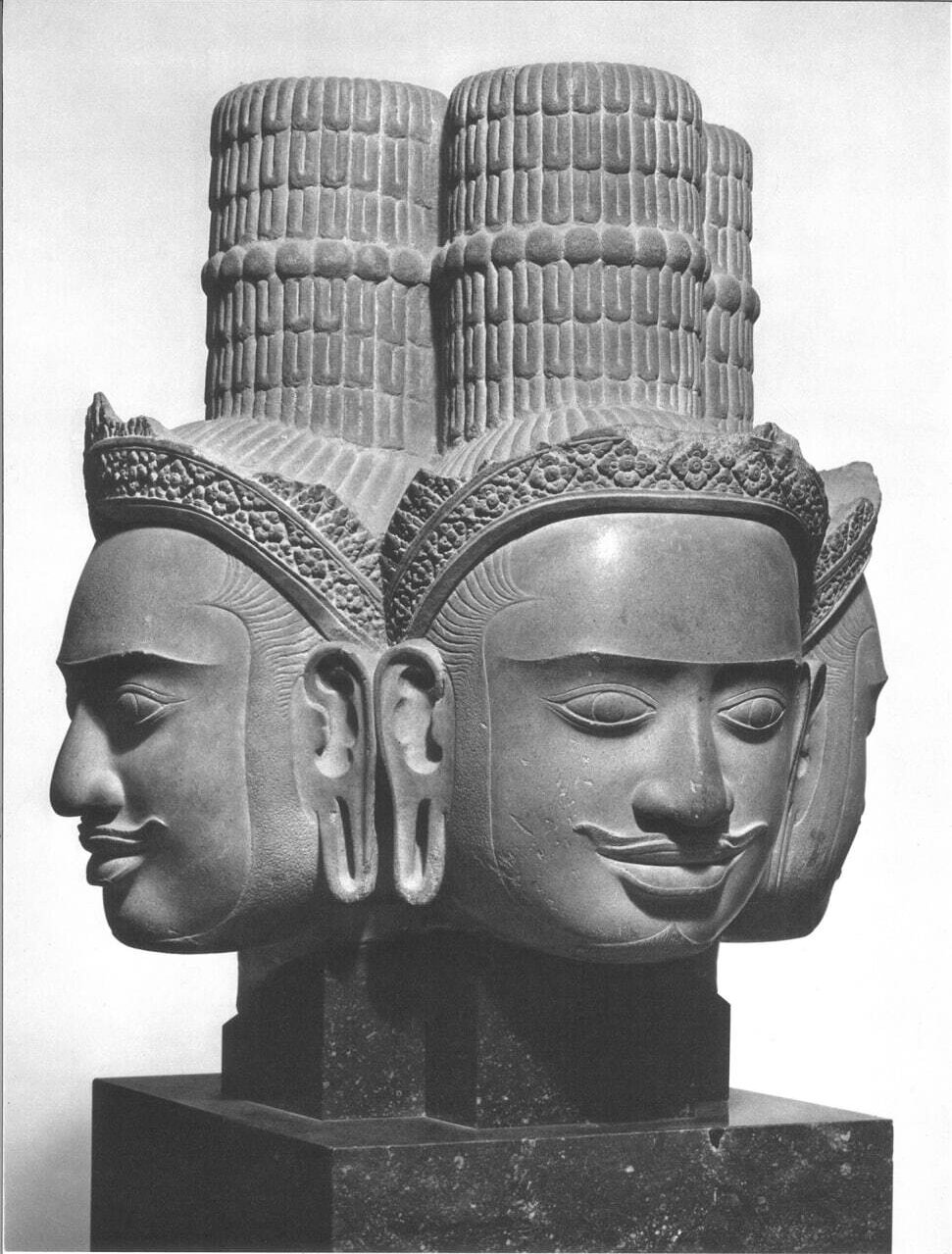
TETE DE BRAHMA [Brahma Head] | Origin: Phnom Bok ភ្នំបូក (Siem Reap) | Bakheng Style, 1st quarter 10th c. | Sandstone | H 52 cm | MG 18100.
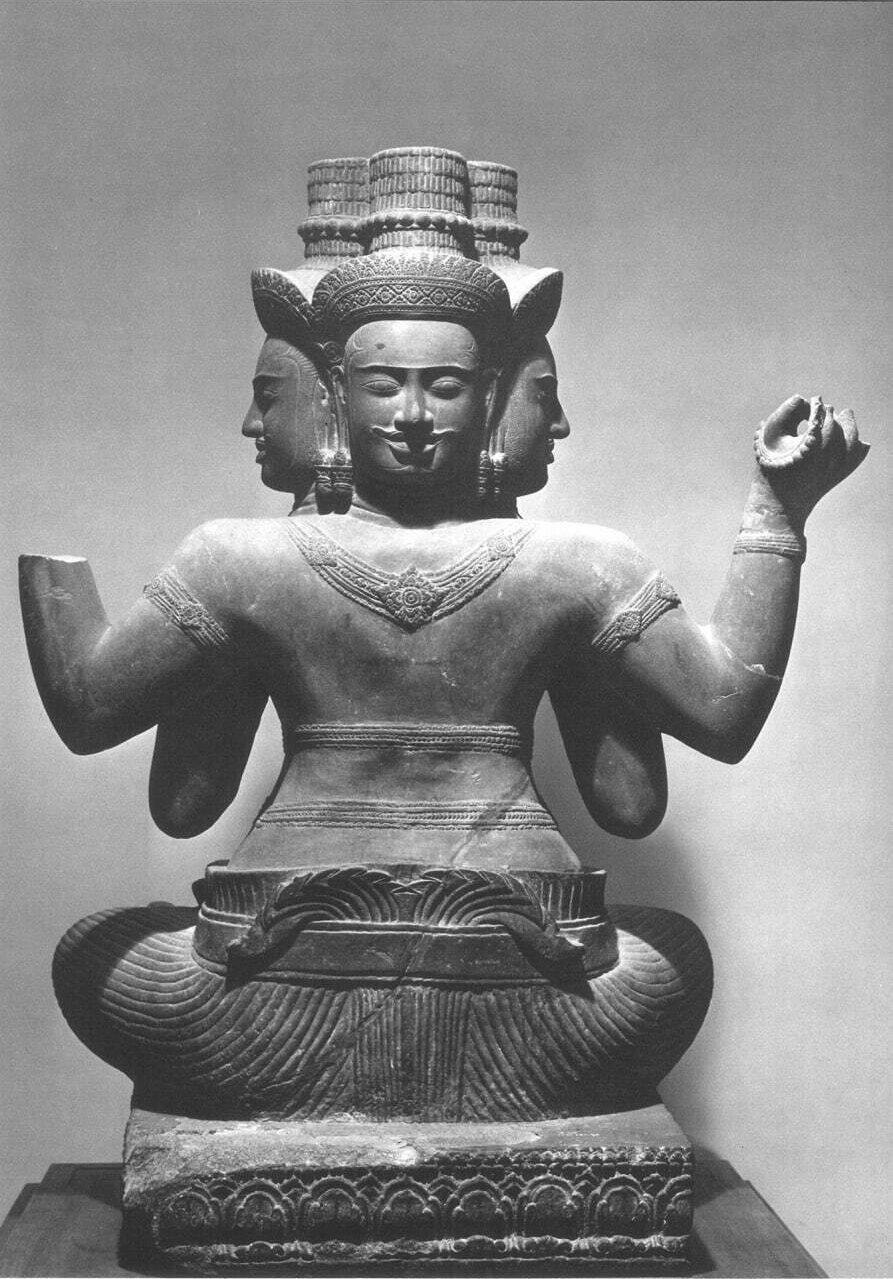
BRAHMA | Origin: : Baset ប្រាសាទបាសែត(Battambang) | 1st half 10th c. |Sandstone | H 110 cm | MG 18098.
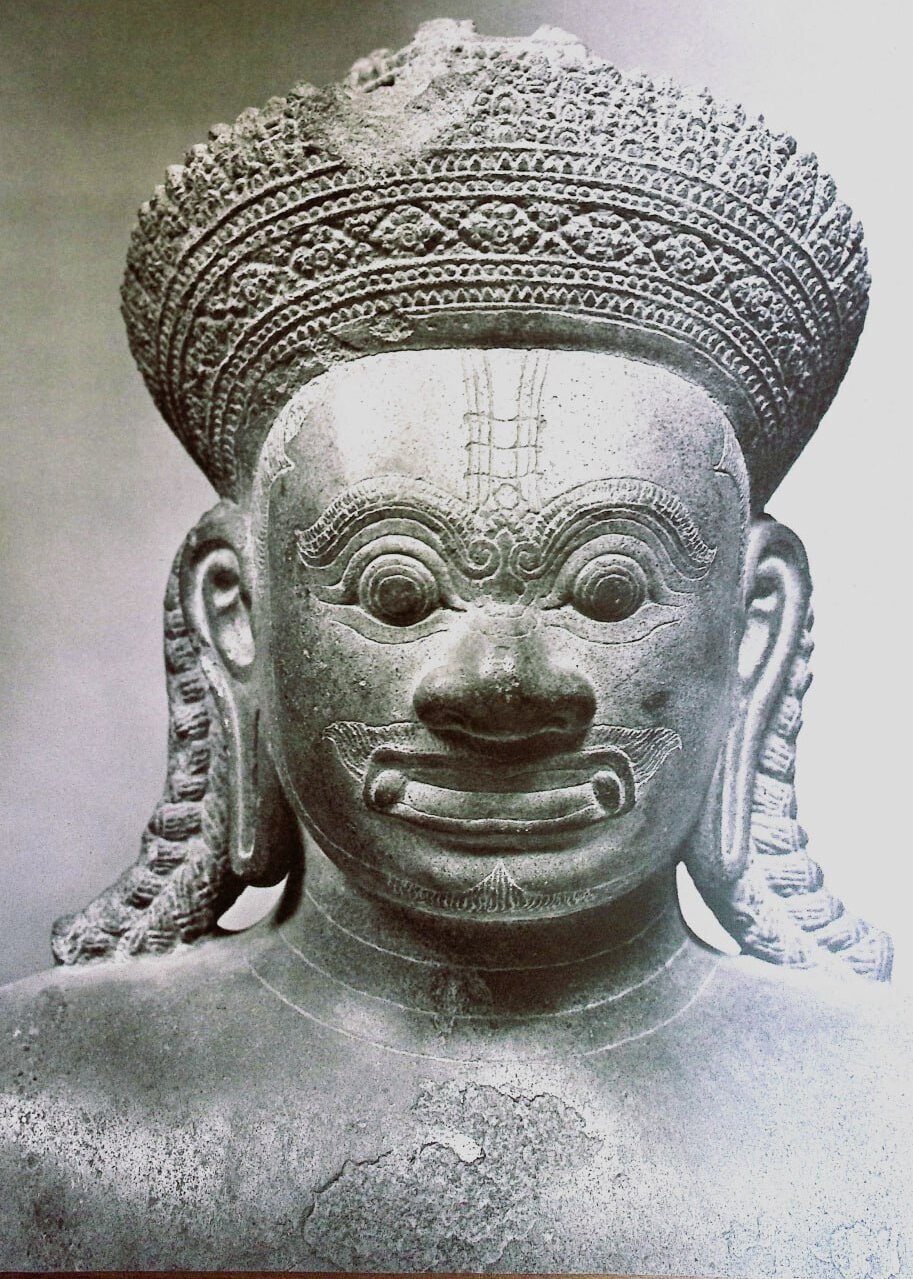
TETE DE STATUE DE YAKSHA [Yaksha Head] | Tuol Chi Tep (Choen Prei) | Banteay Srei Style (2nd half 10th century) | H 106 cm| MG 14892.
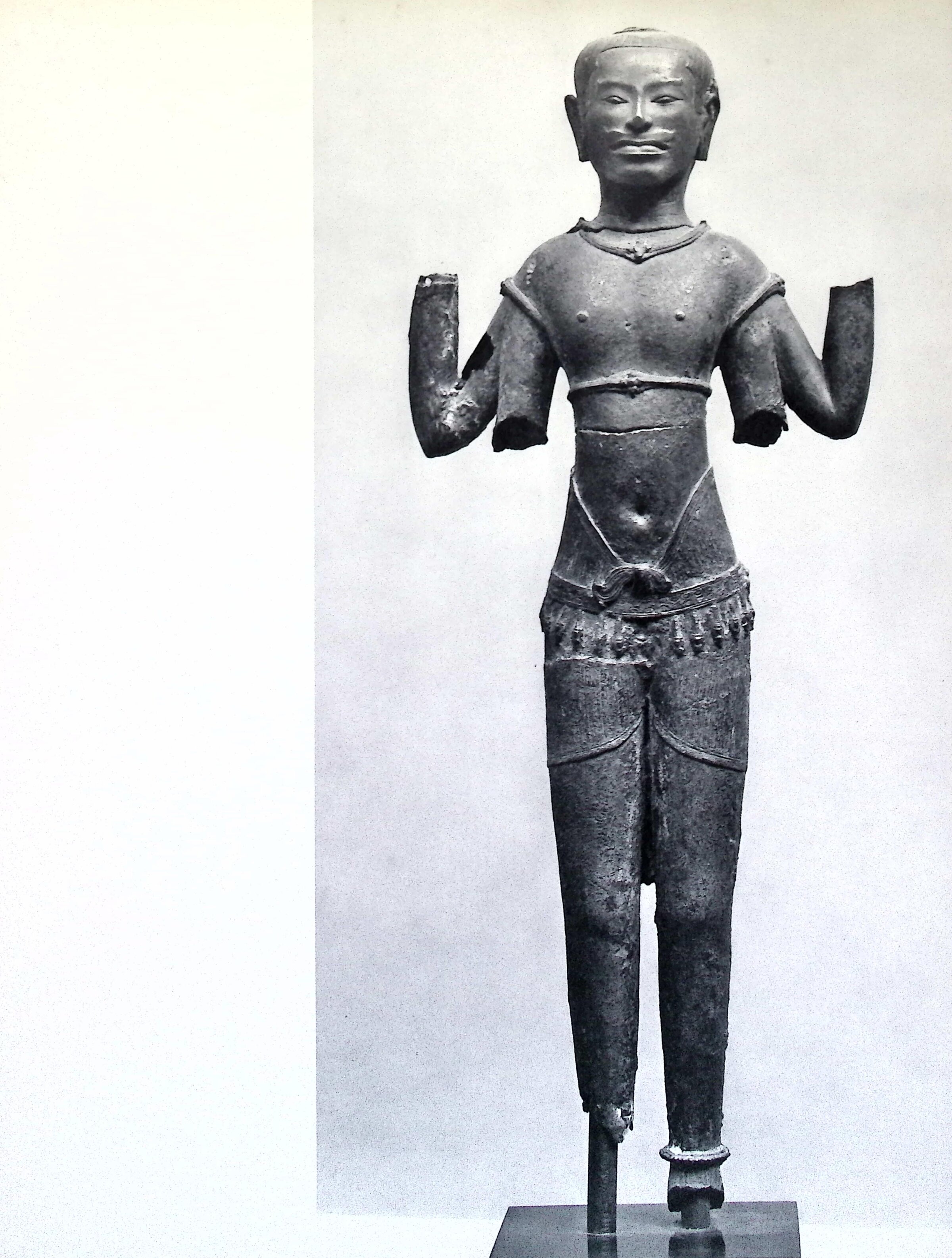
STATUE MASCULINE [Statue of Man] | Origin: unknown | 2d half of the 17th century | Bronze | H 87 cm. | MA 1339.
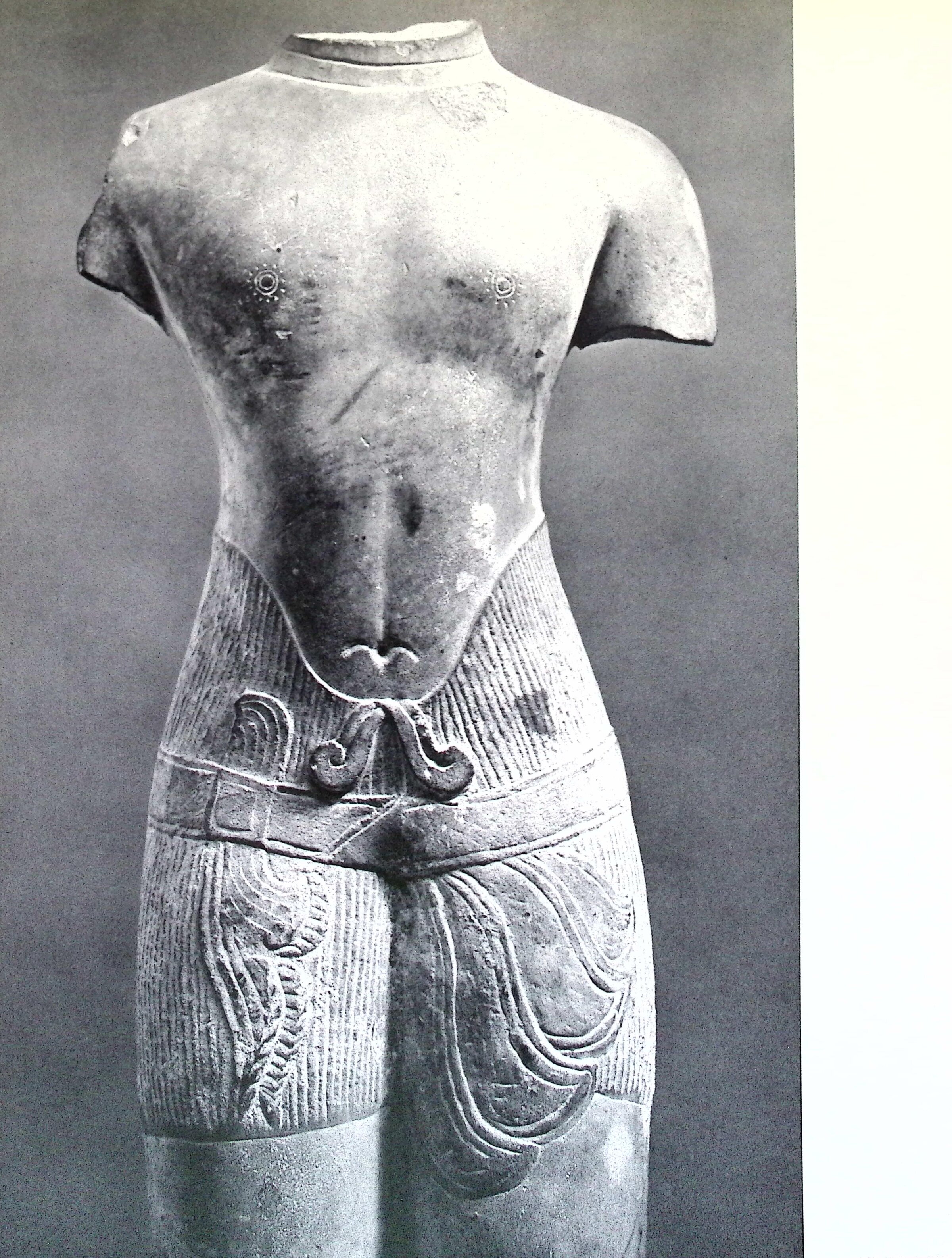
STATUE MASCULINE [Statue of Man] | Origin: Vat Khnat ប្រាសាទខ្នាត(Wat Khnat Temple) | 11th century | Sandstone | H 55 cm | MG 18863.
STATUE FÉMININE [Statue of Woman] | Origin: Prasat Kravan ប្រាសាទក្រវាន់ (Angkor) | 11th century | Sandstone | H 60 cm | MG 18864.
TÊTE DE BUDDHA [Buddha Head] | Origin: Ta Prohmប្រាសាទតាព្រហ្ម (Angkor) | 11th century or 1st half of 11th century | Sandstone | H 38 cm | MG 18051.
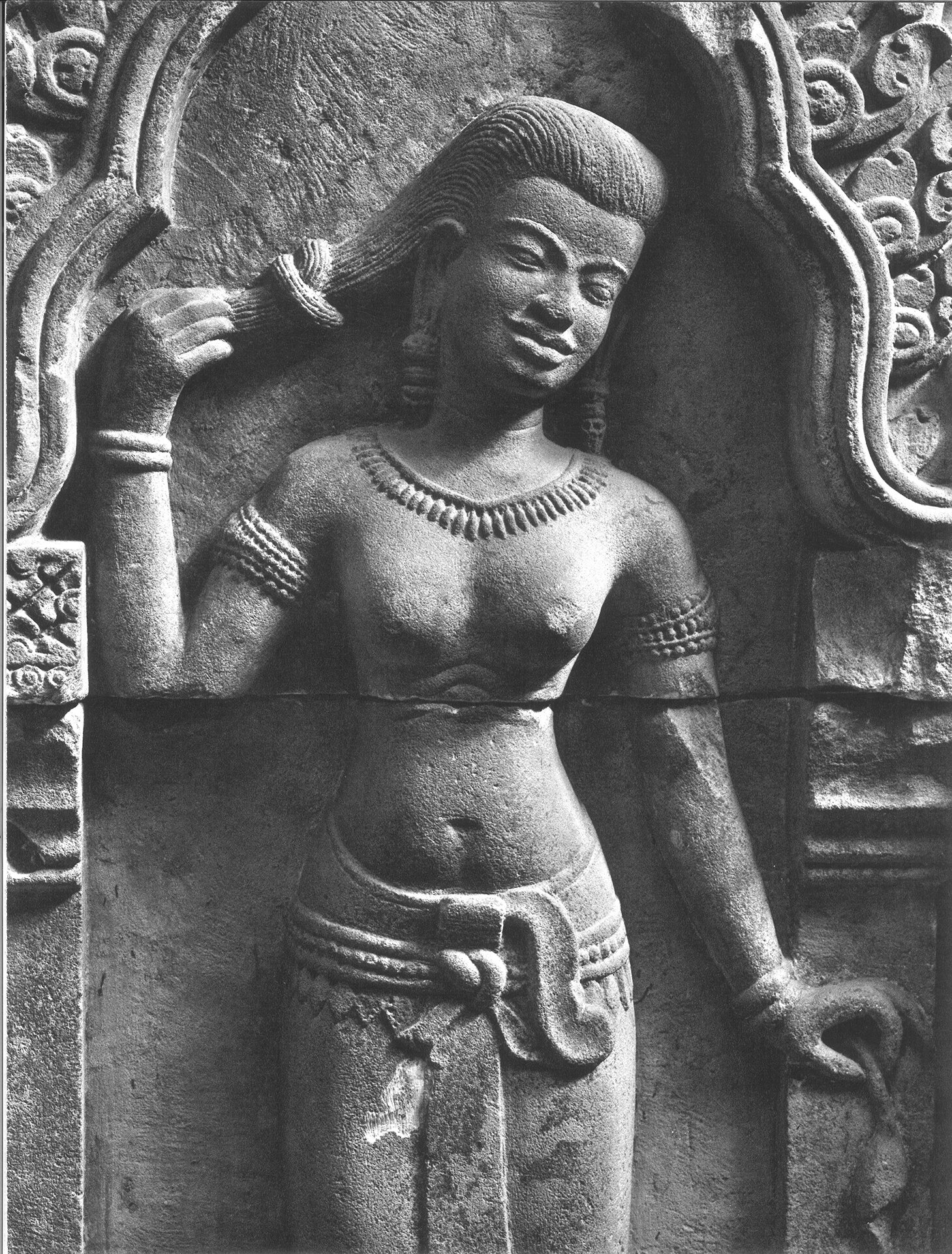
HAUT-RELIEF REPRESENTANT UNE APSARA [Relief with Apsara] | Origin Unknown | Baphuon style, 2d half 11th c. (?) | H. 128 cm | MA 56.
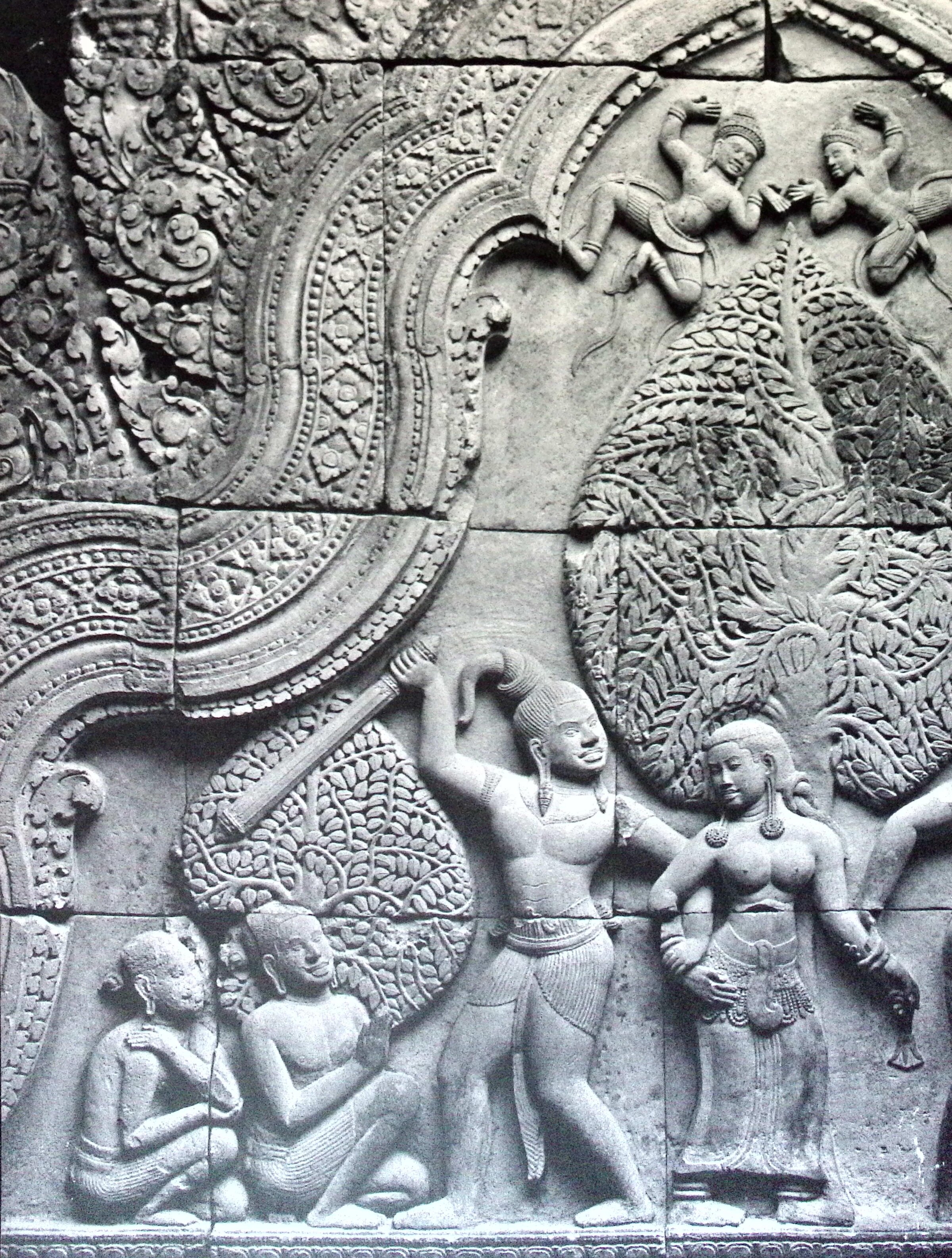
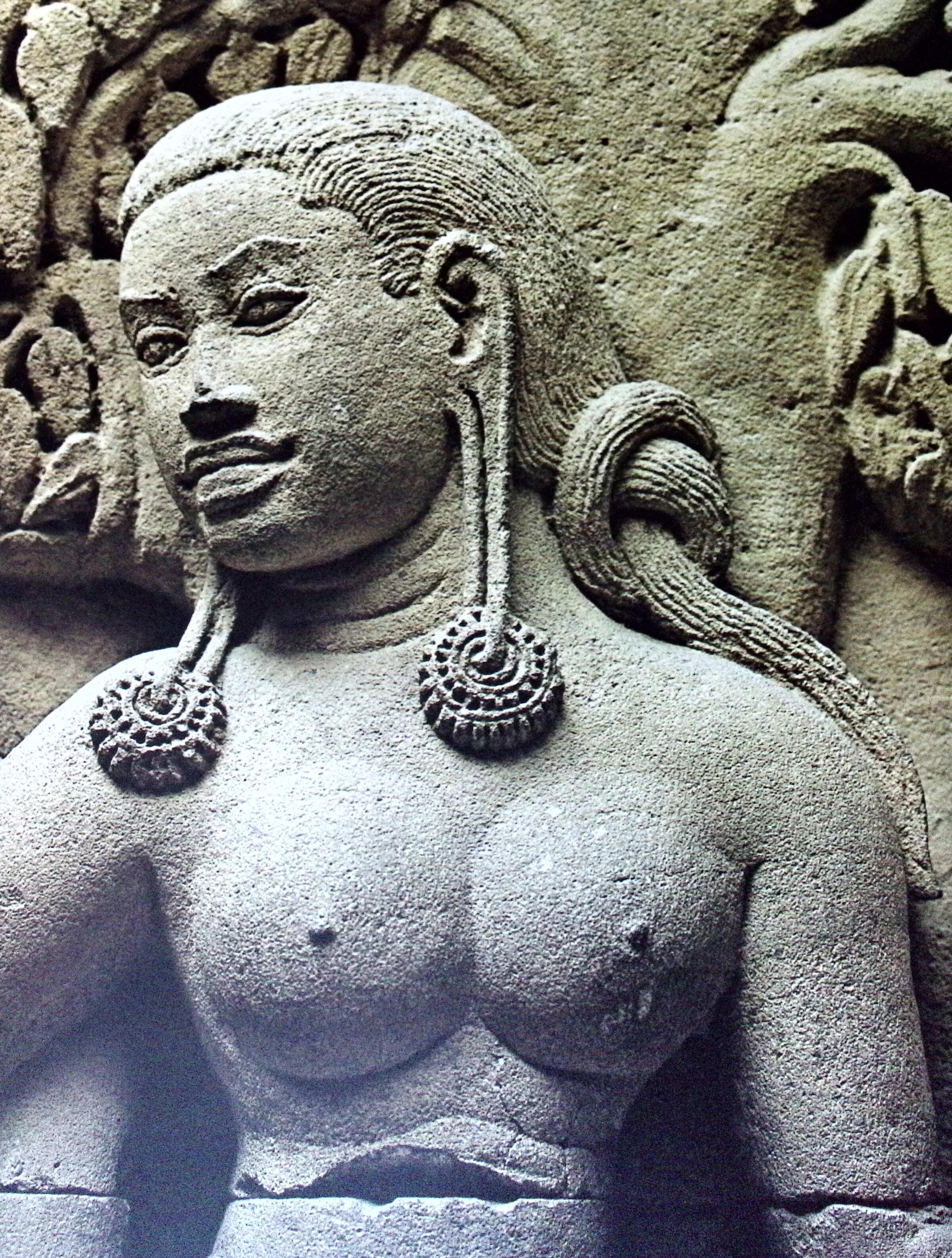
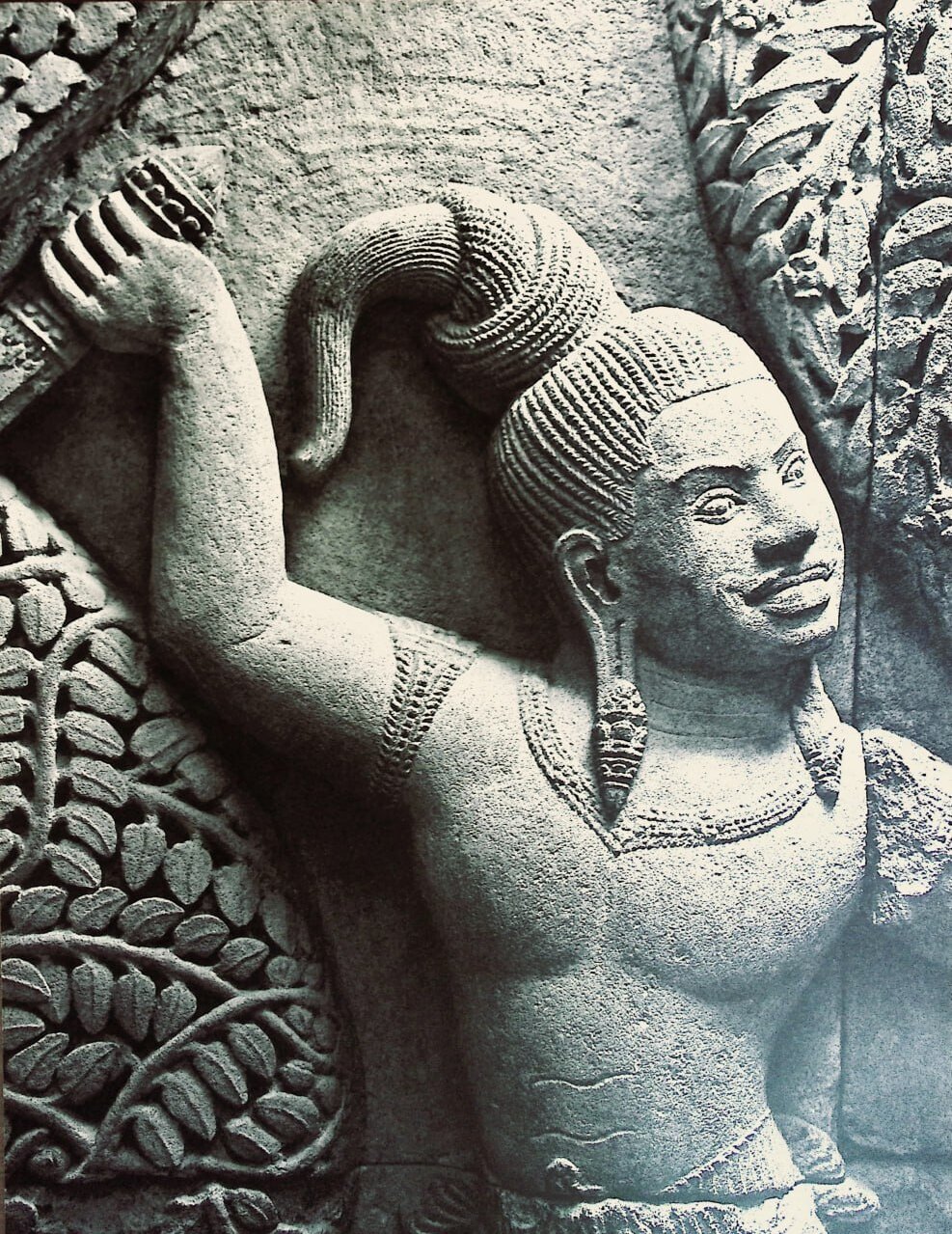
FRONTON À SCÈNE FIGURANT UN PASSAGE DE L’ÉPOPÉE DU MAHABHARATA [Lintel with the Scene from Mahabharata: Sunda and Upasunda fighting over Apsara Tilottama] | Origin: Banteay Srei បន្ទាយស្រី(Style of Banteay Srei) | 2nd half of the 10th century | Sandstone | H 195 cm | W 269 cm | MG 18913.
SPECTATEURS [SAME SCENE as Pl. 20: SPECTATORS]
L’APSARAS TILOTTAMÂ [SAME SCENE as Pl. 20: APSARA TILOTTAMA]
L’ASURA SUNDA [SAME SCENE as Pl. 20: ASURA SUNDA]
DEUX DEVA [SAME SCENE as Pl. 20: TWO DEVAS]
PARVATI REFUSANT D’ÉCOUTER ÇIVA [PARVATI REFUSES TO LISTEN TO SHIVA, detail of lintel] | Origin: Preah Pitu ប្រាសាទព្រះពិធូរ (Angkor) | Beginning of Angkor Wat style, end of 11th century-start of the 12th century | Sandstone | H 84 cm, L 130cm | MG 18912.
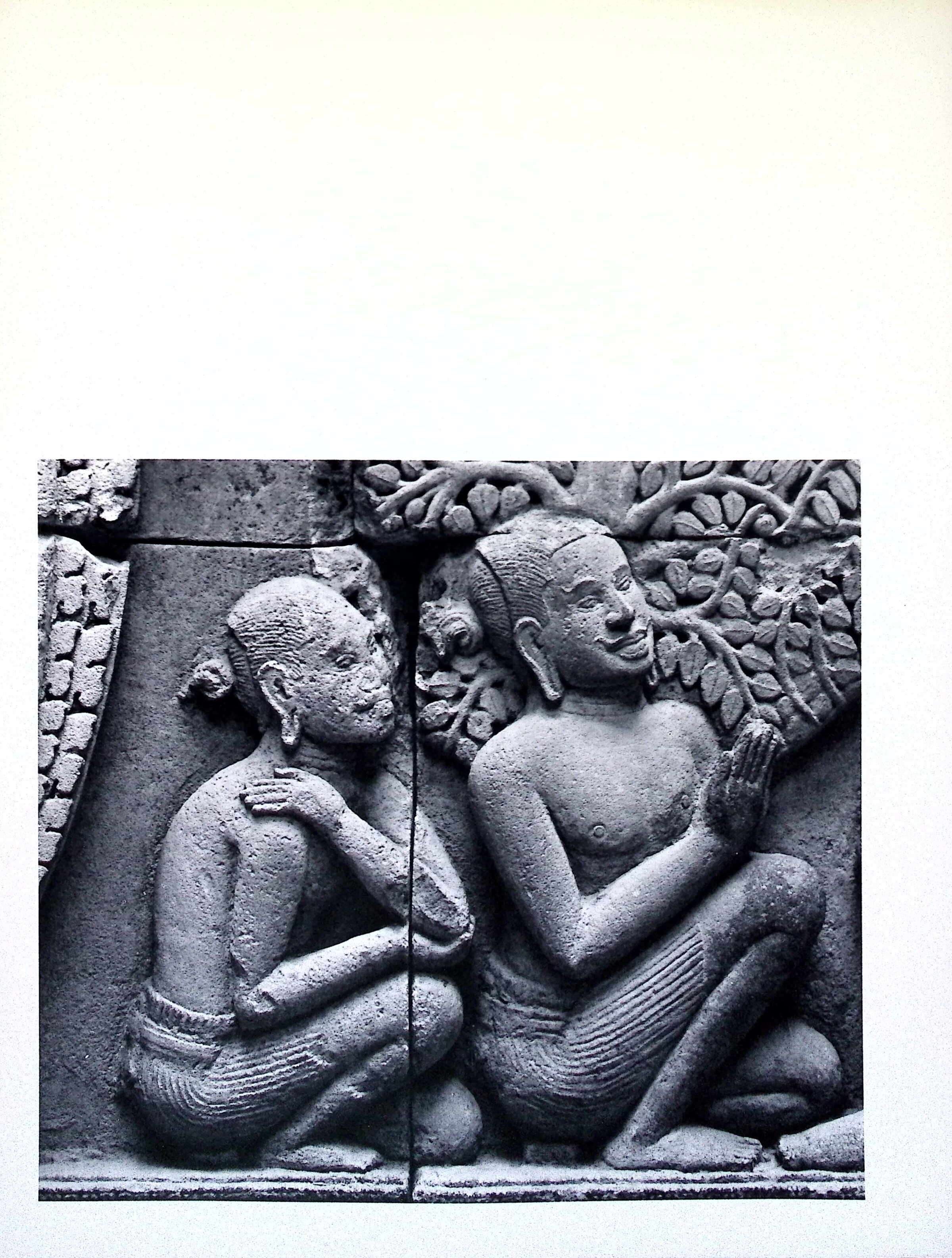
FRAGMENT DE PILASTRE REPRÉSENTANT UNE APSARAS [PIECE OF PILASTER SHOWING AND APSARA] | Origin: Prah Thkol ព្រះថ្កោល (Preah Khan of Kampong Svay), Bayon style | end of 12th century | Sandstone | H 123 cm | MG 18140.
FRAGMENT DÉCORATIF REPRÉSENTANT UNE APSARAS DANSANT [DECORATIVE PIECE WITH DANCING APSARA] | Origin: Phimeanakas Terrace ព្រះលានជល់ដំរី (Angkor), Bayon Style | end 12th-early 13th century | Sandstone | H 80 cm | MG 18143.
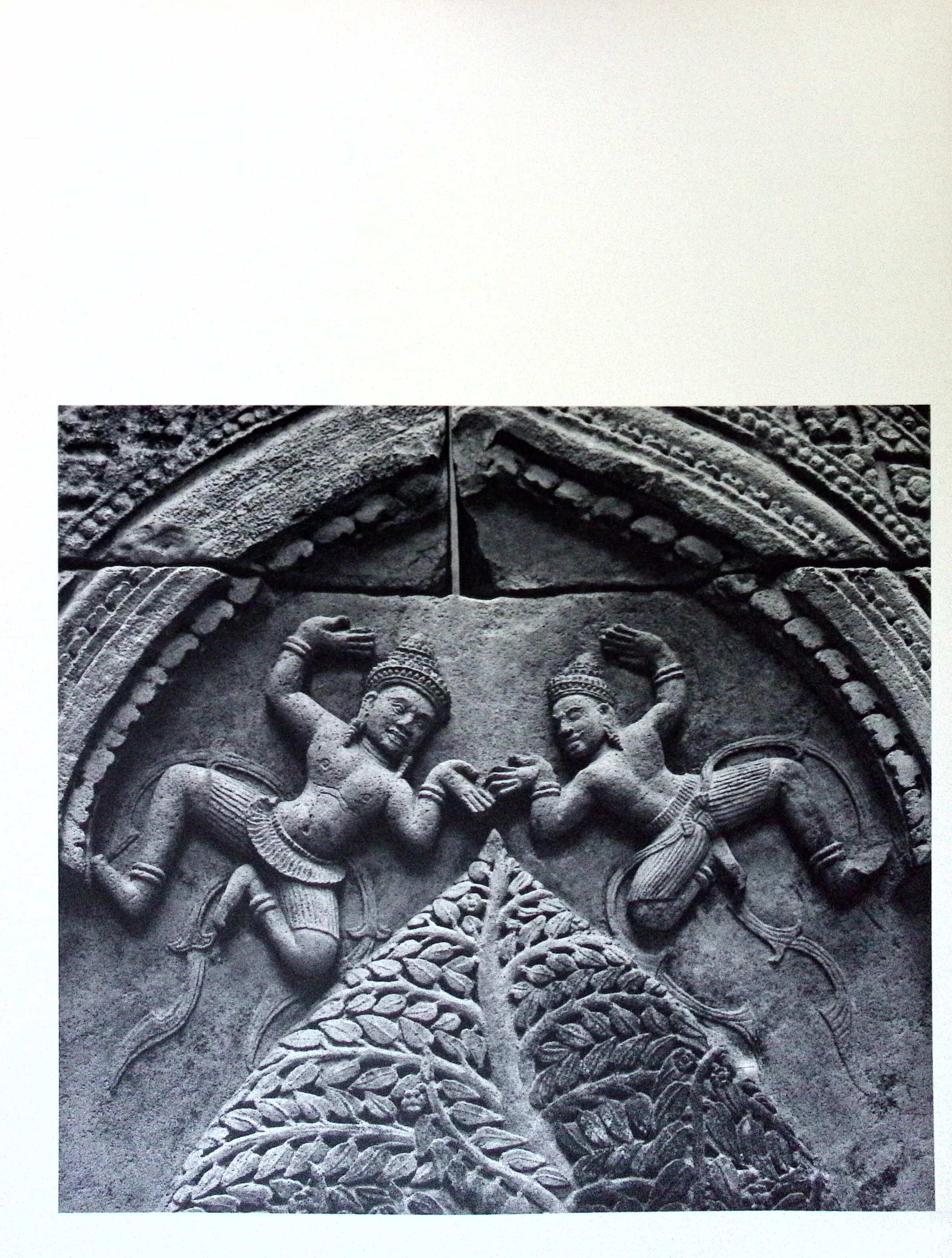
APSARAS DANSANT [DANCING APSARA: Detail of the lower register of a pediment decorated with nine dancing apsaras] | Origin: Bayon (Angkor), Bayon style | end of 12th-beginning 13th century | Sandstone | H 60 cm, L 276 cm | MG 18142.
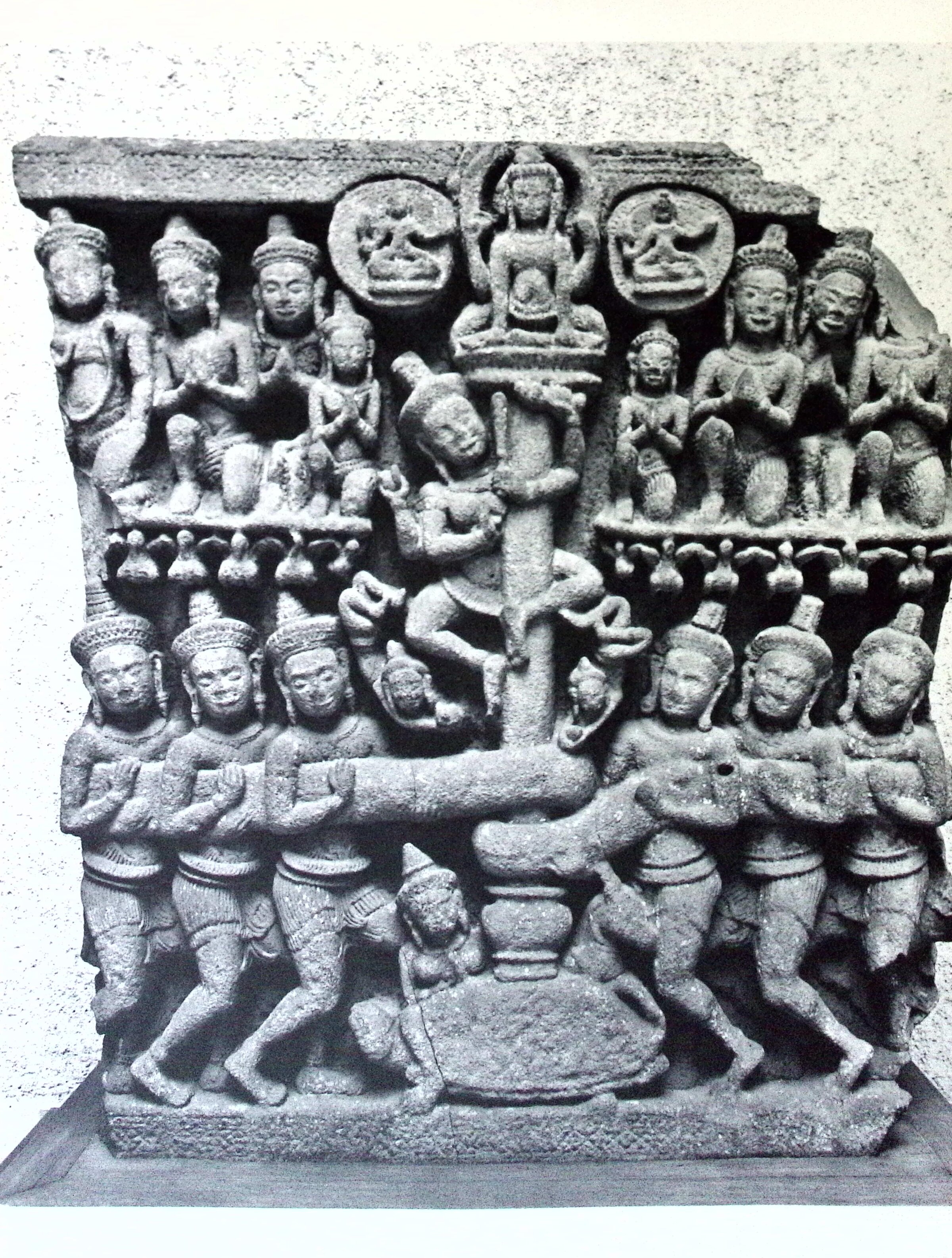
FRAGMENT DE LINTEAU OU DE FRONTON [FRAGMENT OF A LINTEL OR PEDIMENT: The churning of the sea of milk] | Origin unknown | 11th century | Sandstone | H 132 cm | MG 17860.
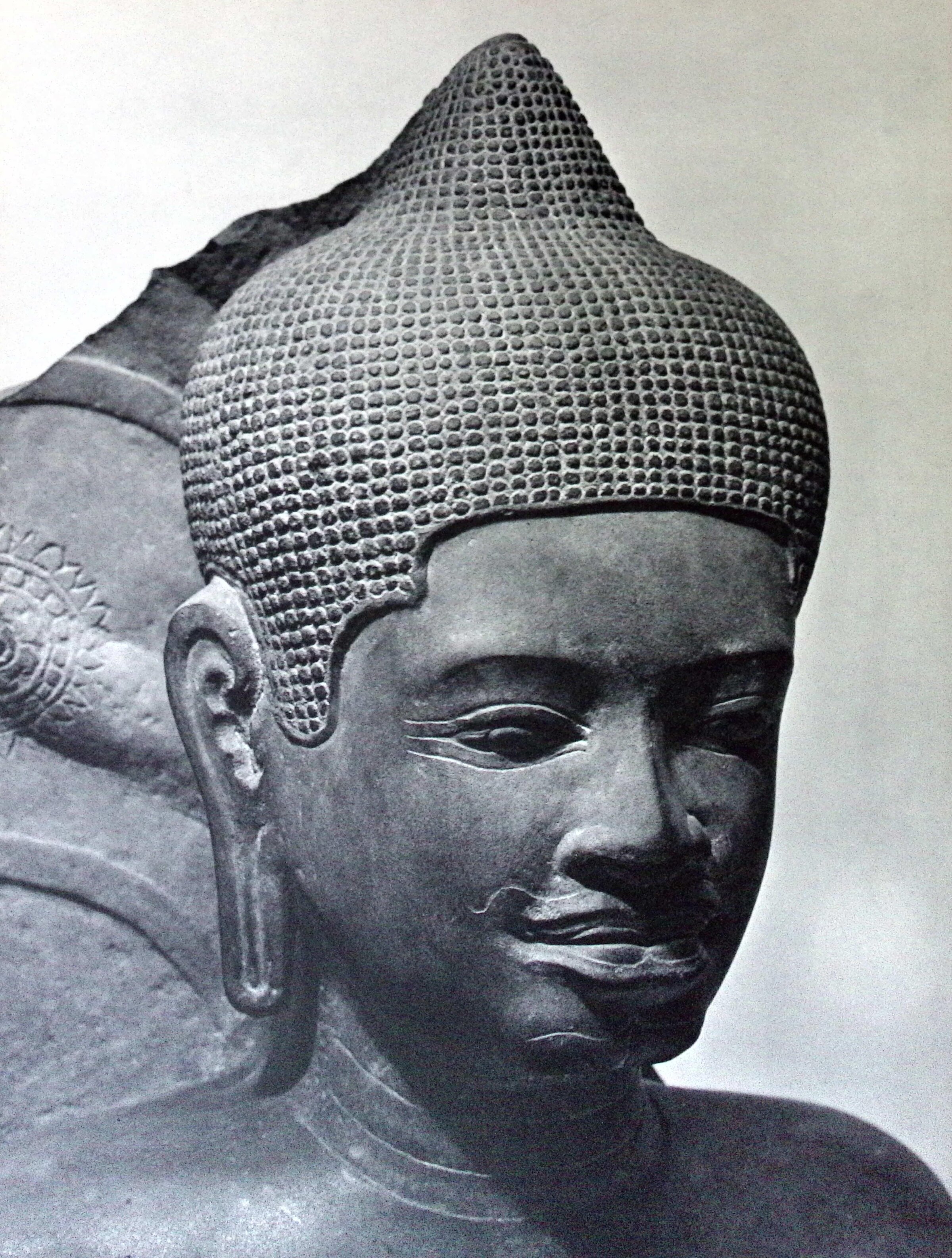
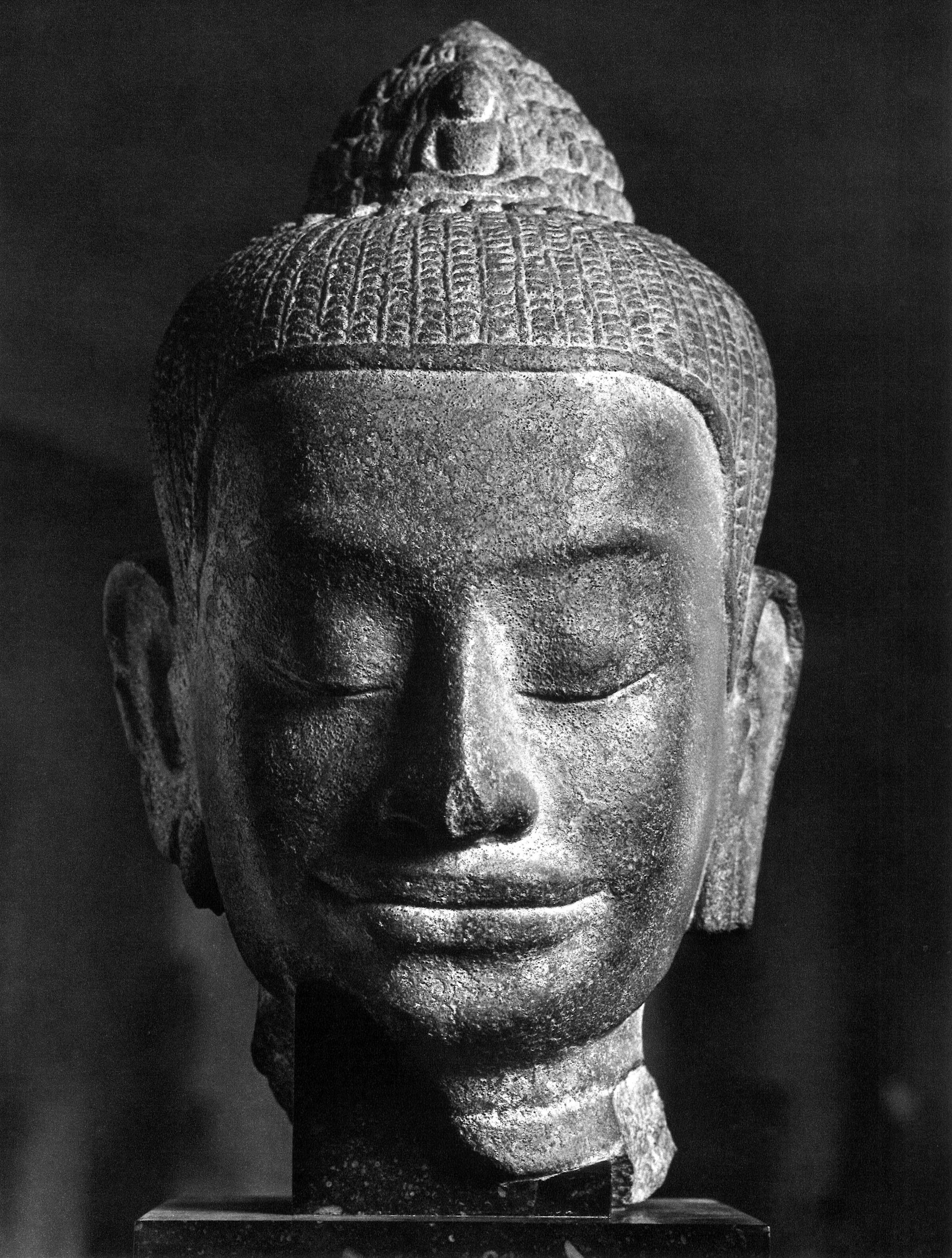
TÊTE DE BUDDHA [Buddha Head] | Detail from Plate 31.
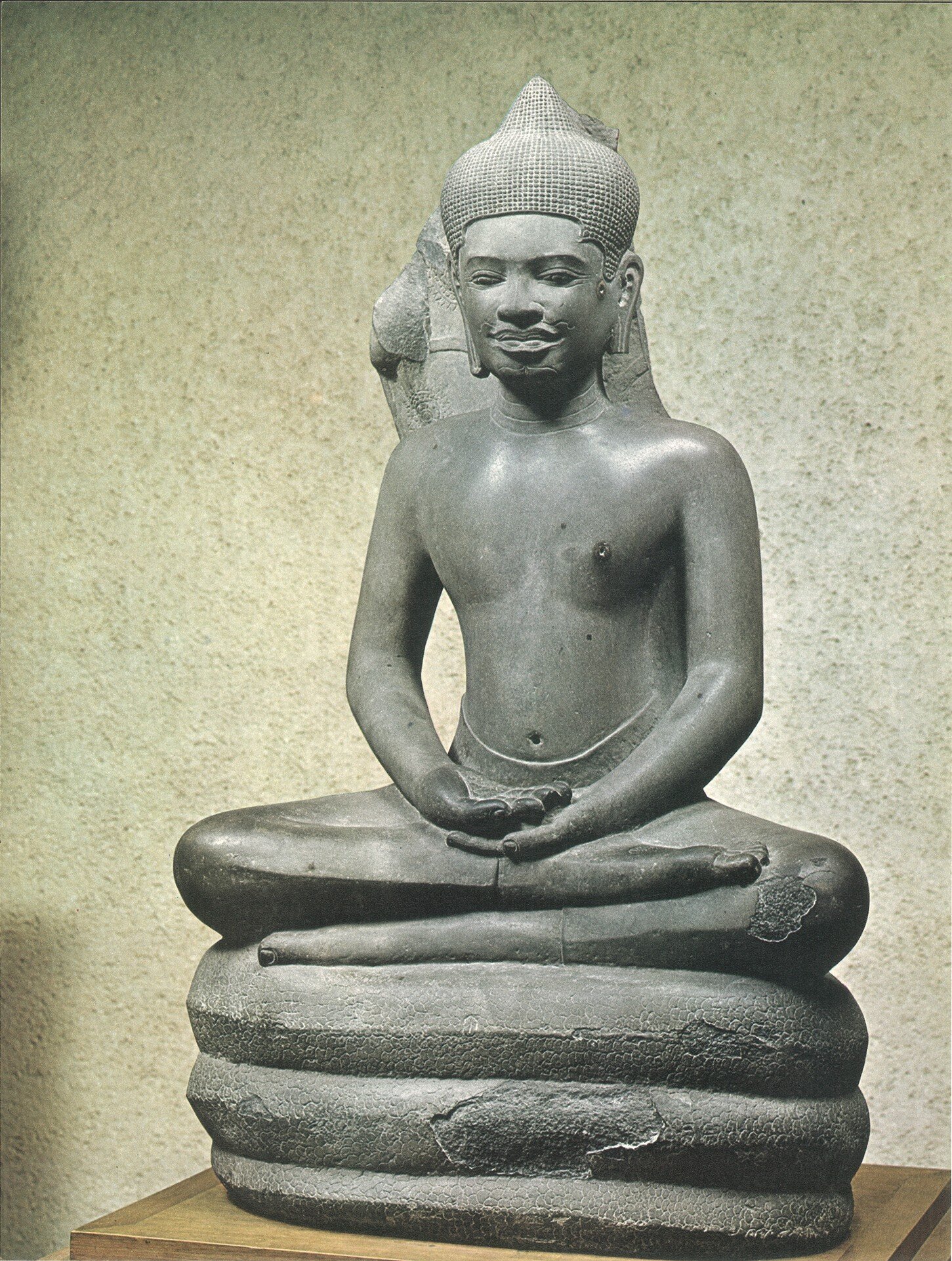
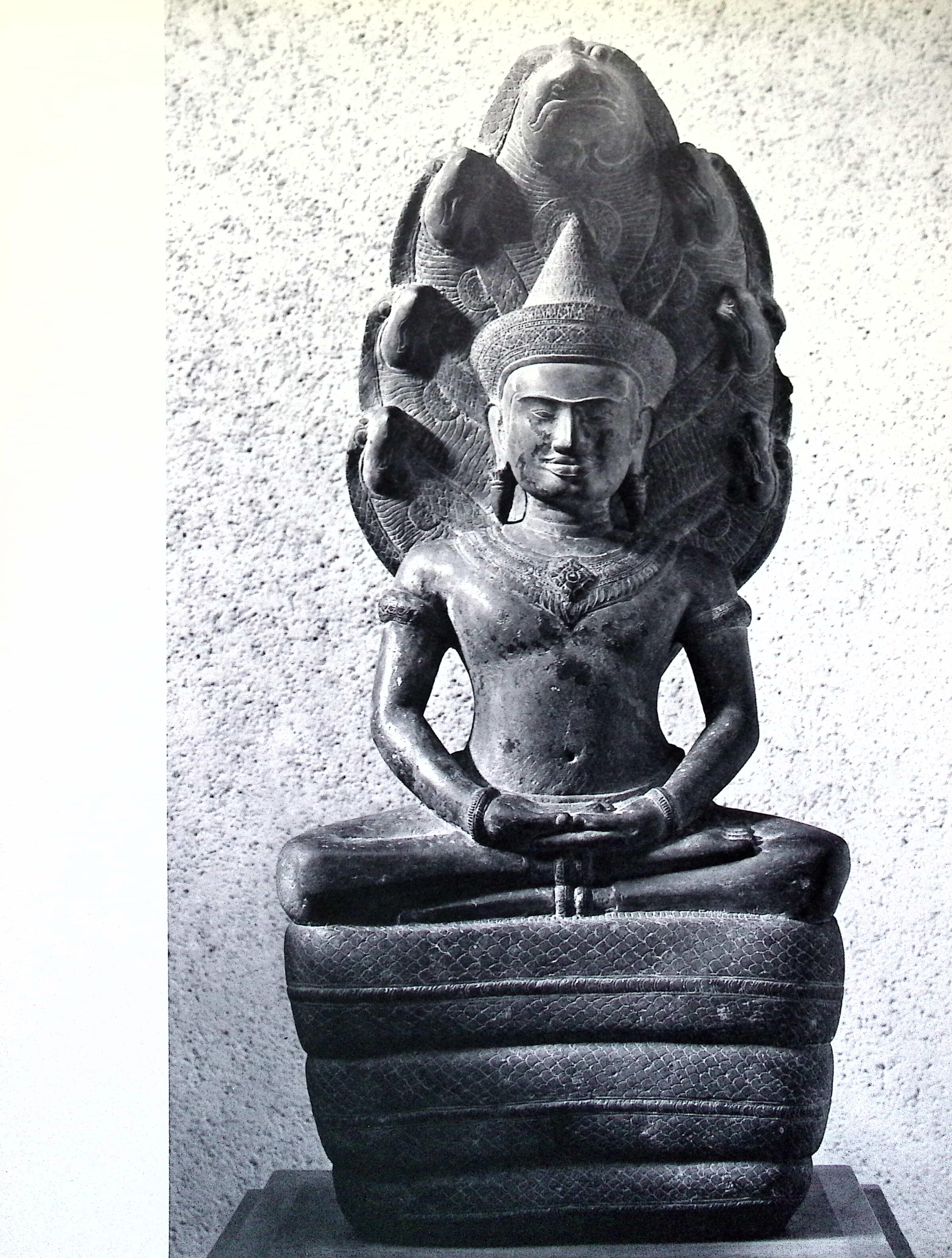
BUDDHA ASSIS EN MÉDITATION SUR LE NAGA [Buddha seated in meditation on the Naga] | Origin: Bayon | 11th century or 1st half of 12th century | Sandstone | H 103cm | MG 17483.
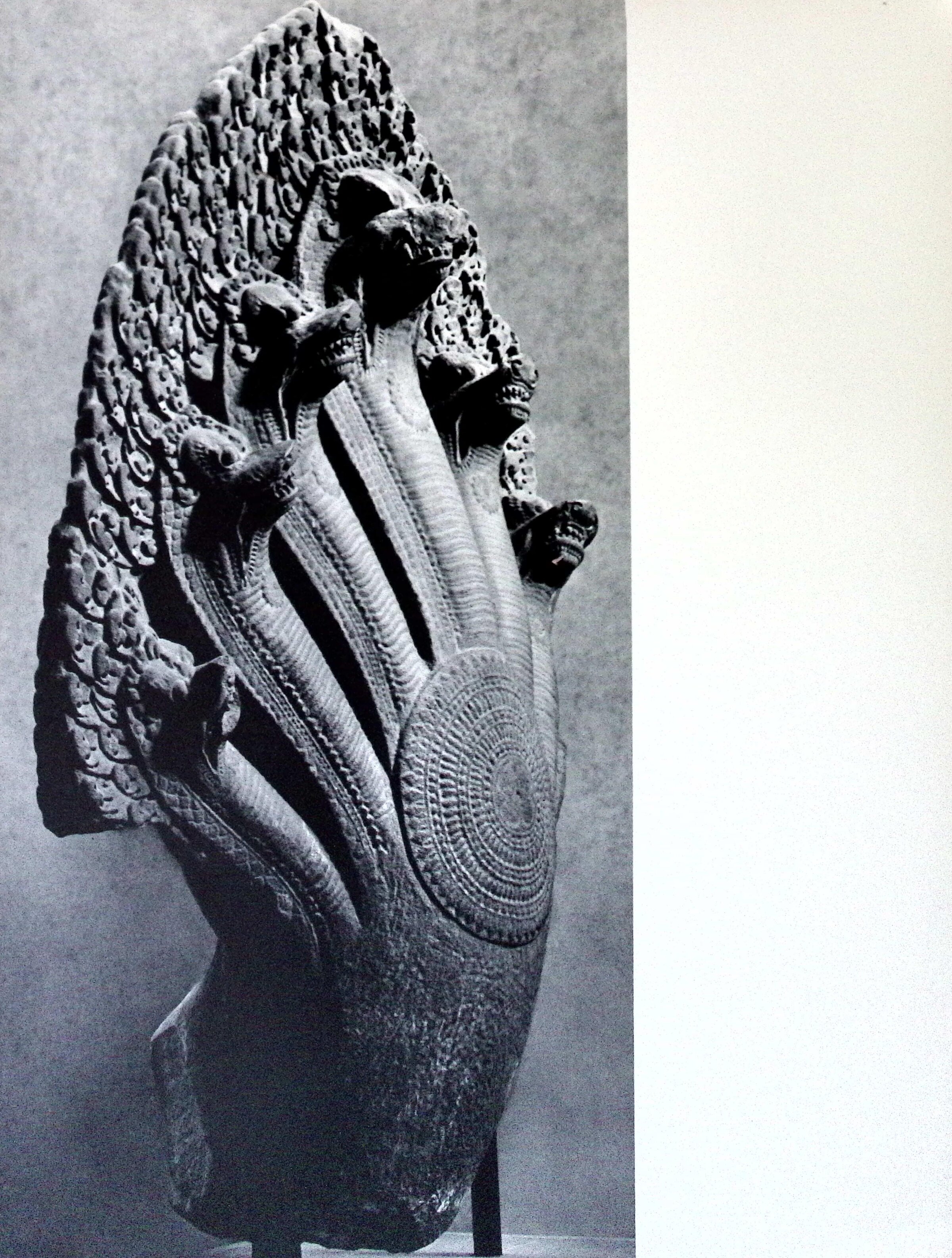
TÊTE DE BALUSTRADE D’UNE AVENUE D’ACCÈS [BALUSTRADE HEAD OF AN ACCESSWAY: decorated with a hood of a seven-headed naga] | Origin: Phimeanakas Terrace ព្រះលានជល់ដំរី (Angkor), Angkor Vat style | 1st half of the 12th century | Sandstone | H 105 cm | MG 18106.
BUDDHA PARÉ ASSIS SUR LE NAGA HEPTACÉPHALE [ADORNED BUDDHA SITTING ON 7‑HEADED NAGA] | Origin: Preah Khan of Kampong Svay ប្រាសាទព្រះខ័នកំពង់ស្វាយ, Angkor Vat style (?)| 1st half of the 12th century | Sandstone | H 111 cm | MG 18127.
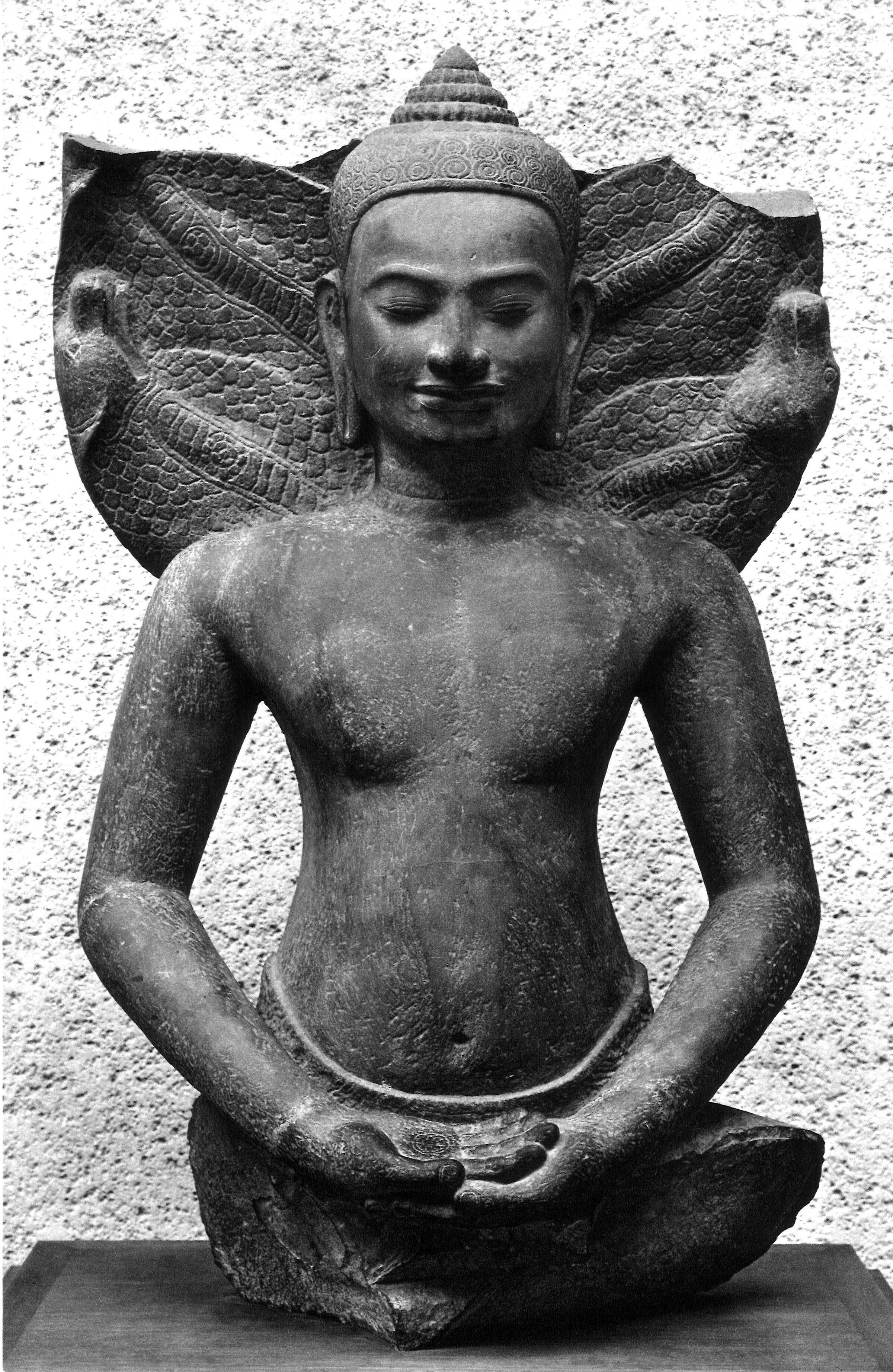
BUSTE DE BUDDHA ADOSSÉ À UN CAPUCHON DE NAGA [BUST OF BUDDHA LEANING AGAINST NAGA HOOD] | Origin: Preah Khan of Kampong Svay ប្រាសាទព្រះខ័នកំពង់ស្វាយ | Late 12th century (?) | Sandstone | H 111 cm | MG 18126.
TÊTE DE PRAJÑĀPĀRAMITA (?) [HEAD OF PRAJÑĀPĀRAMITA (?)] | Origin unknown, Bayon style | end 12th-early 13th century | Sandstone | H 30 cm | MG 14941.
TÂRÂ OU PRAJÑÂPÂRAMITÂ [TARA OR PRAJNAPARAMITA] | Origin: Preah Khan (Angkor), Bayon style | end 12th-early 13th century | Sandstone | H 110 cm | MG 18043.
BUSTE DE LA PRAJÑÂPÂRAMITÂ [BUST OF PRAJÑAPARAMITA] | Detail from Plate 36.
BUDDHA | Origin: Prah Khan (Angkor), Bayon style | 1st half of the 13th century (?) | Sandstone | H 178 cm | MG 18048.
DÉTAIL D’UNE TÊTE DE BUDDHA [DETAIL OF A BUDDHA HEAD] | Origin: Bayon (?) (Angkor), Bayon style | 1st half of the 13th century (?) | Sandstone | H 50 cm | MG 17486.
LION [LION] | Origin: Prah Thkol ព្រះថ្កោល (Preah Khan of Kampong Svay) | Late 12th century (?) | Sandstone | H 143 cm | MG 18109.
LOKEÇVARA [LOKESHVARA] | Origin: Prah Thkol ព្រះថ្កោល (Preah Khan of Kampong Svay), Bayon style | end 12th century-early 13th century | Sandstone | H 130 cm | MG 18139.
STATUE FÉMININE BOUDDHIQUE INACHEVÉE [UNFINISHED FEMALE BUDDHIST STATUE] | Origin: Banteay Kdei ប្រាសាទបន្ទាយក្តី (Angkor), Bayon style | end 12th century-early 13th century | Sandstone | H 78 cm | MG 18046.
[1] The current notice displayed on Guimet Museum website for this famous statue of Bodhisattva Avalokitesv́ara is much more detailed: “ca. late seventh – eighth centuries. Tân Long, Sóc Trăng Province, Vietnam. H. (without tenon) 171 cm | W. 47 cm | D. 28 cm. Musée national des arts asiatiques-Guimet, MA 5063.
[2] The rock shelter mentioned as “near Prasat Rup Arak” is “in fact closer to Prasat Chup” [Prasat Chop Chrei ប្រាសាទជប់ជ្រៃ] , “at only 40 meters to the south of the “, according to archaeologist Jean-Baptiste Chevance (‘Poeng Tbal et Poeng Eisei, ermitages angkoriens méconnus du Phnom Kulen’, Aséanie 32, 2013, p 66), adding that “deux éléments permettent toutefois de douter qu’il s’agisse là de son emplacement d’origine : d’une part, la proximité de Prasat Rup Arak et de Prasat Chup, laquelle laisse à penser que ce Viṣṇu a pu être déplacé (avec son piédestal, toujours conservé dans l’abri-sous-roche) jusque dans cette grotte depuis l’un de ces monuments ; et, d’autre part, le fait que ces Viṣṇu du style du Kulen ont été retrouvés, pour la grande majorité d’entre eux (sur les huit connus), dans un sanctuaire (trois au Prasat Damrei Krap, deux au Prasat Thma Dap) contre deux dans cet abri-sous-roche (Baptiste et Zéphir 2008, 90 – 92). Nous avons découvert en 2008 un autre Viṣṇu de ce style, manifestement enfoui au pied de la digue de Thnal Dac, en attente d’être vendu (déposé au Musée Preah Norodom Sihanouk) et dont on né connaît pas la provenance exacte sur le massif.” [“Two factors, however, cast doubt on the fact that the rock shelter was its original location: firstly, the proximity of Prasat Rup Arak and Prasat Chup, which suggests that this Vishnu may have been moved (along with its pedestal, still preserved in the rock shelter) from one of these monuments to this overhang cave; and secondly, the fact that the vast majority of these Kulen-style Vishnu (of the eight known) were found in sanctuaries (three at Prasat Damrei Krap, two at Prasat Thma Dap), compared to only two in this rock shelter (Baptiste and Zéphir 2008, 90 – 92). In 2008, we discovered another Vishnu of this style, clearly buried at the foot of the Thnal Dac dike, awaiting sale (deposited). at the Preah Norodom Sihanouk Museum) and whose exact origin on the massif is unknown.”]
About the Tan Long Avalokiteshvara [Artwork 5] (ADB Input)
Both Louis Malleret and Albert Le Bonheur have written detailed notices on ‘L’Avalokitesv́ara Didelot’, as it has been nicknamed among the specialists. We’re quoting here from the latter’s text:
L’oeuvre est exceptionnelle aussi par ses grandes dimensions, le Bodhisattva faisant lui-même 1,50 m, les lotus sous les pieds étant hauts de 0,15 m, l’ensemble du bloc, tenon compris, atteignant 1,88 m. Compte tenu du peu de pierre disponible au lieu de la trouvaille, le matériau, peut-être même l’image achevée, a pu venir d’une région plus continentale du Cambodge. […] Du point de vue de l’iconographie, d’ailleurs, la première hypothèse qui vient à l’esprit est que cet Avalokitesvara aurait pu faire partie d’une triade, car il est usuel de trouver associés, à cette époque (VIIe et VIIIe siècle), un Buddha, assis ou debout, entre deux Bodhisattva debout : le Buddha enseignant entre les Bodhisattva Avalokitesvara et Maitreya (selon la tradition plus généralement observée au Cambodge et aussi sur le plateau de Korat, cf. l’ensemble des bronzes dits « de Prakon Chai » et cf. l’inscription K. 1 63 de Prasat Ampil Rolum), ou le Buddha entre les Bodhisattva Avalokitesvara et Vajrapāņi, selon la tradition indonésienne, qui serait peut-être plus vraisemblable ici, compte tenu d’un certain nombre d’autres particularités dont nous allons parler. Toutefois, il me semble encore plus plausible que nous ayons affaire ici à une image d’ Avalokitesvara — ou de Lokesvara — qui occupait seule un sanctuaire (cf. l’inscription K. 244, remployée semble-t-il, au Prasat Ta Kam, et datée de 713 çaka = 791 A.D.
‘The work is also exceptional for its large dimensions, the Bodhisattva himself being 1.50 m, the lotuses under the feet being 0.15 m high, the whole block, including the tenon, reaching 1.88 m. Given the little stone available at the site of the find, the material, perhaps even the finished image, may have come from a more continental region of Cambodia. […] From the iconographic point of view, moreover, the first hypothesis that comes to mind is that this Avalokitesvara could have been part of a triad, because it is common to find associated, at this time (7th and 8th century), a Buddha, seated or standing, between two standing Bodhisattvas: the Buddha teaching between the Bodhisattvas Avalokitesvara and Maitreya (according to the tradition more generally observed in Cambodia and also on the Korat plateau, cf. the set of bronzes known as “Prakon Chai” and cf. the inscription K. 1 63 of Prasat Ampil Rolum), or the Buddha between the Bodhisattvas Avalokitesvara and Vajrapāņi, according to the Indonesian tradition, which would perhaps be more likely here, given a number of other particularities which we will discuss. However, it seems to me even more plausible that we are dealing here with an image of Avalokitesvara — or Lokesvara — which occupied a sanctuary alone (cf. inscription K. 244, reused it seems, at Prasat Ta Kam, and dated 713 çaka = 791 A.D. [Albert Le Bonheur, “Une statue khmère célèbre entre au musée Guimet: ‘L’Avalokitesv́ara Didelot’ (VIIe siècle autour),” Arts Asiatiques 44 (1989): 123 – 125].
A more recent photograph of Bodhisattva Avalokitesv́ara, ca. late seventh – eighth centuries. Tân Long, Sóc Trăng Province, Vietnam. H. (without tenon) 171 cm × W. 47 cm × D. 28 cm. Musée national des arts asiatiques-Guimet, MA 5063. [Wikicommons].
A more recent photograph of Bodhisattva Avalokitesv́ara, ca. late seventh – eighth centuries. Tân Long, Sóc Trăng Province, Vietnam. H. (without tenon) 171 cm × W. 47 cm × D. 28 cm. Musée national des arts asiatiques-Guimet, MA 5063. [Wikicommons].
About the Didelot Collection [ADB Input]
Let’s go back to the origin of Guimet Museum to understand the unique position of the ‘Didelot Collection’ in the Guimet fund:
Louis Delaporte significantly expanded the collection through a second mission to Cambodia in 1881, which yielded a further sixty-six original sculptures and also through solicitation of several important donations from various friends and civil servants with Indochinese connections. Meanwhile, the Musée Guimet, initially established in Lyon in 1879 as a museum of world religions, was transferred to Paris in 1889. One year later it was enriched with a collection of sculptures and stone inscription stelae collected from 1882 to 1885 by another French naval officer serving in Indochina, Étienne Aymonier (1844 – 1929), a renowned linguist and explorer.
By 1910 nearly 300 Khmer sculptures resided in these two Parisian museums, and many more must have been finding their way into private collections. By 1931 the Khmer collection of the Musée indochinois had been transferred to the Musée Guimet, which continued to grow, notably in 1936 when assistant curator Philippe Stern (1895 – 1979) conducted a mission to Southeast Asia in order, among other goals, to acquire pieces that could be sent to France to complete the collection. In a significant change from the days of Delaporte, acquisitions had by this time become selective, as recorded in a 1936 report: “it was understood that no unique piece would leave Indochina in order to leave the artistic heritage intact.”
Now called the National Museum of Asian Arts-Guimet, acquisition policies have become strict with regard to provenance, and Khmer pieces entering the collection have often been in France for a long time. For example, a well-preserved and extraordinarily beautiful image of the Bodhisattva Avalokitesv́ara was purchased from Agnès Nguyên Hûu Hâo the sister of the last empress consort of Vietnam, Nam Phương (1914 – 1963). Discovered in Vietnam in 1919, it had been part of her dowry when, on August 2, 1928 in Saigon, she married Baron Pierre Didelot (b. 1898), a French artilleryman stationed in Saigon, and it was later taken to France, where it resided until entering the Guimet’s collection in 1988. [p 30] [P.A. Lavy, ‘Many Lives of Ancient Khmer Sculpture: From the Pre-Angkorian Period to Contemporary Cambodia’, in Teaching South and Southeast Asian Art, Bokyung Kim & Kyunghee Pyun (eds.), Springer, 2023: 21 – 44 [via Research Gate]].
The statue was discovered circa 1918 in Tan Long (about 300 km from Phnom Penh and 240 km from Ho Chi Minh City in the Mekong Delta), an area in the western part of the Vietnamese former [merged into Cần Thơ province in 2025] province of Sóc Trăng kh ខេត្តឃ្លាំង. A place of ancient cultural intersection with ethnics Hoa, Kinh, Khmer and indigenous people, the area had been a Cambodian territory, hence the adaptation of the original Khmer name ខេត្តឃ្លាំង Srok Khleang, lit. “Land of depositories” in Vietnamese Sốc Kha Lang — Sóc Trăng. Claimed by a relative of King Gia Dinh in the 18th century, the land went under control of the Nguyen dynasty, and the Khmer settlemens ‘allowed’ to continue to inhabit it. It became an important spot of anti-colonial resistance from the 1940s, with the Soc Trang Historical Base, complete with underground tunnels and secrets vaults. It was dug out during the soil removal for the building of a barn.
The sculpture was given to or purchased at an unknown date by PierreNguyen Huu Hao (1 July 1870, Tan Hoa — 13 Sept. 1939, Da Lat), who had become the personal secretary of the landlord Lê Phát Đạt (黎發達 , 1838 – 1900, familiar name Huyen Sy) from Binh Lap, Tan An (southwest of Saigon) and had married one of his daugther, (Marie) Le Thi Binh (27 Feb. 1880-?). Her mother, Agnes Huynh Thi Tai (1845, Thu Duc — 1920), came from a family of fervent Vietnamese Catholics — her own father, John Baptist Huynh Van Tu, had been exiled for being a Catholic and martyred in Northern Vietnam in 1861 — and became a major businesswoman in granaries and rice transportation from the Mekong Delta to Saigon, contributing to rice exports. As for Pierre Huu Hao, the youngest of a family of seven siblings, one of his sisters, Maria Nguyen Thi Guong, became Mother Superior of the Congregation of the Holy Cross of Cho Quan.
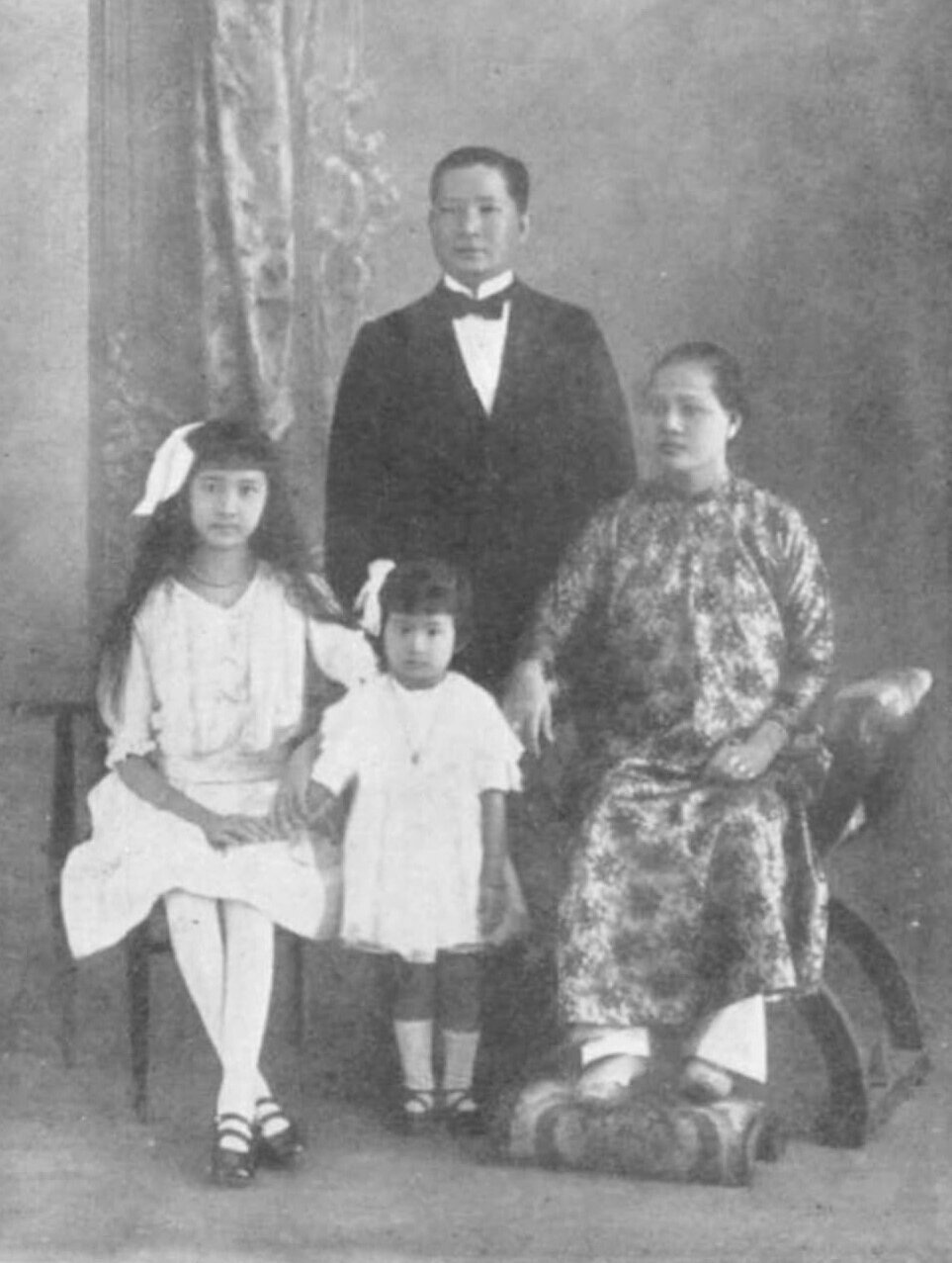
1) Marie-Agnès Nguyen Huu Hao (far left) and her younger sister, future Empress Nam Phuong with their parents, c. 1915. 2) Agnès Didelot (born Nguyen Huu Hao) in the 1930s. [photos reproduced in Vĩnh Đào and Nguyễn Thị Thanh, Following in the Footsteps of Queen Nam Phuong and King Bao Dai, Ho Chi Minh City, Vietnam Women’s Publishing House, 2024.]
1) Marie-Agnès Nguyen Huu Hao (far left) and her younger sister, future Empress Nam Phuong with their parents, c. 1915. 2) Agnès Didelot (born Nguyen Huu Hao) in the 1930s. [photos reproduced in Vĩnh Đào and Nguyễn Thị Thanh, Following in the Footsteps of Queen Nam Phuong and King Bao Dai, Ho Chi Minh City, Vietnam Women’s Publishing House, 2024.]
Pierre Huu Hao and Marie Le Thi Binh had two daugthers — Marie-Agnès (or Agnès) Nguyễn Hữu Hào (13 Aug. 1903, Saigon — 13 Aug. 1998, Paris) and Jeanne Mariette Nguyễn Hữu Thị Lan (1913−1963), known as Nam Phương Hoàng hậu when she married Emperor Bao Dai on 6 Feb. 1934 and crowned Empress Nam Phuong that same day.
On 4 Aug. 1928, at 25 of age, Agnès married Baron (5th) Pierre Jules François Georges Didelot (7 August 1898, Saint-Rémy en Bouzemont [Eastern France] — 15 Nov. 1986, Paris), who had just been appointed Director of the Agence radiotélégraphique de l’Indochine et du Pacifique (ARIP), a colonial news wire service launched in 1923 and incorporated to Havas news agency in March 1930 — he was still in charge of Havas-Indochina when World War II broke out. A Polytechnician, Pierre Didelot had reached the rank of Colonel in the French Army (artillery) and was to be appointed Royal Commissioner of the Imperial Territory by Emperor Bao Dai after WWII [The ‘Royal Territory’ was the northern border region directly governed by the royal family, including present-day Kon Tum, Gia Lai, Dak Lak, Dak Nong and Lam Dong] [1].
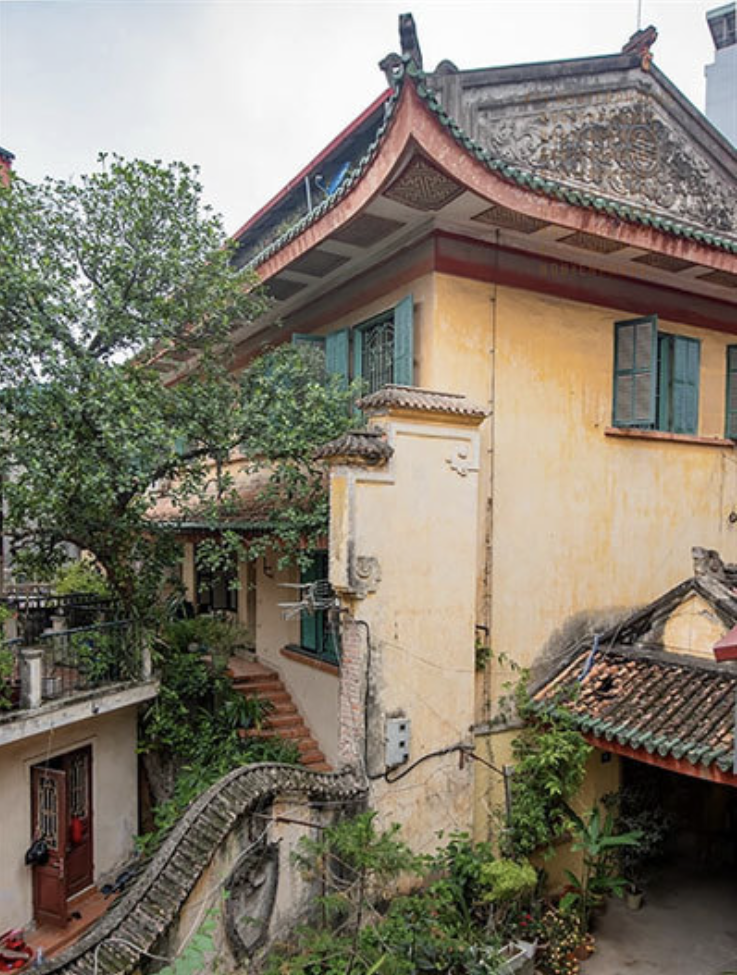
The Tan Long Avalokiteshvara, among other Khmer antique statues found in the Delta, was part of her dowry, which also included residences both in Saigon, Hue, Da Lat and Tan Hoa — their mansion at 186 Ngoc Ha, Hanoi, known locally as “Bao Dai’s Palace” since it was purchased from the couple by the then Chief of State in 1949 [2], was built in 1939 after a “regionalist” design by French architect Arthur Kruze (1900−1989)[3]. Agnès Didelot was also given by her parents several land plots in the Mekong Delta, and she was listed as the owner of the ‘Didelot Rubber Plantation’ num. 22 in Baria Province, 290 ha, as “Mme Didelot, propriétaire, épouse du directeur de l’Arip Saïgon, 37, rue Taberd”, in 1931 [Annuaire du Syndicat des planteurs de Caoutchouc de l’Indochine, June 1931, via entreprises-coloniales.fr].
They had five children — Monique (b. 10 Aug. 1929, later Comtesse de Verdalle la Romagère), Marie-Agnès (b. 18 Jan. 1931, Paris), Christiane (24 June 1933, Saigon — 26 Oct. 2022, Narbonne, later Mme Nicolas d’Andoque de Sériège), Marie Alix Yvonne Jacqueline Sabine (10 Jan. 1937, Dalat — 2 Sept. 2022, Paris) and Jean-François (b. 13 April 1941, Dalat). Like their mother and their royal aunt before, the girls attended the Catholic boarding school ‘Couvent des Oiseaux’ in Da Lat — in January 1936, Agnès Didelot, who was driving back one of her daughters from Hue with two of the latter’s school mates, wrecked her car on the coastal road. Marie-Agnès, their second daughter, married Marie-Jacques André de Lambert des Champs de Morel — they had two daugthers, Véronique and Laurence — and managed to bring another important Khmer statue included in the ‘Didelot collection’ to France in the 1950s. Researcher Lia Genovese has looked into this lesser known chapter of the collection’s saga and will publish her new findings soon.
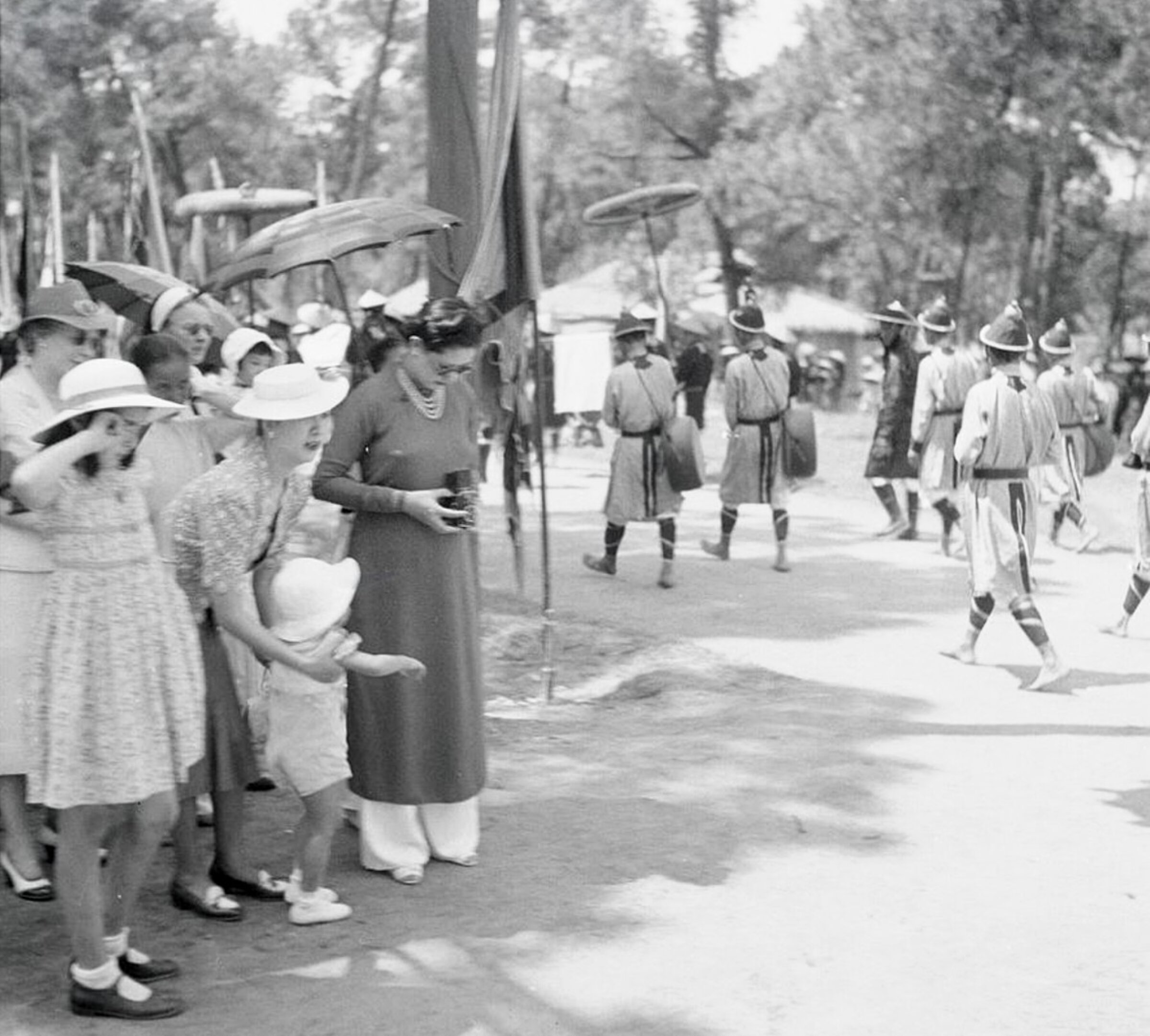
1) At the Nam-giao celebrations in 1942, Empress Nam-phương taking a photograph of her husband’s cortège, with her sister Baronne Marie-Agnès Didelot at her right and their children [source: FC12P — Mạnh-Hải Flickr, Wikicommons]. 2) The Hanoi ‘Didelot Mansion’ built for Marie Agnès Nguyen Huu Hao and Pierre Didelot in 1939 on a ‘regionalist’ design by French architect Arthur Kruze [photo Nguyen Phu Duc by via Vietnam.net].
1) At the Nam-giao celebrations in 1942, Empress Nam-phương taking a photograph of her husband’s cortège, with her sister Baronne Marie-Agnès Didelot at her right and their children [source: FC12P — Mạnh-Hải Flickr, Wikicommons]. 2) The Hanoi ‘Didelot Mansion’ built for Marie Agnès Nguyen Huu Hao and Pierre Didelot in 1939 on a ‘regionalist’ design by French architect Arthur Kruze [photo Nguyen Phu Duc by via Vietnam.net].
1) At the Nam-giao celebrations in 1942, Empress Nam-phương taking a photograph of her husband’s cortège, with her sister Baronne Marie-Agnès Didelot at her right and their children [source: FC12P — Mạnh-Hải Flickr, Wikicommons]. 2) The Hanoi ‘Didelot Mansion’ built for Marie Agnès Nguyen Huu Hao and Pierre Didelot in 1939 on a ‘regionalist’ design by French architect Arthur Kruze [photo Nguyen Phu Duc by via Vietnam.net].
While the Didelots were still established in Vietnam after WWII — Le Journal de Saigon on 21 March 1946 named the couple among the distinguished guests at an offcial dinner in honor of Admiral Georges Thierry d’Argenlieu, General de Gaulle’s special representative in Indochina, and the young King of Cambodia Norodom Sihanouk, the status of ex-Emperor Bao Dai and his wife, Agnes’ sister, was challenged both by the communist opposition and promoters of a ‘new French alliance in Indochina’. Assets were sent to France at a sustained pace. The French opposition newspaper Combat sensationally disclosed on 18 Feb. 1950:
Trafic monstre sur la piastre entre la France et l’Indochine! Suivant les renseignements extraits d’un rapport de l’Office des changes de l’Indochine, les sommes suivantes ont été transférées d’Indochine en France, en faveur de différentes personnalités vietnamiennes : S.M. Bao Daï et l’Impératrice. 176.500.000 francs ; Gouvernement central Viet Nam. 62.600.000 francs ; Gouvernement du Centre Viet Nam. 76.000.000 francs ; Gouvernement du Sud Viet Nam, 6.700.000 francs ; diverses personnalités politiques, 60.200.000 francs ; M. et Mme Didelot, 44.700.000 francs. Soit au total, 426.700.000 francs. [Massive piastre trafficking between France and Indochina! According to information extracted from a report by the Indochina Exchange Office, the following sums were transferred from Indochina to France, in favor of various Vietnamese figures: His Majesty Bao Dai and the Empress, 176,500,000 francs; Central Government of Vietnam, 62,600,000 francs; Government of Central Vietnam, 76,000,000 francs; Government of South Vietnam, 6,700,000 francs; various political figures, 60,200,000 francs; Mr. and Mrs. Didelot, 44,700,000 francs. A total of 426,700,000 francs.]
It seems that Baroness Didelot entrusted famed art historian and Guimet curator Philippe Stern to bring the Avalokiteshvara statue to France during his assessment visit to French Indochina in 1936. Control exerted by EFEO over such operations was getting less stringent, and seemed difficult to implement on a Khmer artwork pertaining to such a French-Vietnamese person of eminence. From an historical perspective, the statue definitely belonged to the ‘Oc Eo culture’ archaeologist Louis Malleret had identified at more than fifteen sites between Can Tho and Soc Trang, but the French governement was set to assuage Vietnamese nationalists by recognizing their territorial claims — including the island of Phu Quoc, Koh Tral (កោះត្រល់) in Khmer — with the 1954 Geneva Accords.
It was only on 27 January 1988 that an edict by the French Ministry of Culture and Communication authorized the Guimet Museum to make public its purchase of ‘the Pre-Angkorian statue M.A. 5063’ - note that in the present book no Guimet catalog ID had been assigned yet. In the already cited article, Albert Le Bonheur stated that the purchase had been made from “la baronne Didelot, qui tenait cette pièce de son père, S.A. Nguyên Hûu Hào” [Baroness Didelot, who had received in possession said artwork from her father, HH Nguyen Huu Hao.”
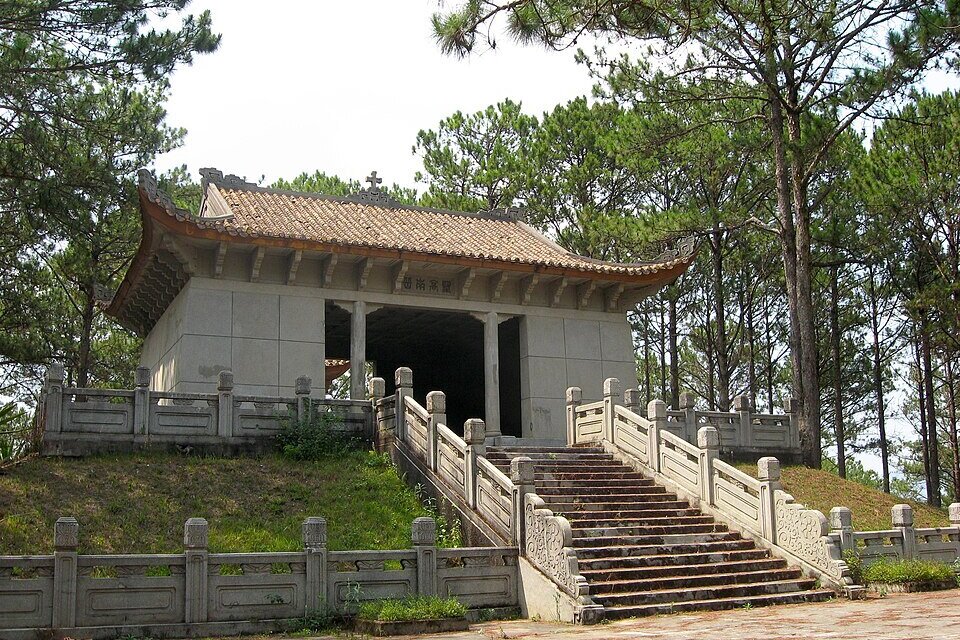
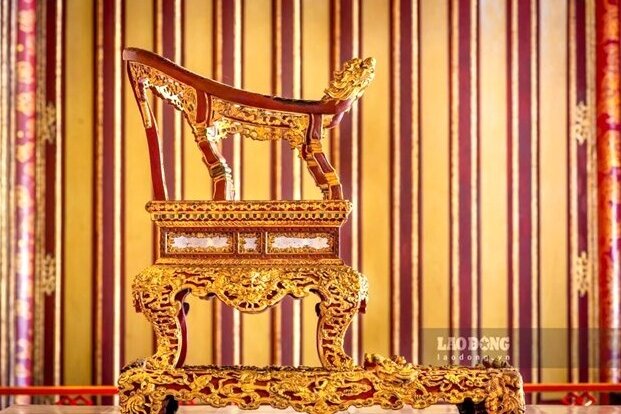
1) The mausoleum of Công tước Long Mỹ [Duke of Long My, an ancient region in the Mekong Delta] Nguyen Huu Hao and spouse Le Thi Bin in Da Lat. It was set up by Empresse Nam Phuong in memory of Agnes’ and her parents in 1941 on a 4‑ha pine hill. [photo Báo Dân trí [Ban Tri newspaper]]. 2) The Throne of the Nguyen Dynasty at Thai Hoa Palace, Hue. Local authorities have called for heightened security for historic sites and enhanced international cooperation with organizations such as UNESCO and ICCROM after an intruder sat on the throne and broke the left armrest in May 2025 [photo Nguyen Luan for Lao Dong Agency].
1) The mausoleum of Công tước Long Mỹ [Duke of Long My, an ancient region in the Mekong Delta] Nguyen Huu Hao and spouse Le Thi Bin in Da Lat. It was set up by Empresse Nam Phuong in memory of Agnes’ and her parents in 1941 on a 4‑ha pine hill. [photo Báo Dân trí [Ban Tri newspaper]]. 2) The Throne of the Nguyen Dynasty at Thai Hoa Palace, Hue. Local authorities have called for heightened security for historic sites and enhanced international cooperation with organizations such as UNESCO and ICCROM after an intruder sat on the throne and broke the left armrest in May 2025 [photo Nguyen Luan for Lao Dong Agency].
1) The mausoleum of Công tước Long Mỹ [Duke of Long My, an ancient region in the Mekong Delta] Nguyen Huu Hao and spouse Le Thi Bin in Da Lat. It was set up by Empresse Nam Phuong in memory of Agnes’ and her parents in 1941 on a 4‑ha pine hill. [photo Báo Dân trí [Ban Tri newspaper]]. 2) The Throne of the Nguyen Dynasty at Thai Hoa Palace, Hue. Local authorities have called for heightened security for historic sites and enhanced international cooperation with organizations such as UNESCO and ICCROM after an intruder sat on the throne and broke the left armrest in May 2025 [photo Nguyen Luan for Lao Dong Agency].
[1] This appointment was probably determined by the fact that the father of Agnes’ husband, Georges François René Didelot (29 June 1868, Brest — 6 June 1944, Paris) had served in that region as Captain of the Service topographique [Surveyor Corps] of the French Army in 1890 – 91. With Lt de Montron and other officers, Didelot Sr (4th Baron) had taken part in the Frandin Mission [after diplomat Hippolyte Frandin (1852−1926), Consul of France in Canton and Hankou (China) from 1885 to 1887 and in Korea from 1890 to 1895] marking out for the first time the Chinese-Tonkinese (Northern Vietnam) border. Starting from the seashore, the mission, protected by 100 Foreign Legion soldiers and with seven to eight hundred porters, delimited some 144 km up to the Vietnamese town of Lạng Sơn 諒山, where the French had been severely defeated five years earlier. [see Antoine Brébion, Dictionnaire de biobibliographie générale, ancienne et moderne, de l’Indochine, Paris, SEGMC, 1935.]
[2] Bảo Đại (22 October 1913, Hue — 31 July 1997, Val de Grace, France), born Nguyễn Phúc (Phước) Vĩnh Thụy, was the 13th and last emperor of the Nguyen dynasty from 1926 to 1945, ruling as such during the five months of Japanase occupation (March-August 1945), then Chief of the State of Vietnam from 1949 to 1955, and eventually ousted by Prime Minister Ngô Đình Diệm on 26 Oct. 1955. Ngo Dinh Diem (3 Jan. 1901 — 2 Nov. 1963, who then had the covert support of the USA, was assassinated eight years later in a CIA-designed coup.
[3] Arthur Kruze (1900−1989 ‑often mispelled ‘Kreuze’ in the Vietnamese media) had been invited by artist Victor Tardieu (30 April 1870 — 12 June 1937) to travel from France to Hanoi and take over the Architecture Department at the École Superieux des Beaux Arts de l’Indochine (EBAI — Indochina School of Fine Arts, the forerunner of the Vietnam University of Fine Arts, est. 1945) he had launched in October 1924. In 1932, Kruze was appointed interim Director of EBAI and Head of Architecture at the school. In addition to his educational work, Kruze developed his style of ‘traditional modern’ buildings adapted to the Vietnamese climatic and cultural context. In 1942, the Hanoi campus was transferred to Da Lat for safety, and Kruze remained at its helm under 1954. [see Pierre Paliard, Un art vietnamien : penser d’autres modernités. Le projet de Victor Tardieu pour l’École des beaux-arts de l’Indochine à Hanoi en 1924, Paris, L’Harmattan, 2014, and Xuân Son Lê,“L’enseignement de l’architecture en Indochine française (1926−1954): du régionalisme aux normes de l’ENSBA de Paris ?”, Séminaires du Comité d’histoire du ministère de la Culture, 21 May 2018.]
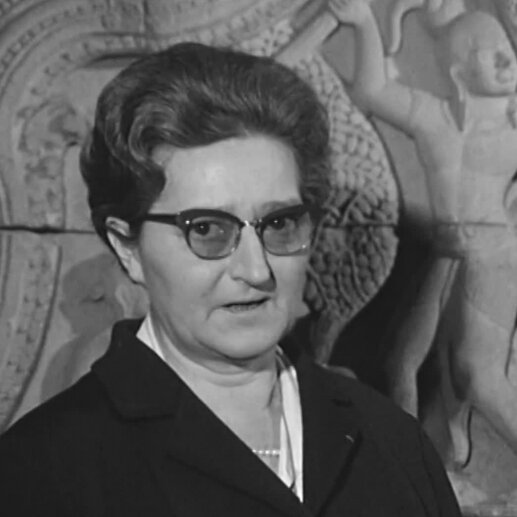
Jeannine Auboyer (6 Aug 1912, Paris — 6 Feb 1990, Sèvres (92), France) was a French Indologist and art historian specializing in the classical arts of South and Southeast Asia. From 1965 to 1980 she was the chief-curator of the Musée Guimet in Paris.
A daughter of commissaire-priseur [auctioneer] Jean Auboyer (1881−1958), she studied visual arts at Académie Jullian and Académie de la Grande Chaumière as a teenager, and attended École du Louvre from 1929 to 1934, specializing in art history of the Indian world and the Far East under prestigious mentors such as Joseph Hackin, René Grousset, Philippe Stern andVictor Goloubew. She also studied at the École pratique des hautes études (EPHE, with Paul Pelliot, Jean Przyluski, Paul Mus), the Institut d’Art et d’Archéologie with Alfred Foucher, the Institute of Indian Civilization as well as the Ethnological Institute at the Sorbonne University of Paris (with Marcel Mauss and Paul Rivet).
Jeannine Auboyer was only 19 when she collaborated with Philippe Stern in the transfer of the collections of the Indochinese Museum at Trocadéro Palace to the Musée Guimet, an assignment that lasted from 1931 until 1936. From 1942 to 1946, she worked at Musée Cernuschi, defending her EPHE thesis on “The Throne and its Symbolism in Ancient India” in 1946. Curator of Musée Guimet in 1952, she replaced Philippe Stern as chief-curator in 1965, initiating a general renovation of the museum which was completed by the end of her tenure, at her retirement in 1980. She then received the title of honorary chief-curator. During these two decades, she taught at École du Louvre, holding the chair of Art of the Indian World from 1965 to 1980.
J. Auboyer was also active at the French National Centre for Scientific Research (CNRS) as director of the Centre for Iconography of the Indian World. She conducted many field studies in India, Nepal, Cambodia and Thailand in 1956 – 57, 1959, 1961 – 62, 1963 – 64, 1966, 1968, 1973 – 74. Among her numerous publications, Daily Life in Ancient India (French: La vie quotidienne dans l’Inde ancienne, published in 1961 and translated into English in 1965) was a vivid record of the ancient Indian rituals and customs.
Publications
“Un aspect du symbolisme de la souveraineté dans l’Inde d’après l’iconographie des trônes”, Revue des arts asiatiques (RAA) 11, 1937, p 88 – 101.
“Les Influences étrangères et les Réminiscences dans les peintures murales du Kondô du Hôryûji”, RAA 13, 1939 – 42, p 49 – 66; Les influences étrangères et les réminiscenses dans les peintures murales du Kondô du Hôryûjî. 1941, 146 p. [originally thesis at Éc. du Louvre 1939].
Le trône et son symbolisme dans l’Inde ancienne, Paris, A.M.G. Bureau d’études, 1949, 228 p [originally JA’s É.P.H.É. thesis 1946].
Les arts de l’Asie orientale et de l’Extrême-Orient, Paris, Que sais-je? 1942, 126 p; 4th ed. 1976.
[with Rene Grousset] De l’Inde au Cambodge et a Java, Monaco, Les editions des beaux-arts, 1950.
Arts et styles de l’Inde, Paris, 1951, 171 p.; [revised edition] Les arts de l’Inde et des pays indianisés, Paris, 1968, 186 p.
“La vie privée dans l’Inde ancienne d’après les ivoires de Begram”, J. Hackin et al., Nouvelles recherches archéologiques à Begram, MDAFA, 1954, p 59 – 82.
[founder and editor of the series]La vie publique et privée dans l’Inde ancienne; own contributions: 6. Les jeux et les jouets, 1955,51 p.; [with J. F. Enault] 1. L’architecture civile et religieuse. 1969, 74 p; [with I. Gobert] 2. Le mobilier, 1983, 146.
“Un maître hollandais du XVIIe siècle s’inspirant des miniatures mogholes”, Arts asiatiques (AA) 2, 1955, 251 – 273.
[with E. Zannas] Khajuraho. 277 p. 175 photos, Gravenhage, 1960.
La vie quotidienne dans l’Inde ancienne (environ 2e s. avant J.-C. – VIIe s.). 408 p. P. 1961, 2nd ed. 1974, transl. into 7 languages; ENG Daily Life in Ancient India, London: Weidenfeld and Nicolson,1965.
“Quelques réflexions a propos du cakra arme offensive”, Arts asiatiques 11, 1965, 119 – 130.
L’Art Khmer au musée Guimet Paris, photos Leonard Von Matt, Zurich, Du-Atlantis special issue, 1965; Zurich, Manesse Verlag, Conzett & Huber, 1966.
The oriental world (Landmarks of the world’s art), London, Hamlyn, 1967.Introduction à l’étude de l’art de l’Inde, Roma, S.O.R., 1965, 138 p.
L’Afghanistan et son art, 1968, 174 p.
Sri Ranganathaswami. Le temple de Vishnu à Srirangam, Paris, Unesco,1969, 58 p; ENG Sri Ranganathaswami — A Temple of Vishnu in Srirangam (Tamilnadu, India), Paris, UNESCO, 1969.
Angkor, Extinct City, Barcelona, Ediciones Poligrafa, 1971, 78 p.
[with H. Härtel] Indien und Südostasien, Berlin, Propyläen Kunstgesch, 1971, 369 p.
Oriental Art : A Handbook of Styles and Forms [with Huguette Rousset, Chantal Massonaud, Michel Beurdeley, Michel, Jean Boisselier], Milan, Rizzoli Ed., 1980. ISBN 13: 9780847802722.
Buddha: Le chemin de l’illumination. Paris, 1982, 265 p. (English and German tr.)
Forms and Styles: Asia (Evergreen Series) [with Michel Beurdeley, Jean Boisselier, Chantal Massonaud, Huguette Rousset], Taschen Verlag, 1994. ISBN 13: 9783822890356.
Sk आश्रम āśrama, "spiritual hermitage" or "monastery" |kh អាស្រម ashram "monastery"
ashram: a kind of monastery or retreat to which men retire when they consider that their active life is over, in order to prepare for their future existence. In ancient Angkor, the asrama, or vidyasrama, or varnnasrama, were educational colleges with teachers were called adhyapaka, and heads of association often called kulapati (cf. varnnasrama).
Asuras are power-seeking deities related to the more benevolent Devas (also known as Suras) in Hinduism, and in the Buddhist context "giants", "demigods", or "antigods".
Asuras are a class of beings fathered by Kashyapa Rishi and mothered by Diti and Danu. Asuras born of Diti are called Daitya (meaning sons of Diti) and those born of Danu are called Danava (meaning sons of Danu). In Hinduism, Diti (sk दिति) is a daughter of Daksha, the mother of the Asuras and supporter of Asuric attributes. She is mother of both the Marutas and the Asuras ( Daityas and Dhanavas) with the sage Kashyapa. She is said to have wanted to have a son who would be more powerful than Indra.
According to Hindu texts, the asuras are in constant fear of the devas. Asuras are described in Indian texts as powerful superhuman demigods with good or bad qualities. In early Vedic literature, the good Asuras are called Adityas and are led by Varuna, while the malevolent ones are called Danavas and are led by Vritra. In the earliest layer of Vedic texts Agni, Indra and other gods are also called Asuras, in the sense of their being "lords" of their respective domains, knowledge and abilities. In later Vedic and post-Vedic texts, the benevolent gods are called Devas, while malevolent Asuras compete against these Devas and are considered "enemy of the gods".
In the Khmer tradition, អសុរ are "monsters", "demons", "evil spirits" who roam the country at night, dwell at Asurabhupa, their place at the foot of Mount Meru and are led by Asura Reach, King Vepachit, their sovereign. Their mother is Socheata Asura Kanha (នាងសុជាតាអសុរកញ្ញា "bride of Asura"), who became the wife of Indra (ព្រះឥន្ទ Preah Int). Asura sculptures at entrance temples are a trait of Angkorean architecture, and the battle of the Devas and the Asuras is depicted on Angkor Wat bas-reliefs.
sk अवलोकितेश्वर Avalokiteśvara (" lord who looks down and watches [the world]") | लोकेश्वरः Lokeśvara ("Lord of the World") | also पद्मापाणी Padmapāni ("Holder of the Lotus")
ch 觀音 Guanyin /Kuan Yin (female deity) | tlநாதா Nātha | vn Quan Am (female deity) | tb སྤྱན་རས་གཟིགས Chenrezig ("eye looks with continuity", male and female) | bh Avalokitesvara
Lokeśvara ("Lord of the World") and Chenrezig (in Tibetan) is a tenth-level bodhisattva associated with great compassion (mahakaruṇā), and often with Amitabha Buddha in Mahayana Buddhism. Avalokiteśvara has numerous manifestations and is depicted in various forms and styles. In some texts, he is even considered to be the source of all Hindu deities (such as Vishnu, Shiva, Saraswati, Brahma, etc).
In modern Cambodia, the four faces of Avalokitesvara (or Avaloksvara, Loksvara) are usually represented at the top of a pagoda or a stupa, as protector of all the planets. When Brahmanism was popular, these faces were considered as the faces of Brahma. In ancient Khmer art, he is represented with two, four, six or eight arms in freestanding sculptures, and ten arms in temple bas-reliefs such those at Banteay Chhmar. The massive stone faces of Bayon are believed to represent Lokeshvara.
Khmer worship of Lokeshvara reached a peak during the reign of Jayavarman VII. Due to his healing powers, the he was given a predominant position in the scenes carved on the chapels of the hospitals built by this king. Lokeshvara was also omnipresent at Neak Poan Temple, whose waters could cleanse the sins and diseases of the pilgrims. Jayavarman VII dedicated the temple of Preah Khan Temple to the memory of his father, deified in the likeness of Lokeshvara.
A sculpture from Prei Monti (Roluos), late 12th-early 13th century, at the National Museum of Cambodia (piece Ga.2424), represents three adorned divinities: Buddha shelled by the Naga in the middle, Lokesvara to the right of the Buddha, and Prajnaparamita to the left. Lokesvara's attributes are the lotus bud, rosary, vase with water of immortality (amrta) and book. Those of Prajnaparamita include the book and the lotus bud.
While Avalokiteśvara was depicted as male in India, and male or female in Tibetan tradition, the deity is often depicted as a female figure in East Asian Buddhism, known as Guanyin /Kuan Yin in Chinese, Kannon in Japanese, Gwaneum in Korean and Quan Am in Vietnamese. In Sri Lanka, Natha literally means ‘no form’ or ‘no shape’, thus associating Avalokiteśvara with Maitreya, the next Buddha
Avalokiteśvara is also known for his popular mantra, oṃ maṇi padme hūṃ, which is the most popular mantra in Tibetan Buddhism.
Dong is an ancient Chinese term for a mountain valley community, especially in the southern and soutwestern regions abutting to 'historic' mainland China.
In Korea, dong동 has come to refer to a neighborhood or an administrative sub-district.
sk हरिहर harihara from हरि hari “bearing , carrying, one of the names of Vishnu” and हर hara "garland, necklace, one of the names of Shiva".
Harihara represents a syncretic form of Śiva and Viṣṇu. The fusional aspect of the deity derives from philosophical traditions in which Vishnu is said as being the shakti of Shiva, or Shiva is the one-who-knows (jñata) and Vishnu the knowledge (jñāna).
Harihara is often represented in the Khmer iconic tradition as four-armed, anthropomorphic form with the left side of the statue being Hari (Vishnu) with the cylindrical mitre (kirtamukuta), and the right Hara (Shiva) with the high crown of tangled locks (jatamukuta). It has been speculated that Harihara became a popular icon in the 7th-8th centuries as the rulers of the north ("Chenla"), followers of Shiva, wanted to ascertain their territorial aspirations and political aspirations over the south ("Funan"), where Vishnu was widely revered. Paul Lavy, however, argued that this explanation based on the assumption that Saivism and Visnavaism could have been rival sects in ancient Southeast Asia.
Hariharalaya ហរិហរាល័យ was the name of the pre-Angkor capital city founded by Jayavarman II at the end of the 8 th century in the Siem Reap area now called Roluos រលួស, the remains being the royal temples of Preah Ko, Bakong, and Lolei.
sk यक्ष yakṣa 'semi-god' | th ยักษ์ yok 'ogre, ogress' | kh យក្ស yoksa, yeak 'giant'
Yakṣa or Yaksha:
1) semi-godly inhabitants of Brahmanic Heaven, a type of Upadevas, the third class after Devas and Gaṇadevas. Among Upadevas, there are Vidyādharas, Apsaras, Yakṣas, Rākṣasas, Gandharvas, Kinnaras, Piśācas, Guhyakas, Siddhas and Bhūtas.
2) a class of demons, followers of Rudra (Śiva), their overlord, led by Kubera,agroup of 'supernatural beings that cause illness' in Saivism; sometimes similar to Asuras.
3) in Buddhism, originally malevolent spirits or ghosts who came to protect the righteous, the attendants of Vaiśravaṇa, the guardian of the northern quarter.
4) In Cambodia and Thailand, as male or female supranatural beings with bulging eyes, they are often represented as guardians of pagodas. In Cambodian village festivities, the yeak are scarecrow-like figures or disguised people designed to ward off evil spirits. As they are meant to be 'big and ugly', they were often represented with European traits in the past.