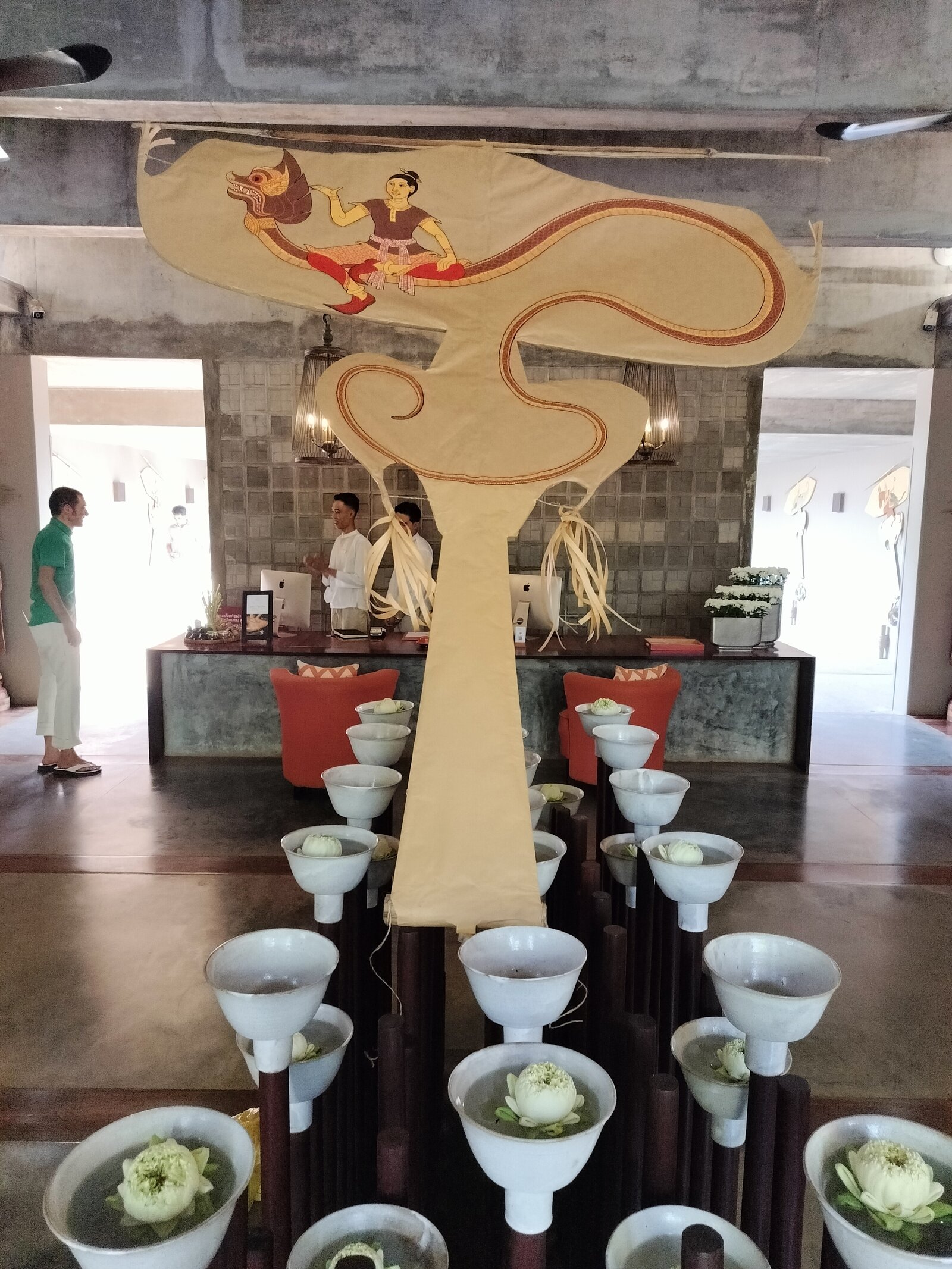
Of Kites and People in Cambodia អំពីខ្លែងនិងប្រជាជននៃកម្ពុជា
by Angkor Database
An exploration of the emblematic Khmer kite, where beliefs of yore and ancient symbolism combine in the simple pleasure of playing with the wind.
Author
Angkor Database
Publication
Angkor Database Reference Document KHL
Published
2025
Languages
English, French, Khmer, English (ADB Translation)
In the Cambodian countryside, especially at the start of the dry season and around Khmer New Year, you can see kids flying simple plastic sheet kites, or more elaborate ones. This a game that awakes the child in everyone of us, and here it reflects many ancestral traditions at the core of Cambodia’s agrarian past.
Here, kite rhymes with farming and peace. Were the first kites flown to scare birds away from the rice paddies about to be harvested, or to tell the nagas and spirits of the rainy season that it was time to leave this earth for a while, or both? And as the practice of flying kites entirely disappeared during the civil war, was it because the Khmer Rouge banned all kind of entertainment, tell us some historians, or because the khleng ខ្លែង, the Cambodian kite, can only fly when earth and sky are at peace?
Among some 25 kinds of Khmer kites, the Khleng Ek ខ្លែងឯក, the musical kite, is so specifically Khmer that it deserves complete attention. Before reviewing trustable sources on its history, let’s summarize some pending questions. [About the adjective ឯក ek, the most common explanation is that it refers to being ‘first’, ‘major’, ‘leading’, like the roneat ek រនាតឯក is the ‘leading xylophone’ in a pinpeat (ceremonial music) orchestra].
Which bird is ‘khleng’? and ‘ak’?
The answer seems obvious: like in English, Old Chinese [纸鸢 zhiyuan, literally ‘paper kite’], Thai [ว่าว wao], Vietnamese [diều] khleng means both the game of kite and kite the bird (milan in French) or any of the family of smaller birds of prey. Chuon Nath Dictionary gives the following definition for khleng ខ្លែង : 1 ឈ្មោះសត្វស្លាបមួយប្រភេទ សម្បុរក្រហមក្រមៅ ត្រង់កមានសម្បុរ‑ស ចំពុះខុប ក្រញាំជើងចំណាប់មាំ អាចចាប់សត្វតូចៗ ស៊ីបាន ។ 2. រូបតំណាងសត្វខ្លែង ធ្វើដោយក្រដាសសម្រាប់បង្ហើរ ខ្លែងបង្ហើរ, បង្ហើរខ្លែង ។ [“A type of bird with a reddish-brown body, a white neck, a pointed beak, and strong claws that can catch small animals. A kite form made of paper for flying.”] [1]
Now, there is a particular species of khleng bird, ខ្លែងស្រាក khlengosrak, whose frightening cry has been evoked in the song The Cry of the Barn Owl សម្រែកខ្លែងស្រាក, immortalized by iconic singer Ros Sereysothea. Even today, villagers say that if one of these birds come to perch on the roof of a house in which a sick person lies, the latter will die soon. Compare with the popular saying recorded by Etienne Aymonier in the 1880s [see below], and still common nowadays, that a paper kite accidentally falling on the roof of a house will bring bad luck to its dwellers, and the ambivalence of kite flying in Cambodia is revealed: celebration of the new harvest season, and at the same time evocation of death. Khmer vocabulary is always complex: for instance, the Khmer name for the black-shouldered kite (Elanus caeruleus), a species common in Cambodia, is ស្ទាំងលលក stangololok, literally hawk-dove.
As for ឯក ekin khleng ek, as the name is given specifically to the Khmer kites producing a sound, it has puzzled researchers: in its general acceptation, derived from its Sanskrit root, it means “single”, “great”, “unique”. But Khmer language has also អកak, defined in Chuon Nath Dictionary as a verb for “catching food with a wide mouth,” and as noun “a type of dark-feathered bird slightly larger than a fishing hawk, which cries out in a loud, shrill and piercing cry when it loses its mate, because they are faithful animals feeling extremely sad when they lose their mate.” And also…“a cicada”, and “a utensil made of clay or silver, gold, etc… shaped like a small tube, with a lid, for holding lime.” So, could the Cambodian “musical kite” take its name from two birds, the khleng and the ak?
At that point, we turned to Saveros Pou’s essential Lexicographie vieux-khmere(Seksa Khmer n 7, 1984, p. 116 – 117), and we found the following:
184. KHLEN: 1. khlen 5 (parmi les offrandes) : K. 669, Xè s.,/C I, p. 171, 1. 27. 2. a/ Oiseau de proie, milan. b/ Cerf-volant; pot à chaux. 3. Mod. khlaen «milan; cerf-volant» (Cf. anglais kite). L’expression ci-dessus fait tout de suite penser à «5 cerfs-volants». Mais une autre interprétation est possible et plus vraisemblable. Les pots à chaux angkoriens avaient des motifs zoomorphiques dont les plus connus sont le hibou, le lièvre, l’éléphant et un oiseau de proie (Cf. Khmer Ceramics, p. 24 et plusieurs illustrations). Ajoutons à cela le fait que «nous avons un très grand nombre de céramiques en forme d’oiseaux de proie (chouette, ou grands-ducs, ou autre rapace) qui servaient — et nous en sommes certains parce que de la chaux y a été encore retrouvée — de boîtes à chaux pour la chique de bétel» (BPG : 11. 10. 83). Or, en khm. mod. le «pot à chaux» se dit ak qui désigne aussi un oiseau de proie, en l’occurrence «l’aigle-pêcheur», oiseau très prisé en littérature (orale et écrite) pour son cri mélancolique quand il est séparé de sa femelle . Si on accepte la dérivation mod. d’ak «aigle-pêcheur | pot à chaux décoré d’un aigle-pêcheur | pot à chaux», il n’y aura aucune difficulté à voir dans vx. khm. khlen «milan | pot à chaux décoré d’un milan | pot à chaux».
184. KHLEN: 1. khlen 5 (among the offerings): K. 669, 10th century /C I, p. 171, 1. 27. 2. a/ Bird of prey, kite. b/ Kite; lime pot. 3. Mod. “kite; kite” (Cf. English kite). The above expression immediately brings to mind “5 kites”. But another interpretation is possible and more likely. Angkorian lime pots had zoomorphic motifs, the most well-known of which are the owl, the hare, the elephant and a bird of prey (Cf. Khmer Ceramics, p. 24 and several illustrations). Add to this the fact that “we have a very large number of ceramics in the shape of birds of prey (owls, or eagle owls, or other raptors) which served — and we are certain of this because traces of lime have been found inside them even today — as lime boxes for betel wad” (BPG: 11. 10. 83). Now, in mod. Khmer the “lime pot” is ak which also designates a bird of prey, in this case “the fish-hawk”, a bird highly prized in literature (oral and written) for its melancholic cry when it is separated from its female. If we accept the mod. derivation of ak “fish hawk” | “lime pot decorated with a fish-hawk” | “lime pot”, there will be no difficulty in seeing in Old. Khm. khlen “kite | lime pot decorated with a kite | lime pot.”
“BPG” refers to Bernard-Philippe Groslier’s ‘Introduction to the Ceramic Wares of Angkor’, in D. Stock (ed.), Khmer Ceramics 9th – 14th Centuries, p. 9 – 39. This 1981 essay, held as the first major scientific contribution to the study of Khmer earthenware, is in effect illustrated with several images of 11th- or 12th-century lime pots with motifs of bird heads, beaks, tails, applied in relief or painted (see in particular images 78, 79, 80).
[1] To our knowledge, Russian would be the only language breaking away from the bird-kite pattern, as it calls the kite летающий змей letayushchiy zmey “flying snake”. More input is more welcome.
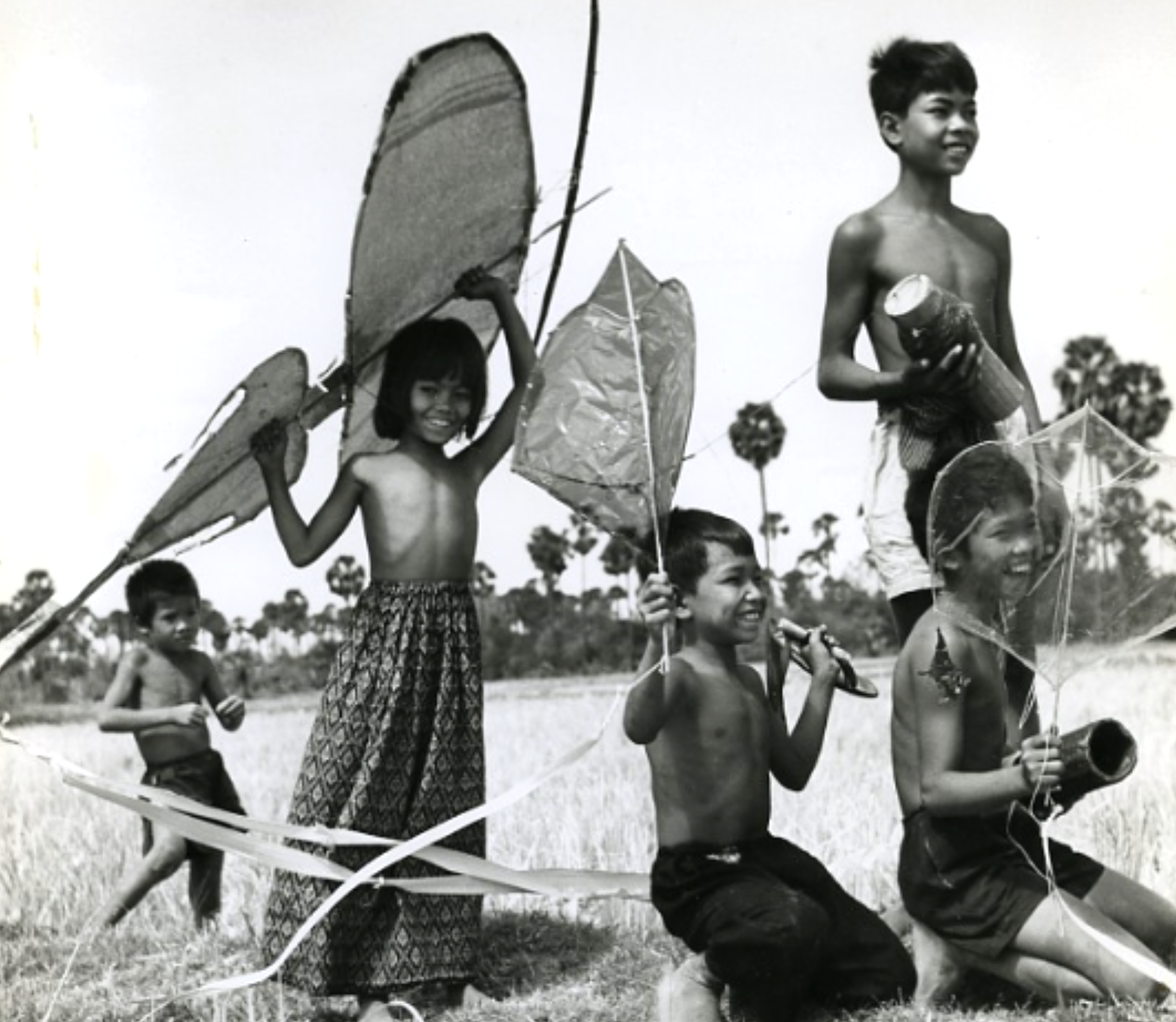
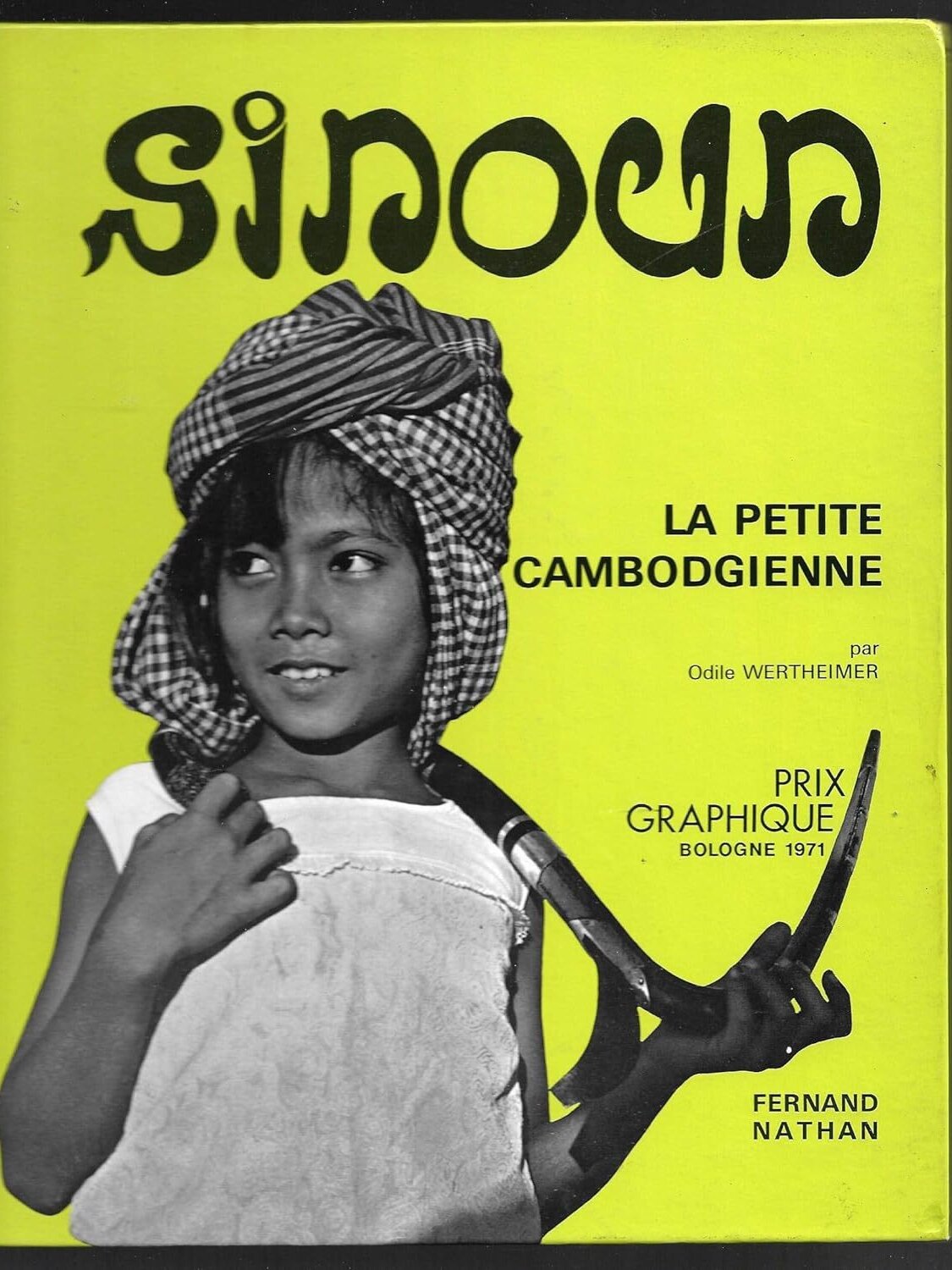
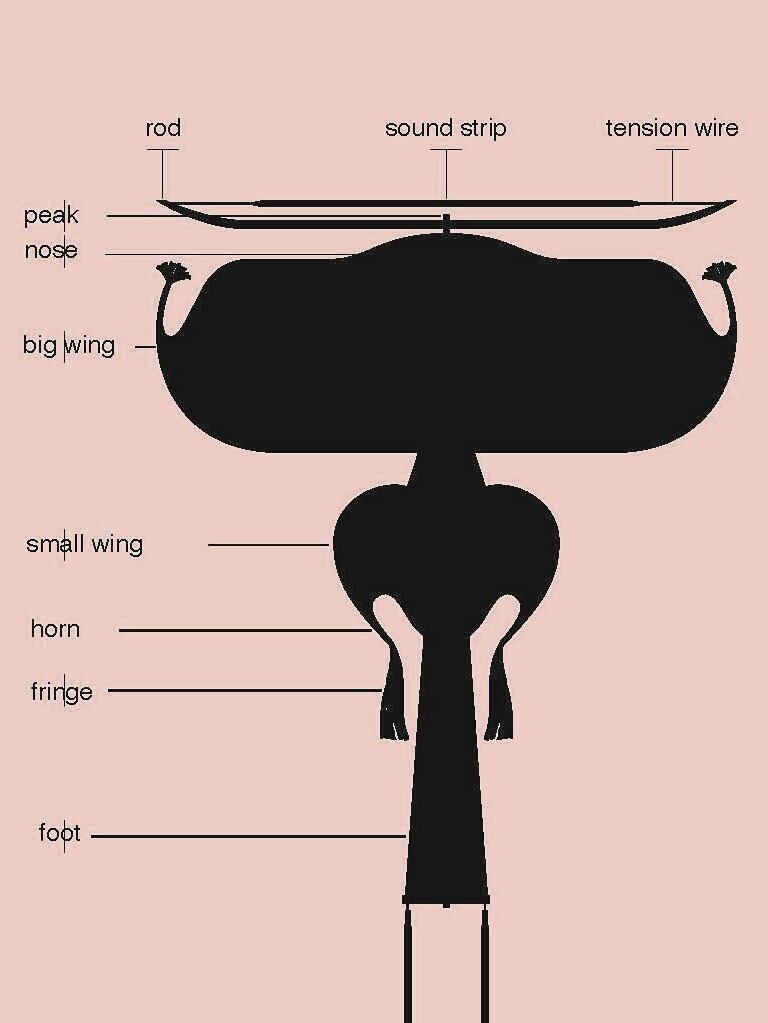
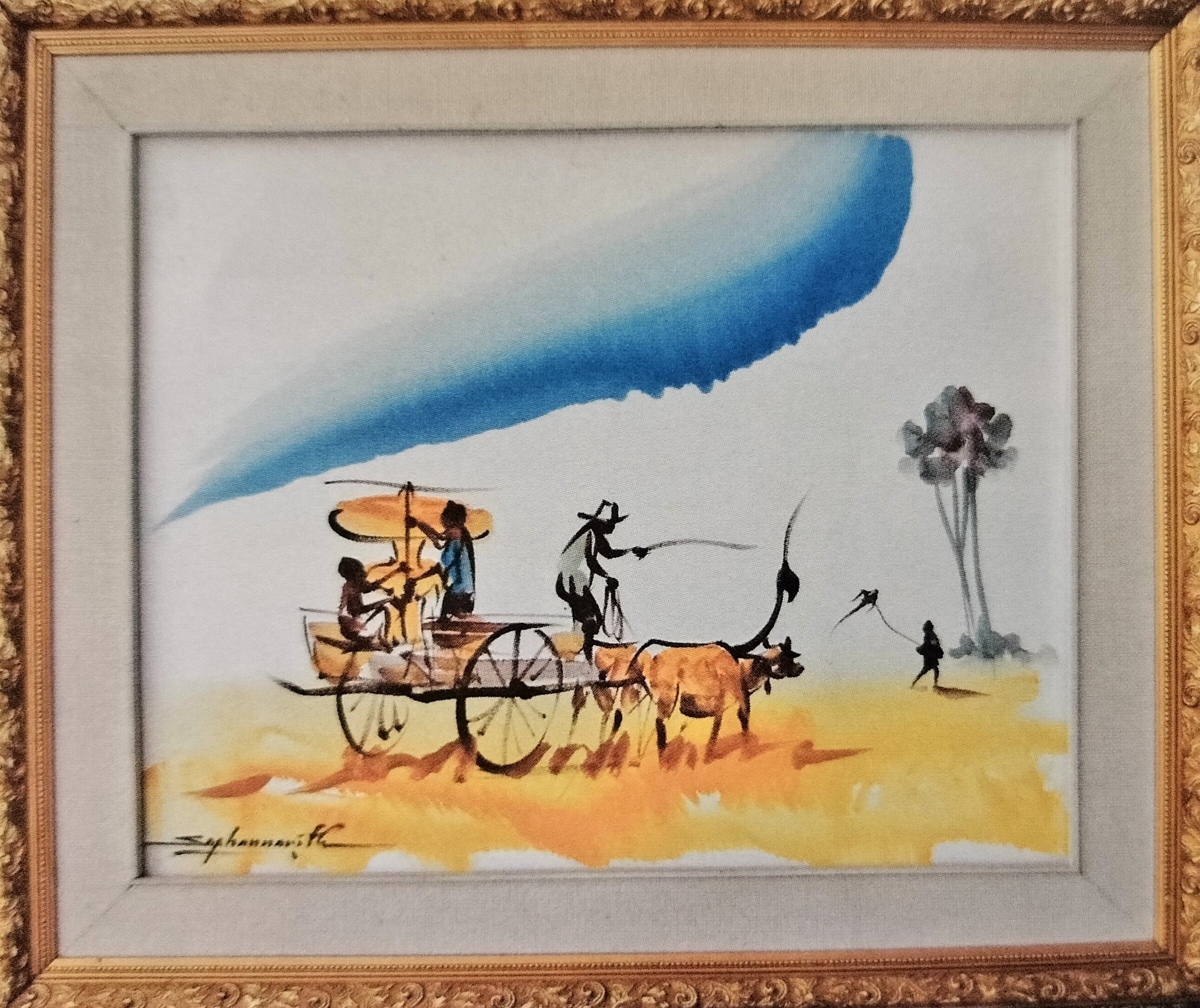
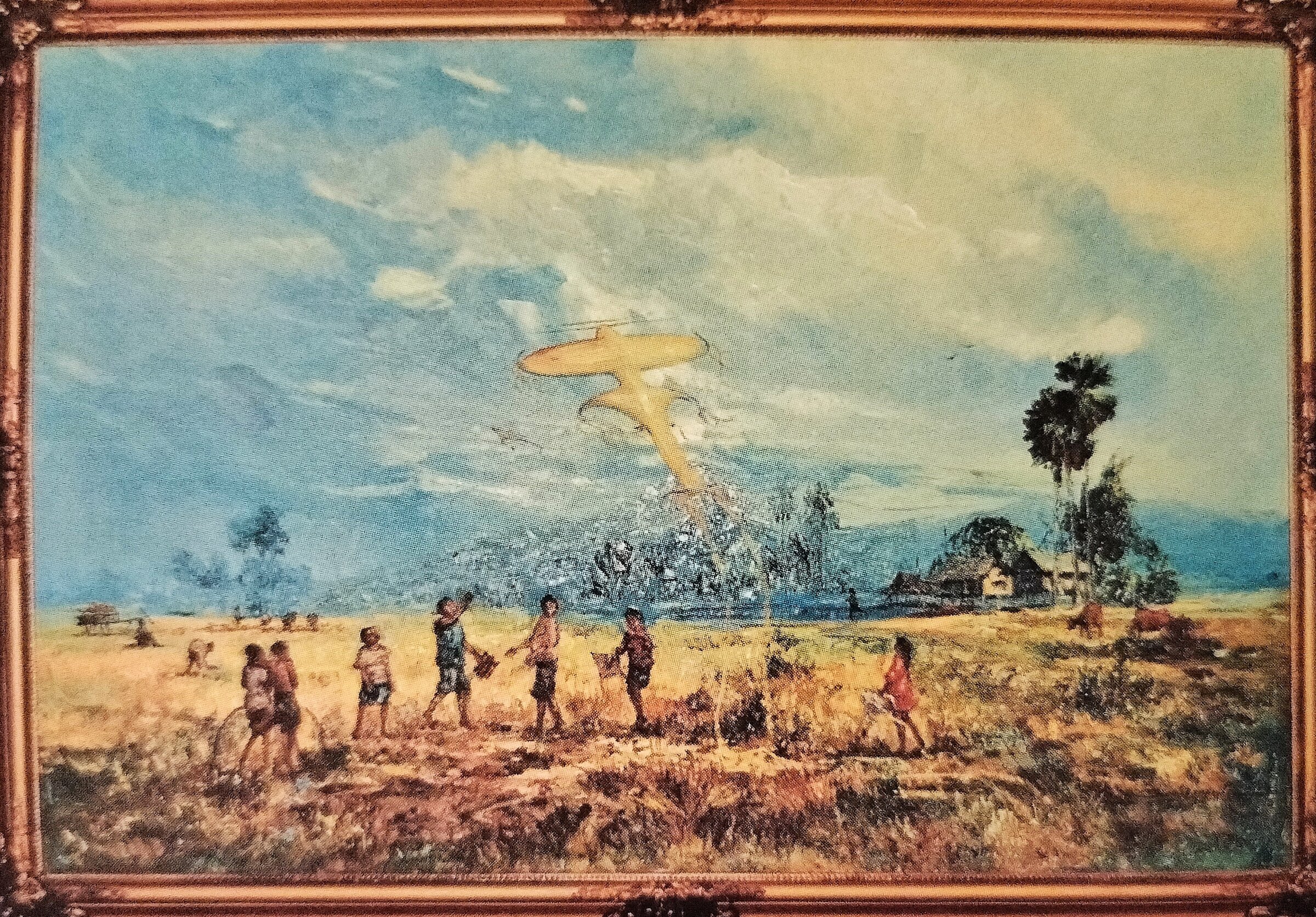
1, 2) Sinoun and her friends flying kites in the Cambodian countryside. Source: Odile Weirtheimer, Sinoun la petite cambodgienne, Paris, Fernand Nathan, 1970. 3) Section plan of a khleng ek by kite master Yann Defond, Phnom Penh, 2024.
1, 2) Sinoun and her friends flying kites in the Cambodian countryside. Source: Odile Weirtheimer, Sinoun la petite cambodgienne, Paris, Fernand Nathan, 1970. 3) Section plan of a khleng ek by kite master Yann Defond, Phnom Penh, 2024.
1, 2) Sinoun and her friends flying kites in the Cambodian countryside. Source: Odile Weirtheimer, Sinoun la petite cambodgienne, Paris, Fernand Nathan, 1970. 3) Section plan of a khleng ek by kite master Yann Defond, Phnom Penh, 2024.
As for the inscription K. 669 [C:27: toṅ vluk 1 khleṅ 5 vān vluk 3.…C:27), ‘… one ivory staff; five lime pots; three ivory cups, as transliterated by Philip Jenner], until Saveros Pou’s luminous explanation no one — even epigraphist extraordinaire George Coedès — could explain the mention of “kites” in an enumeration of cult objects, flasks and cups, musical instruments, fly swatters and spears. Dated 894 çaka (972 CE), the inscription, discovered by Henri Parmentier in 1929 at Prateal Hang Temple ប្រាសាទប្រទាលហាង, Kuleaen District ស្រុកគូលែន (Preah Vihear), was thus referring to decorated lime pots.
And then, ak would be the osprey (Pandion haliaetus, FR balbuzard pecheur), fish hawk, and khleng the bird kite. We immediately think of Prasat Ak Yum (the temple of the Crying Bird of Prey?), the brick temple built in the late 7th century and expanded through the 8th and 9th centurues, dedicated to Shiva under the name Ketanareshvara, an important place of worship of the linga before it was buried down during the construction of the West Baray (Puok District, Siem Reap). According to local traditions, Shiva was worshipped there as ‘The Unfathomable’, ‘the one whose voice is so deep that it cannot be measured’. Unless there would be another explanation for ‘ek’ in khleng ek..
With characteristically insightful remarks, ethnologist Ang Choulean has turned his attention to the kites flying over the Cambodian countryside, as part of his ongoing exploration of traditions and rituals. In this short piece (link to the Khmer text above), he first noted that “kite flying was not only a game but also had some ritual functions,” part of the celebrations “related to the upcoming rice harvest in the month of Migasir.” [មិគសិរ Migasir, pali Magasira, the first month of the traditional Cambodian lunar calendar (corresponding to mid-November to mid-December)].
Ang Choulean observed that in the past the farm children and adults liked to send kites in the air “in the early morning, because at that time, the month of Katika-Migasir, the wind was blowing from the north. They flew and tied it up like this for about an hour or two, when there was not much noise in the villages, except for a few roosters. Some people were harvesting rice at that time or doing other work, listening to that “one” sound emitted from above, which could be heard for about half a kilometer around”: the call of the khleng ek.
To produce a distinctive sound with the string — in the past made of antler fibers, according to the author — attached to the thin vibrating rattan ‘plug’, the kite has to go and stay high up. And to control its flight from the ground, a long string is needed, “with a device for winding called an “aak” អាក់, like the aak used in weaving.” A khleng aak, then, a kite equipped with a sort of weaving shuttle. អាក់, inform the dictionaries, also means “to delay” — and also “a duck”.
The flying of the kites is thus an agrarian rite, and it coincides with the first month of the Cambodian lunar calendar. On that point, the author mentions its possible connection with the ព្រះរាជពិធីបុណ្យទ្វារទសមាស or ព្រះរាជពិធីបុណ្យដប់ពីរខែ, the ‘Royal festivals of the Twelve Months’, which were certainly undertaken across the Kingdom in ancient times but, contrary to the Thai พระราชพิธีสิบสองเดือน, codified in the Palace Law of the Ayutthaya Kingdom, subsisted in only few celebrations such as the Royal Ploughing and the Water Festival raceboats.
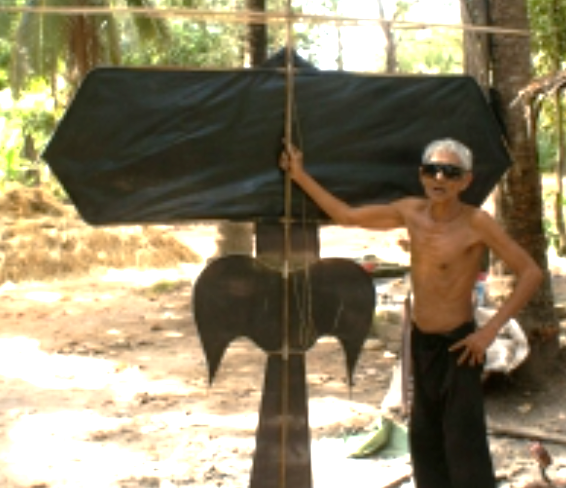
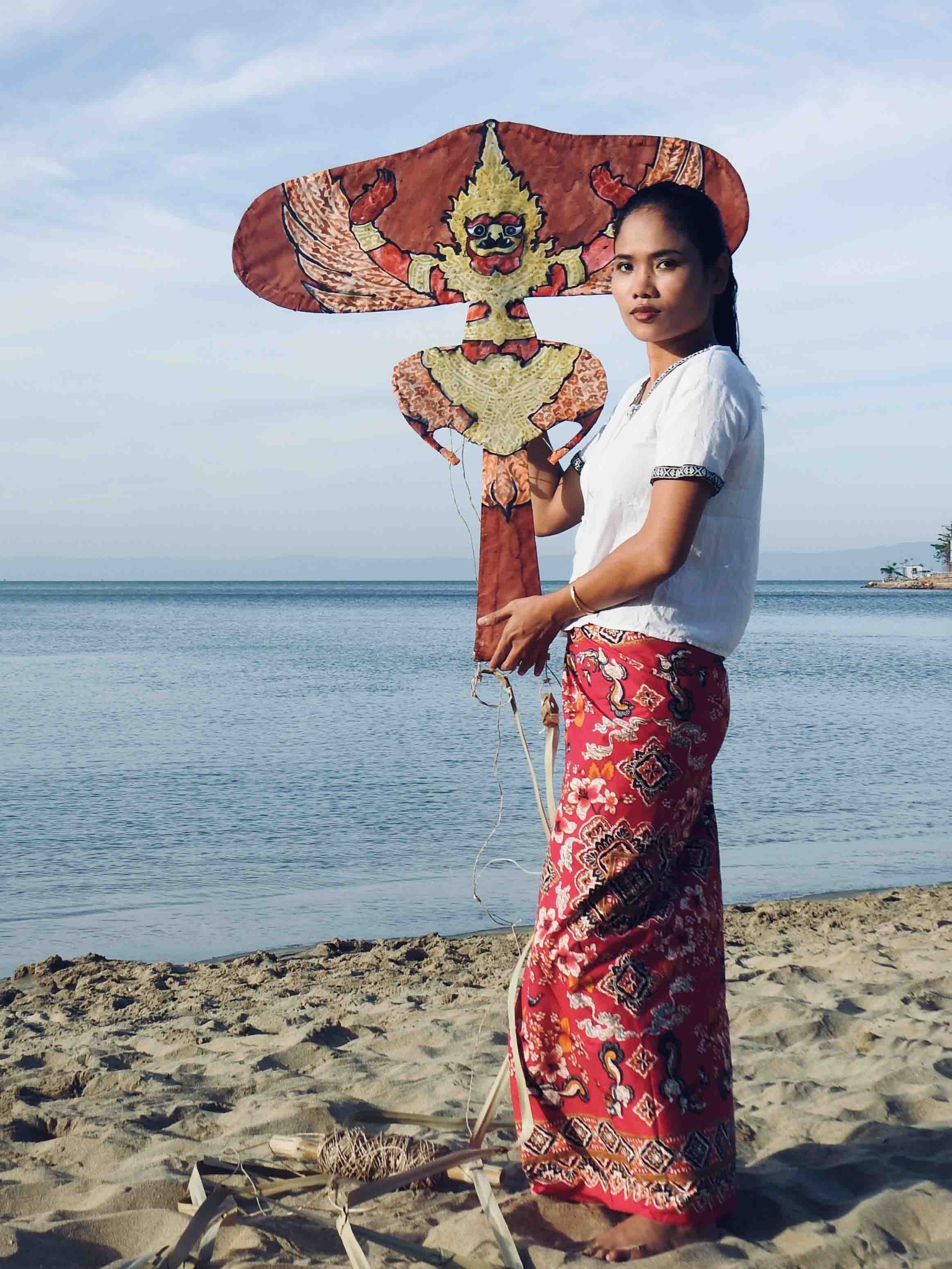
1) Undated and uncredited photo illustrating Ang Choulean’s article on Yosothor.com. We found out that the person holding the kite is Ta Let តាលាត, a blacksmith and kite lover from Roluos រលួស [thanks to Tauch Atakama]. 2) Traditional Cambodian kite by the sea [photo Yann Defond, 2024.]
photo Yann Defond.
1) Undated and uncredited photo illustrating Ang Choulean’s article on Yosothor.com. We found out that the person holding the kite is Ta Let តាលាត, a blacksmith and kite lover from Roluos រលួស [thanks to Tauch Atakama]. 2) Traditional Cambodian kite by the sea [photo Yann Defond, 2024.]
[ADB Input: Some authors have posited that kite flying was practiced at the royal court of Cambodia until the passing of King Ang Duong in October 1860. During the full moon of November, the king gathered monks at the palace at dusk and, after dinner, had them launch kites to the celestial spirits.]
The moaning kite as liberation in Thun Chey/Thmen Chey’s tale
Thorn Chey [or Thunchey or Thmen Chey] ធនញ្ជ័យ, the popular folktale hero, is credited to have found his way out of jail (both in Cambodia and China, where he was briefly exiled — or went at his own will — thanks to his boundless creativity. The embodiment of Cambodian folk wisdom, he came up with the idea of making Cambodia’s favorite rice noodles, នំបញ្ចុក nombanhchok [litt. “cakes to be swallowed”], and also invented the kite, according to the following folktale.
[…Then Thunchey went to the house of the great nobleman, went to work for him, followed the nobleman to the king. When the nobleman found out that it was Thunyachey, he thought that the Khmer were just fools and did not ask him. Thunchey thought that if I got a lot of money, I would think about buying rice and making long rice cakes and selling them to the poor so that they would not have difficulty eating them. So I thought about making cakes just as I thought and sold them to the Chinese to eat. At that time, the Chinese did not yet know how to make this cake. When they saw Thunyachey doing that, they invited everyone to come and buy the cakes and said that this person makes very good cakes. They heard that the king of the Chinese city called Thunchey and said that he did make long cakes. Thunchey replied that he did. The king said, “Bring it to me so I can see.” Then Thunyachey returned and brought the cake to present to him. The king asked what the name of this cake was. He replied that it was called នំបញ្ចុក nombanhchok. If you eat it slowly and open your mouth wide and raise your hand high, you will eat it whole. This cake was said by Thanjaya, because he wanted to see the face of the King of China, because he only heard the words, but he did not see the face, and he wanted to return to his country. When the King of China heard that, he brought the cake and offered it to him, and rose as if Thanjaya had said that. When the King ate it, Thunchey stood up and looked at the face of the King of China and said, “Look at the face of the King of China, it looks black. Look at the face of the King of Cambodia, it looks like a full moon.” When the King of China heard Thunchey’s scolding, he was very angry and ordered all the nobles to seize him and put him in a bronze prison, and not let him go until he died.]
The prison was very cold. Deadly cold. On the day that Thunchey was taken to prison, there were two Chinese prisoners with him. Thunchey was so cold he invited them to wrestle in order to get warmer but that day they didn’t feel cold enough. After two or three days, the guard went to see if they were alive, and he came back and said that all the Chinese and Khmer people were not dead. If that is the case, then he would do that. So he said that if they don’t die, then go. Thunchey and the Chinese thought that we would think of making a kite to fly and make a sound that would only be heard at night. The day they set it up, they thought that they could make a kite, and they flew all night, and the king heard the sound of the kite. It was a strange sound like a crying animal. The king had never heard it before. The king was surprised. He never heard a cry during the day, but at night, it was so loud. The king called the messenger and thought, “Who knows what animal is crying?” The king ordered the fortune teller to come and see. The fortune teller looked and saw and said, “Why is this animal crying like that? This is happening in the kingdom. If the cause of this disaster is not found, the animal will surely eat all the people in the kingdom.” The king listened and said, “If so, what is the cause of the disaster? The fortune teller will find out and make it so that the animal does not eat the people.” The fortune teller said, “I ask you to think about it. There was a wise man who was taken from the land of Khmer to destroy our country. Now, you have him imprisoned. That is why it happened. Now, I will only think about the land of Khmer.”
The king of China heard the fortune teller’s words. The king woke up and said, “I do not know who the wise man of the land of Khmer is. The Khmer people never come here to do business, so go and get it and apologize, don’t be angry with me. Amathya ran to Thunchey who was in prison and brought it to the king. The king looked and saw Thunchey coming. The king said, “I didn’t know you were a Khmer scholar. Now don’t be angry with me. I will take 100 Chinese men and women, and send you back to your country.” Thunnachay bowed down and said, “I don’t own you. The animal that you said would eat the people, I own it.” The king of China complained, “What is the name of the animal that makes such a loud noise?” Thunchey bowed down and said, “That animal is called a kite.” The king asked what it looked like, and it cried so loudly that Thunnachay bowed down and said, “I will make a statue of a kite to offer.” Thunchey went and brought the kite that flew and offered it. This animal cries with its horns, it does not cry with its mouth like other animals. The king listened to Thunchey, bowed down and said, “This is strange, I have never seen it like this before. If so, I will make it cry for fun. I will take a large ship with 200 people and send Thunchey back to Cambodia. I will take 100 Chinese people on the ship and put them in food to be sent to Thunchey back to his country. When Thunchey arrived, he went to ask his parents and wife, and brought all the gifts that the king of China had given him, so that he could come and build a house and live happily. That is why there are Chinese in Cambodia. They are called the Chinese of Thunchey to this day.”
An older version collected by Guillaume Monod and Princess Yukhantor
In Guillaume Monod’s Contes Khmers [p 91 – 4], Thun/Thmen Chey is “celui qui a le dernier mot” [“he who always gets the last word”], a kind of Cambodian Epaminondas, the Greek general mentioned as one of the six most virtuous and noble men who have lived in Gulliver’s Travels and. since mutated in a popular hero. He is sent to China by the King of Cambodia as a punishment, not a reward. Thrown in a jail with a Chinese man also afflicted by a rebellious mind, Thmenh Chey and his companion
construisirent un cerf-volant qu’ils munirent d’un appareil imitant dans le vent un bruyant gémissement. Ils faisaient voler leur cerf-volant toute la nuit et le dissimulaient pendant le jour. Le roi entendait chaque nuit ces violentes plaintes qui né ressemblaient à la voix d’aucun être vivant. Son coeur était rempli de surprise et de crainte. Il interrogea ses mandarins ; tous entendaient, mais nul né pouvait reconnaître l’origine des pleurs. Les astrologues consultés firent leurs calculs et dirent :
— Ce bruit présage de grands malheurs dans le royaume. Si bon ordre n’y est mis, tous les habitants du pays seront dévorés par l’animal terrible qui geint la nuit ! Ils recommencèrent leur calcul pour déterminer la cause des calamités qui menaçaient le pays et rendirent compte au roi : — Les malheurs qui planent sur la Chine proviennent de ce que le fameux sage khmèr a été chassé de son pays, abandonné sur nos côtes, et mis en prison par ordre de Votre Majesté. Si cet homme est ramené dans son pays, tout s’apaisera.
Le roi fut comme réveillé en sursaut. — Je né savais pas, dit-il, que c’était le sage cambodgien ! Je pensais que c’était un homme du peuple. Qu’on aille le chercher. Dès que le prisonnier fut devant le roi, celui-ci lui dit : — J’ignorais qui vous étiez; né gardez point de rancune contre nous ! Je vous offre cent esclaves chinois et vais vous faire ramener dans votre pays.— Je n’ai point de rancune, Sire ; l’animal qui menaçait de dévorer vos sujets né viendra pas ; je l’ai déjà fait disparaître. — Comment donc s’appelle cette bête qui gémit si lamentablement ? demanda le roi. — C’est le cerf-volant, répondit Thmenh Chey. — Et comment est-il fait ? Comment geint-il ? — Je vais faire une représentation de cet animal et l’offrir à Votre Majesté, dit Thmenh Chey.
Il alla chercher le cerf-volant qu’il avait construit. — Voici à quoi ressemble cette bête. Ce n’est pas, comme les autres animaux, avec la bouche, c’est avec les cornes qu’il gémit. — C’est une chose extraordinaire ; jamais je n’avais rien vu de semblable ! dit le roi. Faisons-le voler pour l’entendre pleurer. Après avoir vu voler le cerf-volant et l’avoir entendu gémir, le roi fit équiper une jonque portant deux cents hommes d’équipage ; il y fit mettre cent esclaves tant hommes que femmes, des vivres en abondance et des présents de toute sorte. Thmenh Chey retourna auprès de sa femme et de ses beaux-parents, leur offrit tout ce que lui avait donné le roi de Chine et bâtit pour eux une grande et confortable maison.
Le roi du Cambodge apprit que Thmenh Chey était de retour et possédait de nombreux Chinois. Toute la cour éprouva une crainte respectueuse pour l’intelligence de cet homme ; personne n’osa plus rien entreprendre contre lui. Le roi lui fit dire de venir au palais et lui demanda ce qu’il avait fait et vu en Chine. Thmenh Chey raconta son séjour, puis il dit : — Dès mon arrivée dans ce pays, j’ai songé au moyen de revenir chez moi. Dans ce but, j’ai construit un cerf-volant muni d’un appareil que le vent faisait gémir. Il expliqua au roi comment son invention avait été cause de son retour. Le roi lui demanda de faire un cerf-volant et de lui montrer comment il pouvait le faire voler. Thmenh Chey satisfit le désir du roi, et c’est de lui que nous avons appris à faire les cerfs-volants dont nous nous distrayons encore de nos jours. [p. 93 – 96]
[They built a kite and equipped it with a device that imitated a loud moaning in the wind. They flew their kite all night and hid it during the day.
The king heard these violent cries every night, cries unlike the voice of any living being. His heart was filled with surprise and fear. He questioned his officials; they all heard them, but none could identify the source of the wailing. The astrologers consulted made their calculations and said:
“This noise foretells great misfortunes in the kingdom. If order is not restored, all the inhabitants of the land will be devoured by the terrible beast that moans at night!” They resumed their calculations to determine the cause of the calamities threatening the country and reported back to the king:
“The misfortunes that hang over China stem from the fact that the famous Khmer sage was driven from his country, abandoned on our shores, and imprisoned by order of Your Majesty. If this man is brought back to his country, all will be well.”
The king was startled awake. “I didn’t know,” he said, “that it was the Cambodian sage! I thought he was a commoner. Go and fetch him.” As soon as the prisoner stood before the king, the latter said to him: “I didn’t know who you were; bear no grudge against us! I offer you one hundred Chinese slaves and will have you brought back to your country.” “I bear no grudge, Sire; the beast that threatened to devour your subjects will not come; I have already made it disappear.” “What is the name of this creature that moans so piteously?” asked the king. “It is the kite,” replied Thmenh Chey. “And what is it like? How does it moan?” “I will make a rendering of this animal and present it to Your Majesty,” said Thmenh Chey.
He went to fetch the kite he had built. “This is what this creature looks like. Unlike other animals, it doesn’t moan with its mouth, but with its antlers.” “This is an extraordinary thing; I have never seen anything like it!” said the king. “Let us fly it so we can hear it moan.” After seeing the kite fly and hearing it moan, the king had a junk outfitted with a crew of two hundred men; he had one hundred slaves, both men and women, loaded it with abundant provisions and gifts of all kinds. Thmenh Chey returned to his wife and in-laws, gave them everything the King of China had given him, and built them a large and comfortable house.
The King of Cambodia learned that Thmenh Chey had returned and had many Chinese people in his possession. The entire court felt a respectful awe at the man’s intelligence; no one dared to do anything against him. The King summoned him to the palace and asked him what he had done and seen in China. Thmenh Chey recounted his stay, then said:
“From the moment I arrived in that country, I thought about how to return home. To this end, I built a kite equipped with a mechanism that the wind made whine.” He explained to the King how his invention had brought about his return. The King asked him to make a kite and show him how he could fly it. Thmenh Chey satisfied the king’s wish, and it is from him that we learned to make the kites with which we still amuse ourselves to this day. [p. 93 – 96]
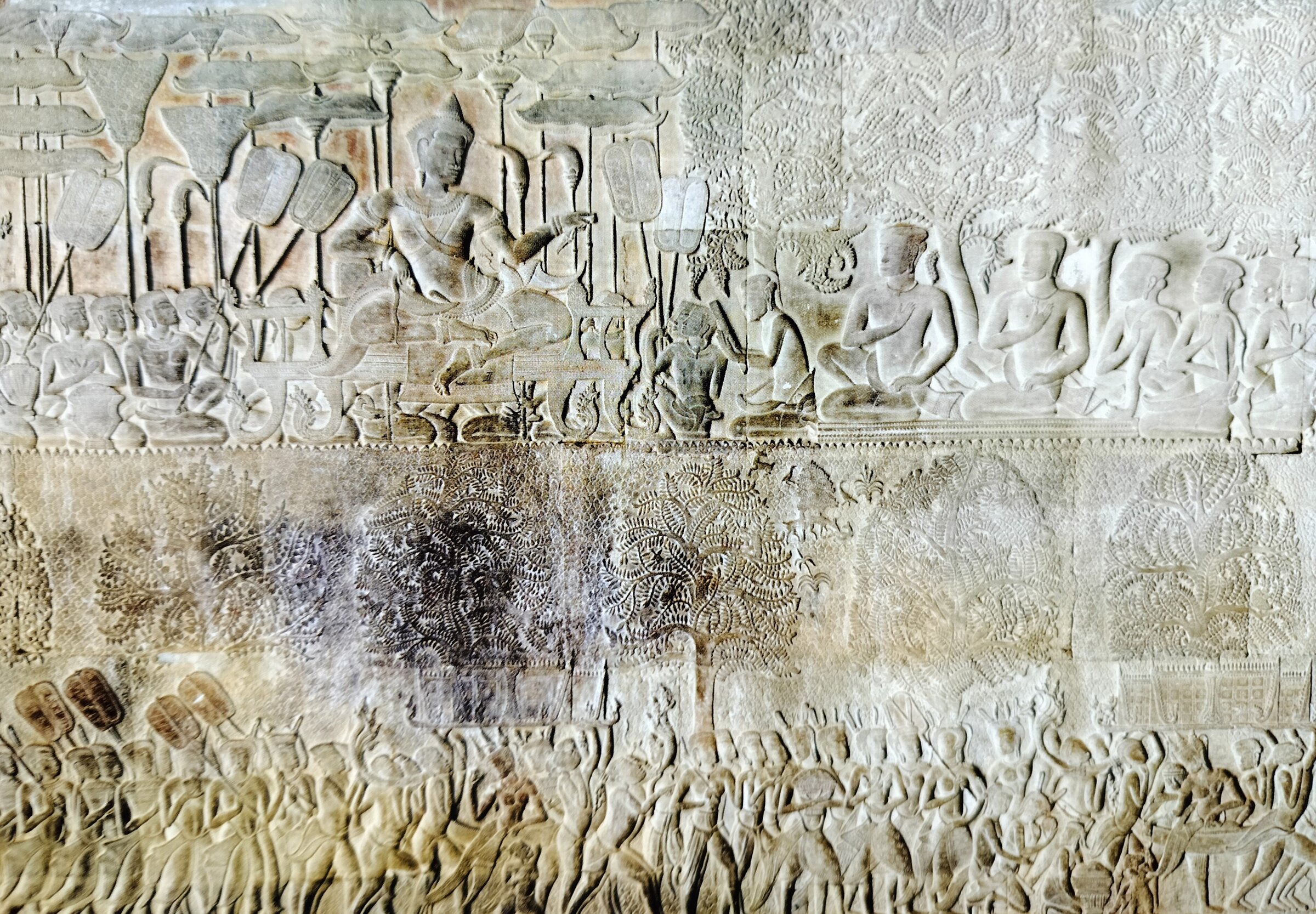
Angkor Wat South Gallery, West Wing: King Paramavishnuloka (Suryavarman II) at Mount Sivapada. Detail of a panoramic photo by Jaroslav Poncar in Of Gods, Kings and Men, Silkworm Books, 2006, p 130 sq.
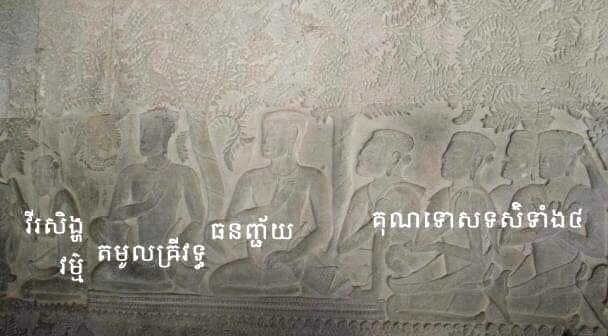
Thmenchey-Thunchey depicted at Angkor Wat? — Some independent Cambodian researchers have argued that the legendary ‘inventor of the kite’ was in real life ‘philosopher and advisor’ to the Cambodian king who was arrested by the retreating armies of the Chinese SouthernSong dynasty [1127 – 1279] after they were repelled by the Yuan [Mongol] rival forces at the siege of Prey Nokor ព្រៃនគរ [the Khmer town preceding Saigon, now Ho Chi Minh City]. Note: such a supposition hasn’t been confirmed by historians and archaeologists.
1) Angkor Wat South Gallery, West Wing: King Paramavishnuloka (Suryavarman II) at Mount Sivapada. Detail of a panoramic photo by Jaroslav Poncar in Of Gods, Kings and Men, Silkworm Books, 2006, p 130 sq. 2) A temptative identification of the sages and ascets sitting below the King: វីរសិង្ហវម៌្ម [Virasinghavarman], តមូលគ្រីវទ្ធ [Tamulkrivatth], ធនញ្ជ័យ [Thunchey, 3d from left] and គុណទោសទស៌ទាំង ៤ [‘The Four Elements of Virtue’][FB post by Library Nokorphnom បណ្ណាល័យនគរវ្នំ, 10 June 2019].
Thmenchey-Thunchey depicted at Angkor Wat? — Some independent Cambodian researchers have argued that the legendary ‘inventor of the kite’ was in real life ‘philosopher and advisor’ to the Cambodian king who was arrested by the retreating armies of the Chinese SouthernSong dynasty [1127 – 1279] after they were repelled by the Yuan [Mongol] rival forces at the siege of Prey Nokor ព្រៃនគរ [the Khmer town preceding Saigon, now Ho Chi Minh City]. Note: such a supposition hasn’t been confirmed by historians and archaeologists.
1) Angkor Wat South Gallery, West Wing: King Paramavishnuloka (Suryavarman II) at Mount Sivapada. Detail of a panoramic photo by Jaroslav Poncar in Of Gods, Kings and Men, Silkworm Books, 2006, p 130 sq. 2) A temptative identification of the sages and ascets sitting below the King: វីរសិង្ហវម៌្ម [Virasinghavarman], តមូលគ្រីវទ្ធ [Tamulkrivatth], ធនញ្ជ័យ [Thunchey, 3d from left] and គុណទោសទស៌ទាំង ៤ [‘The Four Elements of Virtue’][FB post by Library Nokorphnom បណ្ណាល័យនគរវ្នំ, 10 June 2019].
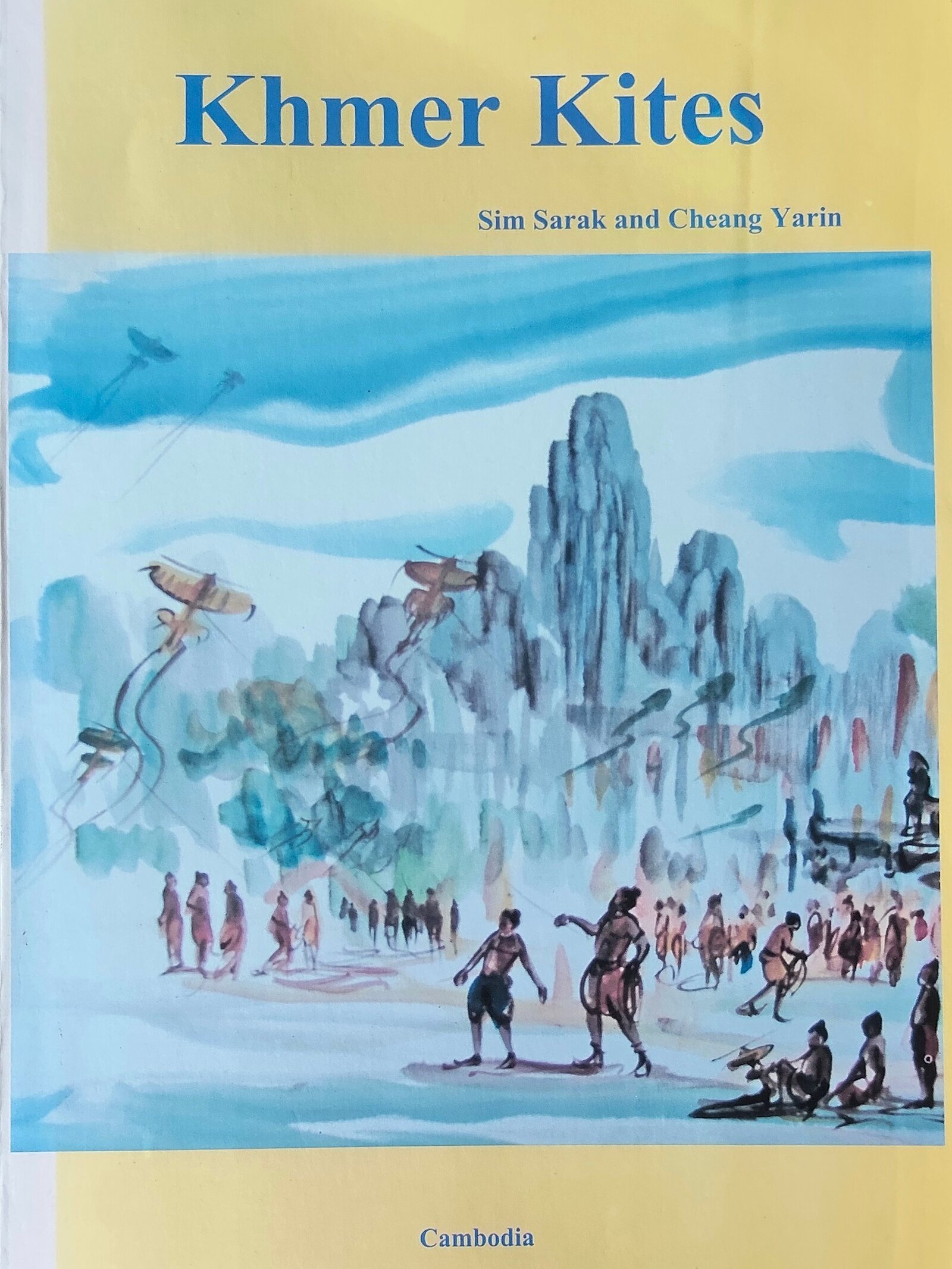
Khmer Kites by Sim Sarak and Cheang Yarin
Sim Sarak ស៊ឹម សារ៉ាក់&Cheang Yarin ជៀង យ៉ារិន, Khmer Kites, Exploring Long-Established Kite Tradition in Cambodia, Phnom Penh, Ministry of Culture and Arts, 2003, expanded ed. 2012 | Khmer edition: ខ្លែងខ្មែរ [Khmer Kites], eLibrary of Cambodia.
Wife and husband in real life, Cheang Yarin and Sim Sarak have researched together the history of kites in Cambodia, and actively promoted the practice of kite flying starting from the early 1990s. As Director of the Administrative Services of the Cambodian Ministry of Culture and Fine Arts, Sim Sarak made sure the Phnom Penh National Kite Festival was revived in 1994 (International since 2004) after a lapse of more than 20 years. In association with other kite enthusiasts, they launched the KhmerKite Museum in the modernist building that hosted the Sangkum Neastr Reyum Permanent Exhibition before the war and traveled abroad to join similar initiatives.
The historical essay [p. 34 – 36] was quite novel for Cambodia at the time, and even if in hindsight the authors wouldn’t repeat some of the guesswork — the “khleng” in the inscription K. 669 (dated 972 CE) was not a flying kite but a lime pot, part of a list of offerings to a temple — they maintain that the flying of kites in Cambodia would go back to “ancient times before the Funan era” [thus before the first millenium CE].
The only proof for that is that kites in Khmer are called either Khleng Phorng [or Phnong] ខ្លែងព្នង or Khleng Ek in equal proportion, according to them. And Phnong here, they claim, should refer to the “ethnic minority (hill-tribe people) actually living in mountainous areas in the northeastern provinces of Kratie, Ratanakiri and especially Mondulkiri.” The people called Khmer Doem ខ្មែរដើម [lit. ‘Khmers of the Origin’] or Khmer Loeu ខ្មែរលើ [lit.‘Khmers from Above’], in Modern Khmer.
That might very well be true, but the reasoning for proving that theory right lacked consistency in the book. In particular, the authors never convicingly established that the ‘Phnong’ in Khleng Phnong necessarily referred to the ancient inhabitants of the country. For instance, they recalled at some point that “some elders in the Tboung Khmum ត្បូងឃ្មុំ Province [‘The Amber Province’] had told them the most common way to refer to the flying kites in their prime was “Khleng Mae-Kaun” ខ្លែងម៉ែកូន [“Mother-Baby” Kite] rather than Khleng Phorng or Phnong. The rounded wings would symbolize the mother’s hips — or womb -, and the lower part of the kite her infant — or the wings representing the ‘queen’ flying over ‘her country’.
Through another exercise in Khmer etymology, they also came up with the following origin of the phnong ព្នង word:
Other people recount that a very long time ago there was a king who ordered his men to use “Tung Proleung” (a piece of fabric of distinctive design symbolizing the soul of a newly dead person) as the body of his kite. He flew this kite to make his population perceived that it was the soul of the Lord of his kingdom and that the melancholic tune aired by his kite was his sorrowful cry after the death of his brother (the former king). The locals then called the kite “Khleng Proleung” or “Kite of the soul of His Majesty King.” Later on, the word “Khleng Proleung” turned into “Khleng Ponleung ” and then “Khleng Phorng,” as heard these days.
Lastly, here is third folklore story: Once upon a time, there was a young man flying his Khleng Phorng at night for his pleasure. With a very long cord, he flew his kite higher and higher into the sky. By mid-night, the wind blew stronger and broke his Khsae Ek (Ek’s string). The young man, with a “Bantuoh” knife hanging from the left hand side of his waist made up his mind to climb along the kite cord, and replace it with a new Khsae Ek. His kite swung left and right and down and up with the strong wind like a pretty girl who is a professional dancer. Hazardously, his kite bridle was cut by his “Bantuoh” knife. The young man had no choice but to let the strong wind decide his fate. Luckily enough, the kite dropped in a country where a beautiful princess had fallen in love with this young man because of more than one criteria, first the young man looked smart enough and secondly he knew how to make a strange and huge musical kite. At last they got married and the local inhabitants have known how to make “Khleng Phorng” ever since. [from the Khmer version].
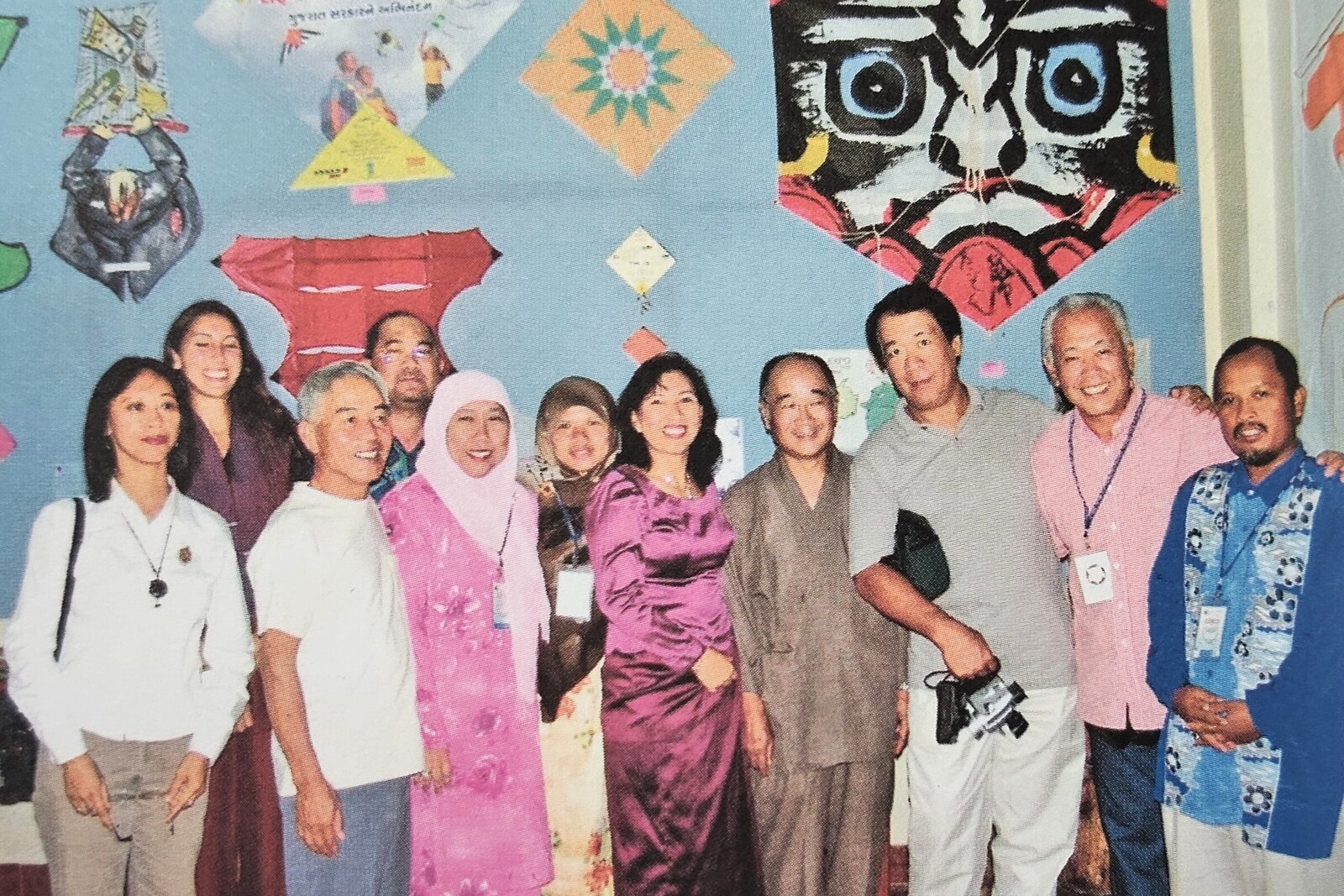
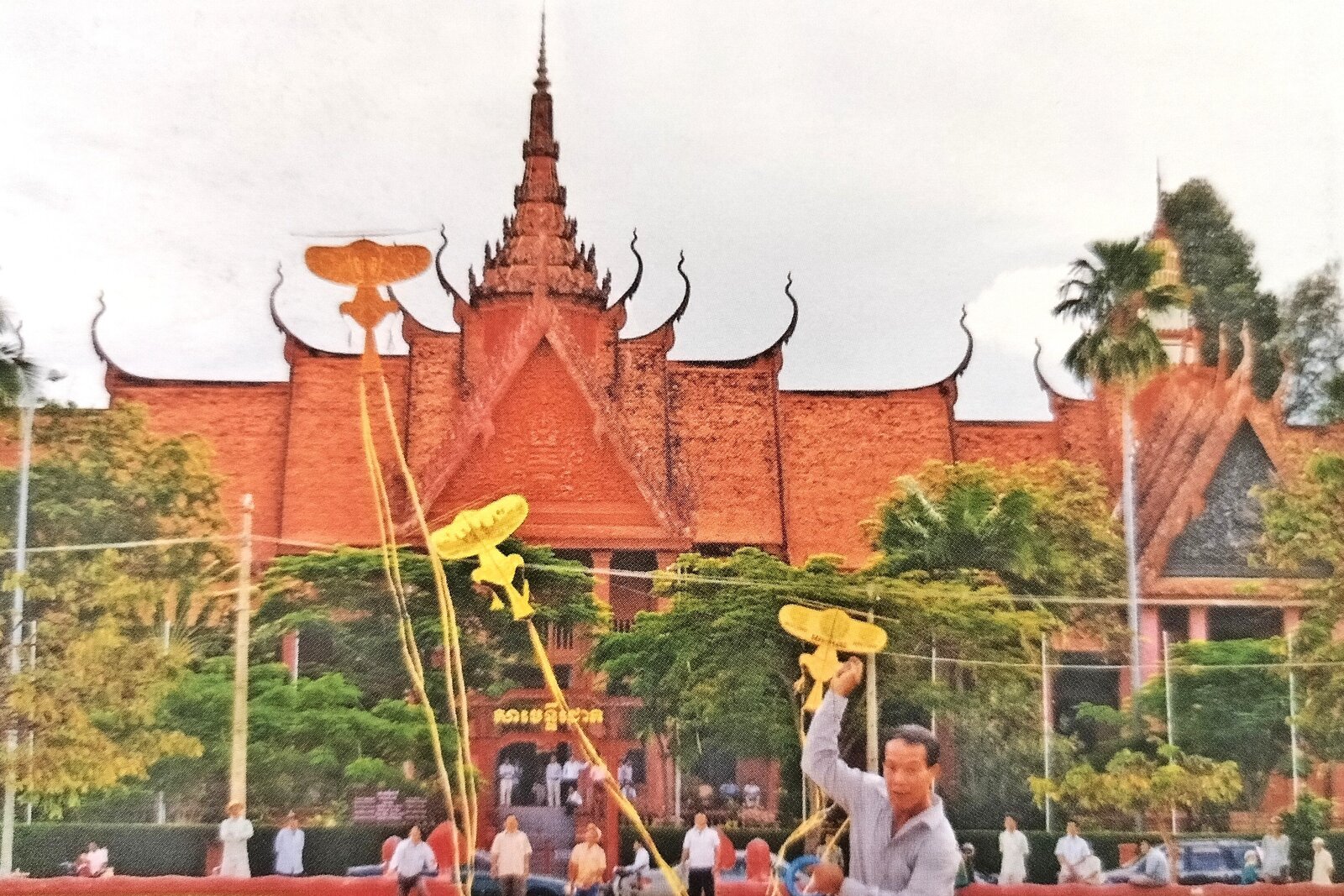
1) Cheang Yarin (center) and international kite flyers at Khmer Kite Museum, 2004. 2) Kite master Sareth flying his khleng ek in front of National Museum of Cambodia, 2003. [photos from Khmer Kites, 2012].
1) Cheang Yarin (center) and international kite flyers at Khmer Kite Museum, 2004. 2) Kite master Sareth flying his khleng ek in front of National Museum of Cambodia, 2003. [photos from Khmer Kites, 2012].
1) Cheang Yarin (center) and international kite flyers at Khmer Kite Museum, 2004. 2) Kite master Sareth flying his khleng ek in front of National Museum of Cambodia, 2003. [photos from Khmer Kites, 2012].
As often in Khmer historiography, we have sailed to places of ancient legends, love and death stories, poetry and superstition. With some precious indications about
the vinculation of kites to funerary practices, in particular the ghostly with banners floating in the wind at a funeral;
the fact that kite flying probably predated the spread of Indian cultural influences in the region, and the introduction of papyrus or paper — cowhide being way too heavy for kites in Cambodia. In that regard, the authors aptly quoted the Portuguese adventurer Quiroga de San Antonio who noted in 1590 that Khmer people were flying “kites made from the “Boboh” reed (Aira arundinacea or Eragrostis arundinacea Linnaeus) fiber and rods, paper and strings, “and when the wind blew it flew up and produced beautiful sounds.”
Interestingly, the authors reached the same conclusion than ethnologist and historian Eveline Porée-Maspero’s in her Etudes sur les rites agraires des Cambodgiens (1964): “The ceremonial flying of kites was part of the Khmer civilization’s cultural heritage that existed long before Khmer people started to adapt Indian civilization”.
Eveline Porée Maspero and Etienne Aymonier on Cambodian kites
The kite as medium of communication with the wind, the natural elements, the spirits of the departed, as divination tool, as a harbinger of misfortune if not properly handled…Here, we quote from two reference studies on Cambodia mores and traditions, dated 1883 and 1964, respectively.
In this rich study on the history of kites in Southeast Asia and Cambodia, certainly the most exhaustive to date, the author puts forward her main theory: “Je crois que si les cerfs-volants chassent les pluies, c’est parce que leur leur vol fait fuir les animaux, nâgas ou autres, qui en sont responsables. Cette hypothèse [est] en accord avec l’ensemble mythico-social que nous avons étudié” [“I believe that if kites chase away the rain, it is because their flight scares away the creatures, nagas or others, who are responsible for it. This hypothesis [is] in accordance with the mythico-social system that we have studied” [earlier in the book]. [p 480]. Also:
La cérémome [des cerfs-volants à la Cour royale du Cambodge] dut être à cette epoque très importante, puisqu’à cette occasion les bàku célébraient le hom pithi. D’après M. Krasem, qui le tiendrait de source orale, la cérémonie servait à renseigner sur les pluies à venir, mais on né sait comment; d’après M. lng-Judeth, qui né cite pas ses sources, des cerfs-volants munis de lumières étaient envoyés en l’honneur du Prah Colàmoni, stupa céleste où sont déposés les cheveux du Buddha. On dit aussi que les khlèn phnon sont envoyés en l’honneur de la canine du Buddha conservée au thàn trai tren «lieu des trente-trois (divinités) ». Ceci marque, ainsi que nous l’avions supposé, que les planers des cerfs-volants sont en antithèse des fêtes des eaux puisqu’on explique celles-ci comme des cérémonies en l’honneur de la canine du Buddha conservée au Royaume des Nâgas.[…] On dit aussi que les « lanternes volantes » sont envoyées en hommage aux nouveaux [sic] tévodà de l’année.” [p 500]
Tout ce qui vient d’être dit prouve que, chez les Khmèrs, les cérémonies du lancer de cerfs-volants appartiennent à un fonds de civilisation antérieur à leur hindouisation. Il est possible, cependant, qu’à un moment quelconque de leur histoire, les cérémonies aient été rénovées au contact de peuplades venues de Chine et se disant issues d’un chien. Cela expliquerait les allusions au Roi de Chine à tête de chien et le fait que, pour eux, Thmén Cei ait été l’introducteur du cerf-volant en Chine. [p 569]
[The kite ceremony [at the Royal Court of Cambodia] must have been very significant at that time, since on this occasion the baku celebrated the hom pithi. According to Mr. Krasem, who claims to have heard it from an oral source, the ceremony served to provide information about the coming rains, but it is unclear how; according to Mr. Ing-Judeth, who does not cite his sources, kites equipped with lights were sent in honor of the Prah Colàmoni, the celestial stupa where the Buddha’s hair is kept. It is also said that the khlèn phnon are sent in honor of the Buddha’s canine tooth kept at the thàn trai tren, “place of the thirty-three (deities).” This indicates, as we had surmised, that the flying of the kites are the antithesis of the Water Festival, since the latter is essentially a ceremony in honor of the Buddha’s canine tooth preserved in the Kingdom of the Nagas. […] It is also said that the “flying lanterns” are sent in homage to the new tevodasof the year.” [p. 500]
All that has just been said proves that, among the Khmer, the kite-throwing ceremonies belong to a civilizational tradition predating their Hinduization. It is possible, however, that at some point in their history, the ceremonies were revived through contact with peoples from China who claimed descent from a dog. This would explain the allusions to the dog-headed King of China and the fact that, for them, Thmen Cei [Thmen Chey] was the one who introduced the kite to China. [p. 569]]
KHLÊNG, LE MILAN: En cas de maladies causées en voyage par l’insalubrité du climat, un bon remède consiste à faire carboniser les plumes du milan rouge commun, à mettre ces plumes dans l’eau chaude et boire cette eau. Il faut abandonner la case à laquelle le milan a pronostiqué le malheur en se posant dessus.
KHLENG KMOCH, UN NOCTURNE: Le khlêng khmoch ou khlêng srak est un oiseau nocturne de mauvais présage. Si, pendant la nuit, il fait entendre son cri, il est nécessaire de brûler au feu quelques grains de sel, un peu de prahok (poisson puant, mets national), autrement quelqu’un mourrait dans la maison. Cet oiseau, envoyé par les esprits infernaux, appelle les âmes des vivants.
BANGHOER KHLÊNG [1], JEU DU CERF-VOLANT: Si le cerf-volant, planant au vent, an bout d’un longue ficelle, s’abat sur une maison, cette chute annonce le malheur, et il est nécessaire que le propriétaire du cerf-volant purifie la maison pour conjurer le mauvais sort et pour éviter l’indemnité qui peut lui être réclamée. La purification a lieu de la manière suivante : un homme docte (achar) vient réciter des formules; toutes les colonnes sont frottées de farine, d’eau de soude ou d’huile, ou de l’eau du fruit sambuor. Les bonzes sont aussi invités à venir réciter les prières.
[KHLENG, THE RED KITE [BIRD OF PREY]: In case of illness caused by the unhealthy climate while traveling, a good remedy is to char the feathers of the common red kite, put these feathers in hot water, and drink this water. One must abandon the hut on which the kite has foretold misfortune by landing on it.
KHLENG KMOCH, A NOCTURNAL BIRD: The khleng khmoch or khleng srak is a nocturnal bird of ill omen. If, during the night, it cries out, one must burn a few grains of salt and a little prahok (stinking fish, a national dish) in a fire; otherwise, someone will die in the house. This bird, sent by infernal spirits, summons the souls of the living.
BANGHOER KHLENG [1], KITE GAME: If a kite, flying in the wind at the end of a long string, falls on a house, this foretells misfortune, and it is necessary for the kite’s owner to purify the house to ward off the bad luck and avoid the compensation that may be claimed from him. The purification takes place in the following manner: a learned man (achar) comes to recite formulas; all the pillars are rubbed with flour, soda water, oil, or sambuor fruit water. Buddhist monks are also invited to come and recite prayers.]
[1] 19th-century French transliteration for បង្ហើរខ្លែង /ban-haa khlaen, to fly a kite. Cf Michel Antelme and Hélène Suppya Bru-Nut, Dictionnaire français-khmer, Paris, L’Asiatheque, 2013, 1696 p. ISBN13 978 – 2915255669.
What’s in a Place Name? Wat Phnom Khleng, Prasat Ak Yum
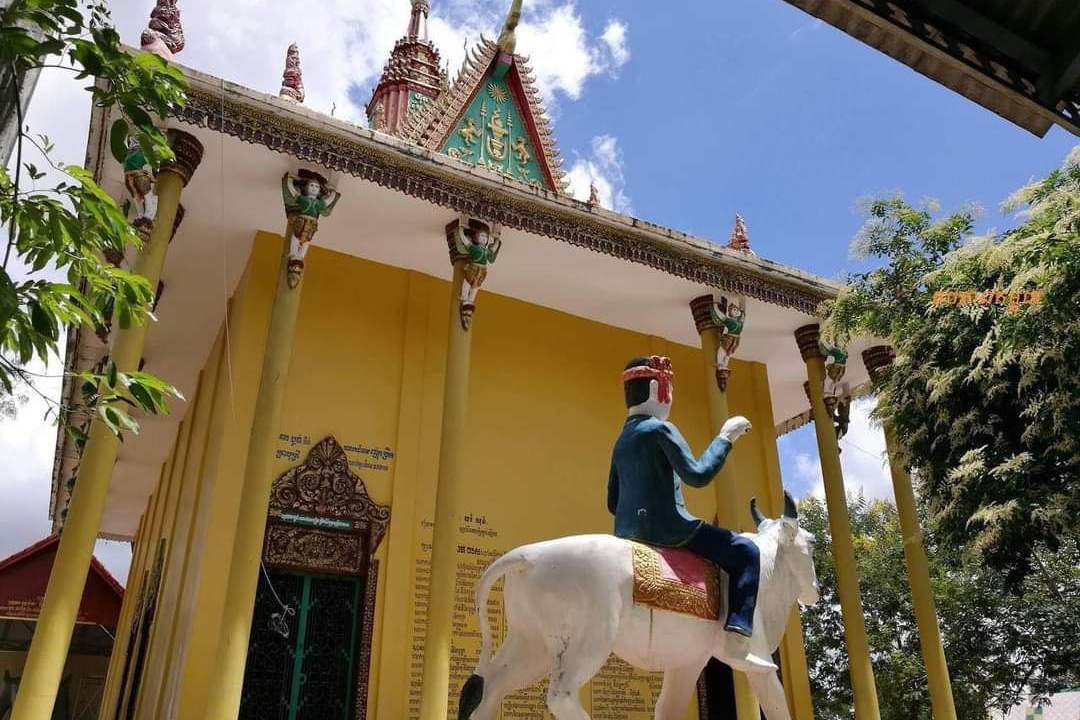
- Wat Phnom Khleng វត្តភ្នំខ្លែង , the Kite Mountain Pagoda in Takeo province south of Phnom Penh, is one of the oldest existing pagodas in Cambodia, as it was built in 1753. With a modern Buddhist temple nearby, it is set on the higher point of a 11-hectare protected natural park, and attracts many visitors as it said that all pious wishes made there will be fullfilled.
Is it a reference to khleng the bird or to khleng the kite? Inquiry ongoing. Meanwhile, you can listen to the song Top of the Kite Mountain កំពូលភ្នំខ្លែង, written by former Prime Minister (in office from 30 Nov. 1998 to 22 Aug. 2023) Samdech Hun Sen សម្តេចតេជោ ហ៊ុន សែន (b. 5 Aug. 1952, Stung Trang, Cambodia) — to date the longest-serving head of government in Cambodia’s history -, music by Prof. Yin Sarin លោកគ្រូ យិន សារិន, here performed by Ieng Sithol អៀង ស៊ីធុល.
Wat Phnom Khleng វត្តភ្នំខ្លែង, Takeo Province [photo Kampuchea Thmei Daily, 2024.]
Wat Phnom Khleng វត្តភ្នំខ្លែង, Takeo Province [photo Kampuchea Thmei Daily, 2024.]
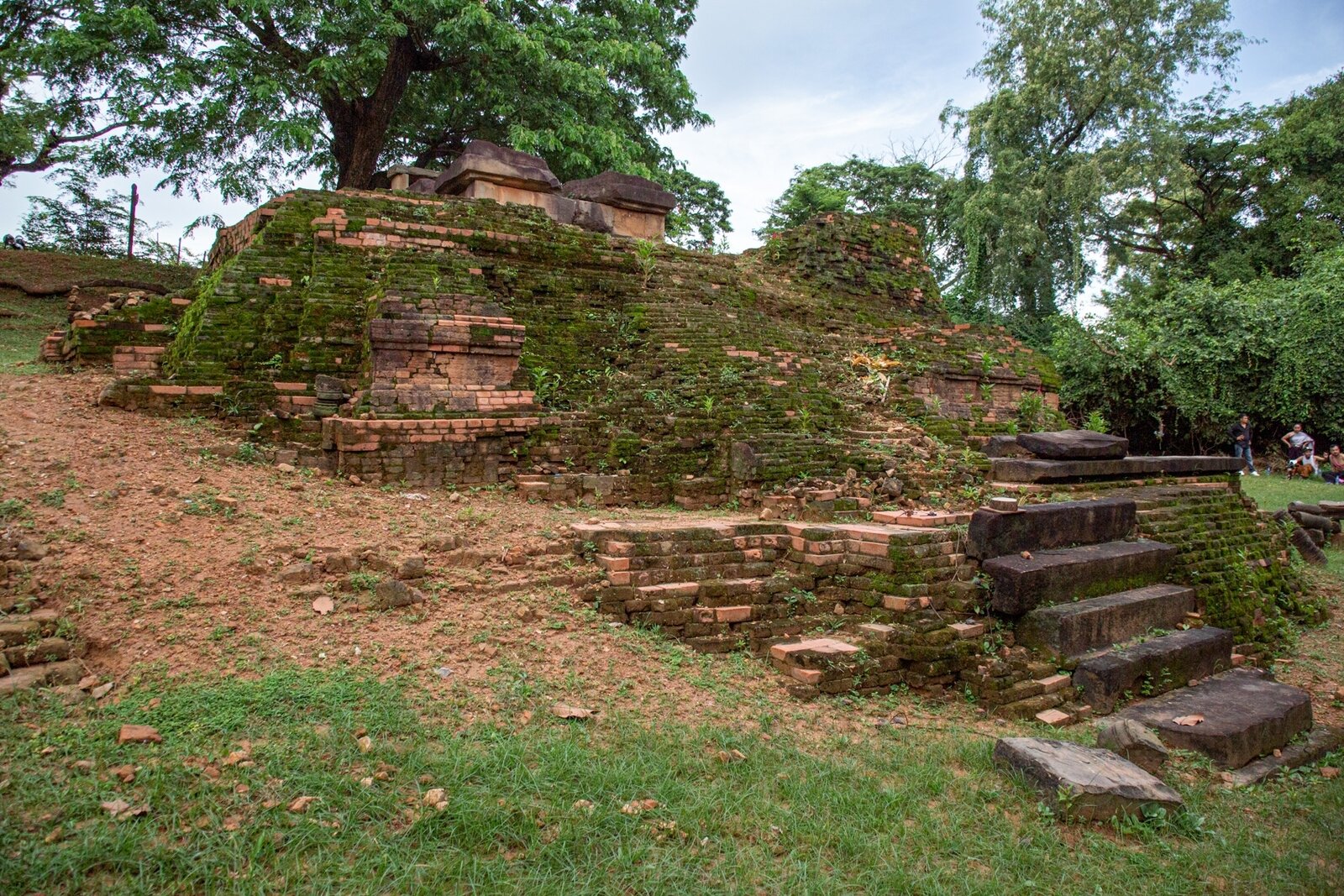
Ak Yum Temple, West Baray, Angkor Area [photo by Hello Angkor, n. d.]
Ak Yum Temple, West Baray, Angkor Area [photo by Hello Angkor, n. d.]
- First completed in 674 CE during the reign of King Bhavavarman I, expanded during the 8th century, modified one century later, with a reservoir added in the 11th century for unclear purposes, Prasat Ak Yum ប្រាសាទអកយំ, on the southern bank of the West Baray near Puok (Siem Reap Province) is one of the most ancient temple-pyramids known in Cambodia, and remains a rather enigmatic one.
Now, what could be the origin of the name for this small — yet graced by 12 towers — structure that has puzzled archaeologists for decades? According to Chhuon Nath’s Dictionary, អក ak in Khmer refers to the fish hawk [osprey] [as seen above], and also to the large, greenish cicada that can be heard so clear and loud in the Angkor forest. អកយំ, ak yum, “the cicada or the osprey cries out loud”…Yet the same dictionary tells us អកយំ akyum is also a genre of Khmer music. And one of the three Khmer inscriptions found there, K. 752, referred to an offering to Śrī Gambhīreśvara, गम्भीरशिव, ‘The Lord with the Resounding Voice’ — Shiva.
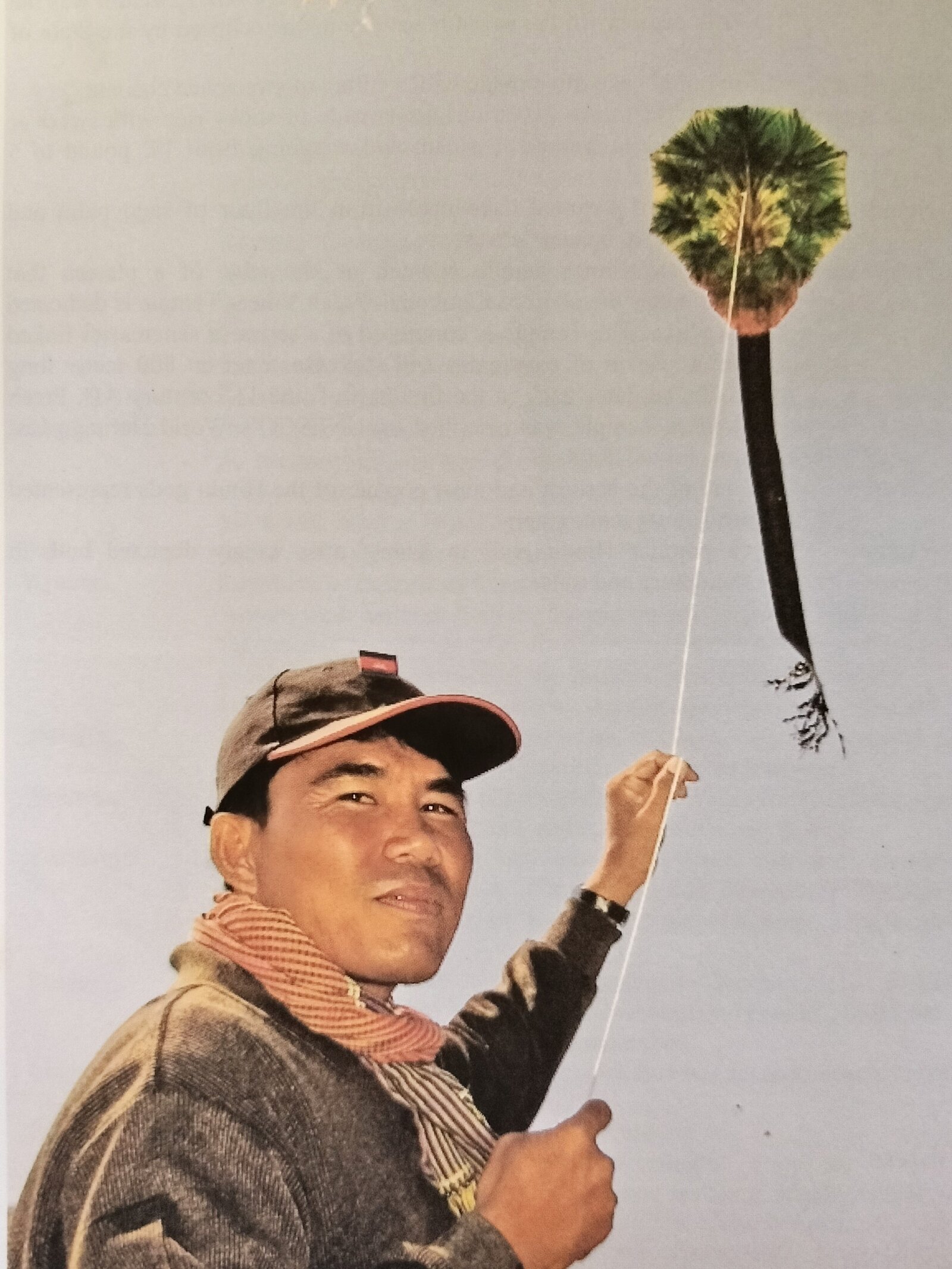
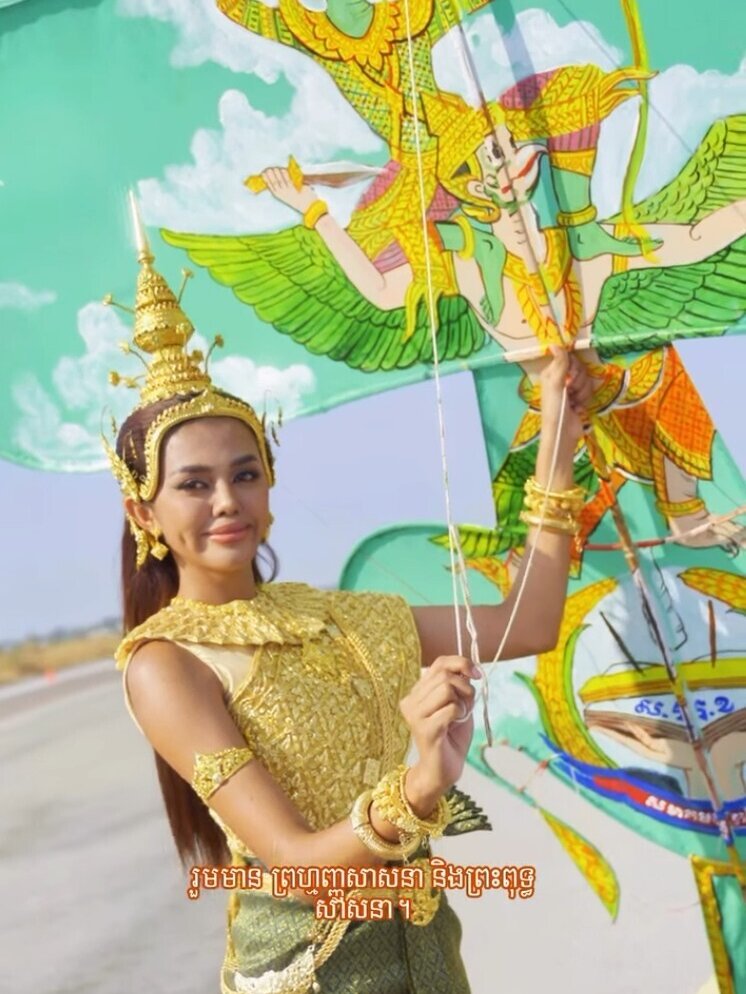
1) Cambodian kite master Roeng Sareth flying a Khleng Thnot (Palm Tree Kite) at Cervia International Kite Festival, Italy, 2009 [from the book Khmer Kites, 2003, 2012.] 2) Cambodian model and actress Leakhena In dressed as an apsara at the Siem Reap Kite Festival, 2026 [photo IG].
1) Cambodian kite master Roeng Sareth flying a Khleng Thnot (Palm Tree Kite) at Cervia International Kite Festival, Italy, 2009 [from the book Khmer Kites, 2003, 2012.] 2) Cambodian model and actress Leakhena In dressed as an apsara at the Siem Reap Kite Festival, 2026 [photo IG].
1) Cambodian kite master Roeng Sareth flying a Khleng Thnot (Palm Tree Kite) at Cervia International Kite Festival, Italy, 2009 [from the book Khmer Kites, 2003, 2012.] 2) Cambodian model and actress Leakhena In dressed as an apsara at the Siem Reap Kite Festival, 2026 [photo IG].
Kites over Asia
Kites are ubiquitous in Asia, or were. They hardly survived the onslaught of video games, remote-controlled miniature cars and planes, the idea that flying contraptions of bamboo and paper just couldn’t be fun. Yet kite flying should be revived, if only for the sake of getting together in a windy park or a calm beach, and not yelling at each other.
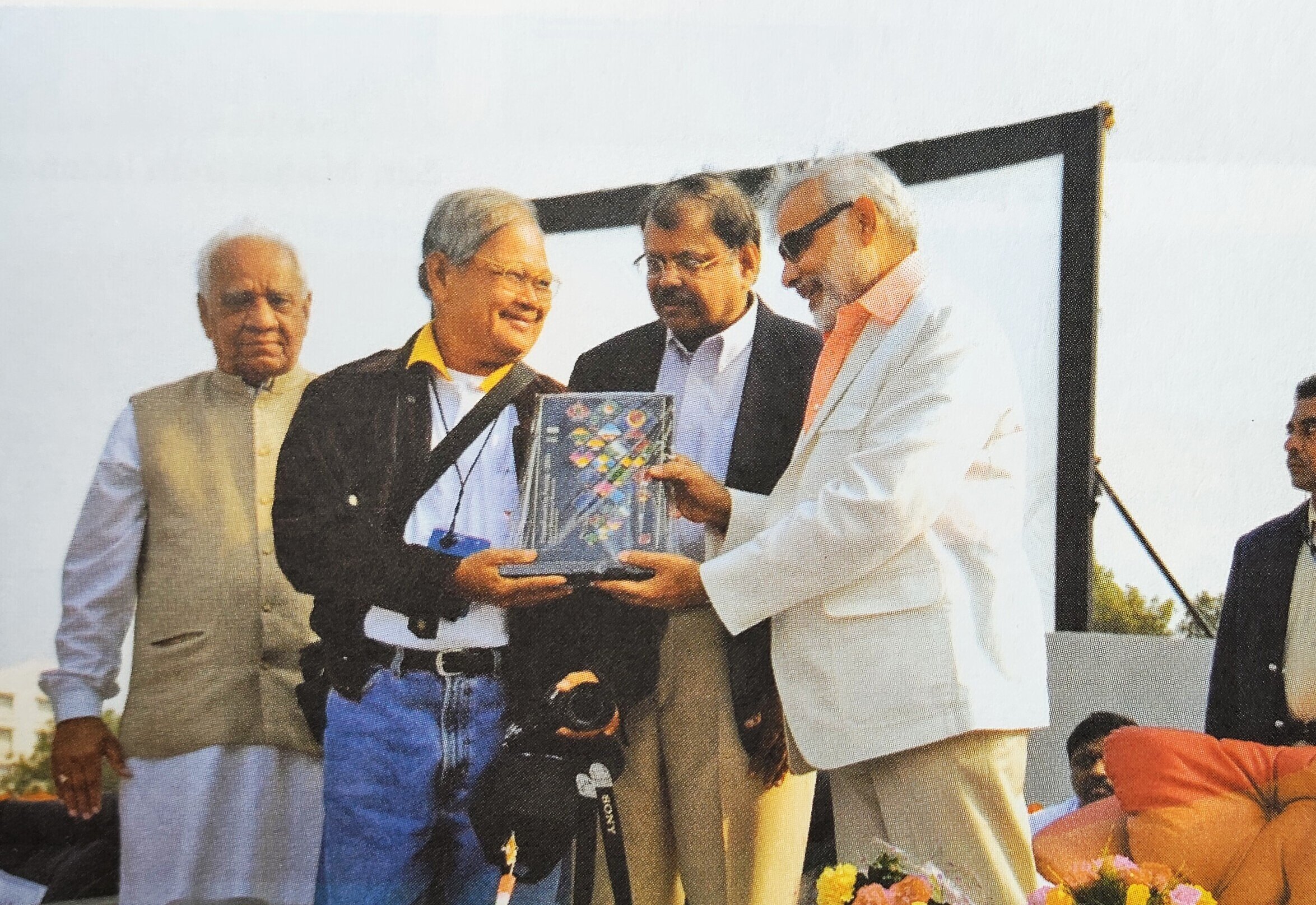
Sri Narendra Modi, then Chief Minister of the State of Gujarat, handing the first prize to Cambodian kite master Sim Sarak at Uttarayan Festival, 15 Jan. 2009 [photo from Khmer Kites, 2012.]
Shri Narendra Modi (right), then Chief Minister of the State of Gujarat, handing the first prize to Cambodian kite master Sim Sarak (3d from right) at Uttarayan Festival, 15 Jan. 2009, with two unidentified Indian officials looking over. Modi was to become India’s Prime Minister on 20 Sept. 2014. [photo from Khmer Kites, 2012.]
Burma (Myanmar)
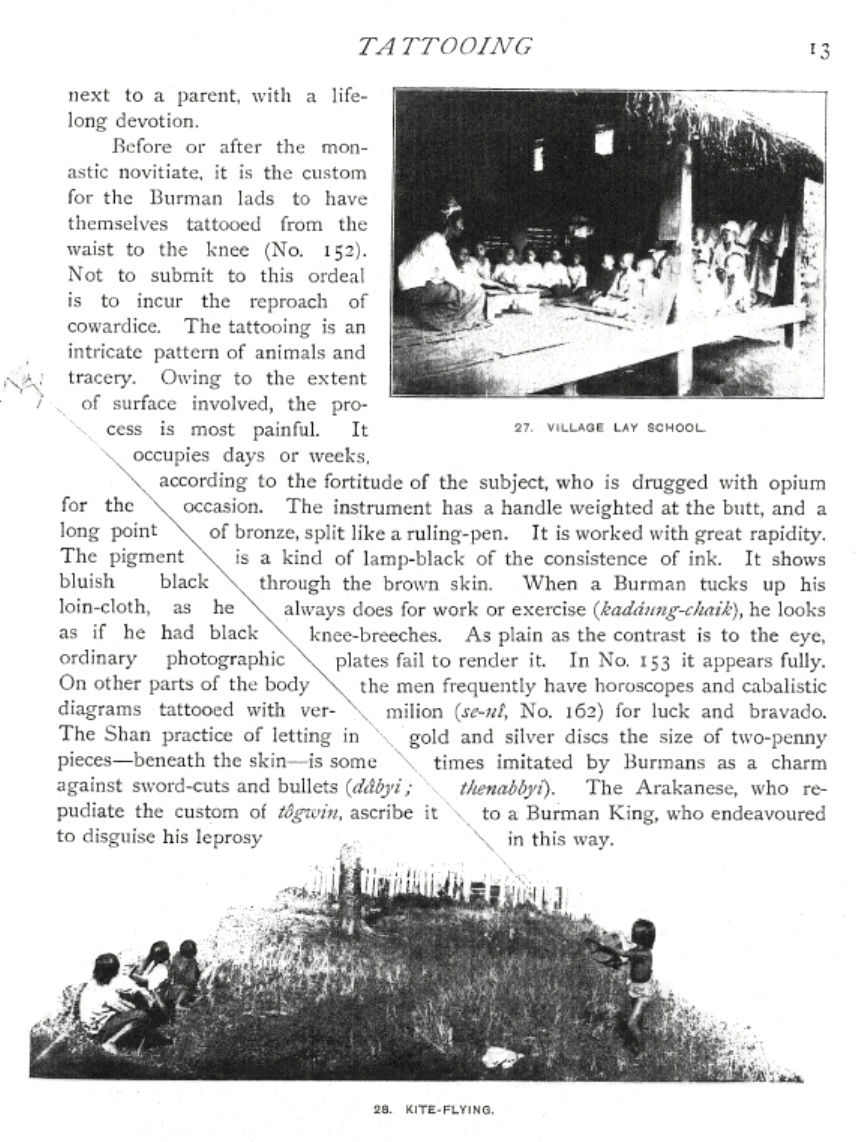
“Boys fight duels with their kites, each flier seeking to saw through his opponent’s kite-line, for which purpose a length of string has been roughened with sand or pounded glass.” [Bertha & Max Ferrars, Burma, London: Sampson, Low, Marston & Company, [photo-album], 1900, 342 p, p 9.
Uttarayan Festival, Gujarat (India)
The Uttarayan Kite Festivals are annually held in January across the State of Gujarat, coinciding with the Capricorn Festival (14 January, 15 in the case of leap year), also referred to as Uttarāyana, Makara, or Makar Sankrānti. In the Hindu calendar, followed in India and Nepal, the day marks the transition of the sun from the zodiac of Sagittarius (dhanu) to Capricorn (makara), and the preparation of the upcoming harvest season.
There is an International edition amongst the many local festivals, attended by worldwide visitors and guests. The Festival is dedicated to the solar deity, Surya, to Vishnu and to the goddess Lakshmi. In past years, master kite makers from Malaysia have brought their wau-balang kites, llayang-llayang have come from Indonesia, kite innovators from the USA have arrived with giant banner kites, and Japanese rokkaku fighting kites have shared the skies with Italian sculptural kites, Chinese flying dragons, and other high-tech innovations. Famous famous kite flyer Rasulbhai Rahimbhai of Ahmedabad has trained of up to 500 kites on a single string, becoming a classic attraction [from Wikipedia article].
Across India, the Makar Sankranti mid-winter, multi-day celebrations, often including kite-flying, are referred to as
Sankranthi or Peddha Panduga in Andhra Pradesh and Telangana,
Khichari in Bhojpuri region,
Magh Bihu in Assam,
Maghi Saaji in Himachal Pradesh,
Makaravilakku in Kerala,
Makara sankranti in Karnataka,
Maghi Sangrand in Punjab,
Pongal in Tamil Nadu,
Maghi Sangrand or Uttarain (Uttarayana) in Jammu,
Sakrat in Haryana,
Sakraat in Rajasthan,
Sukarat in central India,
Uttarayana in Gujarat and Uttar Pradesh,
Dahi Chura in Bihar,
Makar Sankranti in Odisha, Jharkhand, Maharashtra, Goa, West Bengal,
Poush Sankranti or Mokor Sonkranti, Uttar Pradesh,
Khichidi Sankranti or Uttarayani, Uttarakhand,
Til Sakraat in Mithila,
Shishur Senkrath, Kashmir,
Maghe Sankranti, Nepal.
In Buddhist Southeast Asia, the celebration has been moved later in the year to conform with the lunar-solar calendar. Thus, Khmer Mohan Songkran មហាសង្ក្រាន្ត (Cambodia) Thai Songkran สงกรานต์ (Thailand), Burmese Thingyan သင်္ကြန် (Myanmar), Lao Pi Mai ປີໃໝ່ລາວ (Laos ), are all celebrated between 14 and 17 April of each year, and include traditional rites of purification and merit-making, villagegames and dances.
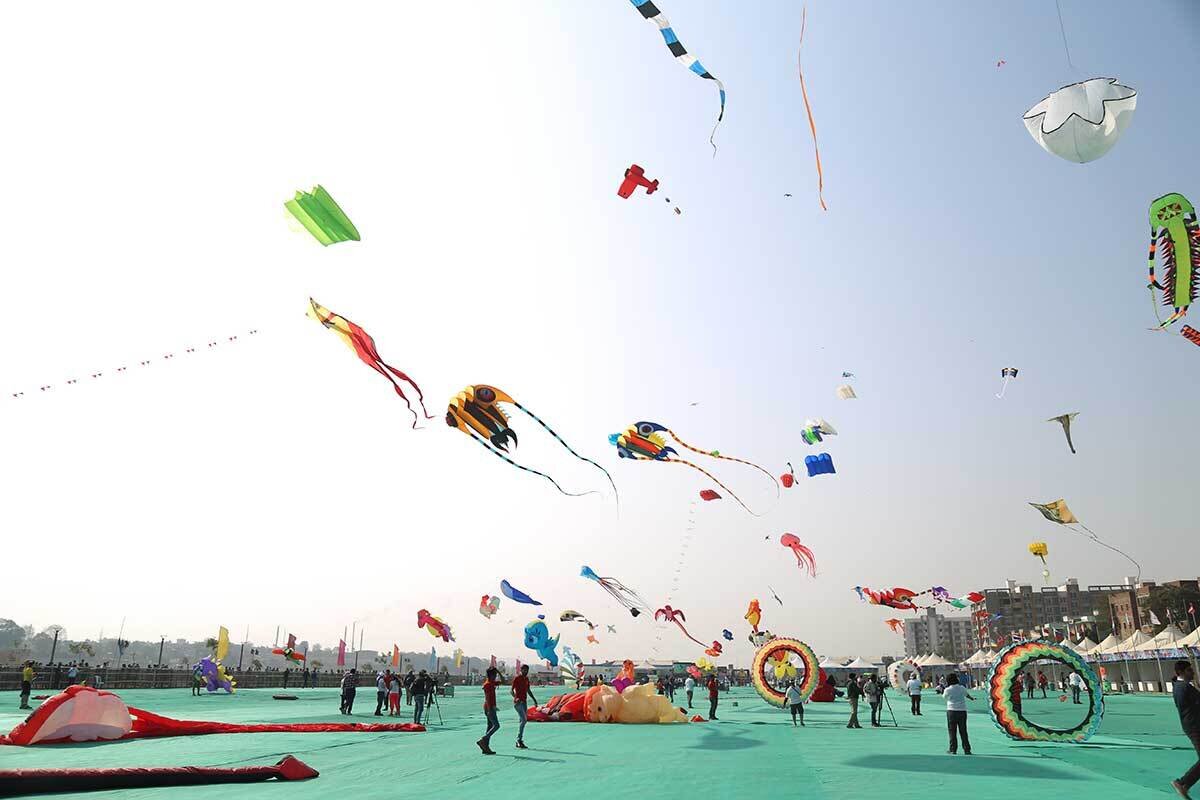
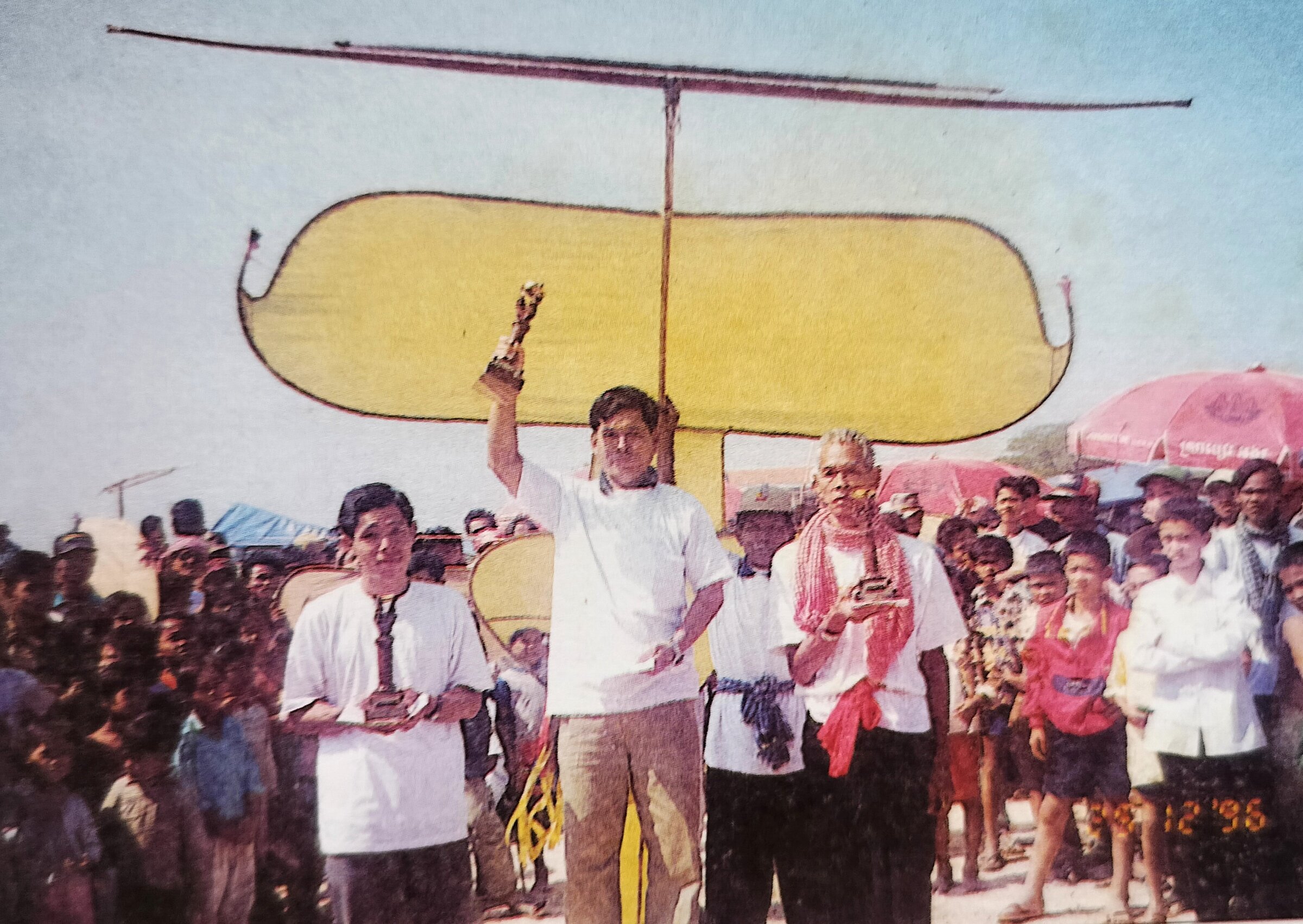
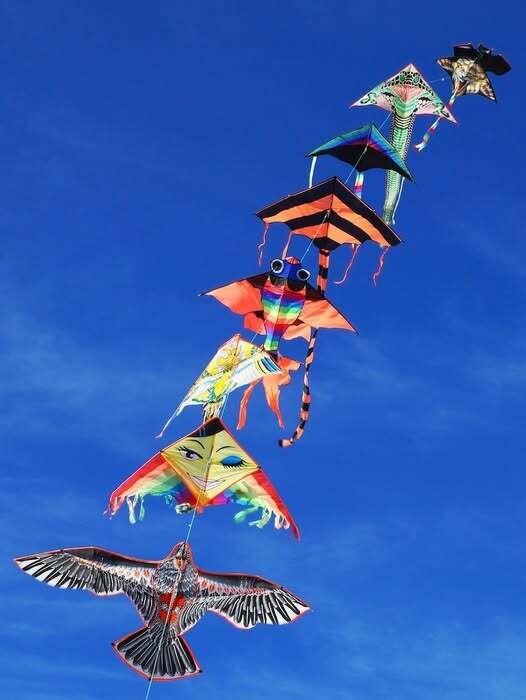
1) Uttarayan Kite Festival 2025, Gujarat, India [Gujarat Tourism Authority]. | 2) 2nd National Kite Festival, Phnom Penh, Dec. 1996 [from Khmer Kites book]. 3) Flying kites in Vietnam, Aug. 2025 [FB post by Xóa Mù Tiếng Anh].
1) Uttarayan Kite Festival 2025, Gujarat, India [Gujarat Tourism Authority]. | 2) 2nd National Kite Festival, Phnom Penh, Dec. 1996 [from Khmer Kites book]. 3) Flying kites in Vietnam, Aug. 2025 [FB post by Xóa Mù Tiếng Anh].
1) Uttarayan Kite Festival 2025, Gujarat, India [Gujarat Tourism Authority]. | 2) 2nd National Kite Festival, Phnom Penh, Dec. 1996 [from Khmer Kites book]. 3) Flying kites in Vietnam, Aug. 2025 [FB post by Xóa Mù Tiếng Anh].
1) Uttarayan Kite Festival 2025, Gujarat, India [Gujarat Tourism Authority]. | 2) 2nd National Kite Festival, Phnom Penh, Dec. 1996 [from Khmer Kites book]. 3) Flying kites in Vietnam, Aug. 2025 [FB post by Xóa Mù Tiếng Anh].
China
There is much research to be done on the Chinese 风筝 fengzheng wind zither, 纸鸢 zhǐyuān paper kite (bird), 鹞 yao harrier (bird of prey). The common knowledge has it that kites flown in China were initially military contraptions, then called “Fēng Yuān”, wooden and silk structures built to wage wars against hostile principalties and kingdoms.
With the Tang dynasty (618−907) came the “Zhǐ Yuān”, paper kites designed to entertain the noblemen who felt comfortable in giving in such frivolous, un-Confucianist endeavors. During the Five Dynasties (907−960) a man named Lǐ Yè attached a musical device to his kite, producing a sound similar to the ancient zither, zhēng. One century later, under the Northern Songs (960−1127), kites became accessible to the commoners.
So, that would be the exact opposite evolution to what happened in Southeast Asia, particularly in Cambodia — a folk tradition borne out of agrarian rites and village beliefs reaching the royal court, wouldn’t it be? Or was it that the Chinese official historiography, even back then, only tolerated cultural flows to be directed from top to bottom, not the reverse?
Vietnam
“Diều sáo”, “kite flying”, is a time-honored activity across Vietnam, with some authors arguing kites have been there for 2,000 years and more. Like the Cambodian khleng, the name of the kite is the same than the one for a bird of prey — diều hâu, “hawk”.
There are numerous kite festivals throughout the country, including the Quang Yen (Quang Ninh Province) kite-fighting competition. Kite flying is seen as a sport, a hobby and a devotional custom.
Flying the kites in Bangkok, 1925
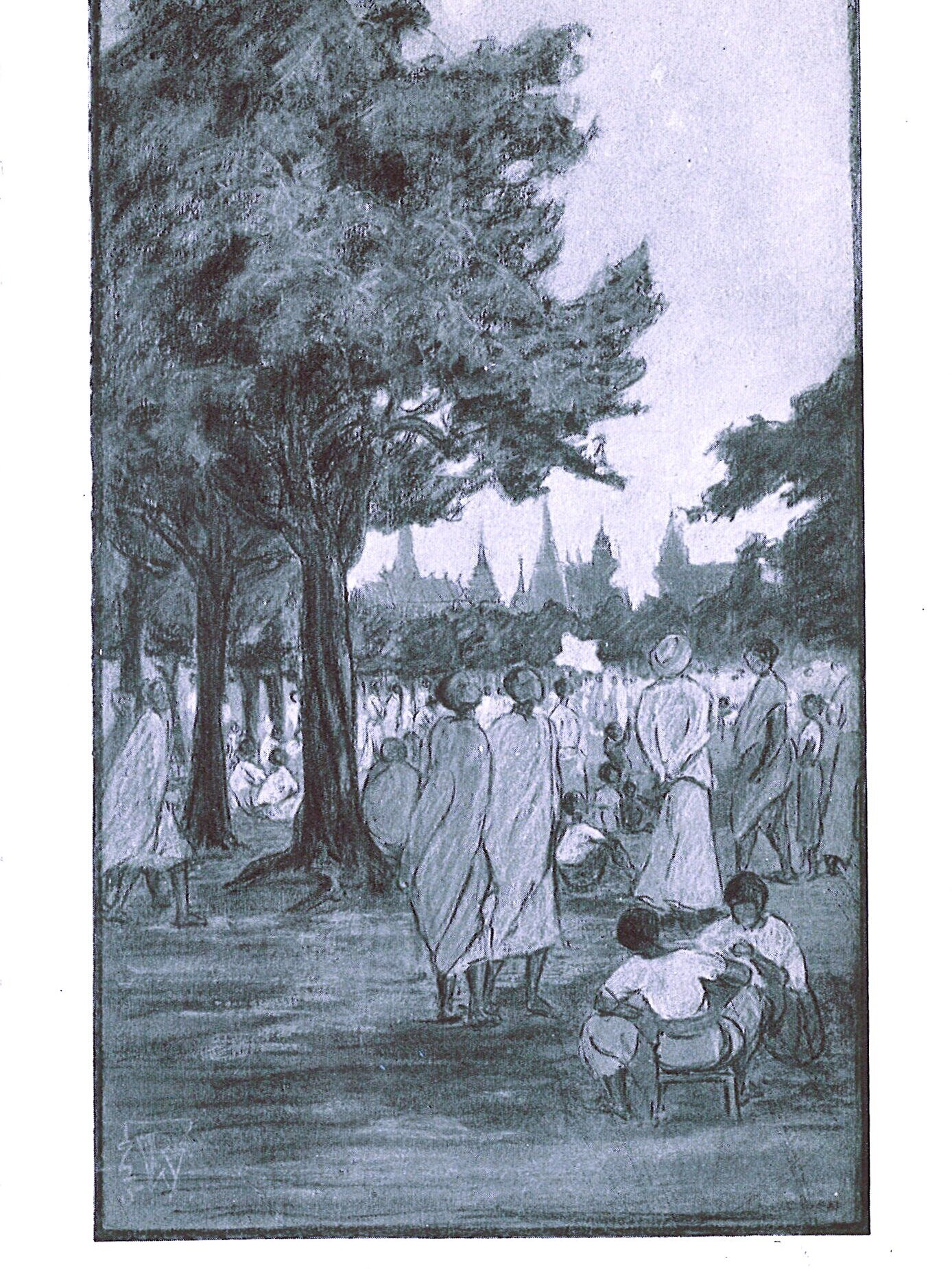
This eye-witness account of kite flying [th ว่าว wao] as a game and a ritual in 1920s by British artist Rachel Wheatcroft can be found in her book Siam and Cambodia in Pen and Pastel [p 186 – 8]:
Nothing could be more perfectly set than kite-flying on the immense Phra meru, looking down its length at the Old Palace, a wonderful background of golden spires glittering in the evening sun. Day after day in the windy season, all Bangkok assembles to see kites flown, and to back the favourites. In the shade of the wide avenue, which runs down the west side of the ground, are whole families in hundreds of cars. Under the double row of tamarinds, which surround the great grassed space, are endless little refreshment stalls of sweets, curries, seeds and what not. The sweets are on trays, the curries in the cooking on small braziers, and each has its group of patrons. On the ground itself is a huge multitude drawn from every class. Every kind of dress may be seen, and the gayest of colours, red predominating as always in the tropics, though here the yellow of monkish draperies, billowing in the strong breeze, is a keen rival.
Family parties are headed by the stout old mother in panung, short chemisette and scarf, if she be well-to-do; in panung and breastcloth only if quite poor, and in either case her stiff hair short and standing upright on her head. Teeth, if any be left to her, are jet-black, and the mouth turned to a loose-edged cavern by the life-long use of betel chews. She is followed by her group of slender daughters, wearing the pasin instead of the panung, and more modern in head-dress too, with their hair rolled low on the nape of the neck, and teeth gleaming white. If becoming dress instead of fashion ruled, the mother should wear the pasin and the daughters the panung. Among the men, all in panung, the bright blue of government officials rules as everywhere in Bangkok. There are Chinese too in immensely wide trousers, which must belong to the extreme south, or to the Bangkok Chinese only. I never saw their like elsewhere. As with all Chinese trousers, the seat is placed anywhere above the bend of the leg, and they fall nearly to the ankle. Most of them are in bright colours, not in the everlasting blue of China itself, and Europeans often adopt them for undress in their homes.
1) “Kite Flying at Prah Meru”, Bangkok, c. 1927 [from R. Wheatcroft’s Siam and Cambodia, p 186b]. 2) Kite flying in Burma [Myanmar] [photo-illustration in Bertha and Max Ferrars, Burma, London, 1900, p. 13. ]
1) “Kite Flying at Prah Meru”, Bangkok, c. 1927 [from R. Wheatcroft’s Siam and Cambodia, p 186b]. 2) Kite flying in Burma [Myanmar] [photo-illustration in Bertha and Max Ferrars, Burma, London, 1900, p. 13. ]
1) “Kite Flying at Prah Meru”, Bangkok, c. 1927 [from R. Wheatcroft’s Siam and Cambodia, p 186b]. 2) Kite flying in Burma [Myanmar] [photo-illustration in Bertha and Max Ferrars, Burma, London, 1900, p. 13. ]
The game that the crowd has come to see consists in fouling your adversary’s flight, or in bringing him or her down, for it is a war of the sexes. The male kite is man size or more; it has five points and is white and tailless. The female, a skittish little thing not a quarter his size, is diamond-shaped and flirts a coloured tail. Both have crushed glass glued on their enormously long strings, in the hope of cutting each other down if the worst come to the worst and the little lady have not entangled the big man in her toils... sometimes the big man escapes scot-free… As may be imagined it is a game of great skill, Manœuvre to catch and manœuvre to avoid, governed from the earthbound end of hundreds of feet of string, filled me with wonder, especially when dozens of couples fly all together and of course all in the same direction. The game is only possible in a high wind steady enough to lift the large kites above tree-level.
Skilled fliers naturally have great reputations, and their dexterity is watched with rapt attention. The whole crowd, head in air, might be awaiting the prophet of a fresh dispensation. On one occasion the Red Cross organized a kind of kite carnival in which marvellous monsters filled the air. Instead of being flat, like the fighting kites, a good many were made on the principle of the Japanese box kites. Amongst many I remember a white elephant, a tiger, several peacocks, a whole family of cobras, a Red Cross nurse - doubtless there to salve the wounds of the animals after encounters a terrific tubular python, a dragon of course, and many other wonders. The more complicated birds and beasts were really a series of connected kites, and must have been most difficult to manage. Except, perhaps, for the elephant all the creatures were life-size or much more!
In the same way that Sunday clothes more often mar than make, the usual kite games were more interesting to me than this great occasion. Yet, in spirit, it was quite as characteristic of Siamese inventiveness and sense of decoration.
Oceania/Pacific
The Māori kite is known as manu tukutuku or manu aute used for recreation, divination and . Manu means both kite and bird, and the word tukutuku refers to the winding out of the line as the kite ascends. Kites were also known as pākau, a name for the wing of a bird.b Maysmor, Kites and manu tukutuku: Tukutuku is a traditional Māori ornamental lattice-work art form made by weaving colored grasses through vertical reeds and horizontal wooden laths to decorate the interior walls of meeting houses (wharenui). [Bob Maysmor, “Kites and manu tukutuku”, TeAra, The Encyclopedia of New Zealand.]
Types of Māori kite, From the 17 or so known types of Māori kite, only three types have survived. In all, seven original kites still exist and are held in museums in London, Hawaii, Auckland and Wellington. Kites in bird form The manu kākā was designed to resemble the kākā (brown parrot). digitalpasifik
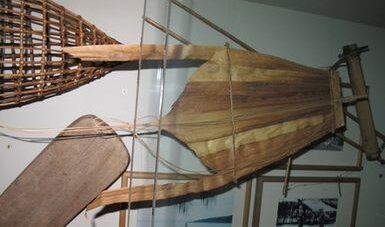
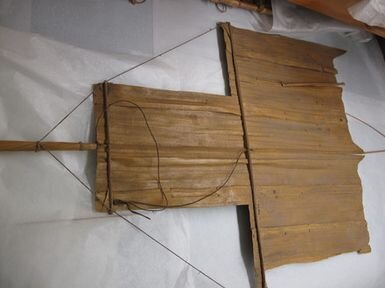
1) Fishing kite from Solomon Islands. 2) Rattan kite, origin unknown. [both kept at Auckland War Memorial Museum — Tamaki Paenga Hira. Photos via digitalpasifik.]
1) Fishing kite from Solomon Islands. 2) Rattan kite, origin unknown. [both kept at Auckland War Memorial Museum — Tamaki Paenga Hira. Photos via digitalpasifik.]
1) Fishing kite from Solomon Islands. 2) Rattan kite, origin unknown. [both kept at Auckland War Memorial Museum — Tamaki Paenga Hira. Photos via digitalpasifik.]
[with tr. of Chinese texts & interviews by Pascal Médeville] Dominique Baillon-Lalande, Le cerf-volant en Chine, Meudon/Dieppe, J. Cunéot/Centre d’action culturelle, 1987, 87 p.
Bob Maysmor, The Māori kite: te manu tukutuku, Wellington: Steele Roberts, 2001 [rev. ed.]
The Ayutthaya Kingdom or Empire was a Mon and later Siamese kingdom existed in Southeast Asia from 1351 to 1767, with its center Ayutthaya city, in Siam [nowadays Thailand]. Considered as the precursor of modern Thailand.
According to traditions, the kingdom was founded by King Uthong, but the latter's origin is unclear, as he is depicted as "a Northern Thai prince, a fugitive Chinese prince from the sea, a Khmer noble from Angkor, a ruler from one of the gulf cities, or a Chola dignitary."
sk तैलङ्ग Tailaṅga "the Tailanga country" | sk तैलङ्गः tailaṅgaḥ "inhabitants of Tailanga" | persian سلطنت كرناتک saltanat-i-kratanak "the Sultanate of Karnatak' | tml ஆற்காடு நவாப் āṟkāḍu navāp "the Nawab of Arkot"
Name of a geographical area, the modern Telangana or Karnatak. The part of the Indian peninsula south of Orissa (Odisha) to Madras (Chennai), between the Eastern Ghats and the Bay of Bengal, in the former Madras Presidency and in the modern Indian states of Karnataka, Kerala, Tamil Nadu and southern coastal Andhra Pradesh.
The area where took place the Carnatic Warsbetween the Mughal Empire, Britain and France which ultimately led to British victory and the domination of the British Empire over India.
Carnatic music (known as Karnāṭaka saṃgīta or Karnāṭaka saṅgītam in the Dravidian languages): the main style of classical music in southern India, as distinct from the Hindustani and Odissi musical genres of the north. Most Carnatic compositions are in Telugu and Sanskrit, derived from ancient Hindu texts and traditions, particularly the Samaveda, and written with an emphasis ongāyaki (singing) style. The Vijayanagara Empire (Karnataka) saw the golden age of Carnatic music in the 18th and 19th centuries, under the patronage of the kings and queens of Mysore, Travancore, and the Maratha rulers of Tanjore. Along with famous royal court musicians Veene Sheshanna (1852–1926) and Veene Subbanna (1861–1939), composers Tyagaraja (1767– 1847), Muthuswami Dikshitar (1776–1835) and Syama Sastri (1762–1827) remain celebrated for the richness of their kritis (works).
sk लिङ्ग linga, 'penis', 'grammatical gender', 'mark', 'sign', 'a type of ancient temple' | kh លិង្គ lengk 'gender', 'feature', 'attribute', 'male genitalia'
The liṅga is a semi-iconic (between the iconic and the aniconic) image of Śiva. A cylindrical shaft with phallic connotations, it is often associated to the yoni, symbolic representation of the female genitalia, the matrix of anything [1].
The linga symbol is ever-present in Southeast Asian architecture and religious representations. It has absorbed ancient local cults of uncut stones. Associated with fertility rituals in Cambodia, it became the physical embodiment of the kamraten jagat raja or devaraja, the vector of the divine essence attached to kingship.
[1] In Tibetan Vajrayana (tantric Buddhism), 'liṅga' refers to the “upper genitals” [penis or clitoris].
A Thai traditional garment consisting in a a long strip of cloth wrapped around the waist and often tucked at the back after being passed between the legs.
sk स्तूप, stupa, "heap" | pa thupa | kh ចេតិយ chedi, cha-dey | th เจดีย์ cedyi, "stupa", "mausoleum".
A Buddhist mound-like or hemispherical structure containing relics, originally from the Buddha or from Buddhist monks or nuns, in modern times the remains of distinguished departed people, where one can come to meditate.
Thought to be derived from the ancient ritual of building tumuli, the stupa was designed to allow circumambulation [pradakhshina] around the structure, as seen until these days at Shewanagon Pagoda (Myanmar), the Abayagiri Dageba (Sri Lanka) or Borobodur Temple (Indonesia).
In Cambodia, royal stupas in pagodas (Oudong, Wat Ounalom, Wat Phnom...) and at the Royal Palace (Kantha Boppha chedi, King Suramarit...) have a distinctive style, different from Thai cedyis. In Khmer, the word originally meant "sign" [of a sacred place], and went to refer only to a structure containing relics.