Epigraphist Chhom Kunthea ឆោម គន្ធា (b. 1980)became the first Cambodia-born Sanskritist at international academic level after presenting her doctoral thesis at Ecole Pratique des Hautes Etudes (Paris) in 2016. She started to specialize in Sanskrit and epigraphy thanks to her BA tutor, the linguist Dr. Sylvain Vogel.
An alumna of Royal University of Fine Arts with various scholarship assignements in India, and a former student under the guidance of linguist Saveros Pou, Kunthea has been working for the Apsara Authority since 2008, specializing in deciphering stone inscriptions from the ancient Khmer Empire. Her research focuses mainly on the development of Old Khmer language which was in close contact with Sanskrit from the 6th to the 14th century CE.
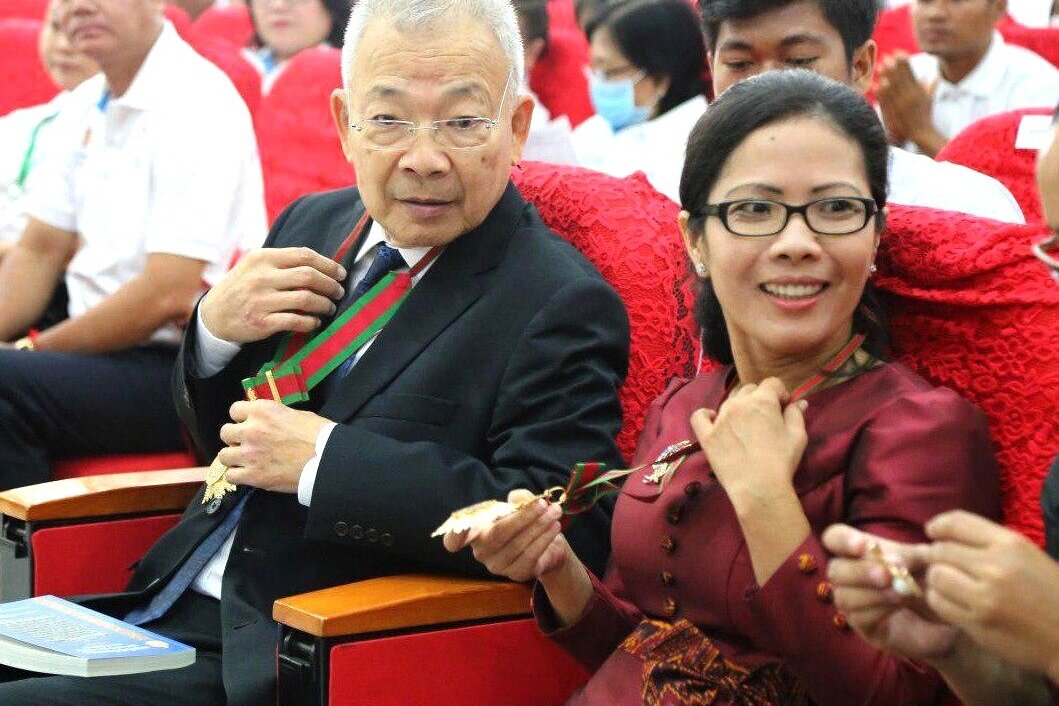
Chhom Kunthea and Prof. Ang Choulean attending an award ceremony at RUFA in March 2020 (photo by RUFA).
Chhom Kunthea and Prof. Ang Choulean attending an award ceremony at RUFA in March 2020 (photo by RUFA).
In additon her epigraphical research, she teaches Sanskrit grammar and Sanskrit inscriptions from Ancient Cambodia at the Faculty of Archaeology, Royal University of Fine Arts, Phnom Penh. A founding member of the DHARMA Project, Kunthea Chhom has also headed the Preah Norodom Sihanouk — Angkor Museumin Siem Reap, a joint establishment between Apsara Authority and Sophia University (Tokyo) opened in 2008.
Chhom Kunthea’s insights on inscriptions of Cambodia in Sanskrit and Khmer have opened numerous hypotheses for further research, for instance her take on the coining of the term Kambuja in the 8th century, linking the country of the Khmer people to a mythical Shivaite ascet as a reference of prestige.
Inscriptions of Koh Ker I, Publications of the Hungarian Southeast Asian Research Institute 1 (series editor: Zsuzsanna Renner), 2011, 334 p.
[with Mathieu Guérin] “Le périple de Khim et Nov de Stung Treng à Attopeu en 1883, récit d’exploration cambodgien du XIXe siècle”, Péninsule 69 – 2, 2014, p 163.
Le rôle du sanskrit dans le développement de la langue khmère: Une étude épigraphique du VIe au XIVe siècle, Phnom Penh, Sāstrā Publishing House, 2018, 750 p. ISBN-13 : 978−99963−92−03−0
[with Arlo Griffiths] “A problematic inscription (K. 1237)”, Udaya 19, 2019: 3 – 22.
“Le mythe de Kambu chez les Khmers : une pratique sanskritique”, in Pierre-Sylvain Filliozat & Michel Zink eds., Mythes d’origine dans les civilisations de l’Asie, Paris, Académie des Inscriptions et Belles-Lettres, 2021, p 201 – 14.
Translations
[tr. FR>KH] វេយ្យាករណ៍ភាសាសំស្ក្រឹតថ្នាក់មូលដ្ឋាន [A Concise Elementary Grammar of the Sanskrit Language] by Jan Gonda, Utrecht University, published by Buddhist Institute, Phnom Penh 2020, ISBN-13: 978−99950−50−11−5.
សាកល្បងមើលសិលាចារឹកកម្ពុជាតាមក្រសែភ្នែកមនុស្សសម័យចាស់ [Looking at Cambodian inscriptions through the eyes of people of yore], Apsara National Authority Center, 18 Aug. 2019, Part I&Part II.
វប្បធម៌សំស្រ្កឹត និងការសិក្សានៅសម័យមុនអង្គរ និងសម័យអង្គរ [The Culture of Sanskrit and the Studies in the Pre-Angkor and Angkor periods], Apsara National Authority Center, 27 Aug. 2019, Part I&Part II.
[withIm Sok Rithy]:ព្រះពុទ្ធសាសនានិងមន្ទីរព្យាបាលរោគក្នុងរាជព្រះបាទជយវម៌្មនទី៧ [Buddhism and Hospitals during the reign of Jayavarman VII], Apsara National Authority Center, 13 Sept. 2019, Part I&Part II.
Kāmboja, a kingdom often mentioned in the Mahābhārata and in the Ramayana, with supposed location in the northwestern part of India, in modern Kabul area, renowned for its warriors and fine horses. Later on, a country visited by Asokas missionaries.
In ancient Indian astrology, a Kādi (subdivision) belonging to Nairṛtī (south-western division referring to a country possibly identified with the Cambodia of Cochin China according to the Bṛhatsaṃhitā (chapter 14), an encyclopedic Sanskrit work written by Varāhamihira.
One of the two Mahājanapadas of the Uttarāpatha (Northern District) of ancient India, as recorded in the Pāli Buddhist texts, presumably not far from Gandhāra, with Nandipura as the only city of the Kambojas mentioned in the inscriptions. "Home of horses," a term related to horses and elephants.
In Ayurvedic medicine, a plant defined with Coccinia grandis. White mimosa.
Kambujadesa, the land of कम्बु Kambu: according to 10th-century traditions, the union between hermit Kambu Swayambhuva and the celestial nymph Mera founded the Cambodian solar royal dynasty (Kambu-Mera), beginning with Chenla ruler Srutavarman and his son Sreshthavarman.
[Kambhoji or Kambodhi, a raga or raganimode in Carnatic music, derived from 28th mela Hari Kambhoji, widely known and developed since the 7th century, often dedicated to Lord Ganesha. Defined as "majestic, auspicious in the devotional register" by Dr. Charulatha Mani and by famed Bollywood music composer A.R. Rahman. Etymology unknown, Kāmbhojī काम्भोजी being one name for Guñjā गुञ्जा, Abrus Precatorius, "red bean" plant. Carnatic music scholars do not exclude the possibility that the name might derive from Cambodia-Kampuchea.]