

Publications
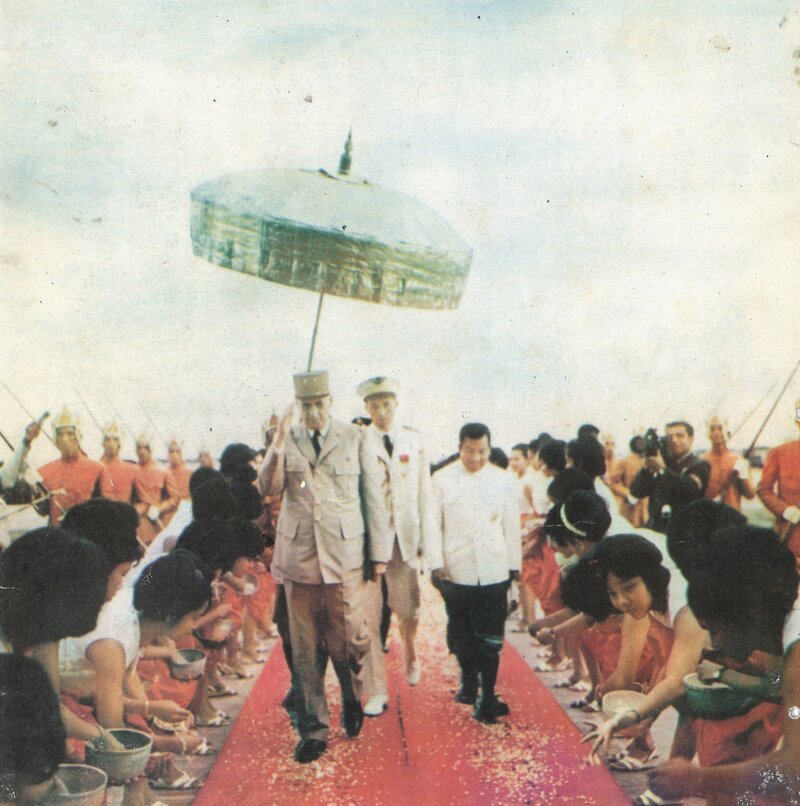
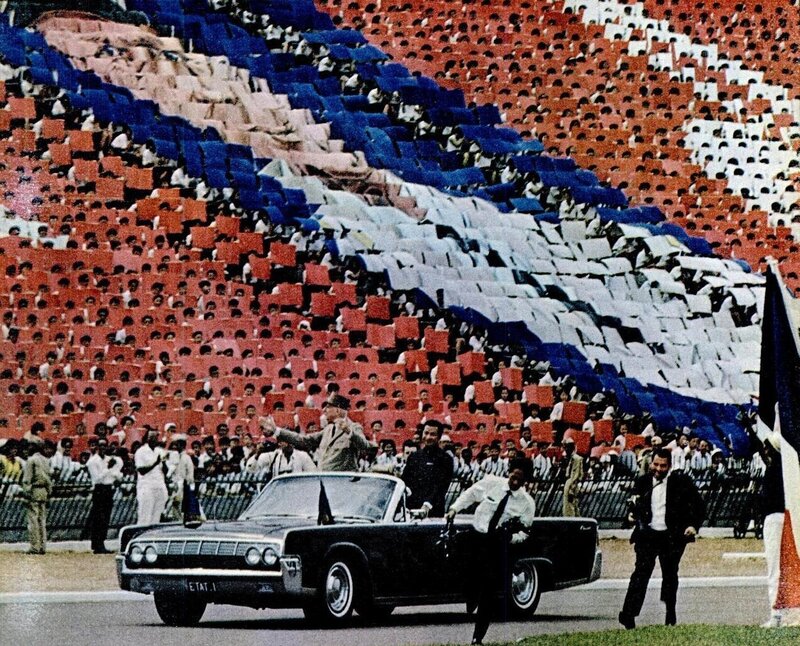
Charles de Gaulle's Speech - Phnom Penh Stadium, 1st Sept. 1966
by Angkor Database
by Sihanouk Norodom & Angkor Database
From "Founding Father" to mending diplomatic fences with France in the 1990s: Prince and King Norodom Sihanouk and Francophonie.

pdf 574.3 KB
Francophonie and the King-Father…A complex story that had originated during the French Protectorate (1863−1953) but went through a noted peak with the September 1966 historic visit of French President Charles de Gaulle (22 Nov. 1890, Lille, France — 9 Nov. 1970, Colombey-les-deux-Églises) to Cambodia. Here are some markers.
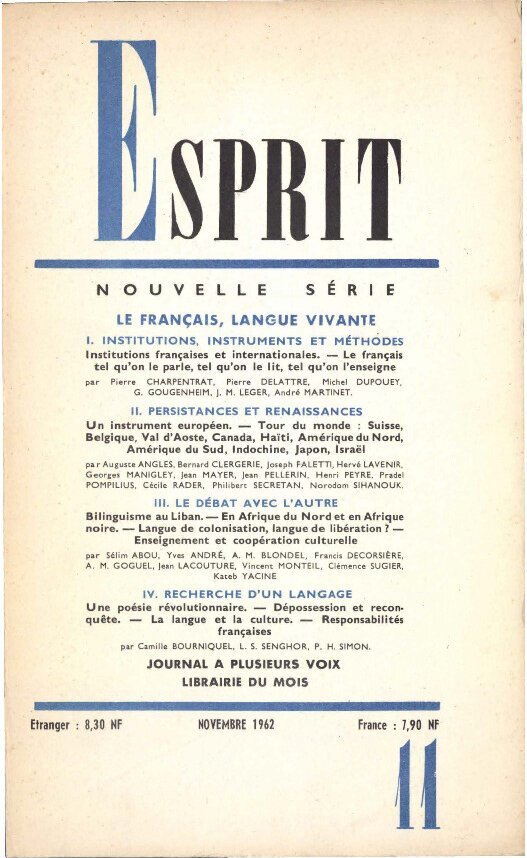
La Revue Esprit me demande mon témoignage sur le rôle de la langue française dans mon pays et dans ma propre formation. Le sujet est vaste et j’aimerais avoir le temps de le développer comme il convient. Mais un Chef d’Etat et de Gouvernement d’une nation du Sud-Est asiatique connaît, de nos jours, tant de graves soucis que je me vois contraint, à regret, d’écourter ma réponse.
On n’ignore pas, du reste dans les cercles intellectuels où circule Esprit, que le Cambodge occupe une place honorable parmi les pays francophones, et qu’il pourrait être, si la France le voulait et consentait pour cela les quelques sacrifices nécessaires, le « sanctuaire » de la culture française en Asie.
L’influence d’un pays, de nos jours, est étroitement liée à son rayonnement culturel. De ce point de vue, la France reste très «présente» au Cambodge où toute l’élite pratique, et souvent assez bien, en tout cas avec affection et fierté, la langue de Pascal — où nos écoliers, nos collégiens, nos lycéens sont dix fois plus nombreux qu’au temps du Protectorat à connaître le français.
Je dois dire qu’une concurrence sérieuse se prépare chez nous pour la langue française. Les Anglo-Saxons font des efforts pour implanter l’anglais et la prochaine création à Phnom-Penh de deux grands Instituts technologiques, l’un offert par les Etats-Unis, l’autre par l’Union Soviétique, qui seront fréquentés par près de 2 000 jeunes et où l’on enseignera bien évidemment dans les langues de ces deux Nations, va porter un coup assez sérieux dans les années qui viennent à la suprématie jusqu’ici incontestée du français.
Si la France installait ici une Université, comme elle l’a fait pour certains pays d’Afrique Noire, elle s’assurerait la gratitude de nombreux jeunes Cambodgiens et consoliderait ses positions. C’est une suggestion qui, malheureusement, n’a guère de chance d’être retenue et qui risqué de me faire qualifier de « mendiant », bien que mon intention soit pure.
Tout en mettant à l’honneur notre langue nationale et en la perfectionnant sans cesse, nous réservons donc une place de choix au français. Un exemple : trois journaux paraissent en langue française à Phnom-Penh et dans mon propre journal le Nationaliste, rédigé en khmer, l’éditorial paraît en français. Pourquoi? Parce que nous voulons que l’étranger connaisse sans erreur possible nos sentiments, nos positions et que nous nous méfions, à juste titre, des déformations dues aux traducteurs, parce que le français est précis, souple, nuancé — parce qu’il nous est très familier enfin, cette dernièr,e raison valant bien les autres.
Il m’est plus délicat de parler du rôle de la langue française dans ma formation. L’avouerai-je? Je né suis pas un intellectuel. J’allais passer mon premier baccalauréat lorsque la mort de S.M. Sisowath Monivong, mon regretté grand-père, m’arracha aux bancs du Lycée Chasseloup Laubat de Saïgon pour me porter sur le Trône.
J’avais été un assez bon latiniste et helléniste et j’étais mieux que passable en français. Il a fallu que je me contente de ce modeste bagage. Je me suis perfectionné tout seul, depuis, en lisant, en écoutant, en parlant, en écrivant. Car j’ai éait en français. Oh! pas de grands livres, je n’en aurais eu ni le temps ni sans doute, ce qui règle tout: le talent. Mais des articles, que j’ai publiés dans la presse de mon pays et, à l’occasion, dans des journaux ou revues de l’étranger. ]‘ai pu ainsi expliquer le rôle de notre Monarchie Khmère, souvent méconnue, traiter de grands problèmes nationaux avec une liberté qui m’a souvent attiré des ennuis, mais m’a suscité aussi quelques précieuses sympathies. C’est d’ailleurs, mes lecteurs le voient, en style plus journalistique que diplomatique que je leur apporte mon témoignage de fidèle ami de la langue française, et de la France elle-même.
Norodom SIHANOUK
The journal Esprit has asked for my thoughts on the importance of the French language in my country and in my own personal education. The subject is vast, and I would have loved to have enough time to elaborate on it as it deserves. However, as the head of state and government of a Southeast Asian nation, I face so many pressing concerns these days that I am regretfully compelled to keep my response brief.
Moreover, it is well known within the intellectual circles where Esprit circulates that Cambodia holds an honorable place among the Francophone nations, and that, should France so desire and be willing to make the necessary sacrifices, Cambodia could serve as a “sanctuary” for French culture in Asia.
In this day and age, a nation’s influence is closely tied to its cultural reach. From this perspective, France remains very much “present” in Cambodia: the entire elite speaks the language of Pascal, often quite well, and always with affection and pride, while the number of our primary, middle, and high school students who know French is ten times greater than it was during the era of the Protectorate.
I must note, however, that the French language is facing serious competition in our country. The Anglo-Saxon powers are making efforts to promote English; furthermore, the upcoming creation of two major technological institutes in Phnom Penh, one provided by the United States and the other by the Soviet Union, will accommodate nearly 2,000 young people. As instruction at these institutions will naturally be conducted in the languages of those two nations, this will deal a significant blow, in the years to come, to the hitherto unchallenged supremacy of French.
If France were to establish a university here — as it has done in certain sub-Saharan African nations -, it would earn the gratitude of many young Cambodgiens and strengthen its own position. This is a suggestion that, unfortunately, has little chance of being adopted and might even lead to me being labeled a “beggar”…though my intentions are entirely pure.
While honoring our national language and constantly striving to perfect it, we nonetheless reserve a prominent place for French. For instance, three French-language newspapers are published in Phnom Penh; furthermore, in my own newspaper, Le Nationaliste, which is written in Khmer, the editorial appears in French. Why? Because we want foreigners to understand our sentiments and positions without any possibility of error, and because we are — and rightly so — wary of distortions introduced by translators. Moreover, French is a precise, flexible, and nuanced language and, finally, it is one with which we are really comfortable; this last reason is as valid as any of the others.
It is somewhat more delicate for me to speak of the role the French language played in my own education. Shall I confess? I am no intellectual. I was on the verge of taking my first baccalauréat examination when the death of His Majesty Sisowath Monivong, my late grandfather, pulled me from my studies at the Lycée Chasseloup-Laubat in Saigon and placed me upon the throne.
I had been a reasonably good student of Latin and Greek, and my French was better than merely passable. I had to make do with this modest foundation. Since then, I have continued to refine my command of the language on my own — through reading, listening, speaking, and writing. For I have indeed written in French. Not great books, mind you, since I lacked the time, and, more decisively, I lacked the necessary talent. But I have written articles, which I published in the press of my own country and, occasionally, in foreign newspapers or journals. I have thus been able to explain the role of our Khmer Monarchy, so often misunderstood — and to address major national issues with a freedom that has frequently brought me trouble, yet has also earned me some valued expressions of sympathy. Moreover, as my readers will observe, it is in a style more journalistic than diplomatic that I offer this testimony — as a loyal friend of the French language, and of France itself.
Norodom SIHANOUK [Reference [1]]
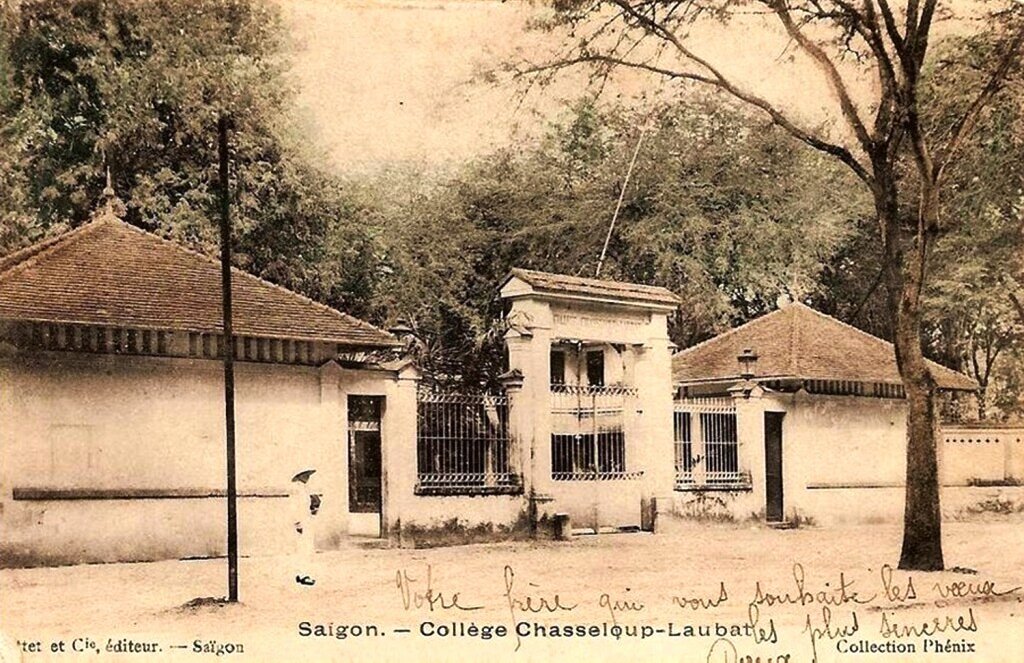
1) The Collège (secondary school) Chasseloup-Laubat in Saigon [mod. Ho Chi Minh City] at the junction of in the 1910s, before it became a Lycée (high school) in 1926. 3) Students in front of the school in the 1940s, at a time it was or had been attended by future famous individuals such as French novelist Marguerite Duras (1914−1996), last South Vietnamese president General Dương Văn Minh (1916−2001), historian Vương Hồng Sển (1926−1996) and King Norodom Sihanouk of Cambodia (1922−2012). Since 1970, it is the Lê Quý Đôn High School, named after 18th-century Vietnamese mandarin, philosopher and poet Lê Quý Đôn (1726−1784). [photos 1& 2 and background from Tim Doling’s post on the history of the school, Historic Vietnam, 8 Sept. 2014.] 2) The Phnom Penh Institute of Higher Technology វិទ្យាស្ថានបច្ចេកទេសជាន់ខ្ពស់ មិត្តភាព កម្ពុជា សួរទៀត, built in 1961 and one of the first educational establishments to reopen after the civil war thanks to the USSR-Cambodia cooperation [photo c. 1984 by A.V. Lieberman in Cambodia: Rebuilding from the Ashes [Russian, Khmer editions], 1986 – 1987].
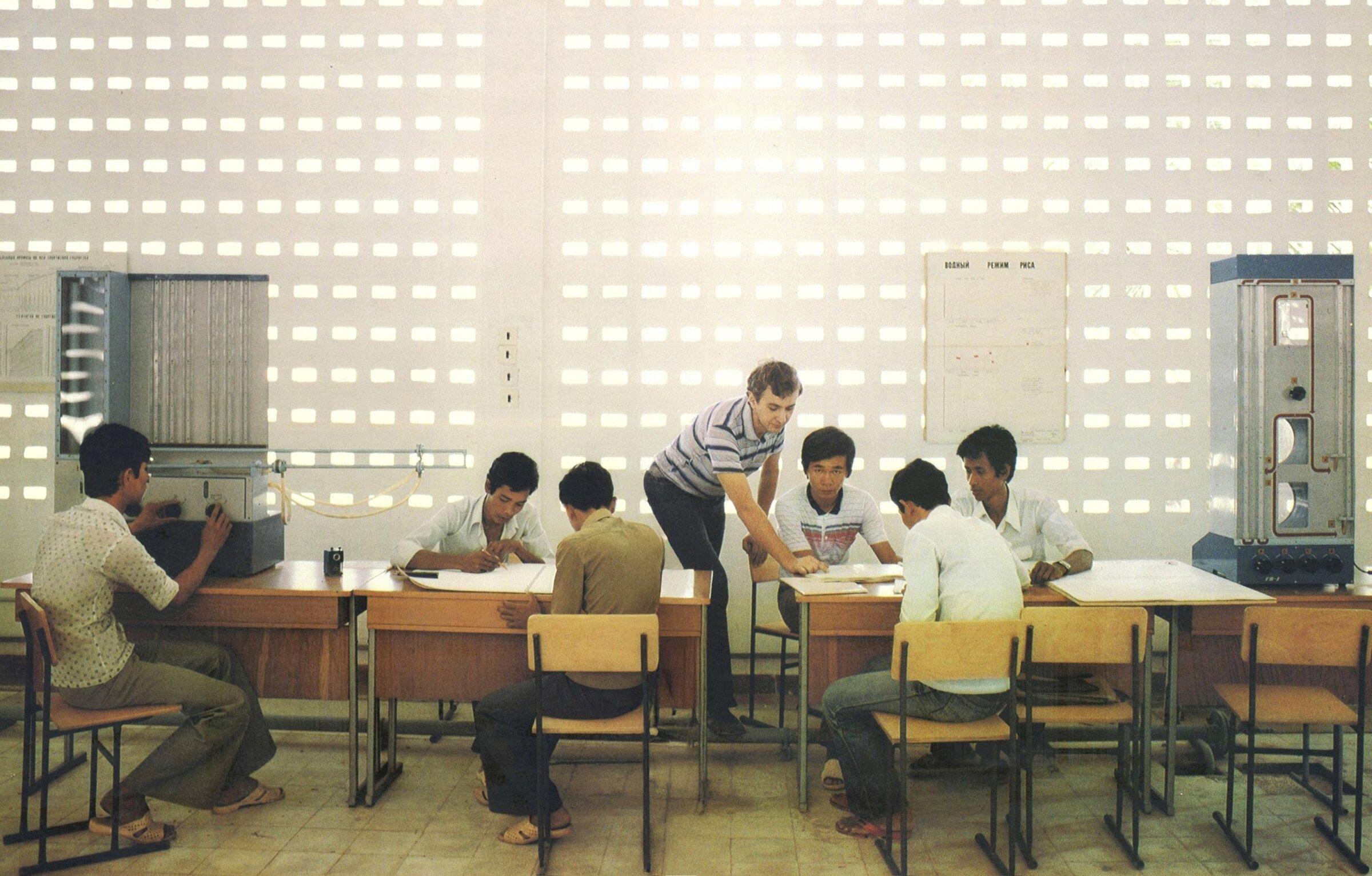
1) The Collège (secondary school) Chasseloup-Laubat in Saigon [mod. Ho Chi Minh City] at the junction of in the 1910s, before it became a Lycée (high school) in 1926. 3) Students in front of the school in the 1940s, at a time it was or had been attended by future famous individuals such as French novelist Marguerite Duras (1914−1996), last South Vietnamese president General Dương Văn Minh (1916−2001), historian Vương Hồng Sển (1926−1996) and King Norodom Sihanouk of Cambodia (1922−2012). Since 1970, it is the Lê Quý Đôn High School, named after 18th-century Vietnamese mandarin, philosopher and poet Lê Quý Đôn (1726−1784). [photos 1& 2 and background from Tim Doling’s post on the history of the school, Historic Vietnam, 8 Sept. 2014.] 2) The Phnom Penh Institute of Higher Technology វិទ្យាស្ថានបច្ចេកទេសជាន់ខ្ពស់ មិត្តភាព កម្ពុជា សួរទៀត, built in 1961 and one of the first educational establishments to reopen after the civil war thanks to the USSR-Cambodia cooperation [photo c. 1984 by A.V. Lieberman in Cambodia: Rebuilding from the Ashes [Russian, Khmer editions], 1986 – 1987].
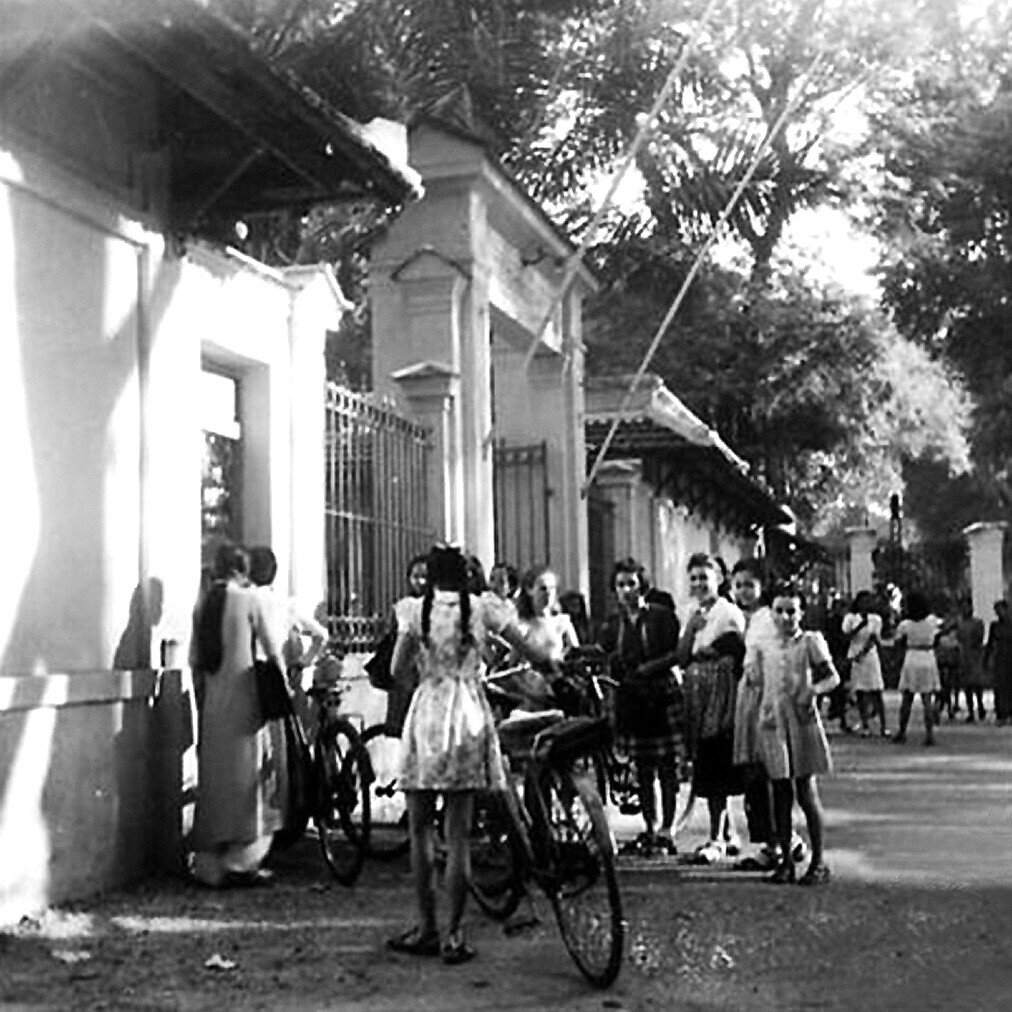
1) The Collège (secondary school) Chasseloup-Laubat in Saigon [mod. Ho Chi Minh City] at the junction of in the 1910s, before it became a Lycée (high school) in 1926. 3) Students in front of the school in the 1940s, at a time it was or had been attended by future famous individuals such as French novelist Marguerite Duras (1914−1996), last South Vietnamese president General Dương Văn Minh (1916−2001), historian Vương Hồng Sển (1926−1996) and King Norodom Sihanouk of Cambodia (1922−2012). Since 1970, it is the Lê Quý Đôn High School, named after 18th-century Vietnamese mandarin, philosopher and poet Lê Quý Đôn (1726−1784). [photos 1& 2 and background from Tim Doling’s post on the history of the school, Historic Vietnam, 8 Sept. 2014.] 2) The Phnom Penh Institute of Higher Technology វិទ្យាស្ថានបច្ចេកទេសជាន់ខ្ពស់ មិត្តភាព កម្ពុជា សួរទៀត, built in 1961 and one of the first educational establishments to reopen after the civil war thanks to the USSR-Cambodia cooperation [photo c. 1984 by A.V. Lieberman in Cambodia: Rebuilding from the Ashes [Russian, Khmer editions], 1986 – 1987].
1) The Collège (secondary school) Chasseloup-Laubat in Saigon [mod. Ho Chi Minh City] at the junction of in the 1910s, before it became a Lycée (high school) in 1926. 3) Students in front of the school in the 1940s, at a time it was or had been attended by future famous individuals such as French novelist Marguerite Duras (1914−1996), last South Vietnamese president General Dương Văn Minh (1916−2001), historian Vương Hồng Sển (1926−1996) and King Norodom Sihanouk of Cambodia (1922−2012). Since 1970, it is the Lê Quý Đôn High School, named after 18th-century Vietnamese mandarin, philosopher and poet Lê Quý Đôn (1726−1784). [photos 1& 2 and background from Tim Doling’s post on the history of the school, Historic Vietnam, 8 Sept. 2014.] 2) The Phnom Penh Institute of Higher Technology វិទ្យាស្ថានបច្ចេកទេសជាន់ខ្ពស់ មិត្តភាព កម្ពុជា សួរទៀត, built in 1961 and one of the first educational establishments to reopen after the civil war thanks to the USSR-Cambodia cooperation [photo c. 1984 by A.V. Lieberman in Cambodia: Rebuilding from the Ashes [Russian, Khmer editions], 1986 – 1987].
Amongst the many observations in King Sihanouk’s essay, we’ll note how the Cambodian leader, while praising the foundational study of the ‘classics’ (Latin, Greek) in the traditional French educational system, insisted on the essential importance of “honoring and perfect the national language”, Khmer. There was not necessarily a contradiction here, except if Francophonie was considered as an instrument of political neo-colonialism. In his text for the same issue of Esprit, Senegal President Léopold Sédar Senghor (9 Oct. 1906, Joal, French West Africa (present-day Senegal) — 20 Dec. 2001, Verson, France) had a similar notation:
C’était en 1937. J’enseignais, alors, le français — avec les langues classiques- depuis deux ans, au Lycée Descartes de Tours. Venu passer les grandes vacances dans mon Sénégal natal, je fus sollicité de donner une conférence. ]‘avais choisi, comme thème, Le Problème culturel en A.O.F. La foule des évolués, blancs et noirs mêlés, s’écrasait dans la grande salle de la Chambre de commerce de Dakar. On s’attendait à m’entendre exalter la culture gréco-latine, du moins la culture française. Devant le Gouverneur général ébahi, je fis une charge vigoureuse contre l’assimilation et exaltai la Négritude, préconisant le « retour aux sources » : aux langues négro-africaines. Ce fut un succès de scandale, plus, au demeurant, chez les Africains que chez les Européens. « Maintenant qu’il a appris le latin et le grec, murmuraient ceux-là, il veut nous ramener au wolof. » [L. Sédar Senghor, “Le français, langue de culture” [French, A Language of Culture] in Esprit, nouvelle série: Le français, langue vivante [French, A Living Language], Nov. 1962, p. 838.]
It was 1937. At the time, I had been teaching French along with classical languages for two years at the Lycée Descartes in Tours. Having returned to my native Senegal for the long summer vacation, I was asked to give a lecture. I chose as my theme “The Cultural Problem in French West Africa.” A crowd of évolués — a mix of Black and white individuals — packed into the large hall of the Dakar Chamber of Commerce. The audience expected me to extol Greco-Latin culture, or at the very least, French culture. Before a stunned Governor-General, I launched a vigorous attack against assimilation and championed Négritude, advocating a “return to the sources”…that is, to Negro-African languages. It was a much controversial success though, it must be noted, the reaction was more intense among Africans than among Europeans: “Now that he has learned Latin and Greek,” the former remarked, “he wants to take us back to Wolof…” [Ref. [2]]
Thirty years later the publication in the journal Esprit, and less than one year after the ratification of the Cambodian Peace Accords of Paris (October 1991), an unsigned column based on an interview with the again-Prince and soon-to-be King again Sihanouk in the French officious newspaper Le Monde read as follows:
Dans la ruche cosmopolite qu’est redevenue la capitale khmère, l’enceinte du palais royal _ avec sa pagode d’argent et son pavillon démontable offert par Napoléon III au roi de l’époque et fraîchement restauré par la France _ n’a pas été gagnée par la fébrilité environnante depuis que Norodom Sihanouk l’a réintégrée, à l’automne 1991, en tant que président du Conseil national suprême.
Le prince est bien allé tourner lui-même un film à Angkor et on revend sur les marchés son histoire en français de la Croisade royale pour l’indépendance, mais il a encore trop de soucis politiques pour rejouer le Cid en costume Grand Siècle comme jadis… Il a, en revanche, dès son retour, remis le Cambodge sur les rails francophones. Se souvient-il de sa participation, avec Léopold Senghor, Kateb Yacine, Vincent Monteil et d’autres, à ce numéro d’Esprit de novembre 1962 sur ” Le français, langue vivante “, qui passé aujourd’hui pour le manifeste de la francophonie moderne et fait classer l’homme d’Etat cambodgien parmi les ” pères du mouvement francophone ” ?
“Si je m’en souviens ! réagit-il. Mais je né veux plus assumer ce rôle de père de la francophonie car cette francophonie m’a boudé dès lors que je n’étais plus dans ce palais royal. On m’a banni. On né m’a pas invité, même comme personnalité indépendante, aux sommets francophones. J’étais pourtant chef de la résistance cambodgienne… Maintenant on me courtise de nouveau. Je verrai si je décide d’aller ou non au sommet francophone à Maurice l’an prochain, je verrai… Je né suis pas rancunier mais quand même… ” ” Cependant n’ayez crainte, nous avons besoin bien sûr d’un peu d’anglais et moi-même j’ai appris cette langue, mais je n’écris et n’écrirai qu’en français, et en khmer bien sûr, poursuit le prince en éclatant de rire. La France doit nous aider, et je crois qu’elle va le faire, pour redonner au français chez nous son premier rang, ce rang que de Gaulle avait remarqué ici en 1966. La France va, je pense, remplacer Hongrois et Soviétiques dans notre Institut d’agronomie et notre Institut de technologie. Il le faut ! ”
Et, avec sa moue inimitable de bébé capricieux : ” Mais qui parle d’abandonner le français ? Pour le français au Cambodge il n’y a pas besoin de consensus officiel, il y a un consensus sentimental… ” Enfin cette boutade : ” Le récent mariage de ma petite-fille avec un député socialiste dissident, est-ce bon pour la francophonie ? En tout cas, le marié appartient à la famille de Cambacérès, c’est à tout le moins une union entre l’Empire khmer et l’Empire napoléonien… ” [Cambodge — Le prince Sihanouk : ” On m’a boudé mais je né suis pas rancunier… (Le Monde, 10 septembre 1992) — Ref. [3]]
[In the cosmopolitan hive that the Khmer capital has once again become, the Royal Palace compound — with its Silver Pagoda and a demountable pavilion gifted by Napoleon III to the king of that era (recently restored by France) - has remained untouched by the surrounding frenetic energy ever since Norodom Sihanouk returned there in the autumn of 1991 as president of the Supreme National Council.
While the prince did travel to Angkor to film a movie himself, and his account (written in French) of the “Royal Crusade for Independence” is sold in the local markets, he remains too burdened by political concerns to reprise his old role as “Le Cid”, dressed in the style of the *Grand Siècle*… On the other hand, upon his return, he immediately set Cambodia back on a Francophone path. Does he recall his contribution — alongside Léopold Senghor, Kateb Yacine, Vincent Monteil, and others — to the November 1962 issue of the journal Esprit, titled “French: A Living Language”? That issue is now regarded as the manifesto of the modern “Francophonie” (the French-speaking world), and it has earned the Cambodian statesman a place among the “founding fathers” of the Francophone movement. “Of course, I remember!” he reacts. “Yet I no longer wish to take on the role of ‘father of the Francophonie’, if only because that same Francophonie shunned me as soon as I was no longer in the royal palace. I was cast out. I wasn’t even invited to the Francophone summits, not even as an independent figure, and this, despite the fact that I was the leader of the Cambodian resistance! Now, they’re courting me again. I’ll see whether or not I decide to attend the Francophone summit in Mauritius next year; we’ll see… I’m not one to hold a grudge, but still…”
“However, have no fear. Surely, we certainly have a need for a bit of English; I’ve even learned the language myself, but I write and will continue to write only in French, and in Khmer, of course,” the prince continues, bursting into laughter. “France must help us, and I believe it will, to restore French to its former preeminent position here, that very status de Gaulle recognized when he visited here in 1966. I expect France will take the place of the Hungarians and Soviets at our Institute of Agronomy and our Institute of Technology. It’s essential!”
And, with his inimitable, petulant pout that makes him look like a capricious child, he adds: “But who’s talking about abandoning French? When it comes to the French language in Cambodia, there’s no need for an official consensus; there’s a sentimental consensus…” Finally, he offers this quip: “My granddaughter recently married a dissident Socialist member of parliament — is that good for the Francophonie? In any case, the groom belongs to the Cambacérès family; at the very least, it’s a union between the Khmer Empire and the Napoleonic Empire…” [Cambodia – Prince Sihanouk: “I was shunned, but I hold no grudges…” [Le Monde, 10 Sept. 1992) — Ref. [3]]
Observe how persistently could last old Napoleonic clichés inherited from the colonial times — from the myth that the Iron Pavilion at the Royal Palace was gifted by Napoleon III and Empress Eugenie to King Norodom I to the fantasy that its restoration in 1991 was supported by the French public finances when it had been the labor of love of French architects and international volunteers called to the rescue by Cambodian architect Phuoeng Sophean, to the brief irruption of a Cambacérès in the modern Cambodian royal family…
In effect, French grand commis d’Etat Jean-Marie Cambacérès, who had taken part in the negotiations leading to the Peace Accords, was to marry (in Nîmes, France) one month after the above mentioned publication Princess Norodom Nanda Devi, a grand daughter of the King of Cambodia — their union lasted seven years. In his book on Sihanouk (2013 — Ref. 4), he recalled how he read the article reproduced above the very day he was to ask for the King and the Queen’s blessings upon the matrimonial prospect. But that wasn’t enough to rekindle that “convergence of destinies” between nations, a concept at the core of Francophonie.
On 11 – 12 Feb. 1993, French Président Francois Mitterrand followed the path of his political nemesis Charles de Gaulle by visiting Phnom Penh and Angkor some 27 years after ‘Le Général”s historic ‘Phom Penh Speech’ against the American War on Vietnam. At the time, the message of a “worldwide French-speaking community” had seriously waned. The Gaullist vision of “French grandeur” belonged to a difficult past, and French language as some sort of ‘imperial lingua franca’ was getting as much challenged as Russian across the remains of USSR since the Soviet collapse in 1989.
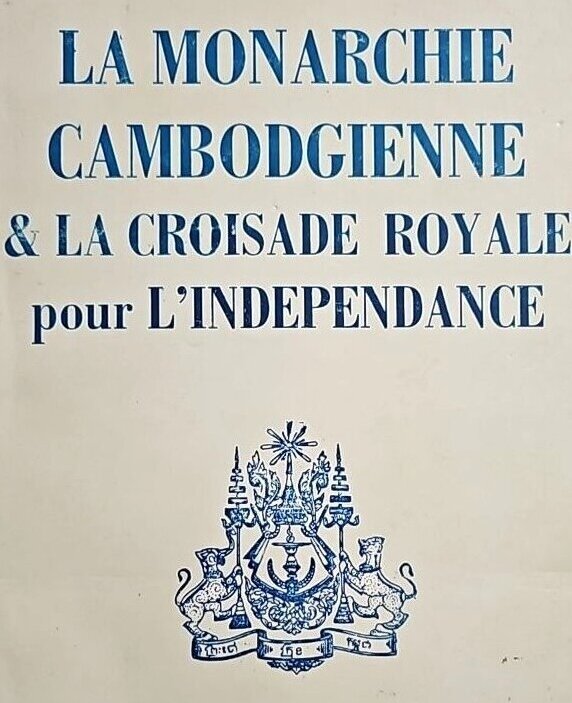

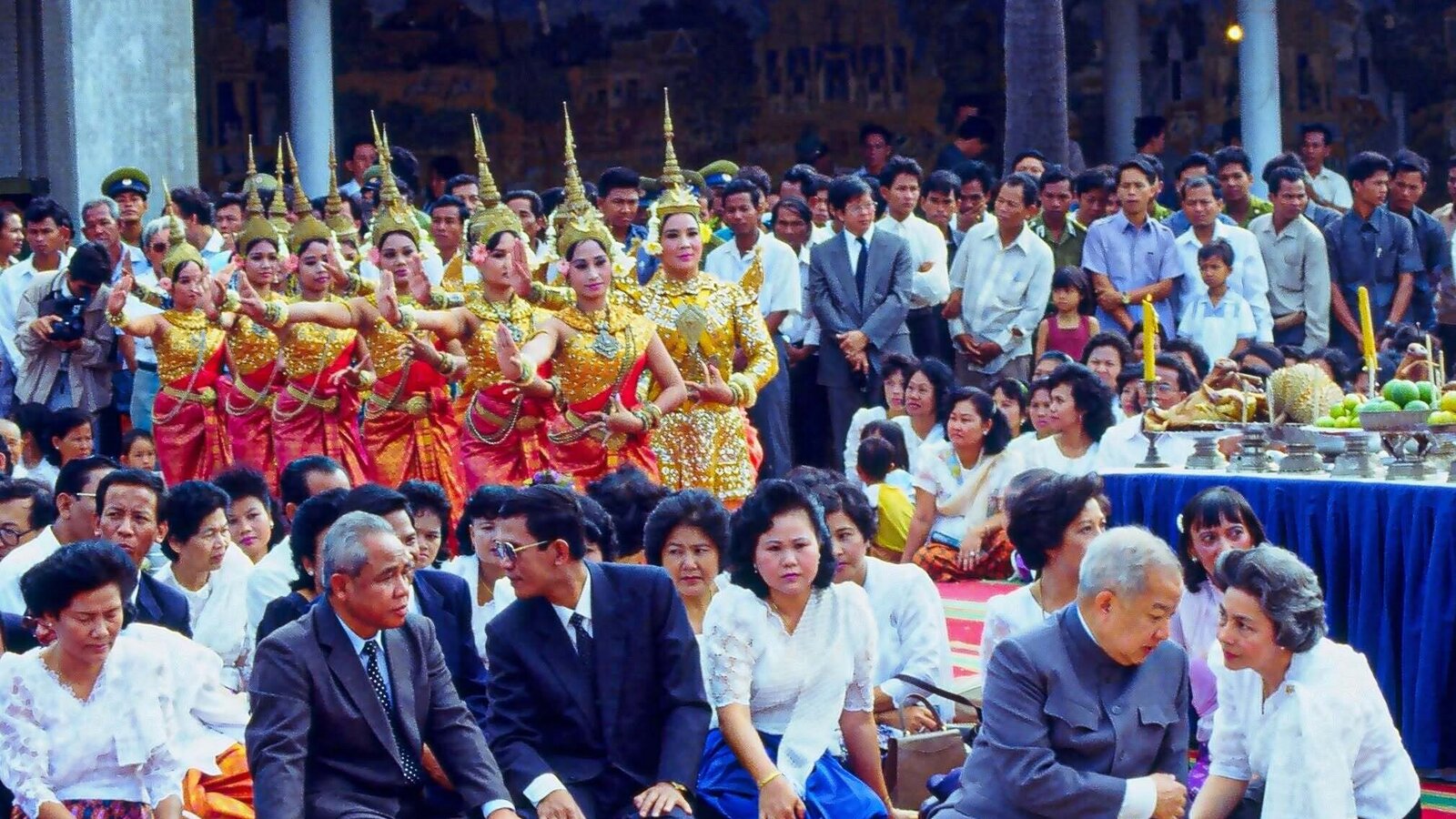
1) Book cover of La Monarchie Cambodgienne et la Croisade Royale pour l’Indépendance [Cambodian Monarchy and the Royal Crusade], written by King Sihanouk in French and published circa 1960 [photo courtesy Julio Jeldres]. 2) The King Father helping an ailing Chuon Nath, author of the major Dictionary of Modern Khmer, on the stairs of the Phnom Penh Buddhist Institute [photo repr. in Life Magazine, 18 Feb. 1968]. 3) Ceremony during the solemn return of Prince Sihanouk and Princess Monineath at the Royal Palace, Nov. 1991. Behind the royal couple, HRH Princess Norodom Arunrasmey, and on third row then Prime Minister Samdech Hun Sen and his spouse Samdech Kittipritbandit Bun Rany [photo by Rauli Virtanen]. 4) State dinner for President Mitterrand at Phnom Penh Royal Palace, 12 Feb. 1993. Princess Monineath was seated between the French President and French Foreign Minister Roland Dumas, with Prince Sihanouk standing for a toast. [source: HM King Sihanouk official website, unknown photographer, ref. 002 D4 Q21 T2].
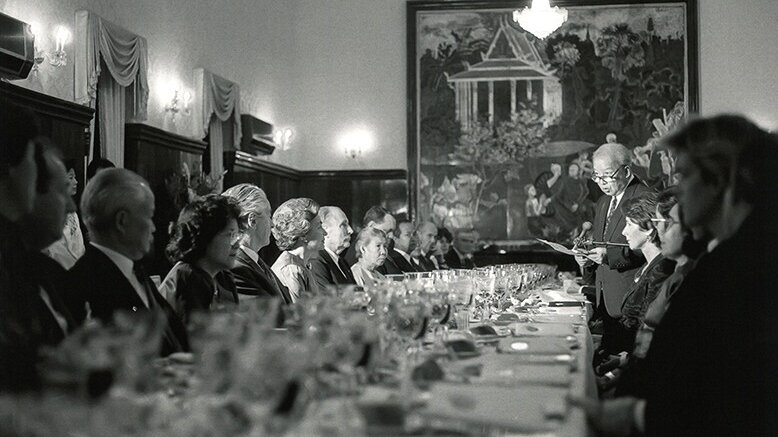
1) Book cover of La Monarchie Cambodgienne et la Croisade Royale pour l’Indépendance [Cambodian Monarchy and the Royal Crusade], written by King Sihanouk in French and published circa 1960 [photo courtesy Julio Jeldres]. 2) The King Father helping an ailing Chuon Nath, author of the major Dictionary of Modern Khmer, on the stairs of the Phnom Penh Buddhist Institute [photo repr. in Life Magazine, 18 Feb. 1968]. 3) Ceremony during the solemn return of Prince Sihanouk and Princess Monineath at the Royal Palace, Nov. 1991. Behind the royal couple, HRH Princess Norodom Arunrasmey, and on third row then Prime Minister Samdech Hun Sen and his spouse Samdech Kittipritbandit Bun Rany [photo by Rauli Virtanen]. 4) State dinner for President Mitterrand at Phnom Penh Royal Palace, 12 Feb. 1993. Princess Monineath was seated between the French President and French Foreign Minister Roland Dumas, with Prince Sihanouk standing for a toast. [source: HM King Sihanouk official website, unknown photographer, ref. 002 D4 Q21 T2].
1) Book cover of La Monarchie Cambodgienne et la Croisade Royale pour l’Indépendance [Cambodian Monarchy and the Royal Crusade], written by King Sihanouk in French and published circa 1960 [photo courtesy Julio Jeldres]. 2) The King Father helping an ailing Chuon Nath, author of the major Dictionary of Modern Khmer, on the stairs of the Phnom Penh Buddhist Institute [photo repr. in Life Magazine, 18 Feb. 1968]. 3) Ceremony during the solemn return of Prince Sihanouk and Princess Monineath at the Royal Palace, Nov. 1991. Behind the royal couple, HRH Princess Norodom Arunrasmey, and on third row then Prime Minister Samdech Hun Sen and his spouse Samdech Kittipritbandit Bun Rany [photo by Rauli Virtanen]. 4) State dinner for President Mitterrand at Phnom Penh Royal Palace, 12 Feb. 1993. Princess Monineath was seated between the French President and French Foreign Minister Roland Dumas, with Prince Sihanouk standing for a toast. [source: HM King Sihanouk official website, unknown photographer, ref. 002 D4 Q21 T2].
Back to that November 1962 issue of Esprit, in his contribution titled “Prospective pour l’ancienne Indochine” [“Prospects for the former Indochina”] journalist Bernard Clergerie mused:
De quoi parle-t-on en évoquant le rôle et l’avenir du français dans le monde? S’agit-il de la satisfaction, traditionnelle et d’allure « coloniale », d’être accueilli dans un srok cambodgien, ou dans un ban lao par un jeune qui vous assure de son amour pour la France ? S’agit-il de rassembler à Saïgon mille auditeurs vietnamiens de tous âges, attentifs et compréhensifs, à l’occasion d’une conférence? S’agit-il de découvrir que nos interlocuteurs à l’aérogare, à la douane et dans toutes les administrations utilisent notre langue, et que certains documents administratifs internes sont bilingues?
Qui n’a été frappé par exemple de l’aisance avec laquelle les princes Souvanna Phouma et Souphanouvong répondaient aux journalistes de la télévision, ou par le talent d’improvisation du jeune prince Sihanouk? Mais ces faits, comme les définitions scolastiques dénoncées par Descartes, posent plus de problèmes qu’ils n’en résolvent. Qui, en effet, dans les villages, parle français? Combien sont-ils et né s’agit-il pas de souvenirs scolaires ou d’une exception ? Qui écoute la radio française ? Qui lit en français, et quoi ? Et la conférence pourrait-elle avoir lieu à Hué ou à Tourane? Et jusqu’à quel échelon hiérarchique les agents de l’administration utilisent-ils notre langue, et comment? [Esprit, Nov. 1962, p. 728]
[What are we actually talking about when we discuss the role and future of the French language in the world? Are we referring to the traditional (and somewhat “colonial”) pleasure of being welcomed in a Cambodian srok (district) or a Laotian ban (village) by some young person who professes their love for France? Are we referring to gathering a thousand Vietnamese listeners of all ages, all attentive and receptive, at a lecture in Saigon? Are we referring to the discovery that the people we encounter at the airport, at customs, and throughout the various government offices use our language, and that some internal administrative documents are bilingual?
Who, for instance, has not been struck by the ease with which [Laotian] Princes Souvanna Phouma and Souphanouvong responded to television journalists, or by the improvisational talent of the young Prince Sihanouk? Yet these instances — much like the scholastic definitions criticized by Descartes — raise more questions than they answer. In the villages, who actually speaks French? How many such people are there — and is this merely a remnant of their schooling, or an exception to the rule? Who listens to French radio? Who reads in French, and what do they read? Could such a lecture even take place in Hué or Tourane? And at what level of the administrative hierarchy do officials use our language — and in what way?]
In the same issue, Sedar Sengor gave a subtle — probably too subtle, in hindsight — definition of values and references shared by “nous, métis culturels” [“us, the cultural cross-breds,” and the French term loses many of its nuances in translation…]:
La Francophonie, c’est cet Humanisme intégral, qui se tisse autour de la terre : cette symbiose des «énergies dormantes» de tous les continents, de toutes les races, qui se réveillent à leur chaleur complémentaire. «La France, me disait un délégué du F.L.N., c’est vous, c’est moi : c’est la Culture française ». Renversons la proposition pour être complets : la Négritude, l’Arabisme, c’est aussi vous, Français de l’Hexagone. Nos valeurs font battre, maintenant, les livres que vous lisez, la langue que vous parlez : le français, Soleil qui brille hors de l’Hexagone. [Esprit, Nov. 1962, p. 843 – 844]
[La Francophonie is an integral humanism, woven across the globe, a symbiosis of the “dormant energies” of every continent and every race, awakening through the warmth they find in one another. “France,” an FLN delegate once said to me, “is you, it is me: it is French culture.” To go further on that thread, let us tilt over the proposition: Négritude and Arabism are also you, the French of the Hexagon! Our values now animate the books you read and the language you speak — a French language that shines as a sun well beyond the borders of the Hexagon.]
Coined in 1880 by French colonial geographer Onésime Reclus - who incidentally was much less progressive than his brother Elisee Reclus, also a geographer and writer -, ‘Francophonie’ initially referred to the geographical space in which French language was used at different levels. At the beginning of the 1960s, independentist leaders who were looking for a non-violent way out of colonialism found the notion appealing because it suggested a certain amount of cultural continuity, as well as a non-partisan expression of their search for non-alignment in the Cold War. In addition to Samdech [King, later Prince] Sihanouk and Pdt Senghor, the most notable proponents were Tunisian President Habib Bourguiba (9 April 1956, Monastir, French Protectorate Tunisia – 15 April 1956, Monastir, Tunisia) and Niger President Hamani Diori (6 June 1916, Soudouré, Niger — 23 April 1989, Rabat, Maroc).
Francophonie remained a lofty concept until it was first set up as an international institution at the 20 March 1970 Conference of Niamey, Niger, with the establishment of the ACCT [Agence de Coopération Culturelle et Technique [Agency of Cultural and Technical Cooperation]). The ‘reign’ of Charles de Gaulle had been put to a protracted end by the May 1968 uprising, the Algerian régime born of the 1962 independence had entered an acute radicalization phase, the ‘Vietnam War’ was reverberating around the world.
In his address to the conference, Niger President Diori Hamani expressed a cautious view on the future of Francophonie: “Nous rejetons solennellement tout ce qui pourrait ressembler à une sorte d’impérialisme culturel. Nous sommes conscients de détenir et de préserver des valeurs qui constituent une part importante du patrimoine universel.” [“We solemnly reject anything that might resemble a form of cultural imperialism. We are conscious of holding and preserving values that constitute an important part of [our] universal heritage.” On 16 April 1974, as Niger was plagued by years of severe drought, he was ousted out of power in a military coup led by Colonel Seyni Kountie.
Aïssa Diori, also known as Aichatou Diori (1928, Dogondoutchi, Niger — 15 Apr. 1974, Niamey, Niger), the wife of Diori Hamani since their marriage on 9 May 1945 and the inaugural First Lady of Niger from 1960 until her death, was killed during the coup. The presidential couple visit to Cambodia in November 1969 had been the very last state reception hosted by Prince Sihanouk and Princess Monineath before he was ousted out of power by General Lon Nol in March 1970.
Calm before the tempest, end of an era, poignantly reflected in the photos we share below. Princess Sisowath Moni Kossoma, shown offering flowers and gifts to the presidential couple of Niger, was then 9 years old. She was the eldest daughter of Princess Norodom Buppha Devi (8 Jan. 1943 — 18 Nov. 2019) with her second husband, Prince Sisowath Monichivann (29th Oct. 1932- 1975).
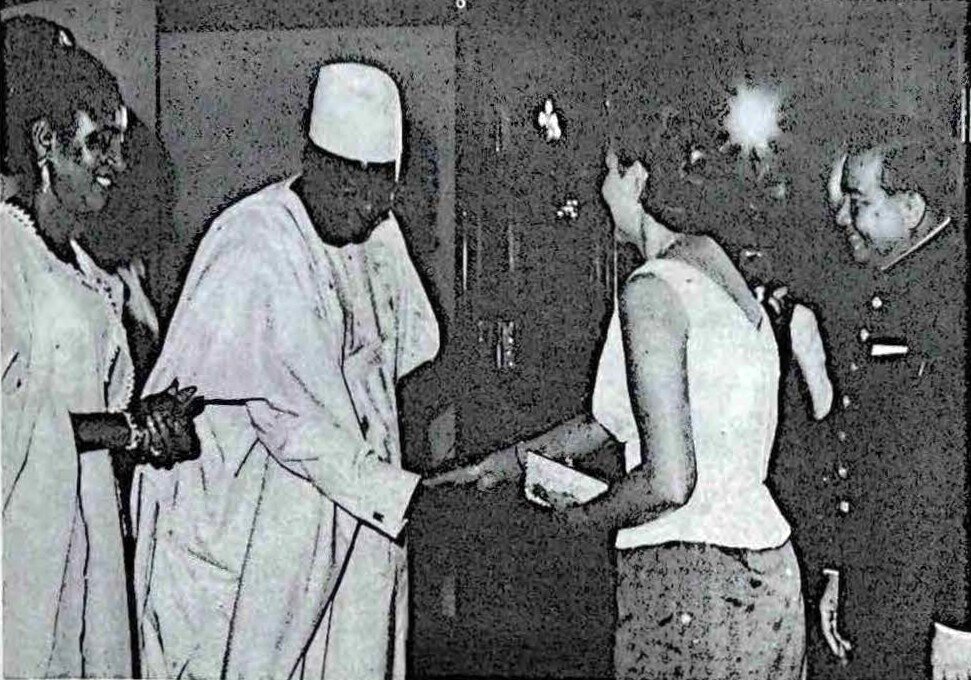
1) Prince Sihanouk and Princess Monineath welcoming the presidential couple of Niger, Hamani and Aissa Diori in Phnom Penh, 3 Nov. 1969. 2, 3) Young Princess Moni Kossama (b. 1960, Phnom Penh), eldest daughter of Princess Norodom Buppha Devi and granddaughter of the King, presenting gifts to the Nigerian president and flowers to Niger’s first Lady. That was the very last state visit hosted by Cambodia before the March 1970 coup. [photos from Le Prestige au plan international du Cambodge 1955 – 1969, Phnom Penh, Sangkum Reastr Niyum Publications, 1969, p. 440 – 79. Ref [5]]
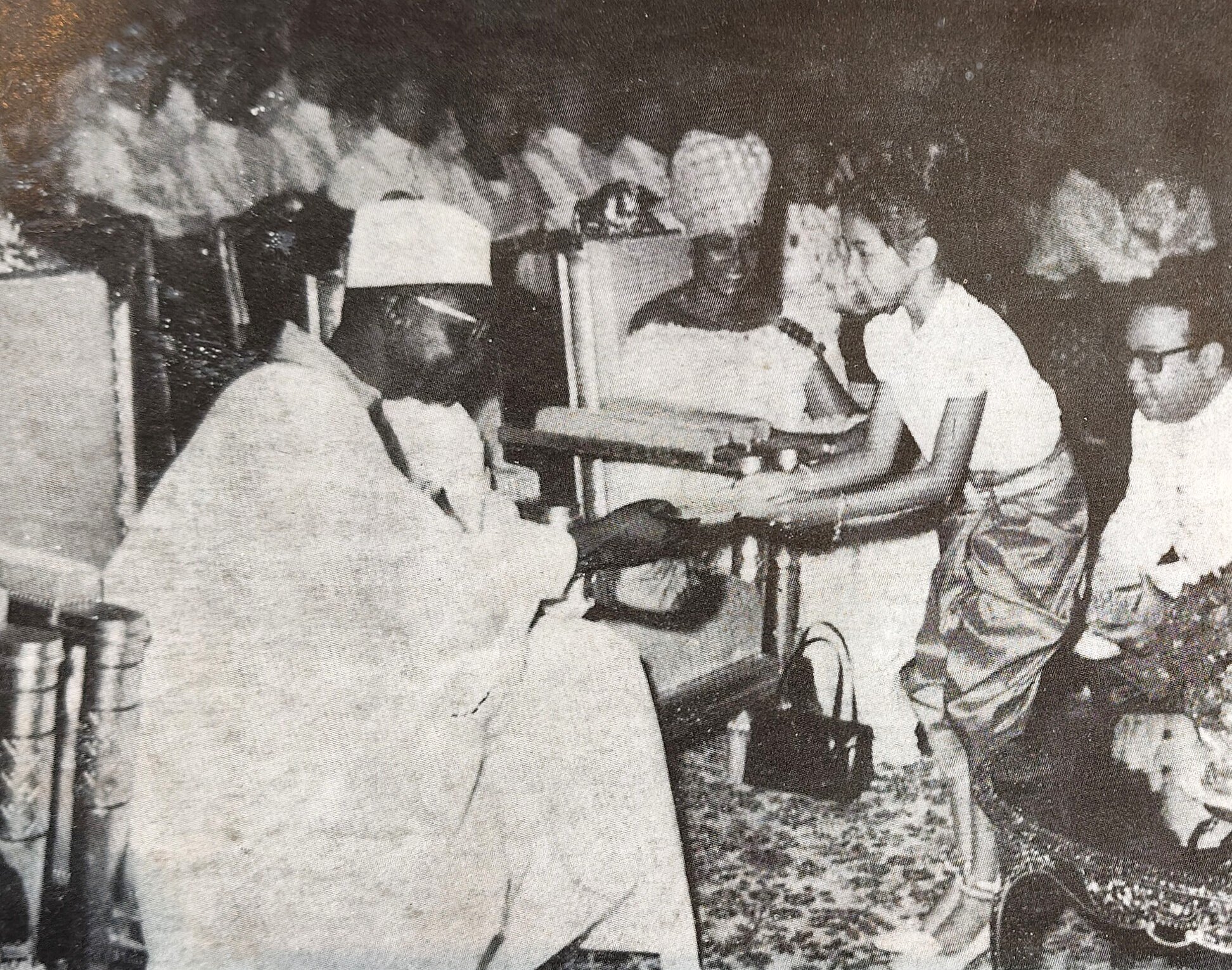
1) Prince Sihanouk and Princess Monineath welcoming the presidential couple of Niger, Hamani and Aissa Diori in Phnom Penh, 3 Nov. 1969. 2, 3) Young Princess Moni Kossama (b. 1960, Phnom Penh), eldest daughter of Princess Norodom Buppha Devi and granddaughter of the King, presenting gifts to the Nigerian president and flowers to Niger’s first Lady. That was the very last state visit hosted by Cambodia before the March 1970 coup. [photos from Le Prestige au plan international du Cambodge 1955 – 1969, Phnom Penh, Sangkum Reastr Niyum Publications, 1969, p. 440 – 79. Ref [5]]
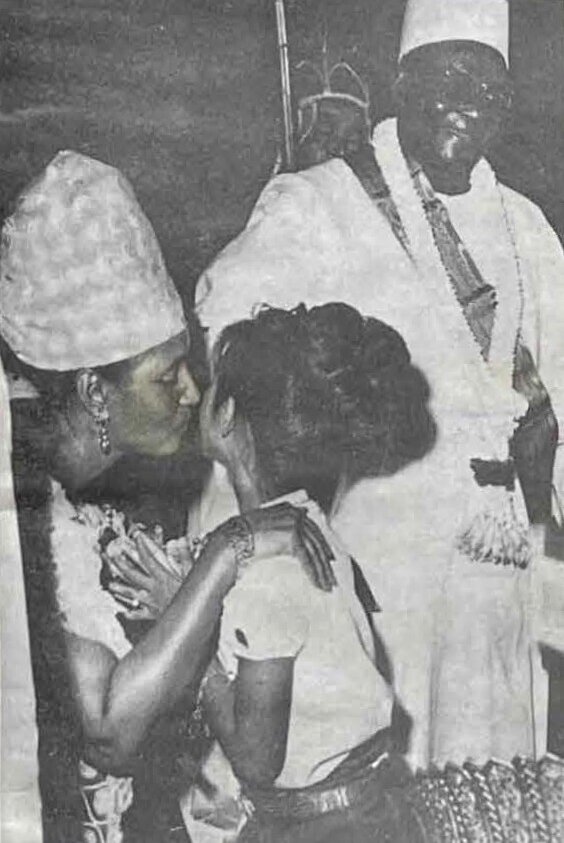
1) Prince Sihanouk and Princess Monineath welcoming the presidential couple of Niger, Hamani and Aissa Diori in Phnom Penh, 3 Nov. 1969. 2, 3) Young Princess Moni Kossama (b. 1960, Phnom Penh), eldest daughter of Princess Norodom Buppha Devi and granddaughter of the King, presenting gifts to the Nigerian president and flowers to Niger’s first Lady. That was the very last state visit hosted by Cambodia before the March 1970 coup. [photos from Le Prestige au plan international du Cambodge 1955 – 1969, Phnom Penh, Sangkum Reastr Niyum Publications, 1969, p. 440 – 79. Ref [5]]
1) Prince Sihanouk and Princess Monineath welcoming the presidential couple of Niger, Hamani and Aissa Diori in Phnom Penh, 3 Nov. 1969. 2, 3) Young Princess Moni Kossama (b. 1960, Phnom Penh), eldest daughter of Princess Norodom Buppha Devi and granddaughter of the King, presenting gifts to the Nigerian president and flowers to Niger’s first Lady. That was the very last state visit hosted by Cambodia before the March 1970 coup. [photos from Le Prestige au plan international du Cambodge 1955 – 1969, Phnom Penh, Sangkum Reastr Niyum Publications, 1969, p. 440 – 79. Ref [5]]
Then, there was war and destruction in Cambodia and many other parts of Planet Earth. In 1986, the first Sommet de la Francophonie (Francophonie Summit) was held in Paris at the invitation of President Mitterrand. In November 1997, the Summit took place in Hanoi, Vietnam, and former UN General Secretary Boutros Boutros-Ghali was designated as General Secretary of OIF (Organisation internationale de la Francophonie [International Organization of Francophonie]), the institution substuting to ACCT.
The 20th Summit (14−16 Nov. 2026) in Phnom Penh, Cambodia, with peace and stability as the main theme, is the second one to be held in the Asia-Pacific region [after Hanoi 1997]. It is composed of 53 (to 56) full member states and governments, 5 associate members and 32 observer states and governments.
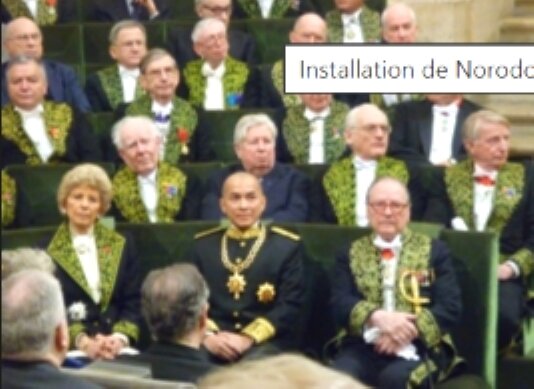
1) On 12 March 2010, HM Norodom Sihamoni of Cambodia was installed as foreign associate member to the Académie des Inscriptions et Belles-Lettres, Paris, the French scholarly institution which has contributed to Khmer studies for one century and a half. On 14 – 16 November 2026, the 20th Francophonie Summit will be held in Phnom Penh under the high patronage of the King. [photo from AIBL podcast, 2010]. 2) Upcoming publication by HE Julio Jeldres, biographer of the late Kings and Queens of Cambodia, historian: The King Father Norodom Sihanouk and the Francophonie, Phnom Penh, Queen Mother Library/CDC, end of October 2026 [also available in French].
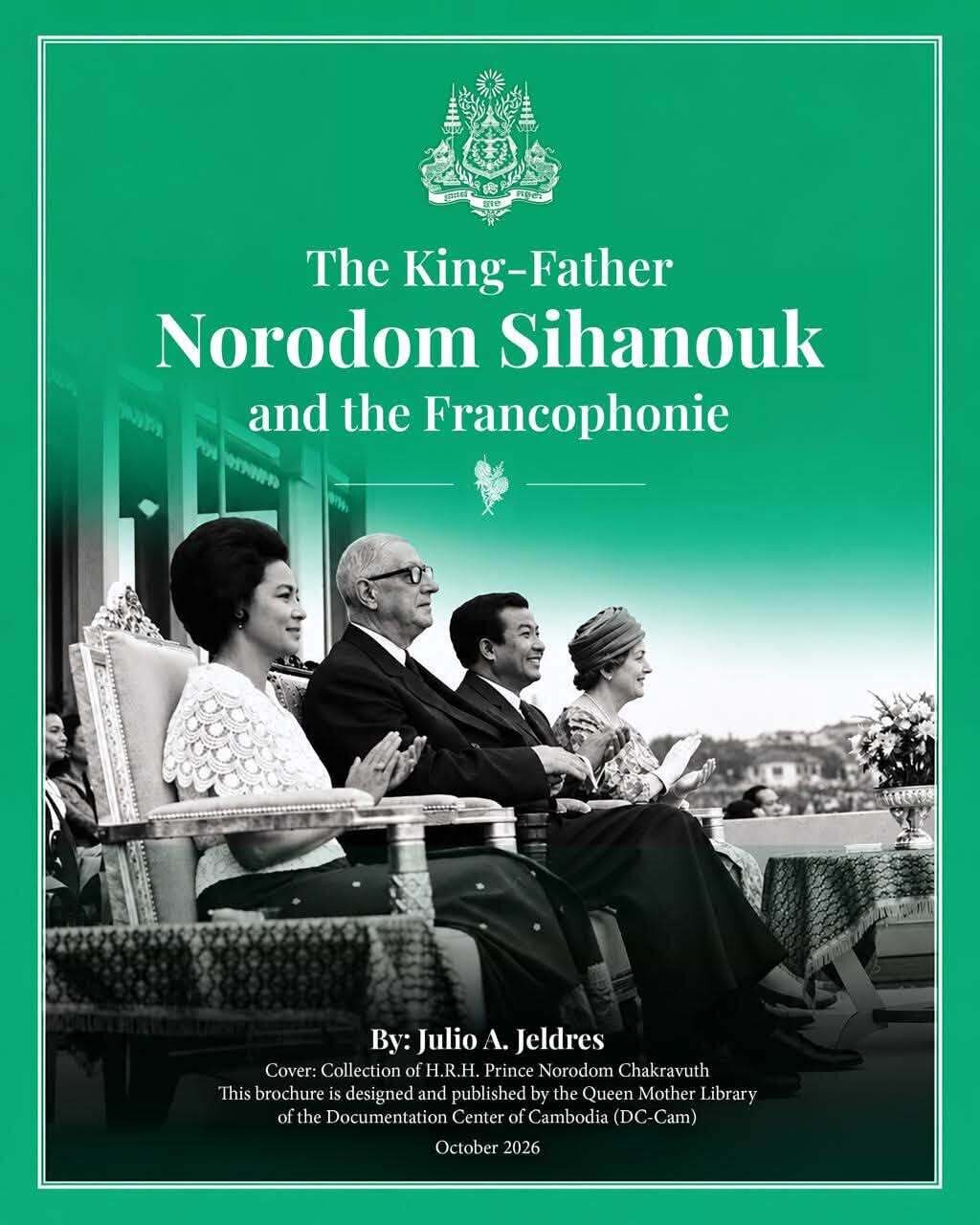
1) On 12 March 2010, HM Norodom Sihamoni of Cambodia was installed as foreign associate member to the Académie des Inscriptions et Belles-Lettres, Paris, the French scholarly institution which has contributed to Khmer studies for one century and a half. On 14 – 16 November 2026, the 20th Francophonie Summit will be held in Phnom Penh under the high patronage of the King. [photo from AIBL podcast, 2010]. 2) Upcoming publication by HE Julio Jeldres, biographer of the late Kings and Queens of Cambodia, historian: The King Father Norodom Sihanouk and the Francophonie, Phnom Penh, Queen Mother Library/CDC, end of October 2026 [also available in French].
1) On 12 March 2010, HM Norodom Sihamoni of Cambodia was installed as foreign associate member to the Académie des Inscriptions et Belles-Lettres, Paris, the French scholarly institution which has contributed to Khmer studies for one century and a half. On 14 – 16 November 2026, the 20th Francophonie Summit will be held in Phnom Penh under the high patronage of the King. [photo from AIBL podcast, 2010]. 2) Upcoming publication by HE Julio Jeldres, biographer of the late Kings and Queens of Cambodia, historian: The King Father Norodom Sihanouk and the Francophonie, Phnom Penh, Queen Mother Library/CDC, end of October 2026 [also available in French].
[1] Norodom Sihanouk, “Témoignage sur le Cambodge” [“An Account from Cambodia”], in Esprit, nouvelle série: Le français, langue vivante [French, A Living Language], Nov. 1962, p. 737 – 8.
[2] Léopold Sédar Senghor, “Le français, langue de culture” [French, A Language of Culture] in Esprit, nouvelle série: Le français, langue vivante [French, A Living Language], Nov. 1962, 837 – 44.
[3] “Cambodge — Le prince Sihanouk: “On m’a boudé mais je né suis pas rancunier…”” [“Cambodia, Prince Sihanouk: Some gave me the cold shoulder, but I don’t hold a grudge…”], Le Monde, 10 septembre 1992
[4] Jean-Marie Cambacérès, Sihanouk, le roi insubmersible, Paris, Le Cherche-Midi, 2013.
[5] “ទស្សនកិច្ច នៃឯកឧត្តមហាមានី ឌីយ៉ូរី ប្រធានាធិបតី នៃប្រទេសហ្គីណេ នៅប្រទេសកម្ពុជា — Le président Hamani Diori, de la République du Niger, en visite d’Etat au Cambodge (du 3 au 5 novembre 1969}”, in Le Prestige au plan international du Cambodge 1955 – 1969, Sangkum Reastr Niyum Publications, 1969, p. 440 – 79. [ADB Scans #55].
Main photo: Prince Sihanouk receiving President de Gaulle at Phnom Penh Royal Palace, Khemarin Palace, Sept. 1966; Cambodian photographer unknown [ADB Collection]
Tags: francophonie, classical studies, French language, post-war Cambodia, post-colonial Cambodia, Protectorate, Saigon, Khmer language, 1960s, 1970s, 1980s, 1990s, 2000s, non-alignement, non-alignment, diplomacy



HM Norodom Sihanouk នរោត្តម សីហនុ (31 October 1922, Phnom Penh, Cambodia – 15 October 2012, Beijing, China) was the King of Cambodia from 1941 to 1955 and from 1993 to 2004.
Affectionately known to the Cambodian people as Samdech Euv (សម្តេចឪ, Father Prince), he masterminded the independence from the French colonial rule in 1953, inspired the creative Golden Age of the young country and was instrumental to national reconciliation after the US-crafted coup d’état by General Lon Nol, the Khmer Rouge brutal rule and the Vietnamese intervention.
Married six times, he fathered fourteen children. His eldest son with Queen Norodom Monineath, King Norodom Sihamoni, ascended to the throne of Cambodia in 2004.

Angkor Database — មូលដ្ឋានទិន្នន័យអង្គរ — 吴哥数据库
All you want to know about Angkor and the Ancient Khmer civilization, how it keeps attracting worldwide attention and permeates modern Cambodia.
Indexed and reviewed books, online documentation, photo and film collections, enriched authors’ biographies, searchable publications.
ជាអ្វីគ្រប់យ៉ាងដែលអ្នកទាំងអស់គ្នាចង់ដឹងអំពីអង្គរ, អរិយធម៌ខ្មែរពីបុរាណ, និងមូលហេតុអ្វីដែលធ្វើឲ្យមានការទាក់ទាញចាប់អារម្មណ៍ពីទូទាំងពិភពលោកបូករួមទាំងប្រទេសកម្ពុជានាសម័យឥឡូវនេះផងដែរ។
Our resources include a physical library library at Templation Angkor Resort, Siem Reap, Cambodia.
email hidden; JavaScript is required