Books
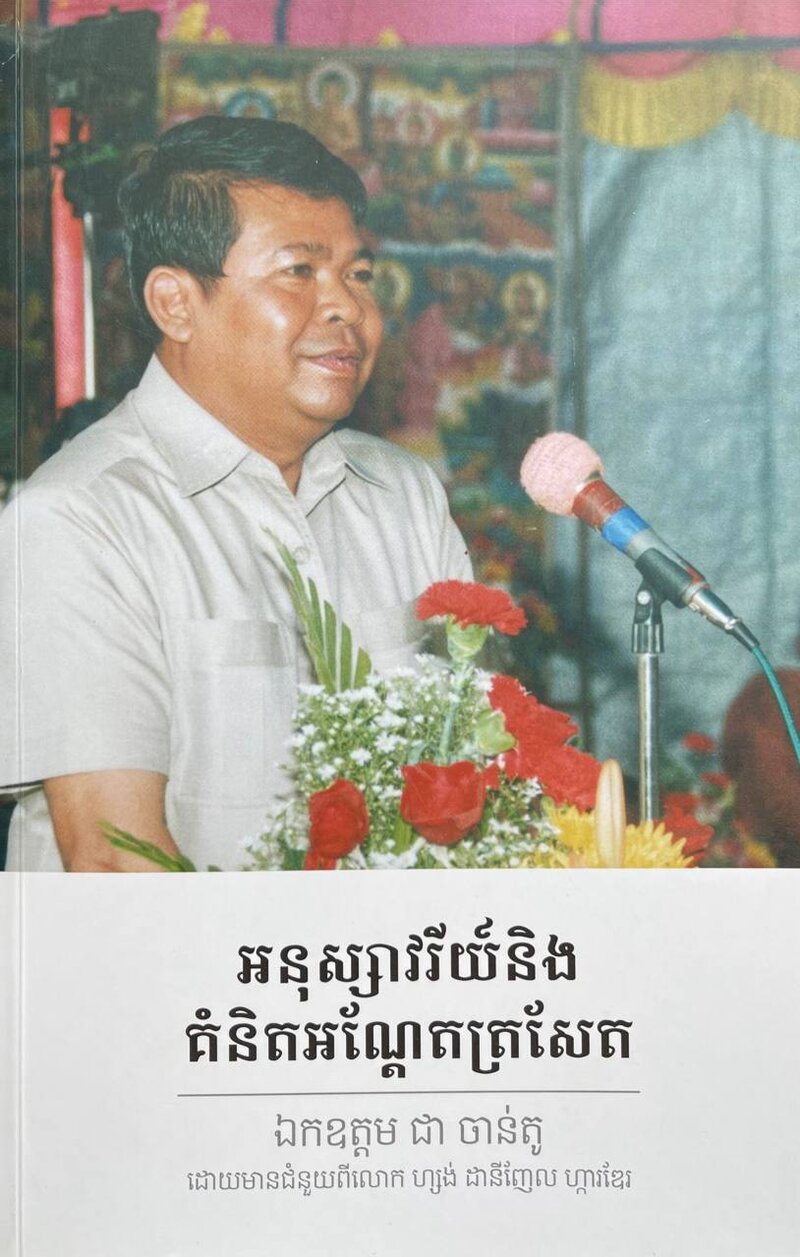
អនុស្សាវរីយ៍និងគំនិតអណ្តែតត្រសែត | Memories & Floating Thoughts | Mémoires et pensées vagabondes
by Chanto Chea
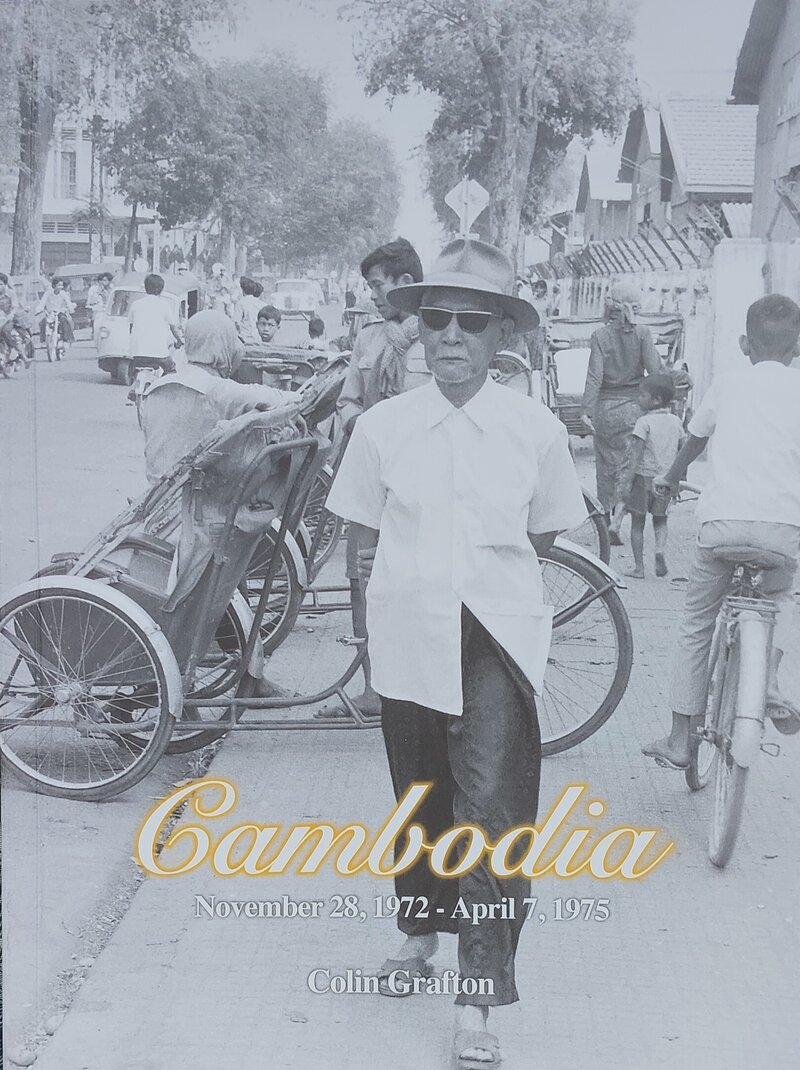
by Takako Kitagawa
A precise historic and ethnographic survey on Pailin in early modern times, with insights on the Kula (Burmese) communities.

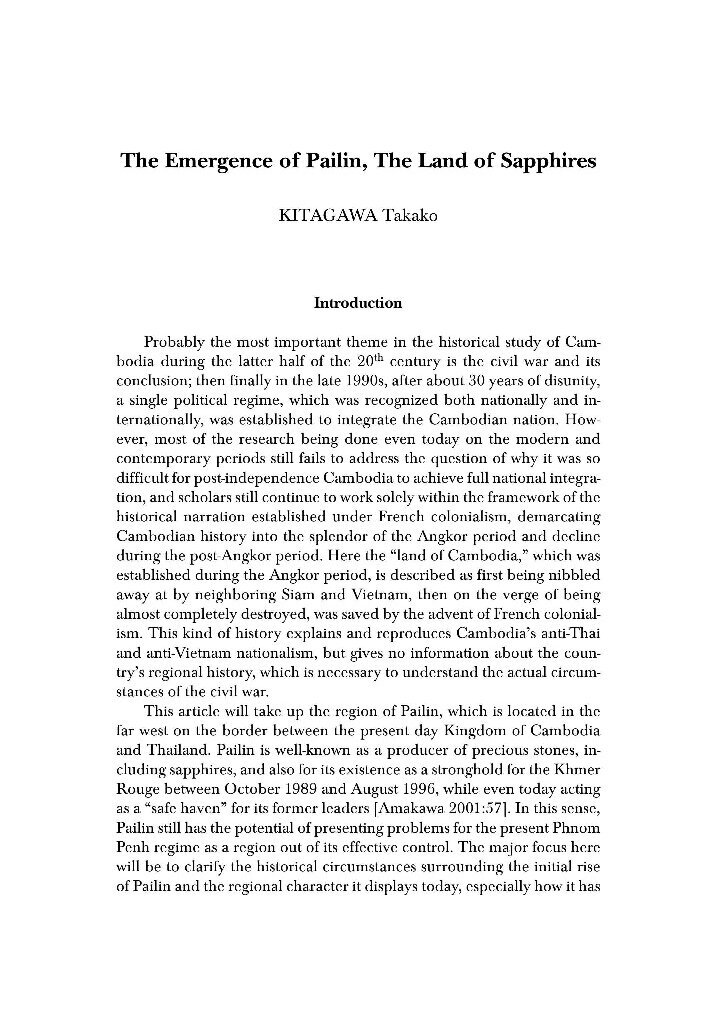
pdf 8.0 MB
This important study on an overlooked region — the mining area of Pailin in the Cardamome Mountains, which attracted at its peak in the 1900s more than 5,000 workers — and understudied ethnic minority — the Kula or Kola communities, of Shan and Pegu origins, who thrived in Cambodia until its nearly complete destruction during the civil war — is particularly valuable as the author, a Japanese female academic who spent several years in Cambodia, thought to explore not only French official archives and journalistic reports but also the archives of the British Foreign Office and the records of the Siamese administration of the Chanthaburi Province.
Here are some insights from the research paper:
During the 19th century, the areas from the Dangrek Mountains to the Northeast Mountain region across the Mekong were inside of the political sphere of Siam, not Cambodia, Although they were incorporated into the Kingdom of Cambodia in 1904 [Forest 1980:175], they continued to maintain contact with the northeastern part of Thailand and southern part of Laos. For example, even in the 1910s, every year between the months of March and May, Laotian cattle merchants would cross the Dangrek Range to buy steers from the villagers of Promtep in the northern part of Kompong Thom [Dufosse 1918:30 – 31]; and in the hinterland of Stung Treng, Birmans, Siamese and Laotiens would come from the north into Moulapoumok and Darlac to buy elephants [Monographie 1913:21 – 22].
Also during the latter half of the 19th century, the aborigents of the Car-damon Mts, on the south side of Pursat, called the Pears, would have one of their chieftains selected by the king of Cambodia to bear the burden of the yearly tribute of 4,000 kg of cardamon seed, In addition to carda-mon, rice and vegetables were cultivated there on a self-sufficiency basis, Further south from Pursat, the mountainous forests of the Thpong region produced gamboge, shellac and two kinds of cardamom (Krakor and Krevanh), which were inferior to Pursat cardamom, The cardamom of the Thpong region was designated as an item of tribute for the Cambodian chancellor. There were 870 inscrits scattered around Thpong who paid taxes in gamboge. From the southern range of the Cardamons, a group of aborigènes called the Samres sent small amounts of tribute to the king of Cambodia, The water, forest and mountains of the province were ru-mored to be unsanitary and its products were similar to those of Thpong [Aymonier 1900:228 – 230].
From the above information, one can assume that the central Carda-mon Mts, and the Pursat River basin were under Cambodian royal sover-eignty. Linking that region to the core of the kingdom of Cambodia was the settlement of Leach, located about 30 km from Pursat. According to an inspection report submitted by the resident of Pursat in January 1922, the Chinese merchants of Pursat would come upon the mountain people at Leach and sell them sundry commodities in exchange for cardamon. which gave rise to a marketplace there. The resident’s intent was to visit Leach in order to observe the transactions occurring there in the interest of protecting the mountain people from predatory merchants, In Leach at that time, there were four wooden, thatch-roofed sala (accommodations) located on the road leading into the mountains. [p 112 – 3]
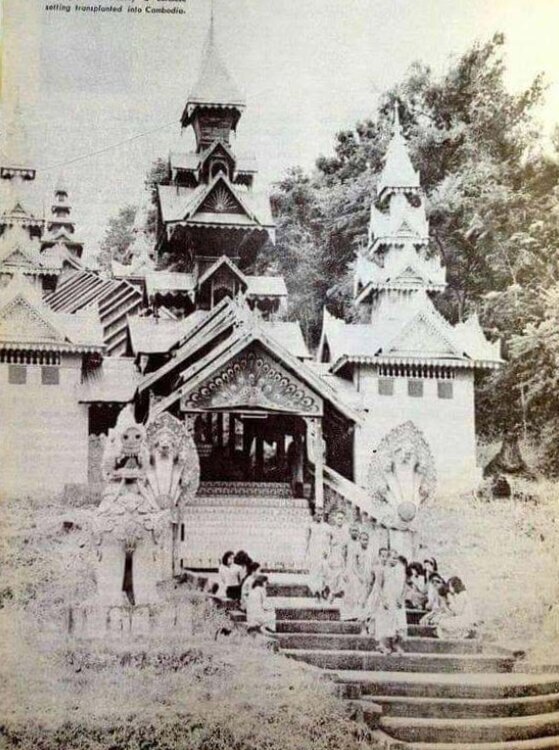
1) Entrance of Wat Phnom Yang [undated, uncredited photo posted on FB by Shan Artist in England, June 2022]. 2) An atypical dvarapala on Wat Phnom Yang esplanade captured by Colin Grafton brandishing a bayonet automatic rifle in 1974 (right) and in 2017with a modified, less aggressive weapon [from Cambodia November 28, 1972- April 7, 1975, 2026.] 3) A view of a typical Shan village somewhere in the Shan States. in Bertha & Max Ferrars, Burma, photo album published in London, 1900.]
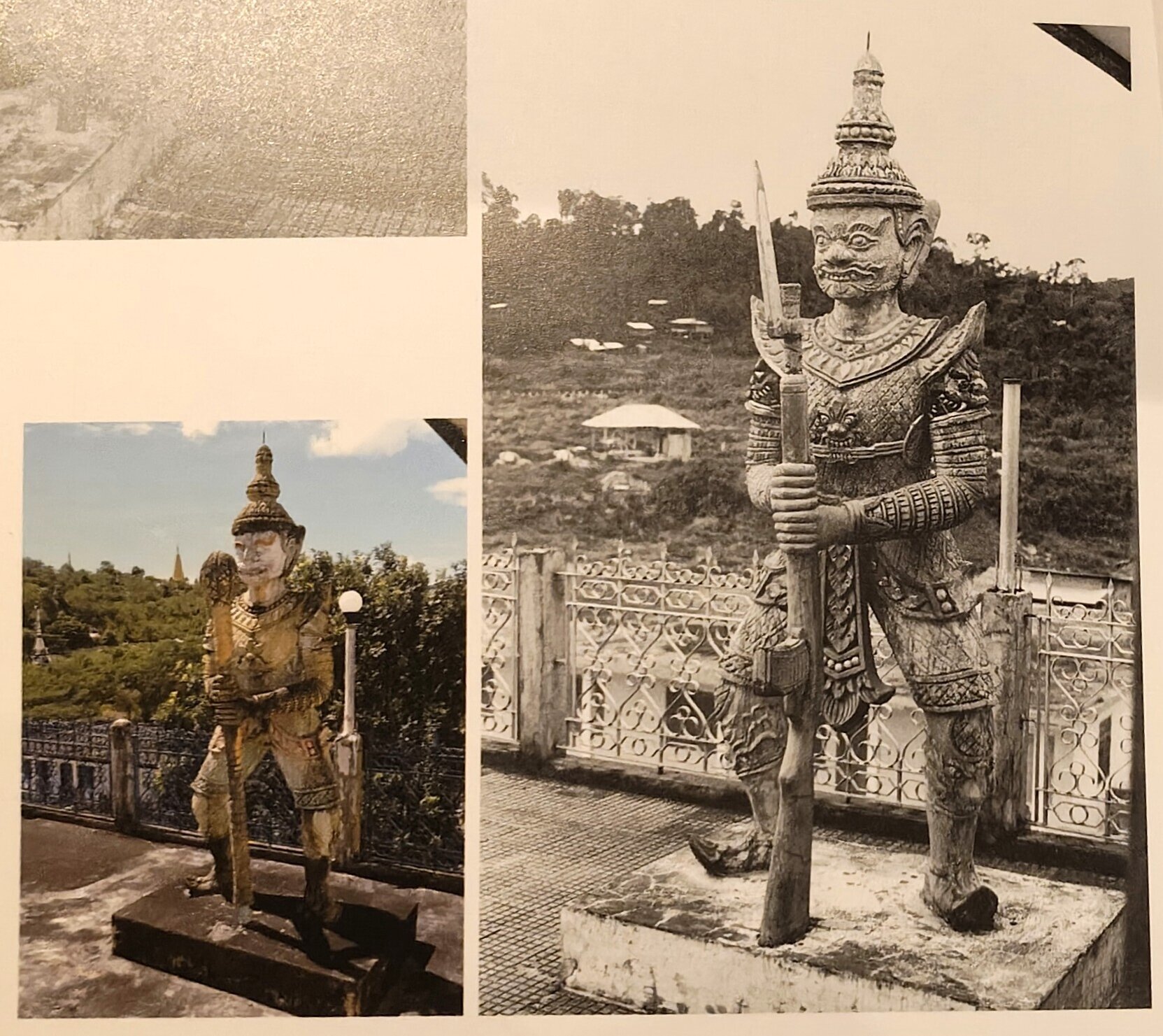
1) Entrance of Wat Phnom Yang [undated, uncredited photo posted on FB by Shan Artist in England, June 2022]. 2) An atypical dvarapala on Wat Phnom Yang esplanade captured by Colin Grafton brandishing a bayonet automatic rifle in 1974 (right) and in 2017with a modified, less aggressive weapon [from Cambodia November 28, 1972- April 7, 1975, 2026.] 3) A view of a typical Shan village somewhere in the Shan States. in Bertha & Max Ferrars, Burma, photo album published in London, 1900.]
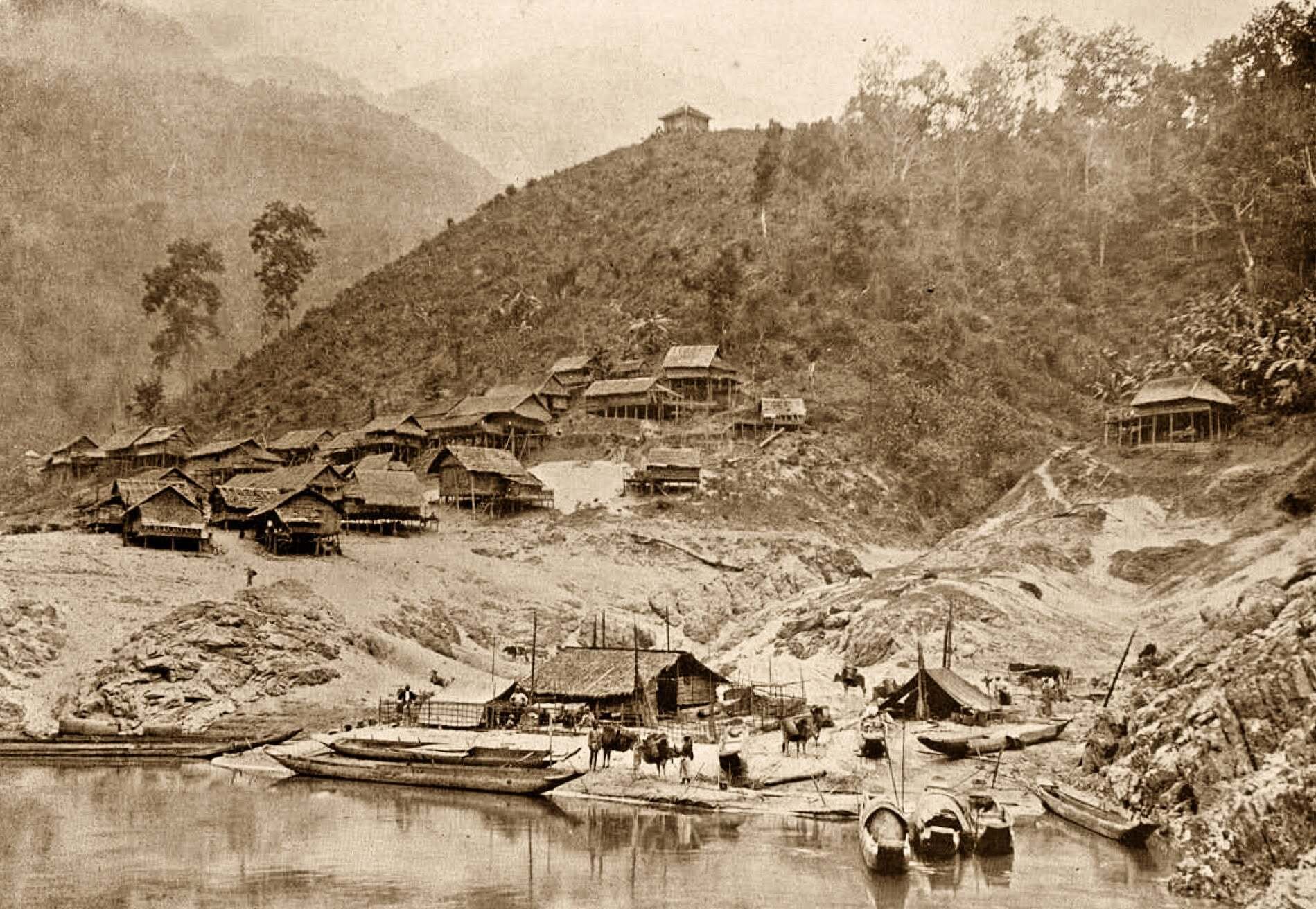
1) Entrance of Wat Phnom Yang [undated, uncredited photo posted on FB by Shan Artist in England, June 2022]. 2) An atypical dvarapala on Wat Phnom Yang esplanade captured by Colin Grafton brandishing a bayonet automatic rifle in 1974 (right) and in 2017with a modified, less aggressive weapon [from Cambodia November 28, 1972- April 7, 1975, 2026.] 3) A view of a typical Shan village somewhere in the Shan States. in Bertha & Max Ferrars, Burma, photo album published in London, 1900.]
1) Entrance of Wat Phnom Yang [undated, uncredited photo posted on FB by Shan Artist in England, June 2022]. 2) An atypical dvarapala on Wat Phnom Yang esplanade captured by Colin Grafton brandishing a bayonet automatic rifle in 1974 (right) and in 2017with a modified, less aggressive weapon [from Cambodia November 28, 1972- April 7, 1975, 2026.] 3) A view of a typical Shan village somewhere in the Shan States. in Bertha & Max Ferrars, Burma, photo album published in London, 1900.]
[…]It was from the 1870s on that gem veins in the Chanthaburi hinterland began to be exploited on a large scale, According to the story regarding the discovery of the veins, the area was originally covered by deep forest, which provided hunting grounds for the indigenous peoples. Then around 1872, a group of Shans came to work at the ruby mine that had been discovered at Bo-Novong in Chathaburi Gorge. During the preраrations for gem extraction, news arrived that another vein of rubies had been discovered at O Toung Hill, north of the village of Boyakar and that Shans and Siamese were working there. In 1875, a man by the name of Maung Visa set out with a group of miners for O Toung, passing through Phya Kampout, Phakat and Mogok on a ten-day journey through the thick, dark forest, When they arrived at O Toung, they found the local children playing with sapphires as toys. The local people told the Shans that while out hunting they had found a large amount of sapphires in a river bed. Based on this information, the Shans searched this area, visiting the village of Vong-sang-Vong and finally settling in the village of Khlong-Tavao. The place names O Toung, Boyakar and Khlong-Tavao still exist in present day Pailin.
In 1877, veins were discovered at Tongsou [1], Chang la Bok and Boyakar, and the villages that bear these names came into being, as both Laotiens and Shans thronged into them. Another mine was discovered at a mountain cardamom plantation, which was destroyed in favor of gem mining. It was called Bo Ha Bat (“Five Ticals Mine”) from the fact that each miner working there was levied a tax of 5 ticals.
An 1879 report by the British Consulate confirms that the mid-1870s marked the discovery of veins in the region, followed by a gem rush be-ginning that same year. The report states that a sapphire mine was dis-covered “five years ago” by local hunters, and although its location was extremely remote, rumors of its discovery spread among Burmese and Indian gem merchants and miners, who were the first to reach the mine […] That year, steamers owned by the Borneo Company, which was the sole British trading company at Chanthaburi, carried a total of 4,912 passengers from Bangkok, the majority of which were “British subjects” who had been issued “passports” by the Company. Since many of the prospec-tors were heavily armed, the residean of Chanthaburi and Battambang were at first alarmed, but the miners proved peaceful and trustworthy enough for the local people to profit gready from the foodstuffs they sold them at highly inflated prices, Although many miners died of jungle fever, the Toung-thoo people of Pegu proved particularly acclimated to the surroundings, At the time the report was written, the area around the mines was inhabited by a large number of gem merchants, enabling the miners to sell their finds on the spot at reasonable prices, However, at the beginning of the rush, there was no market for gems around Chanthaburi, as exemplified by stones being offered in Chanthaburi for 1,000 rupees finding no buyers, but fetching 15,000 rupees in Rangoon and 30,000 rupees in Calcutta, Many wealthy miners took Siamese women as their wives, and the local shops kept large stocks of the miners’ favorite foods, canned milk and British-made biscuits.
The residents of Pailin were reported to be of Birman (Burmese), Pegouan, Shan and Toung-thoo, They had been trading in the northern re-gions of Siam already during the reign of Rama III (1824−51), expanding into the northeast under Rama IV (1851−68), When the Bowring Treaty between Siam and England was ratified on 5 April 1856, these “British subjects” became more commercially active than ever before [Koizumi 1990], and the rise of Pailin during the latter part of the century can be placed within that context, It was after a series of disputes that occurred in 1881 “over the lack of clear legal statutes were settled that Pailin be-gan to develop in earnest. As the result of the establishment of markers in Bangkok and Calcutta and the export of precious stones to Europe through the intervention of banks, large amounts of silver began flowing into the Pailin economy. Even the heavy rain storms of 1884 that caused landslides and flooded the Boyakar River, destroying many residential areas and claiming numerous victims, could not stop the region’s growing prosperity. [p.118 – 9]
During the early 1880s, most of the miners working in Pailin were Birmans known as Koulahs (Kulas) and Pegouans, and there were a number of resident Chinese merchants, as well. The miners, who numbered between three and four thousand, were mostly short-term migrants away from their families, scattered about in small hamlets in the forests of the mining region. […] During the early 1880s, Pailin became “un état dans l’Etat” (a state within the State). While every miner owed the king of Siam a tax of 2 ticals, the tax collector levied 3 ticals per head and kept the extra tical for himself, While not imposing any strict control upon the number of miners who could work in Pailin, Bangkok did manage to collect around 4,000 ticals in tribute from them annually.
It was in 1889 that the government of Siam granted the extraction rights related to the Pailin Mine to an Italian speculator and those related to the Muang Krung and Krat Mines to a group of Chinese British subjects and Englishmen. To work at the mines, one now had to pay his 3 ticals to the chief of the British subjects upon entering the mining region, It was the custom at that time for miners to work in groups of two or three and take their stones to Rangoon or Calcutta for sale. In 1898, Siam Exploring Company, an affiliate of Siam Company, Limited, was managing the Pailin Mine operation and allowed the Shans and Laotiens working there to dispose of the gems they acquired at they saw fit.
At the time of the Pailin’s annexation as a French protectorate in 1907, the British firm of Siam Syndicate, Ltd, was granted monopoly extraction rights to Pailin Mine and then sub-contracted those rights to a Birman by the name of Maung Soy. It was now required to purchase permits at 3 ticals (1$80) for single miners and 5 steals (3$00) for families to work the mines, with no levies on the gems themselves, The sapphire brokers also had to purchase the permits, because no one entering the region was exempt, be they Asian, Chinese, Indian or Afghan merchants, cloth importers, or anyone else not directly engaged in the mining operation, Only Maung Soy himself could grant exemptions [Filleau 1920:37]. In other words, despite new management, the custom of a head tax imposed upon entry into the region and miners’ free rights over gem disposal remained unchanged from the onset of the rush through French colonial.
[…]Pailin, as a heavily forested no man’s land prior to the gem rush, had drawn no attention from the outside world, and existed in a political vac-uum, Then, with the rapid influx of great numbers of foreigners, Pailin became demely populated area that was different from neighboring re-gions in in ethnic, social and administrative structure, Both the safery in tramontane remoteness to obstruct aggressive interference by the existing powers and the advantage of immigrant status as British subjects were major factors in establishing and maintaining a unique regional polity in the Pailin mine area for about three decades.
[…] Maung Soy, the Chief of Birmans who stood up to the Freach, func-tioned as the monarch of the quasi-principality there. He came from up-per Burma and lived in Pailin for nearly thirty years. The Birmans of Pailin believed that he was the successor to the pioneer who had led the initial immigration, While Maung Soy was on the surface no more than the leader of a group of foreigners, in actuality, he became the absolute ruler of Pailin, whose presence was required at any festival that was held there and whose front door was lined with people seeking his audience.
It was Mong (or Maung) Khuati who had been granted the title Hluong Moni Yuttheanea (Luong Mani Yut Thana) by the Siamese Court and was spoken of as the legendary founder of Pailin, Maung Khunti was a Shan from upper Burma who hunted around Pailin and was said be feared by the spirits of the forest there [Filleau 1920:425]. The story of the rise of Pailin related to Maung Khunti was recorded in a collection of folktales compiled by the Kingdom of Cambodia government after independence [Pracum Poeung Preng Khmaer [Corpus of Khmer folktales]. Vol. 6. Phnom Penh: [s.n.]]. Here Mong Khunti is depicted as the chieftain of the Kola (Kula) people who discovered the first gem vein and as the patron of the many temples built in the region.
The French colonial administration tied to restrict Maung Soy’s power and authority to only the Birmans residing in the Pailin region; but Maung Soy resisted such attempts by contending the jurisdiction claimed by a Cambogien governor named Seng, who had been dispatched to Pailin, According a report submitted by the resident of Battambang for February and March of 1909, the “chief of the Birmans” had claimed in a letter dated 2 February that the governor had unlawfully protested and prevented 22 Cambogien natives of Kok-Khan carrying passports issued by the chief from returning home. [p. 120 – 3]
[1] Toongsoo or Thongtoo was another name used both in Siamese and Khmer to refer to the itinerant traders and settlers of Burmese origin. It came for the Burmese (Myanmar) Taungthu တောင်သူ. In her reference essay on the Kula people, Junko Koizumi noted that “the Thai documents from the 1870s and 1880s use the words Toongsoo and Kula interchangeably. Toongsoo (or Tongsú) was used in the 19th century as a designation for the Karen tribe in general, but also for a Tai trader tribe closely related to Shan people known for dealing in elephant and horses. The Shan pronunciation of the Burmese word taungthu “hill man”, refers to the Pa’O, an ethnic group within the Karen people.” [‘Why the Kula Wept: A Report on the Trade Activities of the Kula in Isan at the End of the Nineteenth Century,’ Southeast Asian Studies 28(2) 131 – 153, 1990, p. 6].
As it often happened, minority names inBurma were used both objectively and subjectively. Taungthu as ‘hill people’ and ‘cultivator’ could be applied to the Karen mountain tribes in general, while Kula in the (mostly) derogatory sense of ‘foreigner’, ‘black-colored’, ‘migrant’, would refer to Bangladeshi people, Rohingya, and even the historic Burmese minority in the Malay States (now Malaysia) [ADB].
Main illustration: ‘Gula horseman in Pailin’ from H. Warington-Smyth, Five Years in Siam, From 1891 to 1896, Vol II.
Tags: Pailin, silver, mines, mineralogy, gemstones, sapphires, Shan, Kula, Burmese emigration
Kitagawa Takako 北川香子 is a Japanese researcher who obtained her doctorate in Southeast Asian History at the Department of South and Southeast Asian Studies, University of Tokyo, and has researched and published extensively on Cambodia in the Middle Period (14th-18th c.), and during the 19th century.
In 2005, she published her research ‘Kampot of the Belle Époque: From the Outlet of Cambodia to a Colonial Resort’. With a special interest in Cambodian pre-modern and modern history, she also authored ‘Queen Mothers of Post-Angkor Cambodia’ (Sept. 2019). She contributed to several collective books, including 東南アジア史研究の展開 山川出版社 (2009), アンコール・ワットが眠る間に-カンボジア 歴史の記憶を訪ねて連合出版 (2009), カンボジアおよびシャム王国踏査行 京都大学東南アジア研究所 (2008) 新版 東南アジアを知る辞典 平凡社 (2008) 東南アジア史研究の展開カンボジア旅行記 連合出版 (2007), カンボジア旅行記 連合出版 (2007).
[under construction]
Author’s photo: UTalk, 2013.
sk द्वारपाल dvārapāla, lit. "gate-keeper".
Dvārapāla are the guardians of the gates represented at the doors of most Cambodian temples and pagodas, ancient and modern.
In the Maharabharata, they are Yakshas, ambivalent spirits.