
柬埔寨以北探路記 [An Exploratory Journey to Northern Cambodia (and Beyond)]
by Francis Garnier & Unknown Translator
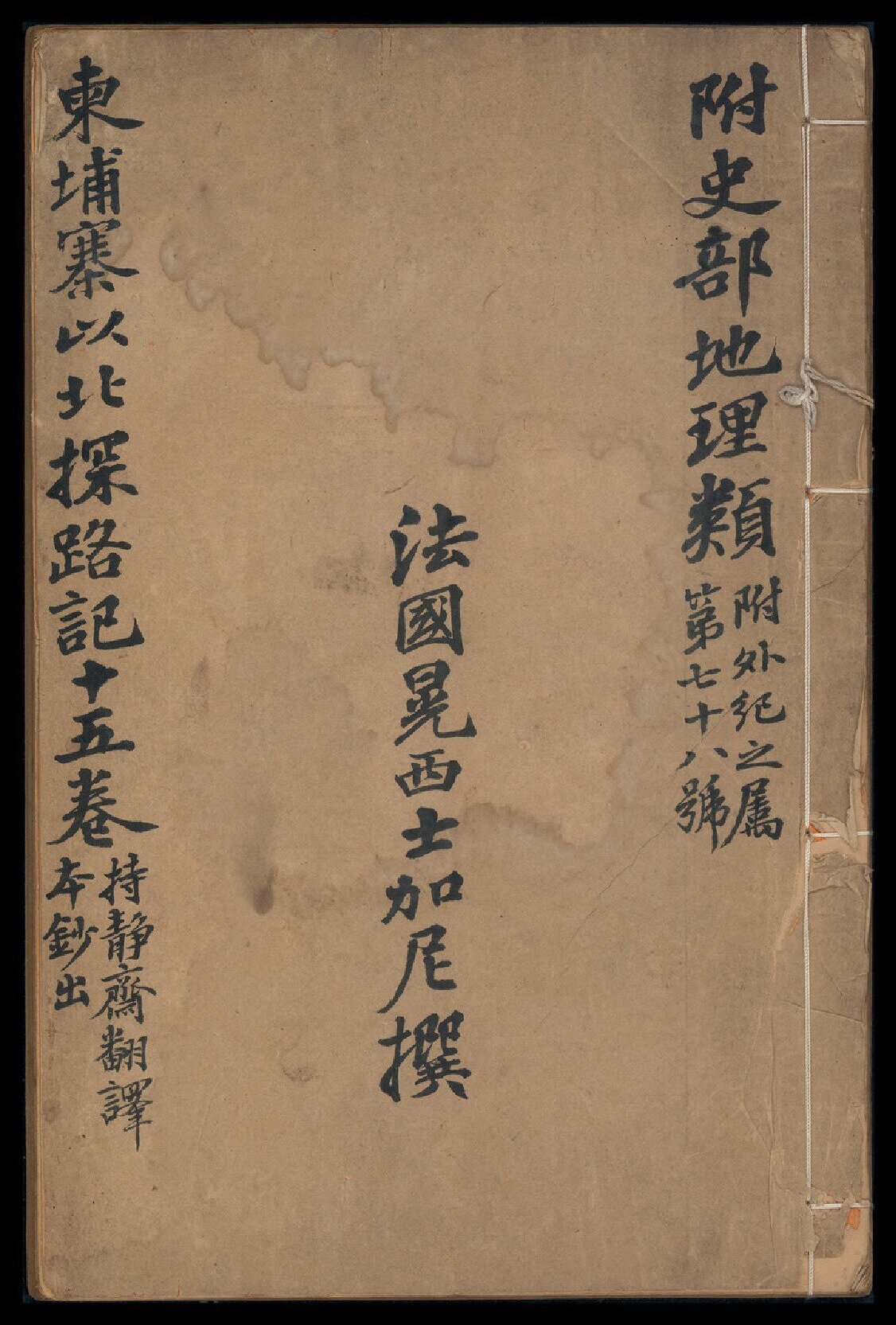
The Chinese translation of Francis Garnier's famous work, commandited and completed a few years after the first French publication.

- Authors
- Francis Garnier & Unknown Translator
- Publisher
- Copy (by Li Wentian) of 1st (out of 15) 卷 juan (volume) of a translation patroned by Ding Richang (1823-1882)
- Published
- c. 1878
- Book Edition
- digital version by Library of Congress, Washington D.C., USA.
- Pages
- 47
- Language
- Chinese
- Format
- e-book
pdf 21.6 MB
柬埔寨以北探路記 [An Exploratory Journey to Northern Cambodia (and Beyond)] is the Chinese translation of Francis Garnier’s account of the 1866 – 8 Commission d’exploration du Mékong travels through Cambodia and Laos to evaluate the navigability of the Mekong River. Garnier has led the last phase of the expedition when leader Captain Ernest Doudart de Lagrée (1823- 1868) became fatally ill.
Undated but known to have been completed before August 1881, thus in the years following Francis Garnier’s death (21 Dec. 1873) and the first publication of his work as a book — a more complete edition was established by his brother Léon Garnier in 1885 -, this translation testifies of the interest the Commission d’exploration du Mékong, which had initially pursued the notion of reaching from China the China via the Mekong and the Red Rivers, stirred among the Chinese learned circles under the Qing dynasty at a time political and social reform, ‘Westernisation’ and international trade development were major topics.
Last imperial power to rule China, the Qing dynasty 清朝 [‘Great Qing’, official name] had succeeded the Ming dynast in 1636/1644 and, led by Manchu dignitaries, expanded its control until its collapse during the Xinhai Revolution in October 1911 and the abdication of the last emperor in February 1912. The port of Shanghai (southwestern China) was particularly at stake sine it had been occupied by the British forces during the First Opium War, and the resulting Treaty of Nanking opened it for international trade (with four other Chinese harbors) in 1842. Between 1842 and 1862, the presence of British, French and American settlements there inspired a succession of insurrections and attacks on the port. Japan would also become a major force of economic development after the first Sino-Japanese war.
Ding Richang (or Ting Jih-Ch’ang) 丁日昌 (8 July 1823, Fengshun, Chaozhou Prefecture, Guangdong – 27 Feb. 1882, Jieyang, Guangdong Province), the Chinese official who sponsorized the translation, was a resolute reformer [labeled ‘resolutely patriotic’ in contemporary Chinese official historiography] with quite a remarkable public career — Magistrate, Finance Commissioner and Province Governor of Jiangxi 江西 until 1870, Shanghai intendant in the 1860s — during which he supervised the building of the Kiangnan Arsenal, Governor of Jiangsu and Fujian 福建 provinces, Governor of Taiwan from 1876 to his death — directing the construction of the island’s first telegraph line connecting Tainan, Anping, and Qihou (Kaohsiung)…
As a liberal Confucianist opposing feodal excesses (in particular abusive taxation), Ding Richang collected an impressive collection of books — printed and handwritten, many dating back from the Song and Yuan periods — in the family mansion he had built in Jieyang in 1878, a compound sprawling over 6,100 square metres (66,000 sq ft) and made of some 99 rooms and halls in traditional South China style. Fujian, the Hokkien-infused province Marco Polo visited during his travels in the 13th century, was traditionally an intellectual and cultural, and when active there Ding Richang recruited translators to make foreign-language works available in Chinese.
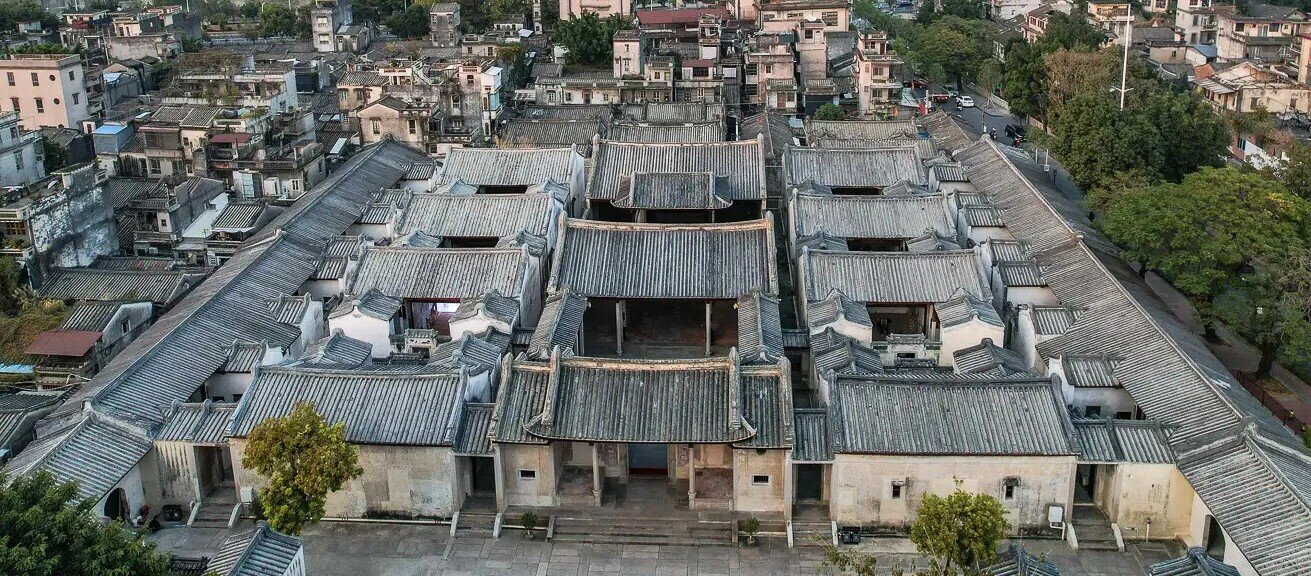
The former residence of Ding Rinchang in Jieyang, known as Ding Rinchang Ancestral Hall since it was listed as “Major National Historical and Cultural Site in Guangdong” in March 2013. [photo Baiduwiki].
The Former Residence of Ding Rinchang [丁日昌旧居] in Jieyang, built in 1878 and known as Ding Rinchang Ancestral Hall since it was listed as “Major National Historical and Cultural Site in Guangdong” in March 2013. [photo Baiduwiki].
Regarding the copy of the Chinese translation of Francis Garnier’s account kept at the US Library of Congress - of which only the preface, table of contents of juan (Book) 1, and juan 1 have been digitized so far -, we know the author of the handwritten copy but not of the translator. To quote the notice on the US Library of Congress website,
in August 1881, the seventh year of the Guangxu reign, Hanlin scholar Li Wentian (1834−95) stayed at Ding’s mansion, Xieyuan, in Jieyang while on a visit to Chaozhou Prefecture. It was there that he was shown Ding’s book collection. Ding also showed Li works not listed in his book catalog, among them translations of works by Westerners, including this translation. Li asked Ding to have a copy made so that he could share it with friends, but Ding died before Li’s wish could be fulfilled.
Later Ding’s son Ding Huiheng made a handwritten copy, from which Li Wentian was able to make a copy for his own use, which is now in the National Central Library collection. This copy thus has Li’s handwritten note and preface, in which he relates how he acquired the work and states that “I have witnessed the Governor’s great skill and ease in handling difficult tasks, but I never knew this other side of his ability.” On the left side of the dust wrapper of the first volume, below the book title, is a two-line inscription that reads: “hand-copied from the translation copy in the collection of Chijingzhai [the name of Ding Richang’s library].”
Two more additional pieces of information appear to be relevant here:
- Li Wentian 李文田 (1834−1895) was a famed calligrapher and presumably the author of the famed Secret History of the Mongols [元朝祕史, in 15 卷 juan [volumes]], a book that has fascinated many Western Orientalists and on the translation of which French researcher Paul Pelliot worked for many years;
- To refer to Cambodia, Garnier’s Chinese translator used alternatively the words Jianpuzhai 柬埔寨 and Ganbozhi 甘波治 [2], following the usage exemplified by chronicler Gu Yanwu 顧炎武 (1613−1682) in his compilation 天下郡國利病書 [On benefit and faults of the empire’s local administration], “a comprehensive history of local administration from the Ming period 明 (1368−1644) [using] materials from various local gazetteers from the whole empire, the official dynastic histories, the veritable records of the Ming dynasty (Mingshilu 明實錄), memorials to the thone, and private writings to evaluate the effects of good and bad government in order to have a compendium at hand how to benefit (li 利) the people and the state and how to avoid malfunction (bing 病)[…] The book opened on a geographic overview of the empire, proceeding to the two capitals of the Ming dynasty, Nanjing and Beijing, and then going on to the thirteen provinces, the Western Regions and tribute states as Annam, and many other foreign countries.” [from Gu Yanwu presentation on China Knowledge ].
[2] Also spelled 干波治 in some texts, the difference probably linked to regional inflexions in Chinese script.
Tags: translations, Commission d'exploration du Mékong, Guangdong, Chinese translations, French explorers, Chinese historians, 1870s, 1860s, 1880s, Mekong River, Shanghai, international trade, maritime trade
About the Author
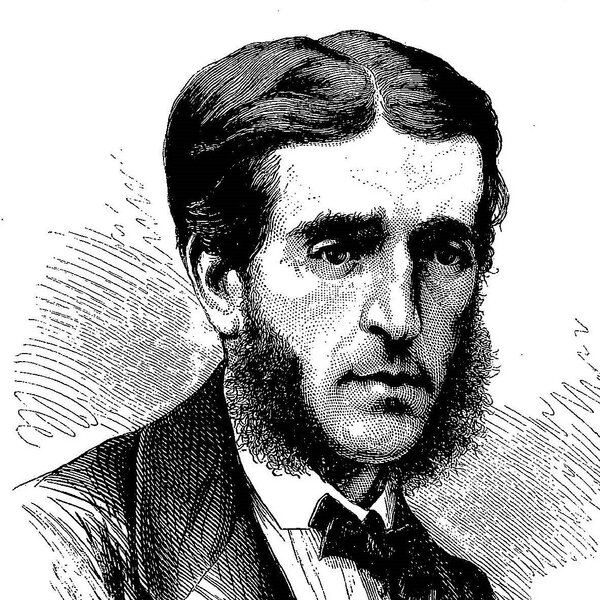
Francis Garnier
Lieutenant-de-vaisseau (French Navy Lieutenant) Marie Joseph François ‘Francis’ Garnier (in Vietnamese: Ngạc Nhi) (25 Jul. 1839, Saint-Étienne — 21 Dec. 1873, Hoy-en Khe, in action during the Hanoi siege) was one of the first French explorers to extensively write about Cambodia, the Mekong River, Indochina, Tibet and China.
After joining the Navy at age 15, he navigated to the South American coasts and joined the staff of Admiral Charnier in 1860 for the “campaign of China and Cochinchina.” Nicknamed “Mademoiselle Bonaparte” by his comrades for his slender and fragile frame, Garnier developed early the idea of a powerful French Empire in Asia. Named administrator of Cholon (Saigon) in 1863, he published in 1864 a pamphlet, La Cochinchine francaise, under the pen name of G. Francis.
In June 1866, Garnier joined in Saigon the Mission d’exploration du Mékong under the command of Captain Ernest Doudart de Lagrée, with (among others) anthropologist and physician Louis Joubert, botanist Clovis Thorel, sailor-photographer Émile Gsell, draughtsman and architect Louis Delaporte, and Louis de Carné Jr. from the French Foreign Ministry. As a commandant-in-second, he was in charge of hydrographic, meteorologic and cartographic reports.
Upon Doudart de Lagrée’s death in Yunnan Province, he took over the Mission, leading it up to Shanghai and sailing back to Saigon in June 1868. After a stint as a cartographer at the Navy Ministry in Paris, and a recognition of his work (along with famous explorer David Livingstone) by the French Société de Géographie, he traveled back to Shanghai with and carried on several solo explorations, having obtained an honorary leave from the Navy. His interest in geography and history did not prevent him to constantly look for “new commercial routes with China”, as he titled on of his articles in the Bulletin de la Société de Géographie (February 1872).
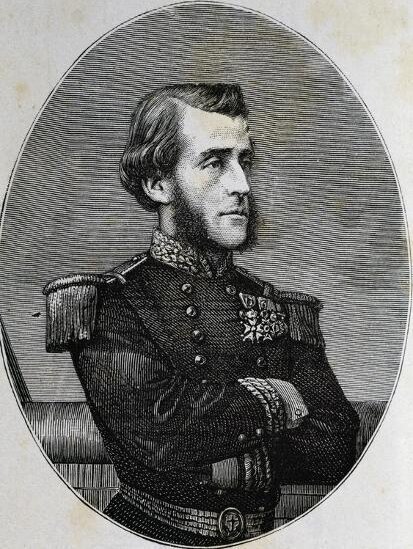
1) A portrait of Francis Garnier in the late 1860s. 2) Garnier’s grave in Saigon, where he was temporarily buried on 7 April 1876. [etching in Albert de Pouvourville, Francis Garnier, Les grandes figures coloniales 7, Plon, 1931.]
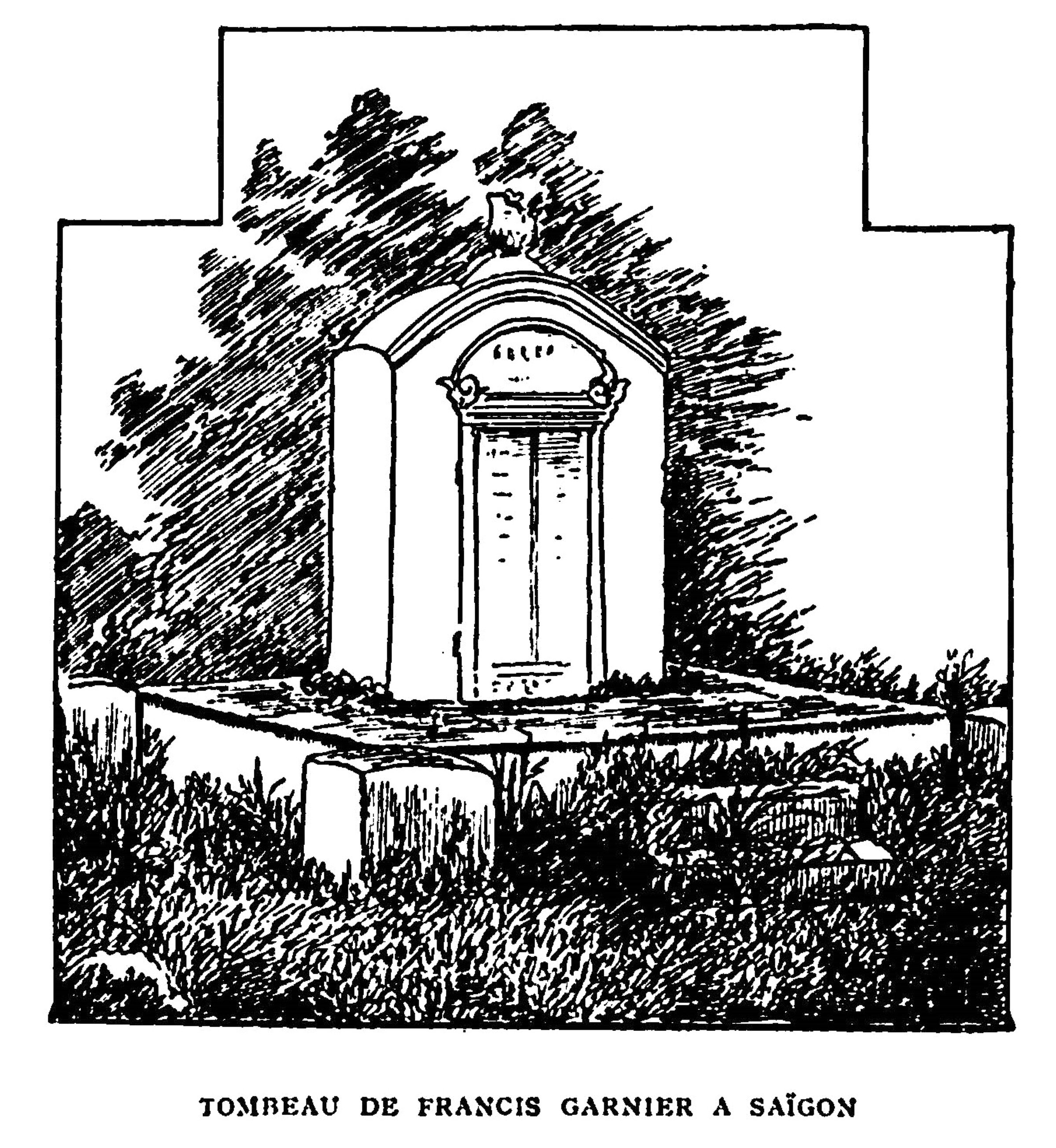
1) A portrait of Francis Garnier in the late 1860s. 2) Garnier’s grave in Saigon, where he was temporarily buried on 7 April 1876. [etching in Albert de Pouvourville, Francis Garnier, Les grandes figures coloniales 7, Plon, 1931.]
1) A portrait of Francis Garnier in the late 1860s. 2) Garnier’s grave in Saigon, where he was temporarily buried on 7 April 1876. [etching in Albert de Pouvourville, Francis Garnier, Les grandes figures coloniales 7, Plon, 1931.]
Called back by Contre-Amiral Dupré, then Governor of Cochinchina, Garnier reached Hanoi in November 1873. On Dec. 21, he was injured and capured by Chinese-Annamite pirates operating in the area, the Pavillons-Noirs headed by Chinese insurgent Luu Vinh Phuoc. He was found decapitated and emasculated, while his head was given back to the French authorities in 1874. Despite his quite sulfurous reputation — he was accused by some of embezzlment –, he was later granted state funerals in Paris, and no less than five French battleships have been named after him.
An expedition of Voyage d’exploration effectué en Indochine pendant les années 1866, 1867 et 1868 [4 vols.], on which he had started to work on whenever he could take some free time from his military obligations during the 1870 – 1871 Prussian blockade of Paris, was published shortly before Garnier’s death in 1873. Twelve years later, the edition including most of Garnier’s dispatches to Le Tour du Monde review was released under the title Voyage d’exploration en Indochine.
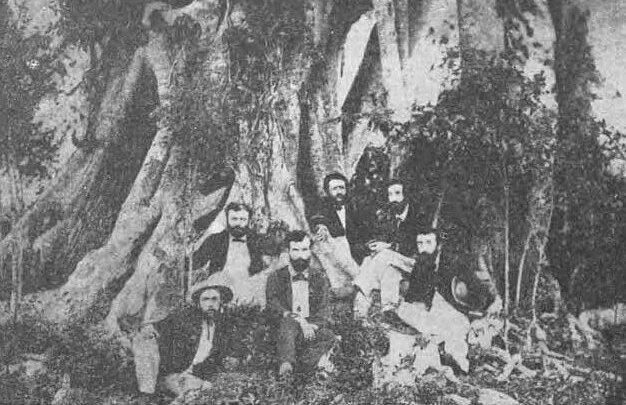
1863 Evenings at Cholon & Francis Garnier — “L’idée de l’exploration du Mékong trouva ses plus chauds partisans dans un petit groupe d’officiers de marine qui avaient coutume de se réunir à la préfecture de Cholon, administrée par l’un d’entre eux, le très dynamique Francis Garnier: “Il y avait alors à Saigon une pléiade de jeunes officiers et fonction naires qui entretenaient les plus cordiales relations. Cette belle jeunesse se riait des privations et des dangers… A Cholon, après le travail du jour, Garnier nous appelait souvent à la nuit tombante … Travail actif le jour, réunion d’études vers le soir, invitations amicales à la veillée, alternatives de besogne, de combats, d’alertes, de fatigue, d’explorations, de plaisirs, d’instruction et de modestes et cordiales distractions qui établissaient entre nous une fraternelle union” (Charles Lemire, 1902). Ces jeunes hommes, qui se réunissaient autour du préfet de la ville chinoise, s’appelaient Luro, Bizemont, Lamarque, Gaillard, Faure-Biguet, Foillard [and later Doudart de Lagrée]. Le soir, à Cholon, on soupait, on jouait la comédie en travesti, on discutait surtout des travaux et des problèmes du jour. On rêvait d’avenir, on dessinait les contours du futur empire que la France se devait de fonder dans les profondeurs mystérieuses d’un arrière-pays d’autant plus attirant qu’il était fait d’inconnu. Animateur de ces soirées, Francis Garnier brûlait d’être le Dupleix de cette nouvelle France d’Asie, de donner à son pays la vaste “main indochinoise”, formée par le bassin des cinq grands fleuves descendus du formidable massif thibétain. Conçue et voulue par quelques jeunes officiers à l’imagination ardente et généreuse, on peut dire que l’ 1 ndochine française est née, à l’appel de Francis Garnier, dans les «entretiens de Cholon ».” [Préface de Henri de Bizemont au livre de E. Luro, Le pays d’Annam, Paris, 1878, p. II et III., quoted in Georges Taboulet, La Geste française en Indochine, 1955 – 6, p 552]
1863 Evenings at Cholon & Francis Garnier — “L’idée de l’exploration du Mékong trouva ses plus chauds partisans dans un petit groupe d’officiers de marine qui avaient coutume de se réunir à la préfecture de Cholon, administrée par l’un d’entre eux, le très dynamique Francis Garnier: “Il y avait alors à Saigon une pléiade de jeunes officiers et fonction naires qui entretenaient les plus cordiales relations. Cette belle jeunesse se riait des privations et des dangers… A Cholon, après le travail du jour, Garnier nous appelait souvent à la nuit tombante … Travail actif le jour, réunion d’études vers le soir, invitations amicales à la veillée, alternatives de besogne, de combats, d’alertes, de fatigue, d’explorations, de plaisirs, d’instruction et de modestes et cordiales distractions qui établissaient entre nous une fraternelle union” (Charles Lemire, 1902). Ces jeunes hommes, qui se réunissaient autour du préfet de la ville chinoise, s’appelaient Luro, Bizemont, Lamarque, Gaillard, Faure-Biguet, Foillard [and later Doudart de Lagrée]. Le soir, à Cholon, on soupait, on jouait la comédie en travesti, on discutait surtout des travaux et des problèmes du jour. On rêvait d’avenir, on dessinait les contours du futur empire que la France se devait de fonder dans les profondeurs mystérieuses d’un arrière-pays d’autant plus attirant qu’il était fait d’inconnu. Animateur de ces soirées, Francis Garnier brûlait d’être le Dupleix de cette nouvelle France d’Asie, de donner à son pays la vaste “main indochinoise”, formée par le bassin des cinq grands fleuves descendus du formidable massif thibétain. Conçue et voulue par quelques jeunes officiers à l’imagination ardente et généreuse, on peut dire que l’ 1 ndochine française est née, à l’appel de Francis Garnier, dans les «entretiens de Cholon ».” [Préface de Henri de Bizemont au livre de E. Luro, Le pays d’Annam, Paris, 1878, p. II et III., quoted in Georges Taboulet, La Geste française en Indochine, 1955 – 6, p 552]
Publications
- [anon., signed ‘G. Francis’] La Cochinchine française en 1864.
- ‘Rapport d’ensemble du jury sur l’exposition des produits de l’Agriculture et de l’industrie cochinchinoises qui a eu lieu à Saïgon du 25 février au 5 mars 1866’, Bulletin du Comité agricole et industriel de la Cochinchine, avril 1866.
- Ta-ly, épisode du voyage d’exploration en Indo-Chine, 1869.
- Voyage d’exploration effectué en Indo-Chine par une commission française pendant les années 1866−67−68, par M. Fr. Garnier, lieutenant de vaisseau, chef de la Mission [extr. de La Revue maritime et coloniale (RMC), avril, juin, juillet, aout 1869], Paris, A. Challamel, 1869.
- ‘Note sur l’exploration du cours du Cambodge par une commission scientifique française’, Bulletin de la Société de Géographie (BSG) XII, 1869, p 97.
- Episode du voyage d’exploration dans l’lndo-Chine, communication adressée à la Société de Géographie, séance du 30 avril 1869, BSG XVII, 1870, XIX. Paris, Imprimerie Martinet, 1869.
- ‘L’Indochine’, Le Tour du Monde, 1870 – 1871-1872 – 1er sem. 1873.
- ‘Voyage de Gérard van Wusthof et ses compagnons aux royaumes de Cambodge et de Laower, traduit du hollandais par M. Voelkel’, BSG, 1er sem. 1871.
- Des nouvelles routes de commerce avec la Chine [offprint BSG III, p 147 – 60], Abbeville, Imprimerie Briey, 1872. |ENG ‘Trades Routes to Western China’, Edinburgh Review 280, April 1873.
- Le Siège de Paris, Journal d’un officier de marine, attaché au *** secteur, Paris, 1872.
- La Chronique royale du Cambodge, traduite du cambodgien par M. de Lagrée et ses interprètes, Journal Asiatique, July and August 1872; Paris, Imprimerie nationale, 1873.
- Voyage d’exploration en Indo-Chine, effectué pendant les années 1866, 1867 et 1868 par une commission française présidée par M. le capitaine de frégate Doudart de Lagrée et publié par les ordres du Ministre de la Marine sous la direction de M. le Lieutenant de Vaisseau Francis Garnier, avec le concoures de M. Delaporte, Lieutenant de vaisseau, et de MM. Joubert et Thorel, médecins de la Marine, membres de la commission, ouvrage illustré de 250 gravures sur bois d’après les croquis de M. Delaporte et accompagné d’un atlas, Paris, Hachette et Cie, 2.vol., 1873.
- [posth. with L. Delaporte, Dr. Lucien-Eugène Joubert and Dr. Clovis Thorel] Atlas du voyage d’exploration en lndo-Chine, Publication officielle, Paris, Hachette, 1873: 2 vols, 1 Atlas & 1 Album, 1875.
- [posth.] Voyage dans la Chine centrale, vallée du Yang Tse, fait de mai à aout 1873 par F. Garnier, lieutenant de vaisseau [offprint BSG Jan. 1872], Paris, Ch. Delagrave, with 39 maps, 1874.
- ‘Le rôle de la France en Chine et en Indo-Chine, Article daté de Shangai le 9 août 1873 en réponse à l’article de M. Giquel’, Revue scientifique de la France et de l’étranger 15, 9 Oct. 1875.
- [posth.] Chroniques royales du Cambodge, Paris, Imprimerie Nationale, 1877.
- [post.] De Paris au Tibet, Paris, Hachette, 1882, 442 p. [includes ‘Une exploration de trois mois en Chine centrale’].
- [post.] De la Colonisation de la Cochinchine, Paris, A. Challamel, 1885.
- [posth.] Voyage d’exploration en Indo-Chine, par une commission française présidée par le capitaine de frégate Doudart de Lagrée, relation empruntée au journal Le Tour du Monde revue et annotée par Léon Garnier, Paris, Hachette, 1885; repr. Paris, La Découverte, 1985 (ISBN 270711409X). | ENG: Explorations in Indo-China, Bangkok, White Lotus, 1996.
About Francis Garnier
- ‘Francis Garnier’, Revue maritime et coloniale (RMC), Apr-June 1874.
- Jules Harmand, Souvenirs du Tonkin, BSG, 1875.
- Charles Normand, ‘Tongking.: Le fleuve du Tongking et le voyage de Francis Garnier et Balny en 1873; d’après un manuscrit inédit’, L’Exploration, 3e ann., 2e trim., T. VIII, 1879.
- Léopold Lanier, La découverte d’une nouvelle route commerciale dans le Tongking, Société industrielle d’Amiens, Sept. 1880.
- J. Dupuis, La conquête du Tonkin par vingt-sept Francais, Paris, 1880.
- J. Dupuis, Voyage au Yunnan et ouverture du Fleuve Rouge, Paris, Annales du Musée Guimet/E. Leroux, 1880.
- Génin, Dupuis et F. Garnier au Tonkin, Paris, A. Challamel, 1882 [off-print Bulletin de la Société de Géographie de l’Est, 3e trim. 1882, T. IV].
- M.A.B. de Villemereuil, Explorations et missions de Doudart de Lagrée – Extraits de ses manuscripts, Paris: Bouchard-Huzard, 1883.
- La France en Indo-Chine, a narrative of Garnier’s explorations in Cochinchina, Annam and Tonkin, London, 1884.
- Gervais, ‘La France au Tonkin: Un rapport inédit de A.-F. Garnier’, Nouvelle Revue, Paris, 1885.
- Felix Julien, Lettres d’un précurseur – Doudart de Lagrée – au Cambodge et en Indo-Chine, Paris: Challamel Ainé, 1886.
- Maisonneuve-Lacoste, Notice sur Francis Garnier, Saigon, 1887.
- Hugh Clifford, Further India, being the story of exploration from the earliest times in Burma, Malaya, Siam and Indo-China, New York, Frederick A. Stokes, 1904.
- Mekong Exporation Commission website.
About the Translator