Publications
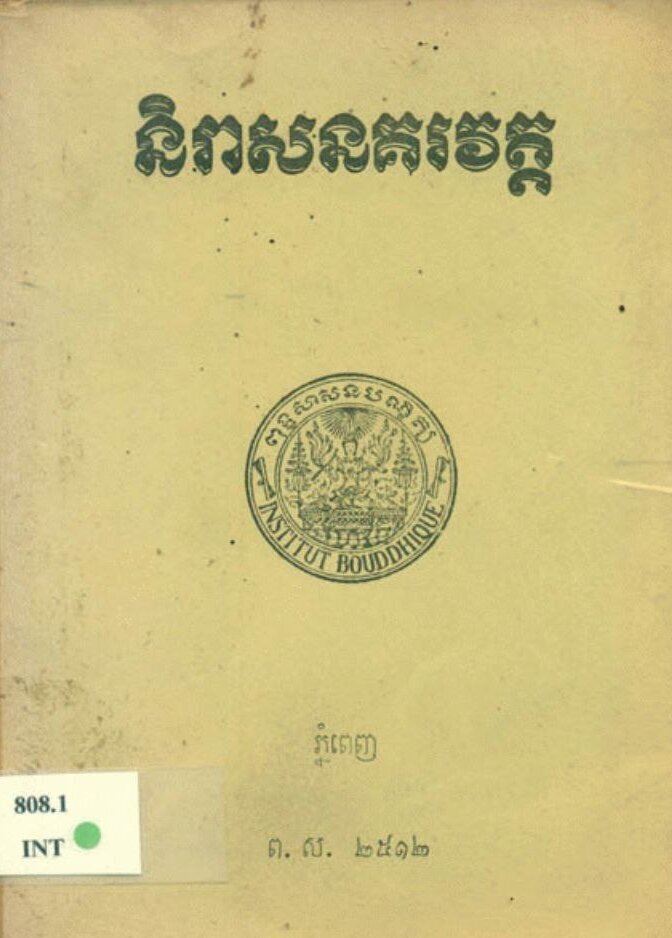
និរាសនគរវត្ត Niras Nokor Wat - 1934 Edition
by Suttantaprija Ind
by Suttantaprija Ind & Trent Walker
An attempt in translating into English one of the poems that marked the birth of Cambodian modern literature.

pdf 123.9 KB
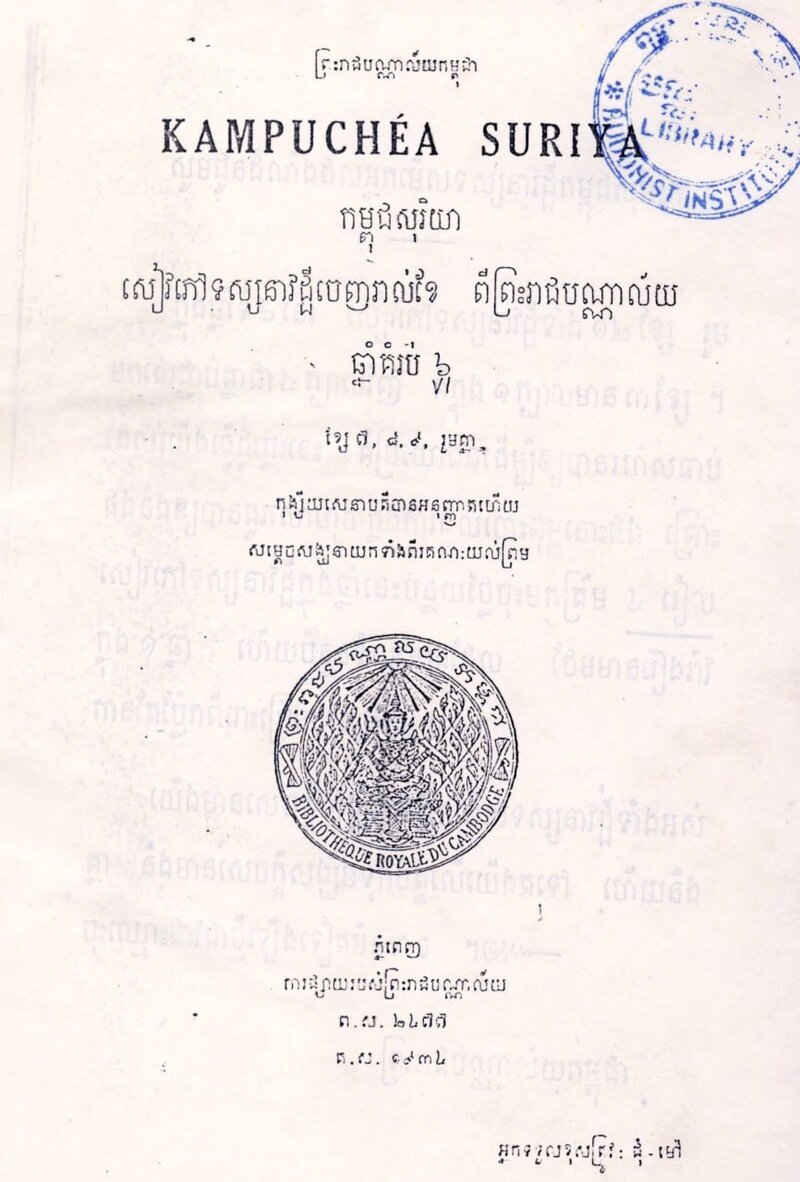
The author here offers his English translation of excerpts from Suttantaprījā Ind’s Journey to Angkor Wat និរាសនគរវត្ត Niras Nokor Wat — the Stanzas 1 to 51 and 237 to 256 in the Kampuchea Suriya edition (1934, vol 7, 8, 9, p. 5 – 81).
A famed Pali scholar and former Buddhist monk from Battambang, Oknha Ind was part of the rich city elite and was invited by then governor of Battambang to join the October 1909 ceremonies at Angkor in presence of HM King Sisowath to mark the restitution of Siem Reap and Battambang provinces to Cambodia, part of the Siamese-French 1907 Treaty. It seems it was his first visit to the Khmer temples ever, while he had spent several years in Bangkok for his studies. In pure “nirat” [a Thai form of “poem of longing”, in its Khmer niras version], he refers to the loved ones left home and to the arduous boat journey on the Sangke River, the Tonle Sap Lake and the Stung Siem Reap, as “the water whirls around like birth and death/, drowning creatures in this carnal abyss.”
The poet notes that he was invited to join the Angkor celebrations by “the governor of Battambang province, who leads the work of the new French régime,”[1] and that the Battambang party has to reach Angkor Wat before “the ninth day of the tenth lunar month”, which marks the Navami Hindu festival of Navratri, a nine-night celebration of the goddess Devi. In some provinces of Siam (now Thailand), this is also when the Sart Duan Sip festival occurs, and in Cambodia it marks the end of the Vassa monk retreat, leading to the holy celebration of Pchum Ben ភ្ជុំបិណ្ឌ.
He remarks that the customs officers at the post set up by the Siamese administration between the two provinces are now occupied in farming: “No toll or tax to excise or extract/, the staff simply let us swiftly steam off. This taxless customs house struggles to last,/ living off naught but its own fields and farms.” This is not a prosperous country he travels through. Cambodia looks much as “that lithe-limbed girl’s life,/ stooping to sow seedlings, scorched by the sun,/ her face plastered with mud and dusty earth./ I mourn the strife and strain of those born poor./If she had riches, rank, and great renown,/she’d dine and doze in lofty luxury;/ adorned with fine perfume and fair powder,/hair trimmed and dyed, her complexion would shine;/ she’d flaunt her charm to captivate rich men,/ she’d be looked over, never overlooked./ But stained now by the sun and by the soil, she can ensnare and earn their love no more./ I eye the tiny girl and pity her, born to a wretched race with the wrong roots.”
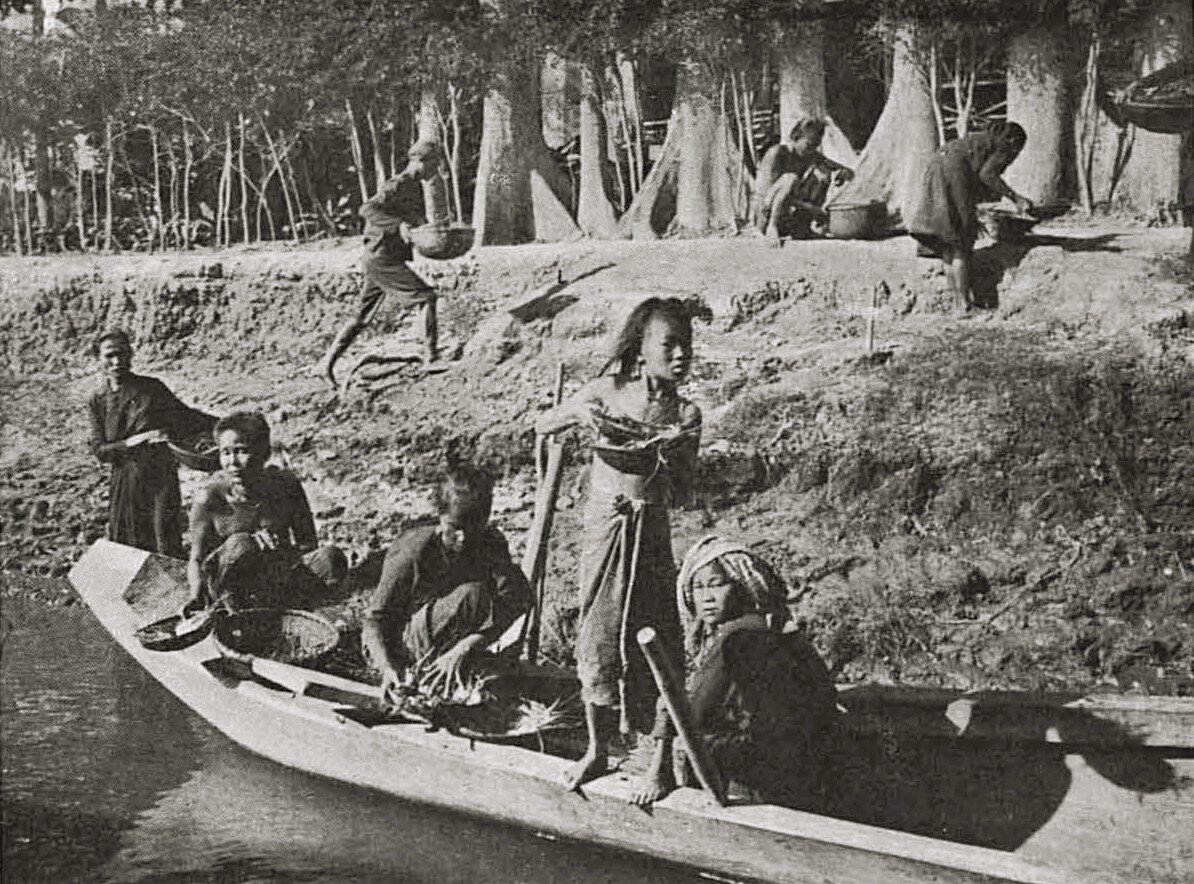
Cambodian fishermen photographed about the same time (1911) as Ind’s visit to Angkor. [source: Loys Pétillot [author and photographer], Une richesse du Cambodge: la pêche et les poissons, Paris, A. Challamel, 1911, 193 p. Plate III).
Cambodian fishermen photographed about the same time (1911) as Ind’s visit to Angkor. [source: Loys Pétillot [author and photographer], Une richesse du Cambodge: la pêche et les poissons, Paris, A. Challamel, 1911, 193 p. Plate III).
Ind Suttantaprija was almost 50 when he went to Angkor. After devoting a large part of his youth to monkhood and Buddhist studies, he had married quite late, at 37, and lived a peaceful family life in the village of Chivea Thom, Battambang. The honors would come later, in 1914, when he was made oknha by King Sisowath and was appointed to the newly founded Ecole de Pali (Pali School) in Phnom Penh. In his journey towards his king, “the ruler of the Kingdom of Kampuchea,/who vows to tread the bodhisattva’s way”, he catches himself daydreaming about his “beloved partner in this life” and reflects on a man’s weakness:
How transient the lives of all creatures!
Once bodies break apart and minds collapse,
no one will dare approach the vile stench.
Let us all dwell on life’s impermanence.I humbly strive to quake at corpses’ sight,
yet lust still must be burning inside me.
For I think of my darling, my dear love;
“impermanence” is only on my lips.
And then, in front of “the gem of Angkor Wat”, the sorrow in front of the decaying ruins seems to overcome any aesthetical emotion, or even the pride at remembering a glorious past:
I gaze upon the moat, a watery sea,
a vast expanse that circles Angkor Wat.
The kings of old had dug it for defense:
a ditch, a dam, a dyke to ward off foes.The moat’s waters expand, a wide, wet field,
all lined with stone, a dense array of rock,
its steep walls carved in shells, spirals of gems,
descending stairs sculpted in fragrant flowers. […]Pity these stone lions, the ancients’ craft!
Their posture roars with life amidst decay.
But now they’re chipped and cracked and smashed:
alas that these sculptures meet such an end!Perhaps some savage folk, cut off from thought,
whetted their knives against the lions’ backs,
ruining what still remains of their fine form,
without a shred of care for art of yore. […]O stone nagas, fashioned by the ancients!
In days long gone, your beauty surpassed all.
But now your bodies are broken and cracked;
you’re only a ruin, your glamor all but gone.Your backs are split, your heads torn from your necks.
Only the row of columns below remains.
Alas, the masterworks of old must fade,
unable to endure forevermore.
These stanzas from the second excerpt translated here are part of the fragment often studied in Cambodian schools nowadays.
[1] This governor might have been Em Arun Sinhaseni, “the first governor of Battambang after the retrocession of 1907 and nephew of mcās’ Jhuṃ” [Chhum, the last viceroy of Battambang], according to Grégory Mikaelian (cf. “The Grū of Parnassus: Au Chhieng Among The Titans”, UDAYA 15, 2020: 148). The last viceroy, Chhum Aphaiwong [ចៅពញាអភ័យភូបេស្ស Chao Ponhea Chhum Abhaivong, Chao Ponhea Abhaiphubet, or Kathathan Chhum], came from the powerful Abhaiphubet [Abhaivong] Thai-Khmer family, and Sinhaseni was also a notorious family in the Siamese kingdom.
Entry photo: Angkor Wat western access, drawing by Louis Delaporte in Francis Garnier, Voyage d’exploration en Indochine, 1873.
Tags: poetry, French Protectorate, Cambodian Buddhism, Angkor Wat, King Sisowath, Siamese occupation, Siam-French Treaty, Buddhist monks, Tonle Sap Lake, customs and duties, Dhamma
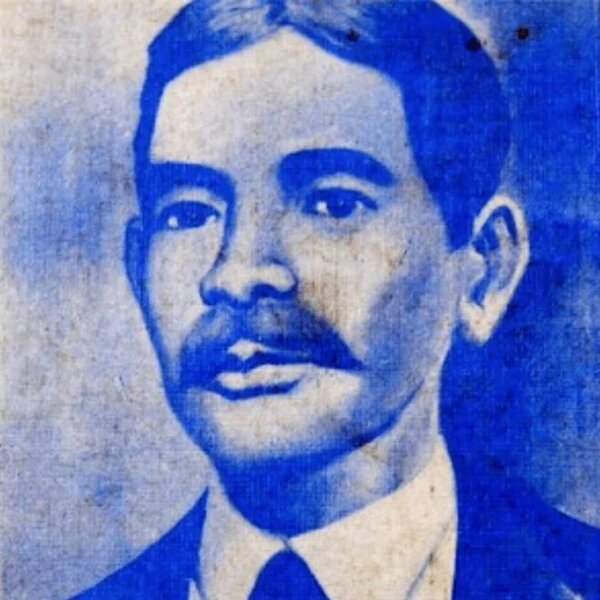
Oknha Suttantaprījā [Sothnpreychea] Ind សុត្តន្តប្រីជាឥន្ទ (22 July 1859, Rokar Korng Village, Kandal Province – 8 Nov. 1924, Battambang) was a Cambodian monk and writer whose work is considered as “pivotal” in the Cambodian literature transitional period between tradition and modernity.
His stanza poem Niras Nokor Wat - on which he worked between 1909 and 1915, his manuscript having been discovered posthumously and published by the Buddhist Institute in 1934 -, related to his attending of King Sisowath’s ceremony at Angkor on Thursday 23 September 1909, marking the 1907 retrocession of Siem Reap and Battambang provinces from Siam and possibly commissioned by the King, is a Khmer literary modern-classic work [1], an account of a “river journey [on the Sangke River] that becomes a meditation on life, desire, and impermanence,” according to Trent Walker. As Penny Edwards remarked, “Ind’s verse is burnished by his monastic training, Pali repertoire, and cosmopolitan schooling.” [“Inarguably Angkor”, in The Angkorian World, 2023, p 641.]
When Suttantaprija Ind was 15, he lived at Wat Prek Por, studying Pali scripts. At 18, he went to Phnom Penh to study under a Buddhist preacher called Prak at Wat Unalom. One year later, he studied with Lok Achar Sok for a year at Wat Keo pagoda, Battambang. He became a monk again when he was 20 at Wat Keo for one year, and went to study in Bangkok, Siam, in 1880. After seven years there he came back to Cambodia in 1887, during the time of Lok Prash Yakatha Chhum Khnon [th เจ้าพระยาอภัยภูเบศร (ชุ่ม อภัยวงศ์), kh ចៅពញាអភ័យភូបេស្ស (កថាថនឈុំ) Chao Ponhea Apheayphubet Kathatan Chhum [2]] (29 July 1861 – 27 Aug 1922), the last ruler of Battambang under Siamese control who appointed him Khon Vichit Voha and Hluong Vichit Vohar, special counselor, after he left the monastic life.
His life reflects the tensions between Cambodia, Siam and France at the time. For instance, his closeness to ‘viceroy’ Chhum could explain his choice of leaving for Bangkok, but also reflects the close family ties across the two countries: Chhum’s sister, acclaimed court dancer Khun Chom Iem Boseba [3](1864 – 1944), was one of King Norodom’s wives and, by giving birth to Prince Sutharot (1872−1945), at the origin of the Royal House of Norodom. She was a daughter of Chao Banam Abhayadipati [Nhonh], from the Abhaivongse family, sometime Governor of Battambang, by his wife, Than Pu Ying Tuptim Bunnag. But Chhum’s granddaughter, Princess Chao Sovathana ព្រះនាងចៅសុវឌ្ឍនា (th พระนางเจ้าสุวัทนา พระวรราชเทวี HRH Princess Suwattana) (15 Apr 1906- 10 Oct 1985) was to marry in 1924 Siam’s King Vajiravuth (Rama VI) April 15, 1906 — October 10, 1985), thus being Queen of Siam for less than one year. During his spare time, Ind was also fond to translate the famous French folktales by La Fontaine in Khmer [4].
According to researcher Thun Theara, he “had translated a chronicle manuscript from Siamese into Khmer. The manuscript was a Cambodian palace chronicle, probably translated from Khmer into Siamese during Ang Duang’s reign, and collected by the Siamese intellectual K. S. R. Kulap (see Khing 2012, 15). Ind had probably come across the manuscript during his years as a Buddhist monk studying in Bangkok in the 1880s. In 1917 there was an effort in Thailand to compile and publish Khmer chronicle manuscripts that had been translated into Siamese since the reign of King Mongkut in the 1850s. The Thai edition included three different versions of the original Khmer manuscripts: the Nubbarath version of 1878 on the pre – fourteenth-century period, a manuscript composed during Ang Duong’s reign in around 1855 on the 1346 – 1794 period, and another text acquired by Coedès in the 1910s on the 1794 – 1865 period. The edition was published as Ratchaphongsawadan Krung Kamphucha (Royal chronicles of Cambodia).” [in Epistemology of the Past: Texts, History, and Intellectuals of Cambodia, 1855 – 1970, New Southeast Asia: Politics, Meaning, and Memory, University of Hawaii Press, 2024, Kindle Edition, p 47) [5].
After staying at Wat Kandal (Battambang) for ten years, Suttantaprija Ind — then 37 — decided to leave the monkhood and married Lok Yay Tuet from Chomka Somroung village, Battambang, living in Chivea Thom village. In ជីវប្រវត្តិអ្នកនិពន្ធខ្មែរ [Biography of Khmer Writers] by Chhay Sokhai ឆាយ សុខៃ and Meas Sopanha មាស សុបញ្ញា (Phnom Penh, 2016, p 134 – 5), we find that “in Battambang province everyone appreciated him for his contributions to society, called him Lok Achar Ind, and loved his work. People borrowed and hand-copied his works before they were published. The hand-copied books were passed around from person to person for reading and studying. Some people knew the entire collection of his poetry by heart. […] According to his daughter, Lone Ind, Suttantaprija Ind was frequently invited to talk about dharma and tell stories when there was an event or ceremony such as a wedding, open house, etc. He would come back home with a lot of money, which he would like to give away to his grandchildren. At night, he would lay flat on his stomach writing all night long.”
In 1914, at 55, Suttantaprija Ind was back to Phnom Penh with honors, being granted the title of Oknha by King Sisowath for his contribution to the knowledge of Cambodian religion and traditions. He was called back to contribute to new Pali School (Ecole de Pali), with temporary quarters in the Silver Pagoda, transferred in 1922 to the building where the Buddhist Institute was to be set [6]. He was particularly occupied with the preparation of a Pali-Khmer Dictionary, and with the Dharma’s saying verification department. He resigned his civil servant post at 65, returning to Battambang where he passed away a few months later, surrounded by his family.
___________
[1] According to Sharon May in her 2015 essay on Cambodian literature,“the Buddhist Institute, which printed Ukñā Suttantaprījā Ind’s famous Gatilok and other literature, became the nation’s first publisher in the early 1900s. Khmer-language newspapers and journals first appeared in the 1920s, although the first Khmer-owned and operated newspaper, Naggaravatta [Angkor Wat] did not appear until 1937. The first Khmer modern novel also appeared in the 1930s. A new Khmer term was invented for the novel, ប្រលោមលោក pralomlok, which means a story that is written to seduce the hearts of human beings. Many of these early works featured ill-fated lovers and contained moral and social critique. As was common for the era in Southeast Asia, and for writers such as Dickens and Tolstoy earlier in Europe, most novels were first serialized in newspapers or journals. Among the early novels still read today are The Waters of Tonle Sap by Kim Hak, The Tale of Sophat by Rim Kim, The Rose of Pailin by Nhok Them, and Wilted Flower by Nou Hach. Literature became linked with national identity, as quoted in the journal Kambuja Surya, “If its writing disappears, the nation vanishes.”
[2] Abhayavongsa อภัยวงศ์ was a Thai noble surname used by the Thai family that formerly governed parts of Cambodia at the time it was ruled by Siam. Despite its long presence in Cambodia, it was never considered part of the Khmer nobility. The Abhayavongsa family governed Phra Tabong Province (modern Battambang Province, Cambodia) for six generations from the late 18th century, when Siam annexed the Khmer territories, until 1907, when the area was ceded to French Indochina effectively reuniting it with Cambodia. The title bestowed by the Thai King to the governor of Phra Tabong which was used by each successive governor was Aphaiphubet [Apheayphubet]. [source: Wikipedia].
[3] บุษบาท่ Bus’ba in Thai means flower. In “The Gru of Parnassus: Au Chhieng among the Titans” (Udaya 15, 2021, p 127 – 82 [tr. by Robert Fowler], Grégory Mikaelian noted that
her filiation varies according to the family trees available: for Népote and Sisowath, Khun Cham Iem Bossaba is the daughter of a Battambang mandarin and a relative of the royal family of Thailand, without further specification (Népote and Sisowath, État présent, 68); for Corfield, Yem Bossaba is the sister of Thao Sri Sudorn-nath, herself the grandmother of Phra Nang Chao Suvadhana (1905−1985), who married Rama VI (also known as Vajiravudh) in 1924, (Corfield, The Royal Family, 47 – 48); for Nhiek Tioulong, Khun Chom Iem is the daughter of a titled dignitary, “Piphéak Bodin”, former governor of Siem Reap under Siamese authority, another of whose daughters, Mâm Keo, is the grandmother of Pranang Tiv, wife of Rama VI (Nhiek, Chroniques khmères, 44). At this stage, the divergences are easily resolved: the “Battambang mandarin” father of the two sisters (one of whom is the grandmother of one of the wives of King Rama IV) is none other than “Piphéak Bodin,” governor of Siem Reap falling within the orbit of the regents of Battambang (Loch, “Chronique des vice-rois de Battambang”). On the other hand, things become complicated when you try to clarify the identity of this dignitary and that of the mother of Iem. If you follow the genealogies of the Siamese royal family (“Khmer-Siam Royal Family Tree”), she is none other than the daughter of the eighth governor of Battambang (see likewise Khuon, Battambang et sa région, 119 and So, The Khmer Kings, Book II, 372).
[4] In his monograph on Suttantaprija Ind, Khing Hoc Dy noted that he helped Père [Father] S. Tandart in his research on Khmer language when the Catholic missionary was active in Battambang. The latter published a few years later S. Tandart, Dictionnaire Français-Cambodgien, t 1, Hong-Kong, Imprimerie de la Société des Missions-Etrangères, 1910, 1104 p. In his review of the dictionary (Toun’g Pao, vol 13, 1912, p 744 – 5), Henri Cordier noted that the same author was “set to publish an Essay on Khmer Grammar.” We do not know whether this project came to fruition.
[5] Known as “Royal Chronicle ME”, since the manuscript is kept at the library of the Missions-Étrangères (ME) in Paris. In his Histoire du Cambodge… (p 15), historian Mak Phoeun noted that this chronicle was “apparently a translation into Khmer — made around 1909 (?) under the reign of Sïsuvatthi (Sisowath) (1904−1927) by the Achary “Ind”, later known as Ukañā Suttant Prījā “Ind” (1859 — 1924) — of a Cambodian royal chronicle previously translated into Siamese. It starts with King Rām de Joen Brai (or Rām I) and ends in 1811 AD. The text often records the same facts than other royal chronicles, yet is much more detailed in relation to events reported from the end of the 18th century, with a slightly different list of kings for the end of 17 th century.”
[6] It has often be said that Ind had worked at the Buddhist Institute but this institution was founded on 12 May 1930 by King Sisowath Monivong of Cambodia, King Sisavong Vong of Laos, the Governor General of Indochina Pierre Pasquier and George Coedès, then director of the EFEO.
See also

Lecturer in religious studies at Stanford University with a PhD in Buddhist — Studies (University of California-Berkeley), Trent Walker is currently Director of Preservation and Lead Scholar of the Khmer Manuscript Heritage Project, Buddhist Digital Resource Center, aimed at digitizing over 10,000 palm-leaf and bark-paper manuscripts from Cambodia in Khmer, Pali, and Thai.
With a solid knowledge in Khmer, Lanna, Lao, Pali, Sanskrit, Siamese languagees, Trent Walker has published numerous essays on Theravada Buddhism and liturgical traditions of Cambodia, Thailand, Vietnam, in particular the adaptations of Tipitaka, the corpus of Pali canon.
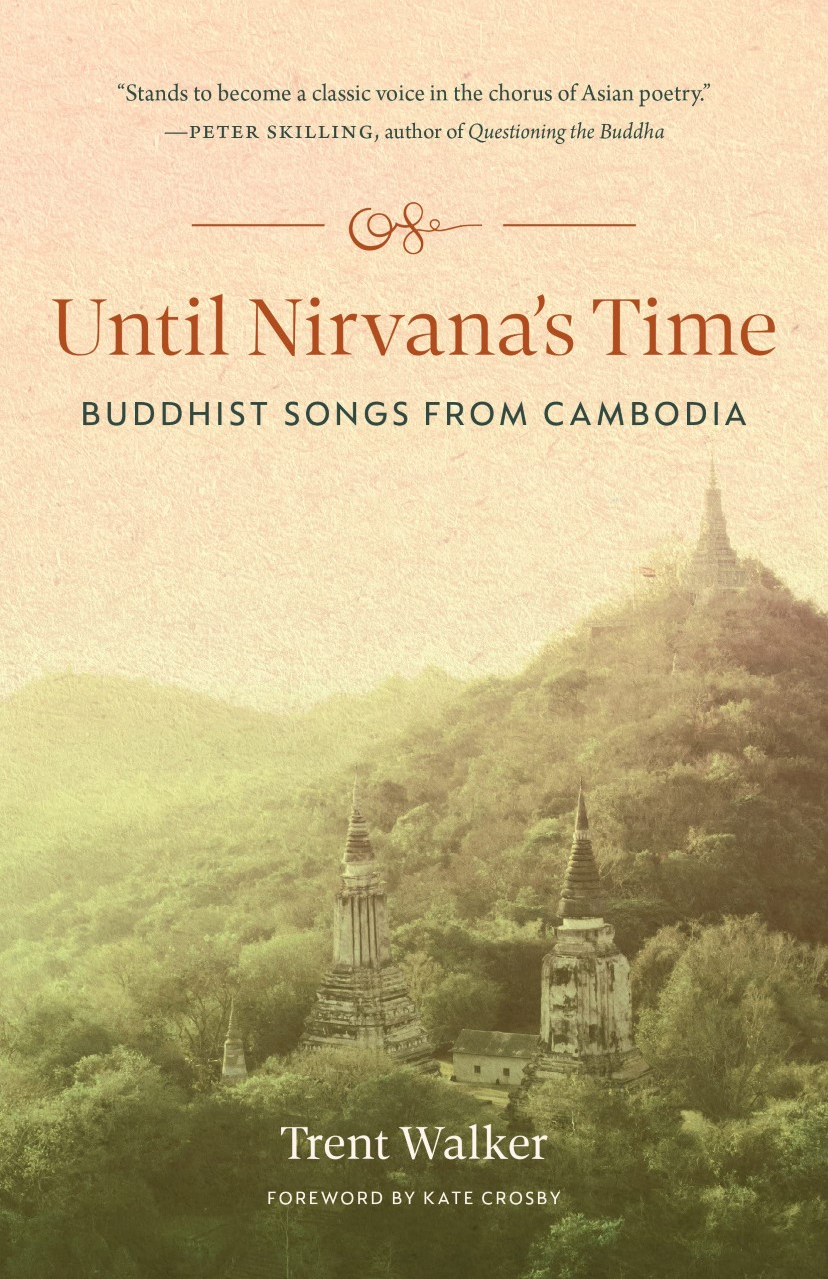
In 2022, Trent Walker published Until Nirvana’s Time: Buddhist Songs from Cambodia, the first collection of traditional Cambodian Buddhist poetry available in English, original translations of forty-five texts along with extensive notes and essays. “Sung in daily prayers or all-night rituals of healing, mourning, and consecration, these Dharma songs have guided Khmer-speaking communities in Cambodia, Thailand, and Vietnam for generations,” he remarked in his book launch announcement. The collection reflects the author’s experience when, in 2005, he went to In 2005, Kampong Speu province to study under the Cambodian Dharma song masters Prum Ut and Koet Ran [video presentation here].
sk अरुणा aruṇā, "red", "reddish brown", personal name, dawn; pl aruṇa "dawn"; kh អរុណ arun, "dawn", "morning".
In Sanskrit literartue, Aruṇā is a personal name, male or female associated with the red or reddish brown color and the sky hues at dawn. In Shaktism, Aruna, “she who is red in complexion”, applies to the Goddesses of accomplishments. There is one Apsara called Aruna in the Mahabharata.
In ancient Indian iconography, Aruna is the charioteer of Surya the sun-god.
In Khmer, Arun refers to dawn, morning, lit. "when the sun is red". Used in modern Khmer only for greetings, ie Arunaposa, good morning.
kh: ឧកញ៉ា angk: uk-na | in ancient vn texts: Ốc nha (屋牙)