
Books
Komlah, Visions d'Asie
by Roland Meyer
by Bophal Chan & Roland Meyer & Angkor Database
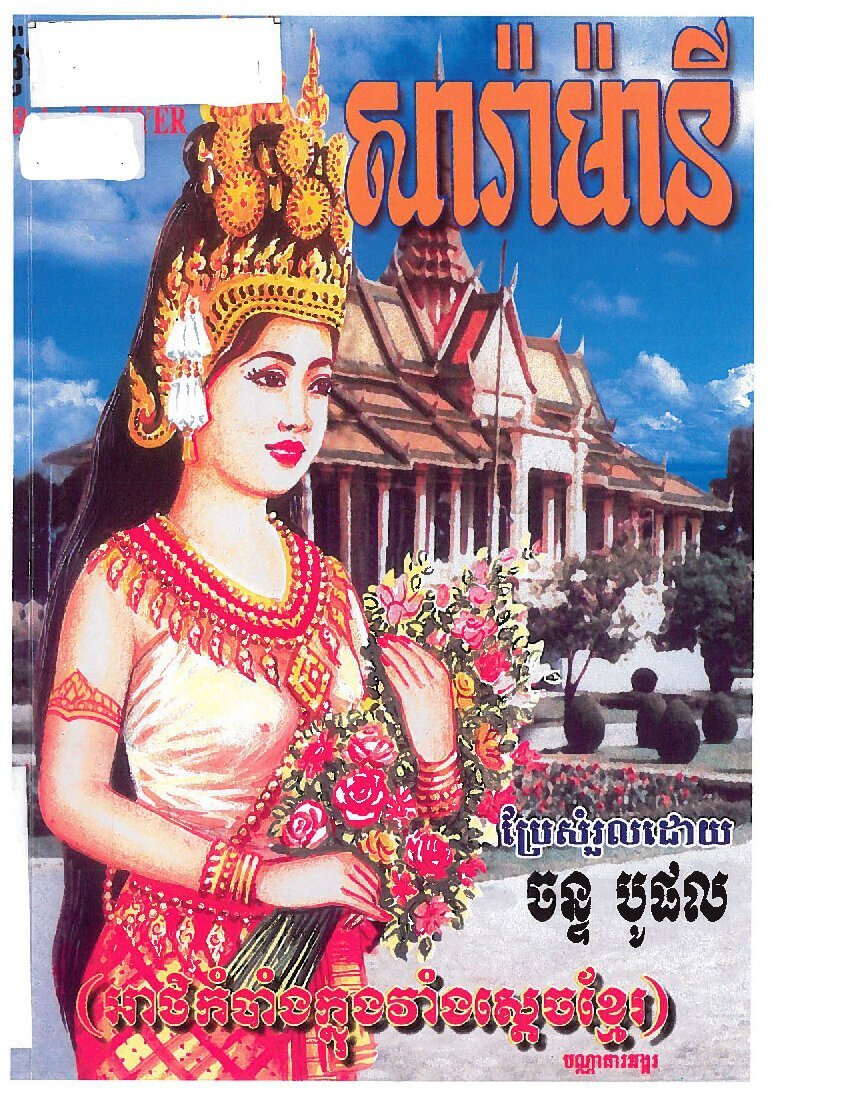
A 1970s Khmer translation of the only major novel set in Phnom Penh Royal Palace at the start of the 20th century.

pdf 5.7 MB
As translator Chan Bophal noted in her Introduction, this translation of Saramani, danseuse khmèr [sic] was initially serialized for the Cambodian newspaper ប្រយោជន៍ខ្មែរ [Brayoch Khmer, ‘Khmer Benefit’] [1], every day except Sundays from 15 October 1970 (Issue 159) to 22 January 1971 (Issue 251). To the date, we haven’t been able to locate copies of the newspaper publication.
In addition to the digital version of the original 1996 edition, here is Angkor Database digitial version in Khmer Unicode [created in November 2025].
ក្រោយពីបានចុះផ្សាយ ចប់សព្វគ្រប់តាមទំព័រ នៃ សារពត៌មានរដ្ឋ «ប្រយោជន៍ខ្មែរ» រៀងរាល់ថ្ងៃ ចាប់តាំងពីលេខ ១៥៩ ចេញថ្ងៃទី ១៥ តុលា ១៩៧០ រហូតដល់លេខ ២៥១ ចេញថ្ងៃទី ២២ មករា ១៩៧១ ខ្ញុំក៍ បានរៀបចំចងក្រងរឿង «សារ៉ាម៉ានី» នេះ ជាសៀវភៅឡើង ដើម្បីជា កិច្ចគោរពតាមសំណូមពរ នៃ អស់លោក‑មិត្តអ្នកអាន ជាច្រើន ដែលបាន យកចិត្តទុកដាក់អានរឿងនេះជាប់រហូតមក ហើយបានធ្វើលិខិតមកសុំឲ្យ ខ្ញុំរៀបចំបោះពុម្ពផ្សាយជាសៀវភៅ ដើម្បីស្រួលរក្សាទុក។ រឿង «សារាម៉ានី» និពន្ធដោយជនជាតិបារាំង ឈ្មោះ “រ៉ូឡង់ ម៉ីយែរ” ចាងហ្វាងវិចិត្រសិល្បៈប្រចាំប្រទេសកម្ពុជា កាលជំនាន់ប្រទេស យើង
ស្ថិតនៅក្រោមអាណាព្យាបាលបារាំងនៅឡើយ | ដោយដាក់ ចំណងជើងថា «SARAMANI, DANSEUSE KHMERE» បោះពុម្ព ផ្សាយក្នុងឆ្នាំ ១៩១៩។ “រ៉ូឡង់ ម៉ីយែរ” ធ្លាប់រស់នៅក្នុងប្រទេសយើងអស់ ពេលដ៏យូរ ធ្លាប់ ចេញ‑ចូល វាំងស្តេចខ្មែរជាញឹកញាប់ ទើបអាច ស្គាល់ និង ដឹង ជីវភាពស្តេចបានជាក់លាក់ល្អយ៉ាងនេះ។ សោតឯដំណើររឿង ខ្ញុំបានសាកសួរចាស់ទុំច្រើននាក់ ដែលធ្លាប់រស់នៅក្នុងវាំង ឃើញថា សុទ្ធសឹងជារឿងពិត រហូតដល់តួអង្គក្នុងរឿង ក៍សុទ្ធជាមនុស្សដែលធ្លាប់ បានរស់នៅកាលជំនាន់នោះមែន ។
ឆ្លៀតឱកាសនេះ ខ្ញុំសូមជម្រាបបញ្ជាក់ជាថ្មីម្តងទៀតថា ក្នុងការប្រែ សំរួលពីភាសាបារាំងមកជាភាសាជាតិយើង តែងតែមានការឆ្នៃ ពាក្យ- ពេចន៍ ឃ្លា ប្រយោគ ខ្លះជាធម្មតា ប៉ុន្តែទោះជាយ៉ាងណា ក៏ខ្ញុំឥតមាន ថែមថយសាច់រឿង ឬ ពន្លើសពាក្យសំដី ដើម្បីញ៉ាំងសាច់រឿងឲ្យឃើញ សម្បើមនោះដែរ ។
សារ៉ាម៉ានី ជាប្រលោមលោកនិពន្ធដោយ Roland MEYER ជាភាសាបារាំង “SARAMANI, DANSEUSE KHMÈRE” បោះពុម្ពផ្សាយនៅ ភ្នំពេញ នាឆ្នាំ ១៩១៩ ។ លោក រ៉ូឡង់ ម៉ីយែរ ជាចាងហ្វាង វិចិត្រសិល្បៈ ប្រចាំប្រទេសកម្ពុជា ធ្វើការនៅស្រុកខ្មែរ ធ្លាប់ ចេញ ចូល វាំងស្តេចខ្មែរ និង បានរស់នៅយ៉ាងយូរ នៅស្រុកខ្មែរ ។ នេះជាកត្តា ដ៏សំខាន់ អនុញ្ញាតឲ្យលោកនិពន្ធសៀវភៅនេះឡើង ប្រកបដោយខ្លឹមសារដ៏ល្អ រៀបរាប់ពី ជីវភាពព្រះរាជវង្ស វ័ន ព្រះមហាក្សត្រខ្មែរ នៅក្នុងវាំង ពីជីវភាពរាស្ត្រខ្មែរ ពីសង្គមខ្មែរនៅ សម័យនោះ ពីចំណាប់អារម្មណ៍ នៃ សារ៉ាម៉ានី នារីខ្មែរសាមញ្ញម្នាក់ ដែលបានធ្វើដំណើរតាម កប៉ាល់ទឹក ឆ្លងកាត់មហាសាគរ ច្រើនថ្ងៃ ច្រើនយប់ មុននឹងបានមកដល់ និង ស្នាក់អាស្រ័យ មួយរយៈពេលដ៏ខ្លី នៅស្រុកបារាំង ។
សៀវភៅនេះ ជាកញ្ចក់មួយ ដែលជនជាតិបារាំងម្នាក់ ហ៊ាននិយាយពីសង្គមខ្មែរ ក្នុង រជ្ជកាល ព្រះបាទ ស៊ីសុវត្ថិ (១៩០៤ — ១៩២៧) ក្នុងរយៈពេលដែលប្រទេសខ្មែរយើង កំពុង ស្ថិតនៅក្រោមអាណាព្យាបាលបារាំង នៅឡើយ ។
ដើម្បីសង្កត់ន័យទៅលើខ្លឹមសារ នៃ សៀវភៅនេះ ដែល អ្នកស្រី ចន្ទ បូផល បាន បកប្រែជាភាសាខ្មែរដ៏ល្អ និង បានបោះពុម្ពផ្សាយនៅ ភ្នំពេញ ពីឆ្នាំ ១៩៧១ ទស្សនាវដ្តី អង្គរវត្ត បានផ្សាយឡើងវិញនៅ បារីស នៅឆ្នាំ ១៩៩៦ និង រៀបចំបោះពុម្ពជាសៀវភៅ ផ្សាយនៅឆ្នាំនេះ ដោយមានដាក់បញ្ចូលរូបថតស្រុកខ្មែរមួយចំនួន ថតនៅរជ្ជកាល នៃ ព្រះមហាក្សត្រខ្មែរ ព្រះបាទ នរោត្តម នឹង ព្រះបាទ ស៊ីសុវត្ថិ ។ គឺ សៀវភៅនេះតែមួយគត់ ដែល សម្តេច នរោត្តម សីហនុ បានយកទៅតាមព្រះអង្គ ពេលដែល ព្រះអង្គ បានការអនុញ្ញាត
និពន្ធដោយ រ៉ូឡង់ ម៉ីយែរ ប្រែសំរួលដោយ | ចន្ទ បូផល [Chan Bophal]
[I asked many elders who used to live in the palace and found that it is all true, even the characters in the story are all people who used to live in that era. I would like to take this opportunity to inform you once again that in translating from French to our national language, there are always some words, phrases, and sentences that are usually used, but in any case, I did not add or subtract from the story or expand the words to make the story more vivid.
This book is a mirror through which a Frenchman dares to talk about Khmer society during the reign of King Sisowath (1904 ‑1927), during the period when our country was still under the French Protectorate. To emphasize the meaning of the content of this book, which Ms. Chan Bophal translated into good Khmer and published in Phnom Penh in 1971, Angkor Wat Magazine republished it in Paris in 1996 and prepared to be published as a book this year, with the inclusion of some photographs of Cambodia taken during the reigns of Khmer kings Norodom and Sisowath. This is the one and only book King Norodom Sihanouk took with him when he was given permission to leave the country [2].”] Written by Roland Meyer, Translated by Chan Bophal ចន្ទ បូផល]
This Khmer translation is a noticeably shorter version of the original novel in its 1919 original and 1922 revised editions. The translator skipped the first four chapters at the beginning of the book, starting from p. 94 and ending p. 173 in Chap V [Le Palais des Quatre Faces], thus keeping less than a third of the original book. This way, the Khmer version left aside all four ‘Komlah’s Meditations’, in any case quite verbose — when a cinematographic adaptation of the novel was discussed in Paris, the potential producer also recommended to seriously trim down the book [see Lucie Labbé, “Saramani, danseuse exotique. Note sur Suzanne Meyer (1913−1942), fille de Roland Meyer et Saramani”, Péninsule 83, 2021: 171– 88.] -, as well as the melodramatic return of Komlah to Angkor and the death of Saramani.
________________________
[1] ប្រយោជន៍ខ្មែរ [Khmer Benefit] was a daily newspaper published in Phnom Penh under the Khmer Republic (March 1970 — April 1975). At the time the Saramani series was published, the Editor-in-Chief was Loung Sen លឿង សែន, the Executive Director Saloth Chhay សាឡុត ឆាយ, and Tep Kom ទេព កុំ. It was sold 4 Riels per copy.
[2] Ambassador Julio Jeldres, who was King Sihanouk’s personal secretary from 1989 until His Majesty’s passing away in 2012, has confirmed to us that the king still had his own copy of the French 2d edition of Saramani with him when he returned to Phnom Penh in 1991.
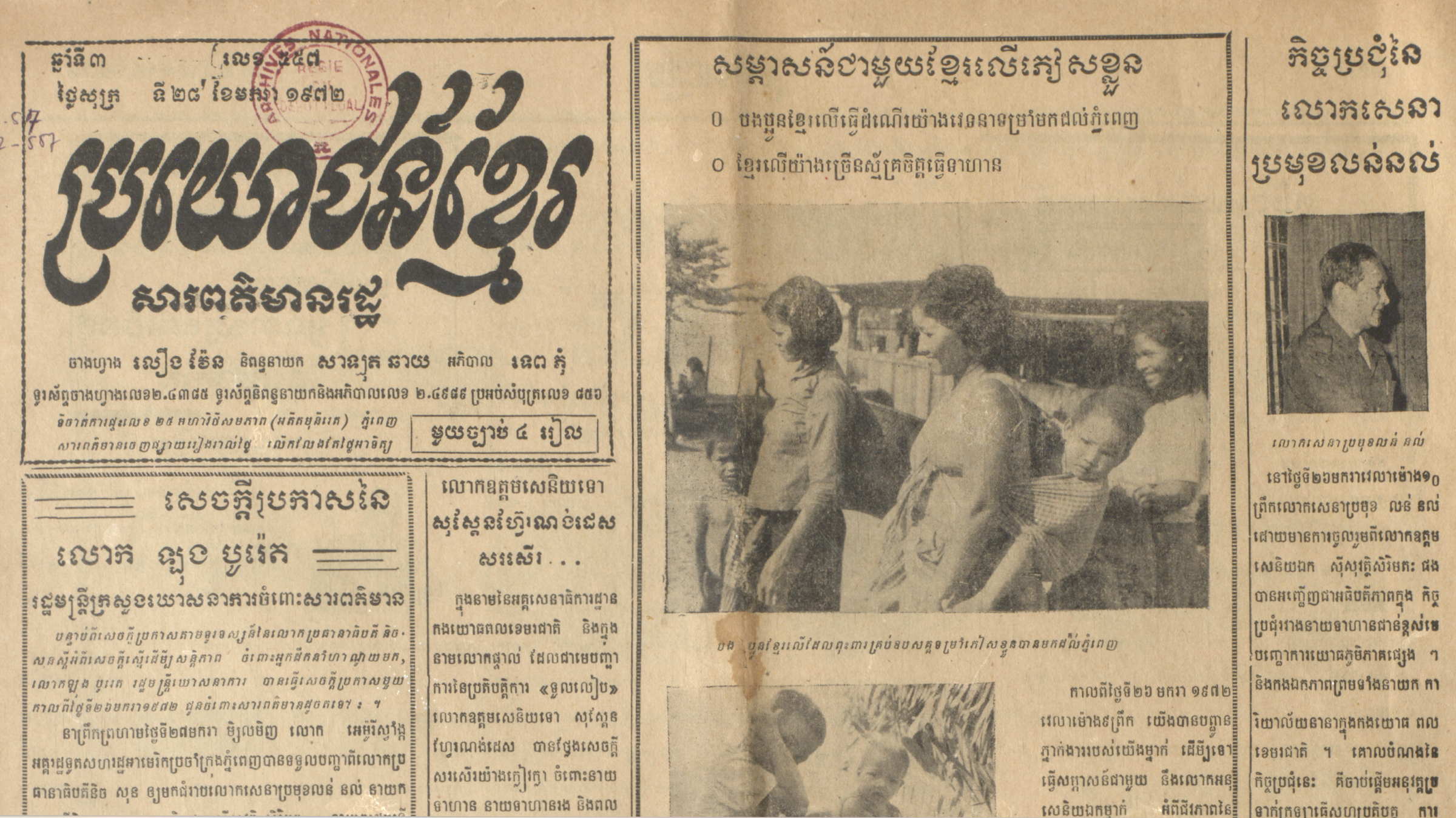
1) Cover page of Cambodian newspaper ប្រយោជន៍ខ្មែរ [Brayoch Khmer, ‘Khmer Benefit’].
2) Saramani held as a “Khmer legend”, as in this broadcast រឿងសារ៉ាម៉ានី វគ្គទី៩ | រ៉ូឡង់ ម៉ីយែរ | ចន្ទ បូផល [The Story of Saramani, ep. 9 | Roland Meyer | Chan Bophal on Khmer Album YouTube channel, 2021 [in Khmer].] In addition to the audio version of Chan Bophal’s translation of រឿង សារ៉ាម៉ានី [The Story of Saramani], it has been republished as an e‑novel by Sabay Digital Corp, 2017 (9 chapters) as សារ៉ាម៉ានី.
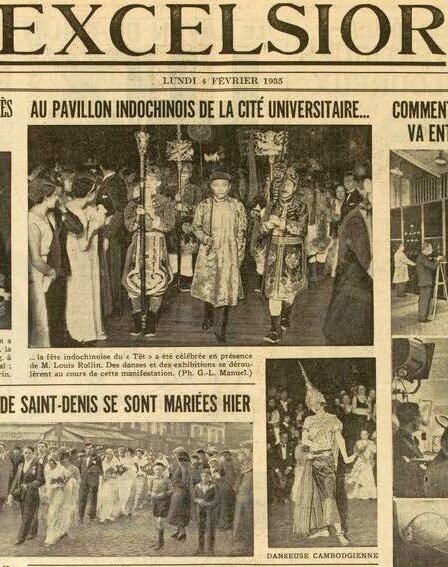
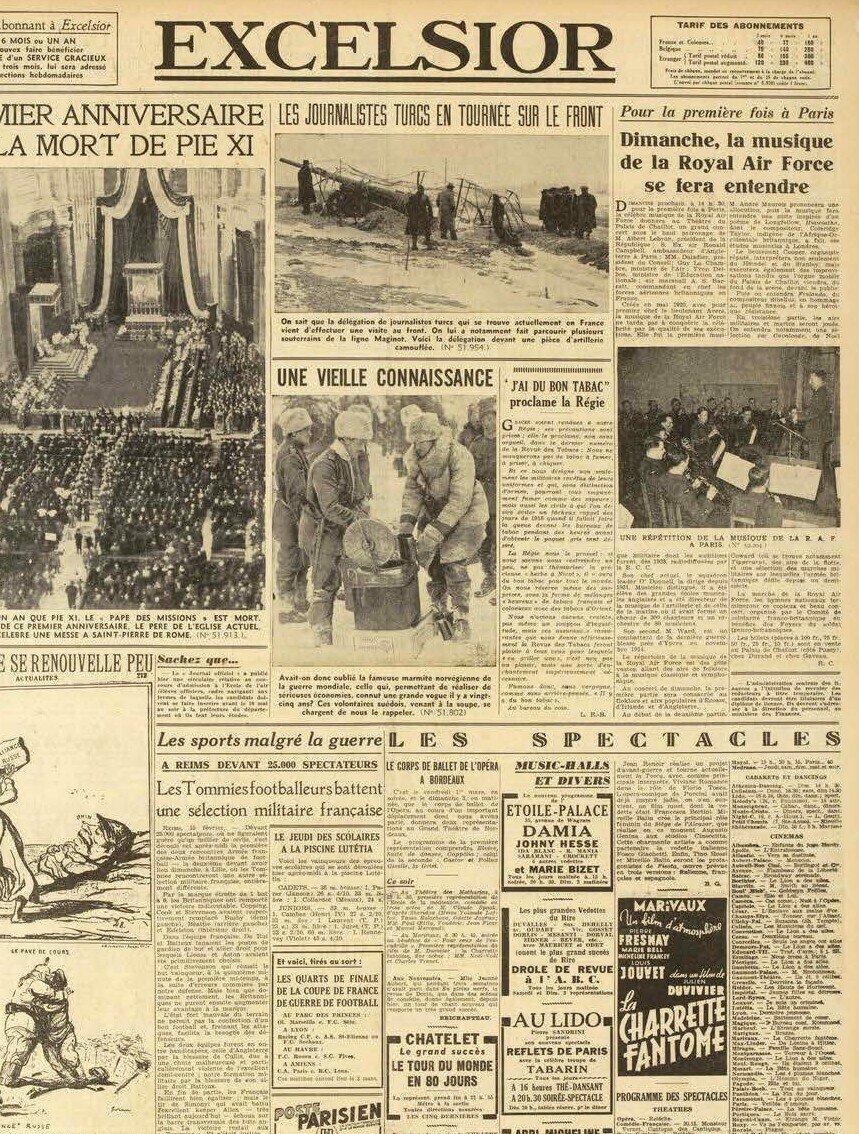
3, 4) Saramani: Daughter and Avatar: ‘exotic’ dancer Suzanne Meyer (1913−1942), the daughter of the ‘real’ Saramani and author Roland Meyer performing for the Tet Festival at the Indochinese Pavilion, Cité universitaire [University Residence] in Paris [cover page of Excelsior, 4 Feb. 1935, via gallica.bnf.fr]. She was still active early 1940, as shown in this ad for a music and dance evening at Etoile-Palace featuring famous singer-actress Damia (artist’s name of Louise Marie Damien (1889 – 1978), [Excelsior, 16 Feb. 1940].

1) Cover page of Cambodian newspaper ប្រយោជន៍ខ្មែរ [Brayoch Khmer, ‘Khmer Benefit’].
2) Saramani held as a “Khmer legend”, as in this broadcast រឿងសារ៉ាម៉ានី វគ្គទី៩ | រ៉ូឡង់ ម៉ីយែរ | ចន្ទ បូផល [The Story of Saramani, ep. 9 | Roland Meyer | Chan Bophal on Khmer Album YouTube channel, 2021 [in Khmer].] In addition to the audio version of Chan Bophal’s translation of រឿង សារ៉ាម៉ានី [The Story of Saramani], it has been republished as an e‑novel by Sabay Digital Corp, 2017 (9 chapters) as សារ៉ាម៉ានី.
3, 4) Saramani: Daughter and Avatar: ‘exotic’ dancer Suzanne Meyer (1913−1942), the daughter of the ‘real’ Saramani and author Roland Meyer performing for the Tet Festival at the Indochinese Pavilion, Cité universitaire [University Residence] in Paris [cover page of Excelsior, 4 Feb. 1935, via gallica.bnf.fr]. She was still active early 1940, as shown in this ad for a music and dance evening at Etoile-Palace featuring famous singer-actress Damia (artist’s name of Louise Marie Damien (1889 – 1978), [Excelsior, 16 Feb. 1940].
1) Cover page of Cambodian newspaper ប្រយោជន៍ខ្មែរ [Brayoch Khmer, ‘Khmer Benefit’].
2) Saramani held as a “Khmer legend”, as in this broadcast រឿងសារ៉ាម៉ានី វគ្គទី៩ | រ៉ូឡង់ ម៉ីយែរ | ចន្ទ បូផល [The Story of Saramani, ep. 9 | Roland Meyer | Chan Bophal on Khmer Album YouTube channel, 2021 [in Khmer].] In addition to the audio version of Chan Bophal’s translation of រឿង សារ៉ាម៉ានី [The Story of Saramani], it has been republished as an e‑novel by Sabay Digital Corp, 2017 (9 chapters) as សារ៉ាម៉ានី.
3, 4) Saramani: Daughter and Avatar: ‘exotic’ dancer Suzanne Meyer (1913−1942), the daughter of the ‘real’ Saramani and author Roland Meyer performing for the Tet Festival at the Indochinese Pavilion, Cité universitaire [University Residence] in Paris [cover page of Excelsior, 4 Feb. 1935, via gallica.bnf.fr]. She was still active early 1940, as shown in this ad for a music and dance evening at Etoile-Palace featuring famous singer-actress Damia (artist’s name of Louise Marie Damien (1889 – 1978), [Excelsior, 16 Feb. 1940].
1) Cover page of Cambodian newspaper ប្រយោជន៍ខ្មែរ [Brayoch Khmer, ‘Khmer Benefit’].
2) Saramani held as a “Khmer legend”, as in this broadcast រឿងសារ៉ាម៉ានី វគ្គទី៩ | រ៉ូឡង់ ម៉ីយែរ | ចន្ទ បូផល [The Story of Saramani, ep. 9 | Roland Meyer | Chan Bophal on Khmer Album YouTube channel, 2021 [in Khmer].] In addition to the audio version of Chan Bophal’s translation of រឿង សារ៉ាម៉ានី [The Story of Saramani], it has been republished as an e‑novel by Sabay Digital Corp, 2017 (9 chapters) as សារ៉ាម៉ានី.
3, 4) Saramani: Daughter and Avatar: ‘exotic’ dancer Suzanne Meyer (1913−1942), the daughter of the ‘real’ Saramani and author Roland Meyer performing for the Tet Festival at the Indochinese Pavilion, Cité universitaire [University Residence] in Paris [cover page of Excelsior, 4 Feb. 1935, via gallica.bnf.fr]. She was still active early 1940, as shown in this ad for a music and dance evening at Etoile-Palace featuring famous singer-actress Damia (artist’s name of Louise Marie Damien (1889 – 1978), [Excelsior, 16 Feb. 1940].
The main historical event covered in Meyer’s novel and retained in the Khmer translation was the visit of King Sisowath, his entourage and some of the dancers of the Royal Ballet to Paris and Marseille on the occasion of the 1906 Exposition Coloniale. This was the first time that the Khmer readers were exposed to the Royal Palace’s intrigues surrounding the preparation of the visit, and to the dalliance of the Minister of the Palace Thiounn with Mam Nou [ម៉មនូ, First Dancer Nou: Nou Nam នូណាម].
The official historiography of the 1906 visit was mostly based on the enthusiastic reports from the French media, and on the famous response of French artist Auguste Rodin to the ‘artistic revelation’ he experienced when seeing the Royal Ballet performing. But, especially in the context of the first publication of the Khmer translation — the first months of the Khmer Republic -, that page of history was revisited in a much more severe way: a royal distraction favored by the colonial masters pursuing their own agenda.
See for instance the “Chronique” in L’Avenir du Tonkin, 18 March 1906:
“Eh bien ! dansez ! La Métropole va être admise à contempler les fameuses danseuses qui font les délices de la Cour du Cambodge et de ses invités. Ces jeunes personnes né se plaindront pas non plus de la façon dont les traite le gouvernement de l’Indo-Chine, En effet, un arrêté en date du 8 mars ouvre au résident supérieur du Cambodge un crédit de cinquante mille piastres pour toutes les dépenses de voyage et d’entretien en France de la troupe de danseuses cambodgiennes. Une autre somme de cinquante mille piastres est également destinée à défrayer les dépenses occasionnées par le voyage en France de S. M. Sisowath. Panem et circenses !”
[“Well then! Dance! France will soon be allowed to admire the famous dancers who delight the Court of Cambodia and its guests. These young ladies will not complain about the way they are treated by the government of Indochina. Indeed, a decree dated March 8th grants the Resident Superior of Cambodia a credit of fifty thousand piastres for all travel and maintenance expenses in France for the troupe of Cambodian dancers. Another sum of fifty thousand piastres is also allocated to defray the expenses incurred by His Majesty Sisowath’s trip to France. Panem and circenses !”
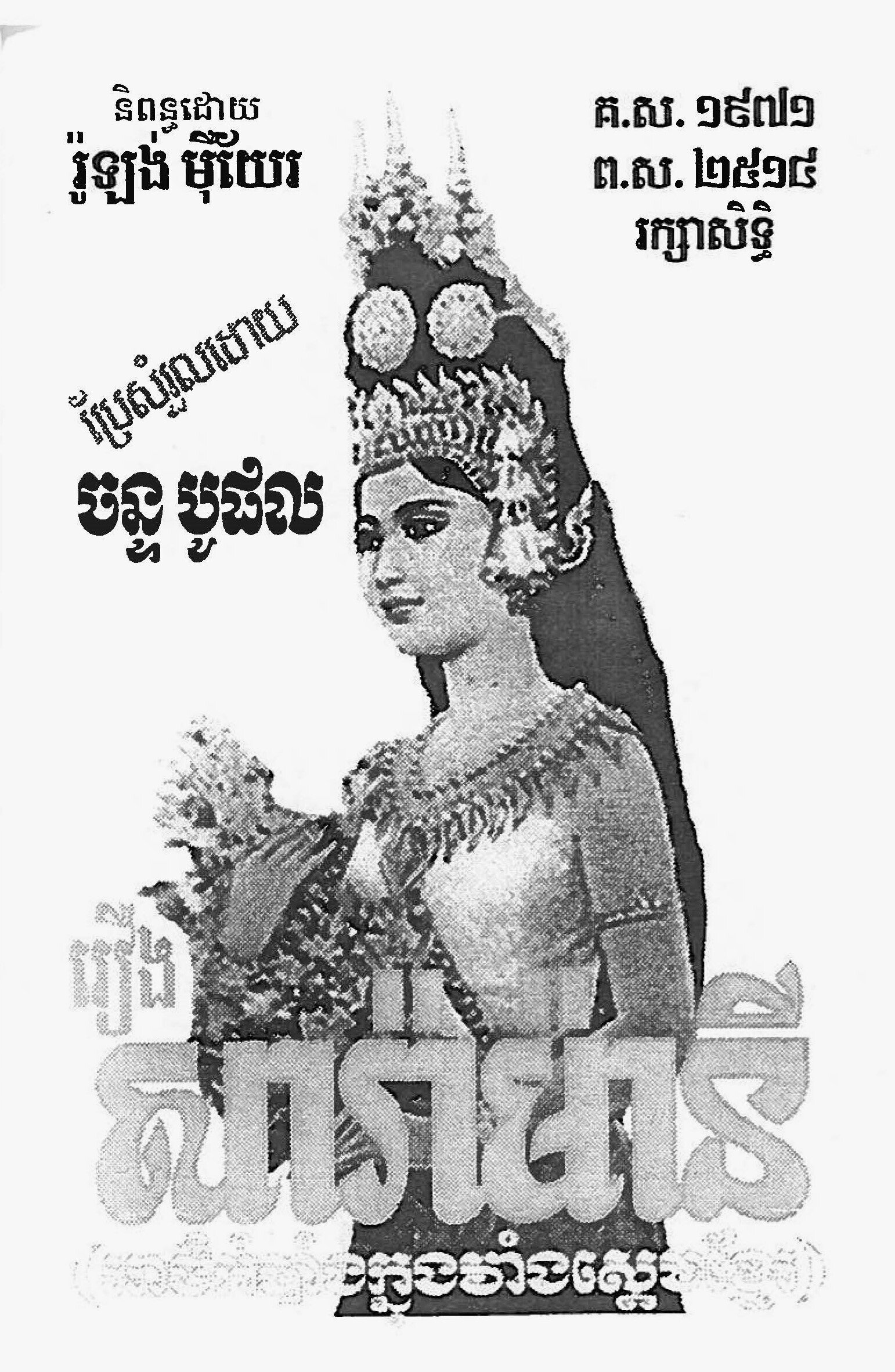
1) Cover for the 1991 Khmer edition. 2) ‘Saramani Junior’ [Suzanne Meyer] pictured during her performance at the Indochinese Pavilion, Paris [Radical illustré de Marseille, 15 Dec. 1934, via gallica.bnf.fr]. 3) Cambodian dancers posing for photographers at the Pavillon de Chasse near Marseille Colonial Exhibition, July 1906. Roland Meyer had said he had seen them in Marseille but was he confusing with the Javanese dancers at the 1901 World Exhibition in Paris? The first dancer to the right standing in the front row does look like a very young Saramani (she would have been 13 years old then), and there was a ‘Yem’ amongst the 40 dancers brought by King Sisowath to France. [photo by Henri Baudoin, collection Musée Rodin, Paris.]
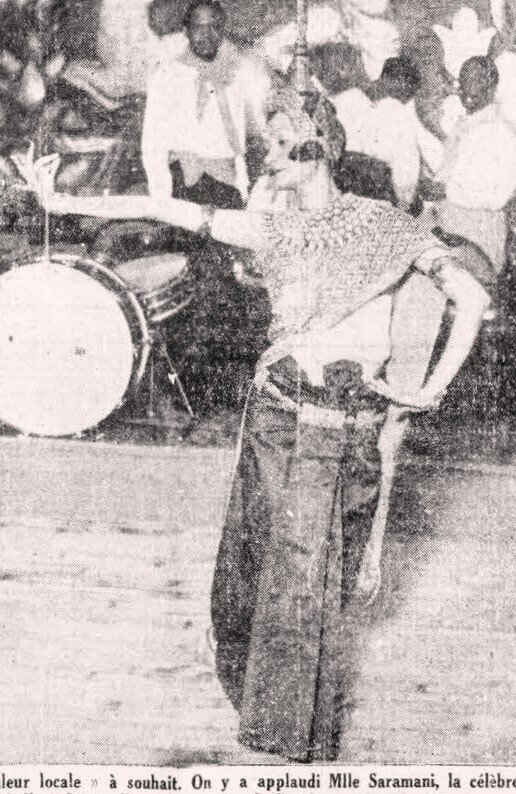
‘Saramani Junior’ [Suzanne Meyer] pictured during her performance at the Indochinese Pavilion, Paris [Radical illustré de Marseille, 15 Dec. 1934].
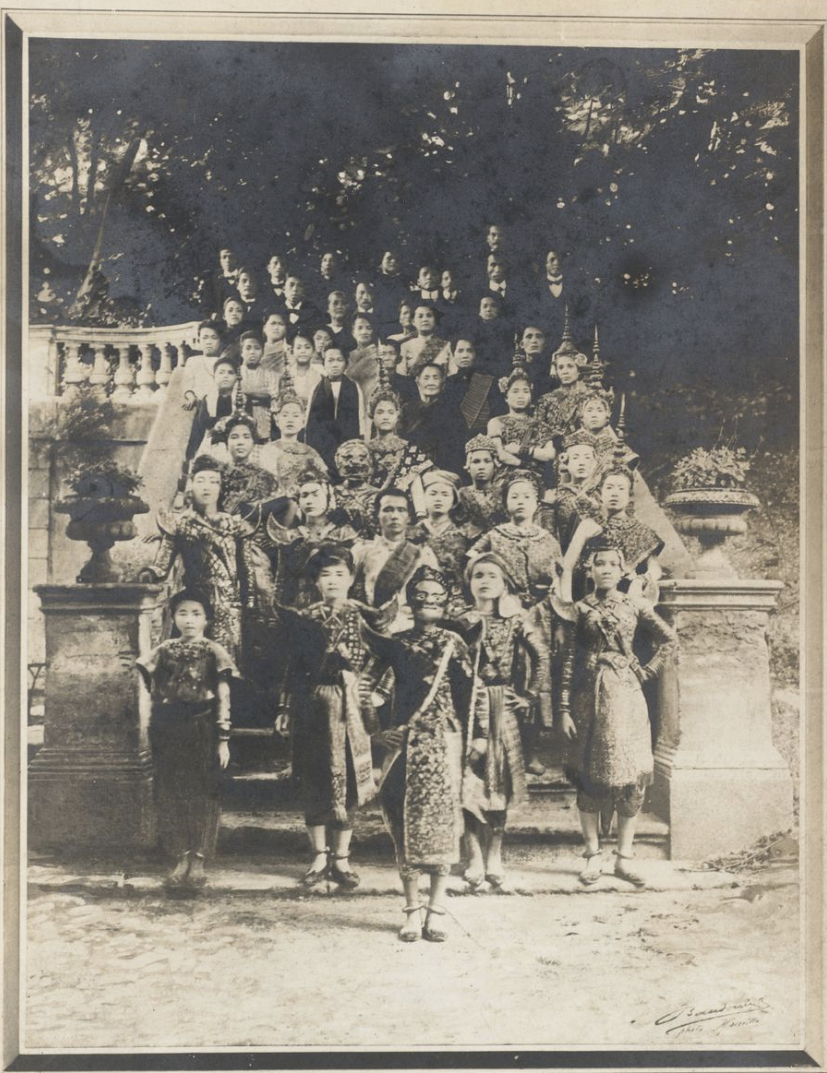
1) Cover for the 1991 Khmer edition. 2) ‘Saramani Junior’ [Suzanne Meyer] pictured during her performance at the Indochinese Pavilion, Paris [Radical illustré de Marseille, 15 Dec. 1934, via gallica.bnf.fr]. 3) Cambodian dancers posing for photographers at the Pavillon de Chasse near Marseille Colonial Exhibition, July 1906. Roland Meyer had said he had seen them in Marseille but was he confusing with the Javanese dancers at the 1901 World Exhibition in Paris? The first dancer to the right standing in the front row does look like a very young Saramani (she would have been 13 years old then), and there was a ‘Yem’ amongst the 40 dancers brought by King Sisowath to France. [photo by Henri Baudoin, collection Musée Rodin, Paris.]
1) Cover for the 1991 Khmer edition. 2) ‘Saramani Junior’ [Suzanne Meyer] pictured during her performance at the Indochinese Pavilion, Paris [Radical illustré de Marseille, 15 Dec. 1934, via gallica.bnf.fr]. 3) Cambodian dancers posing for photographers at the Pavillon de Chasse near Marseille Colonial Exhibition, July 1906. Roland Meyer had said he had seen them in Marseille but was he confusing with the Javanese dancers at the 1901 World Exhibition in Paris? The first dancer to the right standing in the front row does look like a very young Saramani (she would have been 13 years old then), and there was a ‘Yem’ amongst the 40 dancers brought by King Sisowath to France. [photo by Henri Baudoin, collection Musée Rodin, Paris.]
In the Organizing Committee of the Marseille Colonial Exhibition Commissaires, in addition to Henri Brenier (Coordinator) and the quite inocuous Fernand Hauser (Tonkin), Henry Cassé-Barthe (representing Annam) and Alfred Raquez (Laos), there were two colonial dignitaries known for their propensity to abuse of power and corrupt practices Ernest Outrey (11 Apr. 1863, Constantinople — 7 Oct. 1941, St-Germain-le-Guillaume, France) for Cochinchina and Francois Marius Baudouin for Cambodia. In the Guide officiel de l’Exposition coloniale de Marseille [Official Guidebook to Marseille Colonial Exhibition], 1906, we can read:
Danses et Chants. — Au rez-de-chaussée du Théâtre Indo-Chinois, une petite salle coquettement décorée de soieries, de naïves peintures et d’instruments de musique donne asile aux trois danseuses Sao Si, Sao Boun et Sao Deng qui sont chaque jour applaudies par une foule nombreuse. [p. 141] En sortant de ce pavillon nous trouvons, à droite, le Théâtre Indo-Chinois dont le style néo-siamois rappelle les dômes massifs, les « stoupas » de Pnom-Penh. Construit pour recevoir 500 personnes, il est particulièrement destinée aux évolutions chorégraphiques des authentiques danseuses cambodgiennes de la maison du Roi. Ces danseuses sont sacrées et né peuvent supporter aucun contact impur, et c’est ainsi que pour les amener jusqu’ici il a fallu les transporter, isolées, dans des voitures particulières. Au nombre de quatre-vingts, elles représentent des scènes du Ramayana en de véritables ballets mimés. Cette troupe joue tous les jours alternativement avec une seconde troupe de chanteuses annamites recrutées spécialement au Tonkin et dans l’Annam. [p 151]
Mais il est nécessaire de donner une mention toute spéciale aux représentations chorégraphiques sensationnelles dont Marseille aura la primeur. Grâce à la présence en notre ville des danseuses cambodgiennes qui accompagnent dans son voyage le roi Soussovoth [sic], le successeur de Norodom, nouvellement couronné. Ces danseuses n’ont jamais été vues en Europe. Elles sont au nombre de quarante, toutes couvertes de ces costumes riches et brillants dont l’Extrême-Orient a le monopole. Leurs jeux de grâces et leurs danses sont de l’inédit véritable pour nous et ce sera encore là une attraction de tout premier ordre. [p 185]
[Dances and Songs. — On the ground floor of the Indo-Chinese Theatre, a small room, charmingly decorated with silks, naïve paintings, and musical instruments, provides a home for the three dancers, Sao Si, Sao Boun, and Sao Deng, who are applauded daily by a large crowd. [p. 141] Leaving this pavilion, we find, to the right, the Indo-Chinese Theatre, whose neo-Siamese style recalls the massive domes, the “stupas,” of Phnom Penh. Built to accommodate 500 people, it is specifically designed for the choreographic performances of the authentic Cambodian dancers from the King’s household. These dancers are sacred and cannot tolerate any impure contact; thus, to bring them here, they had to be transported, separately, in private vehicles. Numbering eighty, they represent scenes from the Ramayana in veritable mimed ballets. This troupe performs daily, alternating with a second troupe of Annamite singers specially recruited in Tonkin and Annam. [p. 151]
Special mention must be made of the sensational choreographic performances that Marseille will have the privilege of experiencing firsthand. This is thanks to the presence in our city of Cambodian dancers accompanying King Sussovoth [sic], the newly crowned successor of Norodom, on his journey. These dancers have never been seen in Europe. There are forty of them, all covered in the rich and brilliant costumes that are the exclusive domain of the Far East. Their graceful movements and dances are truly unprecedented for us, and this will be yet another attraction of the highest order. [p. 185]
Berliner Illustrite Zeitung, 24 June 1906, p. 446.
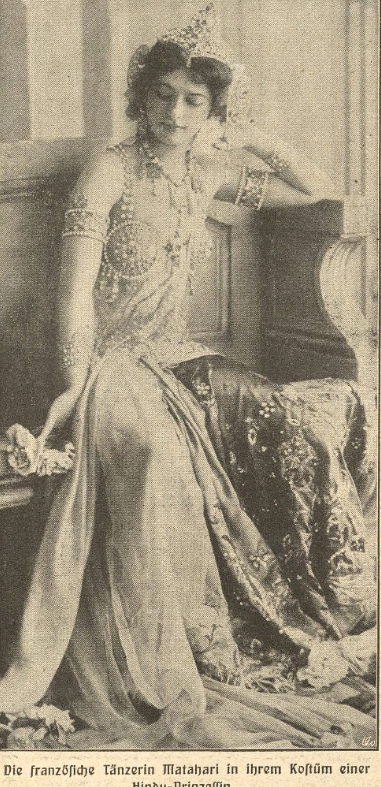
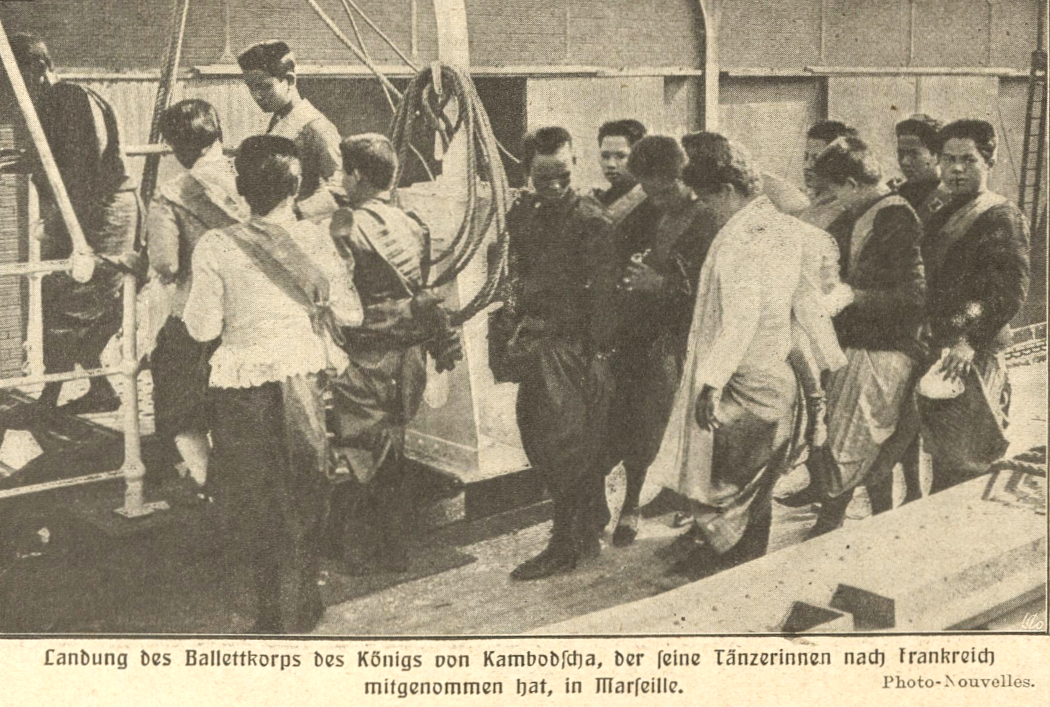
1) Arrival of the Cambodian Royal Ballet dancers in Marseille Port, June 1906 [photo Lilo-Photo Nouvelles repr. in Berliner illustrierte Zeitung 25 (24 June 1906), ‘Bilder vom Tage’ [‘Pictures of the Day’, p. 446.]. 2) Above this photo was of portrait of ‘French dancer Matahari [Mata Hari] in a Hindu Princess costume’. Margaretha Geertruida MacLeod née Zelle (7 Aug. 1876 – 15 Oct. 1917), the exotic Dutch dancer Mata Hari, was suspected to spy for the German army during WWI and killed by a French firing squad. 3) Full page of the Berliner Illustrierte Zeitung [ibid., via Digital Zentral- und Landesbibliothek Berlin.]
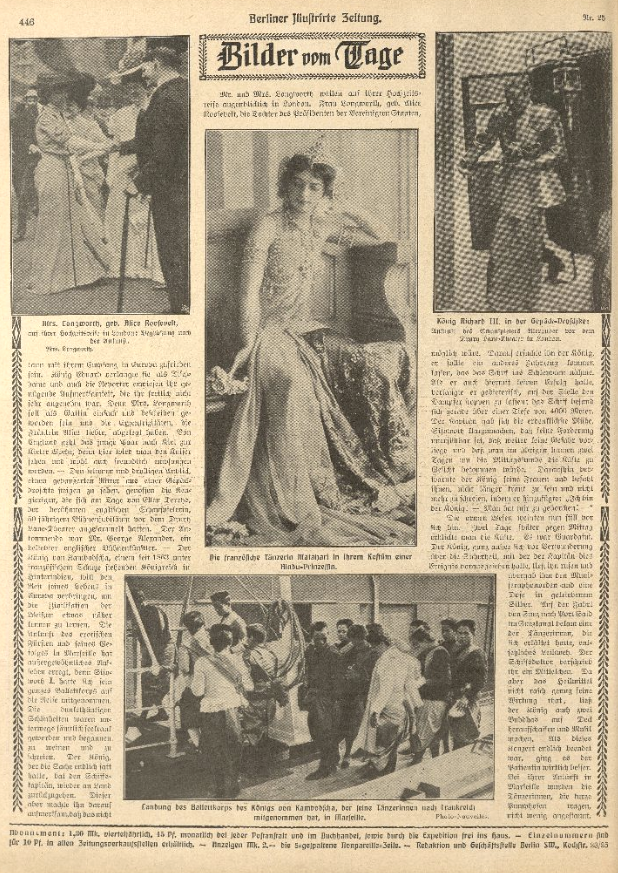
1) Arrival of the Cambodian Royal Ballet dancers in Marseille Port, June 1906 [photo Lilo-Photo Nouvelles repr. in Berliner illustrierte Zeitung 25 (24 June 1906), ‘Bilder vom Tage’ [‘Pictures of the Day’, p. 446.]. 2) Above this photo was of portrait of ‘French dancer Matahari [Mata Hari] in a Hindu Princess costume’. Margaretha Geertruida MacLeod née Zelle (7 Aug. 1876 – 15 Oct. 1917), the exotic Dutch dancer Mata Hari, was suspected to spy for the German army during WWI and killed by a French firing squad. 3) Full page of the Berliner Illustrierte Zeitung [ibid., via Digital Zentral- und Landesbibliothek Berlin.]
1) Arrival of the Cambodian Royal Ballet dancers in Marseille Port, June 1906 [photo Lilo-Photo Nouvelles repr. in Berliner illustrierte Zeitung 25 (24 June 1906), ‘Bilder vom Tage’ [‘Pictures of the Day’, p. 446.]. 2) Above this photo was of portrait of ‘French dancer Matahari [Mata Hari] in a Hindu Princess costume’. Margaretha Geertruida MacLeod née Zelle (7 Aug. 1876 – 15 Oct. 1917), the exotic Dutch dancer Mata Hari, was suspected to spy for the German army during WWI and killed by a French firing squad. 3) Full page of the Berliner Illustrierte Zeitung [ibid., via Digital Zentral- und Landesbibliothek Berlin.]
The Khmer translation has kept most of the account given by Saramani herself of the 1906 trip to France in Meyer’s book, which gave a few more details about the characters of the royal suite, for instance:
នៅលើកប៉ាល់ មានកូនប្រុសហ្លួងជាច្រើននាក់គឺ អ្នកអង្គម្ចាស់ឥស្សរាវង្ស, អ្នកអង្គម្ចាស់ សូរីវង្ស ជាទីគាប់ចិត្តហ្លួងជាងគេ និង ប្អូនប្រុសមួយទៀតឈ្មោះ ចិន្តានុវង្ស ដែលគិតតែនិយាយពីរឿងទៅ “លេង” ស្រីបារាំងឲ្យចាស់ដៃម្តង ដូចជាស្តេចបងនោះដែរ។ [There were many royal sons on the ship: Prince Essaravong (1858, Udong — 1906, Phnom Penh); Prince Sorivong, the king’s favorite; and another brother, Chenda Nouvong, who thought only of “playing” with French women, like the elder prince.][p. 29]
ក្រោយបន្តិចមកទៀត ម្ចាស់សូរីវង្ស កូនប្រុសច្បងរបស់ហ្លួង ដែលល្បីខាងខូចខិលរកលេខដាក់គ្មាន មួយថ្ងៃៗគិតតែញ៉ែជាមួយប្រពន្ធស្ដេចឪពុក និង ស្រីរបាំអារាត់អារាយនោះ ក៏តាមរកទាល់តែឃើញផ្ទះខ្ញុំដែរ។ [After a while, Lord Sorivong, the king’s eldest son, known for his playboy manner, spent his days thinking only of flirting with the king’s wives, his father’s consorts, and the dancers, until he eventually found his way to my house.] [p. 65]
Historian Jacques Népote, in his thesis on ‘King’s Norodom Palace’ (1973), described the ‘gynécée’ inhabited by some 2,000 women of all ranks, organized around the Western courtyard, what the French observers called ‘partie reservée’ [restricted area]:
Chacune de ces tamnak (“maisons”), au nombre de quelques dizaines, contient une trentaine de personnes qui sont- en dehors du personnel expressément de service — des filles de mandarins ou de “clients” venues parfaire leur éducation. Elles y apprenent la cuisine, la musique, la danse, le chant, l’art de se tenir, etc. Toute cette population feminine est divisée en deux grands groupes en fonction de la dominante du tamnak à laquelle on est rattachée : chaque princesse ou concubine est en effet plus ou moins tenue d’organiser une troupe de musiciennes ou de danseuses ; un sentiment de rivalité étant censé règner entre musiciennes et danseuses.” [“Each of these tamnak [damnak, “residences”] — there are several dozen in total) accommodates around thirty individuals who, aside from the staff specifically on duty, are the daughters of mandarins or of “clients,” sent there to complete their education. Within these walls, they learn cooking, music, dance, singing, proper manners, and more. This entire female population is divided into two broad groups, determined by the primary focus of the tamnak to which they belong: each princess or concubine is, in effect, more or less expected to organize a troupe of either musicians or dancers, with a sense of rivalry expected to exist between the two groups.” [pp. 174 – 5]
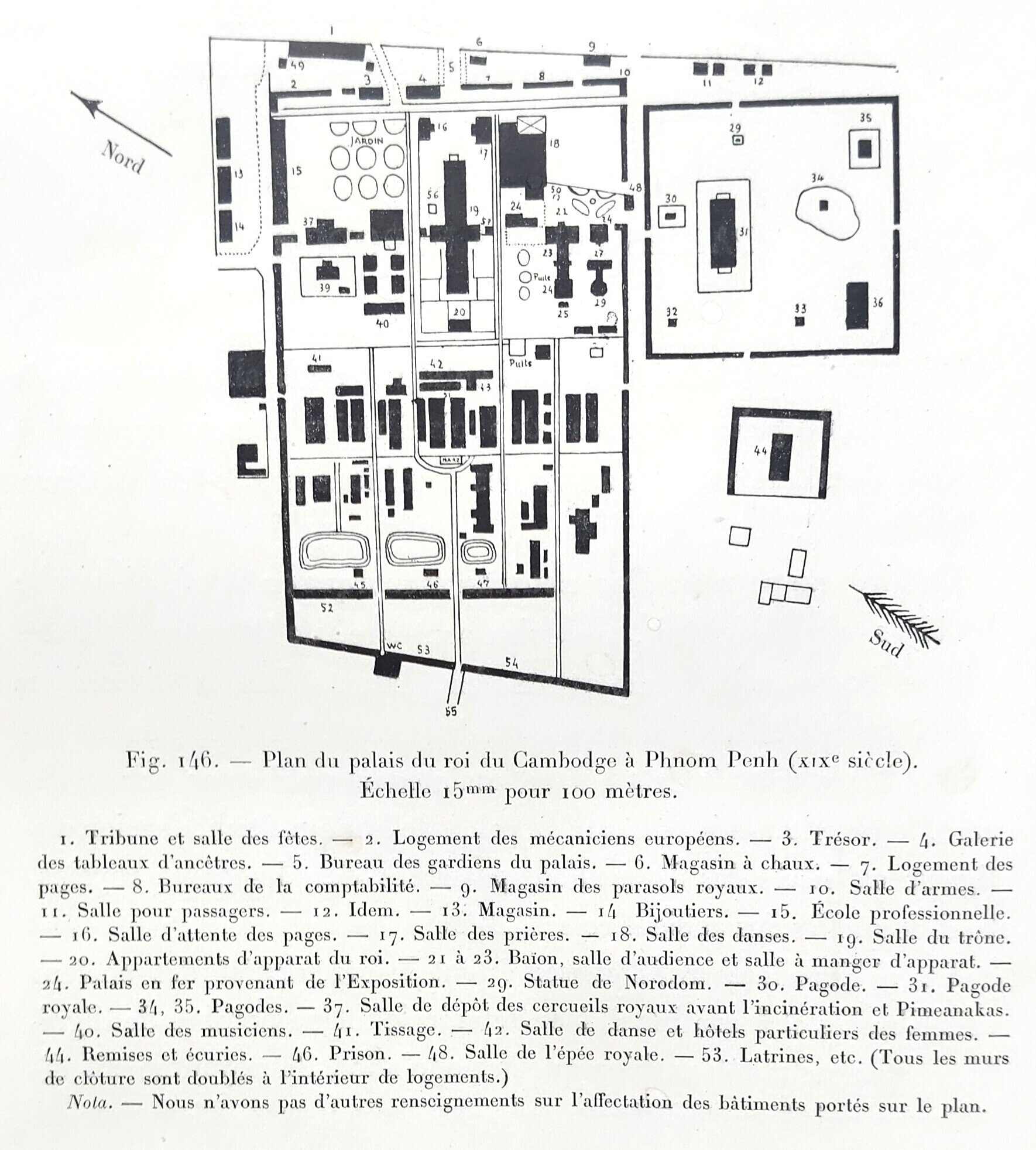
Fig. 146. — Plan of the Palace of the King of Cambodia in Phnom Penh (19th century). Scale 15 mm to 100 meters. 1. Tribune and Ballroom. — 2. Enclosed quarters for European mechanics. — 3. Treasury. — 4. Gallery of Ancestral Portraits. — 5. Office of the Palace Guards. — 6. Lime Store. — 7. Pages’ Quarters. — 8. Accounting Offices. — 9. Storehouse for Royal Parasols. — 10. Armory. — 11. Passenger Room. — 12. Idem. — 13. Storehouse. — 14. Jewelers. — 15. Vocational School. — 16. Waiting Room for Pages. — 17. Prayer Room. — 18. Dance Hall. — 19. Throne Room. — 20. Stately Apartments of the King. — 21 to 23. Bayon, audience hall, and state dining hall. — 24. Iron Palace from the Exposition. — 29. Statue of Norodom. — 30. Pagoda. — 31. Royal pagoda. — 34, 35. Pagodas. — 37. Royal coffin storage room before cremation and Pimeanakas. — 40. Musicians’ room. — 41. Weavers. — 42. Dance hall and women’s quarters. — 46. Coach houses and stables. — 47. Prison. — 48. Royal sword room. — 53. Latrines, etc. (All perimeter walls are lined with living quarters.) Note: We have no further information on the use of the buildings shown on the plan.] [from Général de Beylié, L’architecture hindoue en Extrême-Orient, 1907, p.166].
Fig. 146. — Plan du palais du roi du Cambodge à Phnom Penh (XIXe siècle). Échelle 15mm pour 100 mètres. 1. Tribune et salle des fêtes. — 2. Logement clos mécaniciens européens. — 3·. Trésor.- G. Galerie des tableaux d’ancêtres. — 5. Bureau des gardiens du palais. — 6. Magasin à chaux. — 7. Logement des pages. — 8. Bureaux de la comptabilité. — 9. Magasin des parasols royaux. — 10. Salle d’armes. — 11. Salle pour passagers. — 12. ldem. — 13. Magasin. — 14. Bijoutiers. — 15. École professionnelle.
- 16. Salle d’attente des pages. — 17· Salle des prières. — 18. Salle des danses.- 19 Salle du trône. — 20. Appartements d’apparat du roi. — 21 à 23. Baïon, salle d’audience et salle à manger d’apparat. — 24. Palais en fer provenant de l’Exposition. — 29. Statue de Norodom. — 30. Pagode. — 31. Pagode royale.- 34„ 35. Pagodes. — 37. Salle de dépôt des cercueils royaux avant l’incinération et Pimeanakas. — 40. Salle des musiciens. — 41. Tissage. — 42. Salle de danse et hôtels particuliers des femmes.- 46. Remises et écuries. — 46. Prison. — 48. Salle de l’épée royale. — 53. Latrines, etc. (Tous les murs de clôture sont doublés à l’intérieur de logements.) Nota.- Nous n’avons pas d’autres renseignements sur l’affectation des bâtiments portés sur le plan.
[Fig. 146. — Plan of the Palace of the King of Cambodia in Phnom Penh (19th century). Scale 15 mm to 100 meters. 1. Tribune and Ballroom. — 2. Enclosed quarters for European mechanics. — 3. Treasury. — 4. Gallery of Ancestral Portraits. — 5. Office of the Palace Guards. — 6. Lime Store. — 7. Pages’ Quarters. — 8. Accounting Offices. — 9. Storehouse for Royal Parasols. — 10. Armory. — 11. Passenger Room. — 12. Idem. — 13. Storehouse. — 14. Jewelers. — 15. Vocational School. — 16. Waiting Room for Pages. — 17. Prayer Room. — 18. Dance Hall. — 19. Throne Room. — 20. Stately Apartments of the King. — 21 to 23. Bayon, audience hall, and state dining hall. — 24. Iron Palace from the Exposition. — 29. Statue of Norodom. — 30. Pagoda. — 31. Royal pagoda. — 34, 35. Pagodas. — 37. Royal coffin storage room before cremation and Pimeanakas. — 40. Musicians’ room. — 41. Weavers. — 42. Dance hall and women’s quarters. — 46. Coach houses and stables. — 47. Prison. — 48. Royal sword room. — 53. Latrines, etc. (All perimeter walls are lined with living quarters.) Note: We have no further information on the use of the buildings shown on the plan.]
[from Général de Beylié, L’architecture hindoue en Extrême-Orient, 1907, p.166].
The cosmic symbolism King Norodom’s architects and landscapers had wanted to achieve in the premises as ‘ritualistic pleasure gardern with sacred ponds, bhnams (hills), trees and flower beds, was unsettled by the need for new houses built for the daughters of the new king (Sisowath), and the main favorites.
The French novelist described the areas peripheral to the gynaeceum, in particular the esplanade fronting the ancient Throne Hall. The building names were still related to Angkorian symbolism such as Phimeanakas វិមានអាកាស, South Palace [ទីនាំងទក្សិណ tineang toksaen] for the inner part of the Throne Hall, Prasat Banhyong ប្រាសាទបាញ់យ៉ុង — in which the ageing Norodom “kept himself secluded all day” [p. 38, KH text]…
And at the center of this palatial complex in full mutation, first anecdotical but destined to become a landmark as the only surviving structure from Norodom’s Palace: The ‘Blissful Pavilion’ [ទីនាំងតុសិត Tineang Tusita], also called Maison de Fer (Iron House), Iron Pavilion, Napoleon III Pavilion, Palais Dossedy, Dossedy Pavilion…In Saramani original version, the elegantly incongruous building was a novelistic landmark, too, as it was there that the two young lovers, Komlah [Roland Meyer] outside and Saramani on the balcony, experienced love at first sight. In the French version, it was mentioned no less than seven times, as Pavillon Dossedy [p. 12 and 104], Phimân-Dossedy [p. 83], Tineang-Dossedy or “maison de fer” [p. 87 and 116], and Pavillon Dossédy [p. 163 & 172]. The Khmer text, much shorter, has kept only the mention from page 116 in the French edition:
យប់មួយនោះ វិះតែគេចាប់យើងបាន។ យើងកំពុងតែដើរលបៗឡើងទៅលើរានហាលទីនាំងតុសិត ប៉ុន្តែក្រុមវាំងឃើញភ្លើងបារីរបស់យើង ក៏លបឡើងមកតាមក្រោយ ដោយកាន់ឈើច្រត់ដងប្រាក់មកជាមួយផង។ យើងងាកក្រោយឃើញស្រមោលគាត់ ភ្ញាក់ព្រើតក៏គប់កន្ទុយបារីតម្រង់ក្បាលគាត់ ហើយរត់តម្រង់ជណ្តើរ ផាយចុះក្រោមទៅសម្ងំពួនក្នុងគុម្ពផ្កាបាត់ឈឹង។ [We narrowly escaped being caught that night. We were creeping up to the terrace of the Tineang Tusita, but the palace guard caught sight of our cigarette ember and stealthily followed us up, clutching a silver-handled walking stick. Catching sight of his shadow behind us, we panicked, flicked the cigarette butt straight at his head, and bolted for the stairs. We dashed to the bottom and laid low inside the flower bushes, vanishing without a trace.] [p. 20, KH text]
Interestingly, the Khmer translator didn’t keep one important notation from the original version: this Pavilion was “then inoccupied” and going there was risking a scary encounter with the “khmoch, the ghosts” [p. 116, FR version.]
There was another mention of Tusita/Dossedy Pavilion that unexplicably disappeared from the Khmer translation at a particularly dramatic moment since a) it was the day of Prince Duong Madura/Mathura’s death, b) the first time Saramani and Meyer saw each other:
ពេលនោះ បងប្រុសម្ចាស់ក្សត្រី គឺម្ចាស់ដួងមធុរ៉ា ត្រូវស្លាប់បាត់បង់ជីវិតទាំងវ័យក្មេងល្ហក់។ នេះគឺជាការបាត់បង់បង្គោលទីពឹងមួយទៀតសម្រាប់រូបខ្ញុំ ពីព្រោះម្ចាស់មធុរ៉ា តែងស្រឡាញ់រាប់អានខ្ញុំដូចកូនលោកបង្កើត ហើយលោកថែមទាំងបានទូន្មានម្ចាស់ក្សត្រីជាច្រើនលើកច្រើនគ្រា ឲ្យលើកខ្ញុំធ្វើជាតួឯងផង ។ លោក ស្លាប់ដោយជម្ងឺចម្លែកមួយដែលទើបនឹងឆ្លងចូលមកដល់ស្រុកខ្មែរក្នុងពេលថ្មីៗនេះ ហើយដែលបារាំងហៅថា ជម្ងឺប៉េស្តិ៍។ លោករ៉េស៊ីដង់បារាំង បង្គាប់ឲ្យពេទ្យបារាំងវះកាត់សាកសពពិនិត្យមើល ទោះបីម្ចាស់ក្សត្រី តវ៉ាយ៉ាងណា ក៏គេពុំព្រមស្តាប់។ ពេលនោះ ម្ចាស់ក្សត្រី និង បក្សពួក នាំគ្នាទៅនិយាយបញ្ចុះបញ្ចូលខ្មែរនៅម្តុំខាងត្បូងវាំង ឲ្យលើកគ្នាមកជួយតវ៉ាថែមទៀត ។ ខ្ញុំរត់ឡើងទៅលើរានហាលជាមួយមិត្តភក្តិជាង ដប់នាក់ ដើម្បីមើលរើស៊ីដង់បារាំង អញ្ជើញមកសម្រុះសម្រួលបាតុករ។ ម្នាក់នោះហៅខ្ញុំឲ្យចូលទៅជិតវា ហើយចង្អុលប្រាប់ថា :
- សារ៉ាម៉ានី! មើលន៎ បារាំងនោះនៅក្មេងសោះ ប៉ុន្តែខ្ពស់ចង្គ្រោង គាត់ហ្នឹងអាយុយ៉ាងច្រើនណាស់ ត្រឹមដប់ប្រាំឆ្នាំប៉ុណ្ណឹង។
ខ្ញុំអើតមើលទៅខាងក្រោមតាមដៃគេចង្អុល ហើយនេះជាលើកទីមួយដែលខ្ញុំបានឃើញ លោកពេលដែលលោកឈររេរីនៅមុខប្រាសាទដំកល់ព្រះខ័នរាជ។ គ្រាន់តែឃើញលោកភ្លាម ទ្រូងខ្ញុំប្រែជាញាប់ញ័រ ខ្លួនប្រាណប្រែជាស្លាំង ដូចគ្មានឈាមមួយដំណក់នៅក្នុងខ្លួន។ ខ្ញុំប្រញាប់គេចថយមកក្រោយវិញ និយាយរឿងនេះប្រាប់សំអាង ស្រាប់តែវាផ្ទុះសំណើច ព្រមទាំងនិយាយខ្លាំងៗថា:
- អើ! អានេះគេហៅថាប្រផ្នូល! សារ៉ាម៉ានីឯង ប្រាកដជាបានប្ដីបារាំងហ្នឹងហើយ។
ពួកគេបានពាក្យនេះ នាំគ្នាចំអន់បង្អាប់ខ្ញុំពីរ‑បីថ្ងៃ បន្ទាប់មកគ្មាននរណានឹកឃើញដល់រឿងនេះទៀតឡើយ។At that time, the Princess [Somphady]’s older brother, Prince Duong Mathura, passed away at a very young age. This was yet another loss of a pillar of support for me, as Prince Mathura had always cherished me as if I were his own child; he had even urged the Princess on many occasions to cast me in the lead role. He died from a strange illness that had recently arrived in Cambodia — what the French called the “plague.” The French Resident ordered French doctors to perform an autopsy on the body; despite the Princess’s strong objections, they refused to listen. Consequently, the Princess and her associates went to persuade the Khmer people living south of the Royal Palace to join them in their protest. [here one sentence missing in KH version] I ran out up to the balcony with over a dozen friends to watch as the French Resident arrived to mediate with the protesters. One of them called me closer and pointed, saying:
“Saramani! Look! that Frenchman is just a boy, yet he is incredibly tall! He can’t be more than fifteen years old.” I peered downward in the direction being pointed out, and for the first time, I saw him, standing, swaying slightly, in front of the temple that houses the Royal Sacred Sword. The moment I laid eyes on him, my heart began to race, and my face turned deathly pale, as if every drop of blood had drained from my body. I quickly stepped back and told Samang about it; she burst into laughter and exclaimed:
“Aha! That’s what you call an omen! Saramani, you’re definitely going to end up with a French husband!“
They teased me about this for a few days, but after that, no one ever mentioned it again. [p. 57, KH text]
This lively scene has been scrupulously kept in the Khmer version — apart for the names of two friends of Saramani, dancers Rouhi and Samang -, and we can see here that the farmers ‘living south of the Royal Palace’ were prompt to join anti-colonial protests. But the Khmer translator, for some unfathomable reason, didn’t keep that part in the French original version, so the Khmer reader would have a hard time to understand what that ‘balcony’ was [p. 163]:
Tout ce monde vint s’entasser dans la cour extérieure du palais, devant les pavillons de Banhiong et de Dossédy. [“All these people came flooding into the outer courtyard of the palace, in front of the Banhiong and Dossedy pavilions.”]
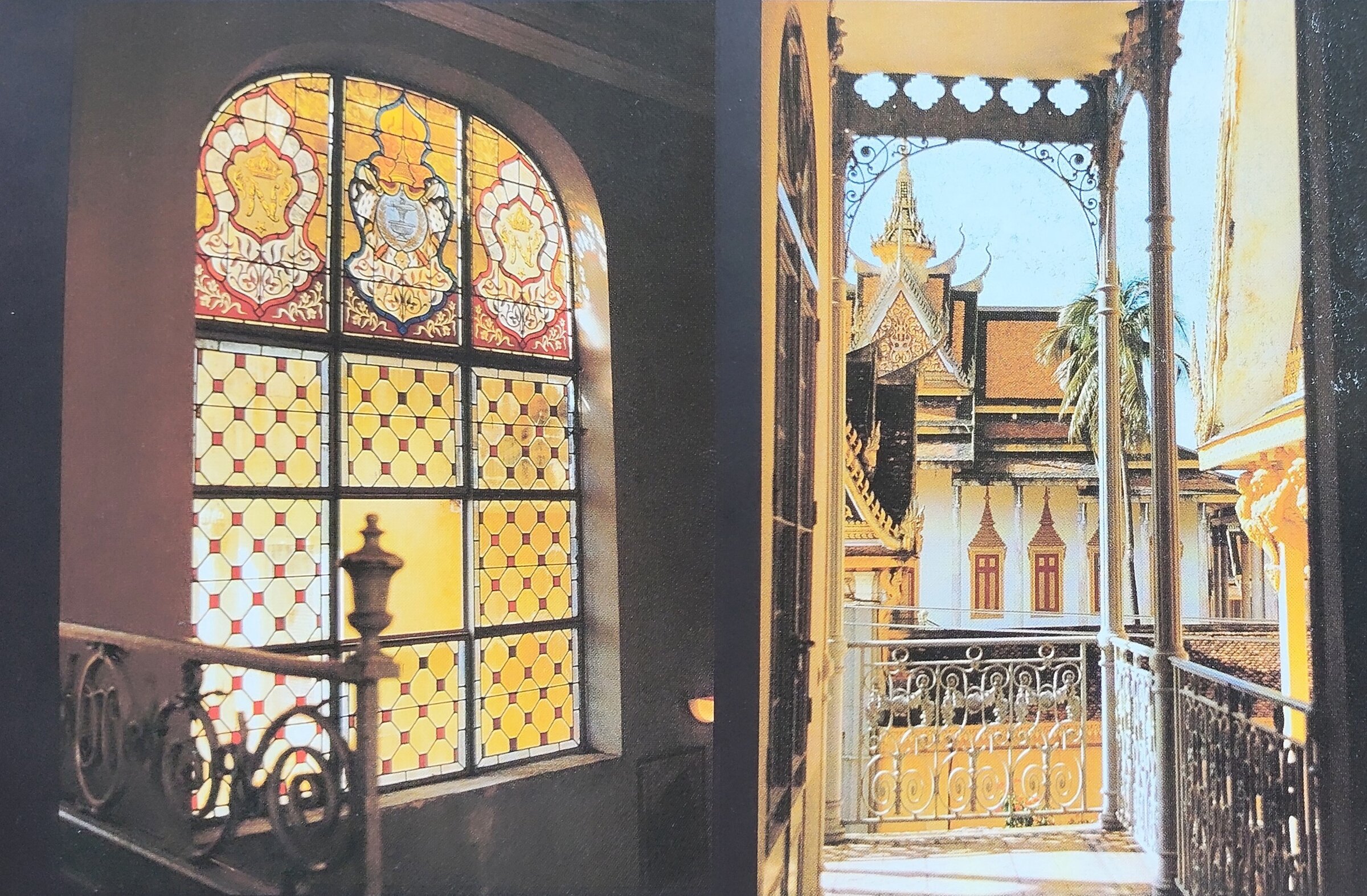
The balcony of the Dossedy Pavilion (also Iron House or ‘Napoleon III Pavilion’) [photo by Somkid Chaijitvanit in Julio Jeldres, The Royal Palace of Phnom Penh and Cambodian Royal Life, 1999.]
The balcony of the Dossedy Pavilion (also Iron House or ‘Napoleon III Pavilion’), where Saramani stood with her friends and from which she glanced for the first time at the young French writer Komlah-Meyer. [photo by Somkid Chaijitvanit in Julio Jeldres, The Royal Palace of Phnom Penh and Cambodian Royal Life, 1999.]
The death of Prince Duong Madhura (1873, Phnom Penh — 1908, Royal Palace), 10th son of King Sisowath — with consort Im [Imayi], the daughter of a mandarin — was a shock to Saramani also because he had helped her in her career as a royal dancer, recommending her for major roles to his sister Princess Somphady ‘Vomthida’. First married to Princess Harinatna (b. in Siam, 1880), the daughter of a Thai prince and of King Sisowath’s eldest daughter, Princess Biriuva, then to Pring, a Cambodian commoner, Duong Madhura was known as more reasonable and reliable than many royal princes [see above].
In this context of pandemic threats — cholera and plagues would be around for several more years in Cambodia — and social unrest, did Saramani unconsciously saw the lovestruck ‘Komlah’ as a promise of stability and economic security? The fact that he was engaged into covert activities as the head of the Sûreté (secret police) in Cambodia and simultaneously viewed himself as a wildly romantic bard had certainly not escaped to the passionate yet lucid young woman, who seemed to foresee trouble ahead:
យប់មួយ ខ្ញុំដេកយល់សប្តិ៍ឃើញពស់មួយសម្បុរសស្គុស ចេញតាមចឹកខ្ញុំជាប់។ ខ្ញុំភ័យភ្ញាក់ដឹងខ្លួន និយាយរឿងនេះប្រាប់មីងចែម ស្រាប់តែគាត់សើចញឹមៗហើយទាយទុកថា ខ្ញុំដល់ពេលជួបគូព្រេងហើយ គ្រូព្រេងនោះជាមនុស្សសម្បុរស។
One night, I had a dream in which a white snake kept trying to bite me. Startled awake, I told my aunt about it; she just smiled gently and predicted that the time had come for me to meet my destined partner — and that this person would be fair-skinned. [p. 66]
One can only lament that Meyer was too preoccupied by his poetic ambitions [the ‘Visions of Komlah’ conjuring the glorious past of the Khmers in endless, elegiac pages] to attempt a powerful chronicle of the profound changes that Cambodia was undergoing at the time. From the descriptions in the book, and other testimonies dating back from the 1910s and 1920s, we can recreate the geography of a palace strictly delineated by walls and guardposts, the Kompong Sema, but also widely open to the river and the farmlands in the south and on the islands nearby. There are numerous mentions of the កំពង់ផែ [Port], both as landing stage for travelers and merchandises as well as District [សង្កាត់កំពង់ផែ]. The French administration had started an important program of stabilization and expansion of the riverbanks in the Four-River area, while the tip of the Chroy Changva peninsula was reserved to French institutions (customs and excises, military barracks, lighthouse).
The Royal Palace area and its port were then the magnet of villagers, mostly from the southern provinces of the capital city. Saramani’s family, for instance, is depicted getting closer:
យើងចាកចេញពីផ្ទះនៅក្បែរវត្តស្វាយពពែ មកទិញផ្ទះស្លឹកតូចមួយ នៅម្តុំកំពង់ផែវិញ។ [We left the house near Wat Svay Popei to buy a small thatched house around the Kompong Phae area instead. [p.6]
It would take decades — and even one century when considered that the stabilization and development of Koh Pich [Diamond Island] and the corresponding section of the mainland bank were completed in the 2010s — for this land and water management effort to give the city more permanent lines, and setbacks were still happening:
កាលនោះ ដីច្រាំងកំពង់ផែពុំទាន់បាក់នៅឡើយទេ ហើយមានឆ្នេរខ្សាច់មួយដែលជាកន្លែងប្រជុំក្មេងៗ… [At that time, the riverbank of Kompong Phae had not yet collapsed, and there was a sandbank where children gathered…] [p.11]
Coming from the ‘garden of Phnom Penh’, the rich alluvial lands of the four-river basin where market farming thrived, the nurturing a growing urban population, Saramani was the country girl who had climbed the social ladder thanks to her art and grace. From the orchards and rice paddies of Kien Svay កៀនស្វាយ to the gilded pomp of the Royal Palace, she remained true to herself until her fate decided otherwise.
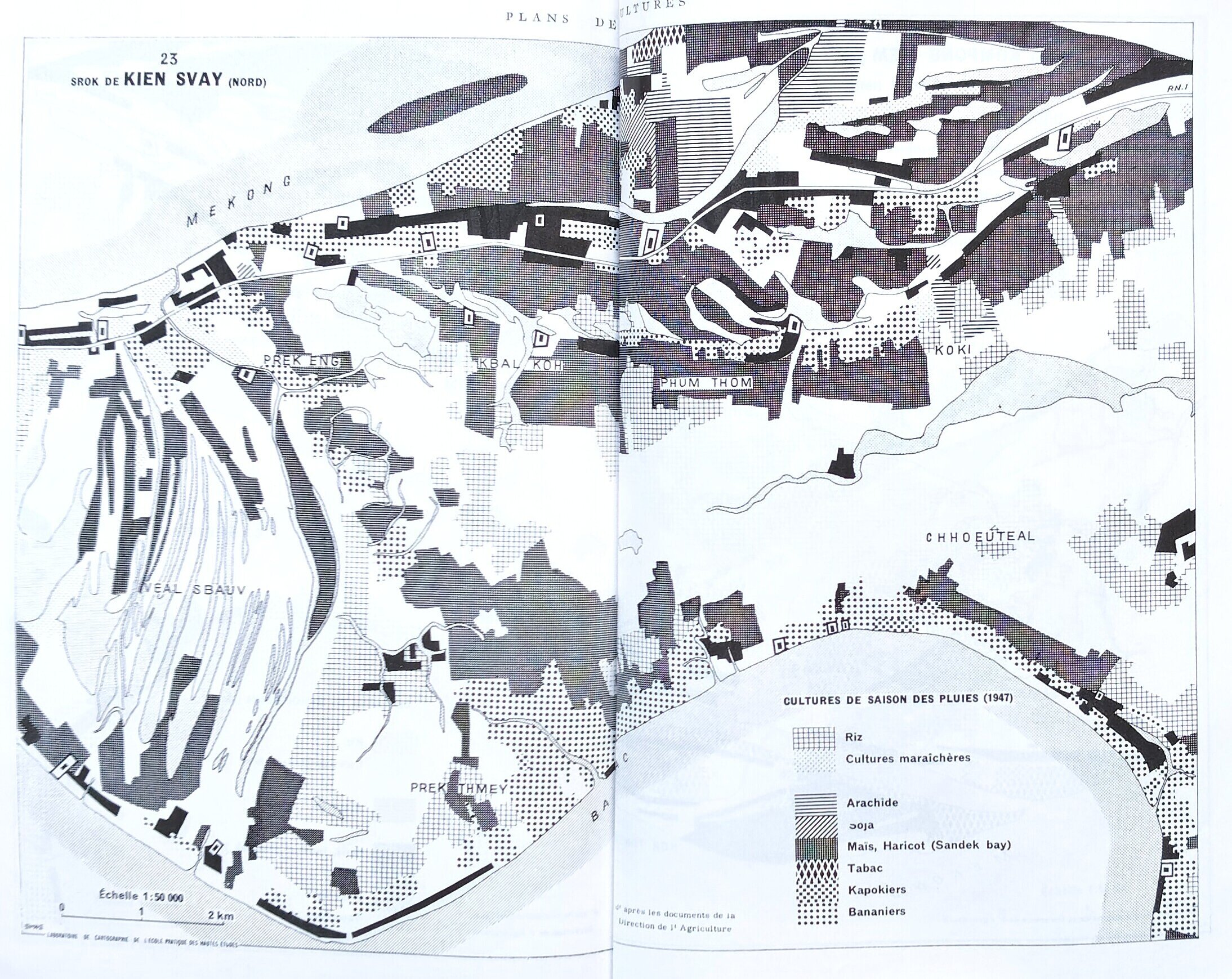
In Jean Delvert, Le paysan cambodgien, 1961.
In his reference study Le Paysan cambodgien (1961), Jean Delvert remarked on the diversity of the agricultural yield in the Kien Svay district — from rice to tobacco to kapok to soy and beans.
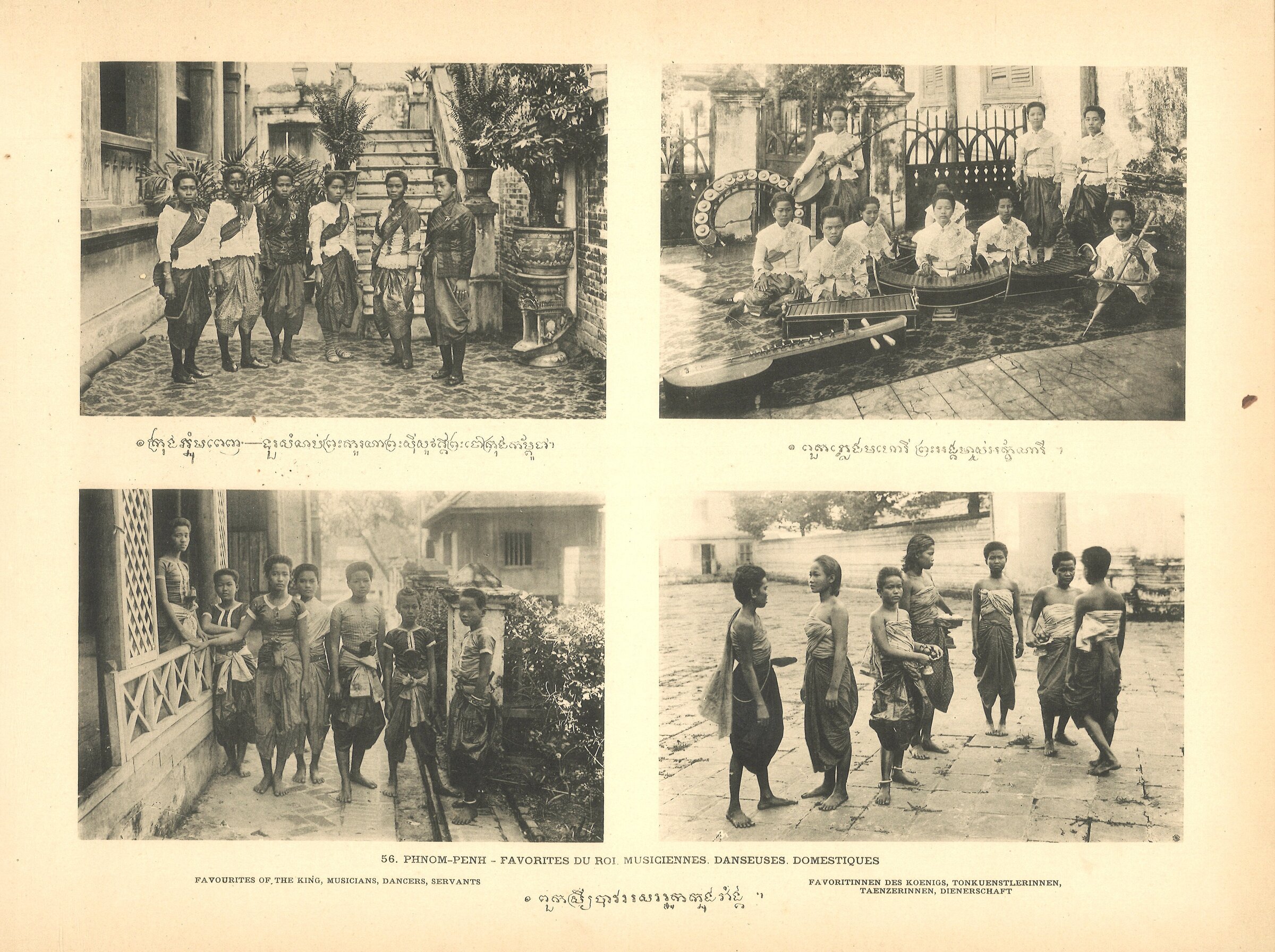
1) This photomontage in Pierre Dieulefils’s photo album Ruines d’Angkor — Cambodge monumental et pittoresque (1910) is a stunning summary and snapshot of the female inhabitants of the Royal Palace at the turn of the century, with their social hierarchy, artistic activites, rank and status attributes (garments, hairstyles). King’s favorites — including dancers and princesses of royal blood -, dancers — with Saramani herself on the far left, first identified as such by Lucie Labbé in 2020 -, musicians and servants.
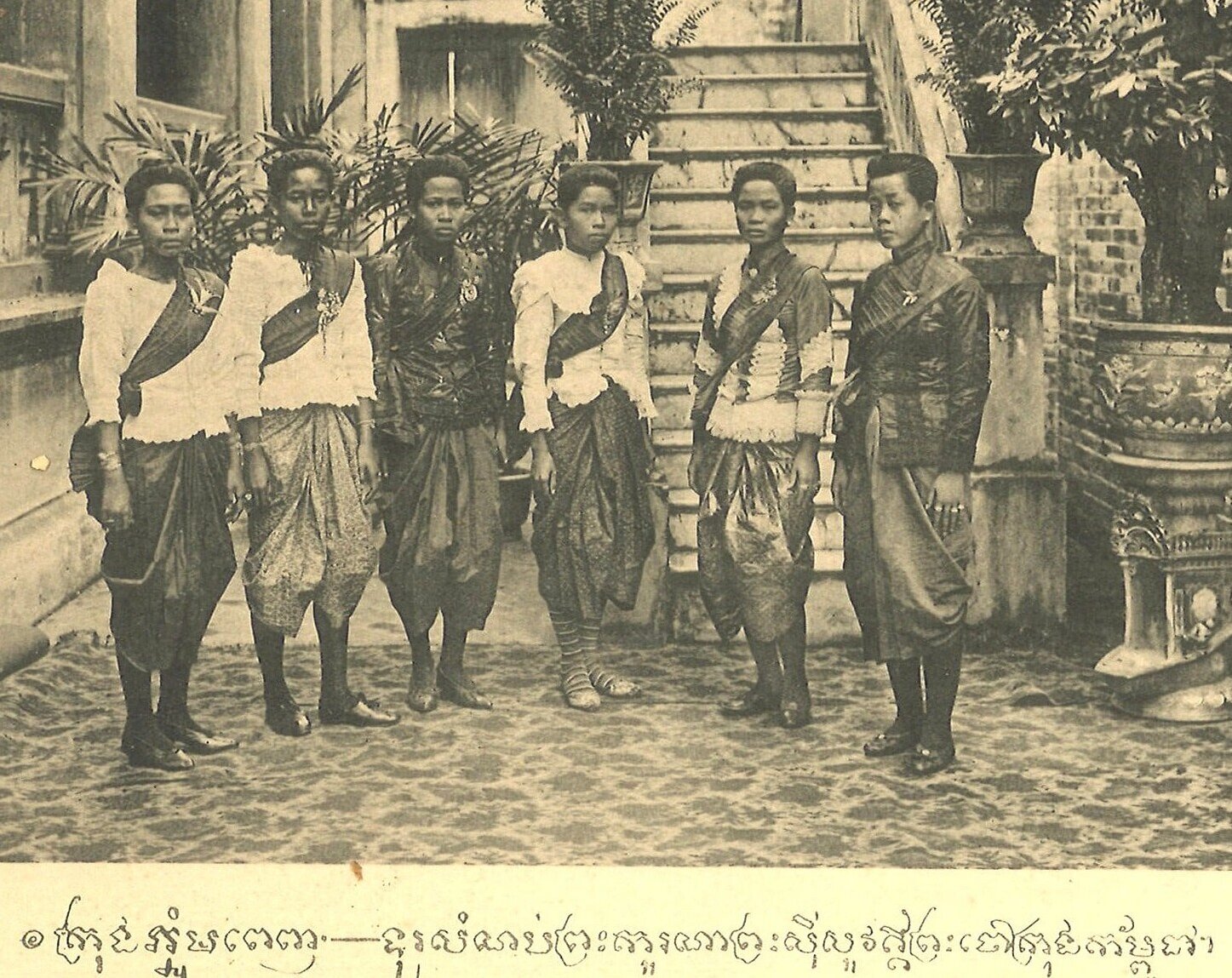
1) This photomontage in Pierre Dieulefils’s photo album Ruines d’Angkor — Cambodge monumental et pittoresque (1910) is a stunning summary and snapshot of the female inhabitants of the Royal Palace at the turn of the century, with their social hierarchy, artistic activites, rank and status attributes (garments, hairstyles). King’s favorites — including dancers and princesses of royal blood -, dancers — with Saramani herself on the far left, first identified as such by Lucie Labbé in 2020 -, musicians and servants.
2) According to Prince Ravivaddhana Monipong Sisowath [com. to ADB 17 Aug. 2026], these ladies, King’s Sisowath’s favorites, were from left to right: a) Khun Sa-Vann, mother of King Monivong; b) her sister, Khun Sa-Im, mother of Prince Duong Mathura and Princess Samphady; c) unknown; d) unknown; e) Khun Mak Fuong, mother of Princess Pindara and Prince Souphanouvong. After considering several sources, we’d suggest, from left to right: a) Mam Nu Nam, ex-prima ballerina and favorite; b) Anak Munang Varni [Vann] or Khun Sa-Vann, the King’s 11th wife, daughter of a Mandarin, mother of King Monivong, d. Khemarin Palace, 15 Sept. 1930; c) Mam Prim, favorite and ex dancer, d) unknown ; e) unknown; f) Khun Brhat Me Munang Kandara Puspa Mac Phuong, daughter of a Mandarin, the King’s 14th spouse, mother of Princess Pindara and Prince Souphanouvong.
Dance at the Royal Court of Cambodia was — still is, in many ways — an expression of sacrality; a symbol of royal power and of personal prestige for the dignitaries protecting several ‘private dance and theater companies’; the depository of attested and reinvented traditions; a medium of influence; an expression of national identity in the making, incorporating many regional traditions. An art.
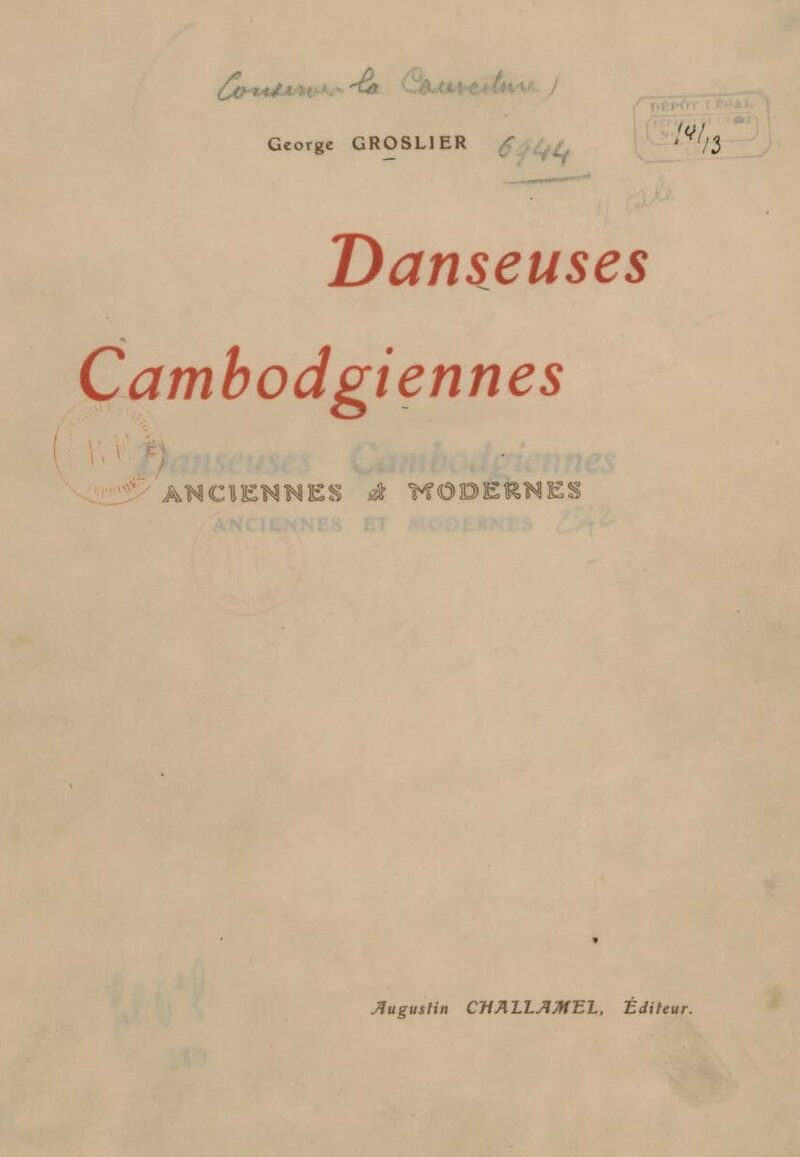
With infinitely more wealth, manpower and discipline, the kings of Siam had also struggled to rein in the exuberant energy of dance and theater art. Eager to bring some rationality to the inherent disorder of so many competing forces and visions, George Groslier would attempt in the 1920s to structure an imaginary corps de ballet. One decade later, the French Protectorate would force upon King Monivong the notion of dancers, ballet masters and musicians tamed into the meek role of civil servants under the authority of the French Ministry of Culture and Education.
Back to the arrival of Saramani at the Royal Palace when she was still a pre-nubile girl, around 1901, what was the lay of the land?
Au-dessous de cette foule de personnages qui entretenait à l’intérieur du palais nombre de jeunes princes et clients et composait une cour de figurants encombrants, l’autorité effective sur le personnel actif était partagée entre les trois grandes favorites qui dirigeaient chacune un des trois corps de ballet.
Tout d’abord, Khoun-Than, la première et la plus puissante des directrices des danses, et en second lieu, Khoun-Preah-Nheat, possédaient chacune leurs danseuses recrutées à grands frais dans les familles de la capitale et composées surtout de Cambodgiennes et de Siamoises. Quant aux danseuses de Mam Suon, la troisième favorite, c’étaient surtout des filles métisses chinoises et annamites, très blanches, dont on avait coupé les cheveux à la siamoise, et qui s’habillaient comme nous-mêmes.
Khoun Than, malgré son age avancé, restait la préférée du roi [Norodom]; elle se distinguait par son zèle, son coeur généreux et le soin qu’elle apportait à former ses élèves et à se faire aimer d’elles. Ce fut de ma part une faute initiale que de m’être laissée enrôler, malgré les ordres formels du roi, dans la troupe de Khoun Preah Nheat, qui né me réserva que des déboires et fit échouer toutes mes ambitions.
[“Beneath this throng of characters, which included numerous young princes and hangers-on residing within the palace, forming a cumbersome entourage, actual authority over the active staff was divided among three principal favorites, each of whom directed one of the three ballet troupes.
First, Khun-Than, the foremost and most powerful of the dance directors, and second, Khun-Preah-Nheat, each had their own dancers, recruited at great expense from families in the capital and consisting primarily of Cambodian and Siamese women. As for the dancers under Mam Suon, the third favorite, they were mostly of mixed Chinese and Annamese heritage; they were very fair-skinned, wore their hair cut in the Siamese style, and dressed in the same manner as we did.
Despite her advanced age, Khun-Than remained the favorite of King [Norodom]; she was distinguished by her zeal, her generous heart, and the great care she took in training her pupils and earning their affection. It was a mistake on my part, early on, to have allowed myself to be enrolled, in defiance of the King’s explicit orders, in Khun-Preah-Nheat’s troupe; this led only to disappointment and caused all my ambitions to come to naught.”] [p. 102, FR text]
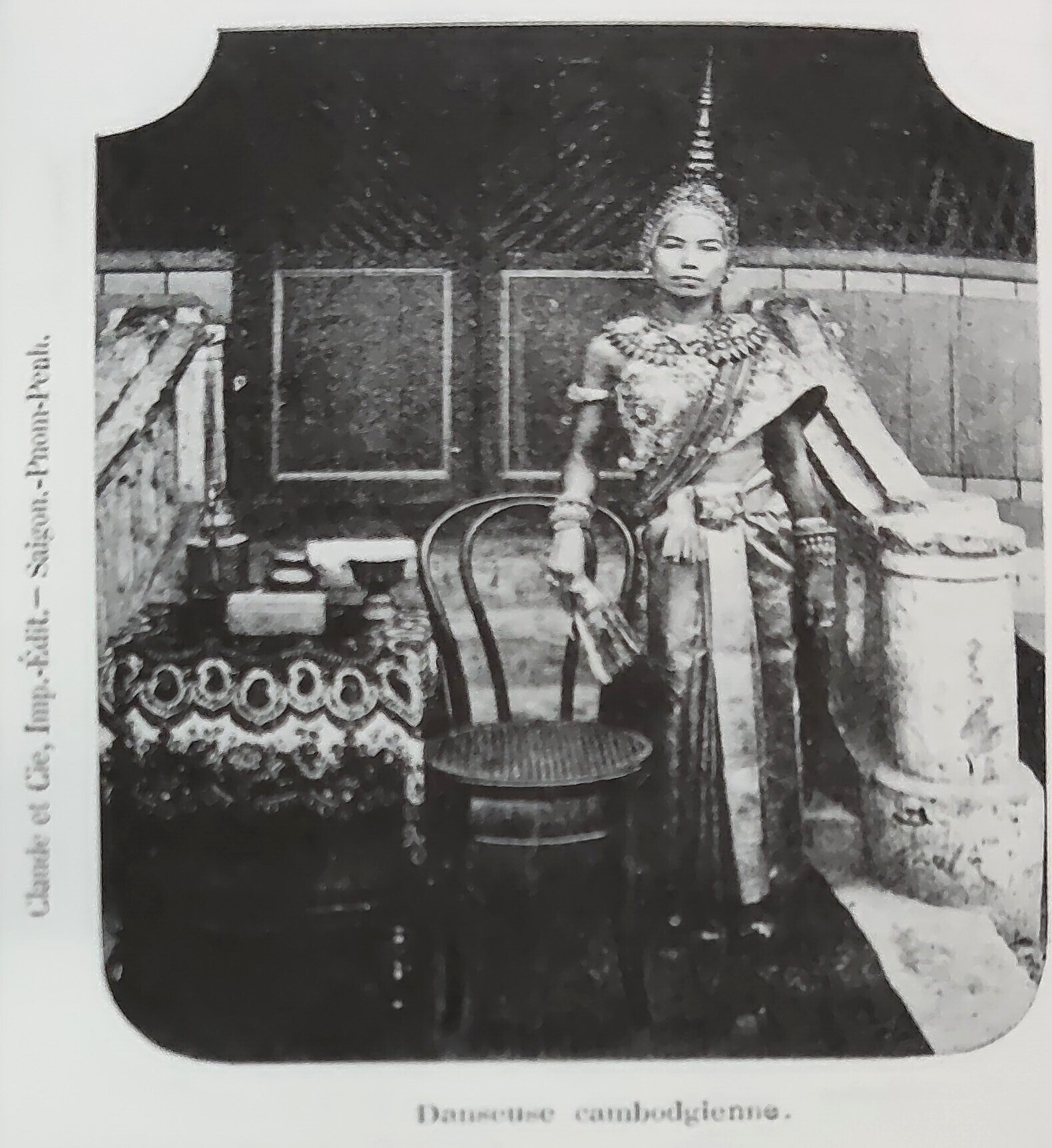
“A Cambodian dancer” on a postcard issued by Claude & Cie, Saigon, n.d. — researcher Suppya Nut has asserted this was the famous Khun Than [repr. in Joel Montague, Picture Postcards of Cambodia]
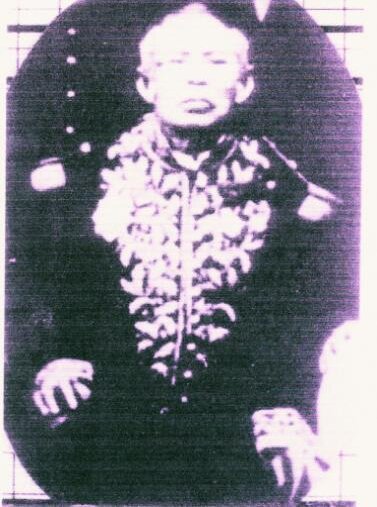
Minister and Oknha Oum (1821−1902), Saramani ‘great uncle’ [photo given to researcher Khing Hoc Dy by Oum’s great-granddaughter, Ms. Yim-Uma Ullarun. Publ. in Bulletin de l’AEFEK 19, 2014.]
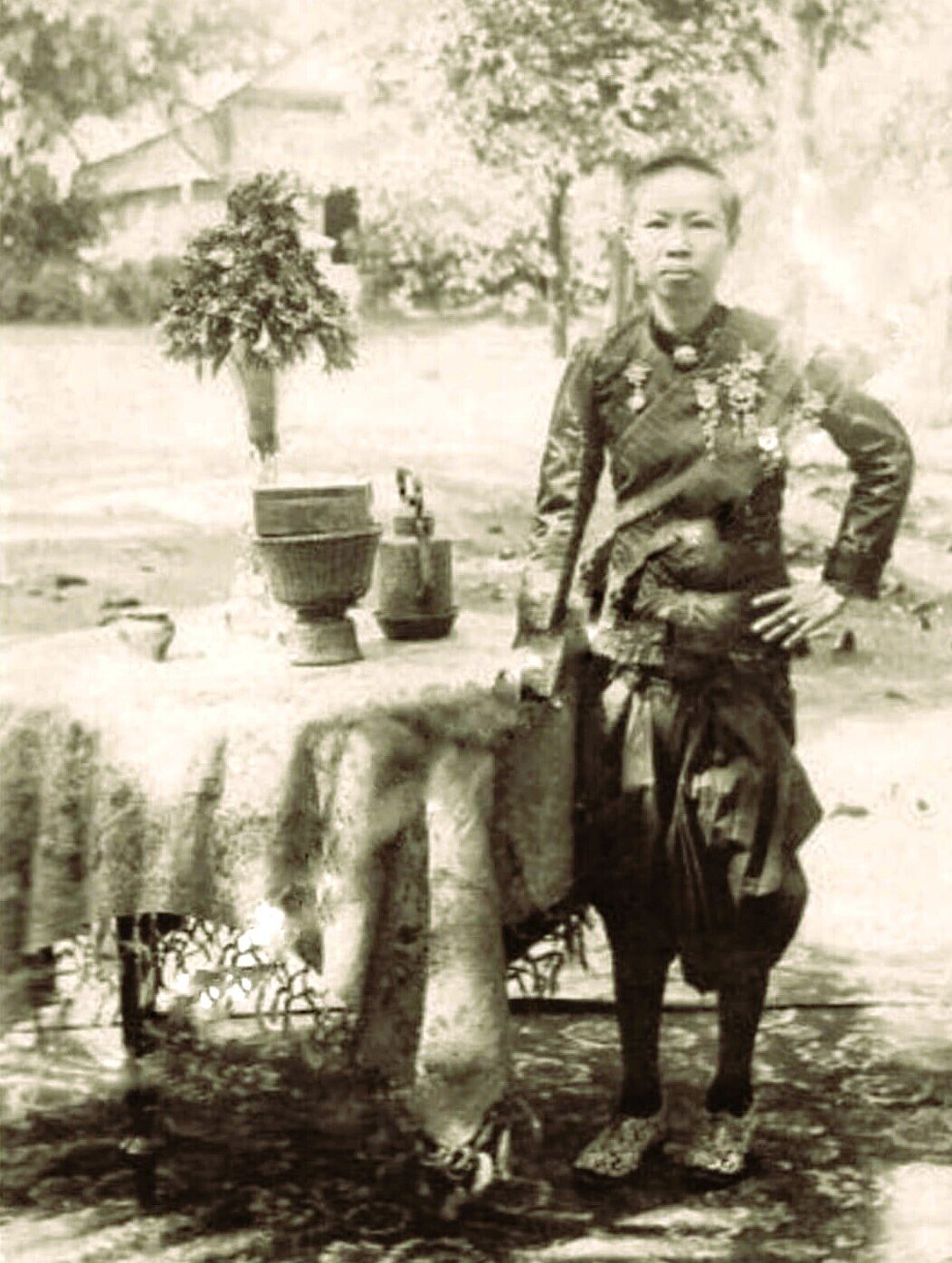
1) “A Cambodian dancer” on a postcard issued by Claude & Cie, Saigon, n.d. — researcher Suppya Nut has asserted this was the famous Khun Than [repr. in Joel Montague, Picture Postcards of Cambodia] 2) Minister and Oknha Oum, Saramani ‘great uncle’ [photo given to researcher Khing Hoc Dy by Oum’s great-granddaughter, Ms. Yim-Uma Ullarun. Publ. in Bulletin de l’AEFEK 19, 2014.]. 3) Princess ‘Vomthida’ Somphady in 1909 at the Royal Palace. [source: Collection Colorise & Old Photos of Cambodia].
1) “A Cambodian dancer” on a postcard issued by Claude & Cie, Saigon, n.d. — researcher Suppya Nut has asserted this was the famous Khun Than [repr. in Joel Montague, Picture Postcards of Cambodia] 2) Minister and Oknha Oum, Saramani ‘great uncle’ [photo given to researcher Khing Hoc Dy by Oum’s great-granddaughter, Ms. Yim-Uma Ullarun. Publ. in Bulletin de l’AEFEK 19, 2014.]. 3) Princess ‘Vomthida’ Somphady in 1909 at the Royal Palace. [source: Collection Colorise & Old Photos of Cambodia].
Who was who, then, in this mix of honorary titles and personal names?
Brhat Neang Chama Sucheata Puspa Nari Than, styled Khun Than ឃុនថាន់ was King Norodom’s stepmother when he took her as his thirteen wife. A keen supporter of Siamese influence when she was married to his father King Ang Duong, then know as Chao Cham Socheat Bosbanera Bopha Nuon, also known as Khun Than. She was the daughter of Touk Hia Khai Boun [Lothia Sa], a Tiandihui [Chines secret society] leader and a younger sister of AnakBrhat Nang Baladevi Subarna. [sources: Royal Ark of Cambodia; Népote-Monipong 1994].
នួន ជាឈ្មោះរបស់ឃុនថាន់ គ្រូល្ខោនក្រុមទីមួយ។ [Nuon is the name of Khun Than, the head of the first Ballet. [p. 9, KH version]
ADB Note 1: ឃុន khuṇa [Mod. ខុន khun; cf. Thai ขุน khǔn, ‘title for the lowest rank of conferred nobility’] A rank of the mandarinate. According to Pou Saveros (Lewitz), Khuņ was originally an appellative of Siamese origin kept in the Khmer composite noun khun-ņāh [khon nari)] referring to the spouses of major dignitaries [Saveros Lewitz, “Inscriptions modernes d’Angkor 1, 8 et 9”, BEFEO 59, 1972: 101 – 121 (p. 108)].
ADB Note 2: According to researcher Leak NCee [administrator of the blog Colorise & Old Photos of Cambodia], “in ancient times, the title “Khun” was reserved exclusively for men holding the rank of “Four Thousand”, meaning they had the authority to command a force of 4,000 soldiers. However, from the reign of King Ang Duong onwards, the King began bestowing this title upon both men and women who rendered significant service to the nation (such as masters of dance or music), as well as upon royal consorts and members of the royal family.”
Titled ‘Royal Princess’ [ម្ចាស់ក្សត្រី mcheasa ksatrei] — title applied to the children of reigning kings and queens, Princess Sisowath Sompady or Vom Thida ព្រះអង្គម្ចាស់ក្សត្រីយ៍ ស៊ីសុវត្ថិ សុម្ភឌី or ម្ចាស់ក្សត្រីយ៍ វ៉ម ធីតា (1865, Saigon, Cochinchina — 1919, Royal Palace) was the first ballet director to lead the Khmer Royal Ballet in performances outside of Cambodia — in Paris and Marseille, 1906.
Born one year after the coronation of King Norodom, she was the daughter of Prince Samura, future King Sisowath ស៊ីសុវត្ថិ (7 Sept. 1840, Mongkol Borey, Battambang — 9 Aug. 1927, Phnom Penh Royal Palace) and Neak Munang Im [or Imayi] អុីម, daughter of a mandarin, 10th of King Sisowath’s spouses, cremated in 1904.
Shortly after King Norodom’s death, she was given the Mekhala Palace, formerly Khun Than’s residence, when the latter was instructed to leave the Royal Palace and live in town.
នៅទីនេះ មានក្រុមល្ខោនតែមួយគត់ ដែលដឹកនាំដោយ ព្រះអង្គម្ចាស់ក្សត្រីយ៍ ដ៏ល្បីល្បាញឈ្មោះ វ៉មធីតា ជាកូនបង្កើតរបស់សម្តេចឧបរាជ។ ក្នុងក្រុមល្ខោននេះ នរណាចង់ធ្វើអ្វីក៍ធ្វើទៅ ព្រោះមួយថ្ងៃៗ ម្ចាស់ក្សត្រីយ៍ចាងហ្វាងនោះ រវល់តែជក់អាភៀនបង្ហុយដូចឪពុកដែរ ហើយបើនិយាយពីរឿងស្រាវិញ ម្ចាស់ក្សត្រីយ៍ ក៏ពុំមែនអន់ប៉ុន្មានដែរ លេងសុទ្ធតែ “សិច” តែម្តង។ ដល់មានចៅហ្វាយធំជាអ្នកឲ្យ ឧទាហរណ៍អញ្ចឹង កូនចៅក៏ចេះតែនាំគ្នាជក់ ផឹក ឬ លេងបៀប៉ោ តាមតម្រាប់ចៅហ្វាយ ដែលជាហេតុនាំឲ្យ កើតការរាយប៉ាយគ្មានសណ្តាប់ធ្នាប់យ៉ាងនេះ។ [There was only one theater troupe [Lokhon Khol] here, led by a renowned princess named Vom Thida — the biological daughter of the Samdech Uparaj [the Prince Regent]. Within this troupe, everyone did exactly as they pleased; the princess in charge spent her days smoking opium, just like her father. As for alcohol, she was no slouch either — she drank heavily and without restraint. With the leader setting such an example, her subordinates followed suit, smoking, drinking, and gambling on po [a card game], which led to the complete state of disorder and chaos seen here.] [p. 14, KH text].
Her half-sister Sisowath Pindara (1886−1965) married Prince Norodom Sathavong, the first Cambodian Minister of Interior ministre (1909−1915).
ADB Note 1: วรณ์ (Vorn/Vom) meaning “precious,” “chosen,” or “blessed” in Thai, while ធីតា (Thida) meaning “daughter, in Khmer, “Vom Thida” can be interpreted as “precious daughter.”
ADB Note 2: Since Roland Meyer simply used the title Khun Preah Nheat ឃុនព្រះញាតិ without given name to refer to the head of the ‘second Royal Ballet’:
ឃុនព្រះញាតិ ដែលមានឋានៈជាចាងហ្វាងទីពីរ នៃ ក្រុមល្ខោនហ្លួង [Khun Preah Nheat, who is the head of the second Royal Ballet. [p. 8],
it can be assumed that Princess Somphady was the bearer of that name.
Mam Suon ម៉មសួន was a young first dancer and favorite who became “third favorite” under the name Vilahi, according to Meyer. [Note that ‘Suon’ was a quite versatile term in Khmer Royal vocabulary, referring first to a “pleasure garden” and by extension to anything pleasurable, easy to the eye or to the senses. The market supplying the Palace, active every day on the riverbank near the southern gates was called ផ្សារសួន Psah Suon].
ម៉មសួន ជាចាងហ្វាងក្រុមល្ខោនទីបី [Mam Suon is the head of the third Ballet. [p. 10]
ADB Note 1: ម៉ម Mam, Mom in Khmer seems to be derived from the Thai word หม่อม Mom Luang, “royal consort”, with Mom added as suffix before the name of a common woman marrying a prince. Or it could be the other way round. More research is needed here.
ADB Note 2: In 2020, Cambodian researcher Leak NCee published a note [in Khmer] on the honorary titles in use at the royal court of modern kings of Cambodia since Ang Duong. There, we can read that
the term Mom ម៉ម is a title that the King, at his royal pleasure, bestows exclusively upon women who serve as his consorts. The title “Mom” holds a higher rank than “Neak Mneang” [អ្នកម្នាង, lit. ‘Milady’] but is lower than “Khun” ឃុន. This title has been in use since ancient times.
Meyer described Nou Nam នូណាម in these terms: “Ni belle, ni laide, elle savait captiver par l’élégance de sa démarche et les provocations presque lascives de son regard et de ses attitudes. [Neither beautiful nor ugly, she knew how to captivate through the elegance of her gait and the almost lascivious provocativeness of her gaze and her mannerisms.] [p. 110]” She was the only prima ballerina to openly play with the attractive power she had both on King Norodom and King Sisowath…and Minister of the Palace Thiounn as revealed during the return journey from France in 1906 [an incident that might explain Thiounn’s travel account entirely omitted that part of King Sisowath’s and his dancers’ travel.
According to Meyer, the title ម៉ម Mam was given to her to illustrate her rank and prestige in the post-Norodom Royal Palace. This remarkable dancer, who was photographed for the first time ever during a royal ceremony at the Palace in 1901 by architect Henri Dufour, was called back from disgrace and oblivion by George Groslier in 1927, when he sought her advice in order to rejuvenate the Royal Ballet.
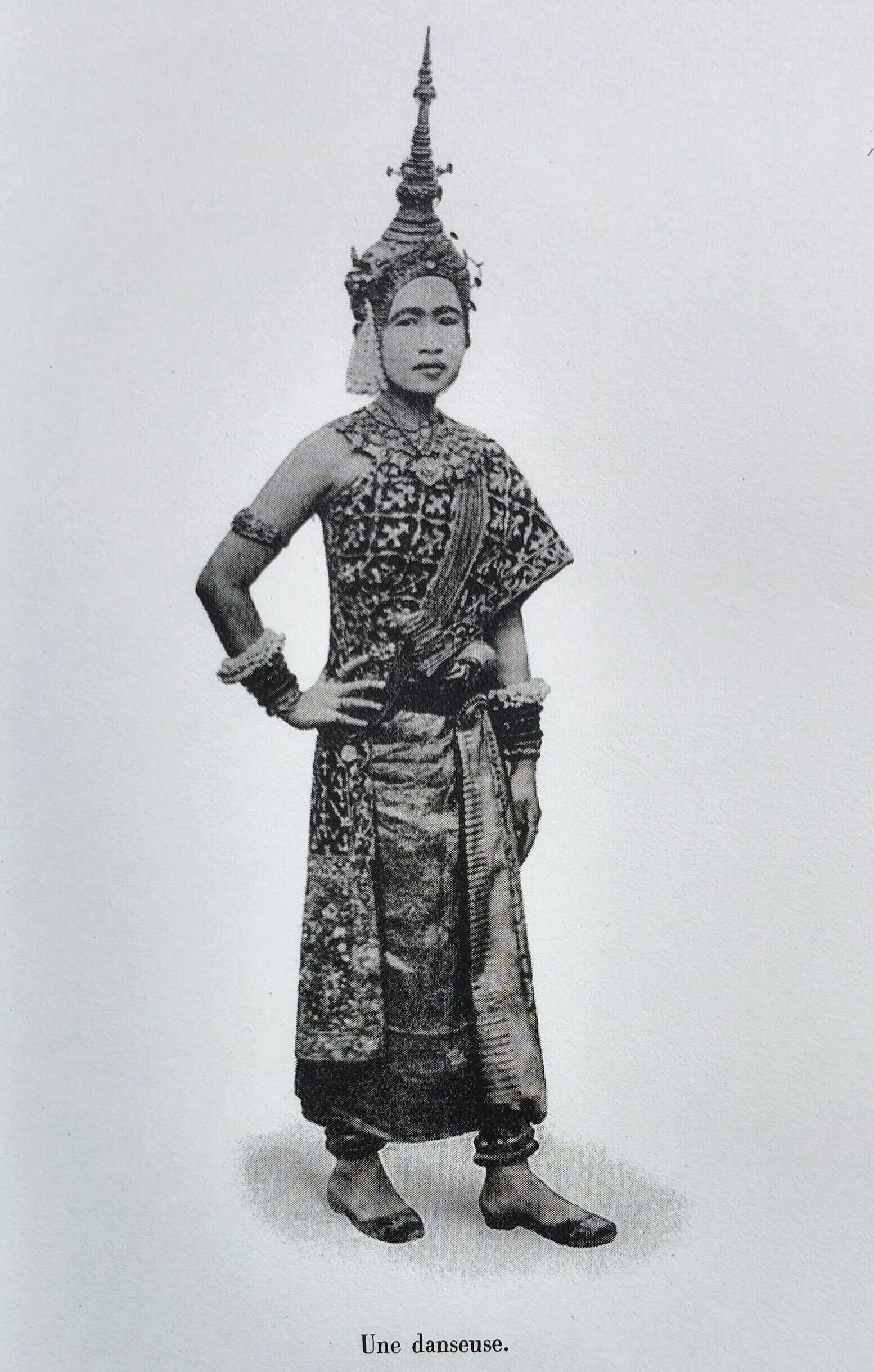
1) ‘Une danseuse’ [‘Dancer’], uncredited photo printed in A. Leclère’s Fêtes civiles et religieuses…, 1916. 2) ‘La première favorite de S.M. Si-Sovat’ [‘HM Sisowath’s first favorite’ [photo Service photographique de l’Indochine (SPI), fig. 155 in George Maspero, Un empire colonial français: L’Indochine, Tome 1, Paris-Bruxelles, Ed. Van Oest, 1929.] Had Cambodia be given control over its photographic archive, would it be easier to trace the history of the Royal Ballet and its artists?
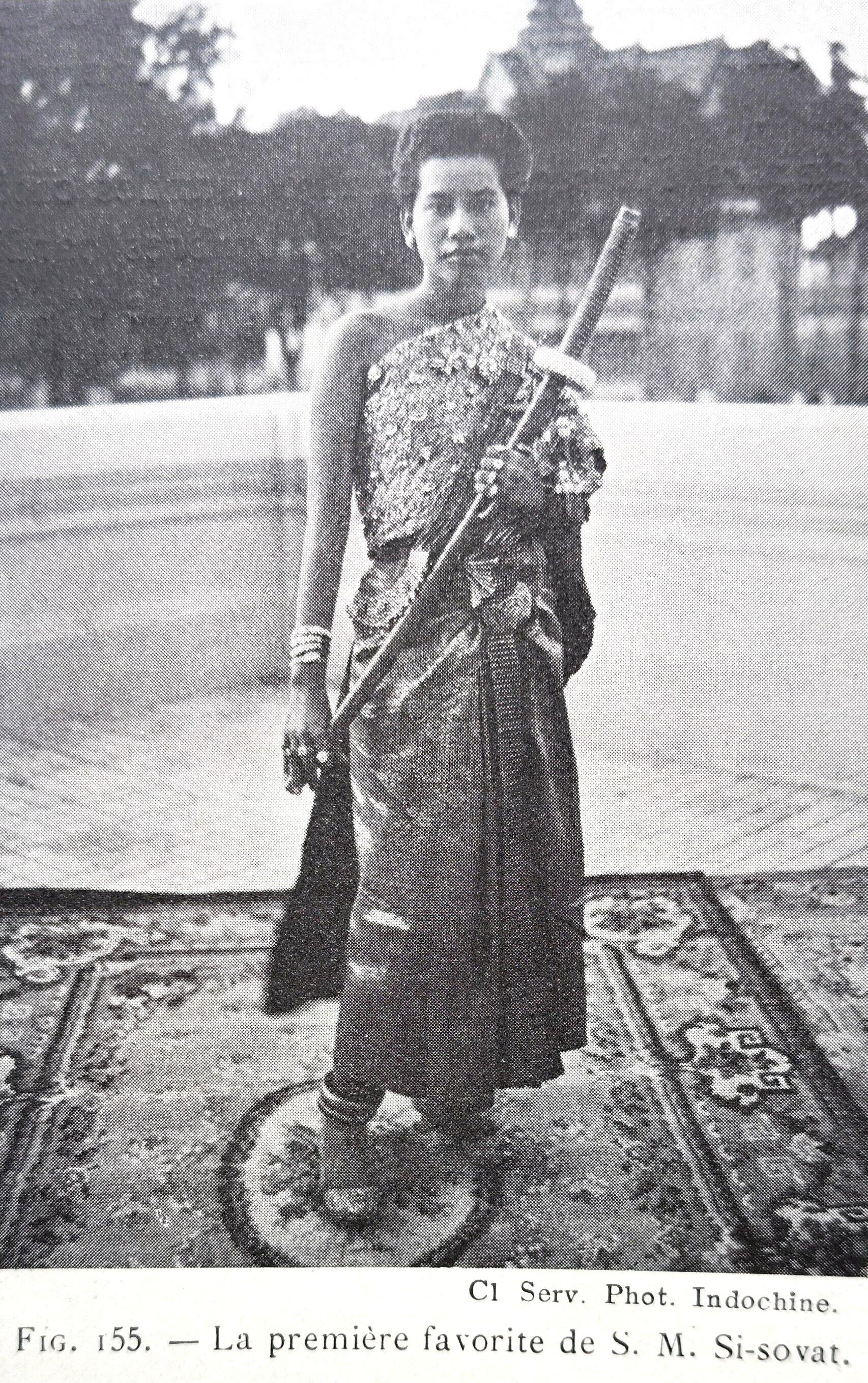
1) ‘Une danseuse’ [‘Dancer’], uncredited photo printed in A. Leclère’s Fêtes civiles et religieuses…, 1916. 2) ‘La première favorite de S.M. Si-Sovat’ [‘HM Sisowath’s first favorite’ [photo Service photographique de l’Indochine (SPI), fig. 155 in George Maspero, Un empire colonial français: L’Indochine, Tome 1, Paris-Bruxelles, Ed. Van Oest, 1929.] Had Cambodia be given control over its photographic archive, would it be easier to trace the history of the Royal Ballet and its artists?
1) ‘Une danseuse’ [‘Dancer’], uncredited photo printed in A. Leclère’s Fêtes civiles et religieuses…, 1916. 2) ‘La première favorite de S.M. Si-Sovat’ [‘HM Sisowath’s first favorite’ [photo Service photographique de l’Indochine (SPI), fig. 155 in George Maspero, Un empire colonial français: L’Indochine, Tome 1, Paris-Bruxelles, Ed. Van Oest, 1929.] Had Cambodia be given control over its photographic archive, would it be easier to trace the history of the Royal Ballet and its artists?
Some notations about Nou Nam:
ក្រោយគេបំផុត គឺនូណាម ដែលឆ្លៀតឧកាសប្រើអំណាចខាងផ្លូវចិត្ត ជិះជាន់លើហ្លួងខ្លាំងណាស់ដែរ គាត់រចនាផ្ទៃវាំងទៅតាមតែចិត្តនឹកឃើញ។ គាត់បានឡើងឋានៈជាម៉ម ហើយក្លាយឈ្មោះជា ម៉មនូ ដ៏ល្បីល្បាញ មានផ្ទះពីរជាន់សង់នៅចុងផ្លូវធំ ក្បែរប្រាសាទភិមានអាកាស។ ម៉មនូ ស្រឡាញ់រាប់អានខ្ញុំ ណាស់ ហៅខ្ញុំសុទ្ធតែកូន ព្រមទាំងឲ្យមាសពេជ្រខ្ញុំពាក់ស្រោចខ្លួន រហូតទាល់តែខ្ញុំភ្លេចម្ចាស់ក្សត្រីវ៉មធីតា ឈឹងតែម្តង។ [Last but not least was Nunam, who took advantage of her psychological influence to exert significant control over the King; she would redesign the palace grounds entirely according to her own whims. She was elevated to the rank of Mom and became known as the famous “Mom Nu,” residing in a two-story house built at the end of the main road, near the Phimeanakas. Morm Nu was very fond of me — always calling me “child” — and showered me with so much gold and diamonds that I completely forgot about Princess Vamthita [Vom Thida]. [p. 16]
ម្ចាស់ក្សត្រី វ៉មធីតា ម៉មនូ និង ម៉មប្រឹម ត្រូវទទួលភារៈជ្រើសរើសអ្នករបាំសម្រាប់ដង្ហែហ្លួងទៅស្រុកបារាំង។ ពួកយើងច្រើនគ្នាណាស់បានប្រកែកដាច់អហង្ការពុំព្រមទៅ រហូតដល់អ្នកខ្លះទៀតសុខចិត្ត យកជំនូនបន្តិចបន្តួចមកសូក ម៉មនូ និង ម៉មប្រឹម ដើម្បីឲ្យគាត់ដាក់ឈ្មោះខ្លួនថាមានជម្ងឺ ពុំអាចដង្ហែហ្លួងទៅបានទៀតផង។ ពួកអ្នករបាំជើងឆើត និង អស់អ្នកអស់នាងស្អាតៗ សុទ្ធតែប្រកែកពុំព្រមទៅ ផ្ទុយទៅវិញ ពួកស្រីចាស់ៗ អ្នកបំរើដ៏មានរូបរាងអាក្រក់គួរខ្មាសអៀននោះ បែរជាលើកទ័ពមកសុំចុះឈ្មោះឲ្យបានទៅជាមួយកូនខ្លួន។ [Princess Vomthida, Mom Nu, and Mom Prim were tasked with selecting dancers to accompany the King on his trip to France. Many of us adamantly refused to go; some even went so far as to offer small bribes to Mom Nu and Mom Prim, hoping they would report them as sick and therefore unable to join the royal entourage. The most talented dancers and the most beautiful young women all refused to go. Conversely, the older women, servants whose appearances were so unsightly they ought to have been ashamed, flocked forward, clamoring to sign up so they could accompany their own children.] [p. 28]
ព្រឹត្តិការណ៍សំខាន់ជាងគេក្នុងពេលធ្វើដំណើរ គឺរឿងដែលគេឃើញ ម៉មនូ កំពុងសាហាយជាមួយលោកមហាមន្ត្រី នៅក្នុងបន្ទប់ទឹក។ រឿងនេះគេខំខ្ទប់លាក់លៀមខ្លាំងណាស់ គ្រាន់តែខ្សឹបខ្សៀវរអេចរអូចពីមាត់មួយទៅមាត់មួយប៉ុណ្ណោះ។ ហ្លួងក៏បានដឹងរឿងអពមង្គលនេះដែរ ប៉ុន្តែមិនហ៊ានមាត់កថាដូចម្តេច ពីព្រោះសព្វថ្ងៃនេះ លោកមហាមន្ត្រីកំពុងមានអំណាចខ្លាំងណាស់។ ប៉ុន្តែទោះជាយ៉ាងណាក៏លោកកាន់តែជិនឆ្អន់នឹង ម៉មនូ ខ្លាំងឡើងៗ។ [The most significant event during the journey was the discovery of Mom Nu having an illicit affair with Lok Moha Montrei [Sir Minister of the Protocol: Thiounn] inside a bathroom. Great efforts were made to keep this matter concealed; it was only whispered about, passing quietly from person to person. The King became aware of this scandalous affair as well, yet he dared not speak a word about it, for at that time, Lok Moha Muntrei wielded immense power. Nevertheless, the King’s growing disgust toward her continued to fester.] [p. 35].
Certainly euphonic, the name Saramani does not occur in Khmer traditions before the eponymous novel, and we have searched for its origin to no avail. In the Puranas, we find Saramā (सरमा), messenger of Indra, a female dog of whom demons were afraid, and Sarasvati, a mythic river believed to flow underground before joining the Ganga at its confluence with the Yamuna. There is a Tamil word saramani, [சரமணி sara+mani, “waist-belt with tinkling tiny bells.” [Wisdom Library].
Yet Roland Meyer’s novel gives us a clue on where that name came from. In presence of Nou Nam, the king, whose intention to take Saramani as a favorite as she had turned 16, told her:
កាលពីដើមមានស្តេចភូមាមួយអង្គមានប្រពន្ធបី ប្រពន្ធទីមួយឈ្មោះ សារ៉ាម៉ានី, ទីពីរឈ្មោះ សុម៉ារ៉េត និង ទីបីឈ្មោះ ស៊ីម៉ាឡា។ ស្ដេចស្រឡាញ់ នាង សារ៉ាម៉ានី ណាស់ ព្រោះនាងចេះថ្នាក់ថ្នម ហើយជាពិសេសទៅទៀត នាងមានកូនប្រុសមួយទុក សម្រាប់ស្នងរាជ្យ ដែលជាហេតុធ្វើឲ្យប្រពន្ធចុងទាំងពីរកើតក្តីច្រណែននិន្ទា រកឧបាយសម្លាប់ប្រពន្ធដើមចោលទៅ។ ប៉ុន្តែបានគុណបុណ្យនៃអំពើល្អលោកជួយ នាងក៏បានរស់រានមានជីវិតឡើងវិញ ហើយរស់នៅយ៉ាងសុខសាន្តជាមួយស្វាមីរៀងរហូតមក។ អញឲ្យឈ្មោះឯងថា សារ៉ាម៉ានី, ឯងទៅប្រាប់ឯម ឲ្យគេចុះឈ្មោះហ្នឹងដាក់ក្នុងសៀវភៅបញ្ជីទៅណា៎! ហើយនែ៎! អញផ្តាំផ្តាច់ បើអាណាហៅឈ្មោះឯងផ្សេងពីហ្នឹង កុំឆ្លើយឲ្យសោះ។ [p. 23, KH text]
“Le nom de Sumaret né te conviendrait pas, celui de Simala non plus… Il y avait une fois un prince malais qui avait trois femmes; sa première épouse
s’appelait Saramani et il l’aimait tendrement, mais il avait aussi deux concubines appelées Sumaret et Simala. Saramani eut un fils et l’influence preponderante qu’elle prit de ce fait sur l’âme de son époux, alluma la jalousie de ses deux rivales qui la firent mourir. Mais la belle Saramani fut ressuscitée par l’effet de ses mérites et vécut longtemps heureuse près de son roi retrouvé. Fillette, je te donne le nom de Saramani que tu feras inscrire sur le registre de Em, et je te défends désormais de répondre à quiconque
t’appellera d’un autre nom que celui-là!” [p. 121, FR text]
“The name Sumaret would not suit you, nor would Simala… Once, there was a Malay prince who had three wives; his first wife was named Saramani, and he loved her tenderly — but he also had two concubines, called Sumaret and Simala. Saramani bore a son, and the commanding influence she consequently gained over her husband’s soul ignited the jealousy of her two rivals, who brought about her death. Yet, the beautiful Saramani was brought back to life by the power of her own merits, and she lived on, long and happy, by the side of the king she had regained. Little girl, I bestow upon you the name Saramani. Have it entered into the register of Em, and from this moment forth, I forbid you to answer anyone who calls you by any other name!”
The real Saramani (July 1893, Kien Svay កៀនស្វាយ — c. 1972 – 1974, Phnom Penh) called Okhnha Oum ‘uncle’ or ‘grand-uncle’. She was a distant relative, protected by the wealthiest (and with utmost political clout) part of the lineage along with her parents, she is a kon-kmuoy កូន ក្មួយ , litt. a “child-niece”, a term which researcher Marie Aberdam thought limited to the aristocratic families close to the Royal Family [see Élites cambodgiennes en situation coloniale, essai d’histoire sociale des réseaux de pouvoir dans l’administration cambodgienne sous le protectorat français (1860−1953), Paris, PhD thesis, 2019, p. 571. Yet as late as 1976, while studying the agrarian rites in the Cambodian and Thai confines of the Cardamom Mountains, ethnologist Marie Martin attested that the cardamom croppers were called “koon kmuoy” (children-nephews or nieces) under the authority of the mee-prey [litt. ‘Mother’-‘Chief’ of the Forest-Harvest (Marie-Alexandre Martin, “Les rites de cueillette au Cambodge”, Journal d’agriculture tropicale et de botanique appliquée 23÷7−12, Jul. Dec. 1976: 205 – 220.]
‘Akkamohasena’ Oum [or Um] អគ្គមហាសេនា អ (1821−1902), then the oldest serving dignitary along with Minister Col de Monteiro, who loved the young girl as a daughter, had bought her a pile of សំពត់ខៀន sampot khien [a sampot specially designed for dance practice], instructed her to join the dance troupe he maintained at home — a large compound erected on a land given to him by King Norodom near the old slaughterhouse, south of the palace, where there was still a Slaughterhouse Market [ផ្សារកាប់គោ Phsa Kab Ko] in the late 2020s -, with three Siamese ballet mistresses as instructors.
In his 2019 biographical notice on Um, historian Khing Hoc Dy [1] remarked that the dignitary, who received the Oknha title and had a part of the Sisowath Quay named after him from 1920s to 1940s, had been hostile to the pro-Siamese factions in the Palace, and opposed critics of the French Protectorate such as Prince Norodom Yukhantor, thought to be the successor of King Norodom until his half-brother Sisowath acceded the throne in 1904. Yinn and Em, Saramani’s parents, had named her Mrech but her old protector sought an other name for her when she became a confirmed dancer, and finally settled for Yem យ៉ែម [p. 5 in the KH translation].
Typically, after her experience as a Royal Ballet dancer, she might have expected her ‘protectors’ (the Um family) to arrange a satisfying marriage to a young civil servant of the new Cambodian administration, even to some minister’s son perhaps. But her affair with ‘Komlah’ necessarily barred her from the gentle way — her dalliance with a Barang (foreigner) made her an outcast, both for Cambodian elites and French residents, especially as author Roland Meyer, contrary to the responsible conduct of Charles Gravelle or George Coedès in respect to their Khmer wives, didn’t care protecting her with the respectability seal of marital union.
It is not surprising, thus, that American writer and adventurer Harry Hervey crossed paths with a young, elegant and enigmatic Cambodian lady called Saramani in Phnom Penh in the 1920s. Her appearance in Hervey’s novel King Cobra is supremely astonishing — a former dancer of the Royal Ballet who is acquainted to younger French colonial administrators — including the character Hervey nicknamed ‘The Tired Cavalier’, quite reminiscent of a smart, desillusioned and sarcastic Meyer, who took the young Harry to her store in the first place — now selling Khmer antiques in a modest shop we imagine close to the National Museum: not a high-flying art dealer but a decent enough, well-educated young mother who needs to navigate the city’s social dangerous straits without male protection…
So far, the following decades didn’t bring us more information about the lovely, strong-minded transfuge of the Royal Palace at the end of the 1910s. Untold social networks seemingly kept protecting her from utter adversity. Before the Khmer Rouge stormed and emptied the former ‘Pearl of Asia’ from its inhabitants, we know that she has moved to the the area of Wat Pibatha Rangsei វត្តពិភទ្ទរង្សី, one of the five ‘historic pagodas’ at Phnom Penh. Her house was across the pagoda’s side entrance on Street 80 between France St. (St. 47) and the riverside, right before the parallel Preah Vihear Street, called Oknha Oum ឧកញ៉ា អ៊ុំ since the years 1930s until present times. As her grandson Jean Courtois (b. 1948, Phnom Penh) recalled in his 2025 text [2], Mrech-Yem-Saramani was living there with her youngest daughter with Roland Meyer, Marcelle-Evelyne (18 June 1918, Phnom Penh — disappeared in Cambodia after 15 April 1975, when Khmer Rouge forces seized Phnom Penh) and the latter’s husband, Louis Courtois (2 Nov. 1915, Phnom-Penh — 30 May 1993, Nice). While they had married before WWII (announcement on 20 Feb. 1940), French Air Force officer Courtois went back to France in 1954, after they had divorced [3].
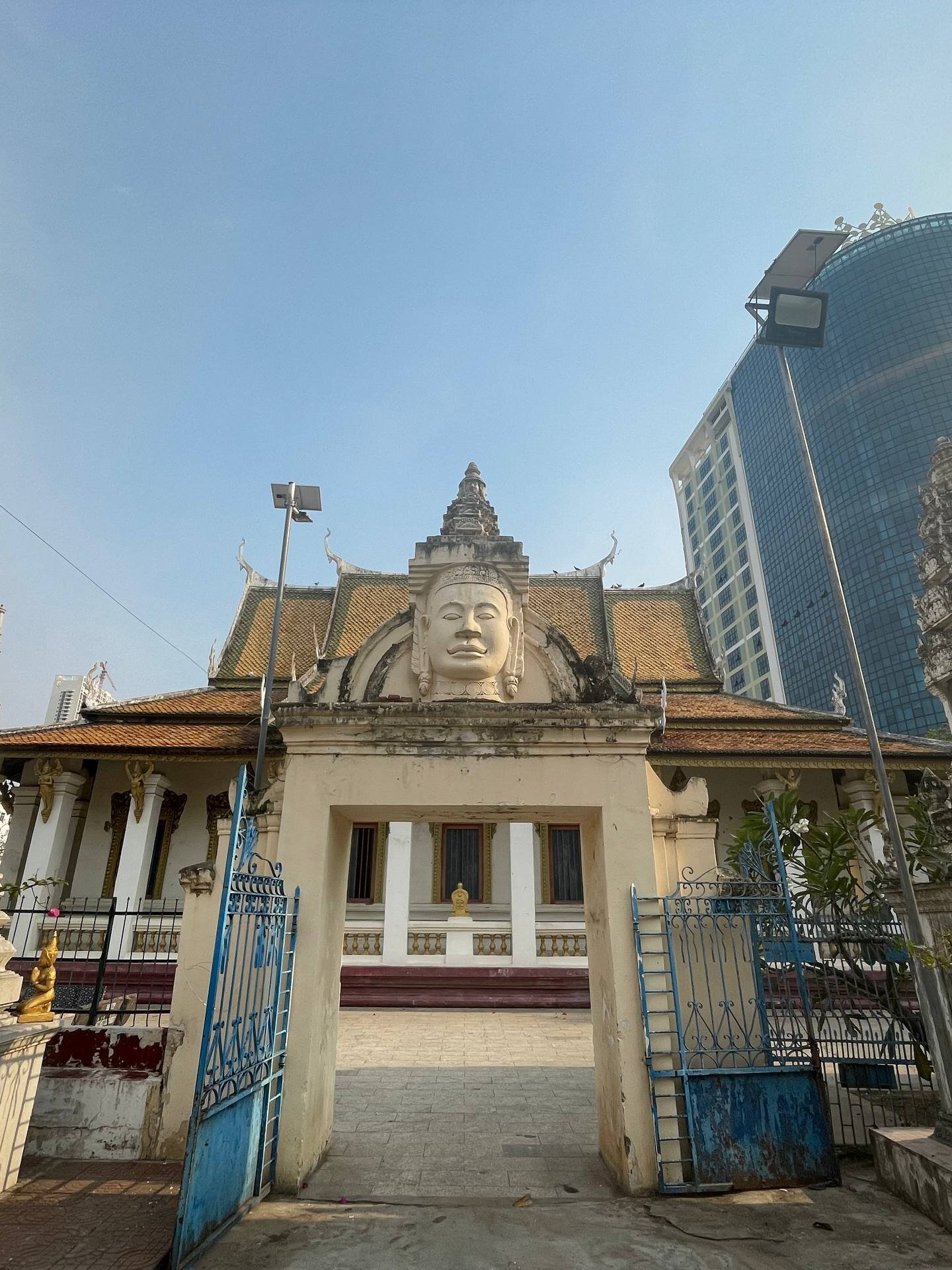
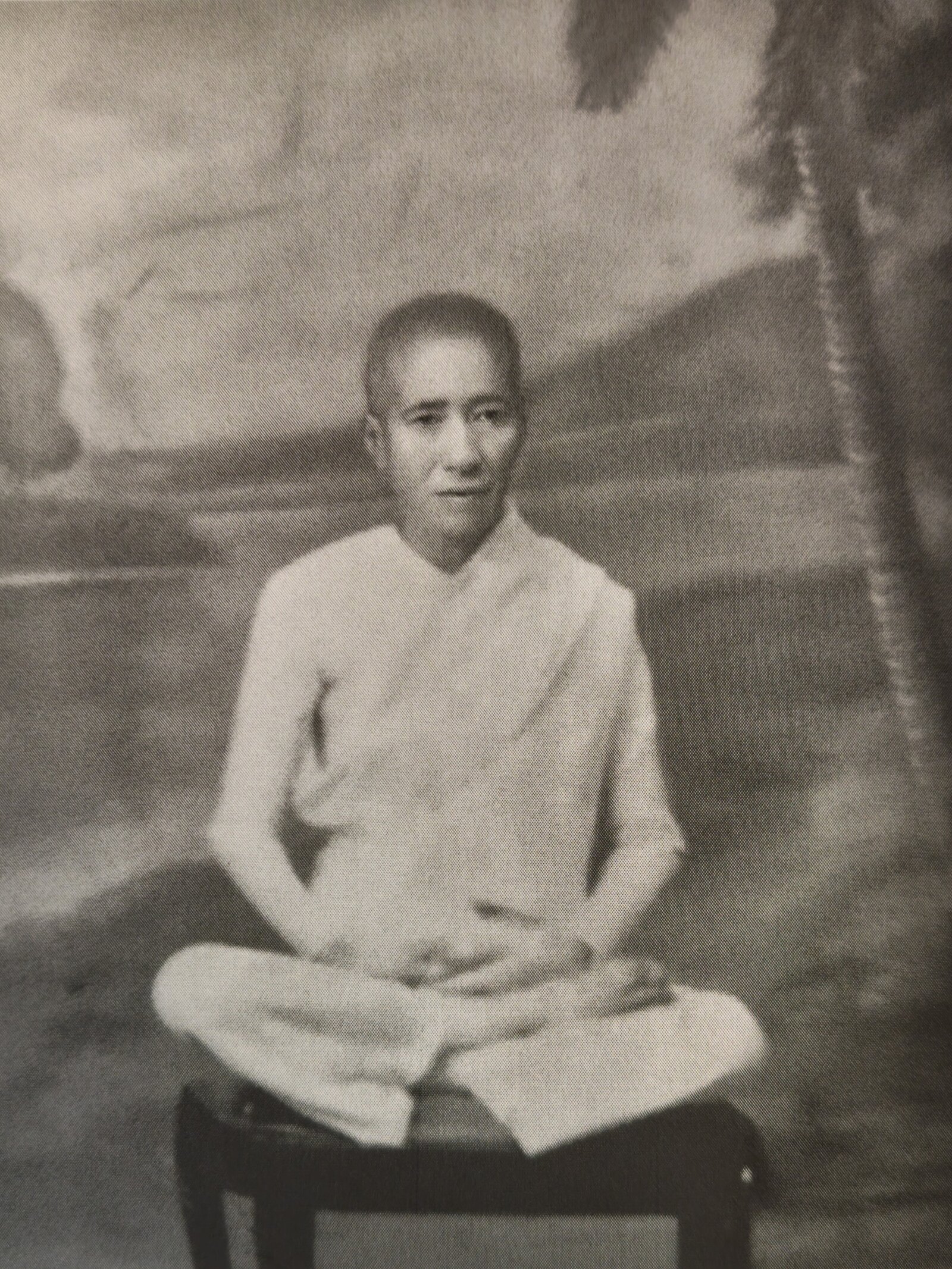
1, 2) 2 views of Wat Piphat Rangsei in 2026. The oldest part of the monastery is still standing but left unattended. [photos ADB]. 3) Saramani wearing the outfit of a nun, painting c. 1950. Note that if nuns often attend monastery services in Cambodia, the ordination of bhikkhunīs (ordained nuns) was never practised among Theravada communities, except in ancient Sri Lanka [photo © Meyer-Courtois Family, published in Jean Courtois 2025, op. cit.]. 4) Cover of Saramani, Khmer translation, ebook version, 2024.
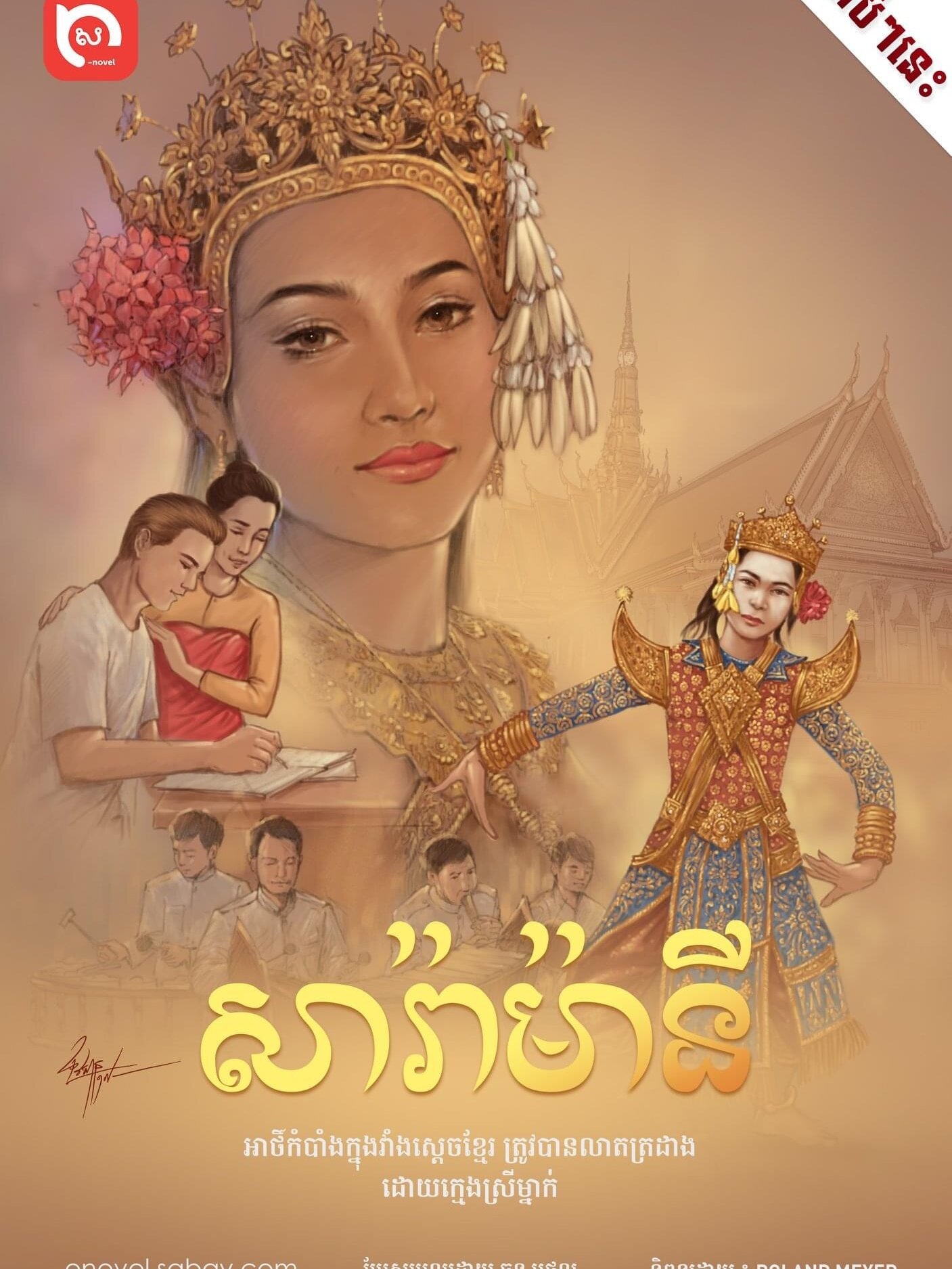
1, 2) 2 views of Wat Piphat Rangsei in 2026. The oldest part of the monastery is still standing but left unattended. [photos ADB]. 3) Saramani wearing the outfit of a nun, painting c. 1950. Note that if nuns often attend monastery services in Cambodia, the ordination of bhikkhunīs (ordained nuns) was never practised among Theravada communities, except in ancient Sri Lanka [photo © Meyer-Courtois Family, published in Jean Courtois 2025, op. cit.]. 4) Cover of Saramani, Khmer translation, ebook version, 2024.
1, 2) 2 views of Wat Piphat Rangsei in 2026. The oldest part of the monastery is still standing but left unattended. [photos ADB]. 3) Saramani wearing the outfit of a nun, painting c. 1950. Note that if nuns often attend monastery services in Cambodia, the ordination of bhikkhunīs (ordained nuns) was never practised among Theravada communities, except in ancient Sri Lanka [photo © Meyer-Courtois Family, published in Jean Courtois 2025, op. cit.]. 4) Cover of Saramani, Khmer translation, ebook version, 2024.
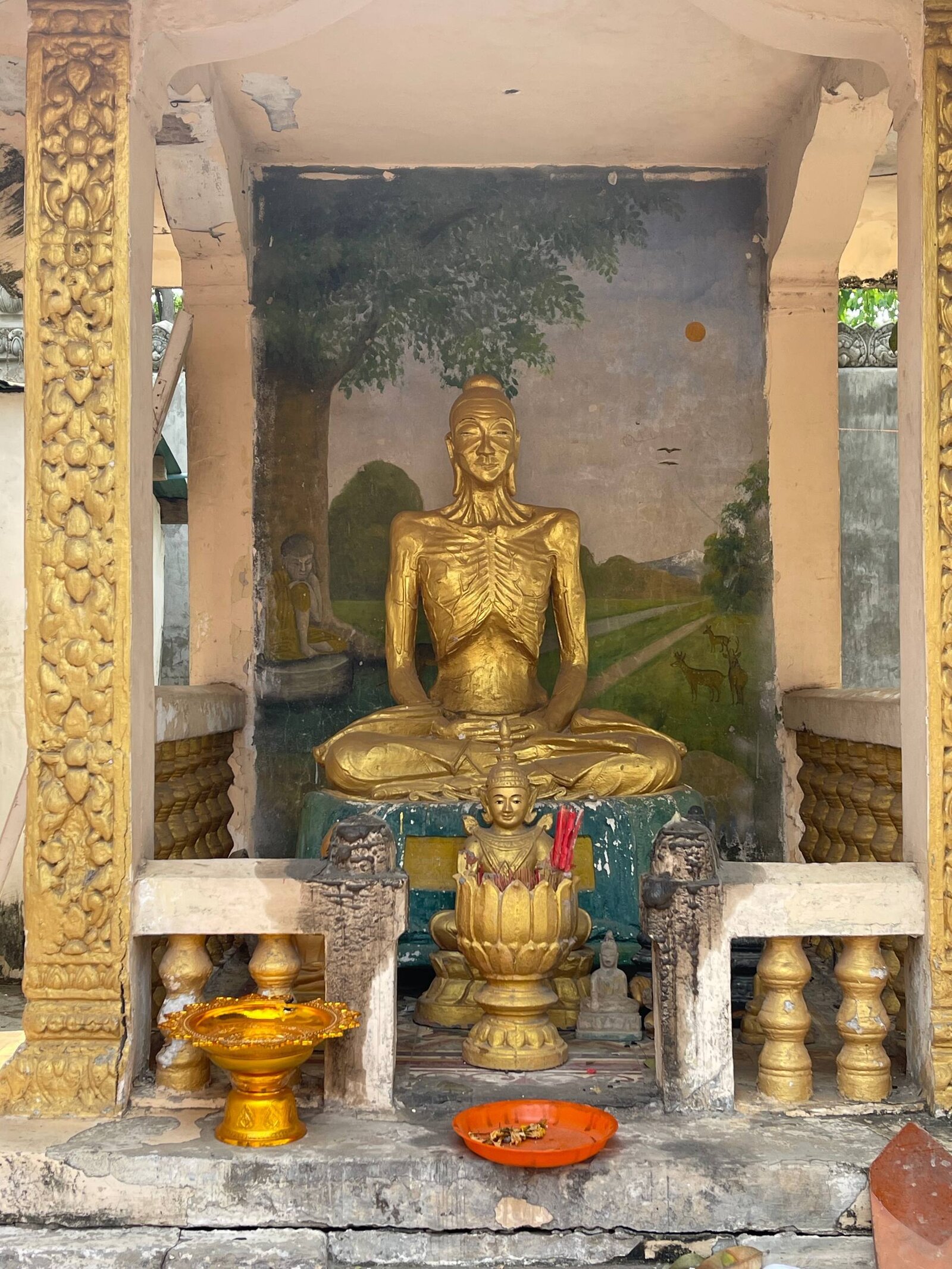
In April 2026, we asked the head monk at Wat Piphat [or Pibatha] Rangsei វត្តពិភទ្ទរង្សី, also known locally as Wat Chin Domdek វត្តចិនដំដែក, the Venerable Ouk Ngouv អ៊ុក ង៉ូវ, about possible remembrance of the nun Saramani. There was nothing to report, except that the name of the monastery itself hinted to prosperity and the chavannarangsei (ឆព្វណ្ណរង្សី), the six colored rays of light emanating from the Omniscient Buddha. In the older part of the monastery, where Saramani certainly went to meditate in her late years, there still is a statue of Kṣudhā-Buddha, the Bodhisattva Kṣudhitah (Hungry/Fasting Buddha) representing “extreme asceticism before enlightenment.”
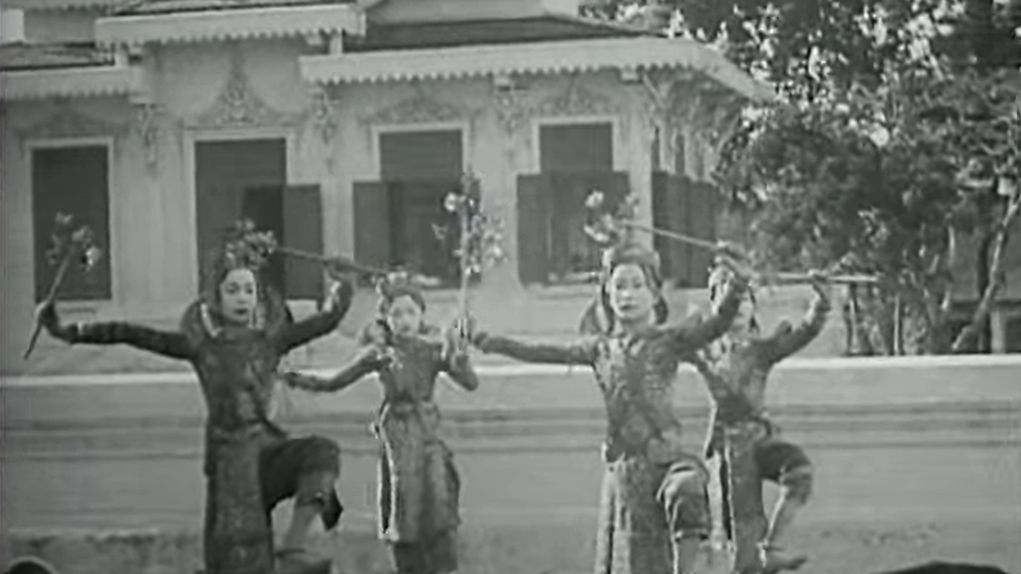
In March 1921, French photographer Léon Busy filmed of a Royal Ballet rehearsal at the Chanchaya Pavilion and in the gardens of the Royal Palace nearby. This rare document has been released online in 2025 [Label: ‘Danses au Palais Royal’. Dur: 16 min. | Id. in Albert Kahn Museum Collection, Mission Léon Busy en Indochine : AI12942. Screen captures by ADB].
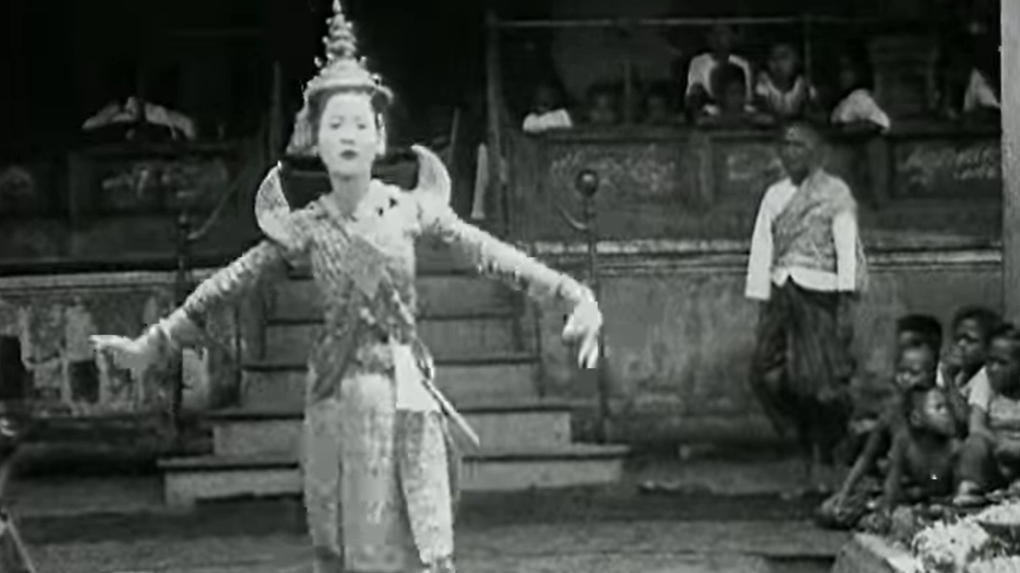
In March 1921, French photographer Léon Busy filmed of a Royal Ballet rehearsal at the Chanchaya Pavilion and in the gardens of the Royal Palace nearby. This rare document has been released online in 2025 [Label: ‘Danses au Palais Royal’. Dur: 16 min. | Id. in Albert Kahn Museum Collection, Mission Léon Busy en Indochine : AI12942. Screen captures by ADB].
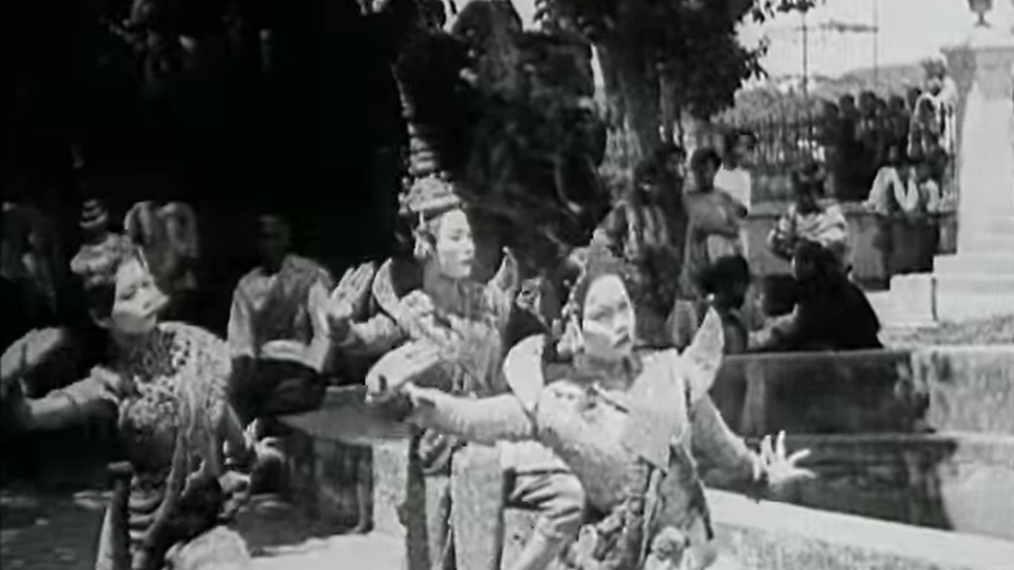
In March 1921, French photographer Léon Busy filmed of a Royal Ballet rehearsal at the Chanchaya Pavilion and in the gardens of the Royal Palace nearby. This rare document has been released online in 2025 [Label: ‘Danses au Palais Royal’. Dur: 16 min. | Id. in Albert Kahn Museum Collection, Mission Léon Busy en Indochine : AI12942. Screen captures by ADB].
In March 1921, French photographer Léon Busy filmed of a Royal Ballet rehearsal at the Chanchaya Pavilion and in the gardens of the Royal Palace nearby. This rare document has been released online in 2025 [Label: ‘Danses au Palais Royal’. Dur: 16 min. | Id. in Albert Kahn Museum Collection, Mission Léon Busy en Indochine : AI12942. Screen captures by ADB].
In spite of the book’s structural flaws, and its French author’s self-infatuation, and beyond the many politically biased ways of reading the novel, Saramani had everything to become the ultimate heroin of a love tragedy in modern Cambodia. In 2026, visual artist Im Pesey quoted directly from the enigmatic and wonderful former ballerina of the Royal Palace in a social media post:
ខ្ញុំចូលចិត្តចង់អោយប្រវត្តិដ៏ខ្លោចផ្សាររបស់ខ្ញុំ ឋិតនៅគង់វង្សជានិច្ច សម្រាប់ជាអនុស្សាវរិយចំពោះរូបអ្នកកាលណាខ្ញុំស្លាប់ទៅ…(សារ៉ាម្នី) I wish for my painful history to endure forever, a lasting memory of me once I am gone…(Saramani).
______________
[1] Khing Hoc Dy, “Quatre notices biographiques de hauts mandarins khmers sous le protectorat français — “Akkamohasena’ Oum អគ្គមហាសេនា អ (1821−1902)”, Bulletin de l’AEFEK 19, 2014.
[2] Jean Courtois, “Saramani et Roland Meyer, mes grands-parents outremer”, in Asiates: des Européens vers l’Asie, parcours et transferts culturels, Magali Bigaud, Henri Copin et Jean-François Klein (eds), Paris, Hemisphères-Maisonneuve, 2025, , p 197 – 222.
[3] Cambodian journalist Rinith Taing stated that Marcelle-Evelyne and Louis Courtois divorced in 1954, while Saramani and Roland Meyer did the same in 1955. They hadn’t see each other since at least 1927. [Rinith Taing, “Histoire & Livre : Distinguer la réalité et la fiction dans ‘Saramani danseuse khmère’ ”, Cambodge Mag, 24 April 2022.]
[3] Lucie Labbé [2020, op. cit., p. 137], quoting from a communication by Saramani and Roland Meyer’s grandson, Jean Courtois, wrote that she might have “vécu ses dernières années comme nonne au monastère Piphort Reangsey (Bibhadd Ratisï) à Phnom Penh avant de se convertir au catholicisme peu avant son décès survenu entre décembre 1972 et avril 1974.” [spent her last years as a nun at Piphat Rangsei Monastery before converting to catholicism shortly before her death, which occurred between December 1972 and April 1974.”
NOTE [August 2026]: A new, complete Khmer translation of Saramani, danseuse khmer by writer Socheata Huot will be soon released by Avatar Publishing, Phnom Penh.
Tags: French writers, Royal Palace, Royal Ballet of Cambodia, dancers, 1900s, 1910s, 1970s, Royal Family, kings and queens of cambodia, Cambodian literature, translations, Historic Pagodas, women, urbanism, water management, riverbanks

[Ms] Chan Bophal ចន្ទ បូផល is a Cambodian writer and translator, author in 1970 – 1971 of the first translation into Khmer of Roland Meyer’s partly autobiographical novel Saramani, danseuse khmèr (1919).
Initially serialized in the newspaper ប្រយោជន៍ខ្មែរ [Brayoch Khmer, ‘Khmer Benefit’], the translation, titled រឿង សារ៉ាម៉ានី : អាថ៌កំបាំង ក្នុង វាំង ស្តេច ខ្មែរ [The Story of Saramani: Secrets in the Royal Palace], was reprinted in Paris in 1996, and in Phnom Penh again in 2005.
We found out she authored at least another book — ប្រវត្តិពិតរបស់អាល់កាប៉ូនស្តេចចោរ, ឆ្នាំ១៩៧៤ [The True Biography of Al Capone, King of Thieves (Phnom Penh, 1974)]. However, it rumors had it that the female name was a pseudonym shielding a male author from possible reprisal by political adversaries.

Part 6 of Chan Bophal’s translation of a novel titled ចាំអូនជានិច្ច [‘I’ll Always Remember You’] in Khmer, original author, title and language unknown, published in the same newspaper in 1974 [with thanks to Srin Sokmean].
Part 6 of Chan Bophal’s translation of a novel titled ចាំអូនជានិច្ច [‘I’ll Always Remember You’] in Khmer, original author, title and language unknown, published in the same newspaper in 1974 [with thanks to Srin Sokmean].
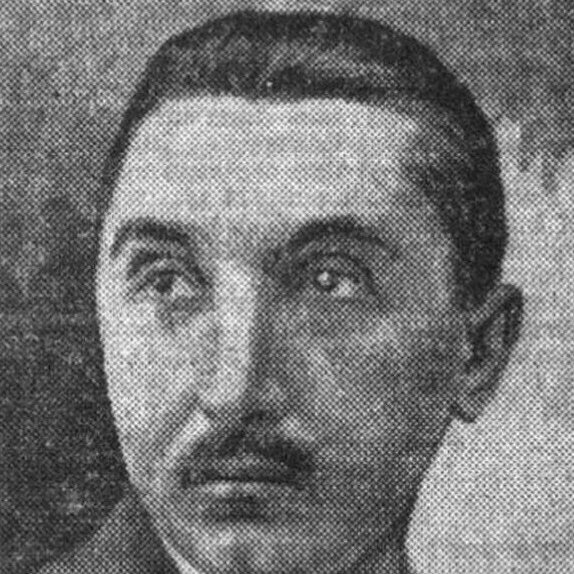
Roland Théodore Emile Meyer (10 July 1889, Moscow, Russia — 9 Sept. 1976, Paris 13) was a French colonial civil servant and novelist who described the life at Phnom Penh Royal Palace and the world of the Royal Ballet dancers in Saramani, danseuse khmère (1919), living in Cambodia (1909−1920) and in Laos (1920−1933).
Roland Meyer’s father, Théodore-Charles Constant Meyer (6 Apr. 1839 — 1914), had been a French diplomatic clerk and diplomat since 1863, first as certified translator with the French legations in Germany and Poland, chief-interpreter of the French Army during the 1870 – 71 French-Prussian war, chancelor of the Sankt-Petersburg consulate from 1874 to 1880 when he was appointed consul in Fou-Tchéou (mod. Fuzhou 福州市, where the invading French fleet was to defeat the Qing naval forces in Aug. 1884), Commissioner of the Government in Tamatave (mod. Taomasina, Madagascar, 1881), consul-general in Singapore (1882−6), Tiflis (Georgia, 1883 – 1885), and Moscow (1888−1891). Between Tiflis and Moscow, his official biography (France’s Ministry of External Relations) stated that he was “chargé de travaux particuliers” [‘entrusted with particular projects’]; later, he served as consul-general in Zurich (1892), Genoa (1893), and plenioptentiary ambassador to Haiti (Port-au-Prince from 1897 to March 1899, when he left the diplomatic service.
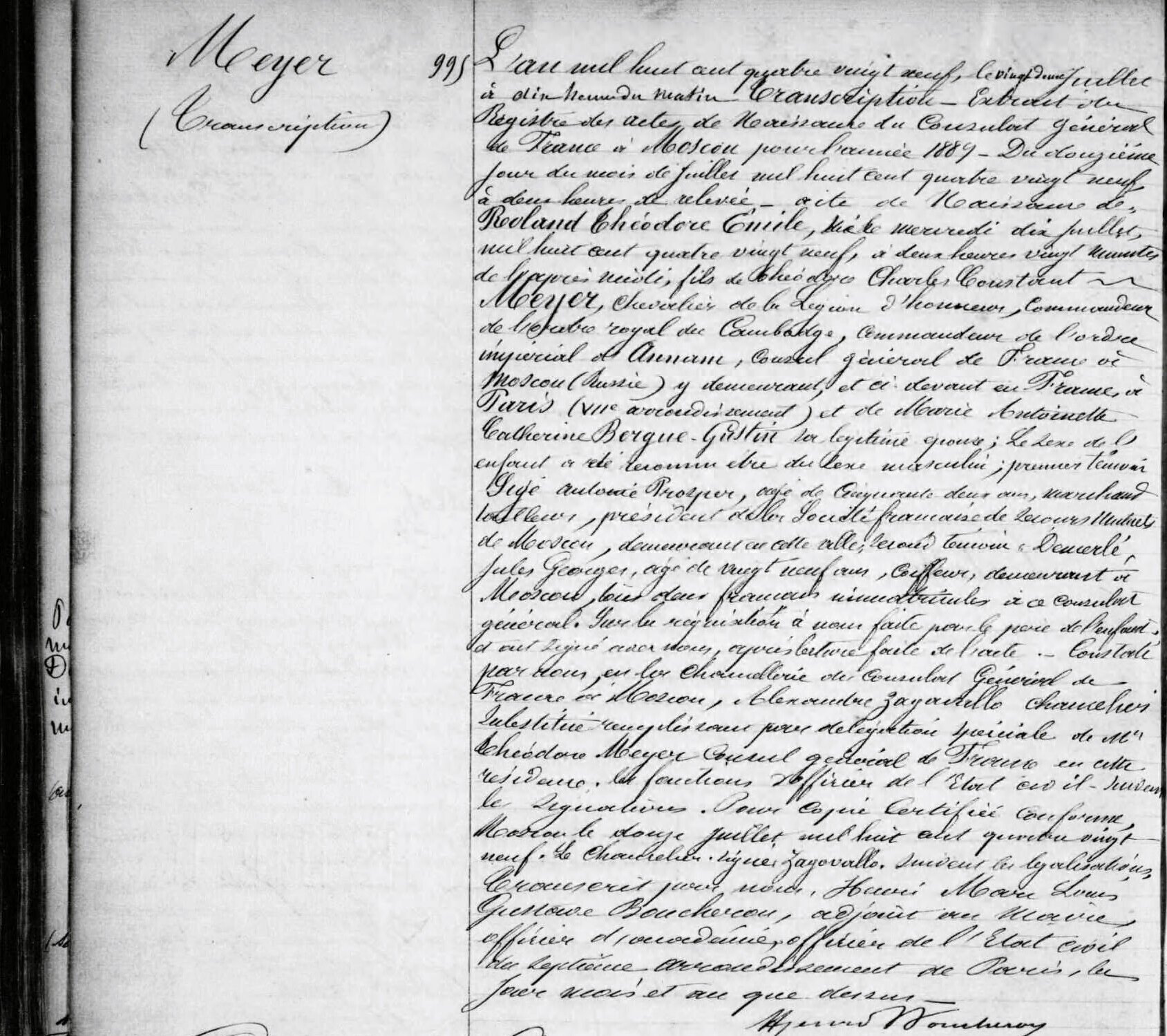
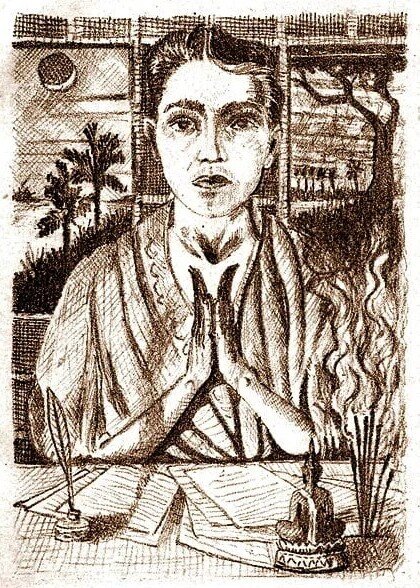
1) Roland Meyer’s birth certificate issued by the French consulate in Moscow, and transcribed at Paris 7th District townhall twelve days after his birth, on 22 July 1889. Along with the name of his mother (Marie-Antoinette Catherine Bergue-Gustin), we can see his father Théodore Meyer’s distinctions as per 1889: ‘Chevalier de la Légion d’honneur, Commandeur de l’Ordre royal du Cambodge, Commandeur de l’Ordre impérial d’Annam’. Singapore or Genoa would be the the only postings listed in the official resumé mentioned above where he could have been distinguished with these decorations, possibly for some involvement in the 1893 ‘Affaire de Siam’. [source: retrieved from filae.com] 2) Roland Meyer, Self-Portrait dated 1909 (at 20 years of age) and reproduced in Saramani (1919).
1) Roland Meyer’s birth certificate issued by the French consulate in Moscow, and transcribed at Paris 7th District townhall twelve days after his birth, on 22 July 1889. Along with the name of his mother (Marie-Antoinette Catherine Bergue-Gustin), we can see his father Théodore Meyer’s distinctions as per 1889: ‘Chevalier de la Légion d’honneur, Commandeur de l’Ordre royal du Cambodge, Commandeur de l’Ordre impérial d’Annam’. Singapore or Genoa would be the the only postings listed in the official resumé mentioned above where he could have been distinguished with these decorations, possibly for some involvement in the 1893 ‘Affaire de Siam’. [source: retrieved from filae.com] 2) Roland Meyer, Self-Portrait dated 1909 (at 20 years of age) and reproduced in Saramani (1919).
1) Roland Meyer’s birth certificate issued by the French consulate in Moscow, and transcribed at Paris 7th District townhall twelve days after his birth, on 22 July 1889. Along with the name of his mother (Marie-Antoinette Catherine Bergue-Gustin), we can see his father Théodore Meyer’s distinctions as per 1889: ‘Chevalier de la Légion d’honneur, Commandeur de l’Ordre royal du Cambodge, Commandeur de l’Ordre impérial d’Annam’. Singapore or Genoa would be the the only postings listed in the official resumé mentioned above where he could have been distinguished with these decorations, possibly for some involvement in the 1893 ‘Affaire de Siam’. [source: retrieved from filae.com] 2) Roland Meyer, Self-Portrait dated 1909 (at 20 years of age) and reproduced in Saramani (1919).
In 1907, one year after watching the performance of the Cambodian royal dancers at Marseille Colonial Exhibition, he traveled to French Indochina for an internship arranged by his father, joining the team of then Governor-General Paul Beau. Sent to Phnom Penh, he started to work on educational and cultural affairs. He also met a young dancer of the Royal Ballet, Saramani — her real name was ម្រេច Mrek (Pepper) but and as it was customary for women she was also known as Thiem, Yem and possibly Saramani like the eponymous novel Meyer came to publish. Interestingly, when his book Saramani, danseuse khmèr (1919) surfaced back in Cambodia in 1970 – 1971, the translator into Khmer only mentioned he had been in charge of the Musée Khmer [‘Khmer Museum’], an embryo of what would become in 1920 the Musée Albert-Sarraut under the direction of George Groslier, now the National Museum of Cambodia [1].
From there, Roland Meyer’s life became two-faceted, the well-groomed, disciplined colonial civil servant and the budding poet-chronicler with privileged access to the Royal Palace, surfing on the waltz of Résidents-Generaux (‘Resident-Superiors’, administrators of the French Protectorate over Cambodia) — Louis Paul Luce (from 1905 to 1911), Ernest Outrey (1911−1914), two acting residents in 1914 (François-Xavier Tessarech and Joseph Le Gallen), and the overwhelming François Marius Baudoin, who was to reign suprem from 22 October 1914 to 20 January 1927. The relative candor of past years was gone — Baudoin was set to enroll young Cambodians in the French army as WWI had broken out, to fight the insurgency linked to nationalist activities in Annam and Cochinchina (Vietnam), and to exploit thousands of ‘itinerary or fugitive workers’ (not attached to plantations) and other outcasts in order to build emphatic projects such as the ‘station climatique’ [sanitarium-resort] on the Bokor mountain.
On 28 June 1917, Albert Sarraut, once again Governor-General of Indochina (2nd mandate), set up by decree the Sûreté générale indochinoise [Secret police], including the ‘Service de la Sûreté et des Affaires politiques et Indigènes du Cambodge’, an apparatus of security surveillance Meyer was already involved in [he had been appointed ‘Chef de la section politique et indigène’ on 1 March 1916] and of which he was appointed Chief by Baudoin in 1918. Some observations in the novel Saramani about surrepititious groups around Phnom Penh Royal Palace evoke what was really at stake: “La Sûreté faisait état de la propagation des rumeurs, de ce que des groupes se formaient dans les rues pour les commenter et les grossir et que des personnes commençaient à être prises à partie.” [“The Sûreté reported that rumors were spreading, that groups were forming in the streets to discuss and amplify them, and that people were beginning to be targeted.” [see Marianne Boucheret, “Le pouvoir colonial et la question de la main‑d’œuvre en Indochine dans les années vingt”, Cahiers d’histoire, Revue d’histoire critique 85, 2001, p 29 – 55.]
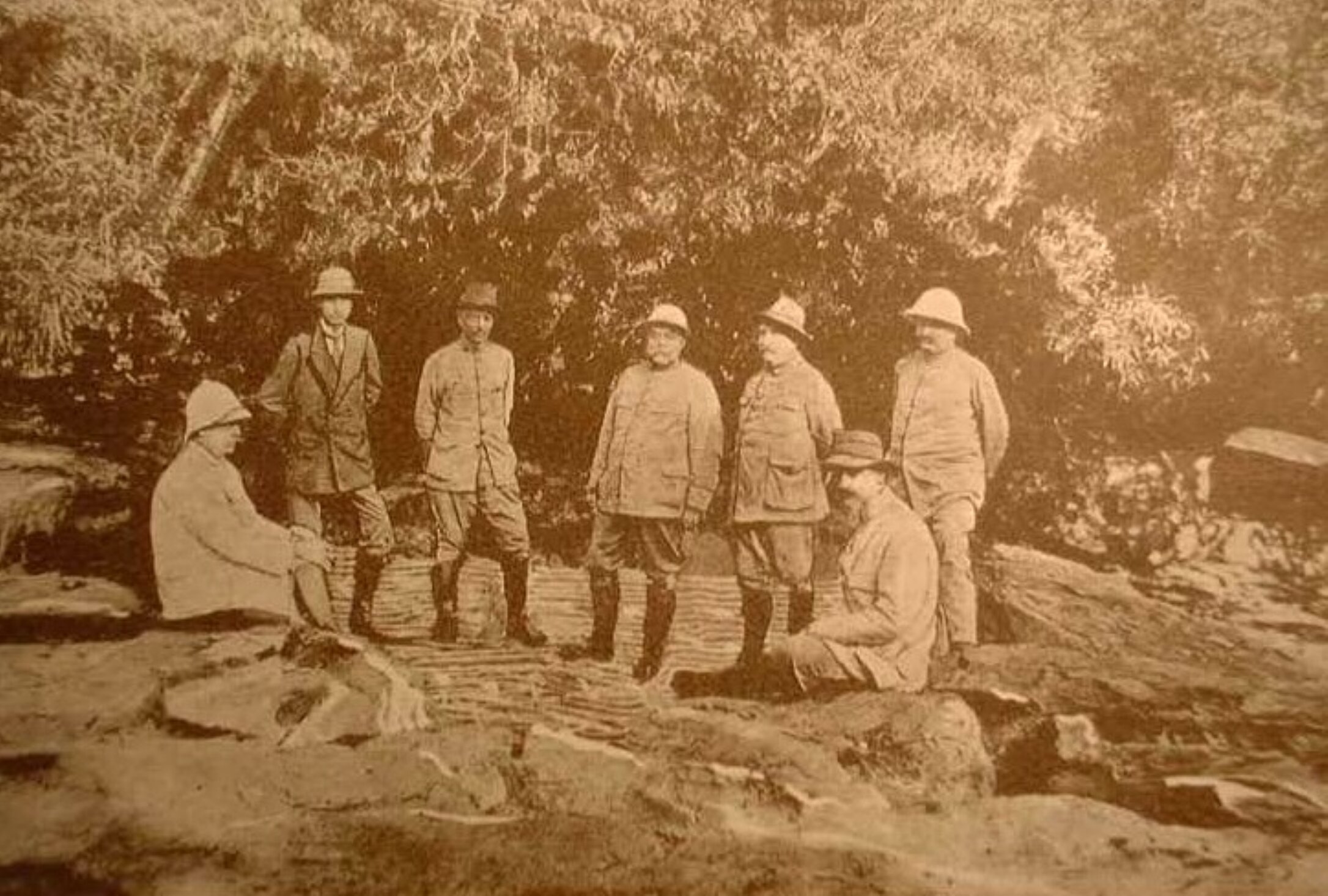
1) On Top of Bokor Mountain, 1917. Left to right, Flacourt (Agricultural Department), R. Meyer (Chef de la sûreté [Head of Security]), Courgand (Forestry Dept.), Baudoin (Résident-supérieur of Cambodia), A. Rousseau (French Resident in Kampot), Jubin (Head of Land Registry), Babillo (Chief-engineer) [source: Berret & Jubin, Revue indochinoise, 7 – 8, 9 – 10, Jul.-Oct. 1919, repr. in Luc Mogenet, ‘La station climatique de Bokor’, 2007, op. cit.] 2) Map of the Gulf of Siam drawn by Roland Meyer before 1925 [published in L’éveil économique de l’Indochine, 15. Jan.1925].
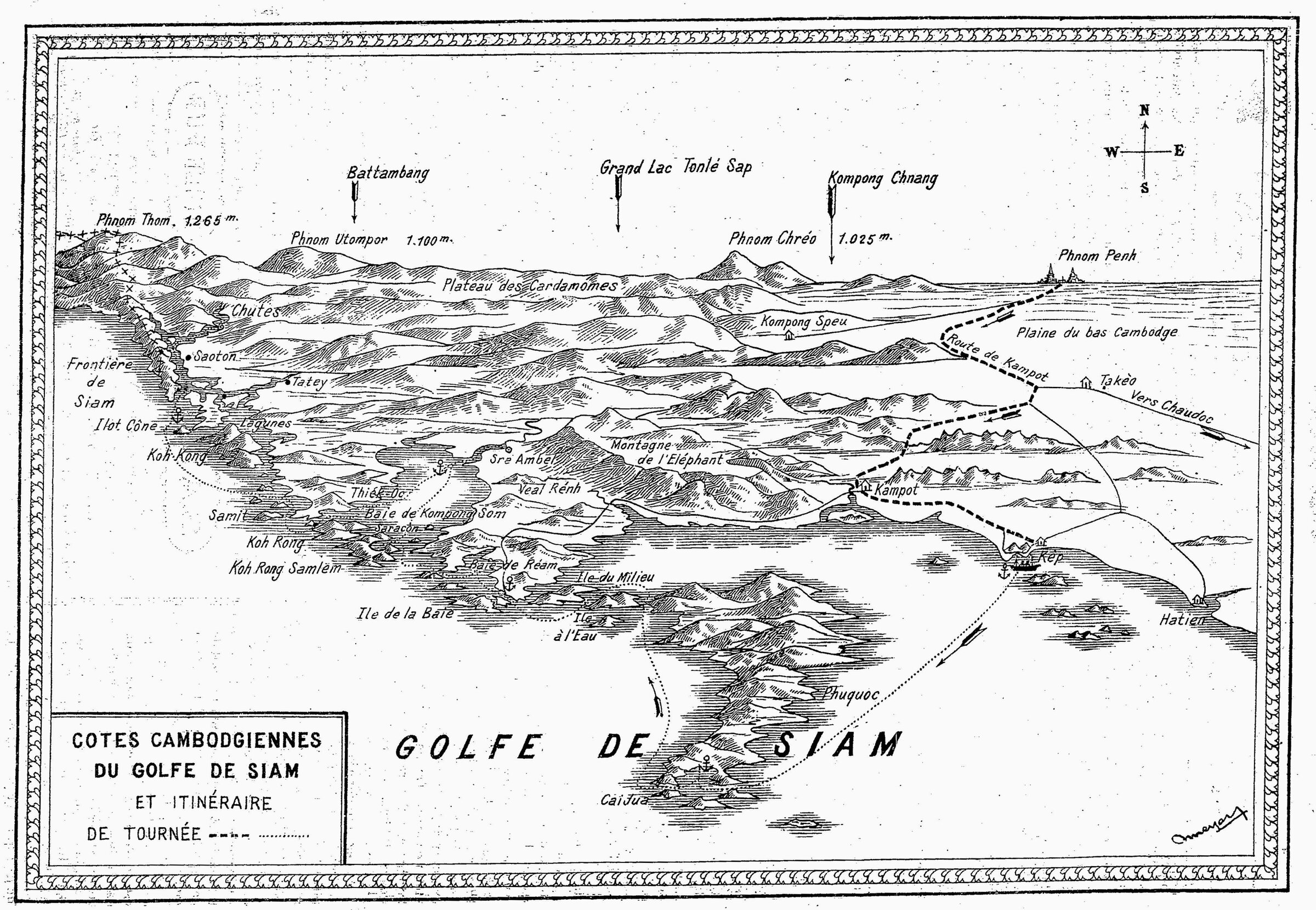
Map of the Gulf of Siam drawn by Roland Meyer before 1925 [published in “Croisière au Golfe de Siam”, L’éveil économique de l’Indochine, 15 Jan.1925]
1) On Top of Bokor Mountain, 1917. Left to right, Flacourt (Agricultural Department), R. Meyer (Chef de la sûreté [Head of Security]), Courgand (Forestry Dept.), Baudoin (Résident-supérieur of Cambodia), A. Rousseau (French Resident in Kampot), Jubin (Head of Land Registry), Babillo (Chief-engineer) [source: Berret & Jubin, Revue indochinoise, 7 – 8, 9 – 10, Jul.-Oct. 1919, repr. in Luc Mogenet, ‘La station climatique de Bokor’, 2007, op. cit.] 2) Map of the Gulf of Siam drawn by Roland Meyer before 1925 [published in L’éveil économique de l’Indochine, 15. Jan.1925].
Precisely at that time, Resident-General François Marius Baudoin embarked in a voluntaristic — the French political opposition would come to call it “megalomaniac” and even “criminal” — building program on the Bokor Hill, including a private villa for himself and a mountain road that would cost hundreds (at least 800) of dead among the forced laborers. The official goal was to establish a “station climatique” [sanatorium] and an experimental farm in climatic conditions that would befit the Europeans. Meyer was initially ecstatic about the project — he himself had to go several times to France “take the waters”, as it was called then, in order to mitigate the impact of tropical heat — and even a decade later, in 1925, he was waxing lyrical about the Cambodian southern coastline:
Enfin, nous contournons un promontoir boisé et arrivons à Kep, la plage aimable, le port d’escale où nous attend à quelques encablures, le joli yacht l’Espadon. Le boulevard du bord de mer court sous les palmes des cocotiers, au long de plages étroites, ou bien serpente en corniche au flanc des caps verdoyants’ où apparaissent les premières villas de la station balnéaire, découverte et créée en 1906 par le colon Dupuy. Au large, le Golfe dresse son horizon d’un bleu intense parsemé d’îles drapées dans une flore d’Insulinde et sous un ciel d’Attique, indemne des perturbations atmosphériques propres au versant indochinois des mers de Chine. Kep est un coin du Golfe ou règne en tous les temps “l’immuable splendeur d’un éternel printemps”. [Roland Meyer, ‘Croisière au Golfe de Siam’, L’éveil economique de l’Indochine, 4 Jan. 1925, p 6]
[Finally, we round a forest-crowned promontory and arrive at Kep, the pleasant beach, the port of call where, a few cables away, the lovely yacht Espadon awaits us. The seaside boulevard runs beneath the coconut palms, along narrow beaches, or winds its way along the cliffside of verdant headlands where one can spot the first villas of this seaside resort discovered and established in 1906 by the colonist Dupuy. Offshore, the Gulf deploys its horizon of intense blue, dotted with islands draped in Insulindian flora and under an Attica sky, untouched by the atmospheric disturbances typical of this Indochinese side of the South China Sea. Kep is a corner of the Gulf where at all times reigns ‘the immutable splendor of an eternal spring’ ”.]
His not-so veiled criticism of Baudoin would come much later, in his 1925 article on Popokvil [partly reprinted in Komlah, Visions d’Asie, 1930, p. 204 – 6] in which one can read behind the lines that he felt he had been ‘banished’ out of Cambodia because of Baudoin’s excessive haste:
Comme par un remords d’avoir trop tardé, on voulait réaliser vite et grand, à coups de vies humaines et de milliers de piastres. Une frénésie se déchaînait pour l’achèvement coûte que coûte de la route d’accès au plateau de Popokvil et pour l’édification de palaces somptueux, là où auraient suffi, au début, de jolis villages suisses encadrés dans les bois de pins. [.…] Huit cents prisonniers renouvelés, raflés dans toutes les prisons du Cambodge achevèrent en deux ans une route de trente kilomètres montant à 1.050 mètres d’altitude, sur les falaises qui dominent le Golfe de Siam. L’inauguration eut lieu en Mai 1919 — Deux ouvriers français de la grande entreprise : Gourgand et Fabre et combien d’indigènes, avaient payé ce succès de leur vie? Mais Popokvil qui avait patienté tant d’années, n’avait pas attendu un an de plus ! Beaucoup d’erreurs grandes ou petites avaient sans doute été commises. Il fallait commencer plus tôt ou finir plus tard ; mais le passé est révolu et Popokvil demeure une réalisation magnifique. Le présent rend hommage aux artisans européens et indigènes qui, chacun dans le domaine limité de sa compétence, furent les agents d’exécution de la grande idée qui les dirigeait tous. L’avenir rendra justice aux inventeurs, aux promoteurs qui furent l’âme de l’entreprise et qui, jalousés, méconnus ou bannis, emportèrent avec eux le secret de leur fortune: la noblesse de leur vocation. […] Sa réalisation a bercé bien des rêves, coûté bien des fatigues, exigé bien des morts.… Profitez-en !
[As if out of remorse for so much procrastination, there was a desire to achieve things quickly and on a grand scale, at the cost of human lives and thousands of piastres. A frenzy was unleashed for the completion at all costs of the access road to the Popokvil plateau and for the construction of sumptuous palaces, where, as a first stage, pretty Swiss villages framed in pine woods would have been enough. Eight hundred prisoners, rounded up from every prison in Cambodia, completed in two years a thirty-kilometer road climbing to an altitude of 1,050 meters on the cliffs overlooking the Gulf of Siam. The inauguration took place in May 1919. Two French workers in this grand undertaking, Gourgand and Fabre, and how many locals, had paid for this success with their lives? But Popokvil, which had waited so many years, hadn’t waited another! Many mistakes, large and small, had undoubtedly been made. It should have started earlier or finished later; but the past is gone, and Popokvil remains a magnificent achievement. The present pays tribute to the European and local craftsmen who, each within the limited scope of their competence, were the agents of execution of the grand idea that guided them all. The future will do justice to the inventors and promoters who were the soul of the enterprise and who, envied, misunderstood, or banished, took with them the secret of their success: the grandeur of their calling. […] Its realization nurtured many dreams, cost much toil, and demanded many lives.… Enjoy it!]
He would reiterate this enthusiastic support of European hill stations — while conceding that Baudoin had probably gone to far in the Bokor ruthless adventure — a ghastly episode that deeply informed the writing career of French novelist Marguerite Duras — in his brochure on Laos prepared for the Paris Colonial Exhibition (1931), praising the project of “our future hill station at Phou-khao-khoai” [2] in “our Indochinese Far-West”, adding that this kind of building programs, including the “new railroad from Tân-ap to Thakhek”, was paving the way to “l’entrée du Laos dans le concert des Frances-Mineures appelées à concourir à la prospérité de la Mère-Patrie.” [“Laos’s entry into the concert of minor French nations called upon to contribute to the prosperity of the Motherland.” [Le Laos, 1930, p. 111] Two years later, he described this ‘Bokor repetitis’ — yet “without one single victim, without one single wounded man left limping behind” — in Laos, in such a pompous way one has to wonder whether this was an exercise in third-degree humor:
Trois cent prestataires [ont été] convoqués à cette fin du mois de janvier 1931 pour accomplir leurs corvées annuelles, par équipes renouvelées de seize en seize jours ont pris leurs outils neufs sans broncher. Dix kilomètres de route à bâtir à flanc de montagne, jusqu’au plateau convoité, telle sera la route des cent jours ! […] Et derrière le résident, blanche fée d’Europe, sa femme en tenue d’amazone, la belle Madame, bien connue des Laotiens de la province, procède à la distribution de tabac, de gâteaux et d’alcool glacé, amené de la ville en touques soudées, pour encourager les prestataires et leur promettre des ripailles semblables, chaque dimanche, à l’avancement des chantiers. […] A cheval elle aussi, telle une Jeanne d’Arc coloniale menant au combat ses guerriers de bronze, la belle résidente, aimée du peuple, étend la main vers les frais bocages environnés de hautes cimes qui s’ouvrent à ses yeux ravis et s’écrie : “En ce soir mémorable du 1er mai 1931, remercions nos loyaux sujets qui nous ont donné la victoire, avec le secours du Bouddha. Il nous reste à consacrer cette réalisation magnifique. Sur ce plateau conquis, auquel je lègue mon nom, nous fonderons Ritaville, sanatorium de Vientiane!” [La Revue du Pacifique, 1932] [3]
[Three hundred ‘service providers’ [ADB: this is the literal translation of the French word, which obviously clash with their actual status of forced laborers] were summoned at the end of January 1931 to carry out their annual work corvee. In teams of sixteen, rotated every sixteen days, they took up their new tools without complaint. Ten kilometers of road to be built on the mountainside, up to the coveted plateau — this would be the hundred-day road! […] And behind the resident, a European fairy, his wife, dressed as an Amazon, the beautiful Madame, well-known to the Laotians of the province, distributed tobacco, cakes, and iced alcohol, brought from the city in sealed jugs, to encourage the laborers and promise them similar feasts every Sunday, as the construction progressed. […] Also on horseback, like a colonial Joan of Arc leading her bronze warriors into battle, the beautiful resident, beloved by the people, stretches out her hand towards the cool groves surrounded by high peaks that open before her delighted eyes and exclaims: “On this memorable evening of May 1, 1931, let us thank our loyal subjects who have given us victory, with the help of Buddha. It remains for us to consecrate this magnificent achievement. On this conquered plateau, to which I bequeath my name, we will found Ritaville, Vientiane’s sanatorium!” [La Revue du Pacifique, 1932] [3].
With the noteworthy exception of Saramani (1919), this ‘epic-colonial’ style infused all Roland Meyer’s writings during his time in French Indochina (1907 – 1st Dec. 1938 [4]). Komlah, Visions d’Asie (1929), the second and last of his books as ‘ecrivain colonial’ [‘colonial writer’, the label he insisted to have assigned to himself for the rest of his natural life, and under which he was always mentioned in the French press], was essentially self-justification of Saramani against “le ressentiment des jaloux et des méchants” [“the resentment of the envious and the malicious”] (Komlah, Visions d’Asie, p. 23), with the [unspecified] addition of six press articles he had previously published in several French media [see bibliography below]. This permanent feature, combined with some elements in his personal life, may shed light on the circumstances that led to his exit from Cambodia to Laos in 1920.
Romanticism being often contagious, researchers have tended to describe Roland Meyer as a free-thinker who rapidly ‘went native’ under the influence of his love story with a Royal Ballet dancer, and whose book immensely irked the French administrators and the Cambodian Royal Palace when it was released in Saigon. Official, classified correspondence retrieved by researcher Lucie Labbé in 2020 did emphasize “King Sisowath’s protestations” to Resident-General Baudoin. These have not been proven, and Prof. Ang Choulean has remarked in a short essay that Cambodian kings have never been obsessing with alleged crime of ‘lese-majesty’ [contrary to their Siamese and later Thai counterparts]. Moreover, right up until Meyer’s transfer to Laos, he was very much installed in the Phnom Penh establishment, both French and Cambodian. We have found the following entry in the Bulletin Administratif du Cambodge :
Par arrêté du Gouverneur Général par interim de l’Indochine du 5 octobre 1919 : La composition des Commissions locales chargées de faire subir au Cambodge les épreuves des examens de langues orientales est fixée ainsi qu’il suit pour la 2e session de 1919: Langue Cambodgienne: MM. Létang, administrateur de 1ere classe des Services civils, président; Desenlis, administrateur de 4e classe des Services civils, Meyer, administrateur de 5e classe des Services civils; membres, Son-Diep, ministre de la Marine, Chhun, ministre de la Justice.
[By order of the Acting Governor General of Indochina on October 5, 1919: The composition of the local Commissions charged with administering the examinations of Oriental languages in Cambodia is fixed as follows for the 2nd session of 1919: Cambodian Language: Messrs. Létang, 1st class administrator of the Civil Services, president; Desenlis, 4th class administrator of the Civil Services, Meyer, 5th class administrator of the Civil Services; members, Son-Diep, Minister of the Navy, Chhun, Minister of Justice.]
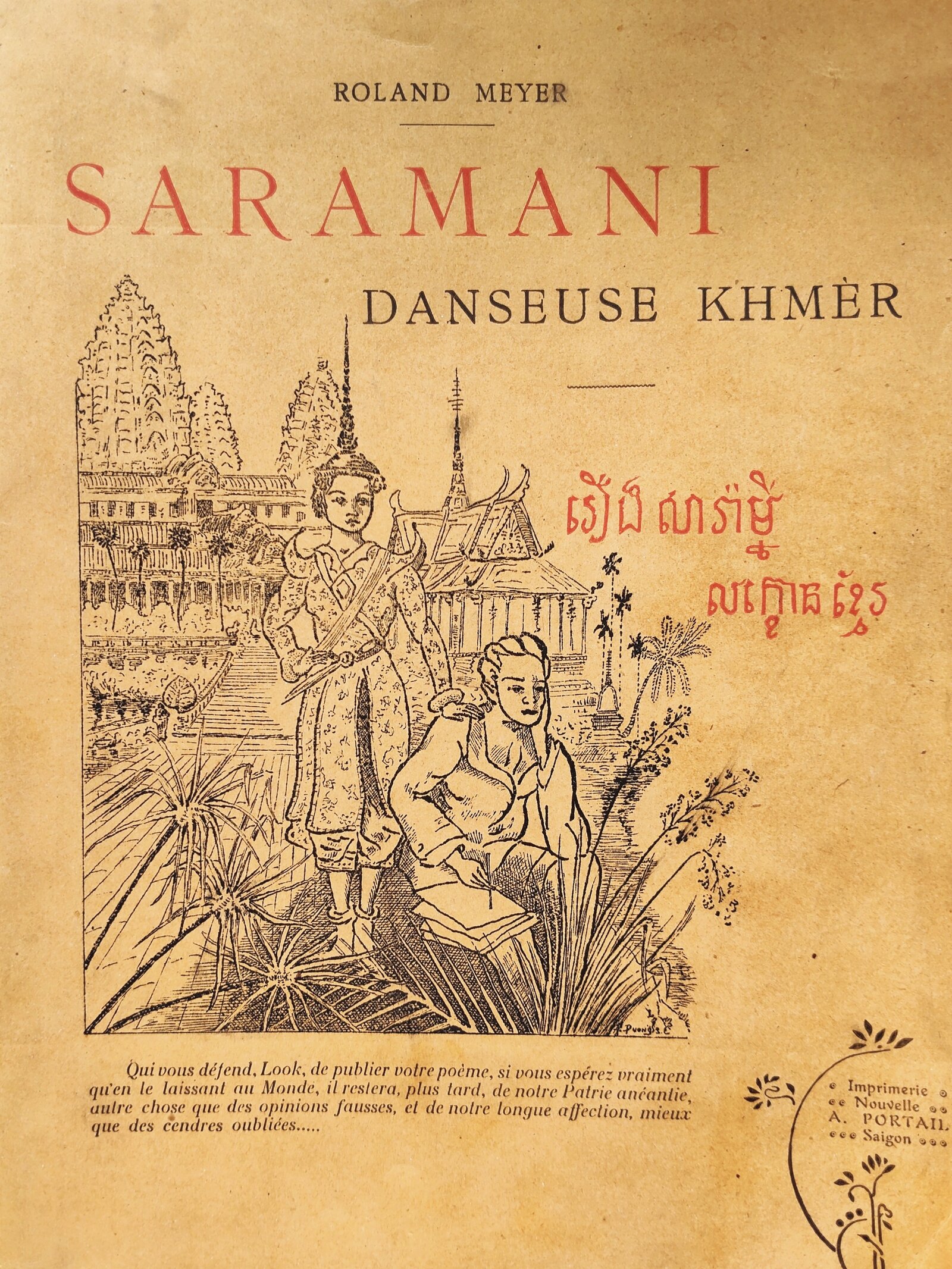
1) Saramani, danseuse khmèr -រឿង សារ៉ាម្នី លក្ខោនខ្មែរ, cover of the original 1919 edition. [លកោន (Modern KH ល្ខោន) lakhon, ‘theater, dance, dancer’, had three correct spelling forms at the time, according to Dictionnaire Guesdon Dictionary (1930) - លកោន, លខោន, លុកឃុន]. 2) On the stairway to Angkor Wat Central Tower in January 1918, clockwise from the left - F. Baudoin and his daughter, Suzanne Groslier seated near George, A. Sarraut at the top, a ‘Mlle Vibert’ and R. Meyer [photo found in Suzanne Groslier’s personal papers by Kent Davis when he was invited by the Groslier family to look through it after her passing in 1979, published in “Le Khmerophile”, English edition of Groslier’s Cambodian Dancers Ancient and Modern, p. 222]. 3) The frontispiece-dedication in the original 1919 edition: that same drawing was used as cover illustration for the 1922 version. The facial features definitely correspond to the photographs of the ‘real’ Saramani kept in the Meyer-Courtois family archive. [source: 1919 edition original edition at ADB Library.]
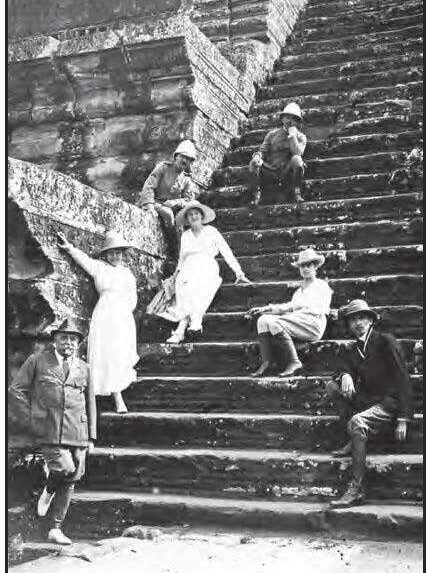
1) Saramani, danseuse khmèr -រឿង សារ៉ាម្នី លក្ខោនខ្មែរ, cover of the original 1919 edition. [លកោន (Modern KH ល្ខោន) lakhon, ‘theater, dance, dancer’, had three correct spelling forms at the time, according to Dictionnaire Guesdon Dictionary (1930) - លកោន, លខោន, លុកឃុន]. 2) On the stairway to Angkor Wat Central Tower in January 1918, clockwise from the left - F. Baudoin and his daughter, Suzanne Groslier seated near George, A. Sarraut at the top, a ‘Mlle Vibert’ and R. Meyer [photo found in Suzanne Groslier’s personal papers by Kent Davis when he was invited by the Groslier family to look through it after her passing in 1979, published in “Le Khmerophile”, English edition of Groslier’s Cambodian Dancers Ancient and Modern, p. 222]. 3) The frontispiece-dedication in the original 1919 edition: that same drawing was used as cover illustration for the 1922 version. The facial features definitely correspond to the photographs of the ‘real’ Saramani kept in the Meyer-Courtois family archive. [source: 1919 edition original edition at ADB Library.]
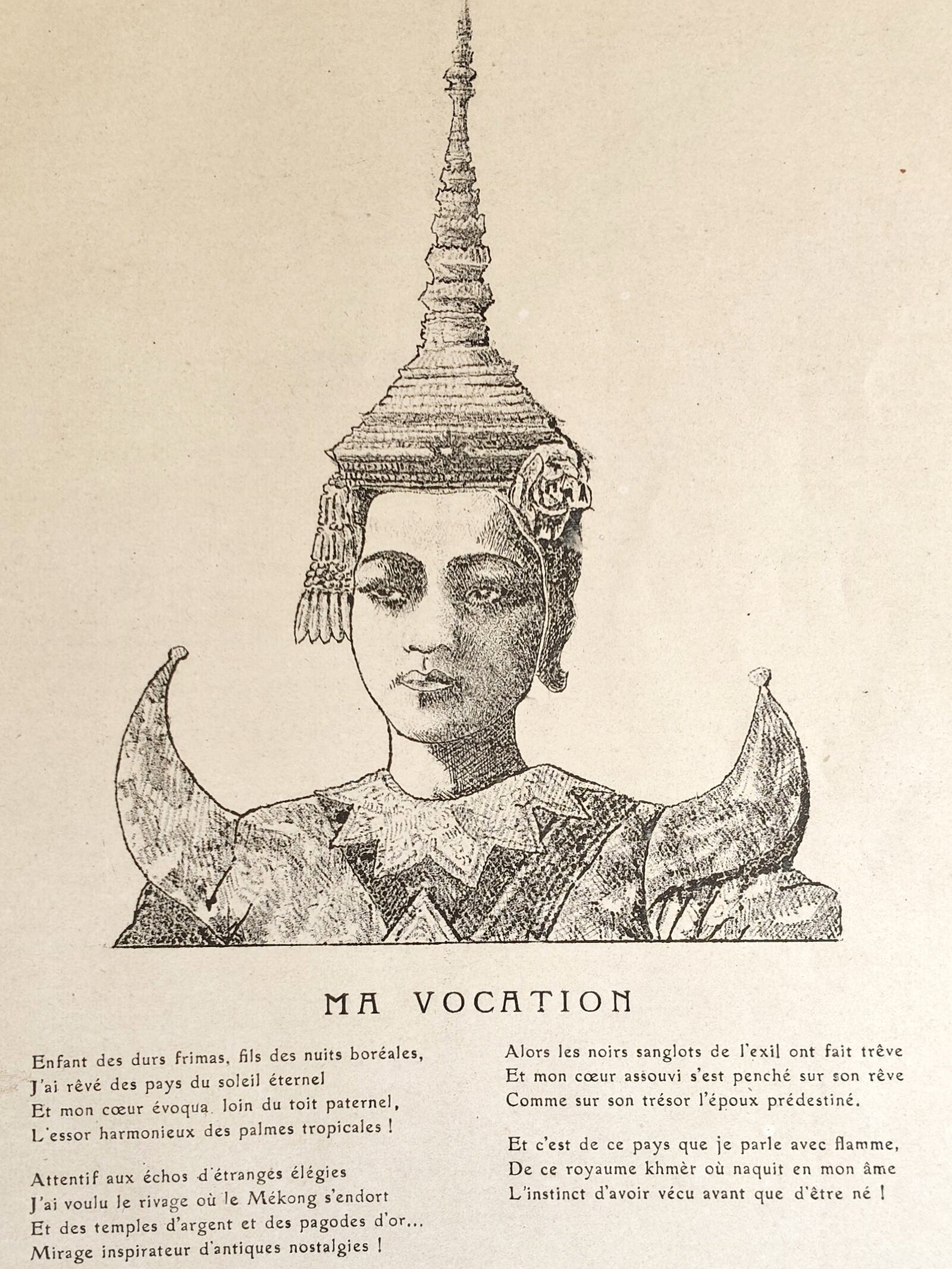
1) Saramani, danseuse khmèr -រឿង សារ៉ាម្នី លក្ខោនខ្មែរ, cover of the original 1919 edition. [លកោន (Modern KH ល្ខោន) lakhon, ‘theater, dance, dancer’, had three correct spelling forms at the time, according to Dictionnaire Guesdon Dictionary (1930) - លកោន, លខោន, លុកឃុន]. 2) On the stairway to Angkor Wat Central Tower in January 1918, clockwise from the left - F. Baudoin and his daughter, Suzanne Groslier seated near George, A. Sarraut at the top, a ‘Mlle Vibert’ and R. Meyer [photo found in Suzanne Groslier’s personal papers by Kent Davis when he was invited by the Groslier family to look through it after her passing in 1979, published in “Le Khmerophile”, English edition of Groslier’s Cambodian Dancers Ancient and Modern, p. 222]. 3) The frontispiece-dedication in the original 1919 edition: that same drawing was used as cover illustration for the 1922 version. The facial features definitely correspond to the photographs of the ‘real’ Saramani kept in the Meyer-Courtois family archive. [source: 1919 edition original edition at ADB Library.]
1) Saramani, danseuse khmèr -រឿង សារ៉ាម្នី លក្ខោនខ្មែរ, cover of the original 1919 edition. [លកោន (Modern KH ល្ខោន) lakhon, ‘theater, dance, dancer’, had three correct spelling forms at the time, according to Dictionnaire Guesdon Dictionary (1930) - លកោន, លខោន, លុកឃុន]. 2) On the stairway to Angkor Wat Central Tower in January 1918, clockwise from the left - F. Baudoin and his daughter, Suzanne Groslier seated near George, A. Sarraut at the top, a ‘Mlle Vibert’ and R. Meyer [photo found in Suzanne Groslier’s personal papers by Kent Davis when he was invited by the Groslier family to look through it after her passing in 1979, published in “Le Khmerophile”, English edition of Groslier’s Cambodian Dancers Ancient and Modern, p. 222]. 3) The frontispiece-dedication in the original 1919 edition: that same drawing was used as cover illustration for the 1922 version. The facial features definitely correspond to the photographs of the ‘real’ Saramani kept in the Meyer-Courtois family archive. [source: 1919 edition original edition at ADB Library.]
Meyer was even appointed to supervise the examinations in Chinese, a language he didn’t master at all, which shows that that mission was much more political than linguistics-related, as Chinese schools, especially in Southern Cambodia, were considered as foci of irredentist, anti-colonial feelings. As for ‘going native’, Saramani’s ‘Komlah’ — Meyer’s Khmer favorite nickname, from kh កំឡោះ, which has often been translated as ‘bachelor” but literally means ‘forever young man’, what classic English writers would have called a ‘cad’, an irreverent boy — did mention spending his spare time in his fiancée’s Cambodian-style house, in Prek Thmey ព្រែកថ្មីនេះ village (some fifteen kilometers south of Phnom Penh on the eastern bank of the Bassac River) but when their third daughter, Evelyne, was born in 1918, the address he gave to the French birth register was 100, rue du Commerce, in the fast-developing district right north of the Royal Palace. We have found no evidence that he ever befriended famous French ‘Khmerophiles’ such as George Groslier — whose house on the corner of Preah Ang Hassakan (modern St. 144) and Preah Ang Yukhantor (modern St. 19) Streets was close to Meyer’s -, Charles Gravelle or George Coedès, the latter two being happily married to Cambodian women. He was indeed notoriously close to Dr. Adrien Pannetier, a staunch critic of Baudoin (and of Minister of the Palace Thiounn), who explicitely quoted Saramani in his unconventional Au coeur du pays khmer (1921).
Was the publication of Saramani an opportunity for the French powers-that-be to send away this auto-proclaimed ‘Bard of Cambodia’ who, as a secret police chief, probably knew too much? Or did Meyer himself — who had ended up his novel with Komlah-Meyer going berserk and melodramatically breathing his last, with Saramani dying shortly after of literary sorrow — had enough of Cambodia, of Phnom Penh, ‘la ville assombrie dont il a partagé, pendant douze ans, toutes les fibres et qui, comme son cœur, saigne dans le crépuscule’ (dixit Komlah in the 1929 version), and even of the beloved Khmer dancer, who would follow him in Laos with two of their children but was back to Phnom Penh after less than two years, in 1922? Had Cambodia resulted to be unresponsive to this “oeuvre de régénération et de rééducation qui incombe au Protectorat Français”, as he described his personal ambition in his quite awkward essay ‘Inde ou Chine’ [‘India or China?’, 1925]?
Disciplinary demotion, or even ‘urgent exfiltration’ [as described by Meyer’s meticulous biographer Jean-François Klein] of a brilliant colonial administration who was at risk of paying with his own life the ire of the Cambodian officials, or just part of an enigmatic lifeline? His transfer to Laos by decree dated 22 March 1920 was published in Bulletin administratif du Cambodge several weeks before the newly-appointed Governor-General of Indochina Maurice Long (1866−1923) sent a confidential cable to the Ministry of the Colonies, found in Archives d’Outremer (Aix-en Provence, France) by researcher Lucie Labbé and quoted in her 2020 publication [see references below], in which Long warned of the “intense emotion provoked at the [Royal] Court and amongst the French citizenry by [this] publication. The Governor-General, an attorney by trade, had arrived in Hanoi in January 1920 and was already busy to make everything spotless for the visit of Maréchal Joffre to Saigon and Phnom Penh in December 1921. An old-school politician, he was closer to Baudoin than to the ‘young guard’ of Sarraut’s proteges such as Pierre Pasquier or Paul Blanchard de la Brosse.
In fact, the Saramani incident didn’t impact his career — as an attaché to the Resident-Superior in Laos, he remained in charge of ‘indigenous affairs’ (secret police) before being appointed in 1928 Head of the French-Siamese High Commission on the Mekong River — with veteran negotiator Colonel Fernand Bernard coming in as backup to an official who had not the least diplomatic experience -, official representative of Laos at Paris Colonial Exhibition (1931), Commissaire du gouvernement de l’Indochine in Laos, Chevalier de la Légion d’honneur in 1933, Head of the Propaganda and Tourism section of Agence Economique de l’Indochine in 1936, advisor to the Minister of the Colonies in Paris from 1933 until his complete retirement in 1940…Hard to find the “rebellious poet” of Saramani fame. Also of note : as late as 1931, Meyer’s Cours de cambodgien [Manual of Khmer Language] was still in the — brief - list of educational books approved by the French Protectorate, along with Minister of Education Pich Ponn’s Cours de morale.
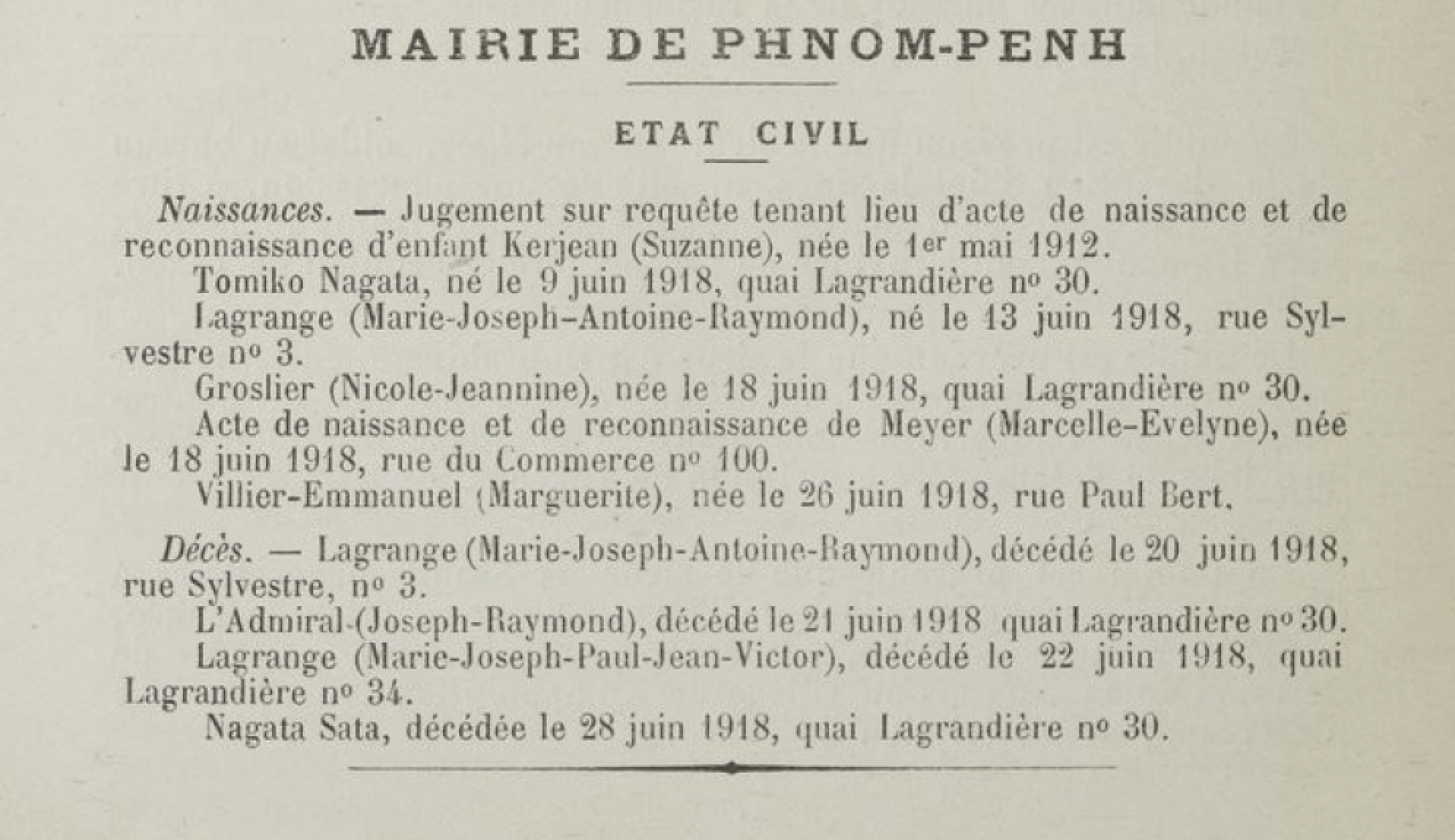
1) Birth and Recognition of daughter Marcelle-Evelyne registered at Phnom Penh Town Hall, 18 June 1918. 2) List of 8 books officially approved for Khmer language teaching in Cambodia [Bulletin administratif du Cambodge (BAC), Jan. 1931]
1) Birth and Recognition of daughter Marcelle-Evelyne registered at Phnom Penh Town Hall, 18 June 1918. 2) List of 8 books officially approved for Khmer language teaching in Cambodia [Bulletin administratif du Cambodge (BAC), Jan. 1931]
1) Birth and Recognition of daughter Marcelle-Evelyne registered at Phnom Penh Town Hall, 18 June 1918. 2) List of 8 books officially approved for Khmer language teaching in Cambodia [Bulletin administratif du Cambodge (BAC), Jan. 1931]
All along, Roland Meyer didn’t give one single clue (except in 1925, see below) that Saramani could have been a real person, and moreover the mother of four children with him. We have found the following notice in the Bulletin administratif du Commissariat de la République au Royaume du Laos [1er Jan. 1922, p. 34]:
Congés et Permissions/ Par arrêté No 22 du Résident Supérieur par interim au Laos, du 11 .Janvier 1922: Un congé administratif de six mois a solde entière de présence est accordé à M. Meyer, Roland, Administrateur-Adjoint de 1ere classe des Services Civils de l’Indochine pour en jouir à Versailles. Ce fonctionnaire […] prendra passage au compte du Budget local du Laos sur un des paquebots partant de Saigon à compter du 1er Avril 1922. M Meyer voyagera accompagné de ses deux enfants, Lucie, née le 21 Mai 1910 et Suzanne, née le 21 Février 1913. Ce fonctionnaire est autorisé à passer à ses frais par la route de Kratie a Saigon. Il touchera à Saigon sur présentation de factures régulières et le remboursement de ses frais de transport, par cette route, dans la limite des frais qu’auraient occasionnés son passage et celui de ses deux enfants, avec nourriture, de Kratié à Saigon par la voie fluviale.
[Authorized Leave of Absence/ By decree No. 22 of the Acting Resident Superior in Laos, dated January 11, 1922: A six-month administrative leave with full pay is granted to Mr. Roland Meyer, First-Class Assistant Administrator of the Civil Services of Indochina, to be taken in Versailles. This official […] will travel at the expense of the Laotian local budget on one of the steamships departing from Saigon starting April 1, 1922. Mr. Meyer will travel accompanied by his two children, Lucie, born May 21, 1910, and Suzanne, born February 21, 1913. This official is authorized to travel at his own expense by road from Kratie to Saigon. He will receive in Saigon, upon presentation of regular invoices, reimbursement of his transport costs by this route, up to the limit of the costs incurred by his passage and that of his two children, meals included, from Kratié to Saigon by river.]
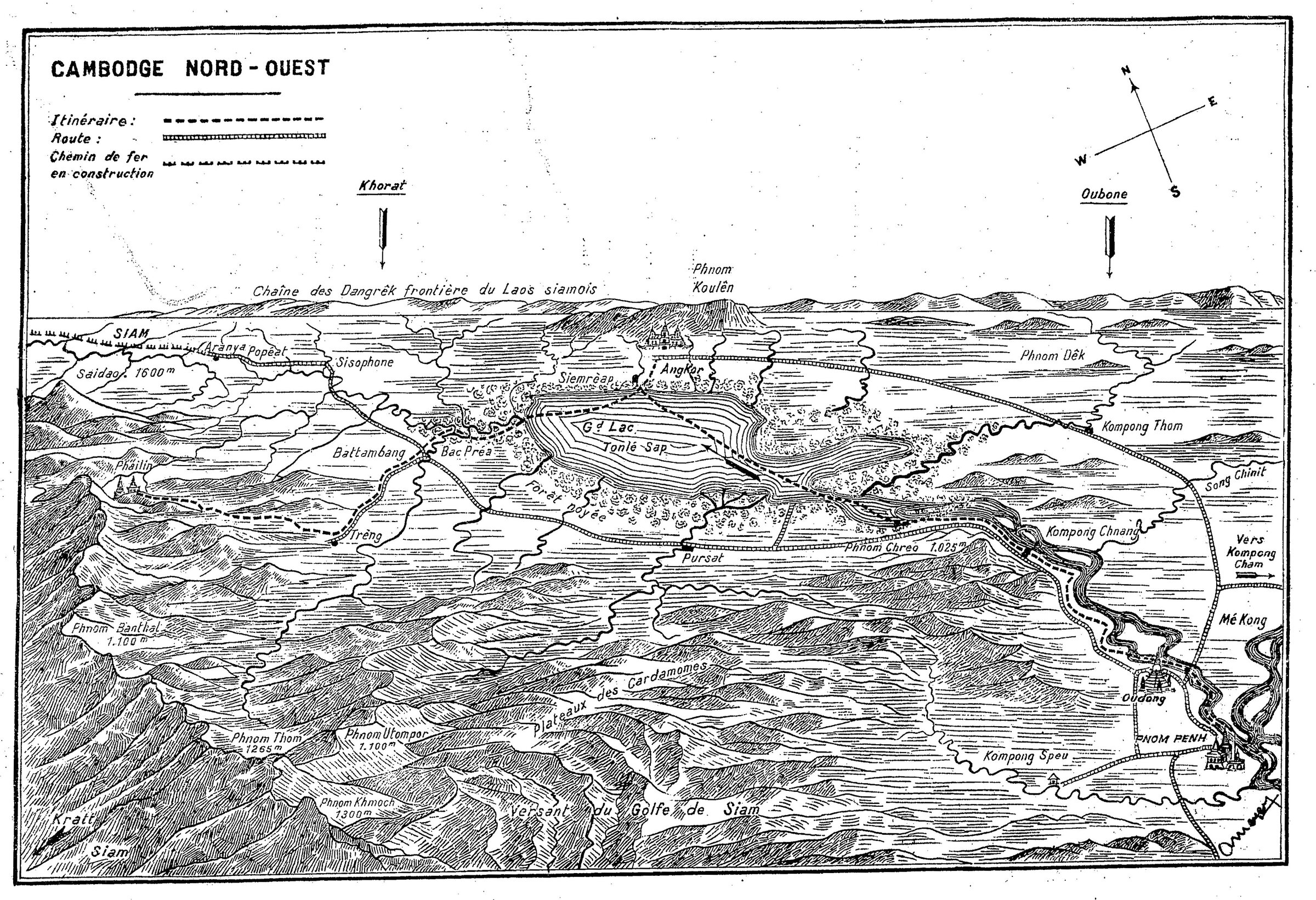
From “Au Royaume des saphirs”, L’Eveil économique de l’Indochine, 22 Feb. 1925, p. 10. [via gallica.bnf.fr]
Roland Meyer’s itinerary in the Northwest, c. 1925. The author himself wrapped in mystery his motive for the trip: “Les fins de ce noùveau voyage ? Qu’importe ? Visite de quelque grand personnage ; tournée de pacification ou de propagande en faveur d’un empru:nt national, ou d’un recrutement de volontaires ; exploration de nouveaux territoires… tous les prétextes né sont-ils pas bons alors qu’on cherche une occasion de connaître l’Indochine et de mieux servir ses habitants?” [“Purpose of this new journey? What does it matter? A visit from some important figure; a pacification or propaganda tour in favor of a national loan, or the recruitment of volunteers; an exploration of new territories… any pretext is valid when one seeks an opportunity to get to know Indochina better and to better serve its inhabitants, isn’t it?” [“Au Royaume des Saphirs, L’Eveil économique de l’Indochine, 22 Feb. 1925, n. 40, p. 10 [via gallica.bnf.fr]
While Lucie and Suzanne entered a Catholic boarding school in Versailles, where they stayed until 1927, their father married on 12 Dec. 1922 in Paris Marie-Louise Blayo (22 Aug. 1902, Toulon, France — 24 April 1992, Clichy-la-Garenne, France) in Paris. [They had one child together, Rolande Meyer, and divorced on 8 April 1936; on 29 Oct. 1937, he was married again, this time to Christiane Rosa Désirée Renée Maupin (1914 – 1993)]. 1922 is also the year he published the “light” version of Saramani.
In 1925, shortly before new Governor-General Alexandre Varenne entrusted him with new assignments in Hanoi and Vientiane, Roland Meyer published a series of articles [later reprinted in Komlah, Visions d’Asie without mentioning previous publication]. In one of them, “Au royaume des Saphirs” [“In the Kingdom of Sapphires”], he recounted an undated trip to the westernmost part of Cambodia and the sapphire mines in Pailin with one stop at Angkor, inserting a blurry photo with the caption “Saramani et ses compagnes dansant devant Angkor-Temple; cliché de l’Ecole d’Extrême-Orient [sic]” [“Saramani and her partners dancing in front of Angkor-Temple; picture by the School of Far East”]:
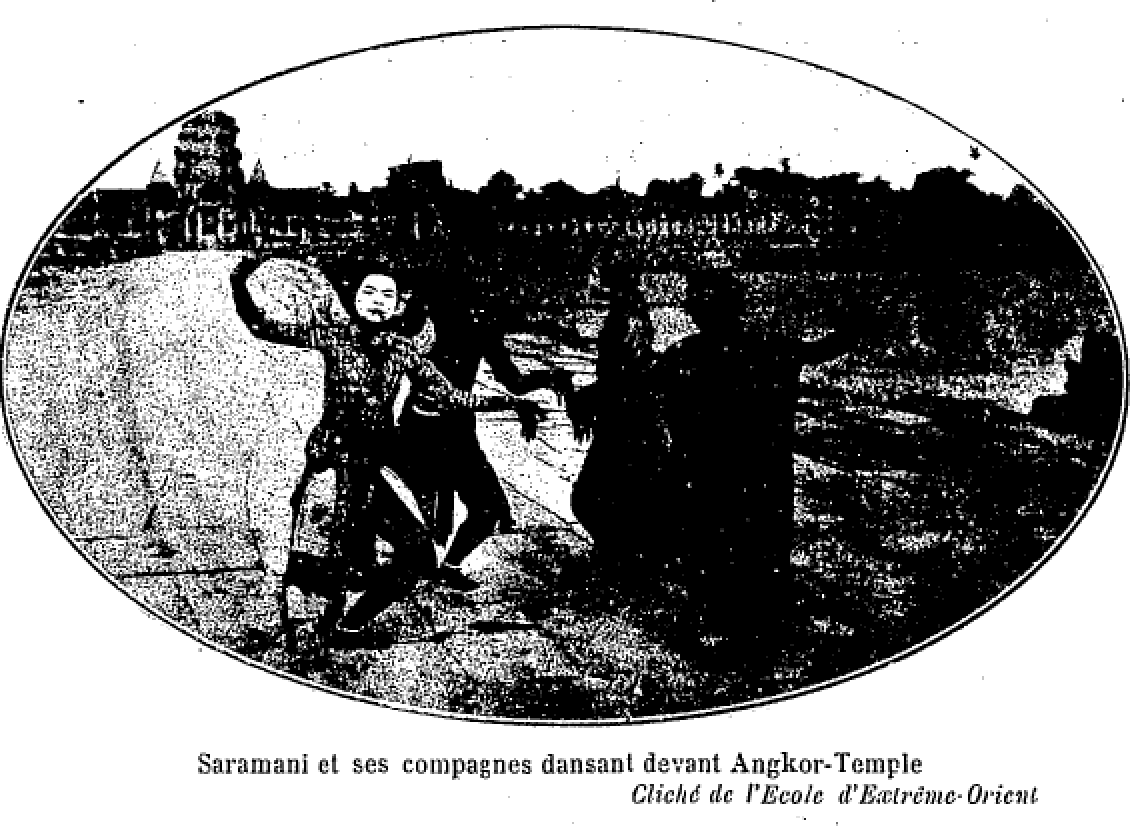
Roland Meyer’s own words: “Saramani et ses compagnes dansant devant Angkor-Temple; cliché de l’Ecole d’Extrême-Orient [sic]” [“Saramani and her partners dancing in front of Angkor-Temple; picture by the School of Far East” [in “Au royaume des Saphirs”, L’Eveil économique de l’Indochine, 15 Feb. 1925 n. 401, p. 11 [scan via gallica.fr, pdf by ADB].
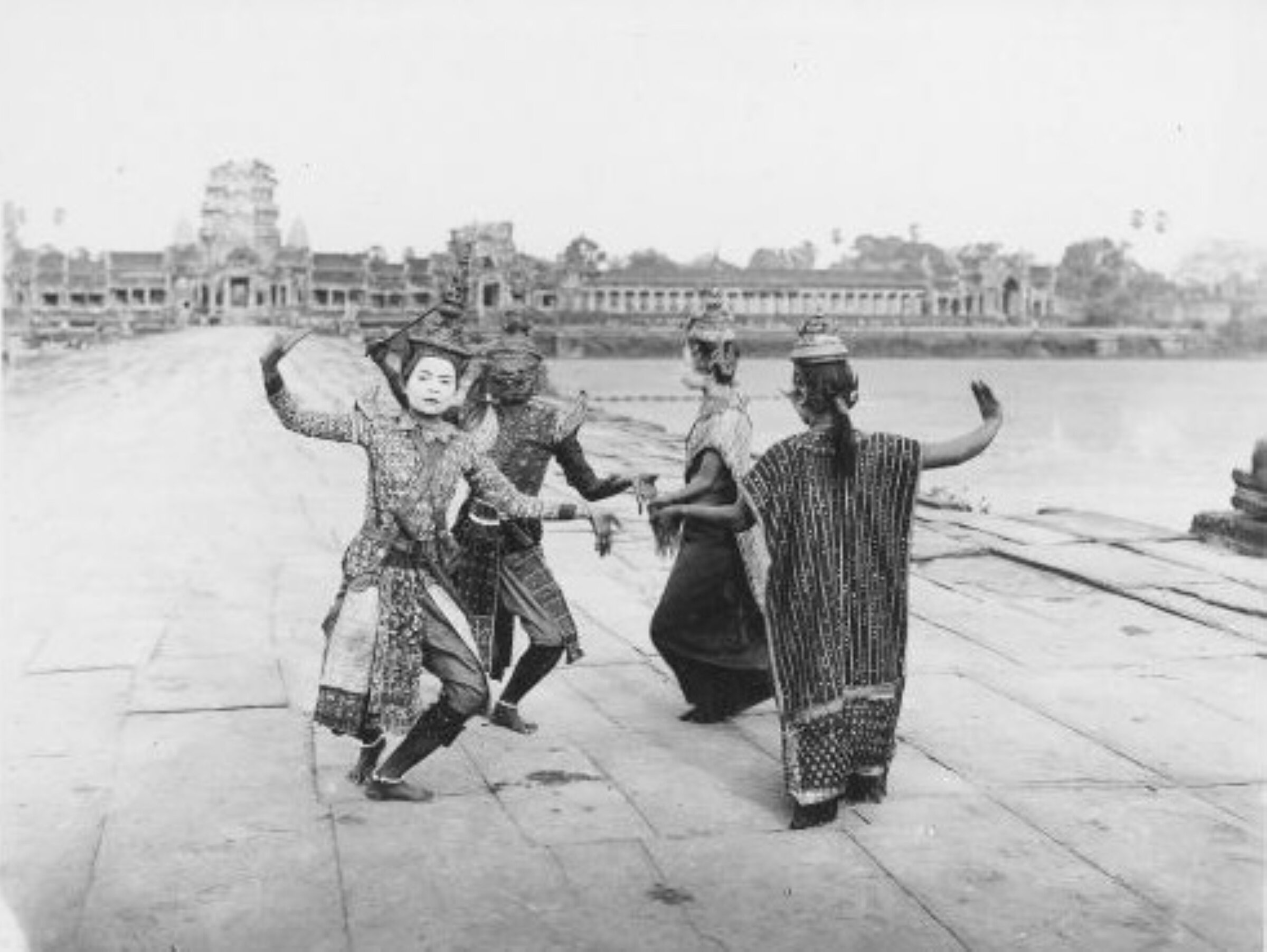
Royal Ballet dancers in front of Angkor Wat, photographer unknown, date unknown’. From Roland Meyer’s notation, we deduct that the dancer clearly depicted is Saramani, and from her personal history that it was taken during King Sisowath’s celebrations in Angkor in September 1909 [EFEO photo archive ref. CAM00358].
1) Roland Meyer’s own words: “Saramani et ses compagnes dansant devant Angkor-Temple; cliché de l’Ecole d’Extrême-Orient [sic]” [“Saramani and her partners dancing in front of Angkor-Temple; picture by the School of Far East” [in “Au royaume des Saphirs”, L’Eveil économique de l’Indochine, 15 Feb. 1925 n. 401, p. 11 [scan via gallica.fr, pdf by ADB]. 2) Browsing through EFEO online photo collection, we found the original picture, labeled ‘photographer unknown, date unknown’. From Saramani’s personal history, we can guess that it was taken during King Sisowath’s celebrations in Angkor in September 1909 [EFEO photo archive ref. CAM00358].
Independent researcher Kent Davis was the first (in 2010) to surmise that Saramani had been a real Cambodian dancer. Later [in a 2016 publication expanded in 2020], researcher Lucie Labbé, thanks in particular to her work on the Meyer-Courtois Family Archive and the Fonds Jacquemond in Paris, was able to prove that Saramani was the dancer standing at the left of a famous photograph (also printed as postcard) taken by Pierre Dieulefils at Phnom Penh Royal Palace around 1909 [see below] by comparing it with family photos.
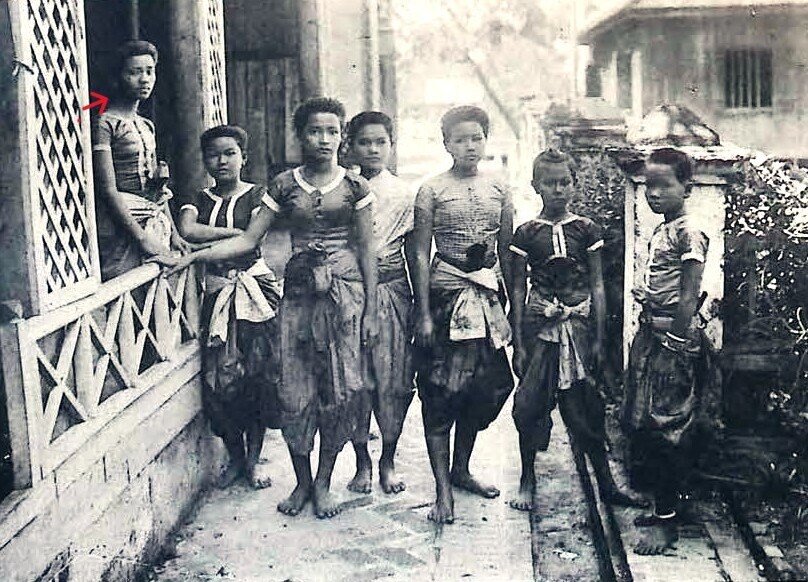
Dancers of the Royal Ballet at their quarters in the Palace (Saramani, red arrow), part of Plate 56 (Phnom Penh — Favorites du roi, musiciennes, danseuses, domestiques) in Pierre Dieulefils, Indochine Monumentale & Pittoresque — Ruines d’Angkor, Hanoi, c. 1911. In the notice, the author remarked: “La population féminine du palais constitue une hiérarchie très compliquée, à titres multiples, depuis les reines (mahesei, tepi) jusqu’aux servantes (puok srei chau as nak), en passant par les favorites, les danseuses (lokhon), les musiciennes (puok phlêng). Le protocole en a été réglé par le roi Ang Duong.” [“The female population of the palace consists of a highly complex hierarchy, with multiple titles, from the queens (mahesei, tepi) to the servants (puok srei chau as nak), including the royal favorites, the dancers (lokhon), the musicians (puok phlêng). The protocol was regulated by King Ang Duong.” [ADB scan of original photo-album].
Dancers of the Royal Ballet at their quarters in the Palace (Saramani, red arrow), part of Plate 56 (Phnom Penh — Favorites du roi, musiciennes, danseuses, domestiques) in Pierre Dieulefils, Indochine Monumentale & Pittoresque — Ruines d’Angkor, Hanoi, c. 1911. In the notice, the author remarked: “La population féminine du palais constitue une hiérarchie très compliquée, à titres multiples, depuis les reines (mahesei, tepi) jusqu’aux servantes (puok srei chau as nak), en passant par les favorites, les danseuses (lokhon), les musiciennes (puok phlêng). Le protocole en a été réglé par le roi Ang Duong.” [“The female population of the palace consists of a highly complex hierarchy, with multiple titles, from the queens (mahesei, tepi) to the servants (puok srei chau as nak), including the royal favorites, the dancers (lokhon), the musicians (puok phlêng). The protocol was regulated by King Ang Duong.” [ADB scan of original photo-album].
Did the real Saramani (born as Mrek circa 1893 in Ken Svay Province — death between Dec. 1972 and April 1974, with her ashes possibly deposited at Wat Pibhatarangsey វត្តពិភទ្ទរង្សី, one of Phnom Penh five ‘historic pagodas’) dance in Paris and Marseille in 1906 during the notorious visit of King Sisowath and part of the Royal Ballet? This hasn’t been clearly established, even if Royal Meyer implied he had seen her during the Marseille performance and if a dancer named Yem was indeed mentioned in the account by the Minister of the Royal Palace Oknha Chauvea Veng Thiounn.
Apart from a brief and enigmatic appearance in young American travel writer Harry Hervey’s King Cobra (1927) as a former royal ballet dancer and proudly independent antiquities dealer in Phnom Penh, and a veiled tribute by Suzanne Meyer, Saramani and Meyer’s daughter and a Khmer classical plus ‘exotic’ dancer in 1930s Paris (1937), the muse fell out of sight for nearly eight decades.
As for Roland Meyer, after fleeing Paris under Nazi occupation in 1940 — where daughter Suzanne reportedly died of privation -, he spent one decade in Southeastern France before heading back to Paris suburbs, self-publishing Propos du vieux colonial [Musings of the Old Colonial] in 1952. And indeed, the self-proclaimed “Asiatiste” [Asianist] — or “Asiate”, a French term referring to “culturally hybrid” French citizens who had experienced Asia -, he was most and foremost a “colonial writer” as himself insisted to be referred to, one of those “héros ignorés de l’épopée coloniale” [“unrecognized heroes of the colonial saga”] he dedicated his book Komlah to, somehow critical of the most reactionary versions of colonialism but still sticking to the ideology of France’s “mission civilisatrice”. In 1965, he bequeathed all his writings to “mon ancien ministère de la France d’Outré-mer” [“my former Ministry of Overseas France,” the new name of the Ministry of Colonial Affairs].
In closing, let’s quote from perceptive author Virginia Thompson, who met Roland Meyer in person in the late 1930s and gave a harsh yet lucid assessment of the man and his literary work:
The Khmers are inordinately proud of their past, but do nothing to revive it or to even learn about it. They bask in an atmosphere of credulous naiveté and this eventually affects the Westerner in their midst. His reasoning slowly loses a common-sense basis. He begins to sleep with his head to the south [ADB: following the Vashtu Shastra principle], to pay attention to native omens and unconsciously to propitiate the spirits. Unlike learning Annamite customs, Cambodian life is contagious without effort. It is easier to slough off a superficial varnish of Western culture than to enter the complicated psychology of the Annamite mind. Roland Meyer’s story of Komlah is that of a European who found the Khmers so overwhelmingly congenial that he gave his life to studying them. He became so steeped in Khmer life that he was dominated by what he had intended to master. In analysing the cause of their charming decadence his personality and will-power were eaten away. In feeling so keenly their charm he absorbed the germs of their decadence. [French Indochina (1937), p 357]
[1] This embryonic museum wasn’t located inside the Royal Palace, as it has been assumed by some authors, but at the Ecole française [Phnom Penh College], established in 1873 and renamed Lycée Sisowath in 1905, on the same spot the modern Sisowath High School វិទ្យាល័យព្រះស៊ីសុវត្ថិ is located.
[2] Phou Khao Khouay National Park is nowadays a protected area of sandstone cliffs and hills, some 2,000 km² large and 40 kms northeast of Vientiane, Laos. Of ‘Ritaville’ have only subsisted some building foundations still visible on the foothills.
[3] Checking against the dates, this French Resident in Laos must have been Jules (Georges Théodore Gabriel) Bosc (6 Apr. 1871, Saissac, France — 20 April 1959, Nogent-sur-Marne, appointed 3 May 1918 to March 1931), and the “white fairy” his wife Jeanne Lafitan. Was ‘Rita’ a nickname, or was she Bosc’s temporary paramour? Still inquiring.
[4] Date stated in L’Avenir du Tonkin (Hanoi), 5 Aug. 1938, p 1.
[5] Recent publications have established the Saramani-Meyer descendency as follows: Lucie [named after Resident-Superior Louis-Paul Luce, Meyer having joined Luce’s circle of close collaborators in 1909] (21 May 1910, Phnom Penh — 24 July 1945, Nice, married to Roger Boivin); Suzanne (26 Feb. 1913, Phnom Penh — 1940, Paris), Charles (1916, Phnom Penh — ?), Marcelle Evelyne (18 June 1918, Phnom Penh — 24 April 1975, Phnom Penh, married (announcement on 20 Feb. 1940) to Louis Courtois (2 Nov. 1915, Phnom-Penh — 30 May 1993, Nice). The French registry listed Marcelle’s birth conjointly with the one of George Groslier’s daugher, Nicole Jeannine, born on 15 June 1918.
(a) So far it has been impossible to find any of these manuals of Khmer language. Interestingly, in his “Notice de renseignements 1907 – 1940” hand-written by Meyer himself on 10 Dec. 1965 in Paris, he only mentioned in his bibliography “Cours de langue cambodgienne, Saigon, Ed. Albert Portail, 1929″. [document reproduced in Jean Courtois, “Roland Meyer et Saramani, Mes grands-parents outré-mer”, op-cit.: 220 – 1]
(*) articles reproduced in Komlah (1930) without mention of prior publication.

Angkor Database — មូលដ្ឋានទិន្នន័យអង្គរ — 吴哥数据库
All you want to know about Angkor and the Ancient Khmer civilization, how it keeps attracting worldwide attention and permeates modern Cambodia.
Indexed and reviewed books, online documentation, photo and film collections, enriched authors’ biographies, searchable publications.
ជាអ្វីគ្រប់យ៉ាងដែលអ្នកទាំងអស់គ្នាចង់ដឹងអំពីអង្គរ, អរិយធម៌ខ្មែរពីបុរាណ, និងមូលហេតុអ្វីដែលធ្វើឲ្យមានការទាក់ទាញចាប់អារម្មណ៍ពីទូទាំងពិភពលោកបូករួមទាំងប្រទេសកម្ពុជានាសម័យឥឡូវនេះផងដែរ។
Our resources include a physical library library at Templation Angkor Resort, Siem Reap, Cambodia.
email hidden; JavaScript is required
sk अवतार avatāra lit. "descent", "persistence", "form".
Avatāra in Sanskrit refers to "descending into a form", or "incarnation" - "avatar" in modern Indo-European languages.
Initially used specifically for the incarnations of Mahāviṣṇu, it is also one of the names of Krishna.
In the Purana, there are three kinds of incarnations of a deity - avatāra (full supranatural power), āveśa (power limited to the present time) and aṃśāvatāra (partial incarnation).
In modern English, an "avatar" is "a graphical or physical manifestation of a person, idea, or deity." [Merriam-Webster Dictionary].
kh: ឧកញ៉ា angk: uk-na | in ancient vn texts: Ốc nha (屋牙)